

Tire cupping, also called scalloping, is most often caused by worn shocks or struts and other tired suspension parts, or by a wheel and tire assembly that is out of balance. Poor alignment and missed rotations can add to it. The tire bounces instead of rolling smoothly, and it scrapes small dips into the tread as it goes. The pattern can’t be reversed, so the fix is to find the cause first and then replace the tires if the damage is bad enough.
This guide walks through what cupping looks and sounds like, what causes it, how it differs from feathering, and what a shop should check before anyone sells you a new set of tires.
TL;DR
- Cupping is a series of scooped, wavy dips around the tread, and it usually points to worn shocks, struts, or other suspension parts, or to wheel imbalance.
- A rhythmic growl or hum that gets louder with speed, plus vibration, is the classic cupping noise.
- Feathering is a different pattern, usually from toe alignment. Cupping and feathering have different fixes.
- Cupped tread never heals. Fix the cause first, then replace the tires when wear is severe or the noise and vibration won’t go away.
- Have the suspension, balance, alignment, pressure, and rotation history checked together, not one at a time.
Table of Contents
- What does tire cupping look like?
- Cupped tires symptoms: noise, vibration, and feel
- What causes tire cupping?
- Cupping vs. feathering vs. scalloping: what is the difference?
- Is it bad to drive on cupped tires?
- Will tire cupping fix itself?
- How do you fix tire cupping?
- How to prevent tire cupping from coming back
- Our perspective: diagnose the cause before selling a tire
- Get cupped tires checked in Richland Hills
- FAQ
- Sources
What does tire cupping look like?
Cupping is wear that shows up as scooped-out sections in the tread, repeating around the tire. Bridgestone describes it as irregular wear with scooped areas appearing every few inches, often about three to four inches apart. AAA describes the same thing as alternating high and low spots around the tread.
The easiest way to see it is in good light with the wheel turned. Look across the tread at an angle rather than straight on. Then run your palm slowly around the tire. A healthy tire feels even. A cupped one feels like a washboard, with a rise and dip in a regular rhythm.
It often shows on one end of the vehicle only. Rear tires get cupped a lot on cars and SUVs that have gone a long time on the original shocks, because the rear tires have been bouncing for thousands of miles without anyone noticing.
Cupped tires symptoms: noise, vibration, and feel
Most drivers notice the sound before they notice the tread. Michelin says scalloped tires can produce a rhythmic growling or grinding that gets louder with speed. BFGoodrich notes that cupping generates both noise and vibration.
Here is what we hear drivers describe most:
- A humming or growling from one corner that rises and falls with road speed, not engine speed.
- A steering wheel shake or a vibration through the seat, especially on the highway.
- A ride that feels bouncy, floaty, or busier than it used to over small bumps.
- Tires that look fine on the sidewall but feel wavy across the tread.
- A car that pulls or wanders slightly, with steering that feels less sharp.
One caution. Cupping noise sounds a lot like a failing wheel bearing, and the two get mistaken for each other all the time. A bearing hum usually changes when you steer left or right at speed, while tire noise tends to stay with road speed and surface. If you aren’t sure which one you have, our piece on how technicians pinpoint wheel bearing noise lays out the checks.
What causes tire cupping?
There is rarely one single cause. Usually something lets the tire move more than it should, and the wear builds slowly over thousands of miles. These are the main causes, in roughly the order we check them.
Worn shocks and struts
Shocks and struts control how much the wheel bounces after hitting a bump. Monroe explains that when they wear out, the vehicle can bounce and the tires lose consistent contact with the road, which gouges rubber out of the tread. Tire Review makes the same point from a technical angle: the damping force of the shock controls tire movement, and excessive movement can create scalloped wear.
So yes, bad shocks can cause cupping. If you’ve noticed a bouncy ride, nose dive when braking, or oil residue on the shock body, read our list of signs you need new shocks.
Worn bushings, ball joints, and other suspension parts
Shocks get most of the blame, but they aren’t the only parts that allow extra movement. Bridgestone says worn shocks, struts, bushings, ball joints, and related steering and suspension parts can all let the wheel move around and produce scalloped wear. Uniroyal likewise lists bent or worn suspension parts among the causes.
If you hear a knock over bumps along with the tire noise, that’s a clue. Our guide to suspension clunking explains what those sounds usually mean and why they shouldn’t be ignored.
Wheel and tire imbalance
A tire and wheel assembly that is out of balance has a heavy spot. At speed that spot hops, and over time the hopping wears the tread in a pattern. Michelin ties scalloping to wheel imbalance or worn shock absorbers. AAA says cupping may indicate an out-of-balance wheel or worn suspension components.
Balance can drift. A lost wheel weight, a tire that has worn unevenly, or a bent rim can all bring back a vibration that wasn’t there last year. Mud and brake dust packed on the inside of a wheel can also confuse a balance check, so a clean wheel helps the technician. A safe cleaning routine for ceramic coated wheels keeps the barrel and weights visible without harming the finish.
Alignment problems
Bridgestone points out that suspension angles outside spec can keep tires from rolling straight or carrying load evenly, which contributes to irregular wear. Alignment is more often linked to feathering than to cupping (more on that below), but a vehicle with several problems can show both. If the car pulls, see our list of signs your car needs an alignment.
Low or uneven air pressure
A tire that runs under-inflated flexes more and wears differently from one that’s set correctly. Always use the pressure on the placard in the driver’s door jamb, not the number on the tire sidewall. AAA recommends checking tires monthly and before long trips, looking at tread and sidewalls for uneven wear, damage, and debris.
Missed rotations and tread design
Tires that stay on the same corner for too long develop their wear pattern deeper and deeper. Some tread designs also seem to be more prone to cupping than others, particularly on heavier vehicles and on rear axles. Rotation resets where the tire sits so no single position keeps taking the same abuse. Follow your vehicle manufacturer’s rotation interval, not a rule of thumb. Our article on how often to rotate and balance tires covers how driving conditions change that.
Cupping vs. feathering vs. scalloping: what is the difference?
“Scalloping” and “cupping” mean the same thing. Feathering is a different wear pattern with a different cause. Michelin describes feathering as a tread block with a sharp edge on one side and a rounded edge on the other, typically from a toe-alignment issue.
Tire Review gives a hands-on test: stroke the edges of the tread blocks. Too much toe-in or toe-out creates a feather edge on the inside or outside edge, while cupping is a series of concentric dips tied to suspension, shock, or balance problems.
| Cupping / scalloping | Feathering | |
|---|---|---|
| What you see | Scooped dips repeating around the tread | Tread blocks smooth on one edge, sharp on the other |
| How it feels | Wavy, like a washboard | Smooth one direction, rough the other when stroked across the tread |
| Typical causes | Worn shocks, struts, or other suspension parts; wheel imbalance | Toe alignment out of spec |
| Common symptom | Rhythmic noise and vibration at speed | Pull or off-center steering wheel |
| First checks | Suspension, balance, tire condition | Alignment angles |
If you’re unsure which pattern you have, don’t guess from a photo. A technician can read the tire in person and look at the suspension at the same time. That’s also why our guide on alignment vs. balancing is worth a read before you book either one.
Is it bad to drive on cupped tires?
It’s not something to ignore. AAA advises treating erratic cupping wear as a maintenance warning, because it may indicate imbalance or failed suspension components, and it says poor tire maintenance can contribute to premature wear, flats, or blowouts. Michelin warns that irregular tread patterns can reduce handling and steering control and recommends prompt professional attention for strong pulling, steering judder, or loud tire noise.
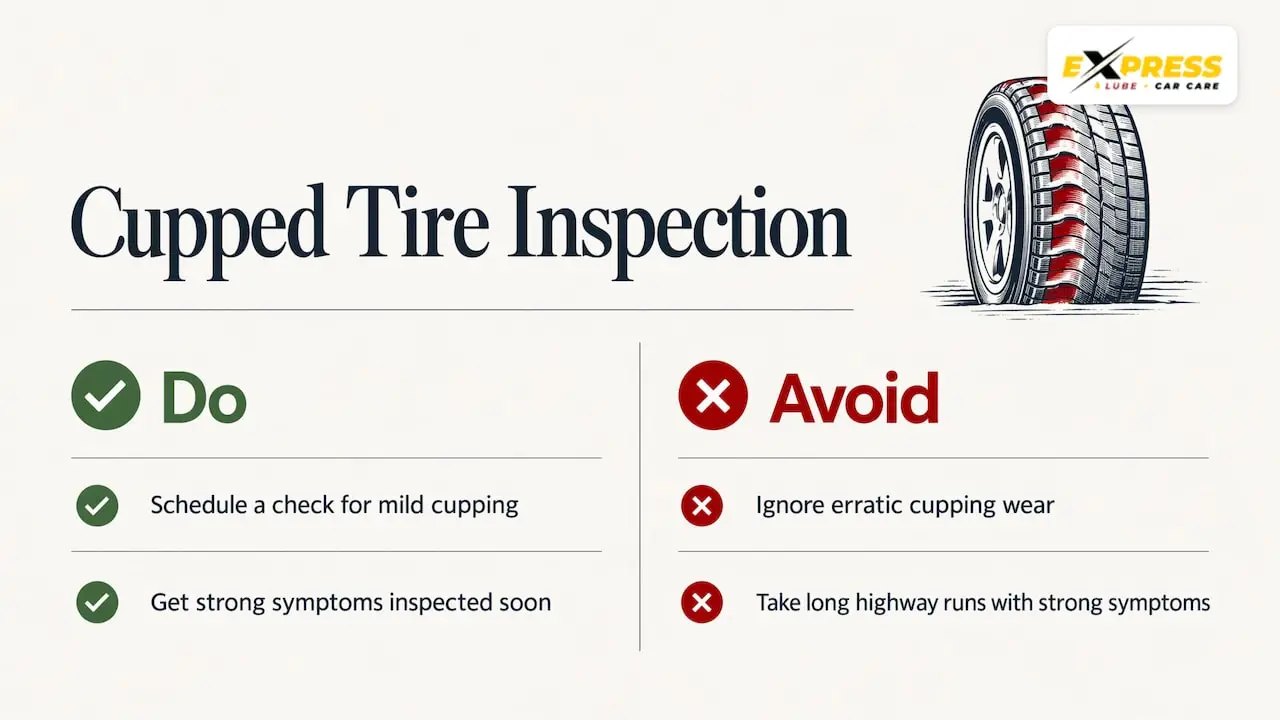
Put plainly: mild cupping on a tire with plenty of tread can be driven short term while you schedule a check. Strong vibration, a pull, loud noise, or any tire that looks damaged means get it inspected soon, and avoid long highway runs until you do. The same suspension wear that cups your tires also affects braking and steering, so the tires are often the first warning of a bigger problem.
Will tire cupping fix itself?
No. Uniroyal says once cupping occurs, the wear pattern is irreversible and the tires continue to wear unevenly. Fixing the cause stops new damage, but it doesn’t smooth out the dips already in the rubber.
That’s why the order matters. If you put new tires on a car with worn struts, the new tires can start cupping all over again. Michelin’s guidance is that each abnormal wear pattern points toward a relatively specific cause that should be corrected before replacement tires are fitted.
How do you fix tire cupping?
Bridgestone’s advice matches what we do in the bay: have a qualified technician inspect the suspension and steering, wheel balance, alignment, inflation, and rotation history, then correct the underlying fault. Here’s how that usually goes:
- Read the tires. Check the wear pattern, feel the tread, and note which positions are affected.
- Inspect the suspension and steering. Look at shocks and struts, bushings, ball joints, tie rods, and wheel bearings for play, leaks, or damage.
- Check balance and wheel condition. Look for bent rims, missing weights, and tires that no longer hold balance.
- Confirm tire pressure and rotation history. Set pressures to the placard and look at when the tires were last moved.
- Repair what’s worn, then align. If suspension parts are replaced, alignment should be checked afterward because those parts affect the angles.
- Decide on the tires. Keep them if the wear is light and they’re still quiet, replace them if not.
AAA recommends that trained and properly equipped service personnel handle rotation, balancing, tire replacement on the rim, and wheel alignment. We agree. These jobs need the right equipment and a trained eye, and a mistake affects how the vehicle handles.
When do the tires need replacing?
Bridgestone says to replace the tire when wear is severe, tread is low, there’s damage or a traction concern, or noise and vibration persist after the cause has been fixed. For tread depth, AAA says that at 3/32 inch it’s time to shop for new tires, while 2/32 inch is the legal tread limit in most states. Because cupped tires can also hurt wet-road grip and handling, many drivers choose to replace them sooner than the legal minimum.
How to prevent tire cupping from coming back
Prevention is mostly routine. Bridgestone’s list is simple: check pressure monthly and before long trips, inspect tires for tread wear and damage, rotate according to the vehicle manufacturer, rebalance when vibration appears, check alignment if the vehicle pulls or wear is uneven, and inspect the suspension and steering if cupping, noise, or vibration shows up.
A few habits that fit how people drive around Richland Hills, North Richland Hills, Hurst, and Bedford:
- Run your hand over the tread when you check pressure. It takes ten seconds and catches a washboard feel early.
- Mind the roads you actually drive. Rough pavement, construction zones, and potholes wear shocks and bushings faster, and heavy loads or towing add stress. Base your inspections on your conditions and your owner’s manual, not on a single mileage number.
- Don’t wait for a vibration to rotate. Keep to the manufacturer’s interval and balance when you feel something change.
- Treat a new bounce as a repair item. If the ride gets floaty, get the shocks or struts looked at before the tires pay for it.
- Get an alignment check after hitting something hard or after suspension work. Lifted trucks and SUVs in particular should read our note on how lift kits affect alignment.
Our perspective: diagnose the cause before selling a tire
Cupped tires are a symptom. When someone walks in with a growl at 60 mph and a wavy tread, the temptation is to treat the tires and send them off. We don’t think that serves the driver, because the same suspension or balance fault will chew through the next set.
That’s why we start with a full look at the vehicle: tires, suspension, steering, wheels, and alignment together. Our ASE-certified technicians use digital vehicle inspections with photos, so you can see what we see on your own vehicle and decide with clear information in front of you.
We’d rather tell you honestly that a set of tires has a few thousand miles left and the struts are the real problem, or that the tires are done and need replacing along with a repair, than guess. Qualifying repairs are backed by our 24-month/24,000-mile warranty, and you can walk in without an appointment or schedule one.
Express Lube & Car Care
Get cupped tires checked in Richland Hills
If your tires are making noise or feel wavy, we can inspect the suspension, steering, balance, and alignment in one visit and show you the findings with photos. Walk-ins are welcome, and appointments are available if you prefer. Same-day service is offered when possible. You can see everything we handle on our services page, including steering and suspension repair, and eligible customers can explore financing through third-party providers such as Koalafi, Snap Finance, American First Finance, and Synchrony, subject to provider approval and terms.

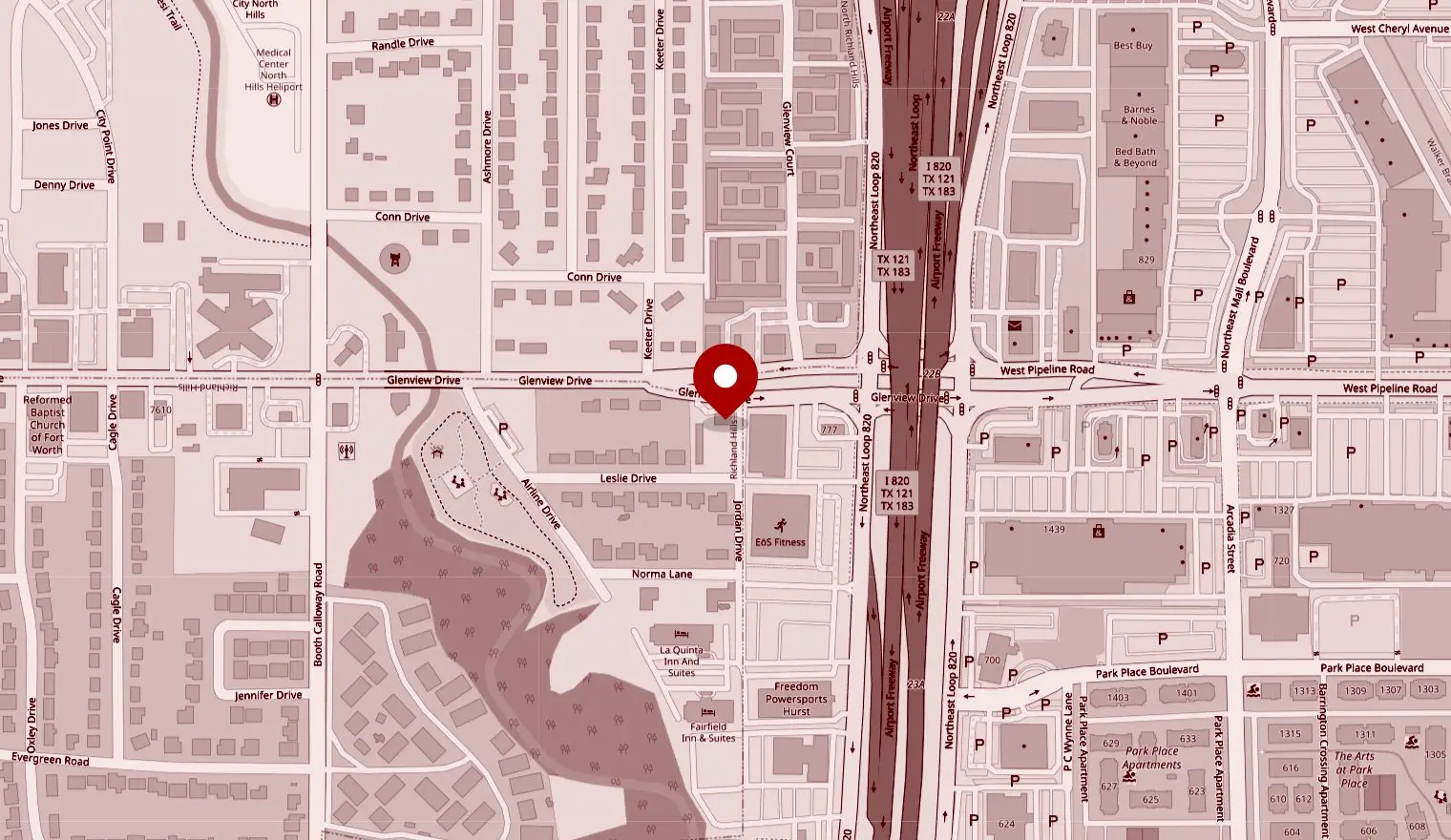
Visit us at 7932 Glenview Drive, Richland Hills, TX 76180, call (817) 284-8478, or start at Express Lube & Car Care to request service. Drivers from Northeast Tarrant County are welcome.
FAQ
Do bad shocks cause tire cupping?
Yes, they’re one of the most common causes. Worn shocks and struts let the wheel bounce, so the tire loses steady road contact and scrapes dips into the tread. Bushings, ball joints, and other worn steering and suspension parts can do the same.
What does cupped tire noise sound like?
It’s usually a rhythmic growl, hum, or grinding that gets louder as your speed goes up. It often comes with vibration in the steering wheel or seat. Because a worn wheel bearing can sound similar, a technician should check both before replacing anything.
Can I rotate or balance cupped tires to fix them?
Rotation and balancing can help stop further damage and may move the noise to a less noticeable spot, but they don’t remove the dips already worn into the tread. If the cause was a worn shock or strut, that part has to be repaired too, or the wear will continue.
How is tire cupping different from feathering?
Cupping is a wavy, scooped pattern repeating around the tire, tied mostly to suspension wear or imbalance. Feathering is when tread blocks are sharp on one edge and rounded on the other, typically from toe alignment. Running your hand across the tread blocks helps tell them apart.
How soon should I have cupped tires looked at?
Soon. Mild wear with no vibration can wait a short while for an appointment, but a strong vibration, pulling, or loud noise calls for prompt attention. The tires are often the first sign of a suspension problem that also affects handling.
Sources
- Tyre scalloping: causes, signs, and prevention | Michelin
- Wear Problems | Michelin USA
- Tire Problems FAQs | Uniroyal Tires USA
- Tire Safety and Maintenance | AAA Exchange
- Tread Tells When to Shop for New Tires | AAA Club Alliance
- AAA: Car Maintenance Guide
- Reading Tire Wear Patterns | Tire Review
- Tire Cupping: What It Means, Causes, and What to Do | Bridgestone
- Uneven Tire Tread Wear | Monroe Shocks & Struts
- Tire Wear and Sidewall Damage | BFGoodrich
- Clean ceramic coated wheels: safe routine for owners