

You notice it on the way home from work. The shift feels a little slower pulling away from a light on Highway 820. Maybe it hesitates backing out of the driveway in the morning. The engine still sounds fine, so it's easy to ignore.
That's how transmission problems usually start. They begin without notice.
A transmission doesn't just need fluid the way an engine needs oil. It needs a transmission service schedule that matches the vehicle, the fluid design, and the way you drive in Richland Hills. Texas heat, short trips, stop-and-go traffic, and occasional towing all change the math. What works on paper in an owner's manual may not be enough for someone planning to keep a vehicle for years.
Treat the transmission like a marathon runner. Fuel matters, but recovery, cooling, and routine care matter just as much. A good schedule isn't busywork. It's the maintenance plan that keeps shifting smooth, helps prevent heat damage, and gives you a better shot at long transmission life.
Why Your Transmission Needs a Schedule
Most drivers think about oil changes first. That makes sense. Engine service is familiar, it gets reminders, and it's talked about constantly. The transmission usually gets ignored until it starts acting up.
That's a mistake, because the transmission handles one of the hardest jobs in the vehicle. It transfers power, manages shifting, and deals with constant heat and friction every time you accelerate, merge, crawl in traffic, or climb through a hot Texas afternoon.
What the fluid is doing all day
Transmission fluid has a bigger job than many people realize. It lubricates internal parts, carries hydraulic pressure, manages heat, and helps with clutch engagement. When the fluid is clean and in good condition, the transmission works the way it should. When the fluid breaks down or gets contaminated, wear speeds up and heat becomes harder to control.
Practical rule: If a transmission is expected to last, its fluid can't be treated like an afterthought.
A schedule matters because fluid condition changes over time. Even if a vehicle doesn't show obvious symptoms yet, repeated heat cycles, traffic, towing, and contamination gradually reduce how well that fluid protects the transmission.
Why waiting costs more than planning
Reactive transmission repair is almost always harder on your wallet and your routine than preventive service. When a transmission starts slipping, shuddering, or delaying shifts, you may already be past the easy fix stage.
A maintenance schedule gives you a roadmap. You're not guessing. You're checking service history, reading the owner's manual correctly, watching how the vehicle is used, and making a decision before damage builds.
For local families, commuters, and work vehicles in Northeast Tarrant County, that matters. A car that sees school pickup lines, errands, and hot-weather traffic is working harder than many drivers think. A sensible service plan keeps that wear from piling up unnoticed.
Decoding Your Official Service Schedule
The first place to check is always the owner's manual. That's where the official transmission service schedule begins. The problem is that many manuals don't make the decision as simple as drivers expect.
Some manufacturers still call for regular service. Others stretch intervals much farther. And some use the phrase filled for life or lifetime fluid, which sounds like the transmission never needs attention.
What lifetime fluid really means
“Lifetime” is one of the most misunderstood terms in auto maintenance. Manufacturer recommendations can range from every 30,000 miles to “never”, and examples vary widely. A 2021 Chevy Silverado may need service every 45,000 miles under severe conditions but never under normal use, while a 2021 Ford F-150 recommends service at 150,000 miles regardless of conditions, according to AMSOIL's review of transmission fluid change intervals.
That doesn't mean every vehicle with lifetime fluid should be left alone forever. It means the manufacturer set a service position based on its design assumptions, testing standards, and ownership expectations. If you plan to keep your vehicle well beyond the warranty period, you should read that language more critically.
A manual gives you the baseline. Your driving conditions decide whether that baseline is enough.
The manual matters, but so does your real life
A truck that spends most of its time cruising on open highways has a different life than an SUV doing short trips, idling in traffic, and hauling gear across town. Both may share the same badge. They do not share the same workload.
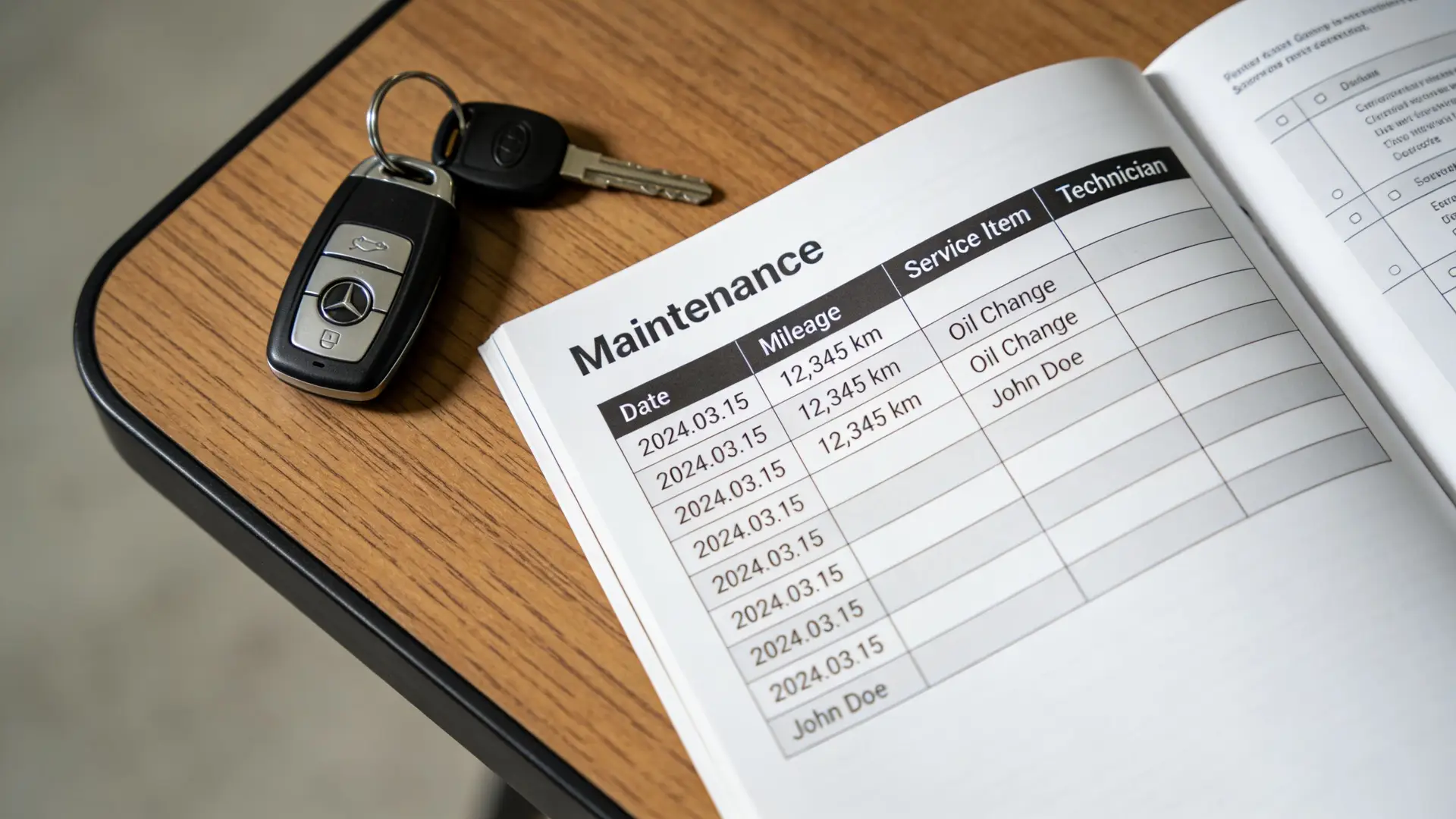
That's why drivers should keep records instead of relying on memory. If you want a simple way to track mileage, dates, and service notes, this download vehicle maintenance template is a practical tool to keep in the glove box or save digitally.
It also helps to view transmission care as part of the bigger maintenance picture. A mileage-based checklist like this car maintenance schedule by mileage guide helps you line transmission service up with other routine work so nothing slips through the cracks.
When shop advice seems different from the manual
Drivers often get confused when an independent shop suggests earlier service than the manual appears to require. That doesn't automatically mean the shop is wrong or the manual is wrong. It usually means they're answering different questions.
The manual answers, “What does the manufacturer require or recommend?”
A good technician is often answering, “What gives this transmission the best chance at a long life under your actual driving conditions?”
Those are related questions, but they aren't identical.
Service Intervals for Your Vehicle Type and Driving Style
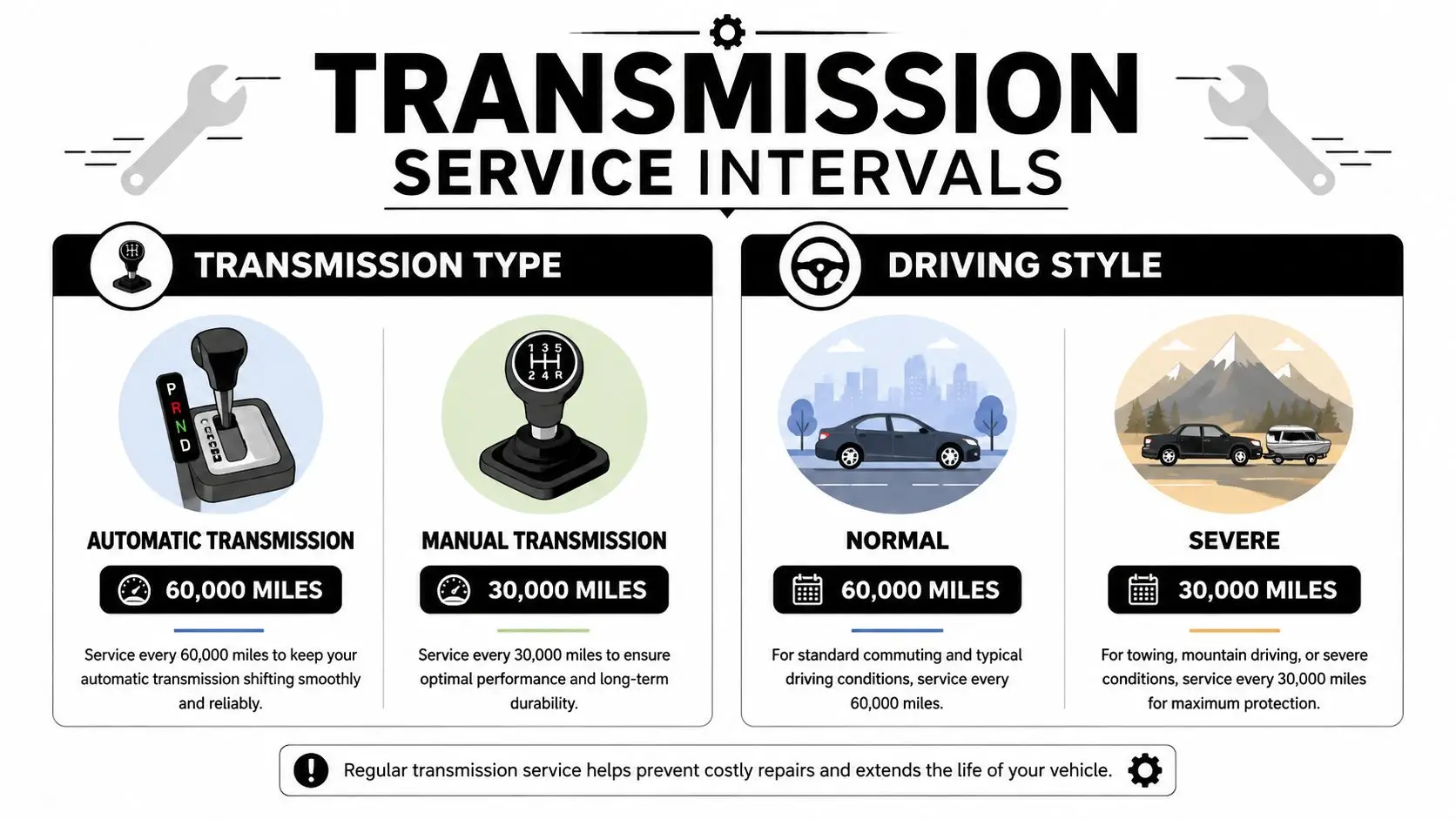
A useful transmission service schedule has to match two things. First, the type of transmission. Second, the kind of driving the vehicle sees every week.
Transmission design matters because automatic, manual, and CVT units don't handle load and heat the same way. Driving style matters because repeated heat is what shortens fluid life fastest.
Normal driving versus severe driving
In the shop, “severe” doesn't mean abuse. It means the vehicle works harder than ideal conditions. Around Richland Hills, that often includes:
- Stop-and-go commuting: Long idle time and repeated shifting in traffic raise transmission temperature.
- Frequent short trips: The fluid may not reach a stable operating pattern before the vehicle is shut off again.
- Texas summer heat: High ambient temperature makes heat control tougher from the start.
- Towing or hauling: Extra load increases heat and stress on clutches and internal components.
- Commercial or fleet use: Delivery routes and repeated starts put more demand on the unit.
One of the clearest examples of how much conditions matter comes from the 2003 Honda CR-V, which calls for fluid changes at 90,000 miles in normal service and 30,000 miles in severe service, as outlined in this transmission maintenance schedule guide. That's a major difference from driving style alone.
Quick reference table
Here's a practical summary based on the verified ranges and examples.
| Transmission Type | Normal Driving Conditions | Severe Driving Conditions |
|---|---|---|
| Automatic transmission | 30,000 to 60,000 miles | 30,000 miles or less |
| Manual transmission | 30,000 to 60,000 miles | More frequent service may be needed |
| CVT | 30,000 to 50,000 miles | More frequent service may be needed |
| 2021 Ford F-150 example | 150,000 miles | 150,000 miles |
| 2021 Chevy Silverado example | Never under normal conditions | 45,000 miles |
| 2003 Honda CR-V example | 90,000 miles | 30,000 miles |
How to place your vehicle in the right category
If you're unsure whether your use is normal or severe, don't overcomplicate it. Ask how the vehicle spends most of its week.
A vehicle that mostly runs steady highway miles is usually closer to normal service. A vehicle that fights traffic, makes repeated short errands, sits in pickup lines, or pulls a trailer belongs in the severe category more often than owners realize.
If your vehicle works hard in heat, service decisions should be based on heat, not hope.
For drivers trying to decide between a routine fluid change and a more involved exchange, this guide on how often to schedule a transmission flush gives a helpful next step.
Vehicle type matters too
An older manual transmission may have a straightforward service rhythm. A modern automatic with advanced fluid chemistry may run much longer between services. A CVT often needs closer attention because of how it transfers power and the demands placed on its specialized fluid.
That's why there isn't one universal mileage that fits every car, truck, and SUV. A real transmission service schedule comes from combining the manufacturer's guidance with the transmission type and your actual use pattern.
Warning Signs Your Transmission Needs Service Now
A schedule helps prevent trouble, but symptoms should always override the calendar. If your transmission starts warning you, don't wait for the next planned interval.
Transmission fluid does four key jobs: lubrication, hydraulic pressure, heat management, and clutch engagement. When it degrades, typically in the 60,000 to 100,000 mile range, it can't control heat effectively, which increases friction and raises the risk of failure. Fluid that looks dark brown or smells burnt calls for immediate service, based on this overview of automatic transmission fluid and service intervals.

The checklist to pay attention to
Delayed engagement
You shift into Drive or Reverse and the vehicle hesitates before moving. That can point to fluid issues, hydraulic pressure problems, or internal wear.Slipping between gears
The engine revs, but the vehicle doesn't accelerate the way it should. Drivers often describe this as the transmission “not catching.”Harsh or jerky shifting
A hard bump during upshifts or downshifts can happen when fluid condition has deteriorated or when the system is struggling to manage pressure correctly.Burning smell
Burnt odor usually means excess heat. Heat is one of the fastest ways to damage a transmission.Dark or contaminated fluid
Healthy transmission fluid is typically red or pink. Brown, burnt-smelling, or metallic-looking fluid is not something to monitor casually.Unusual noises
Whining, humming, or clunking during shifts can signal that lubrication and internal operation aren't where they should be.
Strange shifting isn't just an annoyance. It's often the transmission asking for help before a bigger failure develops.
Why these symptoms get worse fast
Transmission problems rarely fix themselves. Once fluid stops managing heat properly, friction rises and wear increases. In local driving, that can snowball quickly because traffic and heat keep adding stress every day.
This short video gives a helpful visual overview of common symptoms and what they can mean.
When to stop driving and get it checked
If the transmission is slipping badly, refusing to engage, or giving off a strong burnt smell, don't keep pushing it through your normal week. A problem that starts as overdue fluid service can become internal damage if the vehicle keeps operating under load.
A quick inspection can tell you whether the issue looks maintenance-related or whether deeper diagnosis is needed. Either way, acting early gives you better options.
What a Professional Transmission Service Includes
Many drivers hear “transmission service” and picture one quick fluid top-off. A proper service is more involved than that, and the details matter.
The right approach depends on the transmission's condition, service history, and manufacturer guidance. Two common service types are a drain and fill and a flush, and they are not the same.
Drain and fill versus flush
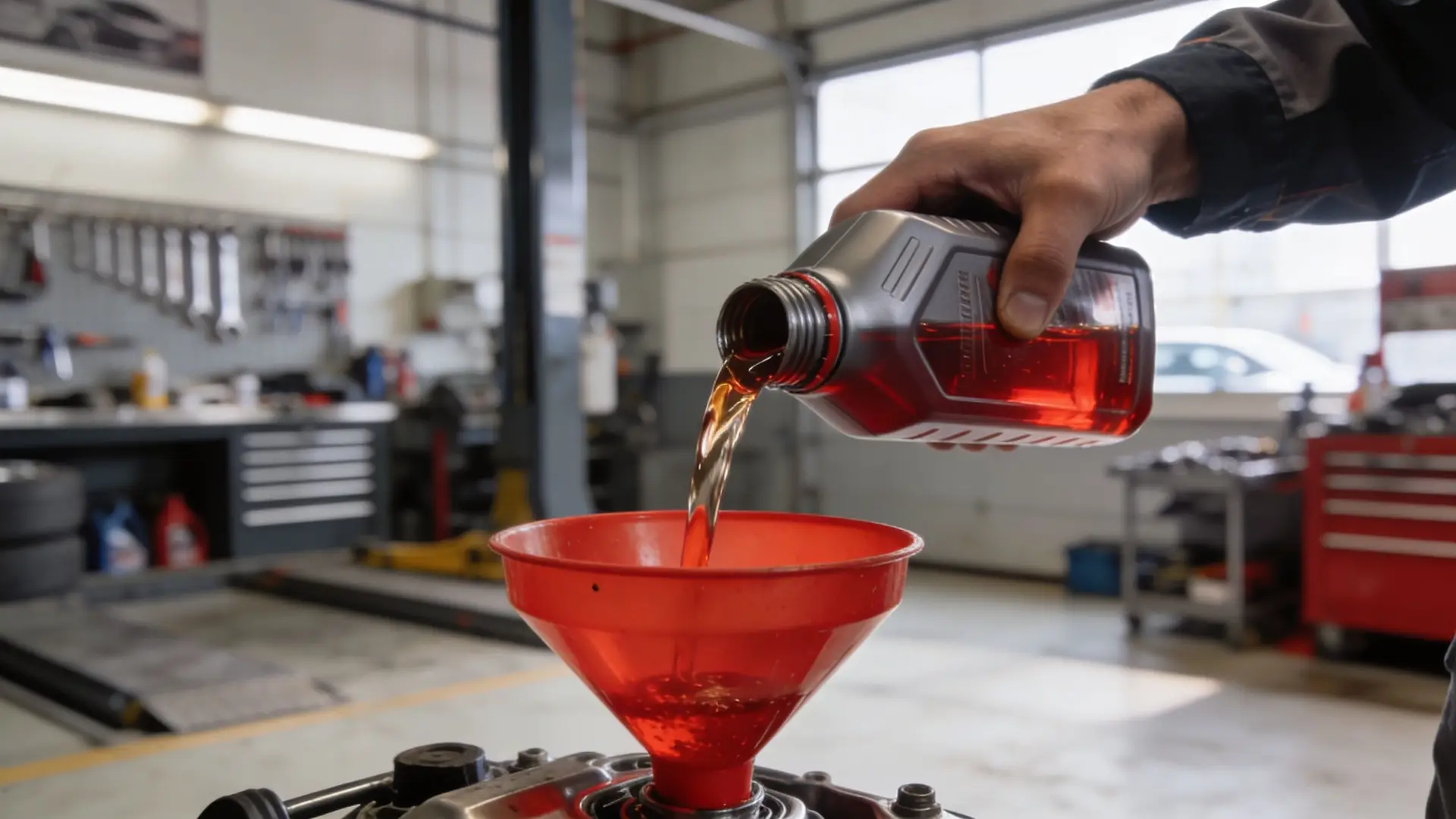
A drain and fill is the more conservative option. It removes part of the old fluid and replaces it with fresh fluid. According to the verified data, a drain-and-fill typically replaces 30 to 40% of the fluid, while a complete flush exchanges nearly 100%. The trade-off is that a flush can also risk dislodging accumulated debris into internal passages in some situations.
That's why a good technician doesn't recommend the same procedure for every vehicle. Service history matters. If a transmission has been maintained consistently, one approach may make sense. If it has very old fluid and unknown history, caution matters.
What a complete professional service should cover
A proper transmission service is more than pouring in fluid. It usually includes several inspection and replacement steps:
- Drain old fluid: Remove worn fluid so the system isn't relying on contaminated oil.
- Inspect the pan: Debris in the pan can reveal early wear issues.
- Replace the filter when applicable: Clean fluid won't stay clean for long if the filter is restricted.
- Install a new gasket when required: Sealing surfaces matter. Small leaks create bigger problems later.
- Check hoses and related components: Leaks, cracks, and seepage need attention before they turn into fluid loss.
- Refill with the exact specified fluid: Modern transmissions are picky. Wrong fluid can create shift issues and long-term damage.
Shop-floor advice: Extended intervals only work when the transmission gets the exact fluid it was designed to use, and when the service is done completely.
That point matters because older rules don't always fit modern vehicles. Historically, transmission service was common every 30,000 miles, but newer designs can go much longer. Some modern vehicles, including the Ford F-150, can stretch to 150,000 miles, but that depends on using the correct fluid and performing a complete service that includes a filter change, as explained in this review of transmission service timing and procedure.
DIY versus shop service
DIY transmission service looks simple online. In practice, it can get messy fast. Fluid level procedures can be temperature-sensitive, access can be awkward, and using the wrong fluid or overfilling the unit can create real problems.
Budget matters too. The verified data places preventive transmission service at $250 to $350 per service. That gives drivers a planning range, and it helps explain why preventive work is usually easier to live with than major transmission repair.
If you run a shop, fleet, or service business, documenting maintenance clearly also matters on the customer side. Tools like an auto repair shop lead capture platform show how some businesses organize service communication and follow-up so maintenance decisions don't get lost between visits.
Keep Your Transmission Healthy in Richland Hills
The best transmission service schedule is the one that fits your vehicle and the way you drive every day. Not your neighbor's truck. Not a generic sticker. Not a guess based on what worked on an older car.
In Richland Hills, local conditions matter. Heat, traffic, school runs, short trips, and towing can all push a vehicle into a more demanding maintenance pattern. That's why the smartest move is to check the manual, track the service history, and have the fluid inspected before symptoms get expensive.
A simple local routine that works
Keep it practical:
- Check your records: If you don't know when the transmission was last serviced, start there.
- Be honest about driving habits: Stop-and-go traffic and heat count.
- Respond to symptoms quickly: Delay, slipping, and burnt-smelling fluid should move to the top of your list.
- Use qualified help: Modern transmissions don't reward guesswork.
If you want a local starting point, this Richland Hills transmission service resource can help you think through what to ask and what to expect.
A good technician should give you vehicle-specific guidance, explain whether a drain and fill or fuller service makes sense, and tell you plainly if your transmission is due, overdue, or showing signs of trouble. That kind of clarity is what keeps maintenance from turning into avoidable repair.
If your car has started shifting differently, if your service history is unclear, or if you just want a straight answer about the right transmission service schedule, Express Lube & Car Care is a practical local option. Their ASE-certified technicians provide walk-in convenience, transparent pricing, and clear recommendations based on your vehicle and driving conditions in Richland Hills. Stop by for an inspection, ask about current monthly specials, and get a maintenance plan that helps keep your transmission smooth, safe, and dependable.