

So, how often should you really get a transmission flush? For most modern cars, the sweet spot is somewhere between 30,000 to 60,000 miles. Think of it as your best defense against expensive repairs down the road.
Pushing it much further, especially past the 100,000-mile mark without a single service, is a real gamble with one of your car’s most complex systems.
Finding Your Service Sweet Spot
Your transmission fluid is the unsung hero of your gearbox. It’s not just a lubricant; it’s a hydraulic fluid that cools parts and makes smooth gear shifts possible. But over time, heat and tiny metal shavings break it down, and it just can't do its job effectively anymore. That’s why a regular flush is so important.
Sticking to that 30,000 to 60,000-mile interval can dramatically cut your risk of a major transmission failure. It's not just us saying it—major manufacturers like Honda and Nissan recommend similar schedules. For example, the manual for a 2023 Nissan Altima points to a fluid change every 60,000 miles.
Here in Richland Hills, Texas, our stop-and-go traffic and brutal summer heat definitely count as "severe" driving conditions, making proactive service even more critical. You can get a deeper dive into how driving habits affect fluid life on Tire Outlet's blog.
Normal vs. Severe Driving Conditions
Your daily driving habits are the biggest factor in how often you need a flush. The "normal" interval listed in your owner's manual often doesn't line up with the reality of city commuting or Texas weather.
A transmission flush is one of the smartest bits of preventative maintenance you can do for your car. You’re not just swapping out old fluid—you’re actively removing harmful gunk and contaminants that cause internal wear. It’s about keeping your transmission shifting smoothly for years to come.
Figuring out which category you fall into is the key to setting the right service schedule. Here’s a quick guide to help you out.
Recommended Transmission Flush Intervals
This table is a quick reference to help you decide on the right service interval based on how and where you drive.
| Driving Condition | Recommended Flush Interval | Common Examples |
|---|---|---|
| Normal | Every 60,000 – 90,000 miles | Mostly highway driving, mild climate, minimal towing. |
| Severe | Every 30,000 – 60,000 miles | Stop-and-go traffic, extreme heat, frequent towing. |
Most of us living and driving around Richland Hills fall squarely into the severe category. That means aiming for the lower end of the mileage range is your best bet for keeping your transmission healthy.
Why Manufacturer Recommendations Can Be So Confusing
Ever cracked open your owner's manual and felt like you were getting mixed signals? One manual might insist on a transmission flush at a specific mileage, while another claims its fluid is "lifetime" and never needs touching. So, what gives?
The truth is, this confusion usually comes down to a few key things: what a manufacturer really means by "lifetime," and the huge differences in how cars are engineered for different parts of the world.
Let's start with that tricky phrase: "lifetime fluid." This is probably one of the most misleading terms in the auto repair world. When a carmaker says "lifetime," they're often talking about the vehicle's warranty period—not the entire time you'll own the car. Once that warranty is up, a catastrophic transmission failure is your problem, not theirs. Their recommendation was designed to get the car through the warranty period, not necessarily to 200,000 miles and beyond.
Global Designs vs. Your Local Commute
The plot thickens when you realize the companies that build the transmissions often have completely different service advice than the car manufacturers. A transmission built in Germany is designed with the cool, high-speed driving of the Autobahn in mind. One from Japan is engineered to handle the hot, humid, stop-and-go chaos of a city like Tokyo.
This leads to some wildly different recommendations. For example, the German transmission giant ZF, whose parts are in tons of European and American cars, suggests a fluid change around 62,000 miles. But Aisin, a massive Japanese supplier for brands like Toyota and Volvo, recommends service as often as every 12,400 miles for vehicles under severe use. If you want to dive deeper into this, you can read more about how these different global service intervals impact U.S. drivers at Hobenool EU. It really shows why a one-size-fits-all approach just doesn't work.
Why Driving in Texas Changes the Game
This is where we connect the dots back to your daily drive right here in Richland Hills. Slogging through rush hour on I-820 or navigating city traffic puts a massive amount of heat and stress on your transmission fluid. The engineering standards for a cool European climate just can't account for the brutal reality of a Texas summer.
It's the same idea we see with engine oil, where your local environment plays a huge role in how often you should get it changed. We actually talk about this in more detail in our guide on oil change intervals for synthetic blends.
The whole "lifetime" fluid idea is based on perfect, laboratory-like conditions. But real-world driving—especially around here—is anything but perfect. The only sure way to protect your transmission long-term is with a proactive maintenance plan based on how you actually drive.
That’s why just going by the owner's manual can be a gamble. Think of it as a starting point, not the final word. A smart service schedule, based on local expertise and your real-world driving habits, is always the safest bet to avoid a transmission repair bill nobody wants to see.
How Texas Driving Conditions Affect Your Transmission

When you hear "severe driving conditions," you probably picture towing a heavy boat up a steep mountain pass. While that definitely counts, the truth is, most of us here in Richland Hills are pushing our cars into that "severe" category every single day without even realizing it.
Think of your transmission fluid like a tiny, dedicated firefighter, working nonstop to keep hundreds of intricate metal parts from overheating. Every time you lurch forward in rush hour traffic or accelerate from a stoplight, you're generating a massive amount of friction and heat. That constant stress is the #1 enemy of your transmission fluid, causing it to break down and lose its ability to protect those vital components.
What Makes Texas Driving So Severe
It’s not just one thing—it’s the perfect storm of our local climate and daily driving habits that puts your transmission through the wringer. This combination dramatically shortens your fluid's lifespan.
These everyday situations are tougher on your transmission than you think:
- Stop-and-Go Traffic: Constantly shifting gears in congested areas generates way more heat than cruising at a steady speed on the highway.
- Brutal Summer Heat: When the thermometer climbs past 95°F, your transmission has to work overtime just to keep itself cool, which degrades the fluid much faster.
- Frequent Short Trips: Drives under five miles don’t give the transmission fluid enough time to reach its ideal operating temperature, which means it can't burn off moisture and contaminants effectively.
That 60,000-mile service interval you see in your owner's manual? It's based on ideal, almost laboratory-like conditions. For the average driver in Richland Hills, that recommendation just isn't realistic for preventing long-term damage.
Why a Proactive Schedule Is Your Best Defense
Since these tough conditions are just a normal part of driving here, a more frequent service schedule is a smart investment. Pushing your transmission to the manufacturer's maximum interval is a gamble that could end with a repair bill in the thousands. In fact, severe driving can cut the recommended 60,000-100,000 mile interval nearly in half.
Experts agree that factors like stop-and-go traffic and extreme heat—the hallmarks of a Texas summer—call for earlier service. This makes a proactive 30,000 to 40,000-mile flush the safest bet for local drivers. Even major manufacturers acknowledge that so-called "lifetime" fluids don't last forever, a topic you can explore on Toyota's official site.
By servicing your transmission based on how you actually drive, you ensure it stays protected, shifts smoothly, and serves you well for the long haul.
Warning Signs Your Transmission Needs Help
Following the mileage guidelines for a transmission flush is smart, but sometimes your car will tell you it needs attention right now. Think of these symptoms as your vehicle's way of raising a red flag before a minor problem turns into a major, wallet-draining repair.
Ignoring these signs is like hitting snooze on a smoke alarm—the problem is just going to get bigger and louder. The trick is to pay attention to what your car is trying to tell you through strange sounds, feelings, and even smells.
Unusual Noises and Sensations
One of the first things you'll notice is a change in how your car sounds and feels on the road. A healthy transmission is a quiet one, so any new noise is worth investigating.
Keep an ear out for a whining or humming sound that climbs in pitch as you speed up. You might also hear a sudden clunk or grinding noise when the car shifts gears. These sounds often mean the old, dirty fluid isn't lubricating the complex internal parts like it should.
Pay just as much attention to how the car feels. Does it seem to hesitate or lag when you pull away from a stoplight? Do you feel a noticeable jerk or shudder as it moves through the gears? These are classic symptoms of fluid that has broken down or is running low.
A transmission in good shape should shift so smoothly you barely even notice it. The moment you start to feel the gear changes in a rough or clunky way, it's a clear signal the fluid is failing to do its job.
Visual and Olfactory Clues
Sometimes, the most straightforward warnings are the ones you can see or smell for yourself. The transmission fluid is the lifeblood of the system, and its condition tells a story.
Fresh automatic transmission fluid is a bright, see-through red. Over time, as it picks up gunk and debris from inside the transmission, it darkens to a murky brown or even black. If you check the dipstick and the fluid looks more like used motor oil, it's way past due for a flush.
You should also be on the lookout for:
- A Distinct Burning Smell: Transmission fluid has a somewhat sweet or tart smell when it's healthy. If you catch a whiff of something acrid and burnt, that's a serious warning sign. It means the fluid is overheating, which can cook the transmission from the inside out and cause catastrophic damage.
- Puddles Under Your Car: Seeing bright red or dark brown spots on your garage floor or driveway is a dead giveaway of a transmission fluid leak. The transmission is a sealed system, so any loss of fluid is a big deal and will quickly lead to bigger problems.
If you spot any of these warning signs, don't just wait for your next scheduled service interval to roll around. It's time to let a professional take a look. Catching these problems early is the absolute best way to avoid a complete transmission failure, saving you thousands of dollars and a massive headache. Your car is talking to you—make sure you're listening.
Flush vs. Drain and Fill: What's the Real Difference?
When it’s time for transmission service, you'll hear mechanics throw around two terms: "drain and fill" and "flush." They sound almost the same, but the difference in how they work—and what they do for your car—is huge. Knowing which one to choose is key to your transmission's health.
Think of it like changing the water in a murky fish tank.
A drain and fill is like scooping out a few buckets of dirty water and then just topping it off. Sure, it's a little clearer, but you've left most of the gunk and grime behind to immediately contaminate the fresh water. That’s exactly what happens inside your transmission—a simple drain only gets rid of 30% to 50% of the old, broken-down fluid. The rest is still trapped in the torque converter and cooler lines, instantly degrading the new fluid you just paid for.
Why a Full Flush is the Gold Standard
A full transmission flush, on the other hand, is like giving that fish tank a complete, professional cleaning. We use specialized equipment that gently pushes out virtually all of the old, contaminated fluid while simultaneously replacing it with new, clean fluid.
It's a much more thorough process, replacing over 95% of the old stuff. This gets rid of the accumulated sludge and tiny metal shavings that cause wear and tear, ensuring the entire system is protected. The flowchart below points out some of the classic warning signs that your fluid has gone bad.
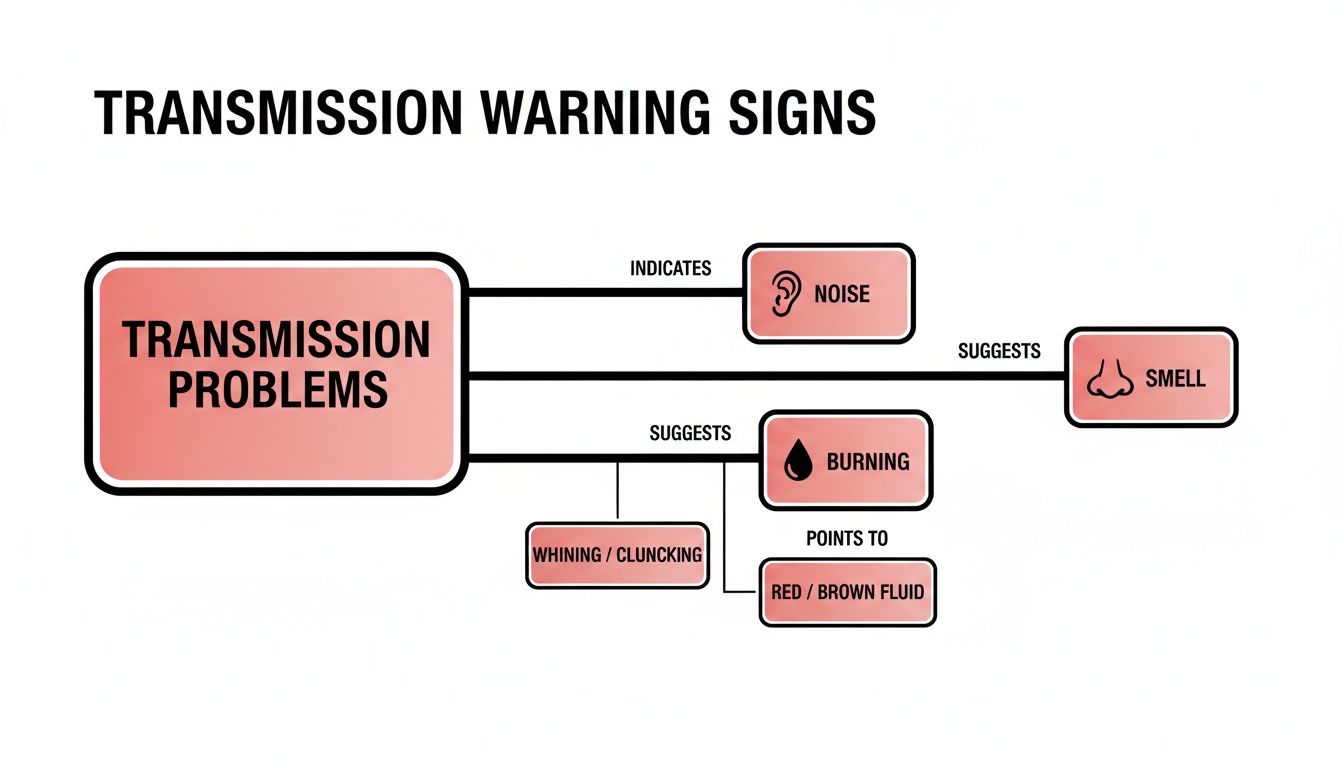
If you're noticing strange noises, a burnt smell, or leaks, your transmission is telling you it needs help. Don't ignore it.
A flush isn't just about swapping fluid; it's about cleaning out the harmful contaminants that shorten the life of your transmission. It restores performance, protects against heat, and keeps everything shifting smoothly.
Flush vs. Drain and Fill At A Glance
To make it even clearer, here’s a quick side-by-side comparison. This should help you see why one method is a temporary fix and the other is a true preventative maintenance service.
| Feature | Transmission Flush | Transmission Drain and Fill |
|---|---|---|
| Fluid Replaced | 95% or more of old fluid and contaminants | Only 30-50% of the old fluid |
| Method | Uses specialized machine to circulate and exchange fluid | Relies on gravity to drain fluid from the pan only |
| Effectiveness | Thoroughly cleans the entire system, including torque converter | Leaves significant old, dirty fluid behind |
| Protection | Maximizes new fluid’s lifespan and protective qualities | New fluid is immediately contaminated by old fluid |
| Best For | Proactive maintenance and restoring performance | Minimal, short-term solution (not recommended) |
Ultimately, a flush is the only way to ensure your transmission gets the complete protection it needs.
That's why we champion the full flush here at Express Lube. We offer a complete range of expert fluid exchange services designed to keep your vehicle running right for the long haul.
Protecting Your Vehicle with the Right Service
Figuring out when to get a transmission flush is half the battle. The other half is choosing where to get it done, and that choice makes all the difference. A professional service isn't just about draining old fluid and pouring in new stuff—it’s about expertise, honesty, and getting the job done right the first time.
When you bring your car into a shop you can trust, the whole experience should be transparent. It all starts with a thorough look-see from an ASE-certified technician who can actually tell you what’s going on with your transmission fluid. They should be able to explain it to you in plain English, no confusing jargon.
What to Expect from Professional Service
A quality shop uses specialized equipment designed to perform a complete fluid exchange, which gets rid of over 95% of the old, gunked-up fluid. This is a huge deal for the long-term health of your transmission. They’ll also use the exact type of high-quality fluid your car’s manufacturer recommends, which is critical for smooth performance and proper protection.
Investing in proper maintenance from a skilled team is the smartest way to keep your car dependable. It stops small fluid issues from snowballing into catastrophic transmission failures, saving you a fortune in potential repair bills down the road.
You should also get clear, upfront pricing. A good mechanic will give you a detailed estimate before a single wrench is turned, so you aren't hit with any nasty surprises on the final bill. That kind of transparency is how you know they respect your business.
At the end of the day, you want to drive away feeling confident your vehicle got the best care possible. To see how we tackle this critical service, check out our approach to professional transmission work at Express Lube & Car Care. A proper flush from a team you trust is key to keeping your car safe and reliable for years to come.
Answering Your Top Questions About Transmission Flushes
Even with all the facts, it's totally normal to have a few more questions before committing to a service. We get it. To help you feel confident, here are the answers to some of the most common things we hear from drivers just like you.
How Much Does a Transmission Flush Cost?
Let's talk numbers. The cost of a full transmission flush usually lands somewhere between $150 and $300, depending on your car and the specific fluid it needs.
While that’s more than an oil change, compare it to the cost of a transmission replacement—we're talking $2,000 to $5,000 or even more. Suddenly, that flush looks like a pretty smart investment. Think of it as an affordable insurance policy against a repair bill that could sideline your car for good.
Can a Flush Fix a Transmission That's Already Acting Up?
This is a really important one. A transmission flush is preventative maintenance, plain and simple. It's not a magic cure for a transmission that's already failing. If you're hearing grinding noises or the gears are slipping badly, new fluid isn't going to rebuild damaged parts inside.
A flush is designed to prevent problems by cleaning out grime and restoring your fluid. If your car is already showing serious symptoms, you need a diagnostic check first to find out what's really going on.
Now, if the problem is minor and just caused by old, dirty fluid, a flush might make things feel a bit smoother. But it should never be your go-to solution for a real mechanical problem.
Is My Car Too Old or High-Mileage for a Flush?
This is a common worry, especially for cars over 100,000 miles that might have a sketchy service history. The fear is that a powerful flush could knock loose some old sludge and actually cause a blockage.
Here's the deal: for a car that's been properly maintained, a flush is perfectly safe at any mileage. But if you have no idea if the transmission has ever been serviced, a technician might suggest a simple drain and fill instead. It's a less aggressive way to get some fresh fluid in there. This is where a pro's opinion really matters—we can look at the fluid's condition and tell you the safest, most effective option for your car.
Ready to give your transmission the protection it deserves? The ASE-certified team at Express Lube & Car Care is here with honest advice and professional service to keep you on the road. Stop by our shop in Richland Hills or learn more at https://www.expressluberichlandhills.com.