

You’ve probably had this moment in your driveway or at a gas station. One tire looks a little low, but not flat enough to feel urgent, so you tell yourself you’ll check it later.
That small delay is how a lot of tire problems start. Low pressure doesn’t just make a tire look soft. It changes how the tire meets the road, how it wears, how the vehicle responds, and how much money you burn through every week you keep driving on it.
In Richland Hills, that matters even more. Heat, long commutes, rough patches of pavement, curbs, and potholes all add stress to a tire that’s already struggling. If you want to understand under inflated tires wear, the short version is simple: low pressure forces the tire to ride on the wrong parts of the tread, creates extra heat, and wears out a good set of tires long before it should.
The Common Mistake Costing Drivers Billions
A lot of drivers treat tire pressure like windshield washer fluid. If the car still moves and the tire isn’t visibly flat, it can wait.
That’s a mistake.
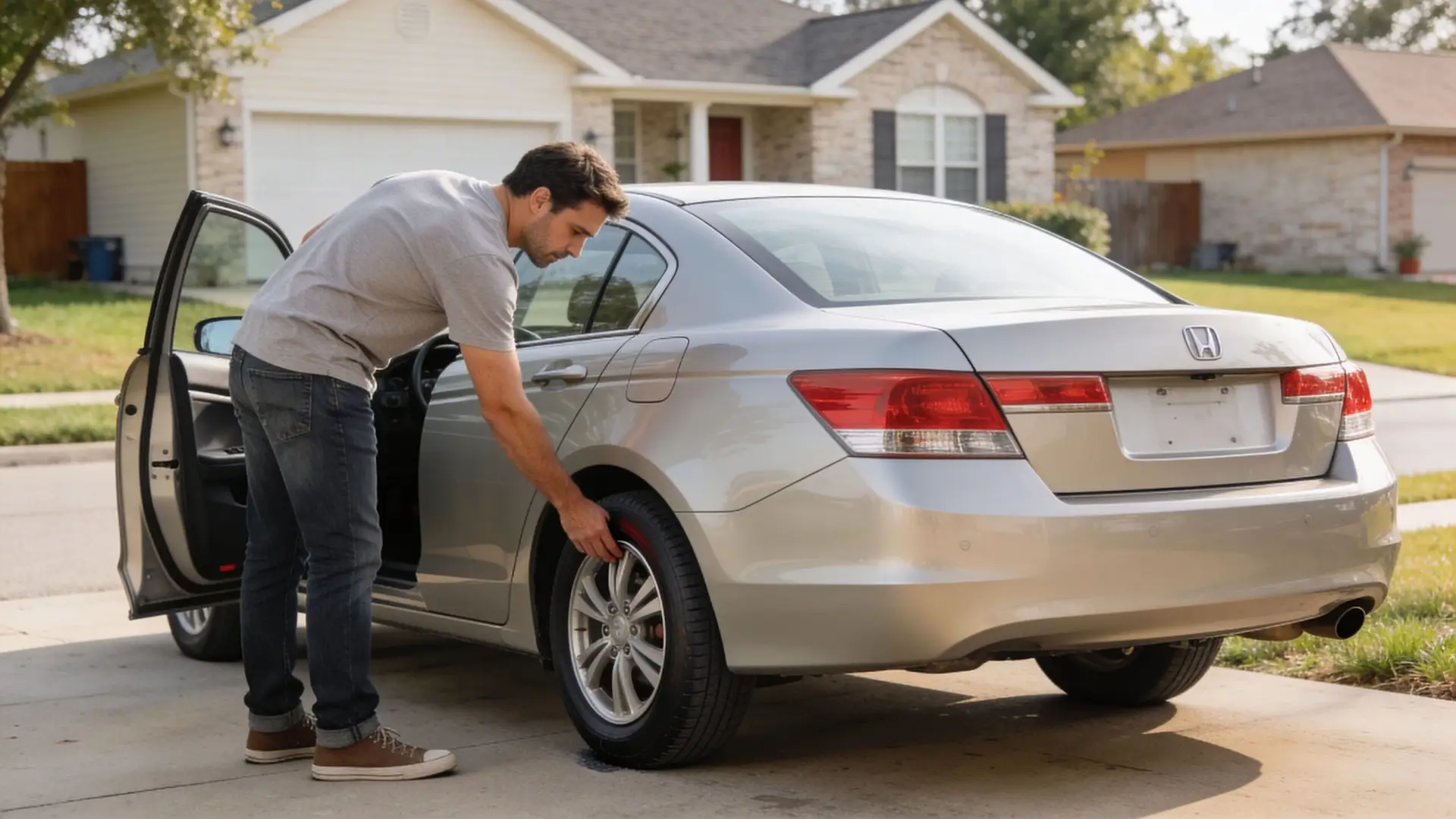
A report covered by Rubber World on underinflated tires costing U.S. drivers $18.6 billion annually found that 42% of cars inspected had underinflated tires, with an average pressure 13 PSI below manufacturer recommendations. The same report says that nearly half of vehicles on American roads are underinflated, costing drivers $18.6 billion in excess fuel consumption and wasting the equivalent of 4.5 billion extra gallons of gasoline.
That’s the big-picture version. The local version is easier to recognize.
Why drivers miss it
Underinflation usually creeps in. A tire loses pressure gradually, so the vehicle still feels normal enough for errands, school drop-offs, and work commutes. You might notice:
- A tire that looks slightly squatted
- Steering that feels softer than usual
- A vehicle that doesn’t feel as crisp in turns
- More fuel stops without an obvious reason
Drivers often wait for the warning light. That’s not a great plan.
Practical rule: If a tire looks low, check it with a gauge. Eyes are bad at judging modern tire pressure, especially on today’s shorter sidewalls.
What actually works
The fix isn’t complicated, but it does require a habit.
A good routine looks like this:
- Check pressure when tires are cold. Morning is best.
- Use the door-jamb sticker. That’s the pressure target for your vehicle.
- Check all four tires. One low tire usually means the others aren’t far behind.
- Don’t forget the spare if your vehicle has one.
What doesn’t work is kicking the sidewall, eyeballing tread, or assuming the tire-pressure monitoring light will catch every small problem early. Low pressure can start wear patterns long before most drivers notice them.
What Underinflated Tire Wear Looks Like
Under inflated tires wear in a very specific way. If you know what to look for, the tread tells the story.
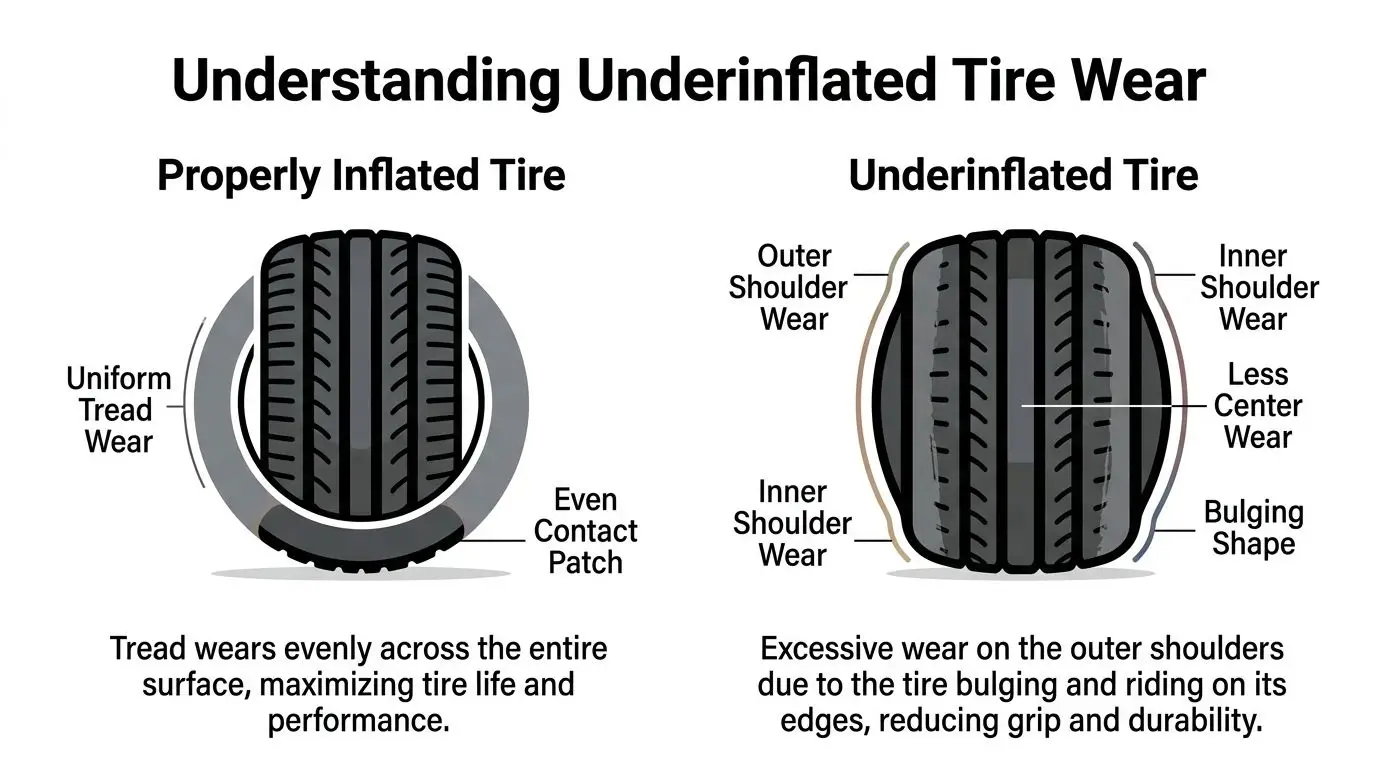
Think of a tire’s tread like a footprint. A properly inflated tire puts its weight across the tread evenly. A low tire sags, so the shoulders, meaning the inner and outer edges, do more of the work.
That’s why the classic low-pressure pattern is wear on both edges with less wear in the center.
The shoulder-wear pattern
A tire needs enough air pressure to hold its shape. When pressure drops, the center of the tread doesn’t carry the load the way it should. The shoulders dig in harder.
That creates a tread pattern that often looks like this:
| Wear pattern | What it usually suggests |
|---|---|
| Both outer edges wearing faster | Underinflation |
| Center wearing faster | Overinflation |
| One side wearing faster | Alignment or suspension issue |
That side-to-side shoulder wear is the giveaway. It’s one of the most common signs technicians see when drivers have been running low for a while.
Why low pressure eats tires faster
Low pressure doesn’t just change the contact patch. It also makes the sidewall flex more with every rotation.
According to this explanation of the dangers of driving on underinflated tires, underinflated tires wear faster because of increased sidewall flexing and an uneven contact patch. The same source notes that tires underinflated by 25% experience 32% faster aging, and that friction and heat build up on the tread edges, forcing the shoulders to carry excessive stress.
That extra flex is what turns a simple pressure problem into a wear problem. Heat builds inside the casing. Rubber ages faster. The edges scrub away while the center may still look decent enough to fool a quick glance.
A tire can have tread left in the middle and still be wearing itself out on the shoulders.
What drivers often confuse with underinflation
Not every uneven tire is a pressure issue. A few patterns get mixed up all the time:
- Feathered tread blocks often point toward alignment trouble.
- One-sided wear can come from camber or suspension problems.
- Cupping or scalloping often shows up with balance or worn suspension components.
- Center wear usually means too much air, not too little.
If you’re unsure, check tread depth across the inner edge, center, and outer edge. If you need help reading what the tire is telling you, this guide on a tire tread depth check is a useful place to start.
The simple driveway check
Turn the steering wheel so you can see the front tread better. Then run your hand lightly across the tire face and look at the edges.
You’re checking for:
- Outer shoulders that look smoother than the middle
- Inner shoulders that feel more worn than expected
- A rounded, sagging appearance when the tire is mounted
- Cracks, bulges, or exposed cords, which mean stop driving and replace the tire
This is one of those cases where a few minutes in the driveway can save a set of tires.
The Hidden Dangers of Low Tire Pressure
A worn tire is expensive. A failed tire at speed is dangerous.
That’s why low pressure isn’t just a maintenance issue. It’s a safety issue.
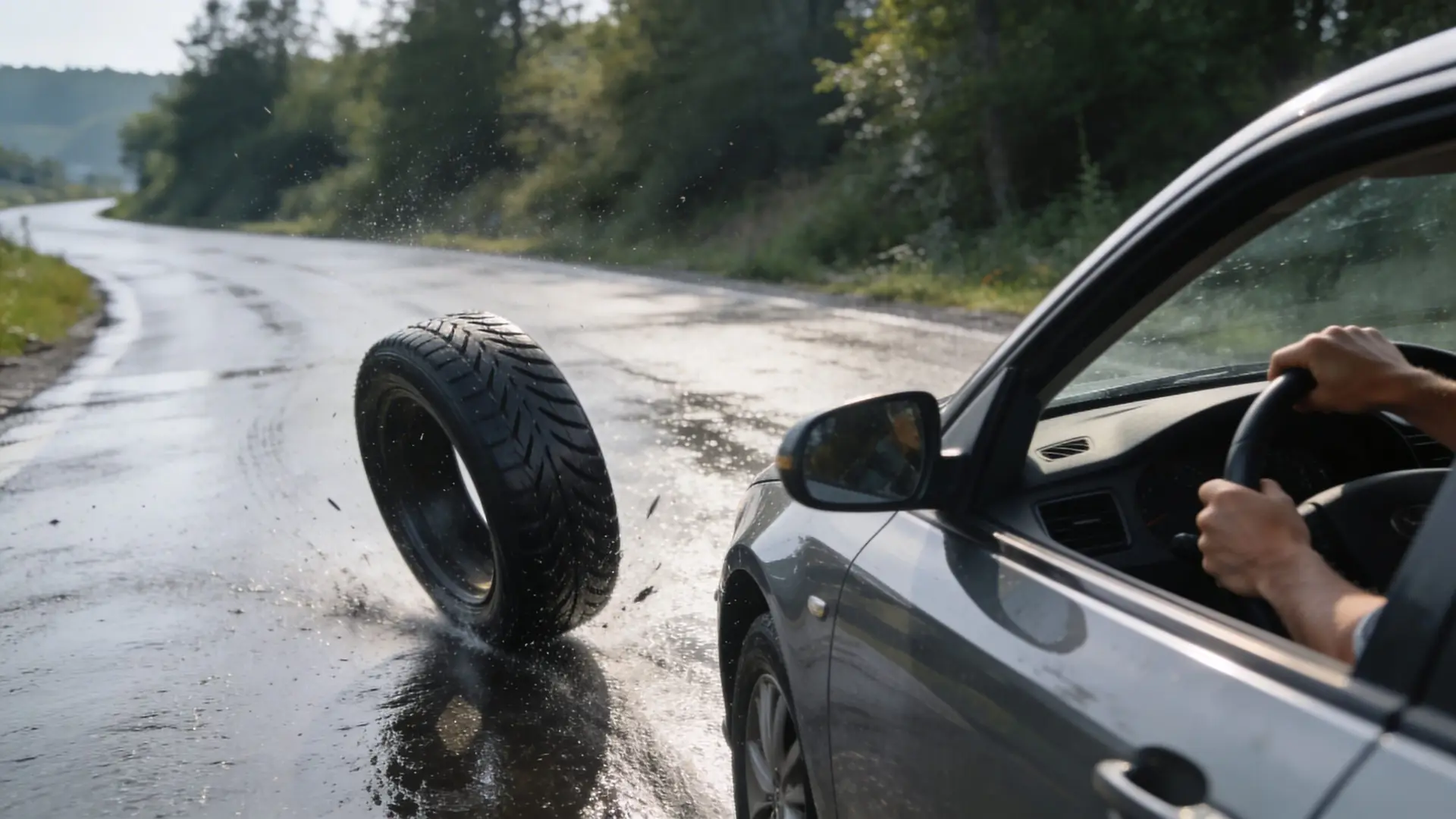
A National Highway Traffic Safety Administration study, summarized by Consumer Reports in its coverage of underinflated and worn tires, found that vehicles with tires underinflated by more than 25% are three times more likely to be involved in a crash related to tire problems. The same source explains that underinflation causes tires to overheat, which can lead to tire failure while also hurting handling and tread life.
Heat is the real enemy
In North Texas, summer pavement can be brutal on tires. A properly inflated tire can handle normal heat cycles much better than a soft one.
A low tire flexes too much. That repeated flex creates internal heat. Then the hot road adds more. By the time the tire is running at highway speed, you’ve got a casing doing more work than it was designed to do.
That’s when drivers start dealing with:
- Slower steering response
- A mushy or wandering feel
- Longer stopping distances
- Higher risk of tread separation or blowout
Wet roads make the problem worse because the tire can’t keep its shape and contact patch as well as it should.
Warning lights don’t make you safe
A lot of people trust the TPMS light too much. It helps, but it doesn’t replace a gauge and a real inspection.
By the time a warning light gets your attention, the tire may already be hot, wearing unevenly, and handling poorly. You may not notice the change because it happened gradually.
Low pressure usually feels normal right up until it doesn’t.
If you manage work trucks, trailers, or service vehicles, it’s worth reviewing DOT Tire Regulations so you know what inspectors and safety managers pay attention to on commercial equipment. Even for everyday drivers, that framework is a good reminder that tire condition is never just cosmetic.
What failure looks like on the road
The dangerous part about underinflation is how ordinary it feels at first. Then one hard brake, one long stretch of highway, or one pothole changes everything.
Watch this for a quick visual on what low pressure and tire failure can turn into on the road.
When a tire fails, the vehicle may pull sharply, feel unstable, or force the driver into a bad correction. That’s why tire pressure belongs in the same category as brakes and steering. It directly affects control.
When not to keep driving
Pull over and inspect the tire if you notice any of these signs:
- A sudden steering pull
- A thumping sound
- A tire that looks visibly collapsed
- Burnt-rubber smell after highway driving
- A new vibration that starts without warning
If the sidewall is damaged or the tire has run low long enough to show major shoulder wear, adding air may not make it safe again. The pressure problem may have already turned into a structural problem.
How Underinflation Impacts Your Wallet and Your Ride
Most drivers notice the cost of low pressure in two places first. The gas pump and the tire shop.
That’s why under inflated tires wear is more than a tire topic. It affects your monthly driving cost and how the whole vehicle feels on the road.
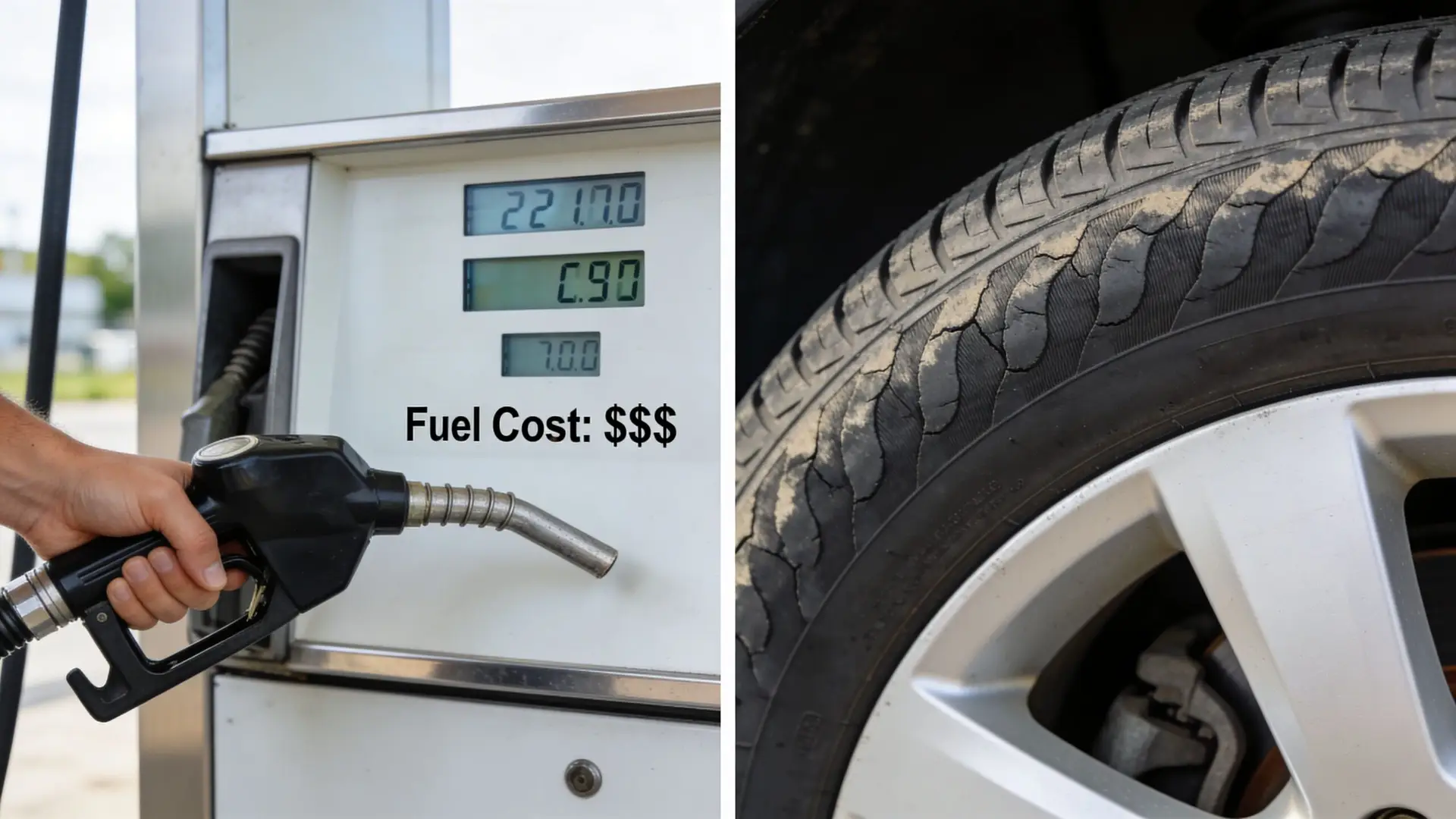
For local drivers, the numbers are hard to ignore. Jiffy Lube’s discussion of tire wear patterns and underinflation costs says that a 3% fuel efficiency loss from underinflation can cost an average driver in Richland Hills around $100 annually. It also notes that underinflation can cut a tire’s lifespan in half, forcing a $600 replacement at 30,000 miles instead of 50,000 miles, with Texas summer heat making heat buildup and blowout risk worse.
The fuel side of the problem
A low tire rolls harder. The engine has to push more resistance, so you burn more fuel to go the same distance.
You may not notice it in one trip. Over a month of commuting, school pickups, errands, and weekend driving, it shows up.
Signs the vehicle is wasting fuel from tire issues include:
- More frequent fill-ups
- A heavier feel when coasting
- The car feeling less eager off the line
- No obvious engine problem, but mileage still seems off
The replacement side hurts more
Fuel waste is annoying. Premature tire replacement is where drivers really get frustrated.
A tire should wear across the tread as evenly as possible. When low pressure destroys the shoulders first, you end up replacing a tire that still looked usable in the middle. That’s money lost because the tire never delivered its full service life.
Here’s the trade-off in plain terms:
| Habit | Likely result |
|---|---|
| Check and correct pressure regularly | More even wear and fewer surprises |
| Ignore a slightly low tire for weeks | Shoulder wear, heat damage, and earlier replacement |
| Replace one worn tire without fixing the cause | The next set starts wearing the same way |
It changes ride quality too
Drivers often describe low-pressure handling as soft, sloppy, or delayed. That’s accurate.
The tire isn’t holding its intended shape, so the vehicle can feel:
- Squishy in corners
- Less stable in lane changes
- Rougher over broken pavement
- Less precise at highway speed
That poor feel matters because it often leads people to chase the wrong repair. They suspect shocks, alignment, or steering parts when the primary problem is tire pressure.
If you care about keeping a car looking sharp as well as driving right, this honest breakdown of whether auto detailing is worth it is a useful reminder that appearance care has value, but the basics under the car matter even more. Clean paint won’t save a tire that’s wearing out on both shoulders.
Money-saving maintenance beats buying tires early
Pressure checks are free or close to it. Tires aren’t.
If a vehicle already has uneven wear, don’t stop at adding air. The next step is making sure the tires are rotating correctly and the vehicle isn’t adding another wear problem on top of the pressure issue. This guide on tire rotation, balance, and alignment helps sort out which service matches which symptom.
Your Proactive Tire Maintenance Checklist
The best way to avoid under inflated tires wear is a routine that’s simple enough to stick with. Not complicated. Just consistent.
If you wait until a tire looks obviously low, you’re late. If you build a habit, most of these problems stay small.
Check pressure the right way
Use a digital tire gauge or a quality pencil gauge. Check pressure when the tires are cold, which usually means before driving or after the vehicle has been parked long enough to cool down.
Then follow this order:
- Find the correct PSI on the driver’s door-jamb sticker. Use that number, not the pressure molded into the tire sidewall.
- Remove the valve cap and press the gauge straight on. A quick hiss is normal. A long hiss means you didn’t seal the gauge well.
- Read the pressure and compare it to the door-sticker spec.
- Add air in short bursts. Recheck after each burst.
- Repeat for all four tires. Don’t stop after the one that looked low.
- Reinstall the valve caps. They help keep dirt and moisture out.
A lot of pressure mistakes come from using the wrong reference number. The sidewall number is not your everyday target. It’s not there to tell you what your car wants for normal operation.
Shop-floor advice: The right pressure is the vehicle manufacturer’s recommendation on the sticker, not whatever number you see stamped on the tire.
Build a monthly walk-around
You don’t need a lift or a service bay to catch early tire trouble. A careful walk-around once a month does a lot.
Look for:
- Both shoulders wearing faster than the center
- One tire that appears lower than the others
- Nails, screws, cuts, or bulges
- Cracks in the sidewall
- Uneven gaps in tread appearance from one side to the other
Use your hand and your eyes. A tire often tells you there’s a problem before the dashboard does.
Rotate before the pattern gets locked in
Rotation helps because tires don’t all live the same life. Front tires usually handle more steering work and often more braking load. Rear tires may wear differently depending on the vehicle and how it’s driven.
If you wait too long, the tire can develop a wear pattern that rotation won’t fully undo. Once shoulder wear is established, the goal changes from prevention to damage control.
A smart routine is simple:
- Rotate on schedule. Don’t wait for visible trouble.
- Ask for a tread inspection during rotation. That’s when wear patterns are easiest to catch.
- Pay attention to recurring wear in the same position. That can point to pressure habits, alignment, or suspension issues.
Know when air alone won’t fix it
A tire can be properly inflated today and still need service because of what happened last month.
Have the tires inspected if you notice:
- Persistent pull to one side
- Steering wheel off-center
- Vibration at speed
- Rapid wear on one edge only
- Repeated low pressure in the same tire
Those signs usually mean there’s more going on than simple pressure loss. Alignment, a slow leak, wheel damage, or suspension wear may be involved.
Don’t rely only on TPMS
TPMS is a warning system, not a maintenance system. It helps after pressure has dropped enough to trigger it. It doesn’t replace regular checks, and it doesn’t show tread wear patterns.
Use the warning light as backup. Don’t use it as your plan.
Keep a basic tire kit in the car
This makes routine checks much easier:
| Item | Why it helps |
|---|---|
| Digital tire gauge | Gives a quick reading without guessing |
| Portable inflator | Lets you correct small pressure loss at home |
| Flashlight | Helps inspect tread and sidewalls in low light |
| Tread gauge | Shows whether wear is even across the tire |
| Work gloves | Makes roadside checks cleaner and easier |
None of this is fancy. It’s just practical.
Watch how the vehicle drives after corrections
After you set pressure correctly, drive the vehicle and pay attention.
You should notice:
- Sharper steering response
- A more settled feel in turns
- Less drag
- A more normal ride quality
If the vehicle still feels loose, pulls, or vibrates, pressure may have been only one part of the issue. That’s when a professional inspection saves time. It keeps you from guessing and replacing parts the car didn’t need.
When to Service Your Tires in Richland Hills
Some tire problems can wait a few days. Some shouldn’t wait until tomorrow.
If you’re seeing shoulder wear on both sides, adding air may stop the damage from getting worse, but it won’t restore tread that’s already gone. The question becomes whether the tire is still safe and whether another issue is also in play.
Good times to have tires checked
Have the tires inspected if:
- One tire keeps losing pressure
- The vehicle feels vague or drifts
- You can see uneven wear across the tread
- You’ve hit a pothole or curb hard
- You’re heading into a long highway trip
- You haven’t had the tires looked at in a while
A quick penny test can help as a rough driveway check for tread, but it won’t diagnose pressure-related shoulder wear, internal heat damage, alignment trouble, or a slow leak. That takes a trained eye and proper equipment.
What local drivers usually need most
In this area, the combination of heat, daily commuting, rough pavement, and stop-and-go traffic tends to expose tire issues fast. A small pressure problem in cooler weather can become a bigger one once summer hits and the roads heat up.
That’s why routine inspections matter. They catch the tire that’s wearing unevenly, the wheel that may be out of balance, or the alignment issue that’s about to ruin another set.
If you want a local resource for staying ahead of routine vehicle needs, this guide on car maintenance near me is a helpful starting point.
A good tire visit should be straightforward. You want clear answers about pressure, tread condition, rotation needs, and whether the tire is still safe to drive on. No guessing. No vague recommendations.
If your tires look low, wear unevenly on the shoulders, or your car just doesn’t feel right on the road, let the ASE-certified team at Express Lube & Car Care take a look. We offer walk-in convenience, honest recommendations, and the kind of practical tire inspection that helps Richland Hills drivers stay safe, protect their budget, and avoid replacing tires sooner than they should.