

Your vehicle is a complex machine that communicates its needs through subtle, and sometimes not-so-subtle, changes in performance. One of the most critical, yet often overlooked, maintenance needs is proper wheel alignment. Misalignment doesn't just wear out your tires faster; it compromises your vehicle's stability, safety, and fuel efficiency. Ignoring the warning signs can lead to expensive repairs and, more importantly, put you at risk on the busy roads of Richland Hills and Northeast Tarrant County. A misaligned car can make handling unpredictable, especially during sudden stops or sharp turns, increasing the risk of an accident.
This guide is designed to help you decode those messages. We will walk you through the 8 critical signs your car needs alignment, providing a clear, actionable checklist. For each sign, we’ll break down precisely what the symptom means, explain the potential underlying causes, and detail simple at-home checks you can perform in your own driveway. Understanding these specific warnings empowers you to take prompt action, ensuring a safer, smoother, and more cost-effective driving experience. Let's dive into what to look, listen, and feel for to keep your car tracking straight and true.
1. Uneven or Rapid Tire Wear
One of the most obvious and expensive signs your car needs alignment is unusual wear on your tires. Properly aligned wheels sit flat on the road, distributing the vehicle's weight evenly across the entire tread. When misalignment occurs, certain parts of the tire bear more of the load, causing accelerated and uneven wear patterns.
This premature wear significantly shortens the life of your tires, a major investment for any vehicle owner. For busy Richland Hills families and commuters, ignoring alignment can mean replacing tires thousands of miles sooner than expected, sometimes reducing their lifespan by 25% or more.
What to Look For
Different alignment problems create distinct wear patterns. Here’s how to spot them:
- Feathering: When the tread ribs are worn smooth on one side and sharp on the other, it often points to a toe-in or toe-out issue.
- Camber Wear: If only the inner or outer edge of your tire is wearing down, it’s a classic sign of a negative or positive camber problem.
- Heel/Toe Wear: This saw-toothed pattern, where one side of a tread block is more worn than the other, can also indicate incorrect toe alignment.
For example, a local commuter might notice the inside shoulder of their front tires is nearly bald at 35,000 miles, while the rest of the tread looks fine. This points directly to a misalignment that, if fixed, could have saved them from buying a new set of tires prematurely.
Simple At-Home Checks & Tips
You don’t need to be a mechanic to monitor your tires. Simple, regular checks can save you money and keep you safe.
- Rotate Regularly: Get your tires rotated every 5,000-7,000 miles. This not only promotes even wear but also gives you or a technician a chance to spot early signs of misalignment. To better understand the relationship between these services, you can learn more about the differences between tire rotation, balance, and alignment.
- Visual Inspections: When you stop for gas or during your next oil change at Express Lube & Car Care, take a moment to look at your tire tread.
- The Penny Test: Use a penny to check tread depth across the entire width of the tire, not just one spot. If the depth is significantly different from the inside edge to the outside edge, it's time for an alignment check.
If you suspect an issue, bring your vehicle to Express Lube & Car Care. Our no-appointment service makes it easy to get a professional inspection and protect your tire investment.
2. Vehicle Pulling to One Side
Another classic and potentially dangerous sign your car needs alignment is a noticeable pull to the left or right while driving. When your alignment is correct, your car should travel in a straight line with minimal steering input. Misalignment of camber, caster, or toe angles forces the vehicle to drift, requiring you to constantly correct the steering to stay in your lane.

This constant fight with the steering wheel isn't just annoying; it’s a safety hazard that increases driver fatigue and reduces reaction time. For commercial drivers and families navigating busy Northeast Tarrant County roads like I-820, a car that pulls unexpectedly can be a serious risk that demands immediate attention.
What to Look For
The pull can be subtle at first but typically becomes more pronounced over time. The key is to distinguish between road crown (the slight arch in the road for drainage) and a genuine alignment issue.
- Consistent Drifting: The vehicle consistently drifts to one side on multiple flat, straight roads.
- Steering Correction: You find yourself holding the steering wheel at a slight angle to keep the car moving straight.
- Pulling During Braking: In some cases, misalignment can cause the car to veer sharply to one side when you apply the brakes.
For instance, a local delivery driver noticed their van kept pulling to the right on the highway, a symptom that eventually traced back to a minor front-end collision from weeks prior. Fixing the alignment restored the vehicle's directional stability and safety.
Simple At-Home Checks & Tips
You can safely test for a pulling issue yourself before heading to a mechanic. This helps confirm that what you’re feeling isn't just the road surface.
- Check Tire Pressure First: Before testing, ensure all your tires are inflated to the manufacturer’s recommended PSI. A low tire on one side can mimic an alignment pull.
- The Straight Road Test: Find a safe, flat, and empty stretch of road. Briefly and cautiously let go of the steering wheel for just a second or two. If the vehicle immediately starts to drift, it’s a clear sign of an alignment problem.
- Note the Direction: Pay attention to which way the car pulls. A pull to the right often indicates an issue on the right side, which helps our technicians diagnose the problem faster.
If your car fails the straight road test, visit Express Lube & Car Care. Our no-appointment service allows you to get a quick, professional alignment check to ensure your vehicle is safe and easy to control.
3. Steering Wheel Off-Center or Difficult to Turn
Another clear and distracting sign your car needs alignment is a steering wheel that isn’t centered when you're driving straight. Your steering wheel's logo should be level when the car is moving forward on a flat road. If you have to hold it at an angle to maintain a straight path, your wheel alignment is almost certainly off.

This constant need to correct your steering is more than just an annoyance. For Richland Hills commuters and commercial fleet operators, it directly contributes to driver fatigue and reduces focus on the road. The issue often points to incorrect toe or caster angles, which can also make steering feel unusually heavy or difficult.
What to Look For
An off-center steering wheel can manifest in a few distinct ways, sometimes accompanied by other symptoms.
- Consistent Angle: The steering wheel is always tilted by a few degrees in one direction when driving straight.
- Increased Effort: Turning the wheel in one direction feels noticeably easier or harder than turning it in the other.
- Loose or Sloppy Steering: A feeling of excessive play or a delayed response in the steering can indicate worn suspension components, like tie rods or ball joints, that are preventing the alignment from holding true.
For example, a local delivery driver might notice their steering wheel is off by 5 degrees to the left after hitting a pothole. This constant compensation increases physical strain over a long shift and is a direct signal that the vehicle’s alignment and potentially its suspension components need immediate inspection.
Simple At-Home Checks & Tips
You can easily verify these symptoms without any special tools, helping you provide clear information to your mechanic.
- The Straight Road Test: On a safe, straight, and level road with no traffic, briefly let go of the steering wheel. If it immediately wants to turn on its own or if the car pulls, you likely have an issue.
- Note the Details: Pay attention to whether the steering feels stiff, loose, or requires more effort than usual. If you notice it's difficult to turn, it's also wise to understand the potential for power steering fluid leak symptoms, as multiple issues can sometimes occur at once.
- Check Both Directions: When parked or driving slowly in an empty lot, turn the wheel fully to the left and then to the right. Note any differences in effort or unusual noises.
If your steering wheel isn’t straight, don't delay. Bring your car to Express Lube & Car Care for a quick, no-appointment alignment check to restore your vehicle’s handling and your peace of mind.
4. Vibration or Shimmy in Steering Wheel
A persistent vibration or shimmy felt through your steering wheel is a very unsettling sign your car needs alignment. While often confused with tire imbalance, a steady vibration, especially at highway speeds, can be a symptom of severe misalignment. When toe or camber angles are off, tires may not track straight, causing them to scrub or flutter against the pavement, which translates into a shimmy you feel in your hands.
This symptom isn't just annoying; it's a signal of excessive stress on your vehicle's suspension and steering components. For Northeast Tarrant County commuters, ignoring this vibration compromises handling and control, leading to a fatiguing and potentially unsafe drive on highways like I-820.
What to Look For
Vibrations can point to different underlying issues, but paying attention to the details helps pinpoint the cause. Here’s what to notice:
- Speed-Specific Shimmy: A vibration that only appears or gets worse within a specific speed range (e.g., 55-65 mph) often points to an alignment or tire balance problem.
- Steering Wheel vs. Seat: A shimmy felt primarily in the steering wheel typically indicates a front-end issue. If you feel the vibration more in the seat or floor, the problem is likely with the rear wheels.
- Constant vs. Intermittent: If the vibration is constant while driving straight, it’s a strong indicator of misalignment. If it happens only during braking or turning, other issues like warped rotors could be the cause.
For example, a Richland Hills family's SUV might develop a severe steering wheel shimmy at 55 mph after hitting a deep pothole. This scenario often results in both tire imbalance and alignment damage, requiring a professional diagnosis to correct the handling.
Simple At-Home Checks & Tips
You can help a technician diagnose the problem faster by gathering some key information before you come in.
- Note the Speed: Pay close attention to the exact speed when the vibration starts and stops. This is the first piece of information a technician will ask for.
- Document the Conditions: Does the shimmy happen when you're accelerating, cruising, or braking? Is it worse on certain road surfaces?
- Start with Balancing: If you're unsure, tire balancing is a less expensive first step. If the shimmy persists after balancing, alignment is the almost certain culprit.
- Check for Obvious Damage: A quick visual check of your tires and wheels for bulges or damage after hitting a curb or pothole can provide immediate clues.
If you’re experiencing a troubling vibration, don't wait for it to get worse. Bring your vehicle to Express Lube & Car Care for a quick inspection. Our walk-in service makes it easy to get peace of mind and ensure your car is safe and smooth on the road.
5. Vehicle Wandering or Floating at Highway Speeds
A particularly unsettling sign your car needs alignment is a feeling of wandering or floating at highway speeds. Instead of tracking straight, your vehicle may drift across lanes, forcing you to make constant, small steering corrections to stay centered. This instability happens when wheel angles, particularly toe and caster, are misaligned and actively fight against each other.
This issue is a critical safety concern, especially for families and commuters driving on busy Northeast Tarrant County highways like I-820. The lack of precise control significantly increases the risk of an accident, turning a routine drive into a stressful and dangerous experience. Ignoring this symptom puts you, your passengers, and other drivers at risk.
What to Look For
Wandering can feel subtle at first but becomes more obvious under specific conditions. It’s more than just being pushed by the wind; it’s a persistent instability.
- Constant Corrections: You find yourself making continuous, tiny adjustments to the steering wheel just to keep the car straight on a flat road.
- Vague Steering Response: The steering feels loose or disconnected, lacking the immediate, crisp response you’re used to.
- Lane Drifting: The vehicle drifts to the left or right on its own, requiring conscious effort to guide it back into the lane.
For example, a Richland Hills commuter recently reported their SUV felt dangerously unstable on I-820 during their morning drive. A diagnostic at our shop revealed a severe toe misalignment, and a four-wheel alignment restored the vehicle's stability and the driver's confidence.
Simple At-Home Checks & Tips
You can safely test for this issue to determine if you need professional service. The key is to find a safe, straight, and calm stretch of road.
- Find a Safe Space: Test on a quiet, straight highway segment with minimal traffic. Avoid this test during rush hour or in windy conditions.
- Minimal Input Test: Briefly loosen your grip on the steering wheel (while remaining in full control) and see if the car immediately starts to drift or wander from its path.
- Note the Speed: Pay attention to the speed at which the wandering becomes most noticeable. This information can help our technicians diagnose the problem.
- Consider Other Factors: While wandering is a classic alignment symptom, it can sometimes be related to other issues. You can explore warning signs that your suspension needs attention to see if other symptoms overlap.
If your vehicle feels unstable, avoid highway driving until it's inspected. Visit Express Lube & Car Care for a quick, no-appointment alignment check to ensure your vehicle is safe and handles predictably.
6. Squealing or Unusual Tire Noises
Another often-overlooked and audible sign your car needs alignment is new or unusual squealing noises coming from your tires. While tires can squeal during aggressive cornering, persistent squealing during normal, everyday turns or even while driving straight indicates a problem. Misalignment forces your tires to scrub or drag across the pavement instead of rolling smoothly.
This constant friction creates the high-pitched noise and rapidly wears down your tire tread, similar to taking an eraser to sandpaper. For Richland Hills drivers navigating suburban streets and parking lots, a new squeal during low-speed turns is a clear warning that the wheels are fighting against their set angles, costing you tire life and fuel efficiency.
What to Look For
The context of the squeal provides important clues about the specific alignment issue. Listen carefully for when and how the noise occurs:
- Turning Squeal: A consistent squeal when taking corners at normal speeds often points to incorrect toe or camber angles.
- Scrubbing Noise: A low-pitched scrubbing or groaning sound can also be present, especially during tight turns, indicating severe tire drag.
- Straight-Line Noise: In some cases, a very subtle but constant squeal on a straight road can signal a significant toe issue causing the tires to fight each other.
For instance, a fleet vehicle making routine city deliveries might develop an audible tire complaint. A quick four-wheel alignment could reveal a 1.5-degree camber misalignment, and fixing it would resolve both the noise and the premature tire wear that was sure to follow.
Simple At-Home Checks & Tips
You can help diagnose the issue before even visiting a shop by paying close attention to the noise.
- Document the Noise: Note exactly when the squealing happens. Is it on left turns, right turns, or both? Does it happen during acceleration or braking? This information is invaluable for our technicians.
- Check Tire Pressure First: Under-inflated tires can sometimes cause squealing noises. Ensure all tires are inflated to the manufacturer’s recommended PSI before assuming it’s an alignment problem.
- Parking Lot Test: Find an empty parking lot and make slow, tight turns in both directions. If the squealing is easily repeatable, it strongly suggests a camber or toe alignment issue.
If simple checks don't solve the noise, bring your vehicle to Express Lube & Car Care. Our ASE-certified technicians can quickly distinguish between a simple tire issue and a complex alignment problem, ensuring you get the right fix the first time.
7. Excessive Play in Steering Wheel (Loose/Sloppy Steering)
A steering wheel that feels loose, requires excessive input to change direction, or has noticeable “play” before the wheels respond is another key sign your car needs alignment. When your steering feels sloppy or disconnected from the road, it often points to issues with alignment angles, like the toe, or wear in critical steering and suspension components.
This lack of responsiveness makes driving feel less precise and can be dangerous, especially in emergency maneuvers. For busy Northeast Tarrant County drivers, a steering wheel with excessive play reduces your control over the vehicle, increasing the risk of an accident and signaling that front-end components need immediate professional evaluation.
What to Look For
Loose steering isn't just a feeling; it's a measurable problem caused by specific mechanical issues. The disconnected sensation comes from worn parts that create gaps in the steering system, which your alignment settings can no longer compensate for.
- Mushy Feedback: The steering feels vague and doesn't provide a clear sense of the road or how the tires are gripping.
- Delayed Response: You have to turn the wheel more than usual to get the car to change direction.
- Worn Tie Rods: A common cause of steering play is worn inner or outer tie rod ends, which directly connect your steering rack to the wheels.
- Incorrect Toe Settings: While often linked to pulling, severe toe misalignment can also contribute to a wandering or imprecise steering feel.
For instance, a Richland Hills vehicle owner noticed their SUV’s steering felt sloppy after 80,000 miles. A visit to the shop revealed loose tie rod ends and a significant toe misalignment. Replacing the parts and performing an alignment restored the vehicle's sharp, responsive handling.
Simple At-Home Checks & Tips
You can perform a simple test to gauge the severity of your steering play and determine if it's time for a professional inspection.
- The "Wiggle" Test: In a safe, empty parking lot with the engine running, slowly rock the steering wheel back and forth. There should be very little movement (less than an inch or so) before the front wheels begin to turn. Significant play indicates a problem.
- Check for Noise: When performing the wiggle test, listen for any clunking or knocking sounds, which often point to worn-out steering or suspension parts like tie rods or ball joints.
- Request a Comprehensive Inspection: When you suspect an issue, don't just ask for an alignment. Request a complete front-end inspection to ensure all related components are checked.
If your steering feels anything less than tight and responsive, bring it to Express Lube & Car Care. Our technicians can quickly diagnose the root cause, whether it's a simple alignment adjustment or a worn component, and get you back on the road safely.
8. Vehicle Sits Uneven or Leans to One Side
If you notice your car visually leaning to one side or sitting lower at one corner when parked on level ground, it’s a strong indicator of a serious issue. While often caused by worn-out shocks, struts, or springs, an uneven stance is one of the more critical signs your car needs alignment because it directly points to a compromised suspension system, which is the foundation of proper wheel alignment.
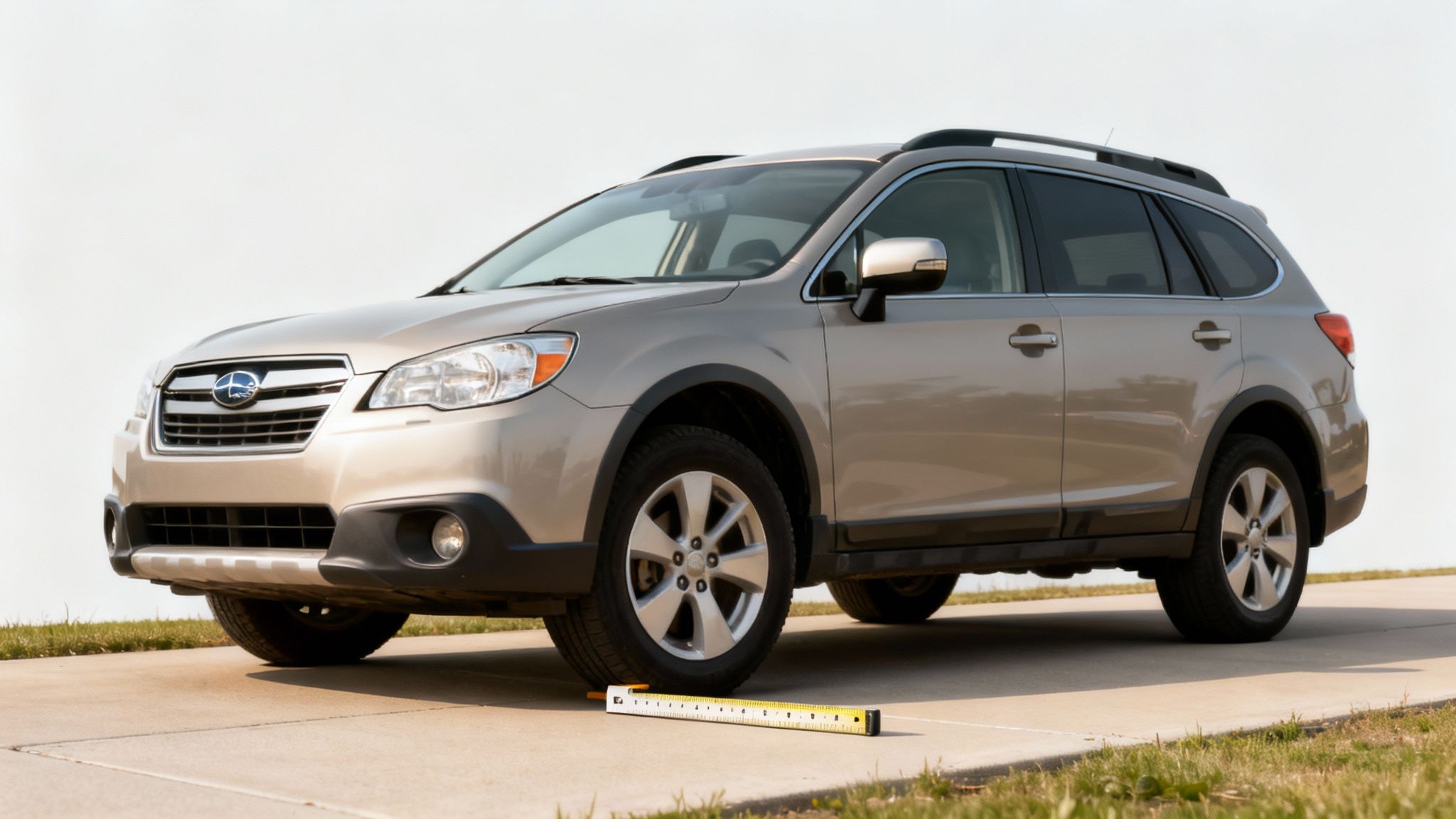
This kind of problem drastically affects your vehicle’s handling, braking performance, and stability. For fleet managers in Richland Hills responsible for company vehicles, a lean can signal component failure or hidden accident damage that compromises driver safety and vehicle longevity. A damaged suspension component will throw the alignment out of spec, leading to poor control and rapid tire wear.
What to Look For
An uneven stance can develop slowly from wear or appear suddenly after an incident. Here’s what it might look like in real-world scenarios:
- Sudden Lean: A local family’s minivan showed a noticeable passenger-side lean after a minor side-swipe in a parking lot. The cause was a bent strut, which required replacement and a full four-wheel alignment to restore proper handling.
- Gradual Sag: A commercial fleet vehicle with over 120,000 miles developed a driver-side sag over time. This was caused by a worn-out coil spring, which had also thrown the camber and toe angles out of alignment, requiring both a suspension repair and an alignment service.
Simple At-Home Checks & Tips
You can easily check your vehicle’s stance at home to determine if a professional inspection is needed. These simple steps can help you identify a problem before it gets worse.
- Take a Picture: Park your car on a flat, level surface and take a photo from about 10 feet away, both from the front and the back. An uneven stance is often much more obvious in a picture.
- Measure the Height: Use a measuring tape to check the distance from the center of each wheel to the edge of the fender above it. If there’s a significant difference (typically more than half an inch) between the sides, your suspension is likely compromised.
- Note the Onset: Pay attention to whether the lean appeared suddenly after hitting a pothole or curb, or if it developed gradually over months. This information helps our technicians diagnose the root cause faster.
If your measurements are off or you see a visible lean, it’s crucial to get it inspected immediately. At Express Lube & Car Care, we can perform a comprehensive suspension evaluation alongside an alignment check to ensure your vehicle is safe, stable, and performing correctly.
8-Point Comparison: Signs Your Car Needs Alignment
| Symptom | 🔄 Complexity to Diagnose/Repair | ⚡ Resource Requirements | 📊 Expected Outcomes | 💡 Ideal Use Cases | ⭐ Key Advantages |
|---|---|---|---|---|---|
| Uneven or Rapid Tire Wear | Low–Moderate — visual patterns easy to spot but may require history | Visual inspection, tread depth gauge, technician review | Evened wear, longer tire life, lower replacement cost | Routine maintenance, post-rotation checks, early warning signs | Cost savings; early detection; simple to identify |
| Vehicle Pulling to One Side | Moderate — road test and alignment scan to confirm | Alignment equipment, road test, tire pressure check | Restored straight tracking, centered steering | Consistent drift on flat straight roads or during braking | Immediate safety improvement; clear indicator for service |
| Steering Wheel Off‑Center or Difficult to Turn | Moderate — steering angle measurement; may need suspension check | Steering angle gauge, alignment machine, possible suspension inspection | Centered wheel, smoother steering, reduced driver fatigue | Off‑center wheel while driving straight or heavy steering feel | Improves comfort and control; confirms alignment issues |
| Vibration or Shimmy in Steering Wheel | Moderate–High — multiple possible causes require sequence diagnosis | Wheel balancer, alignment rack, suspension inspection | Eliminated vibration, improved ride quality, less component wear | Vibration at specific speeds (45–65 mph) or during braking | Tangible comfort and safety gains; often resolved in one visit |
| Vehicle Wandering or Floating at Highway Speeds | High — severe toe/caster issues; may require suspension repair | Four‑wheel alignment, alignment rack, detailed suspension check | Stable lane holding, improved high‑speed control, reduced risk | Wandering above ~50 mph or increased in crosswinds | Critical safety fix; priority service to prevent accidents |
| Squealing or Unusual Tire Noises | Low–Moderate — audible cue but multiple potential causes | Tire inspection, pressure check, quick alignment check | Noise reduction, prevention of premature wear | New or persistent squeal during turns or acceleration | Rapid, non‑invasive diagnosis; audible early warning |
| Excessive Play in Steering Wheel (Loose/Sloppy) | High — indicates component wear; hands‑on inspection required | Front‑end inspection, tie‑rod/ball joint check, parts replacement | Restored steering precision and responsiveness | Noticeable wheel play (2+ inches) or delayed vehicle response | Addresses safety‑critical defects; immediate control improvement |
| Vehicle Sits Uneven or Leans to One Side | High — requires suspension and alignment evaluation | Suspension diagnostic tools, measuring tape, parts replacement | Restored stance, corrected handling and braking geometry | Visible lean or sudden change after impact or slow sagging | Reveals suspension damage; corrects appearance and safety |
Your Next Step: Get a Professional Alignment Check at Express Lube & Car Care
Navigating the roads of Richland Hills and Northeast Tarrant County safely begins with a well-maintained vehicle, and proper wheel alignment is a cornerstone of that maintenance. Throughout this guide, we've explored the critical signs your car needs alignment, moving beyond generic advice to give you practical, real-world indicators. From the subtle drift of your steering wheel on a straight road to the unmistakable evidence of uneven tire wear, each symptom is your vehicle's way of communicating a need for attention.
You are now equipped to identify these warnings early, which is a powerful advantage. Recognizing a problem like a slight vehicle pull or a minor vibration before it escalates can save you hundreds, if not thousands, of dollars in premature tire replacement and suspension repairs. It’s not just about money; it’s about control, safety, and peace of mind every time you get behind the wheel.
Key Takeaways for Proactive Vehicle Care
Your vehicle’s alignment is not a "set it and forget it" component. It is a dynamic system that requires periodic checks and adjustments. Here are the most important takeaways from our discussion:
- Listen to Your Car: Unusual noises, vibrations, and changes in steering feel are direct messages from your vehicle. Paying attention to these subtle shifts allows you to address alignment issues before they cause significant damage.
- Trust Your Eyes: A crooked steering wheel or visible, uneven tire wear are undeniable signs your car needs alignment. Performing a quick visual inspection of your tires once a month can be your best early detection tool.
- Prioritize Safety Above All: Issues like steering wander or excessive play in the steering wheel are more than just annoyances; they are serious safety hazards that compromise your ability to control the vehicle, especially during emergency maneuvers or in adverse weather.
Your Actionable Next Step
Ignoring these symptoms is a gamble with your safety and your wallet. The most crucial step you can take after identifying a potential alignment issue is to seek a professional diagnosis. Driving on misaligned wheels doesn't just wear out your tires faster; it puts unnecessary strain on your entire suspension system, including shocks, struts, and ball joints, leading to a cascade of expensive repairs.
At Express Lube & Car Care, our ASE-certified technicians specialize in precision wheel alignment. We understand the daily demands placed on vehicles in our community, from family commutes to fleet operations. Using advanced diagnostic equipment, we don't just correct the alignment; we identify the root cause, whether it's from hitting a pothole on I-820 or from normal wear and tear. Our no-appointment-needed service is designed for your busy life, ensuring you can get expert care without disrupting your schedule. We believe in transparent service, so we’ll show you the diagnostic readings and explain exactly what needs to be done.
Don't let a small alignment issue become a major problem. Taking proactive steps today ensures your vehicle remains reliable, efficient, and safe for you and your family on every journey.
Ready to ensure your vehicle is driving straight and true? Visit Express Lube & Car Care in Richland Hills for a fast, professional alignment check and service with no appointment necessary. Protect your tires and your safety by stopping by today or learning more at Express Lube & Car Care.