

So, what exactly is a fluid flush service? It’s a deep-cleaning maintenance job that uses special equipment to push out all the old, gunky fluid from your car's most important systems and replace it with fresh, clean fluid. This isn't just a simple drain and refill—it's about clearing out the sludge and grime that can cause serious damage down the road.
What a Fluid Flush Service Actually Does for Your Car
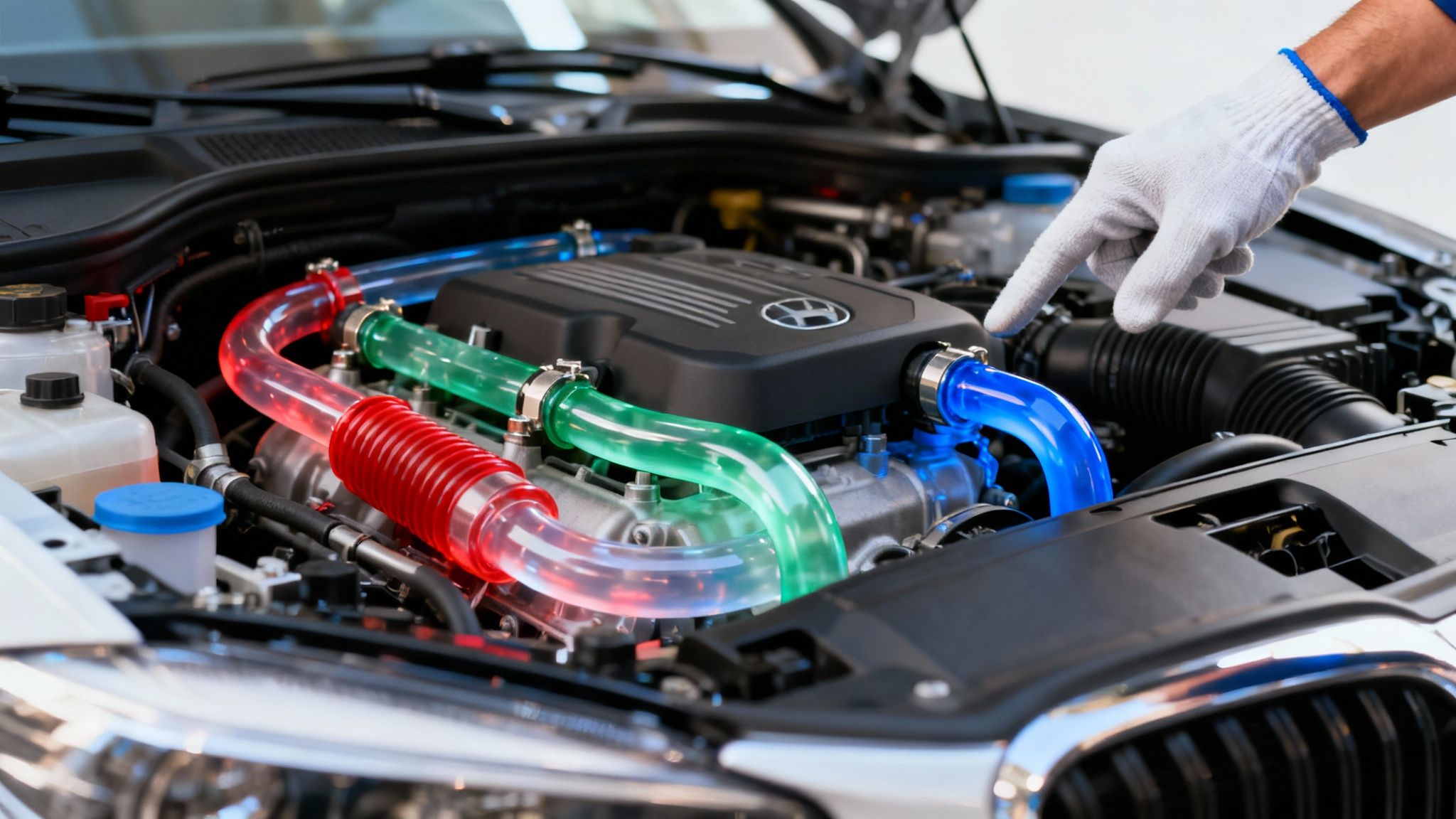
Think of your car's fluids as its lifeblood. Just like blood keeps our bodies running, fluids like coolant, transmission fluid, and brake fluid are constantly circulating to cool, lubricate, and create pressure in critical systems. But after thousands of miles, they start to break down.
Heat and friction take their toll, and the fluids get contaminated with tiny metal shavings, dirt, and other gunk. Before you know it, that clean, effective liquid has turned into a thick, gritty sludge that can’t do its job anymore.
Why a Simple Drain Is Not Enough
You might think a standard "drain and fill" is good enough, but it only removes some of the old fluid. A surprising amount of dirty, worn-out liquid and sludge gets left behind, which immediately contaminates the new fluid you just added. That’s where a professional fluid flush service really shines.
A complete fluid flush uses specialized machinery to first circulate a cleaning solution through the system. Then, it uses pressure to force out virtually 100% of the old fluid and all the nasty contaminants, ensuring the entire system is spotless before the fresh fluid goes in.
This thorough cleaning is a game-changer for several key parts of your car:
- Transmission System: Keeps your gear shifts smooth and prevents the transmission from overheating.
- Cooling System: Fresh coolant (or antifreeze) is essential for protecting your engine from extreme heat and preventing corrosion.
- Brake System: Clean brake fluid ensures you have reliable stopping power when you need it most.
- Power Steering System: Makes turning the wheel feel effortless and protects the steering pump from premature wear.
Ultimately, a fluid flush is one of the smartest preventative maintenance tasks you can do for your vehicle. It breathes new life into your car’s core systems, helping to prevent catastrophic (and expensive) failures while boosting performance and extending the life of your car.
The Most Important Fluid Flushes Your Vehicle Needs
Your car runs on more than just gasoline. It depends on a whole host of specialized fluids to cool parts, lubricate gears, and create the hydraulic pressure needed for braking and steering. Over time, these fluids get old, dirty, and lose their effectiveness.
When that happens, performance drops, and you start risking major, wallet-busting repairs. Let's break down the five most critical fluid flushes every driver in Texas needs to know about to keep their car on the road and out of the shop.
Transmission Fluid Flush
Think of your transmission as a maze of intricate gears and clutches, all working together in a high-stakes ballet. Transmission fluid is the unsung hero that keeps everything moving smoothly—it lubricates, cools, and acts as a hydraulic fluid for shifting.
But all that heat and pressure eventually breaks the fluid down, contaminating it with microscopic metal shavings. When the fluid gets old and dirty, it can't protect those vital parts anymore, and that’s a fast track to a catastrophic failure.
The numbers don't lie. Old, degraded fluid is a factor in up to 90% of all automatic transmission failures. In major Texas markets, a full transmission rebuild can easily set you back $2,500 to $4,000. If you want to dive deeper into how modern fluids are helping vehicles last longer, you can explore the latest industry insights on PolytronDirect.com.
- Symptoms: Jerky or delayed shifts, a whining noise when accelerating, or a distinct burning smell are all red flags. Sometimes, the check engine light will pop on.
- Interval: Most cars need this every 30,000 to 60,000 miles, but always check your owner’s manual.
- Estimated Cost: $150 – $300.
Coolant Flush
Your engine is a heat-generating machine. The cooling system is what keeps it from melting down, and coolant (or antifreeze) is the liquid at the heart of it all. It circulates through the engine and radiator, pulling heat away and protecting all the metal components from rust and corrosion.
As coolant gets old, its anti-corrosion additives wear out, and the fluid can actually become acidic. An acidic fluid will start eating away at your radiator and water pump from the inside out, creating a sludge that clogs everything up and leads to overheating—and potentially a blown head gasket.
- Symptoms: The most obvious sign is your temperature gauge climbing into the red zone. You might also spot puddles of green, pink, or orange fluid under your car or notice a sweet, syrupy smell.
- Interval: A good rule of thumb is every 30,000 to 50,000 miles, or every 3 to 5 years.
- Estimated Cost: $100 – $200.
Brake Fluid Flush
Your brakes work using hydraulic force. When you push the pedal, you're actually pushing brake fluid through the lines to squeeze the brake pads against the rotors, bringing your car to a stop. For this to happen instantly and effectively, the fluid has to be pure and completely free of air.
The problem is, brake fluid is "hygroscopic"—a fancy way of saying it loves to absorb moisture right out of the air. This moisture is its worst enemy.
Water contamination lowers the fluid’s boiling point. Under heavy braking, that moisture can boil and create vapor bubbles in the brake lines. Unlike liquid, vapor can be compressed, which results in that terrifying "spongy" brake pedal feeling and a dangerous loss of stopping power. A fluid flush service is the only way to get that old, water-logged fluid out and replace it with fresh, clean fluid.
- Symptoms: A soft, spongy brake pedal that goes closer to the floor than usual is the classic sign. You might also notice it takes longer to stop or see a brake warning light on your dash.
- Interval: Most mechanics recommend a flush every 2 to 3 years, no matter how many miles you drive.
- Estimated Cost: $100 – $180.
Power Steering Fluid Flush
If you have a vehicle with hydraulic power steering, this fluid is what makes turning the wheel feel so easy. It’s the hydraulic muscle that multiplies your effort, but it also has the important job of lubricating the power steering pump and other moving parts.
Over the years, this fluid gets contaminated with gunk from deteriorating seals and hoses. That dirty fluid puts a massive strain on the power steering pump, causing it to whine and groan until it eventually gives out. Trust us, a pump is not a cheap part to replace.
If you want to learn more about this and other essential fluids, check out our guide on when to change your car fluids.
- Symptoms: The steering wheel feels heavy or hard to turn, you hear a groaning sound when you turn, or there’s a chattering noise coming from under the hood.
- Interval: Generally needed every 40,000 to 60,000 miles.
- Estimated Cost: $100 – $175.
Differential Fluid Flush
The differential is a gearbox that lets your drive wheels spin at different speeds when you make a turn. It’s filled with a thick, heavy gear oil that keeps all the internal gears and bearings from grinding themselves into dust.
After tens of thousands of miles, this oil breaks down from the intense heat and pressure. Without clean fluid, the differential gears will wear out, leading to loud whining noises and an eventual, costly failure. This is especially critical for trucks and SUVs that do a lot of towing or hauling.
- Symptoms: A whining or howling noise that gets louder as you speed up or turn is the number one symptom. You might also hear a rumbling sound that starts around 20 mph.
- Interval: This varies a lot by vehicle, but it’s usually between 30,000 and 60,000 miles. Your owner's manual will have the exact number.
- Estimated Cost: $80 – $150.
Vehicle Fluid Flush Service Intervals and Symptoms
Keeping track of every fluid in your car can be a handful. Here’s a quick-reference table to help you spot trouble early and stay on top of your maintenance schedule.
| Fluid Type | Primary Function | Common Symptoms of Failure | Recommended Flush Interval |
|---|---|---|---|
| Transmission Fluid | Lubricates, cools, and enables shifting | Jerky/delayed shifts, whining noise, burning smell | 30,000–60,000 miles |
| Coolant/Antifreeze | Manages engine heat, prevents corrosion | Overheating, sweet smell, visible fluid leaks | 30,000–50,000 miles |
| Brake Fluid | Creates hydraulic pressure for braking | Spongy or soft brake pedal, reduced stopping power | 2–3 years |
| Power Steering Fluid | Assists in turning the steering wheel | Whining/groaning noise, difficulty turning | 40,000–60,000 miles |
| Differential Fluid | Lubricates differential gears | Howling or whining noise during acceleration | 30,000–60,000 miles |
Remember, these are general guidelines. Always check your vehicle's owner's manual for the most accurate recommendations for your specific make and model.
How a Professional Fluid Flush Service Works
Ever wondered what really happens when you bring your car in for a fluid flush? It's a whole lot more involved than just pulling a plug and letting the old stuff drain out. A professional fluid flush service is a methodical process that gets nearly every drop of old, contaminated fluid out of a system and replaces it with the clean, correct fluid your car needs to run right.
It all starts with a good look-see. A trained tech will check the fluid's condition and level, sniffing for a burnt smell and looking for nasty stuff like metal shavings or a milky, discolored appearance. This quick check tells us if a full flush is truly what your car needs.
From there, we hook up specialized equipment directly to the system, like the transmission's cooler lines or the brake lines. This powerful machinery is what really separates a professional job from something you'd try in your driveway.
The Flushing and Refilling Process
Instead of just letting gravity do the work, our machine actively pushes all the old fluid out. While it's working, it can also circulate a special cleaning agent through the lines and components, breaking loose all the stubborn gunk and sludge that a simple drain-and-fill would absolutely leave behind.
A professional fluid flush removes up to 99% of the old fluid and contaminants. Compare that to a basic drain and fill, which often leaves as much as 40% of the dirty stuff hiding in nooks and crannies like the torque converter.
Once the system is sparkling clean on the inside, the machine pumps in the precise amount of fresh, manufacturer-spec fluid. The technician then runs the vehicle to get that new fluid circulating, double-checking for any leaks and making sure everything is operating smoothly. It’s a thorough process that restores your car’s vital systems back to factory-fresh condition. We actually have a whole article breaking this down if you want to read more about what is involved in a transmission fluid change.
It's all about making sure your car has the clean lifeblood it needs to perform its best.
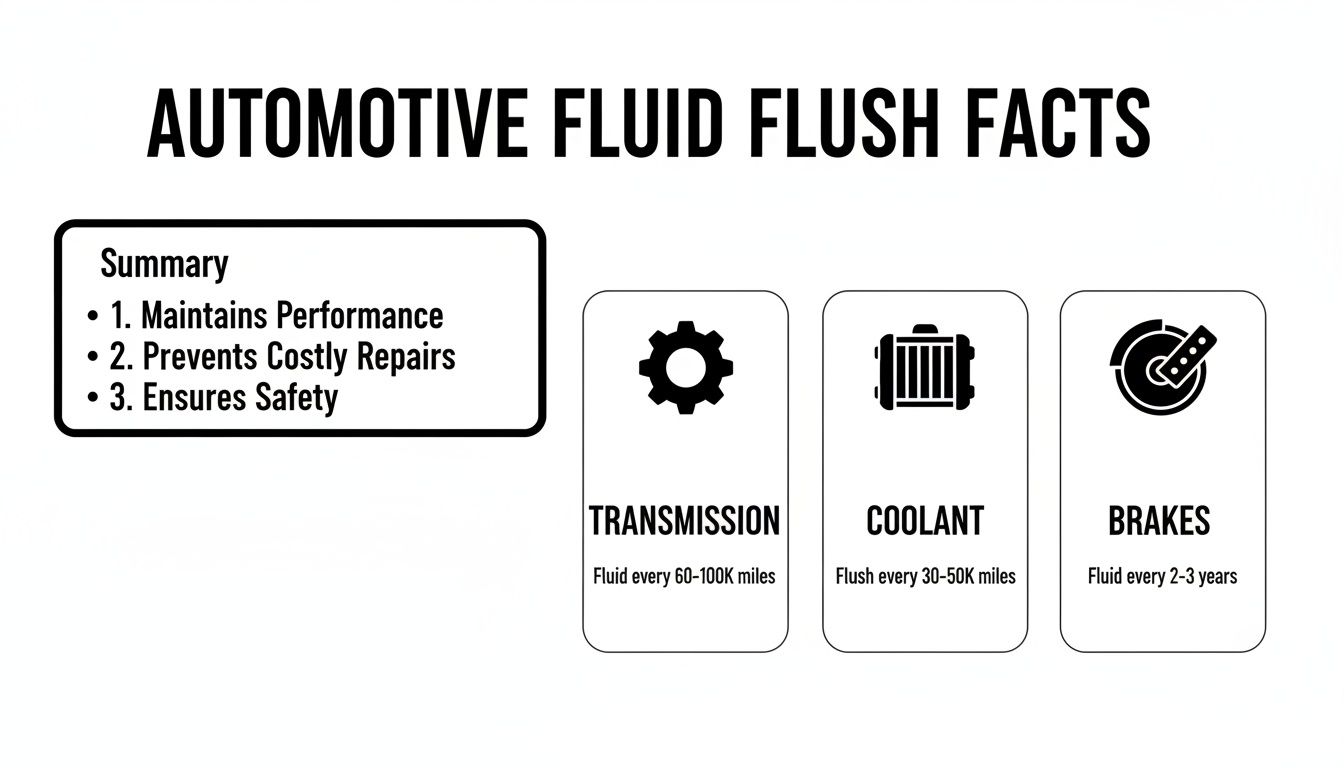
As you can see, every fluid has a critical job, and keeping them clean is one of the smartest investments you can make in your vehicle's long-term health and safety.
DIY Fluid Flush vs Professional Auto Service
It's tempting to try and save a few bucks by tackling a fluid flush in your own garage. You see a few videos online, and it looks simple enough for a Saturday afternoon project. But what those videos often gloss over are the hidden headaches and very real risks.
First, there's the cost. Sure, you save on labor, but you’ll have to buy the fluid, a collection pan, and often a few specialized tools you'll only use once, like flare nut wrenches for brake lines or a fluid extractor. Get one step wrong—like letting a single air bubble into your brake system—and you've suddenly created a serious safety hazard that could lead to brake failure.
And let's not forget the mess. Used automotive fluid is nasty stuff—it's legally considered hazardous waste. You can't just pour it down a drain or toss it in the bin. You're responsible for collecting it, storing it safely, and hauling it to a proper recycling facility. That’s a hassle most people don't bargain for.
The Professional Advantage
Bringing your car to a trusted shop like Express Lube & Car Care takes all that risk and mess off your plate. Our certified technicians have the right equipment, from professional-grade flushing machines to the exact tools needed for your specific vehicle. We know precisely which fluid type and quantity your car needs, which is a bigger deal than ever with today's complex vehicle systems.
A professional service isn't just about getting the job done; it's about precision and prevention. A technician might spot a small leak or a worn-out hose that a DIYer would easily miss, saving you from a much more expensive repair down the line.
This is why the professional auto service industry is thriving. The quick lube business alone is valued at $10.8 billion annually and is expanding to handle comprehensive maintenance like fluid services. With over 85% of U.S. vehicles still needing these traditional fluid changes by 2030, the need for expert service isn't going anywhere. You can discover more about the growing automotive service market on FranchiseChatter.com.
At the end of the day, while you can do it yourself, the potential for costly mistakes and safety issues just isn’t worth the few dollars you might save. For a job this critical to your vehicle’s health, professional service provides peace of mind that it's done right, every time.
Finding a Trusted Fluid Flush Service in Richland Hills
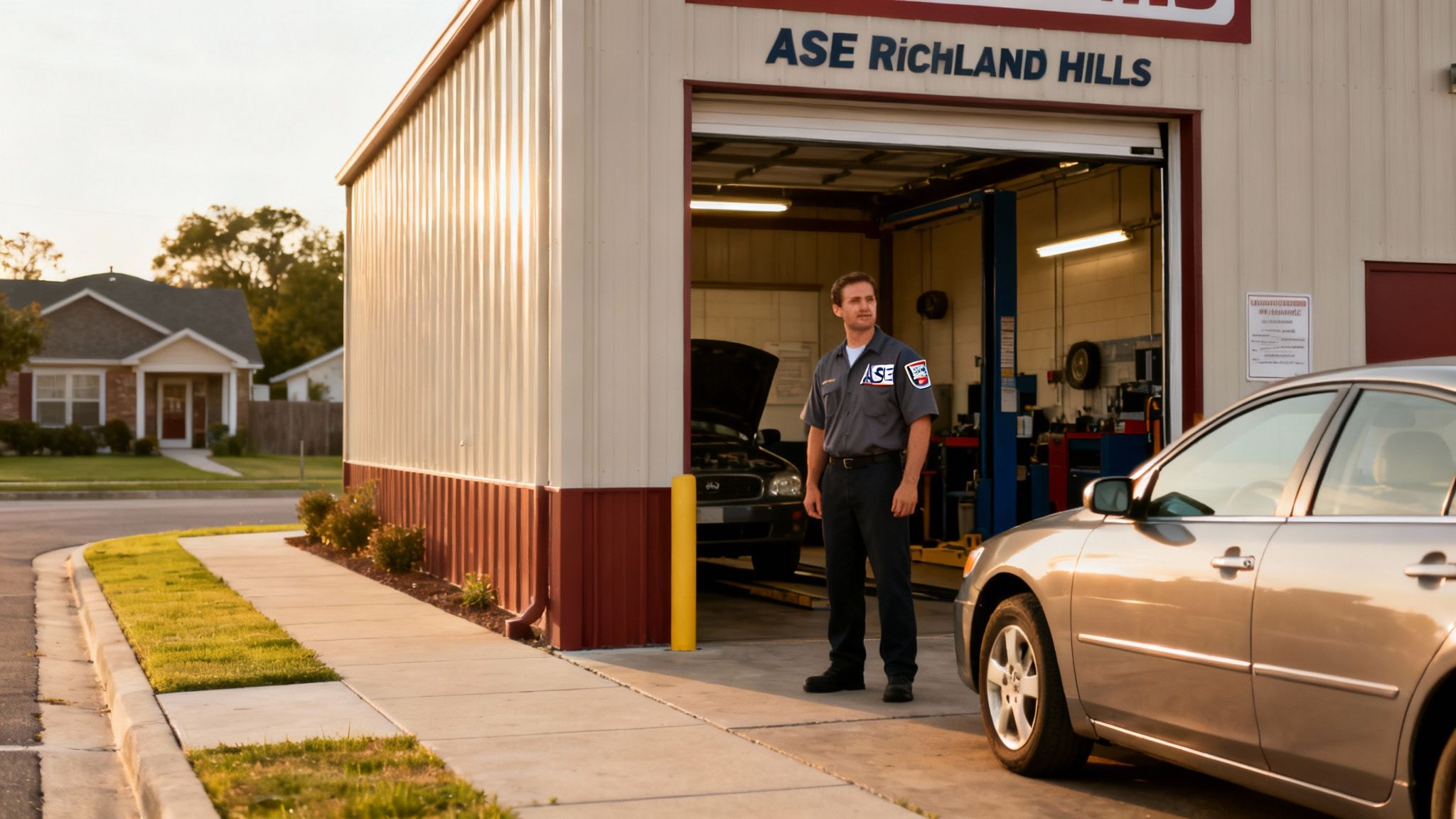
Knowing why your car needs a fluid flush is half the battle. The other half? Finding a local shop in Richland Hills you can actually trust to do the job right. For drivers here in Northeast Tarrant County, it’s about more than just getting the work done—it’s about peace of mind.
The single most important thing to look for is who’s actually turning the wrenches. Always choose a shop with ASE-certified technicians. This isn’t just a fancy sticker on the window; it's a guarantee that the mechanics have proven their skills and are committed to keeping up with today's complex vehicles.
What to Look for in a Local Shop
Beyond the certifications, a great shop respects your time and your wallet. Car maintenance shouldn't throw your whole week off track.
- No-Appointment Convenience: Life is busy. A shop that takes walk-ins for services like fluid flushes clearly values its customers' schedules.
- Transparent Pricing: There should be no surprises when you get the bill. A trustworthy shop gives you a clear, upfront estimate before any work starts.
- Community Focus: Look for businesses that give back with local specials, like discounts for military members, first responders, or on designated "Ladies Day" events.
When you choose a local auto shop, you're not just another number on a work order. You're a neighbor, and the service should reflect that. It’s all about building long-term trust for every one of your car’s needs.
The need for good, reliable service is only growing. The U.S. automotive service market is on track to hit $281.23 billion by 2031, largely because we're all driving our cars more. Here in Texas, our daily commutes and blistering heat put an incredible strain on vehicles, making a professional fluid flush service a non-negotiable for preventing breakdowns.
At Express Lube & Car Care, our ASE-certified team delivers that expert service with the convenience you need. We offer a complete lineup of fluid exchange services to keep your vehicle running strong and safe on these Texas roads.
Common Questions We Hear About Fluid Flushes
Even after explaining the basics, we find drivers still have a few lingering questions about fluid flush services. Let's clear up some of the most common ones so you can feel confident about your car's maintenance.
Is Just Topping Off the Fluid Good Enough?
We get this one a lot. While adding a little fluid to a low reservoir might seem like a quick fix, it's absolutely not a substitute for a real fluid flush service. When you just top it off, you're mixing fresh, clean fluid with all the old, contaminated gunk that’s already circulating.
Think of it like adding a cup of clean water to a gallon of mud—it doesn’t really clean anything. A full flush is the only way to completely remove the sludge and degraded fluid that slowly grinds away at your car's vital parts.
Can a Fluid Flush Fix My Car's Current Problem?
It’s really important to see a fluid flush for what it is: preventative maintenance, not a magic cure-all for existing mechanical problems. If your transmission is already slipping hard or your power steering pump is whining loudly, new fluid isn't going to reverse the internal damage that's already done.
A fluid flush is meant to prevent problems from ever starting by keeping parts clean and lubricated. It's an investment in your car's future, not a repair for past neglect.
If you’re already noticing serious symptoms, you need a proper diagnostic check to find the real problem. A flush might be part of the solution, but only after the broken parts are repaired or replaced.
Are Synthetic Fluids Really Worth the Extra Money?
For most modern cars driving in the tough Texas heat, the answer is a definite "yes." Synthetic fluids are specifically engineered to handle high temperatures way better than conventional fluids can. This means they give you better protection against sludge and keep performing at their peak for much longer.
Just look at the benefits:
- Enhanced Heat Resistance: This is critical for protecting your engine and transmission during our scorching summers and in constant stop-and-go traffic.
- Longer Service Intervals: Synthetics simply don't break down as fast, which often means you can go longer between flushes.
- Superior Lubrication: They provide a better protective film for all the complex moving parts, cutting down on friction and long-term wear.
Sure, the upfront cost is a bit more, but the long-term payoff—better performance and a much lower risk of expensive repairs—makes synthetic fluid a smart choice for keeping your car happy on the demanding roads around Richland Hills.
Ready to give your vehicle the expert care it deserves? The ASE-certified technicians at Express Lube & Car Care are here to help with fast, reliable fluid flush services. Visit us today for a professional fluid exchange with no appointment needed!