

Alignment sets the angles of your wheels so the car tracks straight. Balancing evens out the weight around each wheel and tire so it spins smoothly. If the car pulls to one side or the steering wheel sits crooked, think alignment. If you feel a shake in the steering wheel, seat or floor at highway speed, think balancing.
That is the short version. The longer version matters because the same symptoms can come from worn suspension, steering or brake parts, and a drive down Loop 820 or Rufe Snow Drive won’t tell you which it is. Here is how to sort it out.
One honest note first: alignment and balancing are tire and wheel services, and they are not on our list. We are an ASE-certified general repair shop in Richland Hills, so we focus on what we do every day: finding out whether a pull or a vibration is coming from your suspension, steering, brakes or drivetrain, and fixing those.
TL;DR
- Alignment adjusts wheel angles to the manufacturer’s specifications. Balancing corrects uneven weight in the wheel and tire assembly.
- Pulling, an off-center steering wheel and uneven edge wear point to alignment. Vibration at speed points to balance.
- Vibration and pulling can also come from worn suspension, steering or brake parts, which a physical inspection will catch.
- Hit a big pothole or curb? Have the car checked soon, because impacts can disturb both.
- Our technicians can inspect the parts behind these symptoms and send you photos in a digital vehicle inspection.
Table of Contents
- What alignment does
- What balancing does
- Alignment vs balancing side by side
- Which one do you need first?
- When it is not alignment or balance at all
- How potholes, curbs and long trips change things
- SUVs, trucks and heavy use
- Our perspective: look at the parts, not just the symptom
- Want a second opinion on a shake or a pull?
- Quick checks before you come in
- FAQ
- Ready for an answer you can see?
- Sources
What alignment does
Alignment is not an adjustment of the tires or wheels themselves. Bridgestone describes it as an adjustment of the suspension, the system that connects the vehicle to its wheels. Michelin adds that the goal is to bring the wheel angles to the manufacturer’s specifications, and those angles govern how the tires meet the road and how the car reacts when you drive straight.
Think of it like a shopping cart with a bent wheel. The wheel may spin fine, but the cart drifts because it is pointed the wrong way. Nothing is shaking. Something is just aimed wrong.
Signs of an alignment problem
- The car drifts or pulls to one side on a flat, straight road.
- The steering wheel is off-center when you are driving straight.
- Tread wears fast on the inside or outside edge of a tire.
AAA lists the same pattern: pulling, an off-center wheel and rapid, uneven wear on the edges of the tires. We cover the full list in our guide to the signs your car needs alignment.
What balancing does
No wheel and tire assembly is perfectly even. One spot is always a little heavier. At low speed you never notice it. At highway speed that heavy spot gets thrown around hundreds of times a minute, and you feel it as a shake. Balancing corrects this by adding small weights to the wheel, as AAA explains.
Signs of an imbalance
- A vibration in the steering wheel, seat or floor, often starting around 45 mph, according to AAA.
- Cupped or irregular wear patterns on the tread.
- A car that feels less responsive than it used to.
The tell is that the shake is tied to speed. It may appear at 55, smooth out at 70, or build as you go faster. If it happens only when you brake, that is a different story, and we get to it below.
Alignment vs balancing side by side
| Alignment | Balancing | |
|---|---|---|
| What it corrects | Wheel angles set by the suspension | Uneven weight in the wheel and tire |
| Typical feel | Pulling, crooked steering wheel | Shaking at certain speeds |
| Typical wear pattern | Rapid wear on inner or outer edges | Cupped or patchy wear |
| What causes it | Potholes, curbs, worn suspension or steering parts | Lost wheel weights, tire wear, a new tire or a bent wheel |
| Fixed by | Adjusting the suspension angles | Adding or moving small weights |
They are separate jobs, and one does not substitute for the other. Michelin puts it this way: a vibration tied to a specific speed points to imbalance, while a consistent pull after tire pressures are equalized points to alignment.

Which one do you need first?
A simple order of operations works for most drivers:
- Check tire pressure on all four tires. A low tire can make a car pull and feel mushy. Fix that before you chase anything else.
- Note when the symptom shows up. Only at speed? Only when braking? Only on turns? Write it down, because it saves diagnostic time.
- Look at the tread. Wear on one edge suggests alignment. Scalloped or patchy wear suggests balance or a worn part.
- Get the parts inspected. Loose or worn suspension and steering parts make both problems worse, and no adjustment holds if a part is worn out.
That last step is where we come in. If a technician adjusts angles on a car with a worn ball joint, the car may drive fine for a week and drift again. The worn part has to be dealt with first.
When it is not alignment or balance at all
This is the part most “alignment vs balancing” articles skip. A lot of cars come into a repair shop with a shake or a pull that has nothing to do with either one.
Vibration that shows up when you brake
If the steering wheel shudders mainly when you press the brake pedal, suspect the brakes, not the balance. Warped or unevenly worn rotors, a sticking caliper or worn pads can all do it. Our brake repair service in Richland Hills covers pads, rotors and caliper work, and a quick inspection can tell you which it is.
A pull that comes and goes
A car that pulls only under braking, or only when you let off the gas, often has a sticking brake caliper, a collapsed bushing or a worn control arm. Those are suspension and brake problems. If your car drifts right, our post on five ASE-backed checks for a car that pulls right walks you through what to look at first.
Looseness or clunking with the shake
A worn tie rod end, ball joint, wheel bearing or strut can make the steering wheel wander or shimmy. These are covered under steering and suspension repair, and they are the reason a quick inspection beats guessing. You can read more about what causes steering wheel vibration if you want the full list of suspects.
Vibration that you feel in the seat or the floor
Vibration through the seat or floor, rather than the steering wheel, can also point to the rear of the car. Drivetrain parts, such as a worn driveshaft joint on a truck or SUV, can produce a shake that feels like an unbalanced wheel. If the vibration changes with throttle rather than speed, that is a clue it is not the wheels.
| What you feel | Common suspects |
|---|---|
| Shake at highway speed, steady | Wheel and tire balance |
| Pull to one side on a flat road | Alignment, tire pressure, sticking brake caliper |
| Shudder only when braking | Rotors, calipers, pads |
| Wandering, loose steering, clunks | Tie rods, ball joints, bushings, struts |
| Vibration that changes with throttle | Drivetrain or engine mounts |
How potholes, curbs and long trips change things
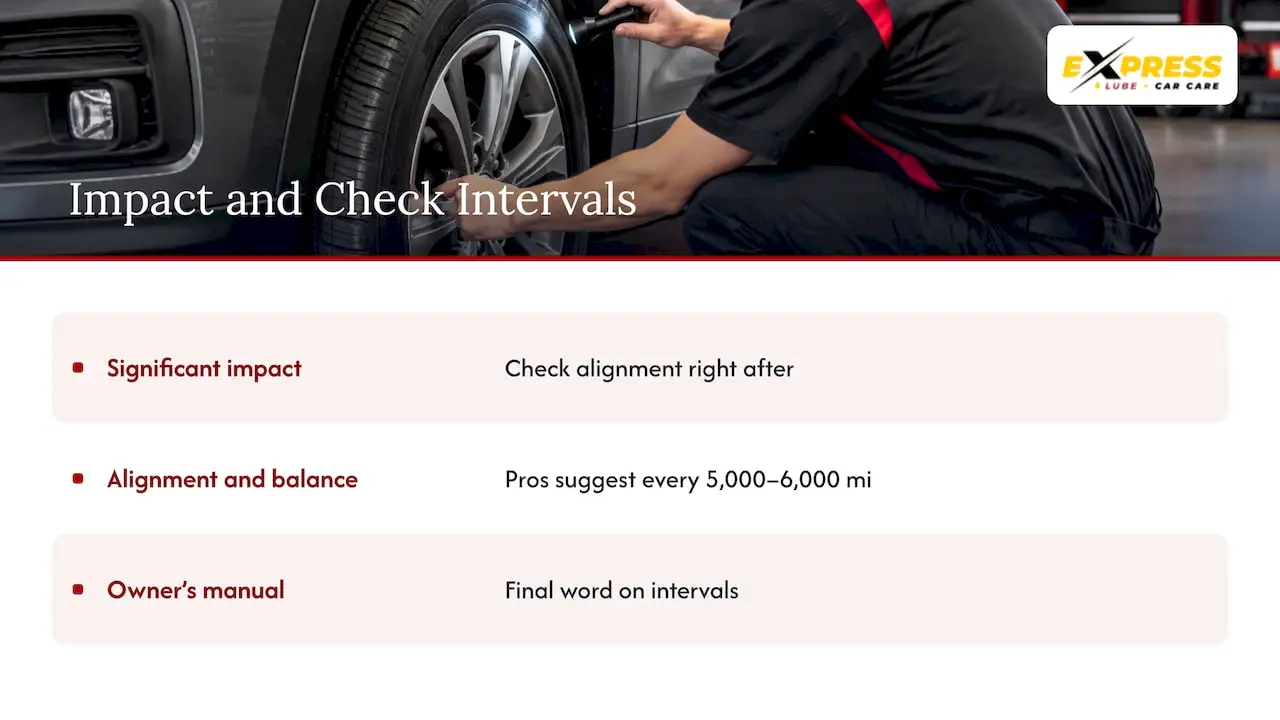
Texas roads are hard on suspensions. Construction zones, expansion joints and the occasional pothole after a heavy rain all send a jolt into the wheel. One hard hit can knock the angles out of specification, shift a wheel weight or bend a part. Bridgestone notes that alignment should be checked right after a significant impact such as a curb or a deep pothole, and it says many professionals suggest checking alignment and balance every 5,000 to 6,000 miles, while your owner’s manual has the final word on intervals.
The same logic applies to electric vehicles. A collision shop in Florida explains why an EV can feel off after a long road trip, with pulling, an off-center wheel and uneven wear all traced back to repeated road impacts. The advice carries over to any driver who has just put a lot of rough miles on the car.
If you want to know how rotation fits in, our guide to how often tires should be rotated and balanced and our plain-English piece on rotation, balance and alignment lay out the schedule. For the bigger picture, our maintenance schedule by mileage shows where these checks sit.
SUVs, trucks and heavy use
Heavier vehicles load their suspension harder, and that wears bushings, shocks and joints sooner. If you drive an SUV or truck around Tarrant County, especially with a trailer or a full load, the parts that hold alignment in place get tired faster. We explain the reasons in why SUVs need more frequent service. Rideshare and delivery drivers rack up miles quickly too, so a steering wheel that gradually wanders is worth checking early rather than waiting for a tire to wear out.
High mileage matters as well. Rubber bushings and joints age, and symptoms creep in slowly enough that you stop noticing them. Our overview of how high-mileage vehicles are serviced is a good reference.
Our perspective: look at the parts, not just the symptom
We see the same story often. A driver comes in sure they need one of the two services, because that is what a friend or a search result suggested. Sometimes they are right. Often the real cause is a worn part that no amount of adjusting will fix for long.
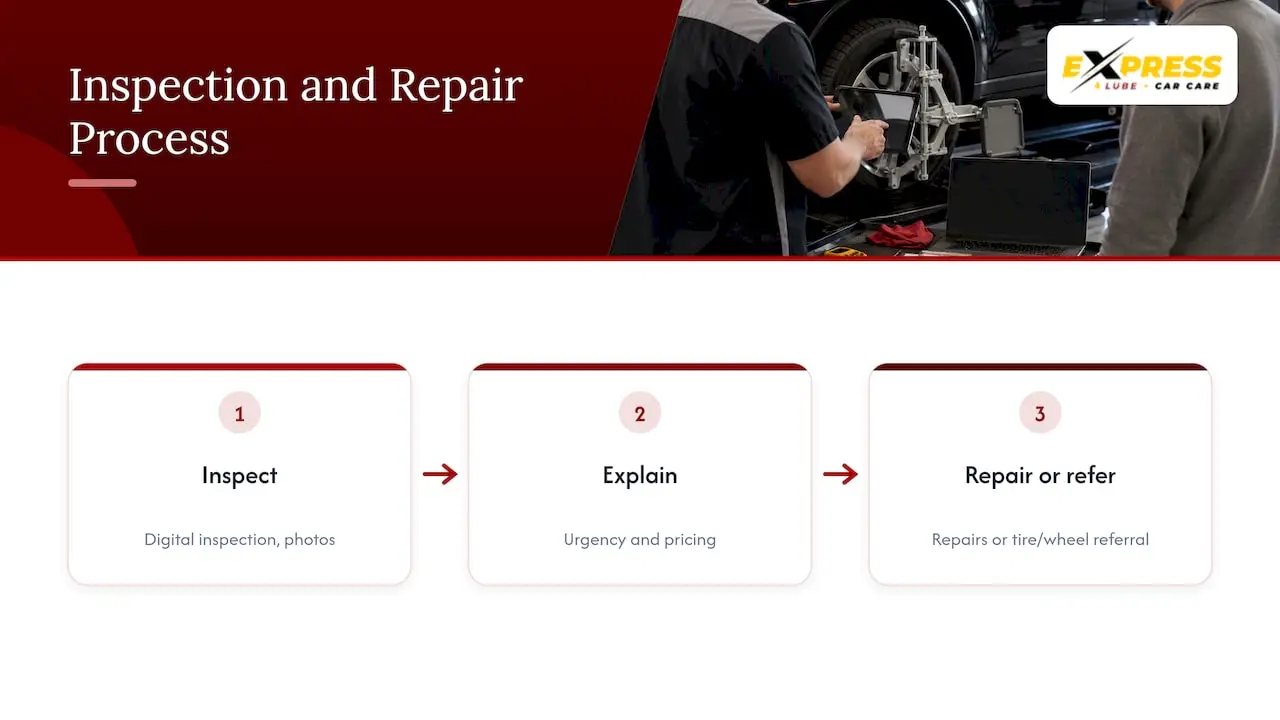
That is why we start with a look rather than a guess. Our ASE-certified technicians put the vehicle through a digital vehicle inspection, and you get photos of what they find, so you can see a cracked bushing or a leaking strut for yourself instead of taking our word for it. We explain what is urgent, what can wait and what is fine, and we give you pricing before work starts.
We also think it is only fair to say what we do and don’t do. Alignment and balancing are specialized tire and wheel work, and we do not list them. What we do handle is the repair side: steering and suspension, brakes, drivetrain, and the diagnostics that tell you where the problem lives. If the answer to your symptom turns out to be a tire or wheel service, we will tell you plainly, so you are not paying for repairs you do not need.
For qualifying repairs, our work carries a 24-month/24,000-mile warranty, which is the reason we want the diagnosis right the first time.
— Express Lube & Car Care
Want a second opinion on a shake or a pull?
If your steering wheel shakes, your car drifts or you hit something hard, stop by. We take walk-ins, and appointments are available if you prefer, with same-day service when possible. We will inspect your steering, suspension and brakes and show you photos of what is going on. If financing helps with a bigger repair, ask us about the options available.
Quick checks before you come in
These take ten minutes and give us useful information:
- Set all four tires to the pressure on the driver’s door jamb sticker.
- Find a straight, flat stretch and note which way the car drifts with your hands lightly on the wheel. Only do this when traffic is clear and keep control of the car.
- Look at the tread, front and rear, for wear on one edge or patches. Our tread depth check guide shows how.
- Write down the speed range where the vibration starts and stops.
- Tell us if the symptom changes with braking, turning or throttle.
If you want a broader routine, our car maintenance checklist covers the other tasks worth keeping on a calendar.
FAQ
How do I know if I need a balance or an alignment?
Vibration in the steering wheel, seat or floor at certain speeds usually points to balance. Pulling to one side, a crooked steering wheel or wear on the tire edges usually points to alignment. Because worn suspension, steering and brake parts can mimic both, an inspection is the surest way to tell.
Should you do balancing or alignment first?
It depends on your symptom, and there is no single required order. What matters more is that worn suspension or steering parts are fixed before any angle adjustment, since loose parts will not hold a setting. Have the car inspected first so the work happens in the right sequence.
Can I do balancing without alignment?
Yes. They are separate services that fix separate problems. If your only symptom is a speed-related shake and the car tracks straight with even tire wear, balance alone may be what you need. If the tires are wearing unevenly, balance will not solve that.
Which is more expensive, alignment or balancing?
Prices vary by shop, vehicle and what the work involves, so we will not quote a figure for services we do not offer. Ask any shop for the price before work begins. It is also worth asking whether worn parts are the real cause, because replacing a part can cost more than an adjustment but saves repeating the visit.
Can bad brakes feel like an unbalanced tire?
Yes. Warped rotors and sticking calipers can send a shudder through the steering wheel, but usually only while braking. If the shake appears when you are cruising and not touching the pedal, balance is the more likely cause.
Ready for an answer you can see?
Call us at (817) 284-8478 or schedule service with Express Lube & Car Care in Richland Hills. Walk-ins are welcome.
Sources
- Wheel Balance vs. Alignment: What’s the Difference and Why It Matters, AAA Automotive
- Wheel Alignment & Balancing Explained, Michelin USA
- Handling Problems, Michelin USA
- What You Need to Know About Tire Alignment, Bridgestone
- Tesla Alignment Florida: After Holiday Road Trips, Car Geeks Collision