

SUVs need more frequent service than most drivers expect, and the reasons come down to physics more than brand or price tag. Heavier curb weight puts extra stress on brakes, tires, and suspension with every mile. Add a complex AWD or 4WD drivetrain, regular towing, or daily stop-and-go traffic, and wear accelerates faster than the standard maintenance schedule accounts for. Here is what that means in practice:
- Weight-driven wear: Heavier SUVs wear brakes and tires faster, especially in city driving where braking is constant.
- Drivetrain complexity: AWD and 4WD systems add transfer cases and rear differentials that need their own fluid services, separate from a standard oil change.
- Demanding use cases: Towing, off-roading, and mountainous driving all push fluids and mechanical parts harder than normal commuting does.
- Common high-frequency needs: Brake pad replacement, tire rotations, alignment checks, and drivetrain fluid changes come up sooner on SUVs than on lighter passenger cars.
- Real-world examples: Chevrolet SUVs like the Tahoe and Suburban and the Hyundai Palisade all carry enough weight and drivetrain complexity to make proactive servicing a financial necessity, not just a suggestion.
Why regular maintenance pays off for SUV owners
Staying on top of your SUV’s service schedule does more than prevent breakdowns. It protects your wallet, your safety, and your vehicle’s long-term value.
A clean air filter alone can improve fuel mileage by up to 10%, and keeping tires properly inflated adds up to 3% more. Those gains add up over tens of thousands of miles. Routine oil change benefits extend engine life and keep fuel consumption in check, especially on larger SUV engines that hold more oil and run hotter under load.
Documented service history also protects your investment when it is time to sell. Buyers and dealerships pay more for SUVs with a clear maintenance record, and a complete service log gives you real negotiating leverage at trade-in.
- Timely oil and filter changes prevent sludge buildup that shortens engine life
- Brake inspections catch worn pads before they damage rotors, saving hundreds in repair costs
- Tire rotations and alignment checks extend tire life and reduce uneven wear
- Fluid services for AWD components prevent costly drivetrain failures
- Consistent servicing keeps safety systems and driver-assist sensors calibrated correctly
How SUV type and drivetrain change your maintenance needs
Not every SUV carries the same service burden. A compact crossover on 17-inch tires with front-wheel drive costs noticeably less to maintain than a full-size three-row SUV with AWD and a tow package.
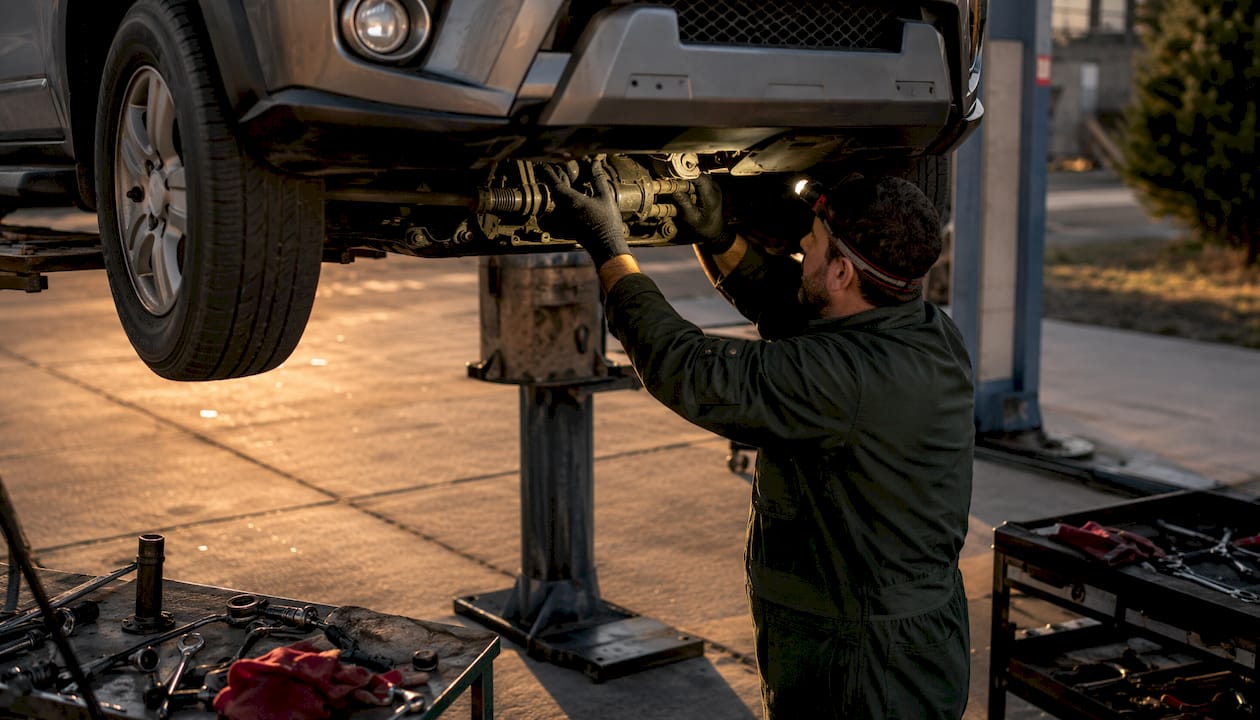
Compact SUVs generally have smaller brakes, lighter tires, and simpler drivetrains, so routine wear items come up less often. Midsize and full-size models like the Chevrolet Tahoe or Hyundai Palisade carry more weight, use larger tires with higher load ratings, and often include AWD systems that require separate fluid services for the rear differential and transfer case. Neglecting those fluids risks internal gear failures that cost far more than the service itself.
Off-road use adds another layer. Dirt and debris accelerate wear on suspension bushings, ball joints, and wheel bearings. Even occasional gravel-road driving can push alignment out of spec faster than highway miles alone would. Signs you may need service sooner than scheduled include:
- Pulling to one side while braking or driving
- Vibration or noise from the wheels or suspension
- Brake pedal feeling soft or requiring more pressure than usual
- Uneven tire wear visible on a quick visual check
- Warning lights for AWD, traction control, or oil life
Pro Tip: If you tow regularly or drive in hilly terrain, treat your SUV as if it is always in “severe service” mode and shorten your service intervals accordingly.
Recommended service intervals for SUVs
Most SUVs follow a baseline schedule, but actual intervals depend heavily on how and where you drive. Severe driving conditions like towing, mountainous roads, or extended idling can cut recommended oil change intervals from 10,000 miles down to 5,000 miles or less.
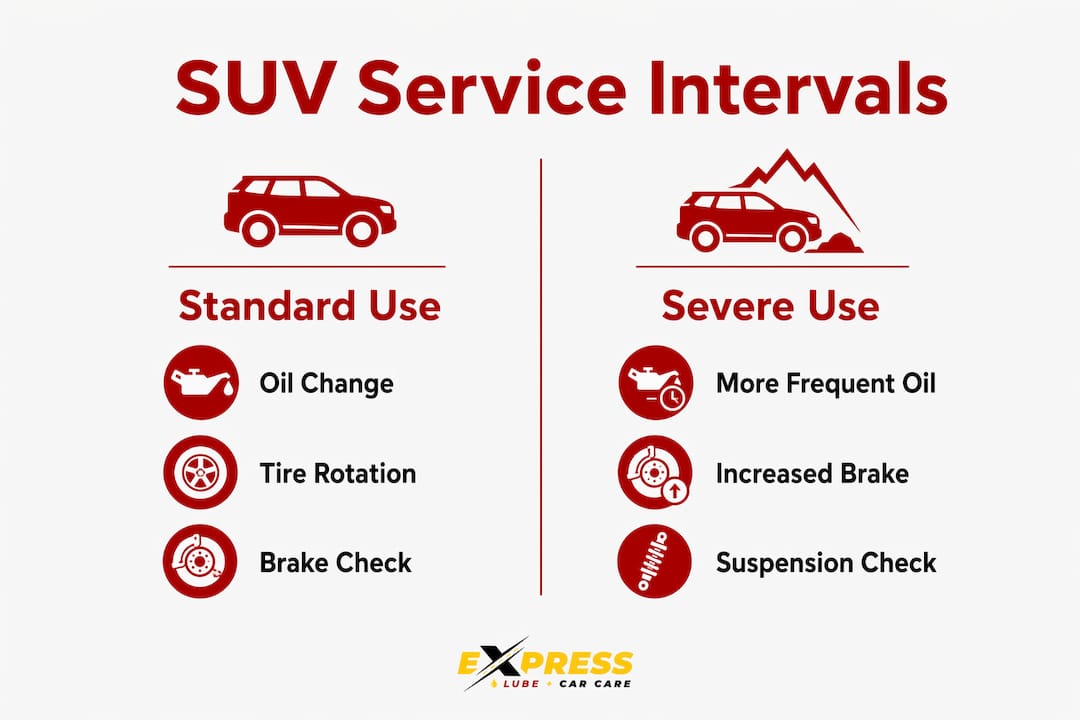
For a practical car maintenance schedule, use the table below as a starting point and adjust tighter if your driving qualifies as severe.
| Service task | Standard interval | Severe-use interval |
|---|---|---|
| Oil and filter change | 7,500 miles or more | 5,000 miles or less |
| Tire rotation | 6,000 miles or more | 5,000 miles or less |
| Brake inspection | At least once a year | More frequently in severe conditions |
| Alignment check | 6,000 miles or more | Every rotation |
| AWD/4WD fluid service | Per manufacturer spec | Shorten significantly under severe use |
| Cabin air filter | 15,000 miles or more | 12,000 miles or more |
| Engine air filter | Around 30,000 miles | Around 20,000 miles |
Manufacturer oil-life monitoring systems on vehicles like Chevrolet SUVs adjust the oil change reminder based on actual driving data, which is a useful tool. That said, the system does not account for AWD fluid services or brake wear, so you still need to track those manually or with your service shop.
How maintenance directly affects your SUV’s safety and fuel economy
Worn brakes and degraded suspension components do not just cost money. They reduce your ability to control a heavy vehicle in an emergency. Early brake pad replacement prevents metal-to-metal contact that can compromise stopping distance and damage rotors. On a full-size SUV traveling at highway speed, that difference in stopping distance is not abstract.
Driver-assist systems add another dimension. Sensors for lane-keeping, automatic emergency braking, and blind-spot monitoring rely on calibration that can drift after a suspension repair or even a windshield replacement. Staying current on scheduled inspections keeps those systems working as designed.
On the fuel side, a clogged air filter forces the engine to work harder, burning more fuel for the same output. Proper tire inflation reduces rolling resistance. Together, these simple maintenance steps can meaningfully reduce your fuel costs over a year of driving.
- Replace air filters on schedule to maintain engine efficiency
- Keep tires inflated to the manufacturer’s recommended PSI
- Address suspension noise early before it affects steering response
- Inspect brake fluid condition annually, as moisture absorption reduces braking performance
- Keep sensors and cameras clean, especially after off-road use or heavy rain
What certified ASE technicians recommend for SUV owners
Certified ASE technicians consistently point to one habit that separates owners who avoid big repair bills from those who don’t: catching small problems before they compound. A worn bushing caught at a routine inspection costs a fraction of the suspension damage it causes if left alone.
Quality parts and transparent pricing matter too. Using the correct fluid specification for your AWD system, for example, is not optional. The wrong fluid can damage seals and cause the kind of drivetrain failure that runs into thousands of dollars. Technicians also stress keeping a written service log, since documented maintenance history protects your warranty and strengthens your position at resale.
- Schedule a full inspection at least once a year, regardless of mileage
- Use manufacturer-specified fluids for AWD, transmission, and brake systems
- Replace tires as a matched set to avoid stressing AWD components
- Address warning lights within a week, not “when it gets worse”
- Choose a shop with ASE-certified technicians and a clear, written estimate before work begins
Pro Tip: Ask your technician to walk you through any wear items found during an inspection. A good shop will show you the worn part, not just tell you about it.
Ready to keep your SUV running right?
Express Lube & Car Care serves SUV owners in the Richland Hills area with no-appointment walk-in service, certified ASE technicians, and honest pricing on every job. Whether your SUV needs a routine oil change, a brake inspection, or a full drivetrain fluid service, we get it done right the first time. Check out our current oil change specials and ask about our 24-month warranty on qualifying repairs.
Key Takeaways
SUVs need more frequent service because their weight, drivetrain complexity, and demanding use cases accelerate wear on brakes, tires, suspension, and drivetrain fluids faster than standard passenger cars.
| Point | Details |
|---|---|
| Weight drives faster wear | Heavier SUVs wear brake pads and tires faster, especially in stop-and-go driving. |
| AWD/4WD needs extra service | Transfer case and rear differential fluids require separate service intervals beyond a standard oil change. |
| Severe use shortens intervals | Towing or mountainous driving can cut oil change intervals to 5,000 miles or less from 10,000. |
| Fuel gains from maintenance | A clean air filter can improve mileage by up to 10%; proper tire inflation adds up to 3%. |
| Service records protect value | Documented maintenance history increases resale leverage and supports warranty compliance. |
FAQ
How often should an SUV be serviced?
Most SUVs need an oil change and tire rotation every several thousand miles under normal conditions, with a full inspection at least once a year. Severe driving conditions like towing or off-roading shorten that interval to more frequent service.
What is the $3,000 rule for cars?
The $3,000 rule is an informal guideline suggesting you should consider replacing a vehicle rather than repairing it when a repair costs more than what owning becomes financially reasonable. For SUVs, consistent preventive maintenance is the best way to avoid expensive repairs.
Which SUVs tend to require the least maintenance?
Compact crossovers with front-wheel drive and naturally aspirated engines generally carry lower maintenance costs than full-size or AWD models, because their tires, brakes, and drivetrains are simpler and less expensive to service.
Why do AWD SUVs need more frequent fluid changes?
AWD systems include additional components like transfer cases and rear differentials that require their own fluid services. Neglecting these can cause internal gear failures that are far more expensive than the routine fluid change itself.