

High-mileage vehicle service is defined as a targeted maintenance approach that prioritizes condition-based inspections and critical system care over generic, fixed-interval schedules. Once your car crosses 100,000 miles, the rules change. Wear patterns become less predictable, fluids degrade faster, and small leaks that were harmless at 50,000 miles can cascade into engine failures at 150,000. Understanding how high-mileage vehicles are serviced gives you a real advantage. You stop reacting to breakdowns and start preventing them. Express Lube & Car Care works with high-mileage cars every day, and the difference between a vehicle that lasts 200,000 miles and one that doesn’t usually comes down to a few consistent habits.
What maintenance tasks are critical for high-mileage vehicles?
The most effective maintenance for high-mileage cars focuses on five systems: fluids, filters, belts, cooling, and brakes. Each one carries a disproportionate share of the risk when neglected on an older vehicle. Fluids like engine oil, coolant, transmission fluid, brake fluid, and power steering fluid remove heat and debris from critical components. When those fluids break down, the damage compounds quickly.
High-mileage engines benefit from oils specifically formulated for older seals and gaskets. These oils contain conditioners that reduce minor leaks and maintain viscosity under higher operating temperatures. Switching to a high-mileage oil formula at 75,000 miles or beyond is one of the most cost-effective moves you can make.
Here is a practical checklist of critical tasks for cars with significant mileage:
- Engine oil and filter: Change every 3,000–5,000 miles with a high-mileage formula
- Coolant flush: Service every 30,000 miles or as the system shows signs of degradation
- Transmission fluid: Check condition at every oil change; service when discolored or burnt
- Brake fluid: Replace every two years regardless of mileage
- Air and cabin filters: Inspect every 15,000 miles; replace when restricted
- Belts and hoses: Visually inspect at every service; replace on age and condition
- Tire rotation and pressure: Every 5,000–7,500 miles to even out wear
- Battery and charging system: Test annually after 3 years of service
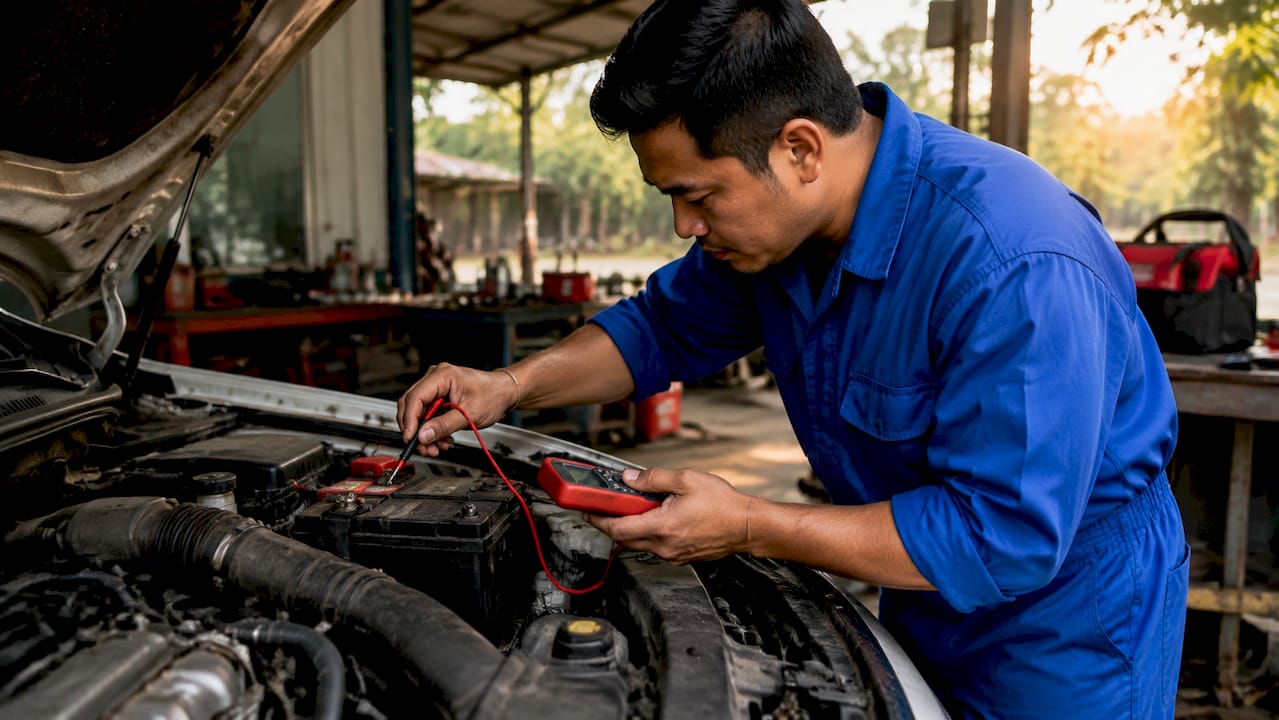
Battery health, belts, and hoses require regular checks to prevent sudden breakdowns in high-mileage cars. A cracked hose or a weak battery rarely announces itself before it fails.
Pro Tip: Check all fluid levels every time you fill up with gas. It takes two minutes and catches leaks before they become expensive problems.
How do usage patterns affect servicing schedules?
Mileage alone does not determine car health. A car with 120,000 miles of mostly highway driving is often in better mechanical shape than one with 80,000 miles of short city trips. Usage conditions drive wear far more than the odometer reading suggests.
Short trips under five miles are particularly hard on high-mileage engines. The engine never fully reaches operating temperature, which means moisture and fuel residue accumulate in the oil. Brakes and batteries also suffer more in stop-and-go traffic because neither gets a chance to fully cycle through its normal operating range. A car used for daily urban commuting may need brake inspections twice as often as the same model used for highway driving.
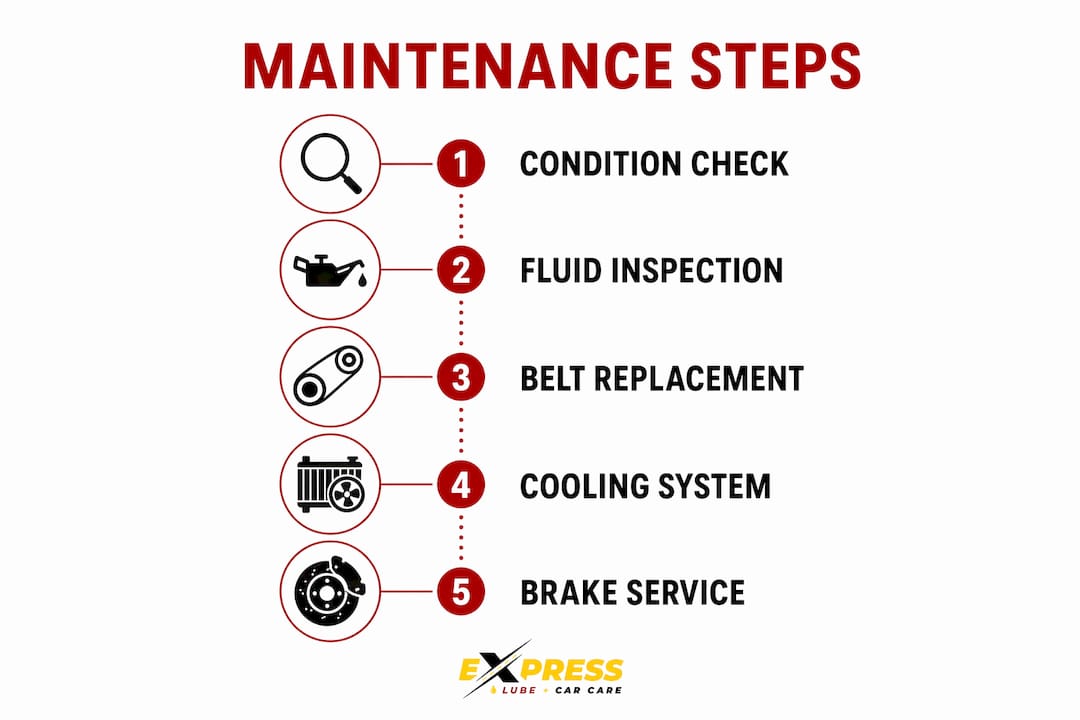
Condition-based inspections reduce unnecessary part replacements common in fixed-interval service menus. This means a technician looks at the actual state of the component, not just the number on the odometer. A brake pad at 4mm of remaining material on a city driver needs attention sooner than the same pad thickness on a highway driver. The physical condition tells the real story.
Seasonal changes also shift maintenance priorities. Summer heat accelerates coolant degradation and puts more strain on the battery. Winter cold thickens transmission fluid and reduces battery output. Timing your fluid inspections around seasonal transitions gives you a natural checkpoint that aligns with actual wear cycles.
Pro Tip: Ask your technician to run a diagnostic scan at each visit. On a high-mileage car, stored fault codes often reveal developing problems before any warning light appears on the dash.
Which costly repairs can proper servicing prevent?
The four most expensive failures on high-mileage vehicles are engine overheating, transmission damage, timing belt failure, and gasket failures. All four are largely preventable with consistent, targeted maintenance.
Cooling system maintenance every 100,000 miles prevents catastrophic engine damage. Replacing hoses and the thermostat costs $100–$500. Ignoring that service and suffering an overheating event on an interference engine can cost $3,000–$8,000 in repairs. That is a ratio no car owner should accept.
Transmission fluid tells a similar story. Checking transmission fluid condition at each oil change costs nothing extra. A full fluid service runs $100–$250. Letting the fluid degrade until the transmission fails means a repair bill of $2,000–$5,000. The math is straightforward.
| Neglected service | Preventive cost | Repair cost if ignored |
|---|---|---|
| Cooling system hoses and thermostat | $100–$500 | $3,000–$8,000 |
| Transmission fluid service | $100–$250 | $2,000–$5,000 |
| Timing belt replacement | $500–$1,200 | Up to $8,000 |
| Valve cover gasket repair | $150–$400 | $3,000+ (seized engine) |
Timing belt replacement before 100,000 miles is critical on interference engines. A snapped timing belt destroys the engine instantly. The replacement cost of $500–$1,200 is one of the best investments you can make on a high-mileage car.
Ignoring oil leaks leads to progressive damage. A valve cover gasket repair at $150–$400 is straightforward. Letting that leak continue until the engine seizes pushes the cost past $3,000. Catching it early is the entire point of regular inspections.
How to build a practical maintenance plan for your car
A practical maintenance plan for a high-mileage vehicle starts with your owner’s manual as the baseline, then adjusts based on how you actually drive. The manufacturer’s schedule was written for average conditions. Your car’s real life probably looks different.
Prioritize safety-critical systems first. Brakes, tires, and steering components protect you and everyone around you. These get inspected at every service visit, not just when something feels wrong. Reliability repairs, like replacing a worn serpentine belt, come next. Comfort items, like a slightly noisy cabin air filter, can wait if the budget is tight.
A solid car maintenance schedule by mileage gives you a structured starting point. Build your plan around these core components:
- Baseline schedule: Use manufacturer intervals as a floor, not a ceiling
- Condition checks: Inspect fluids, belts, and hoses at every oil change
- Seasonal reviews: Check coolant, battery, and tires at the start of summer and winter
- Repair fund: Set aside a monthly amount for unexpected but inevitable repairs
- Service records: Keep a log of every service to spot patterns and avoid duplicate work
Preventive maintenance focused on fluids, filters, brakes, tires, and battery delivers the best return on investment for high-mileage vehicles. These are the areas where a small investment consistently prevents a large expense.
A full car maintenance checklist helps you track all 11 critical service categories in one place, which is especially useful when managing an older vehicle with multiple systems to monitor.
What are the key considerations for brakes, transmission, and cooling?
These three systems are the most interconnected on a high-mileage vehicle. Neglecting the cooling system accelerates wear in the engine and transmission because heat is the common enemy of all three. When one system runs hot, the others pay the price.
Brake fluid absorbs moisture over time. That moisture lowers the fluid’s boiling point, which causes brake fade under hard use. Replacing brake fluid every two years keeps the system performing as designed. On a high-mileage car that sees city driving, annual replacement is worth considering.
Transmission fluid condition is easy to check but often skipped. Dark, burnt-smelling fluid means the transmission is working harder than it should. Learning how to check transmission fluid takes about five minutes and gives you an early warning before damage sets in.
Cooling system hoses and the thermostat have a finite service life. Rubber hoses become brittle and crack after years of heat cycling. A thermostat that sticks open wastes fuel. One that sticks closed causes overheating. Brakes, tires, and suspension wear also manifest early as handling or stopping issues, so monitoring all three together during a single inspection saves time and catches problems before they become safety risks.
Pro Tip: Squeeze your radiator hoses when the engine is cold. A hose that feels mushy, brittle, or has visible cracks needs replacement before it fails on the road.
Key Takeaways
Servicing high-mileage vehicles effectively requires condition-based inspections, targeted fluid maintenance, and proactive replacement of wear items before they cause cascading failures.
| Point | Details |
|---|---|
| Condition over mileage | Inspect actual component wear rather than relying solely on odometer-based schedules. |
| Fluids are foundational | Engine oil, coolant, transmission fluid, and brake fluid must stay clean to prevent system failures. |
| Preventive cost vs. repair cost | Cooling, transmission, and timing belt service costs a fraction of the repairs they prevent. |
| Usage patterns change intervals | City driving and short trips accelerate wear on brakes, batteries, and engine oil. |
| Safety systems come first | Brakes, tires, and steering get priority in every maintenance plan. |
What we’ve learned from years of high-mileage service
The most common mistake I see from car owners is treating a high-mileage vehicle like it still follows the factory schedule. It doesn’t. At 100,000 miles, your car has its own history, its own wear patterns, and its own quirks. A generic service menu written for a new car off the lot simply doesn’t account for any of that.
Experienced technicians prioritize service based on vehicle condition and usage, not mileage alone. That’s the approach we take at Express Lube & Car Care, and it consistently saves our customers money. We’ve seen cars come in with 180,000 miles that are in better shape than some 90,000-mile vehicles, purely because of how they were maintained and driven.
High-mileage vehicles often develop overlapping issues, and diagnostics cut through the noise. Running a scan before recommending repairs means we fix what actually needs fixing, not what the mileage suggests might need fixing. That distinction saves you from paying for parts that still have years of life left.
The honest truth is that most high-mileage cars fail not because they wore out, but because they were neglected at the wrong moment. A $200 cooling system service skipped at 100,000 miles becomes a $5,000 engine repair at 110,000. Consistent, attentive care is the only thing that separates a car that reaches 200,000 miles from one that doesn’t.
— Express Lube & Car Care
High-mileage car care at Express Lube & Car Care
If your car has crossed the 100,000-mile mark, the right service partner makes a real difference. Express Lube & Car Care’s ASE-certified technicians specialize in high-mileage maintenance types and know exactly which systems to prioritize on an older vehicle.
No appointment needed. Walk in and our team will perform a thorough inspection, change your oil with the right high-mileage formula, and flag any developing issues before they become expensive repairs. Check out our current oil change and service specials to see what’s available for your vehicle right now. Keeping your high-mileage car on the road doesn’t have to be complicated or costly when you have the right team behind it.
FAQ
What does high-mileage vehicle service mean?
High-mileage vehicle service means a maintenance approach tailored to cars with 100,000 or more miles, focusing on condition-based inspections and targeted fluid, belt, and system care rather than generic fixed-interval schedules.
How often should you service a high-mileage car?
Service intervals depend on usage patterns, not just mileage. City drivers and those making frequent short trips should inspect brakes, oil, and battery more often than highway drivers covering the same total miles.
What is the most expensive repair to avoid on a high-mileage car?
Timing belt failure on an interference engine causes damage up to $8,000. Replacing the belt before 100,000 miles costs $500–$1,200 and prevents total engine destruction.
Does driving style affect how quickly a high-mileage car wears out?
Yes. Short trips under five miles, stop-and-go traffic, and frequent cold starts accelerate wear on the engine, brakes, and battery significantly faster than steady highway driving.
When should you switch to high-mileage oil?
Switch to a high-mileage oil formula at 75,000 miles or beyond. These oils contain seal conditioners that reduce minor leaks and maintain viscosity in older engines running at higher temperatures.