

When you find your brake pads wearing down unevenly, it's a sure sign that something else in your brake system is off-kilter. This isn't just a pad problem; it's a symptom of a deeper mechanical issue that needs attention.
Your Quick Guide to Uneven Brake Pad Wear
Every time you hit the brakes, you’re counting on a complex system to bring you to a smooth, safe stop. But if one brake pad is being forced to work harder than its partner, you get uneven wear. This not only shortens the life of your pads but also seriously compromises your stopping power and safety.
Think of it like a precision rowing team where one person is pulling out of sync—the whole boat gets thrown off course. When a brake component isn't pulling its weight, your car might pull to one side, you could hear strange grinding noises, or feel a vibration through the brake pedal. These are your car’s warning signs that a small issue is about to become a big one.
The Main Culprits
So, what's really going on? A few key mechanical failures are almost always the root cause of uneven brake pad wear. Getting familiar with them is the first step to a proper fix.
- Sticking Caliper Components: The brake caliper is the hydraulic clamp that presses your pads against the rotor. Its piston and slide pins need to move freely, but they can get gummed up with rust and road grime. When they stick, a pad can get stuck against the rotor, wearing it down constantly.
- Warped or Damaged Rotors: Your brake rotor needs a perfectly flat, smooth surface for the pad to grip. If the rotor gets overheated and warps, or if it develops heavy rust or scoring, the pad can't make consistent contact. This creates high and low spots, grinding the pad down unevenly.
- Alignment and Hardware Issues: Sometimes, the entire caliper assembly is misaligned. In other cases, the small clips and hardware that hold the pad in place can break or fail. This forces the pad to sit at a slight angle, causing it to wear into a wedge shape over time.
This diagram shows how interconnected these parts are—a failure in one area directly leads to problems in another.
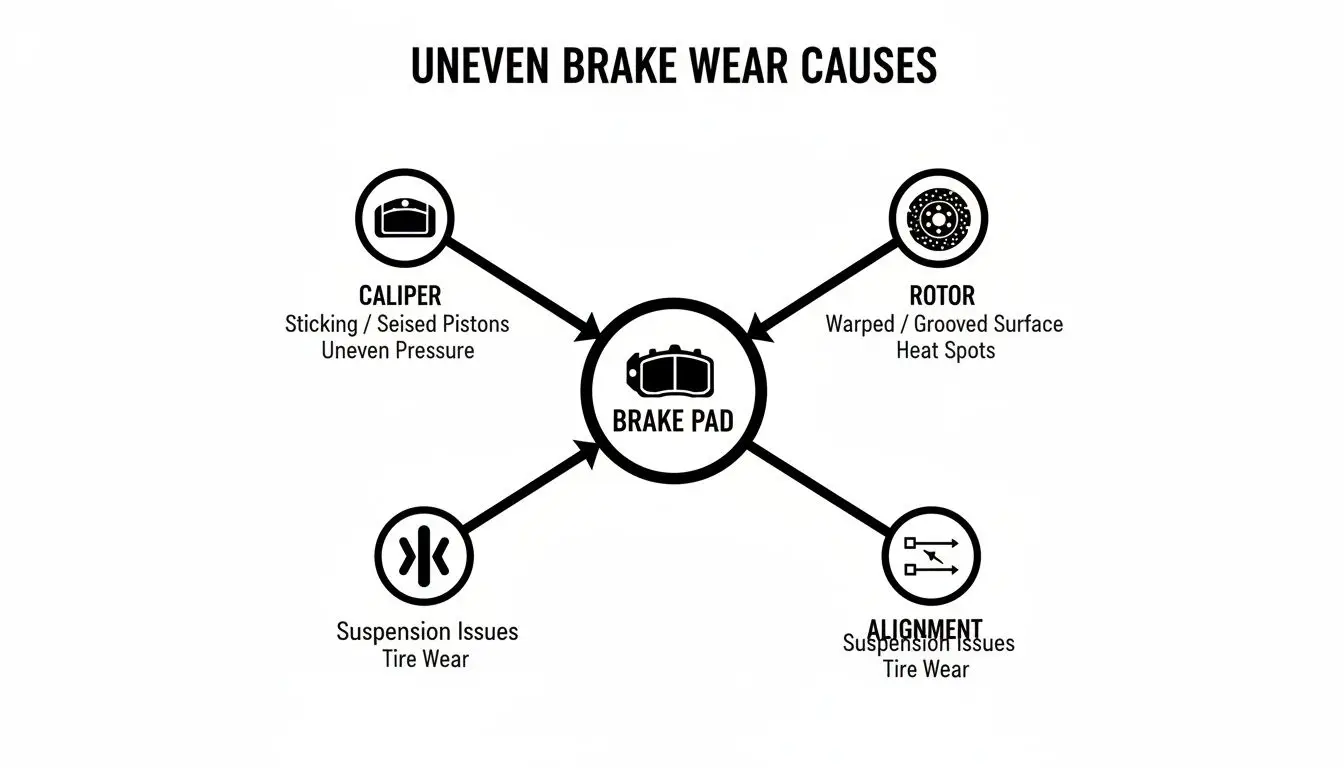
As you can see, the caliper, rotor, and even the vehicle's suspension alignment all have to work in perfect harmony for your brakes to function correctly and wear evenly.
To make it even clearer, here’s a quick-reference table summarizing what to look out for.
Common Causes of Uneven Brake Wear at a Glance
| Cause | Common Symptom | Typical Wear Pattern | Repair Urgency |
|---|---|---|---|
| Sticking Caliper | Car pulls to one side when braking; burning smell | Inner or outer pad wears much faster than the other | High – Safety risk |
| Warped Rotor | Pulsing or vibrating brake pedal; steering wheel shake | Grooves or high/low spots on the pad surface | Medium – Affects performance |
| Hardware/Alignment | Squealing or grinding noise; visible pad angle | Pad worn into a taper or wedge shape | Medium – Leads to further damage |
Ignoring these symptoms doesn't just lead to more expensive repairs down the road—it puts you and others at risk.
The #1 Cause: Sticking Brake Caliper Components
Hands down, the most common culprit behind uneven brake pad wear is a sticking brake caliper. Think of a C-clamp that’s supposed to squeeze and release smoothly. Now, imagine that same clamp getting rusty and binding up on one side—that’s pretty much what’s happening inside your wheel well when caliper parts start to seize.
These critical components live a tough life, constantly battling water, road salt, grime, and intense heat. Over time, this causes corrosion and gunk to build up, especially on the caliper slide pins and the caliper piston.
How Caliper Components Fail
Your brake caliper is meant to "float," or slide freely back and forth, on a set of greased guide pins. This movement is what allows it to clamp down with equal force on both the inner and outer brake pads. But when that grease breaks down and rust takes over, the pins get stuck.
A seized caliper slide pin is one of the most frequent problems we find during a brake inspection. It stops the caliper from centering itself, forcing one pad to do all the heavy lifting while the other barely makes contact. This is a classic recipe for rapid, lopsided wear.
It's a similar story with the caliper piston. This is the part that hydraulic fluid pushes out to press the inner pad against the rotor. When corrosion forms inside the caliper housing, it can stop the piston from pulling back after you let off the brake pedal.
What happens then? The inner brake pad gets stuck against the spinning rotor, silently grinding itself away even when you’re just coasting down the road.
Symptoms of a Sticking Caliper
So, how can you tell if a sticky caliper is your problem? Keep an eye (and an ear) out for these tell-tale signs:
- Vehicle Pulling: Your car lurches to one side when you hit the brakes. It will always pull toward the side with the sticking caliper because that brake is dragging.
- Burning Smell: You notice a constant burning odor, a lot like burnt carpet, coming from one of your wheels after a drive. That's the unmistakable smell of an overheated pad.
- Excessive Brake Dust: One wheel is always caked in black brake dust, looking much filthier than the others. This is proof that one set of pads is wearing down way too fast.
Imagine you're driving through Richland Hills, Texas, and feel your car pulling to one side when you brake—that’s a textbook sign of a sticking caliper. With the average car on US roads now being over 12 years old, neglected brake hardware is a bigger issue than ever. In fact, a seized caliper can speed up pad wear by as much as 50% on one side.
Fixing a seized caliper usually means more than just slapping on new pads. The job often involves a thorough cleaning and re-lubrication of the slide pins. If the corrosion is bad enough, the entire caliper might need to be replaced. This is also why keeping your brake fluid fresh is so important, which you can learn more about in our guide on how to bleed brakes.
How Warped Brake Rotors Create Problems
It's not always the caliper's fault. Sometimes, the source of uneven brake pad wear lies with the brake rotor itself. Think of the rotor as a perfectly flat, smooth surface. Your brake pads need to press squarely against this surface to generate consistent friction and stop your car. But what happens when that surface isn't flat anymore?
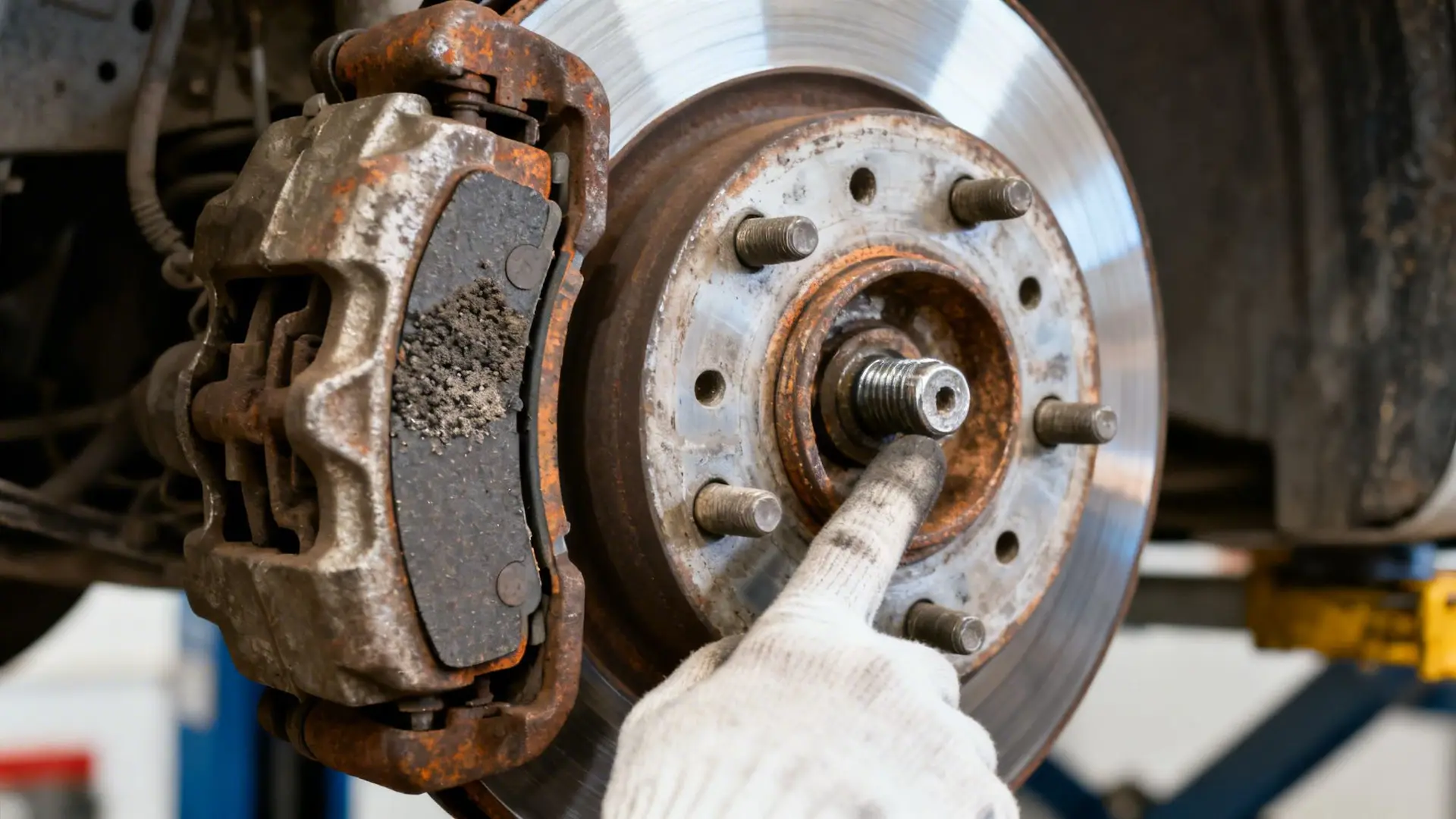
The biggest enemy of a rotor is intense heat from heavy or prolonged braking. This heat can cause the metal to distort, creating subtle high and low spots across the face of the rotor. This condition is called warping, or "runout" in technician-speak, and it ruins the smooth contact area your pads depend on.
Imagine trying to write on a bumpy, warped tabletop. Your pencil tip (the brake pad) would skip over the low spots and press down hard only on the high spots. As the warped rotor spins, your pad makes inconsistent contact, wearing it down erratically and setting it up for early failure.
The Vibrations and Grooves Tell the Story
A warped rotor is the number one cause of that pulsing or vibrating feeling you get in the brake pedal when slowing down. It's the sensation of the pad literally skipping over the rotor's uneven surface, and you feel that vibration travel right up through the pedal.
Corrosion is another tell-tale sign. Over time, a "lip" of rust can form on the inner and outer edges of the rotor where the pads don't quite reach. This rusty ridge can act like a ramp, forcing the brake pad to sit at an angle and wear down unevenly.
When a pad makes contact with a warped rotor, only a fraction of its surface does the work. This not only causes uneven wear but also significantly increases stopping distances, as the brakes can't generate the full friction they were designed for.
Rotor Resurfacing vs. Rotor Replacement
When a technician spots a warped rotor, there are two paths forward:
- Resurfacing (Machining): If the warping is minor and the rotor still has enough thickness, a special brake lathe can shave off a very thin layer of metal. This restores a perfectly flat, true surface.
- Replacement: If the rotor is already too thin to be safely machined or the warping is too severe, it has to be replaced.
Getting this right is crucial. Our guide on brake rotor replacement service digs into the details if you want to learn more. Fixing rotor issues promptly ensures your new pads have a proper surface to work on, preventing the same wear problem from happening all over again.
Uncovering Misaligned and Failing Hardware
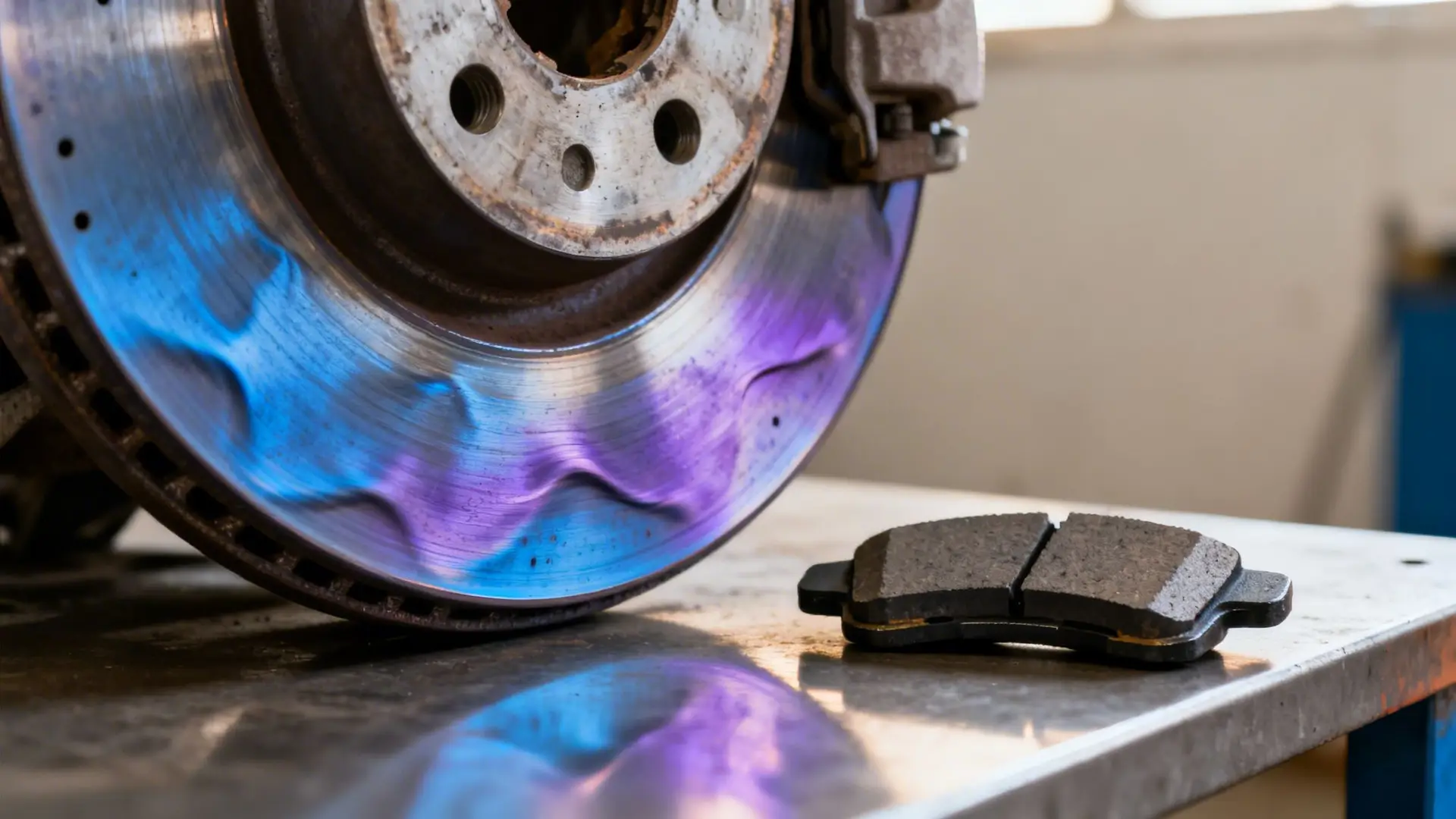
While seized parts are a huge problem, sometimes the culprit is much simpler: a brake component is just not sitting straight. If a brake caliper isn’t mounted perfectly parallel to the rotor, you’re guaranteed to see uneven pad wear.
Think about a door that’s hanging crooked on its hinges. It’s never going to close flush in the frame; it’ll scrape and bind at the top or bottom. A misaligned caliper acts the exact same way, forcing the brake pad to meet the rotor at an angle.
The result is a classic "tapered" wear pattern. One end of the pad will be worn right down to the metal backing plate while the other side still has plenty of life left. It's a dead giveaway of an alignment problem in the brake assembly itself. A hard hit from a pothole or even a previous, sloppy brake job can be enough to knock a caliper bracket out of alignment.
The Role of Small But Mighty Hardware
It's not just about the big parts. Your brake system depends on a whole crew of small but essential hardware pieces. We’re talking about anti-rattle clips and shims that are designed to hold the brake pad firmly in its bracket, preventing any slop or vibration.
But when these little guys rust, break, or simply get left out during a careless repair, they can’t do their job. This allows the brake pad to vibrate, shift, or even tilt every single time you hit the pedal.
A complete brake service isn't just about swapping pads and rotors. It’s about inspecting, cleaning, and replacing this supporting hardware. Neglecting these small parts is a primary reason why brake noise and uneven wear return shortly after a "pad slap" job.
The consequences are bigger than you’d think. A loose pad will chatter against the rotor, causing high-pitched squeals and accelerated, all-over-the-place wear. This is a perfect example of how what causes uneven brake pad wear can be traced back to the smallest, most overlooked parts of the system.
If a caliper bracket is bent or off-kilter, one pad can wear out twice as fast as its partner. In fact, these kinds of alignment issues are so common they drive significant demand in the global automotive brake pad market. For commercial vehicles like ride-hailing fleets, misaligned calipers are known to increase pad replacement needs by as much as 35%. You can learn more about the market impact of these maintenance issues by reviewing recent industry analysis.
A quality brake job has to include a full inspection to catch these hardware and alignment problems. It’s the only way to be sure your new pads provide safe, reliable stopping power and last as long as they’re supposed to.
How to Spot Uneven Brake Wear Yourself
You don't need to be a mechanic to know when something’s off with your brakes. In fact, catching the early warning signs of uneven wear is simpler than you might think, and it can save you from a much bigger repair bill down the road.
It all comes down to paying close attention to your car. By using your ears, hands, and eyes, you can spot the clues and have a much more informed conversation with your technician.
Step 1: Listen for Brake Trouble
Your brakes will often tell you something's wrong long before you feel it. The next time you're driving, turn the radio down and listen carefully as you slow for a stop sign or press the pedal on a quiet street.
- A High-Pitched Squeal: This is often the sound of the built-in wear indicators. These little metal tabs are designed to scrape against the rotor when the brake pads get thin, making that annoying noise on purpose to tell you it's time for new pads. If you only hear it from one side of the car, that’s a dead giveaway one pad is wearing out faster.
- A Deep Grinding Noise: This is a much more serious problem. A harsh, metallic grinding means your brake pad is likely worn completely down to its metal backing plate. This is metal-on-metal contact, a dangerous situation that ruins your rotors and needs immediate attention.
Step 2: Feel for Problems in the Pedal and Steering
Next, focus on what you feel through the brake pedal and steering wheel. These physical sensations are direct feedback from your braking system.
A pulsating or vibrating feeling in the brake pedal is the classic sign of warped rotors. As the pads press against the rotor's uneven surface, you feel that shudder come right up through the pedal. You might even feel a shake in the steering wheel, too.
Another major red flag is your car pulling to one side when you hit the brakes. This is almost always caused by an issue on one side of the car—usually a sticking caliper that's making one brake work much harder than the other.
If your vehicle pulls sharply to the left or right during braking, it’s a sign of a significant imbalance in your brake system. This is a major safety concern because it makes your car's behavior unpredictable in an emergency stop.
Step 3: Look for Visual Clues
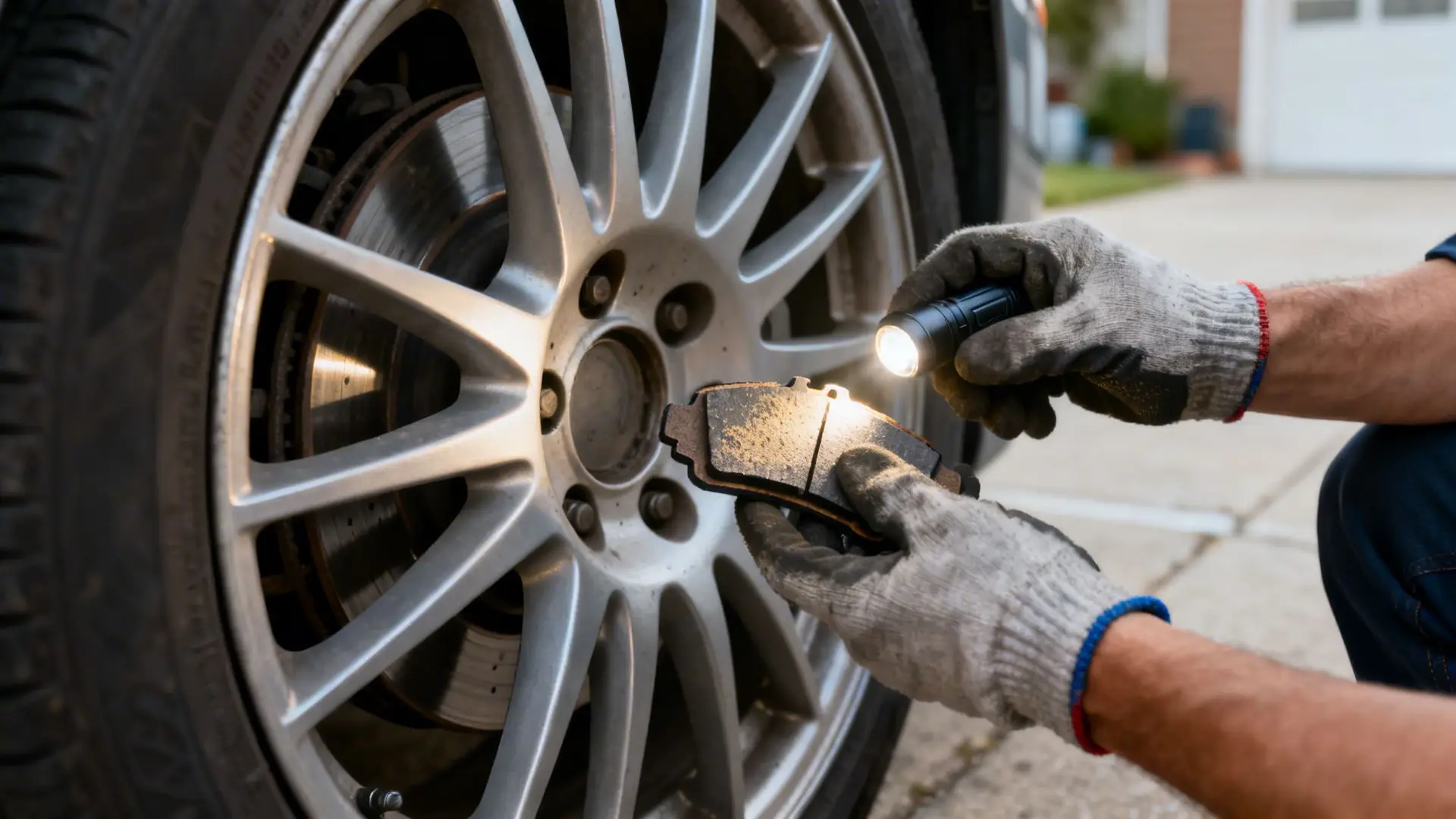
Finally, a quick visual inspection can confirm what you're hearing and feeling. You don't even have to take the wheels off—just park on a level surface with a flashlight.
Try to peek through the spokes of your wheels at the brake caliper and pads inside. Compare the driver's side to the passenger's side. If one brake pad looks obviously thinner than the pad on the other side of the car, you've found clear evidence of uneven wear.
Another visual clue is excessive brake dust. Is one wheel always way dirtier than the others? That's often the wheel with a sticking caliper, since the pad is constantly dragging and grinding itself into dust.
To help you put all the pieces together, we've created a simple chart to connect the symptoms you notice with their most likely cause.
DIY Brake Wear Symptom Checker
| Symptom | What You Hear/Feel/See | Likely Cause |
|---|---|---|
| Pulling to One Side | Car veers left or right when braking. | Sticking caliper or collapsed brake hose. |
| Pulsating Pedal | Shuddering or vibration felt in the brake pedal. | Warped brake rotors. |
| Squealing Noise | High-pitched squeal from one wheel during braking. | One brake pad wearing faster than the others. |
| Grinding Noise | Loud, harsh metallic scraping sound. | Brake pad is completely worn down; metal-on-metal. |
| Excessive Brake Dust | One wheel is consistently dirtier than the others. | Sticking caliper causing constant friction. |
| Thin Outer Pad | The visible outer pad is thinner than the inner pad. | Sticking caliper slide pins. |
While this table is a great starting point, remember that these are just the most common culprits. A professional inspection is the only way to be 100% sure what's going on. These simple checks, however, can empower you to spot trouble early and know when it's time to call in the experts.
Next Steps for Safe and Reliable Brakes
Knowing why your brake pads are wearing unevenly is one thing, but what you do next is what really matters for your safety. Ignoring the signs is like letting a small mechanical issue snowball into a major failure, which can compromise your stopping power and lead to much bigger repair bills down the road.
Once you’ve spotted the signs of uneven wear, it’s time to let a professional take over. While knowing how often to change brake pads is a good starting point, only a thorough, hands-on inspection can pinpoint the true cause of the problem.
Why a Professional Brake Service Is Your Best Bet
Here at Express Lube & Car Care, our ASE-certified technicians do more than just a quick "pad slap." We get to the bottom of what caused the uneven wear in the first place, because a proper brake job is about fixing the entire system.
That means we always:
- Measure rotor thickness and runout to spot any warping.
- Inspect caliper pistons and slide pins to make sure they move freely.
- Examine brake hardware like clips and shims for rust or wear.
- Check brake hoses and fluid to ensure there are no leaks or contamination.
A quality brake job restores the whole system back to how it was designed to work. We’ll show you exactly what’s wrong and explain the fix before we start any work, so you can feel confident in your decision.
For drivers in Richland Hills, that approach means having brakes you can count on, every single time. We get it done right the first time, saving you from return trips and giving you total peace of mind on the road. For more on maintenance schedules, you can also check out our guide on how often to replace brake pads.
Your safety isn't something to gamble on. Since we don't require appointments, you can get expert attention for your brakes without messing up your schedule. Just stop by anytime, and our team will get you back on the road safely.
Frequently Asked Questions About Brake Wear
When you're dealing with a brake problem, you’re bound to have questions. Getting straightforward answers is the first step toward understanding the seriousness of the issue and making a smart decision about repairs. These are a few of the most common questions our technicians hear every day.
Can I Just Replace the One Worn-Out Brake Pad?
This is probably the most frequent question we get, and the answer is always a firm no. Brake pads have to be replaced in axle sets—meaning both front wheels or both rear wheels at the same time.
Think of it like buying new tires; you wouldn't just replace the one that’s bald. Changing a single pad creates a dangerous imbalance in your braking system. Worse, it does nothing to fix the underlying mechanical problem that caused the uneven wear in the first place, so you’ll be right back in the shop in no time.
How Much Does It Cost to Fix Uneven Brake Wear?
The cost really depends on what’s causing the problem. Sometimes, it’s a simple fix. Cleaning and lubricating sticky caliper slide pins during a standard brake job, for example, adds very little to the final cost.
However, if a more serious part has failed, the price will go up. A seized caliper that needs a full replacement or a brake rotor that's too warped to be safely resurfaced will naturally be more expensive. A good technician will always give you a clear, upfront estimate after a full inspection, before any work begins.
How Often Should I Have My Brakes Inspected?
Being proactive is the best way to catch uneven wear before it becomes a major safety risk. We recommend a professional brake inspection at least once a year or every 12,000 miles.
Here’s an easy way to stay on top of it: ask for a brake check every time you get your tires rotated. The wheels are already off the car, making it the perfect opportunity for a technician to get a good look at your pads, rotors, and calipers. This lets us catch things like binding hardware early and perform preventative maintenance.
Is It Dangerous to Drive with Unevenly Worn Brake Pads?
Yes, absolutely. Uneven wear isn’t just a sign that your pads are getting old—it’s a clear symptom that your brake system is malfunctioning, which is a critical safety hazard.
A faulty brake system can lead to much longer stopping distances or cause the vehicle to pull sharply to one side during a hard stop. In a worst-case scenario, you could lose braking power on one wheel entirely. If you spot the signs, it's vital to get it checked out right away for your own safety.
If you're noticing any signs of uneven brake wear, don't wait for the problem to get worse. Bring your vehicle to Express Lube & Car Care for a thorough and honest inspection. Our ASE-certified technicians will find the root cause and get you back on the road with brakes you can trust. Visit us today—no appointment needed. Learn more at https://www.expressluberichlandhills.com.