

Warning lights, unusual noises, smoke, overheating, rough running, and loss of power can all indicate that your vehicle needs diagnosis—but none of these symptoms automatically identifies a failed engine component.
Modern vehicles contain interconnected ignition, fuel, cooling, electrical, emissions, and mechanical systems. A symptom that feels like a major engine problem can sometimes originate elsewhere, while seemingly minor symptoms can occasionally point to conditions that need prompt attention.
The best approach is to document what the vehicle is doing, inspect the relevant systems, and test before replacing parts.
Table of Contents
- What Are Common Signs of Engine Trouble?
- What Does the Check Engine Light Tell You?
- What Do Unusual Engine Noises Mean?
- What Can Exhaust Smoke Indicate?
- What Causes Rough Running or Loss of Power?
- Why Is Engine Overheating Important?
- Do Oil Leaks Mean the Engine Needs Repair?
- How Are Engine Problems Diagnosed?
- Engine Repair vs. Replacement
- Is Engine Repair Worth It on an Older Vehicle?
- Engine Repair in Richland Hills, TX
- Frequently Asked Questions
What Are Common Signs of Engine Trouble?
Your vehicle can provide several clues when an engine or related system is not operating normally.
Symptoms worth investigating include:
- Check engine light
- Unusual knocking, tapping, grinding, or other new noises
- Rough idle or engine misfires
- Loss of power or hesitation
- Engine overheating
- Smoke from the exhaust
- Oil or coolant leaks
- Repeated stalling
- Unusual odors
- Low oil-pressure warning
- Changes in engine operation or drivability
These are warning signs—not diagnoses. Several different systems can produce similar symptoms.
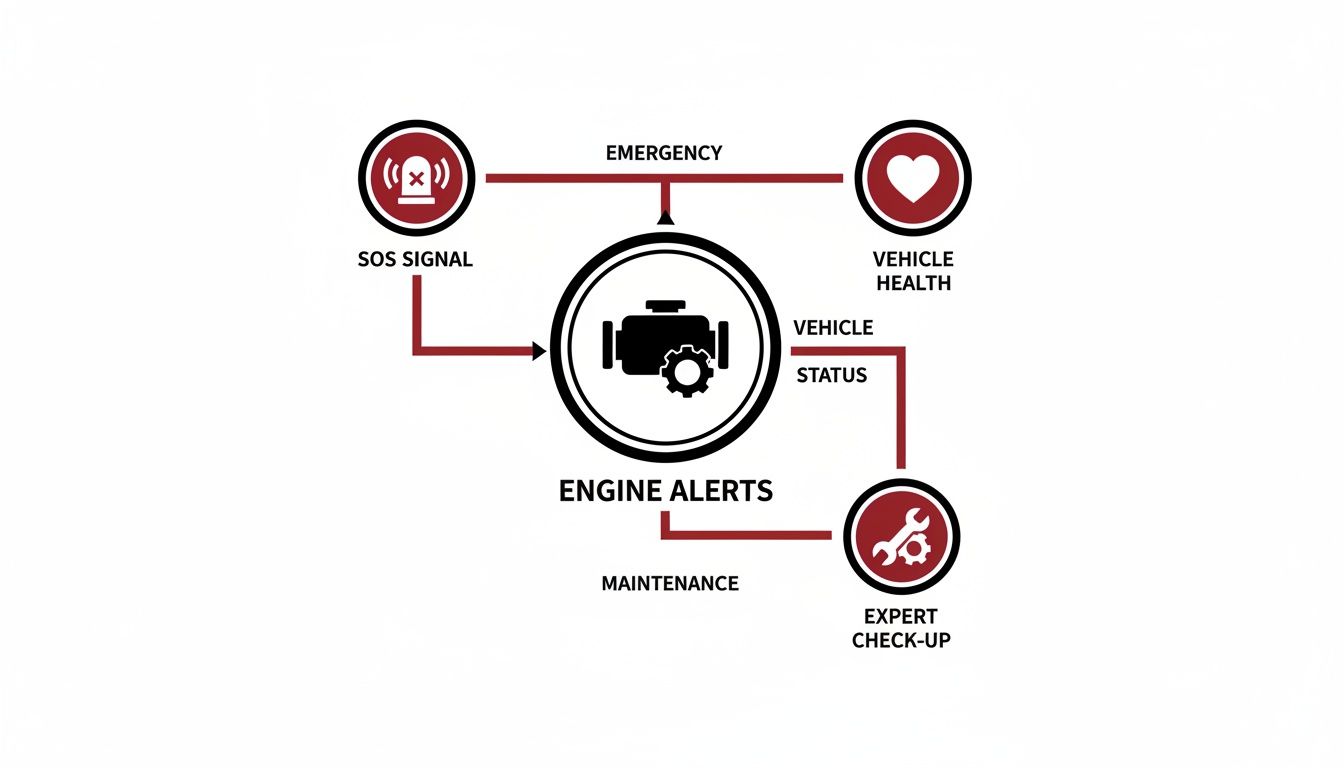
The key is determining why the symptom is happening before deciding which component needs repair.
What Does the Check Engine Light Tell You?
The check engine light means the vehicle’s onboard diagnostic system has detected a condition that meets its criteria for setting a fault.
A diagnostic trouble code can provide direction for testing, but it does not necessarily identify the failed component.
For example, a code associated with an engine misfire may involve:
- Spark plugs
- Ignition coils
- Fuel injectors
- Fuel delivery
- Air or vacuum leaks
- Wiring or electrical faults
- Compression or mechanical engine conditions
A steady check engine light should be diagnosed rather than ignored.
A flashing check engine light can indicate a more serious active condition, often involving severe misfire. Continuing to operate the vehicle under that condition may damage the catalytic converter or create additional drivability concerns.
If the vehicle is shaking severely, losing significant power, overheating, or otherwise cannot be driven safely, reduce driving and arrange appropriate assistance.
Learn more about what the check engine light can mean.
What Do Unusual Engine Noises Mean?
New engine-area noises deserve attention, but sound alone rarely identifies one failed component.
Possible noises include:
- Knocking
- Tapping or ticking
- Rattling
- Grinding
- Squealing or chirping
- Hissing
The source could involve the engine itself or related systems such as accessory-drive components, belts, pulleys, exhaust components, cooling-system parts, or other mechanical systems.
A technician may consider when the noise occurs—cold start, warm engine, idle, acceleration, deceleration, or under load—to help narrow the diagnostic path.
What Can Exhaust Smoke Indicate?
Unusual exhaust smoke can provide diagnostic clues, but smoke color should not be treated as a stand-alone diagnosis.
Blue or Blue-Gray Smoke
Blue-colored exhaust may indicate that engine oil is entering the combustion process, but testing may be needed to determine the source.
Persistent White Exhaust
Some visible vapor during cold operation can be normal condensation. Persistent heavy white exhaust after the engine is warm can warrant inspection, particularly when accompanied by coolant loss or overheating.
Dark or Black Exhaust
Dark exhaust can occur when combustion or fuel control is not operating as intended. Fuel delivery, airflow, sensors, engine-management controls, or other conditions may need to be evaluated.
The vehicle’s symptoms, fluid levels, diagnostic information, and operating conditions should be considered together before drawing conclusions.
What Causes Rough Running or Loss of Power?
Rough idle, hesitation, misfires, stalling, or reduced power can involve many systems.
Possible areas of investigation include:
- Ignition system
- Fuel delivery
- Airflow and vacuum systems
- Engine-management sensors
- Electrical systems
- Exhaust restrictions
- Compression or other mechanical engine conditions
Because the symptoms overlap, replacing spark plugs, coils, injectors, sensors, or other parts without testing can lead to unnecessary repairs.
For more detail, read our guide on why a vehicle may idle roughly.
Why Is Engine Overheating Important?
Overheating indicates that the engine or cooling system is unable to maintain the expected operating temperature.
Possible causes can include:
- Low coolant
- Cooling-system leaks
- Thermostat problems
- Water-pump problems
- Radiator problems
- Cooling-fan faults
- Hose problems
- Air trapped in the cooling system
- Engine-related conditions
Continuing to operate an overheating engine can increase the risk of additional damage.
If the temperature warning appears or the gauge moves into an abnormal range, follow the vehicle manufacturer’s warning instructions and avoid continued operation when doing so could cause damage.
Learn more about why an engine may overheat.
Do Oil Leaks Mean the Engine Needs Repair?
An engine oil leak means oil is escaping from somewhere it should remain contained, but the repair required depends on the source and severity.
Possible leak areas can include:
- Gaskets
- Seals
- Oil pan or drain components
- Oil-filter area
- Valve-cover area
- Other engine lubrication-system components
A visible leak should be located before parts are replaced.
If an oil-pressure warning appears, that is different from simply seeing an external oil leak. Low oil pressure can have several possible causes and should be evaluated promptly.
Learn more about what low oil pressure can mean.
How Are Engine Problems Diagnosed?

Engine diagnosis begins with the symptoms and vehicle history.
Depending on the concern, diagnosis may include:
- Customer symptom information
- Diagnostic trouble-code scanning
- Live scan-tool data
- Visual inspection
- Fluid-level and leak inspection
- Ignition-system testing
- Fuel-system testing
- Electrical testing
- Cooling-system testing
- Compression or cylinder-leakage testing when appropriate
- Oil-pressure testing when appropriate
- Manufacturer-specific diagnostic procedures
A trouble code is generally a starting point. The appropriate tests depend on the system identified and the symptoms present.
At Express Lube & Car Care, digital vehicle inspections can also document visible findings with photos so customers can see relevant conditions before deciding how to proceed.
Engine Repair vs. Engine Replacement
Not every engine problem requires replacement.
Depending on the diagnosis, a vehicle may need repair to a specific component or system rather than replacement of the complete engine.
When significant internal damage is present, the available options can depend on:
- Extent of engine damage
- Vehicle age and condition
- Availability of replacement or remanufactured engines
- Repairability of the existing engine
- Parts availability
- Vehicle value
- Customer ownership plans
- Warranty considerations
The decision should be based on the diagnosed condition and realistic repair options rather than assuming that one symptom means the engine needs replacement.
Is Engine Repair Worth It on an Older Vehicle?
There is no universal formula that determines whether an older vehicle should be repaired.
Consider factors such as:
- Overall vehicle condition
- Diagnosed repair needed
- Repair estimate
- Vehicle market value
- Transmission and drivetrain condition
- Maintenance history
- Known upcoming repairs
- Cost of replacing the vehicle
- How long you intend to keep it
A repair costing a certain percentage of the vehicle’s value is not automatically a good or bad financial decision. The complete condition of the vehicle and the owner’s needs matter.
Engine Repair & Replacement in Richland Hills, TX

Express Lube & Car Care provides engine diagnostics, engine repair, and engine replacement services for drivers in Richland Hills.
Our ASE-certified technicians evaluate the symptoms, inspect relevant systems, and perform appropriate testing before recommending repairs.
Depending on the diagnosis, service may involve engine components, ignition, fuel delivery, cooling, electrical systems, gaskets and seals, or other related systems.
Learn more about our engine repair and replacement services in Richland Hills.
Our goal is to explain what was found, what repair is recommended, and why before work proceeds.
Frequently Asked Questions About Engine Repair
What are common signs that my car needs engine repair?
Warning signs can include a check engine light, unusual noises, rough running, misfires, overheating, smoke, fluid leaks, low oil-pressure warnings, stalling, or loss of power. These symptoms can have multiple causes, so diagnosis is needed to determine the actual problem.
Does a check engine light mean my engine is failing?
No. A check engine light can be triggered by many engine-management, ignition, fuel, emissions, sensor, or electrical conditions. Diagnostic trouble codes and testing are needed to determine the cause.
Can I drive with a flashing check engine light?
A flashing check engine light can indicate a serious active condition, often involving severe misfire. Continuing to drive may damage the catalytic converter or create additional drivability problems. If the engine is shaking severely or the vehicle cannot be driven safely, reduce driving and arrange appropriate assistance.
Does knocking mean the engine needs replacement?
Not automatically. Knocking or tapping noises can have different sources. The location, operating conditions, oil pressure, engine data, and other diagnostic information may need to be evaluated before determining the required repair.
Does blue smoke mean the engine is burning oil?
Blue or blue-gray exhaust can indicate that oil is entering the combustion process, but further diagnosis may be needed to determine the source and appropriate repair.
Does white exhaust mean I have a blown head gasket?
No. Some visible vapor during cold operation can be normal condensation. Persistent heavy white exhaust after warm-up, especially with coolant loss or overheating, should be inspected. Several conditions can produce similar symptoms.
How long does engine diagnosis take?
Diagnostic time depends on the vehicle, symptoms, fault complexity, and testing required. Reading diagnostic trouble codes may be quick, but identifying the underlying cause can require additional inspection and testing.
Should I repair or replace my engine?
That decision depends on the diagnosed damage, repairability of the existing engine, replacement-engine options, overall vehicle condition, costs, warranty considerations, and your plans for the vehicle.
When should a timing belt be replaced?
Follow the maintenance schedule specified by your vehicle manufacturer. Timing-belt requirements vary by engine and application, so a universal mileage interval should not be used.
Does Express Lube & Car Care provide engine replacement?
Yes. Express Lube & Car Care in Richland Hills provides engine diagnostics, engine repair, and engine replacement services based on the vehicle’s condition and diagnostic findings.
Seeing warning lights, hearing unusual engine noises, or experiencing overheating, smoke, rough running, or power loss? Express Lube & Car Care provides engine repair and replacement in Richland Hills, TX with diagnosis before repairs are recommended.