

When your check engine light comes on, your vehicle is telling you that its onboard diagnostic system has detected a problem. The cause could be something relatively simple, such as a loose gas cap, or an issue involving the ignition, fuel, emissions, or engine-management system.
The light itself does not tell you exactly which component has failed. Instead, your vehicle stores one or more diagnostic trouble codes (DTCs) that help identify where a technician should begin testing.
The most important first step is determining whether your check engine light is solid or flashing.
Why Is My Check Engine Light On?
Your vehicle continuously monitors sensors and systems that affect engine performance, fuel efficiency, and emissions. When the computer detects a reading or operating condition outside its expected range, it may store a diagnostic trouble code and turn on the check engine light.
Common causes include:
- Loose, damaged, or improperly sealed gas cap
- Failing oxygen sensor
- Worn spark plugs or faulty ignition coils
- Mass airflow sensor problems
- Fuel-system or fuel-delivery issues
- Evaporative emissions system leaks
- Engine misfires
- Catalytic converter problems
- Electrical, sensor, or circuit faults
Because many different problems can trigger the same warning light, reading a trouble code is only the beginning of the diagnostic process.
Is Your Check Engine Light Solid or Flashing?
How the check engine light appears can help you determine how quickly you should respond.
Solid Check Engine Light
A solid or steady check engine light generally means your vehicle has detected a problem that should be diagnosed soon. If the vehicle is otherwise operating normally, you can usually drive cautiously while arranging for an inspection.
However, pay attention to additional symptoms such as rough idling, hesitation, reduced power, unusual noises, unusual smells, or declining fuel economy. These symptoms can indicate a more significant problem.
Flashing Check Engine Light
A flashing or blinking check engine light requires more immediate attention. It can indicate an active engine misfire or another condition that could damage the catalytic converter or other components.
If the light begins flashing, reduce engine load and find a safe place to stop. If the engine is running roughly, shaking, losing power, or showing other serious symptoms, shut the vehicle off and have it inspected before continuing to drive.
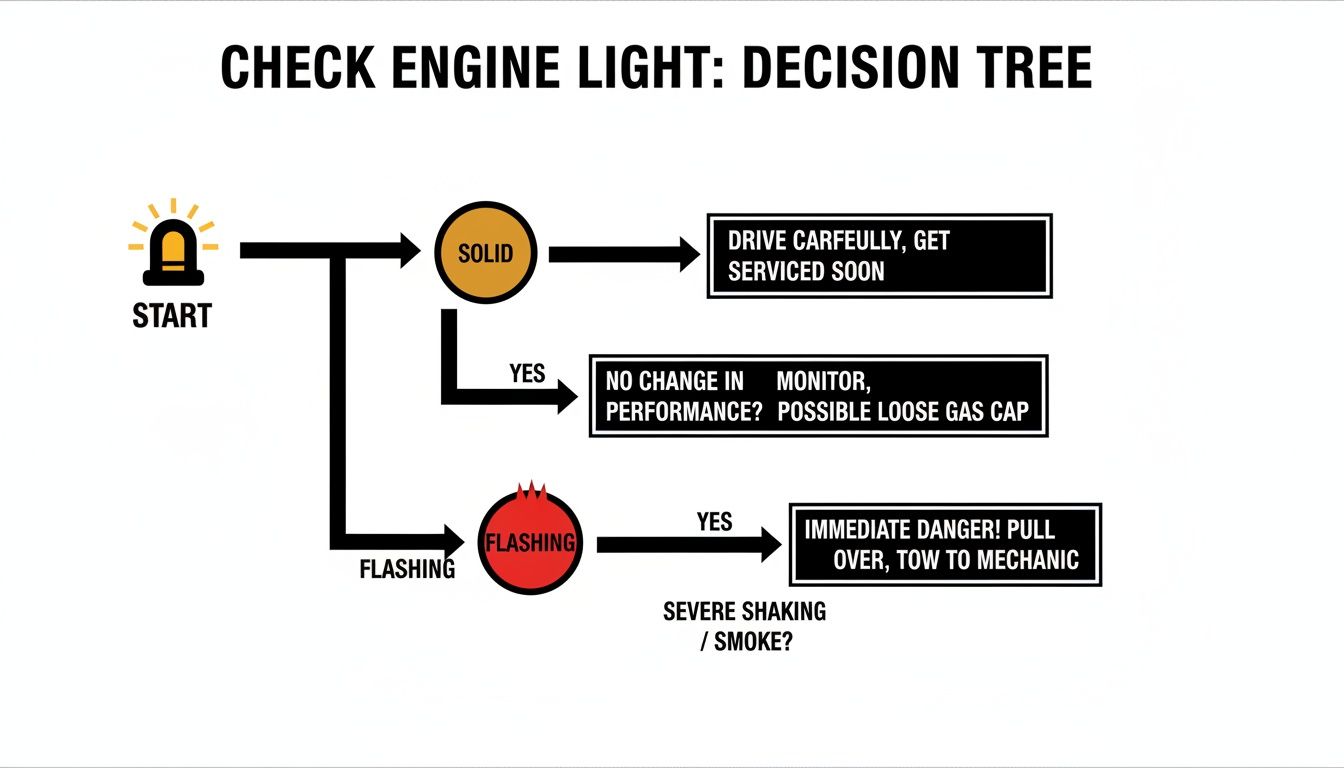
Check Engine Light Status and Your Next Steps
| Light Status | Urgency | Possible Situation | Recommended Action |
|---|---|---|---|
| Solid | Needs Attention | Sensor, emissions, ignition, fuel, or other system fault | Check for obvious issues and schedule diagnosis soon. |
| Flashing | Urgent | Possible active misfire or condition that could cause additional damage | Reduce engine load, stop safely, and avoid continued driving if the vehicle is running poorly. |
What Should You Do When the Check Engine Light Comes On?
You do not need to assume the worst when the light appears. Start with a few basic observations that can help determine your next step.
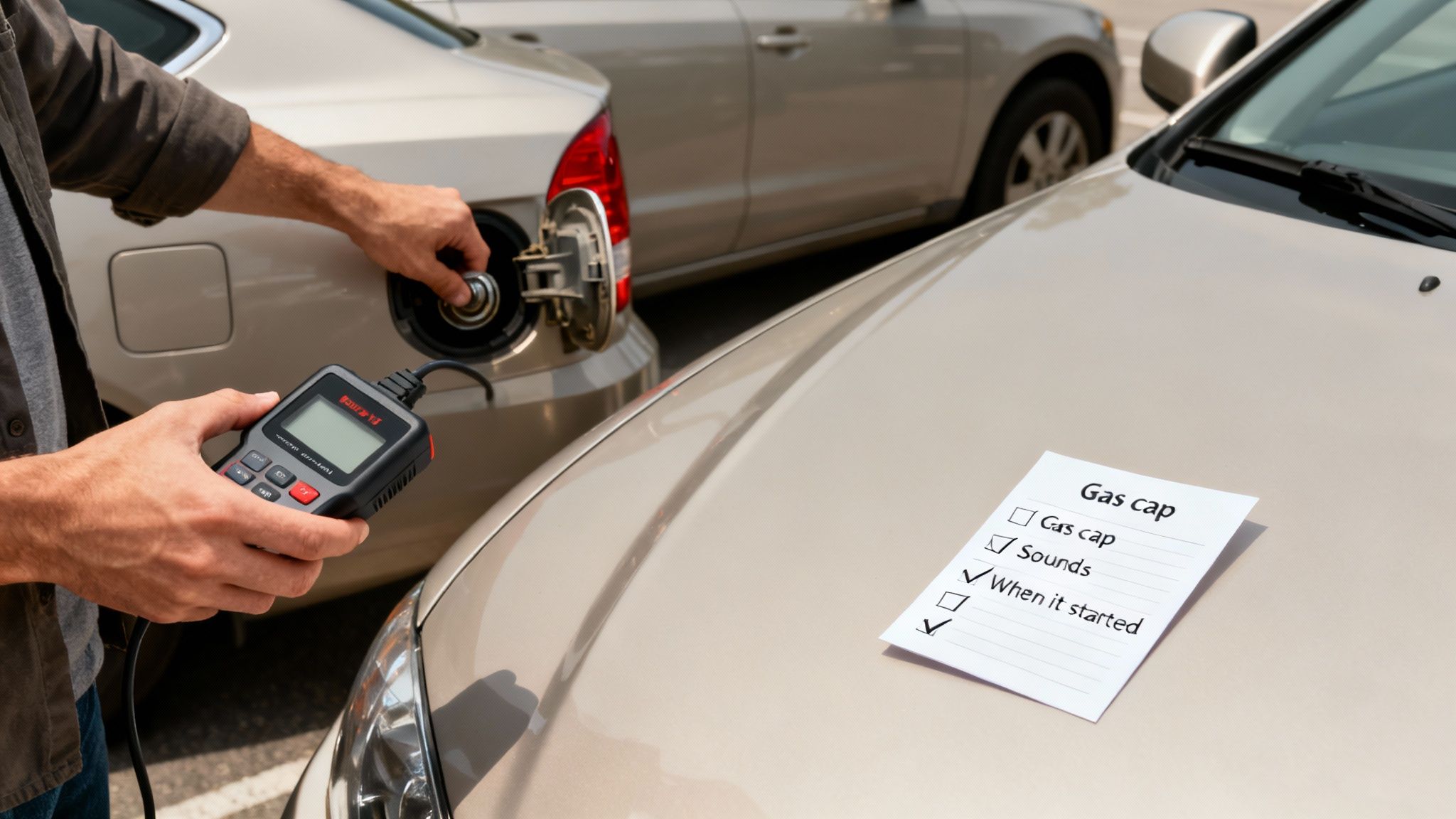
1. Check the Gas Cap
If your vehicle has a traditional fuel cap, make sure it is installed correctly and seals securely. A loose, damaged, or improperly sealed cap can cause the evaporative emissions system to detect a leak and trigger the check engine light.
After correcting the problem, the warning light may not disappear immediately. The vehicle may need to complete additional self-tests during subsequent trips before the light turns off.
2. Pay Attention to How the Vehicle Is Running
Notice whether anything changed when the warning light appeared. Useful symptoms to watch for include:
- Rough or unstable idle
- Hesitation during acceleration
- Reduced engine power
- Stalling
- Unusual engine noises
- Unusual exhaust or burning smells
- Sudden decrease in fuel economy
- Hard starting
These observations can provide valuable information during professional diagnosis.
3. Remember When the Light Appeared
Think about what was happening when the warning light first came on. Did it happen after refueling? During hard acceleration? At highway speed? During startup?
The conditions surrounding the warning can help a technician narrow down the systems that require testing.
Common Causes of a Check Engine Light
Hundreds of diagnostic trouble codes can trigger a check engine light, so the warning should not be treated as a diagnosis by itself. However, several problems are commonly associated with the light.
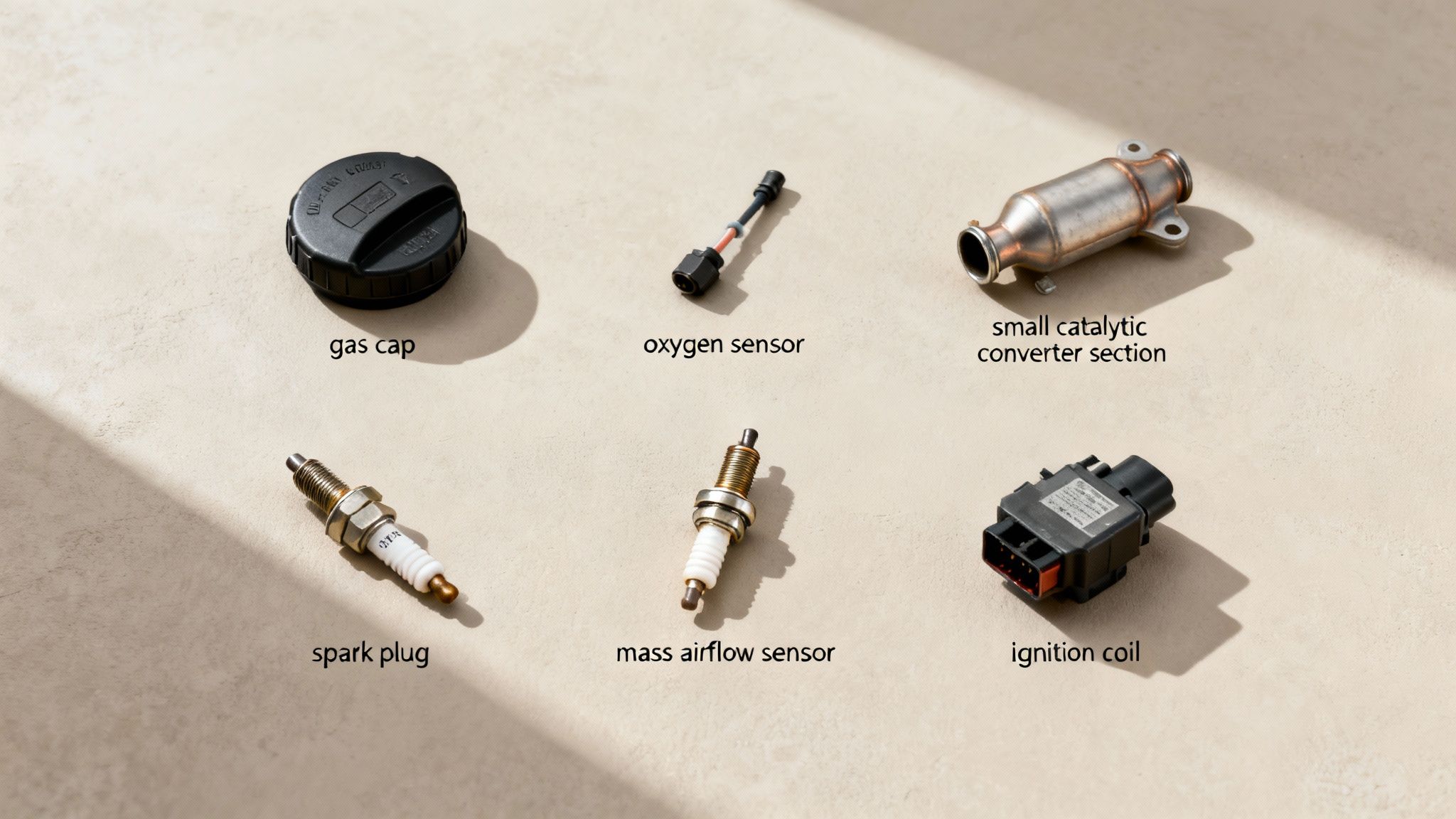
Loose or Damaged Gas Cap
A loose or damaged gas cap can prevent the fuel system from maintaining the sealed environment required by the evaporative emissions system. If the vehicle detects a leak, it may illuminate the check engine light.
If the cap is loose, reinstall it securely. If its seal is cracked or damaged, replacement may be necessary.
Failing Oxygen Sensor
Oxygen sensors monitor the amount of oxygen in the exhaust and provide information the engine computer uses to manage the air-fuel mixture and emissions.
A failing oxygen sensor can contribute to poor fuel economy, rough engine operation, increased emissions, or other performance problems.
Worn Spark Plugs or Faulty Ignition Coils
Spark plugs and ignition coils are essential to the combustion process. When an ignition component fails, one or more cylinders may misfire.
Possible symptoms include rough idling, hesitation, reduced power, poor fuel economy, or a flashing check engine light.
Mass Airflow Sensor Problems
The mass airflow (MAF) sensor measures the amount of air entering the engine. The engine computer uses this information to calculate the appropriate amount of fuel.
If the sensor becomes contaminated or fails, the engine may hesitate, stall, idle poorly, lose power, or use more fuel than normal.
Catalytic Converter Problems
The catalytic converter helps reduce harmful pollutants in your vehicle’s exhaust. Problems elsewhere in the engine or emissions system—particularly persistent misfires or an improper air-fuel mixture—can contribute to catalytic converter damage.
Symptoms may include reduced acceleration, poor engine performance, unusual exhaust odors, or an illuminated check engine light.
Because catalytic converter problems can sometimes result from another unresolved fault, identifying the underlying cause is an important part of the repair process.
Does a Trouble Code Tell You What Part to Replace?
No. A diagnostic trouble code identifies a system, circuit, or operating condition that requires further investigation. It does not automatically prove that a particular component has failed.
For example, a code involving an oxygen sensor does not necessarily mean the oxygen sensor itself needs replacement. Wiring problems, exhaust leaks, fuel-delivery issues, vacuum leaks, or other conditions may affect the sensor’s readings.
Professional diagnosis may involve:
- Scanning stored and pending diagnostic trouble codes
- Reviewing freeze-frame information
- Analyzing live vehicle data
- Inspecting wiring, connectors, hoses, and related components
- Testing sensors and electrical circuits
- Checking ignition and fuel-system operation
- Performing additional tests based on symptoms and trouble codes
This testing helps identify the underlying cause instead of simply replacing parts based on a code.
Can You Drive With the Check Engine Light On?
It depends on how the light is behaving and how the vehicle is operating.
If the check engine light is solid and the vehicle appears to be running normally, you can generally drive cautiously while arranging for diagnosis. Avoid postponing the inspection indefinitely because some problems can affect fuel economy, emissions, performance, or other components.
If the check engine light is flashing, or the vehicle is shaking, losing power, overheating, making unusual noises, or producing strong odors, continuing to drive may cause additional damage. Find a safe place to stop and have the vehicle inspected before continuing.
Will the Check Engine Light Turn Off by Itself?
Sometimes. If the condition that triggered the warning no longer exists, the vehicle’s computer may turn the light off after the system completes enough successful self-tests.
A loose gas cap is one example. After the cap is properly secured, the vehicle may require several driving cycles before confirming that the evaporative emissions system is operating normally.
If the light remains on or returns, the underlying problem should be diagnosed.
Can a Check Engine Light Affect a Texas Emissions Inspection?
For vehicles subject to emissions testing, an illuminated check engine light or certain OBD-II conditions can affect the vehicle’s ability to pass the emissions inspection.
Simply clearing diagnostic trouble codes immediately before an inspection may not solve the problem. Clearing codes also resets emissions-system readiness monitors, which may need to complete their self-tests before the vehicle is ready for inspection.
The underlying problem should be properly diagnosed and repaired before emissions testing.
When Should You Get a Professional Diagnosis?
Consider professional diagnosis when the check engine light remains on, returns after being cleared, begins flashing, or appears along with symptoms such as rough running, reduced power, stalling, unusual noises, or poor fuel economy.
A professional diagnostic process goes beyond simply reading a trouble code. The code provides a starting point; testing determines what is actually causing the fault.
If you need help identifying the cause of your warning light, learn more about our Check Engine Light & Diagnostics service in Richland Hills.
Frequently Asked Questions About Check Engine Lights
What is the most common reason for a check engine light?
There is no single cause for every vehicle. A check engine light can be triggered by problems involving the evaporative emissions system, oxygen sensors, ignition components, airflow sensors, fuel delivery, emissions equipment, electrical circuits, or other monitored systems. Diagnostic testing is needed to determine the cause on a specific vehicle.
Can a loose gas cap cause the check engine light?
Yes. On vehicles equipped with a traditional fuel cap, a loose, damaged, or improperly sealed cap can allow the evaporative emissions system to detect a leak and illuminate the check engine light.
Is a solid check engine light an emergency?
Not necessarily. A solid light generally indicates that a fault has been detected and should be diagnosed. If the vehicle is otherwise operating normally, you can usually drive cautiously while arranging service. If other warning lights or serious symptoms appear, the situation may require more immediate attention.
What does a flashing check engine light mean?
A flashing check engine light can indicate an active misfire or another serious condition that could cause additional damage. Reduce engine load, stop safely, and avoid continuing to drive if the vehicle is running poorly.
Can I drive with my check engine light on?
If the light is solid and the vehicle is operating normally, limited driving is generally possible while you arrange diagnosis. A flashing light or symptoms such as shaking, major power loss, overheating, unusual noises, or strong odors require more immediate attention.
Does a diagnostic trouble code tell me which part is bad?
No. A trouble code identifies the system or condition that requires investigation. Additional inspection and testing are often necessary to determine the actual cause.
Why did my check engine light turn off by itself?
If the condition that triggered the warning is no longer detected, the vehicle’s computer may turn the light off after completing enough successful self-tests. Diagnostic information may still remain stored in the vehicle’s computer for a period of time.
Should I clear the check engine light before an emissions inspection?
Clearing codes resets important emissions readiness monitors. Those monitors may need to complete additional self-tests before the vehicle is ready for emissions testing. Diagnosing and correcting the underlying problem is the better approach.
Need help finding out why your check engine light is on? Express Lube & Car Care provides professional check engine light diagnostics in Richland Hills to identify the underlying problem and recommend the appropriate next step.