

Texas changed its vehicle inspection requirements on January 1, 2025. Most non-commercial vehicles no longer need an annual state safety inspection before registration. However, qualifying vehicles registered in emissions counties—including Tarrant County—still need an annual emissions inspection.
Commercial vehicles are different. Texas continues to require commercial vehicle safety inspections, regardless of county, with emissions testing also applying when the vehicle is subject to the emissions program.
For Richland Hills drivers, the key is understanding which requirement applies to your vehicle before registration renewal.
Table of Contents
- What Changed With Texas Vehicle Inspections in 2025?
- Do Tarrant County Vehicles Still Need an Inspection?
- Which Vehicles Need Emissions Testing?
- What Does a Texas Emissions Inspection Check?
- Can a Check Engine Light Cause an Emissions Failure?
- What Are OBD-II Readiness Monitors?
- What Should You Do Before an Emissions Test?
- Do Commercial Vehicles Still Need Safety Inspections?
- What Happens If Your Vehicle Fails?
- Texas Emissions & Commercial Inspections in Richland Hills
- Frequently Asked Questions
What Changed With Texas Vehicle Inspections in 2025?
Beginning January 1, 2025, Texas eliminated the annual safety-inspection requirement for most non-commercial vehicles.
That means ordinary passenger vehicles no longer need to pass the former statewide safety checklist as a condition of registration.
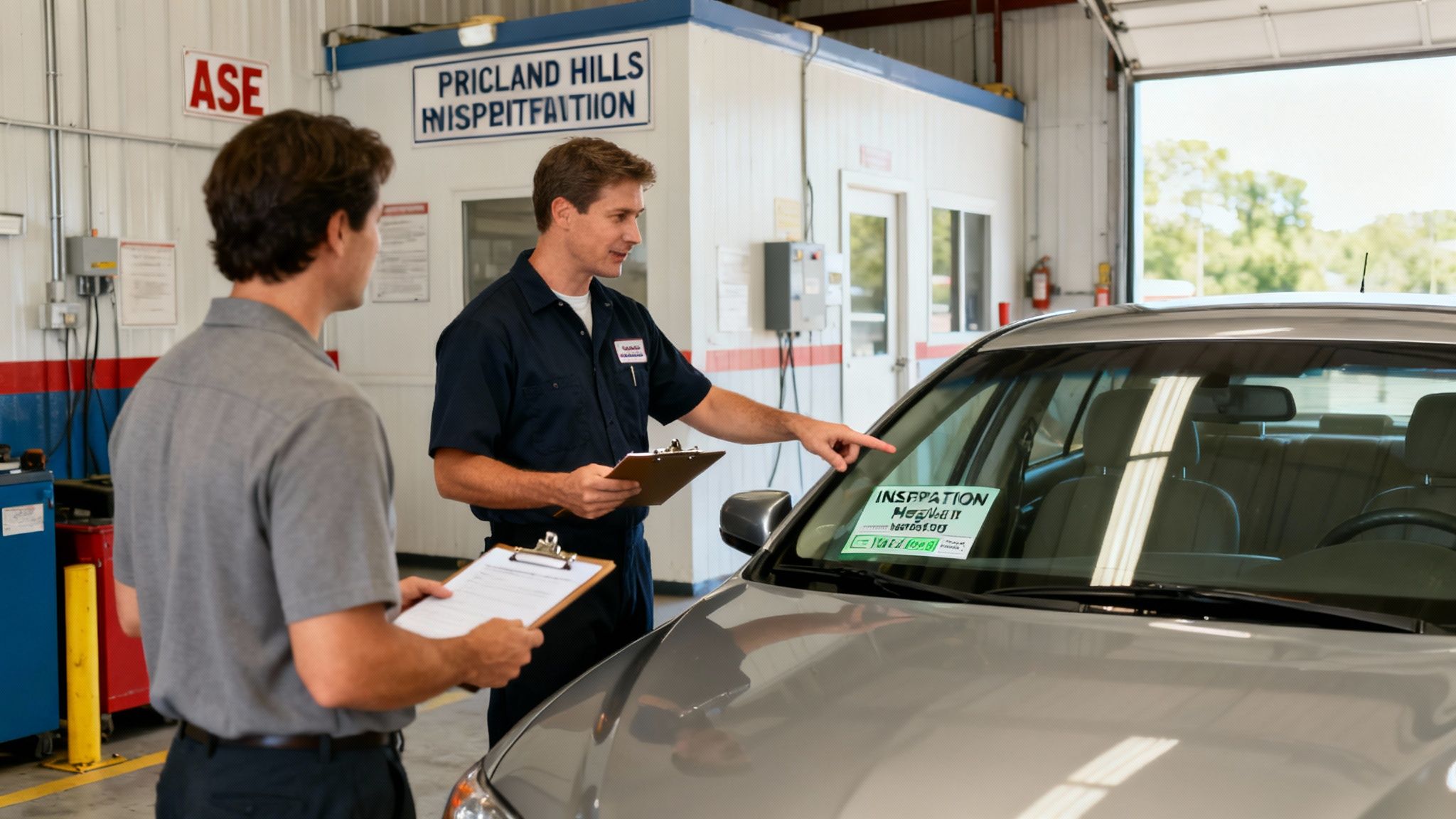
The change did not eliminate emissions inspections in Texas emissions counties.
It also did not eliminate safety inspections for commercial vehicles.
For most Richland Hills passenger-vehicle owners: think emissions testing—not the old annual passenger safety inspection.
Do Tarrant County Vehicles Still Need an Inspection?
Yes, qualifying vehicles in Tarrant County still need an annual emissions inspection.
Tarrant County is part of the Dallas-Fort Worth emissions inspection program. Other counties in the DFW program include Collin, Dallas, Denton, Ellis, Johnson, Kaufman, Parker, and Rockwall.
The emissions requirement is separate from the passenger-vehicle safety inspection that Texas eliminated in 2025.
Which Vehicles Need Emissions Testing?
Texas emissions requirements generally apply to qualifying gasoline-powered vehicles that are within the state’s applicable model-year range and registered or primarily operated in an emissions-program county.
For most non-rental gasoline vehicles, the program applies to vehicles that are 2 through 24 model years old.
Some vehicle categories are exempt from the emissions program, including:
- Electric-only vehicles
- Diesel-powered vehicles
- Motorcycles and mopeds
- Certain other vehicles excluded under Texas program rules
Vehicle eligibility can depend on registration, model year, fuel type, vehicle category, and current Texas requirements.
What Does a Texas Emissions Inspection Check?
For qualifying vehicles in the Dallas-Fort Worth emissions program, emissions testing generally uses the vehicle’s onboard diagnostic system.
The inspection can evaluate information such as:
- Whether the malfunction indicator lamp, commonly called the check engine light, is commanded on
- Emissions-related diagnostic trouble codes
- OBD-II readiness-monitor status
- Communication between the inspection equipment and the vehicle’s onboard diagnostic system
- Other emissions-inspection items required by the Texas program
The emissions inspection is designed to determine whether the vehicle meets applicable emissions-program requirements. It is not the same as a comprehensive mechanical inspection of the entire vehicle.
Can a Check Engine Light Cause an Emissions Failure?
Yes. An illuminated check engine light associated with an emissions-related fault can prevent a qualifying OBD-II vehicle from passing its emissions inspection.
The important step is to diagnose why the light is on rather than simply clearing the code before testing.
Diagnostic trouble codes can involve many systems, including:
- Oxygen sensors
- Catalytic-converter efficiency
- Fuel control
- Engine misfires
- Evaporative-emissions systems
- Airflow or sensor problems
- Other emissions-related components
Learn more about our check engine light and diagnostic services in Richland Hills.
What Are OBD-II Readiness Monitors?
Modern vehicles perform onboard self-tests of emissions-related systems. These self-tests are commonly referred to as readiness monitors.
After diagnostic trouble codes are cleared, the battery is disconnected, or certain repairs are performed, some readiness monitors may return to a not ready status.
The vehicle then needs to complete the operating conditions required for those monitors to run again.
Simply clearing a check engine light immediately before an emissions inspection can therefore create another problem: the vehicle may not have completed the required self-tests.
If you’re unsure whether your vehicle is ready for inspection, diagnostic equipment can be used to review monitor status before the emissions test.
What Should You Do Before an Emissions Test?
Before your emissions inspection:
- Do not clear diagnostic trouble codes simply to turn off the check engine light
- Address an active check engine light before testing
- Make sure the vehicle’s battery and electrical system are operating normally
- Confirm that recent repairs have allowed required readiness monitors to complete
- Follow any applicable Texas inspection and registration requirements for your vehicle
If the vehicle recently had a dead or disconnected battery, emissions readiness monitors may need time and appropriate driving conditions to complete their self-tests.
Do Commercial Vehicles Still Need Safety Inspections?
Yes. Texas continues to require commercial vehicles to obtain a passing commercial vehicle safety inspection.
This is different from the rule for ordinary non-commercial passenger vehicles.
Commercial inspection requirements can cover safety-related components according to Texas commercial vehicle inspection criteria.
If a commercial vehicle is also subject to the emissions program, applicable emissions requirements still apply.
What Happens If Your Vehicle Fails an Emissions Inspection?
A failed emissions inspection should be treated as diagnostic information rather than a reason to start replacing parts at random.
The next step depends on why the vehicle failed.
Possible issues can include:
- Active diagnostic trouble codes
- Check engine light status
- Incomplete readiness monitors
- OBD communication problems
- Emissions-control system faults
A technician can review the Vehicle Inspection Report and vehicle diagnostic information to determine what needs to be addressed.
After the underlying condition is corrected, the vehicle may need to complete required self-tests before returning for another emissions inspection.
Texas Emissions & Commercial Inspections in Richland Hills, TX
Express Lube & Car Care helps Richland Hills drivers understand and address current Texas inspection requirements.
For qualifying passenger vehicles, that means emissions testing under the Tarrant County emissions program.
For commercial vehicles, applicable Texas commercial safety-inspection requirements continue to apply.
If your vehicle has a check engine light or another emissions-related problem, our technicians can diagnose the condition before you return for testing.
Learn more about our Texas emissions and commercial inspection services in Richland Hills.
Frequently Asked Questions About Texas Vehicle Inspections
Does Texas still require annual vehicle safety inspections?
Not for most non-commercial vehicles. Texas eliminated the annual safety-inspection requirement for non-commercial vehicles beginning January 1, 2025. Commercial vehicles continue to require safety inspections.
Do Richland Hills drivers still need emissions testing?
Qualifying vehicles do. Richland Hills is in Tarrant County, which remains part of the Texas emissions inspection program.
Which vehicles need emissions testing in Tarrant County?
The program generally applies to qualifying gasoline-powered vehicles within the applicable model-year range. For most non-rental vehicles, that means gasoline vehicles 2 through 24 model years old. Exemptions apply to certain vehicle categories.
Do electric vehicles need an emissions inspection?
Electric-only vehicles are exempt from the Texas emissions inspection requirement because they do not have gasoline-powered emissions systems to test.
Do diesel vehicles need emissions testing in Tarrant County?
Diesel-powered vehicles are not subject to the gasoline-vehicle emissions inspection program described here. Other registration or commercial requirements may still apply depending on the vehicle.
Will a check engine light cause an emissions-test failure?
An illuminated malfunction indicator lamp associated with an emissions-related fault can prevent a qualifying OBD-II vehicle from passing. The cause should be diagnosed and corrected rather than simply clearing the code.
Can I clear my check engine light before the emissions test?
Clearing diagnostic trouble codes resets emissions readiness information. If required monitors have not completed afterward, the vehicle may not be ready for testing. Fix the underlying problem and allow the vehicle to complete the required self-tests.
What does “not ready” mean during an emissions test?
It generally means one or more required onboard emissions self-tests have not completed. This can happen after codes are cleared, the battery is disconnected, or certain repairs are performed.
Do commercial vehicles still need Texas safety inspections?
Yes. Commercial vehicles continue to require Texas safety inspections even though the requirement was eliminated for most non-commercial vehicles.
Need an emissions inspection or commercial vehicle inspection in Richland Hills? Express Lube & Car Care provides Texas emissions and commercial inspection services and can help diagnose check engine light or emissions-related problems before retesting.