

As a rule of thumb, you should plan to have your tires rotated and balanced every 5,000 to 7,500 miles. A great way to remember is to get it done with every other oil change.
Think of it like rotating your running shoes to even out the wear on the soles. It’s a simple, affordable task that’s absolutely vital for your car’s safety, tire lifespan, and overall performance on the road.
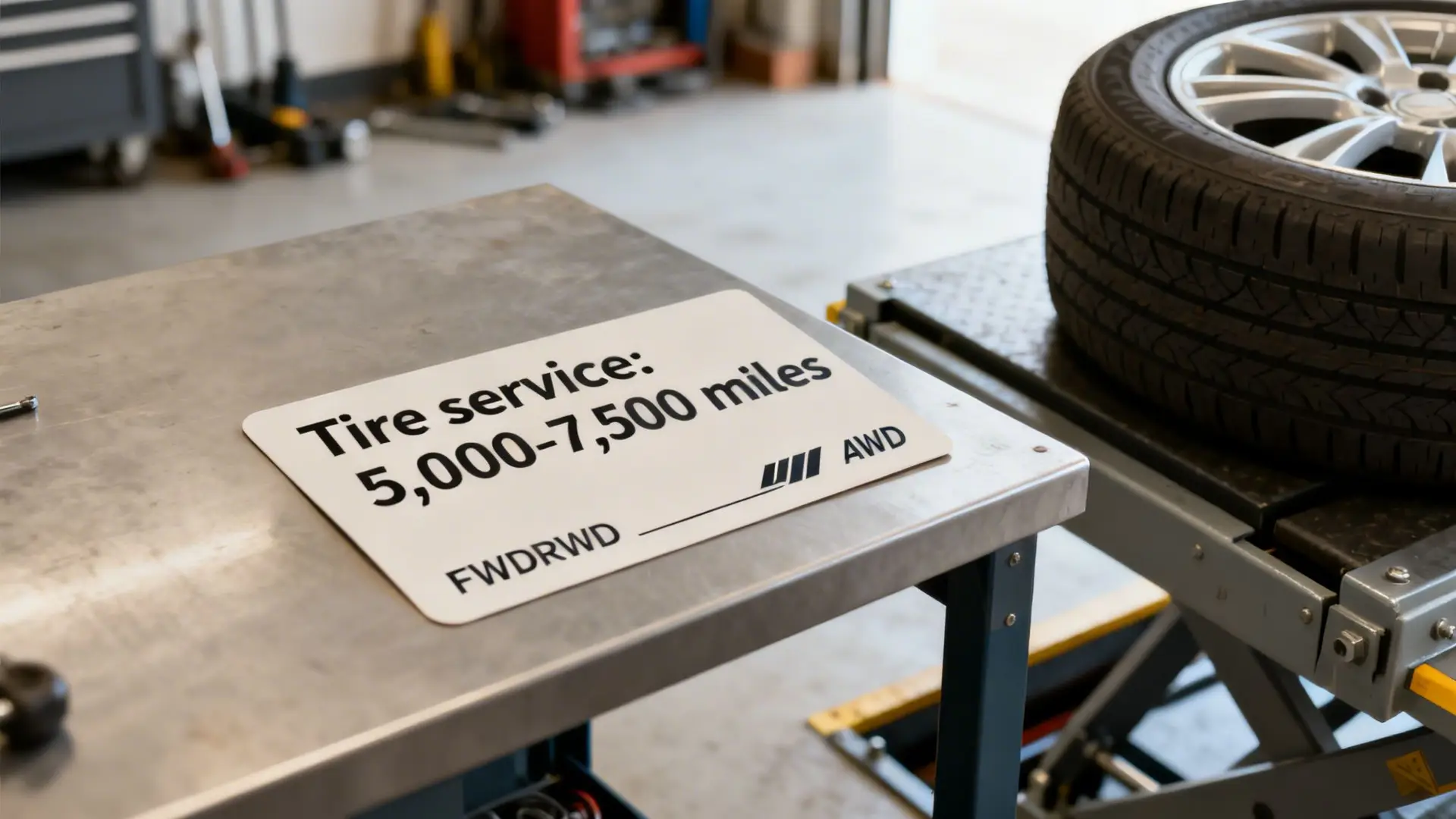
Your Quick Guide to Tire Rotation and Balancing Intervals
Knowing how often your tires need attention is one of the smartest things you can do as a car owner. While that 5,000 to 7,500-mile guideline is a solid starting point, the perfect schedule really comes down to your specific car and how you drive it.
Here’s why: your front tires always have a tougher job than the rears. If you have a front-wheel-drive car, they’re supporting the engine’s weight, handling all the steering forces, and doing most of the work when you brake. All that extra stress means they’ll wear down much faster if you leave them in one spot for too long.
Rotating your tires isn't just a friendly suggestion; it’s a critical maintenance job that directly impacts your safety and your wallet. It makes sure the tread wears down evenly across all four tires, which maximizes their lifespan and keeps your car’s handling predictable.
Why Drivetrains Change the Rules
Your vehicle’s drivetrain—whether it’s front-wheel drive (FWD), rear-wheel drive (RWD), or all-wheel drive (AWD)—decides which set of tires is doing the most work. This is why the service recommendations aren't one-size-fits-all. Skipping rotations doesn’t just wear out your tires faster; it can seriously compromise your car's stability and safety.
In fact, sticking to a regular rotation schedule can extend the life of your tires by up to 20-30%. Since the front tires on most cars carry 60-70% more stress, letting them sit means they could wear out way before the rears. This isn’t just about saving money, either. Thousands of crashes every year are linked to tire failures, with a huge number caused by poor maintenance like skipped rotations. You can find more info on this at the Tire Industry Association's consumer education page.
To make it simple, use this quick-reference guide for recommended service intervals based on your vehicle's drivetrain and typical driving conditions.
Tire Rotation and Balancing Frequency Reference
| Vehicle Drivetrain | Recommended Interval (Miles) | Recommended Interval (Time) | Best Practice |
|---|---|---|---|
| Front-Wheel Drive (FWD) | 5,000 – 7,500 | ~6 Months | Every other oil change |
| Rear-Wheel Drive (RWD) | 5,000 – 7,500 | ~6 Months | Every other oil change |
| All-Wheel Drive (AWD) | 3,000 – 5,000 | ~3-6 Months | Every oil change, or as per manual |
Following these guidelines will help you get the most out of your tires and keep your vehicle handling safely and predictably.
Why Tire Rotation and Balancing Are So Important
Most drivers have heard of tire rotation and balancing, but it's easy to think they're the same thing. They’re actually two very different services, but both are absolutely critical for keeping your ride smooth, safe, and cost-effective.
Let's break down what each one does and why you can't skip them.
Think of tire rotation as a way to even out the workload for your tires. On a front-wheel-drive car, which is most of what we see on the road today, the front tires take a real beating. They carry the engine's weight, handle all the steering, and absorb most of the force when you brake.
This means your front tires wear down way faster than the rears. A rotation simply moves each tire to a different spot on the car, giving the front tires a break and letting the rear ones take on more of the work.
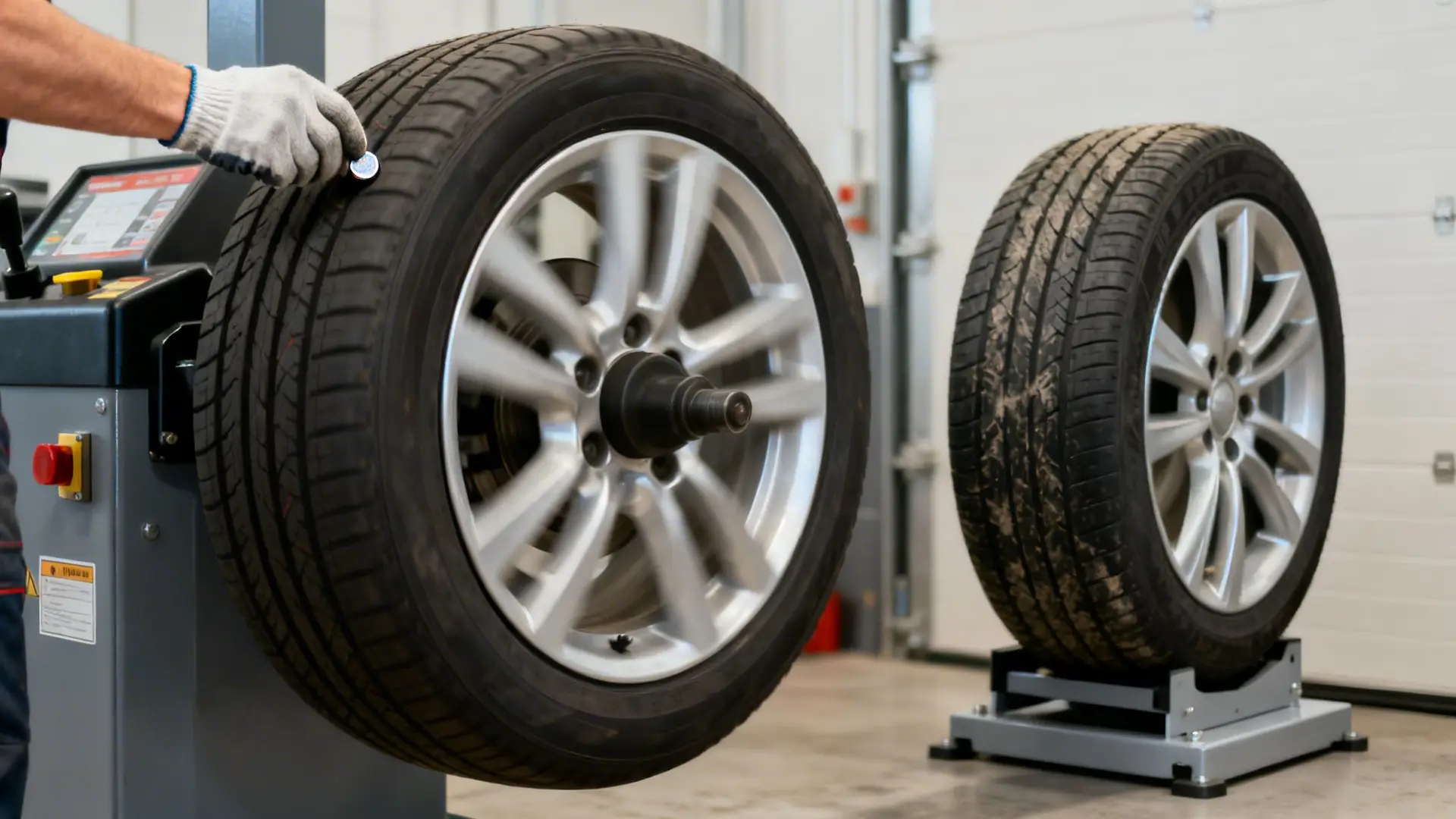
Without it, you’d be buying new front tires long before the rears are worn out—a total waste of money. Even wear also guarantees you have consistent grip and handling across all four corners. This all starts with good tread, which you can learn about in our guide on checking tire tread depth.
The Physics of a Balanced Ride
If rotation is about evening out wear over thousands of miles, tire balancing is about making sure your ride is smooth right now.
Imagine a ceiling fan with one blade that's just a tiny bit heavier than the others. When it spins, the whole thing is going to shake and wobble. Your tires do the exact same thing.
No tire and wheel is perfectly balanced from the factory. Tiny weight differences, sometimes less than a quarter of an ounce, can cause a surprising amount of vibration at highway speeds.
Using a special machine, we spin the wheel and pinpoint exactly where those heavy spots are. A technician then attaches tiny, precise counterweights to the rim to cancel out the imperfection. The result is a wheel that spins perfectly true, without any hopping or shaking.
Ignoring an imbalance is a bigger deal than most people think. That constant vibration isn't just annoying; it sends damaging shudders through your entire suspension. This can cause expensive parts like struts, shocks, and wheel bearings to fail much sooner than they should.
So, knowing how often should tires be rotated and balanced is about more than just your tires. It's about protecting your whole car. When done together, these two services are one of the best ways to ensure you have a safe, comfortable drive while preventing bigger repair bills down the road.
Key Warning Signs Your Tires Need Immediate Service
Sticking to a service schedule is great, but sometimes your car gives you clear hints that it needs attention now. Learning to spot these warning signs is key, as they often point directly to a need for tire rotation, balancing, or both.
Ignoring these symptoms doesn't just make for a rough ride—it's a safety issue. If your car is telling you something is wrong, it’s best to listen.
Vibrations Through Your Steering Wheel
This is the classic sign of a tire problem. If you feel a noticeable shake or vibration in your steering wheel, especially at highway speeds between 50 and 70 mph, your tires are almost definitely out of balance.
That vibration is caused by a heavy spot on one of the front tires, making the whole wheel wobble as it spins. It’s more than just an annoyance; it puts a ton of extra stress on your suspension and steering parts. You can learn more about pinpointing the issue in our guide on what causes steering wheel vibration.
Letting it go can lead to premature wear and expensive repairs down the road. A quick tire balance will smooth things out and protect your vehicle from damage.
Uneven or Rapid Tread Wear
A major reason we rotate tires is to ensure they wear down evenly. If you’ve skipped a few rotations, you’ll start to see distinct wear patterns that tell a story. Take a close look at your tires for any of these issues:
- Feathering: Run your hand across the tread. If it feels like a sawtooth, the tread ribs are wearing down unevenly. This often signals an alignment problem made worse by missed rotations.
- Cupping or Scalloping: These look like diagonal or scooped-out patches of wear on the tire. This pattern usually points to worn-out shocks or struts, and the imbalance it causes gets worse without regular balancing.
- Outer or Inner Edge Wear: When the inside or outside shoulder of a tire wears down faster than the center, it’s a big red flag for a wheel alignment issue. Rotating the tires can help slow the damage until you can get it fixed.
Any weird wear pattern is your car’s way of telling you something is off. It means your tires aren't making full, proper contact with the road, which hurts your grip, handling, and ability to stop safely.
Drifting or Pulling to One Side
Find yourself constantly fighting the steering wheel to keep your car straight on a flat road? That’s a symptom that needs immediate attention. While a bad wheel alignment is the most common cause, severely uneven tire wear from a lack of rotation can also be the culprit.
If one front tire is much more worn down than the other, your car may pull toward that side. A quick rotation and inspection will help figure out what’s really going on.
Rotation vs. Balancing vs. Alignment Explained
It’s easy to get tire rotation, balancing, and alignment mixed up. A lot of drivers use the terms interchangeably, but they’re actually three very different jobs that solve completely different problems.
Knowing what's what helps you understand exactly what your car needs and why a technician might be recommending a specific service. A good way to think about it is to compare these services to your own body—your feet, your shoes, and your posture.
Tire Rotation Keeps Wear Even
Tire rotation is the most straightforward of the three. It’s simply the process of moving each tire to a different spot on your vehicle, like moving the front tires to the back and vice versa.
Think of it like swapping your left and right shoes to make sure they wear down at the same rate. The whole point is to even out tread wear across all four tires. This is critical for getting the most life out of your set and keeping your car’s handling predictable, especially since front tires almost always wear out faster.
This chart shows some common red flags that mean it's time for a rotation or other tire service.
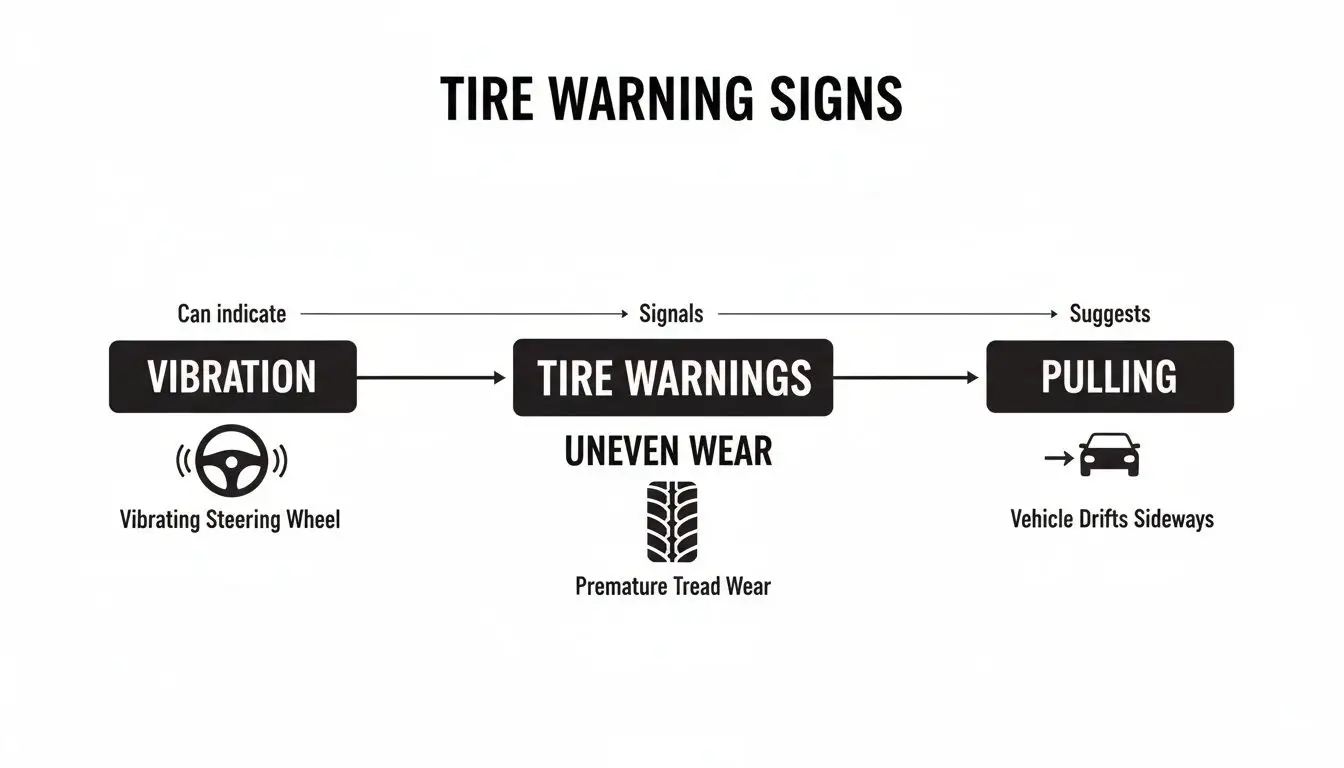
Vibrations, pulling to one side, or weird tread patterns are your car's way of telling you something is wrong.
Tire Balancing Creates a Smooth Ride
Tire balancing is all about correcting tiny weight imbalances in the tire and wheel itself. Even a difference of half an ounce is enough to cause a noticeable vibration, especially at highway speeds. A technician spins the wheel on a special machine to find the heavy spots and adds small counterweights to even it all out.
Using our analogy, this is like making sure both of your shoes weigh the exact same. If one was heavier, it would throw off your balance and make you limp. An unbalanced tire makes your car "limp," creating vibrations that can eventually damage other parts of your suspension.
Wheel Alignment Corrects Your Car's Posture
Wheel alignment doesn't actually involve your tires or wheels at all. Instead, it’s about adjusting the angles of your car's suspension—the parts that connect your wheels to the vehicle's frame. A proper alignment makes sure your tires sit perfectly flat on the road.
Think of this as fixing your posture. If you always stand with your ankles rolled in, the soles of your shoes will wear out on the inside edge. An alignment fixes your car's "posture" to stop that from happening to your tires.
Potholes and bumping into curbs are the most common culprits for knocking your car out of alignment. You can learn more in our deep-dive on tire rotation, balance, and alignment services.
Here’s the bottom line:
- Rotation: Moves tires to new positions for even wear.
- Balancing: Corrects weight imbalances for a smooth, vibration-free ride.
- Alignment: Adjusts suspension angles for proper tire contact with the road.
Each one is a separate piece of the puzzle, but they all work together to give you a safer, more comfortable ride and save you money in the long run.
DIY vs Professional Tire Maintenance
When it's time for tire maintenance, the classic question always comes up: can you just do it yourself? While you can certainly tackle a tire rotation in your own garage, it's a job that requires the right equipment and a serious focus on safety.
To do it yourself, you’ll need a good car jack, four sturdy jack stands (this is non-negotiable for safety), and a lug wrench. The process involves lifting your entire vehicle off the ground, taking off all four wheels, moving them to their new spots, and torquing the lug nuts back on correctly.
The most important part of a DIY rotation is safety. Your car must be on a solid, level surface, and you absolutely must use jack stands. A car slipping off a jack can cause catastrophic damage to the vehicle and, far worse, severe or fatal injury.
The Professional Advantage
Even if you have the tools and the time, there are a couple of huge advantages to letting a pro handle it. First is pure efficiency. A certified tech working with a vehicle lift and professional air tools can get a rotation done in a fraction of the time it takes at home.
The second, and most critical, benefit is tire balancing. This is one job you simply can't do at home. Balancing requires a computerized spin-balancing machine that can detect tiny weight differences—down to a quarter of an ounce. The technician then applies small, precise counterweights to make the wheel spin perfectly smooth.
For a surprisingly small cost, bringing your car to a shop gets you:
- Precision and Safety: The work is done with calibrated equipment, and your wheels are torqued exactly to the manufacturer's specs. No guesswork involved.
- An Expert Eye: A technician can spot problems you might easily miss. Things like uneven wear patterns that point to an alignment issue, a slow leak from a nail, or even worn-out suspension parts.
- Proper Balancing: This is the only way to prevent the vibrations that can damage your suspension and bearings over time. It's an essential service you can't replicate in a driveway.
The Verdict
At the end of the day, while you can rotate your own tires, the small amount you might save just isn't worth it. The benefits of a professional service—safety, a proper balance, and an expert inspection—far outweigh the cost.
For drivers here in Richland Hills, this means you get peace of mind on the road, knowing the job was done right. It's also the best way to catch small issues before they snowball into big, expensive headaches.
Your Local Partner for Expert Tire Care
We've covered a lot of ground on why tire rotation and balancing are so important. Sticking to that 5,000 to 7,500-mile service interval isn't just about tire longevity—it's about keeping your vehicle safe, stable, and predictable on the road.
Regular maintenance stops the uneven wear that kills your grip and prevents the vibrations that damage expensive suspension parts. It's a simple, affordable way to protect your car and drive with confidence.
We Make Expert Care Easy
Here in Richland Hills, we know life gets busy and car maintenance can be a hassle. That’s why at Express Lube & Car Care, we’ve made it simple: you don’t need an appointment.
Just stop by our shop whenever it’s convenient. Our ASE-certified technicians will handle your tire rotation and balancing with speed and precision, using professional-grade equipment to do the job right. We'll get you back on the road fast.
Don’t wait for a warning light or a shaky steering wheel to tell you there’s a problem. Proactive care is always safer and more affordable than reactive repairs.
We believe quality auto care should be straightforward. When you come to us, you’re not just getting a service—you’re getting peace of mind from a trusted local crew that puts your safety first.
Stop by our shop today for a fast, professional tire rotation and balancing service. Let our team at Express Lube & Car Care help you keep every drive smooth and worry-free.
Common Questions About Tire Care
Even after you get the basics down, you’re bound to have a few questions. We hear them all the time at the shop, so here are some quick answers to the most common ones.
Do I Still Need to Rotate Tires on an All-Wheel-Drive Car?
Yes, absolutely. In fact, it’s even more important for All-Wheel-Drive (AWD) vehicles. Your AWD system needs all four tires to be almost the exact same size to work properly.
If one tire is more worn than the others, its circumference changes. That small difference can put a huge strain on expensive parts like your transfer case, which might think a wheel is slipping. To prevent this, most automakers recommend rotating tires every 3,000 to 5,000 miles on an AWD vehicle.
How Much Should I Expect to Pay for Tire Rotation and Balancing?
Tire rotation and balancing are two of the most affordable maintenance services you can get, especially when you think about the value they provide. The cost is a tiny fraction of what you’d spend on a new set of tires or fixing suspension damage from constant vibrations.
At our shop, we often bundle a rotation and balance with an oil change to give you the best deal. It’s always smart to call ahead for current pricing and see what specials are running.
Do New Tires Need to Be Balanced?
Definitely. Every single new tire must be professionally balanced when it’s installed on a wheel. No tire or wheel is perfectly balanced right out of the factory.
Our technicians use a computer spin balancer to find those tiny weight imbalances. Then, they attach small, precise weights to the rim to even things out. This is a critical step to ensure you get a smooth ride and even wear from the very first mile.
Don't wait for a warning sign. For fast, professional tire service without an appointment, stop by Express Lube & Car Care today. Let our trusted crew keep your drive safe and smooth. Learn more about our expert services.