

Think of it like this: you've pushed a shopping cart with a wobbly wheel before, right? That annoying, rhythmic shake is almost exactly what happens to your car when something is off. The most common culprits are usually imbalanced tires, warped brake rotors, or poor wheel alignment, and each one sends a slightly different signal through your steering wheel.
Your Quick Guide to Steering Wheel Vibrations
That shimmy you feel isn’t just an annoyance—it's your car trying to tell you something. It’s a physical message traveling from your tires, up through the suspension, and straight to your hands. If you ignore it, a small problem can quickly turn into a much bigger, more expensive repair down the road.
The key to figuring out what causes steering wheel vibration is to notice when it happens. The timing of that shake is your single best clue.
- A vibration that only shows up at high speeds usually points to your tires.
- Shaking that happens only when you brake is almost always a sign of a brake rotor issue.
- A constant shimmy at all speeds might mean you have a bent wheel or a worn-out suspension part.
This handy flowchart can help you trace the vibration back to its likely source.
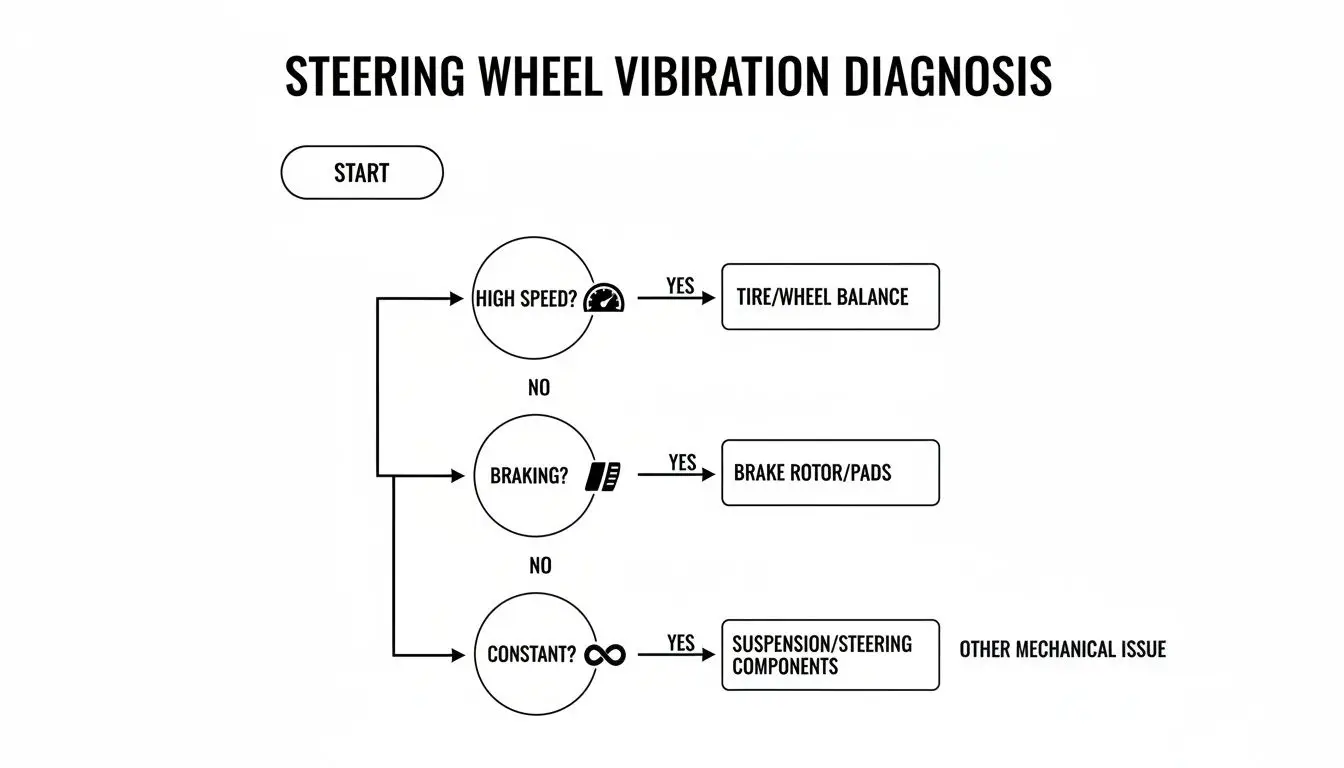
As you can see, just knowing if the shake is tied to your speed, braking, or is always there helps narrow things down quite a bit before you even pull into the shop.
Think of your steering wheel as a built-in diagnostic tool. The kind of shake you feel—whether it's a fast buzz or a slow wobble—gives you direct clues about the health of your tires, brakes, and suspension.
To make it even simpler, we've put together a quick cheat sheet to help you connect the symptoms to the cause.
Vibration Diagnosis Cheat Sheet
Use this table to quickly identify the likely cause of your steering wheel vibration based on when it happens.
| When You Feel the Vibration | Most Likely Cause | What It Feels Like |
|---|---|---|
| At Highway Speeds (55+ mph) | Unbalanced Tires | A consistent, speed-sensitive buzz or shimmy in the wheel. |
| Only When Braking | Warped Brake Rotors | A pulsing or juddering sensation in the wheel and brake pedal. |
| At Low Speeds or Constantly | Bent Rim or Suspension Issue | A rhythmic wobble or clunking feel, even when driving slowly. |
These patterns give you a solid head start on any diagnosis. For a deeper look at other vehicle shakes that aren't just in the steering wheel, check out these common reasons for why your car is shaking when you drive. The more you understand these differences, the better prepared you'll be.
When you feel a shake in your steering wheel, 9 times out of 10, the problem starts with your tires and wheels. They are, by far, the most common source of that annoying vibration.
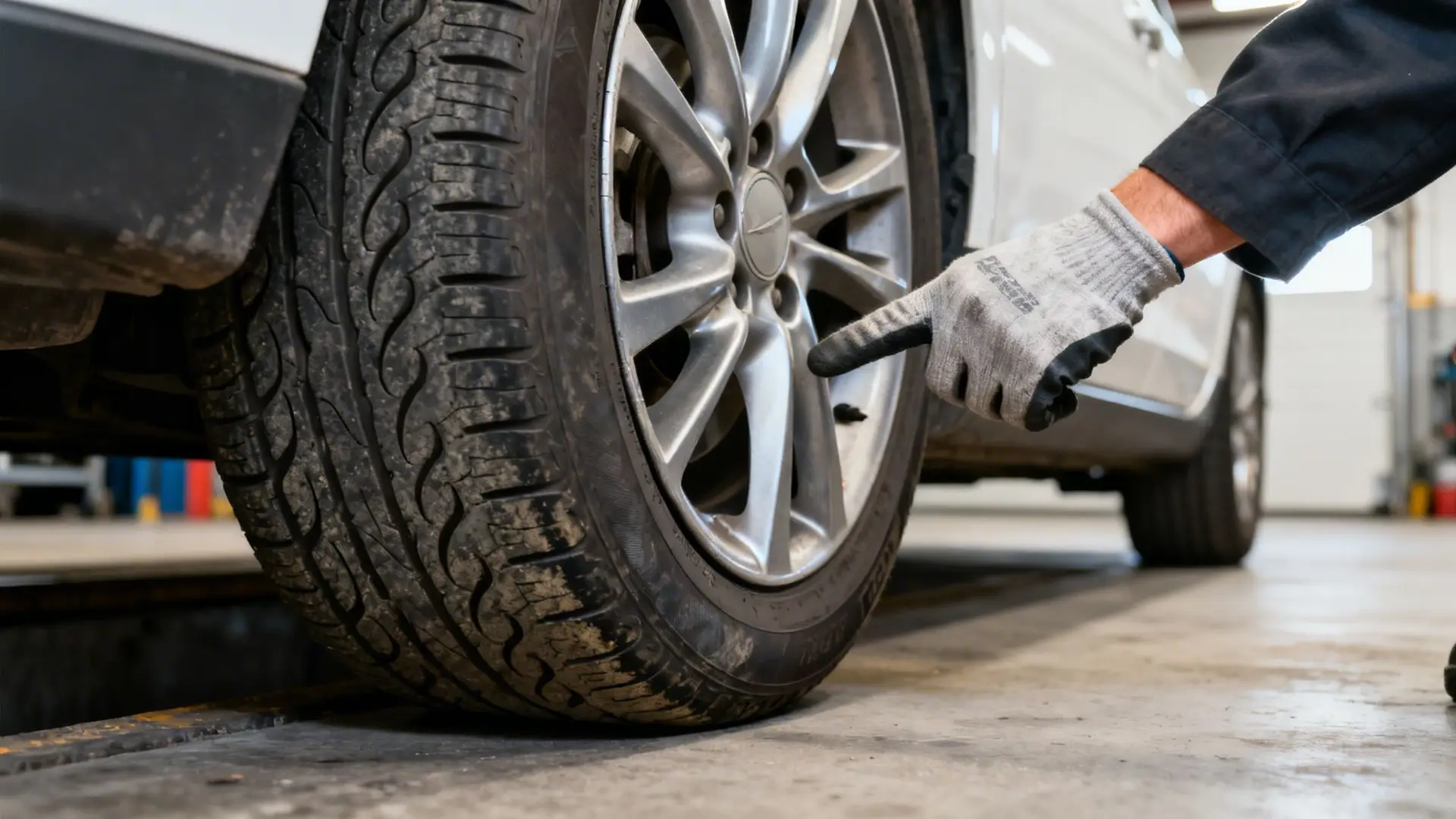
Think about a washing machine trying to spin a lopsided load of wet towels—that aggressive, thumping wobble is almost exactly what an imbalanced tire does to your car. This is the single biggest reason for a shaky steering wheel, especially once you get up to highway speeds.
The imbalance happens when one section of the tire-and-wheel assembly is heavier than the rest. It doesn't take much, either. As little as a quarter of an ounce of difference can cause a vibration you can feel as the wheel spins thousands of times per minute. A nasty pothole, a scrape against a curb, or just normal tread wear is all it takes to throw things off.
In fact, unbalanced tires are behind up to 40% of all vibration complaints we see in the shop. Ignoring it doesn't just mean putting up with the shake; it causes accelerated tire wear and puts extra stress on your suspension parts, leading to more expensive repairs down the road.
How to Spot Tire and Wheel Problems
Beyond a simple imbalance, a few other tire-related issues can cause a steering wheel shake. The good news is that you can often spot the warning signs yourself with a quick walk around your vehicle.
Here’s what to look for:
- Uneven Tire Wear: Check your tread. Are the inside or outside edges wearing down faster than the middle? Do you see any strange scalloped patterns or "cupping"? This is a dead giveaway that the tire isn't rolling evenly on the pavement, often due to an imbalance or alignment issue.
- Bulges or Blisters: A bubble or bulge on the sidewall of your tire is a serious safety hazard. It means the tire's internal structure has failed, creating a weak point that's at high risk of a sudden blowout. This kind of damage will absolutely cause a powerful, lurching vibration.
- Bent or Damaged Rims: After a hard impact with a pothole, the metal rim itself can get bent. A damaged rim creates a wobble with every single rotation, and you'll usually feel it at both low and high speeds. Look closely at the lip of your wheel for any obvious dents or flat spots.
A tire isn't just a simple hoop of rubber. It’s a precisely balanced component, and when that balance is lost, it sends a disruptive force through your entire steering and suspension system that only gets worse the faster you go.
Staying on top of your tire condition is critical for both a smooth ride and your safety on the road. Knowing the basic standards, like those outlined in the DOT Tire Regulations, can help you spot problems before they get serious. Tread depth is just as important, so be sure you know how to check your tire tread depth in our detailed guide.
When Your Brakes Are to Blame for the Shake
If you only feel that steering wheel shake when you step on the brake pedal, you’ve just found your biggest clue. It’s a classic S.O.S. signal coming directly from your brake system, and more often than not, the culprit is your brake rotors.
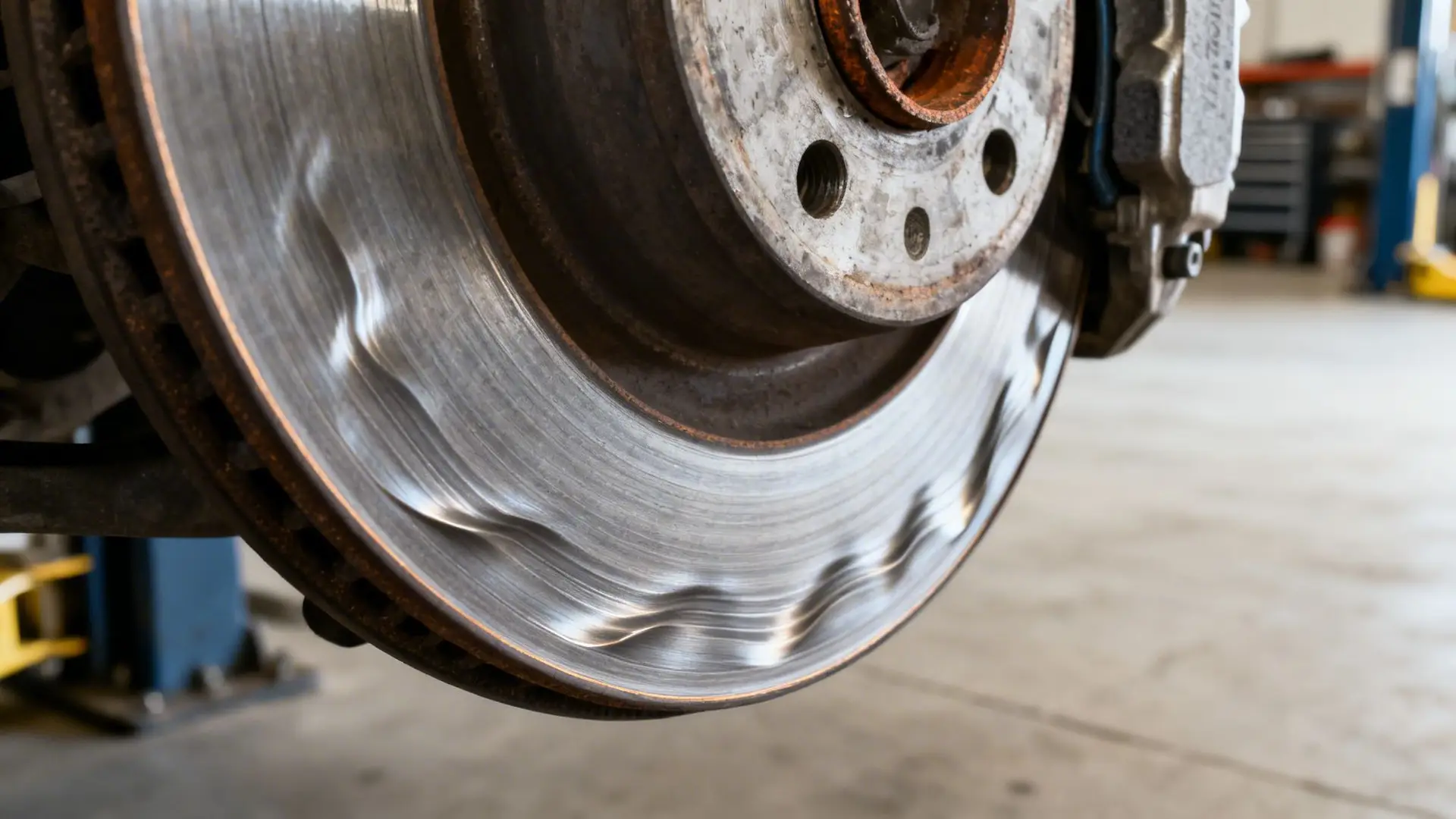
Think of it like a bicycle wheel with a slight, almost invisible bend. Every time the brake pads try to grab that bent spot, they get pushed away, creating a noticeable pulse. This is exactly what happens with a warped brake rotor on your car.
Understanding Warped Brake Rotors
The brake rotor is the heavy metal disc that your brake pads squeeze to bring your car to a stop. When that disc loses its perfectly flat surface—even by a tiny amount—it becomes "warped." This unevenness causes the brake pads to grab and release as the rotor spins, sending that shuddering sensation right up into your steering wheel.
You’ll usually feel this shake in two places at once:
- The Steering Wheel: A distinct side-to-side shudder or pulsing you feel in your hands.
- The Brake Pedal: A rhythmic pulsing sensation that pushes back against your foot.
This dual feedback is a dead giveaway that the issue is with your brakes, not your tires or alignment. Industry data shows that brake problems are behind about 35% of vibration complaints, leading to millions of rotor replacements across the U.S. each year.
A warped rotor isn't just an annoyance; it’s a critical safety issue. The inconsistent contact between the pads and the rotor surface reduces your braking effectiveness. This can increase your stopping distance by 10-15 feet from 60 mph in an emergency.
So, what causes a rotor to warp? Intense heat. Hard braking, like driving down a steep hill or stop-and-go city traffic, generates enough heat to physically alter the metal. If a hot rotor cools down too fast—like by hitting a big puddle—it can warp instantly. Because this directly impacts your ability to stop safely, it’s a problem that needs a professional’s attention right away. Our guide on brake rotor replacement service explains this process in more detail.
How Poor Alignment Disrupts Your Drive
Ever feel like your car has a mind of its own, constantly pulling to one side while you fight a shimmy in the steering wheel? You’re almost certainly dealing with poor wheel alignment. It’s a lot like trying to walk in a straight line with your feet pointed slightly inward—you’d have to constantly correct yourself to stay on course.
That’s exactly what your tires are forced to do. Instead of rolling straight ahead, they "scrub" sideways against the pavement. This constant fight between where the tires are pointed and where you're trying to go sends a frustrating vibration right up into your hands.
All it takes is one good hit from a pothole or a scrape against a curb to knock your suspension's precise angles out of whack. When that happens, you’ve got one of the most common causes of steering wheel vibration.
The Signs and Costs of Bad Alignment
The most obvious sign is a crooked steering wheel; you have to hold it at an odd angle just to drive straight. Another huge red flag is uneven tire wear, where you'll see the inside or outside edges of your tires wearing down way faster than the middle.
This isn’t just about an annoying shake. When your wheels are out of sync—even by just one degree—it creates serious instability. In fact, misalignment is behind an estimated 25% of all vibration complaints, and it can chew through your tires up to 50% faster.
A car with bad alignment is like a machine with one gear out of place. The whole system has to work harder to compensate, leading to faster wear and tear, worse fuel economy, and that unmistakable shake in the steering wheel.
That accelerated wear hits you directly in the wallet. We see drivers all the time who are forced to replace perfectly good tires way too early, adding hundreds of dollars in unexpected costs.
An alignment check is the best way to stop this from happening. If you think your car is showing these symptoms, check out our guide on the common signs your car needs an alignment. Catching it early means a smoother ride, better safety, and protecting the investment you've made in your tires.
Deeper Issues With Suspension and Drivetrain Parts
So, you’ve ruled out tires, alignment, and brakes, but the shake is still there. Now it's time to investigate the parts that connect your wheels to your car: the suspension and drivetrain.
When these heavy-duty components wear out, they introduce looseness—or "play"—into the system. That play is what translates into a vibration you feel right in the steering wheel.
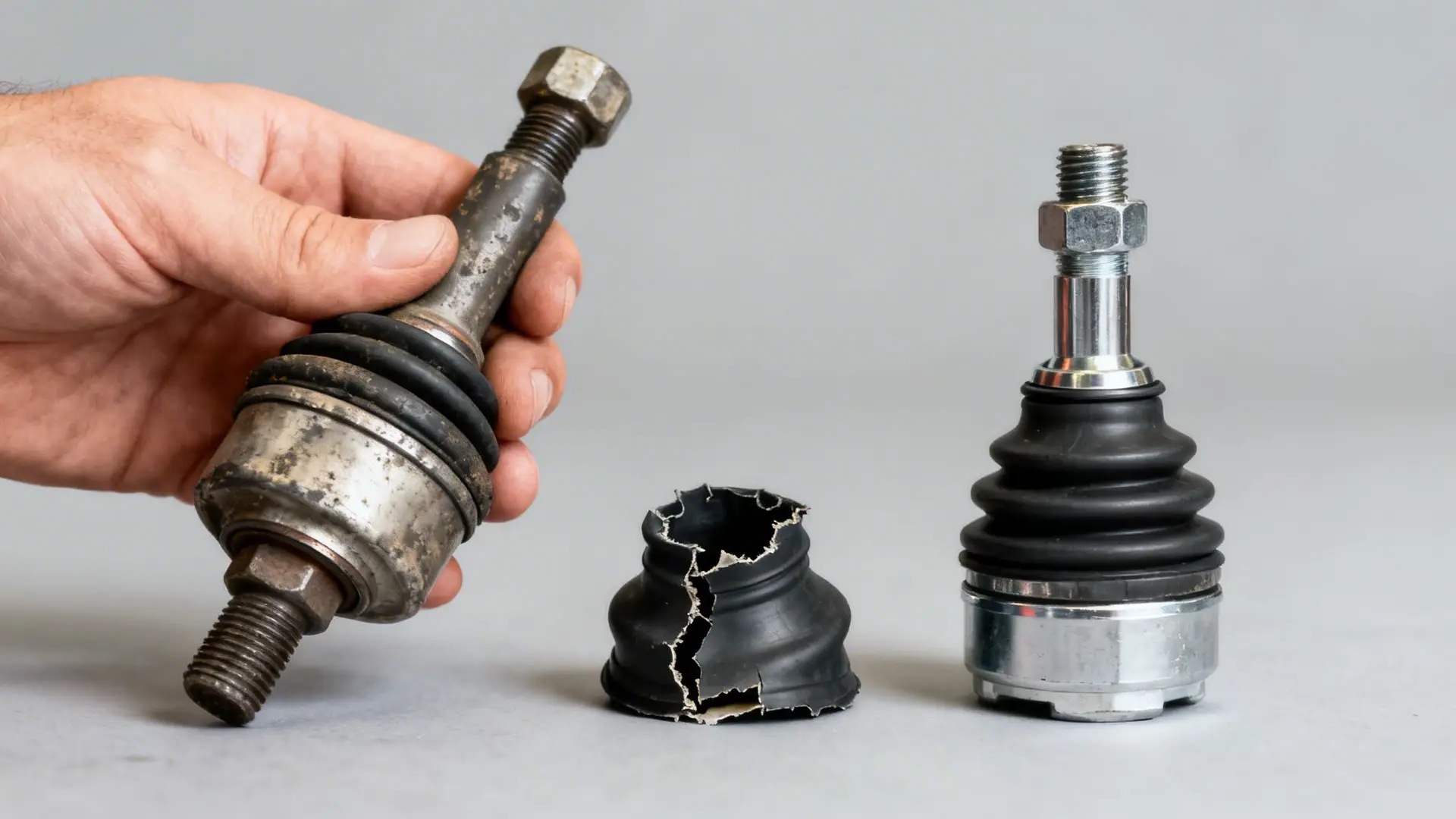
Think of your car's suspension like the joints in your body. When they're healthy, movement is tight and controlled. But when they wear out, things get wobbly and unstable. It's the exact same principle in your vehicle.
Worn Suspension Components
Your suspension is a network of joints and arms designed to keep your tires planted firmly on the road. When any of these parts develop too much play, they can't absorb road imperfections anymore. Instead, they create their own vibrations.
Here are the usual suspects:
- Ball Joints: These are critical pivot points for your steering. When a ball joint wears out, the wheel can literally wobble in its housing. You’ll often hear a clunking noise when turning or hitting bumps along with the vibration.
- Tie Rod Ends: As the name implies, these rods connect your steering rack to your wheels. Worn tie rod ends create sloppy steering, making the car feel less responsive and shaky.
- Wheel Bearings: A bad wheel bearing usually gives you an audible warning first—a humming or growling sound that gets louder as you speed up. If left alone, this will progress into a significant vibration you can feel in the wheel.
A healthy suspension provides a firm, controlled connection to the road. When parts like ball joints and tie rods wear out, that connection becomes loose, turning smooth feedback into a rough, unsettling vibration that directly impacts your control and safety.
Problems With the Drivetrain
The drivetrain is responsible for sending power from your engine to your wheels. If a part here is damaged or out of balance, it can cause a shake that often feels different—it typically gets worse as you accelerate.
The most common culprit is a bad CV axle (or constant velocity joint). These are essential for front-wheel and all-wheel-drive vehicles. A torn rubber boot is the classic failure point; it lets protective grease out and road grime in. This quickly ruins the joint, causing a vibration that is most pronounced when you're on the gas.
These aren't problems you should ever ignore. Worn suspension or drivetrain parts directly compromise your car's stability and your ability to steer safely. They demand immediate diagnosis from a certified technician who can pinpoint the source of the looseness and get your car back to riding smoothly and safely.
Diagnosing and Solving Your Steering Wheel Shake
Knowing why your steering wheel is shaking is one thing, but getting your car back to driving smoothly and safely is what really matters. This is where a good auto shop proves its worth, combining a technician’s experienced eye with the right diagnostic tools.
Fixing a vibration isn’t about guesswork—it’s a process of elimination. For instance, if you only feel that shake at highway speeds, our first suspect is almost always an imbalanced wheel. We use a computerized balancer to spin each wheel at high speed, letting us pinpoint and correct weight differences down to a fraction of an ounce.
What to Expect During a Professional Inspection
When you bring your vehicle in for a vibration, we follow a straightforward diagnostic routine. It usually starts with a quick test drive so we can feel the shake for ourselves and note what speed it starts at.
From there, we’ll move on to a few key checks:
- Tire and Wheel Service: We'll inspect your tires for any strange wear patterns or physical damage, check the rims to make sure none are bent, and run a precision wheel balance.
- Brake System Inspection: If the shake happens when you hit the brakes, we'll measure the brake rotors for any warping and inspect your brake pads and calipers for wear.
- Four-Wheel Alignment: Using laser-guided equipment, we measure your car’s suspension angles against the exact factory specs and adjust them as needed.
A professional diagnosis is all about finding the root cause, not just treating the symptom. This makes sure the fix actually lasts and saves you from the headache of coming back for the same problem.
If those initial checks don’t solve it, the problem likely runs deeper. We’ll then perform a full suspension inspection, checking for any looseness in parts like ball joints, tie rods, or wheel bearings. Knowing what to expect helps you have a clear, confident conversation with your mechanic and understand exactly what you’re paying for—whether it’s a simple tire balance or a more involved suspension repair.
Common Questions About Steering Wheel Vibrations
Even after you know what might be causing that shake, a few practical questions always come up. Let's tackle the concerns we hear most often from drivers so you know exactly what to do next.
Can I Still Drive if the Steering Wheel Is Vibrating?
It's tempting to ignore it, but we strongly advise against it. While a faint vibration might just be an out-of-balance tire, that same shake could be a warning sign of a serious brake problem or a failing suspension part.
Continuing to drive almost always makes the problem worse. Pushing your luck can turn a simple fix into a major, expensive repair. For your own safety, it's best to get it checked out by a pro as soon as you can, especially if the shaking is severe or gets worse when you brake.
Think of it this way: a vibrating steering wheel is your car's check engine light for its tires, suspension, and brakes. Listening to it early is always the safest and most affordable choice.
How Much Does It Cost to Fix?
This really depends on what’s causing the shake. The fix could be simple or more involved.
A tire balance is often the solution and is usually the cheapest fix, typically under $100 for all four wheels. If your alignment is off, a wheel alignment generally costs between $90 and $150.
But if the problem is a warped brake rotor or a worn-out ball joint, the cost can climb, ranging from a few hundred dollars to over a thousand for more complex suspension work. Getting a proper diagnosis first is key to knowing what you're up against.
Will Rotating My Tires Fix the Vibration?
No, rotating your tires won't fix the shake—it will just move it. For instance, if you have an unbalanced front tire causing the steering wheel to vibrate, moving it to the back will just make you feel the vibration in your seat instead.
Tire rotation is vital for making your tires last longer, but it doesn't solve a balance or alignment problem. The only way to stop the shake is to balance the tire, correct the alignment, or repair the part that’s worn out.
If you're tired of that annoying shake and want a clear, honest diagnosis, the ASE-certified team at Express Lube & Car Care is here to help. With our walk-in convenience and commitment to fair pricing, we'll pinpoint the cause and get you back to driving smoothly and safely. Stop by today for fast, dependable service you can trust. Learn more or get directions at https://www.expressluberichlandhills.com.