

Long before any dashboard light starts nagging you, your right foot will likely feel the first sign of trouble. The most immediate, hands-on (or rather, feet-on) way to tell if your brake fluid is low is a change in how the brake pedal feels. If it suddenly feels soft or spongy when you press it, that’s your car talking to you.
This mushy sensation is the classic symptom of a problem in the hydraulic system. It often means you have to push the pedal further down to get the same stopping power, which is a clear signal that something is wrong.
That Spongy Brake Pedal Is Your First Warning
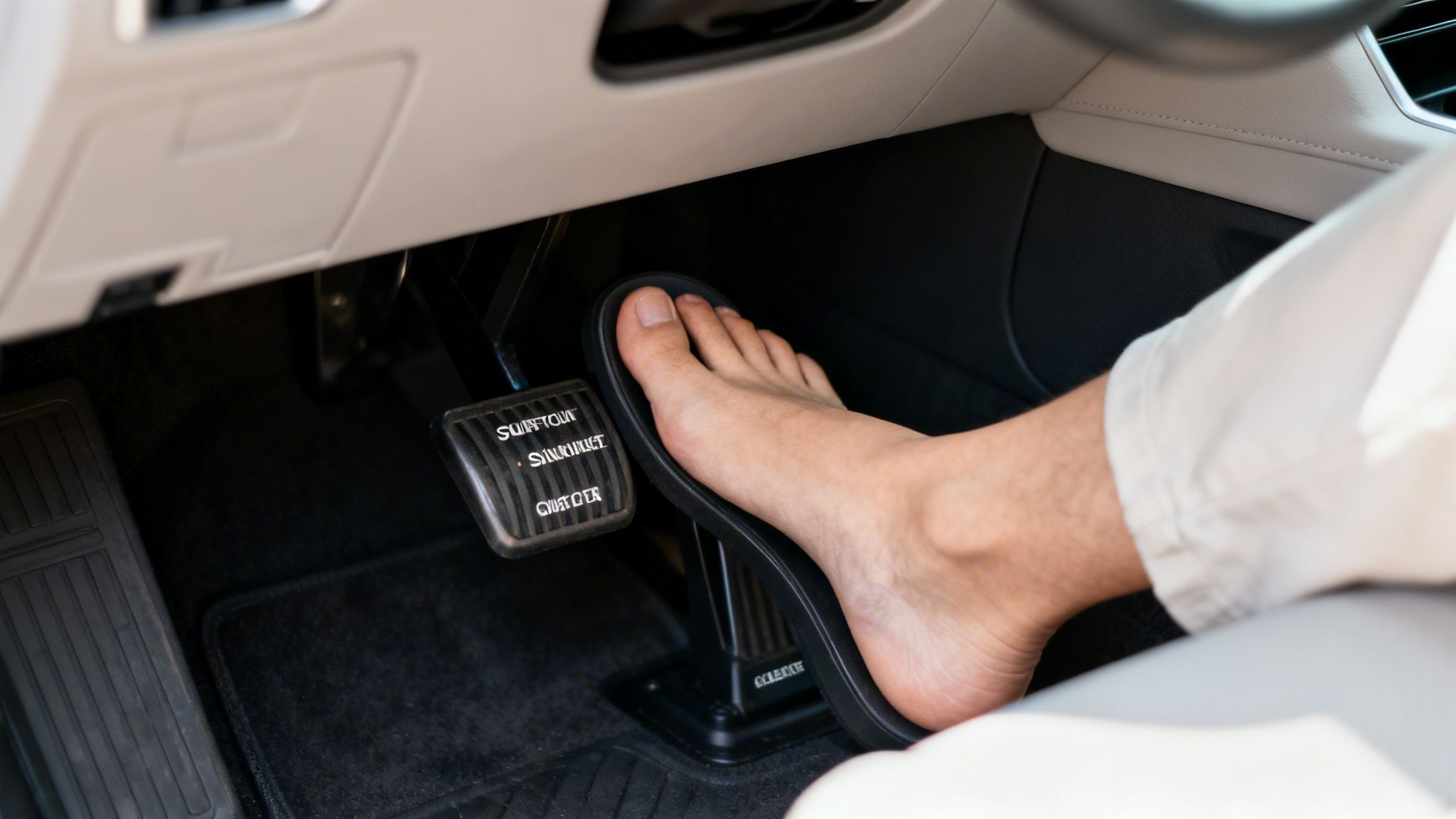
Think about it. You're driving through Richland Hills, heading for an intersection, and the brake pedal just feels… off. It sinks closer to the floor than it should. That’s your car’s way of waving a red flag about its most important safety system.
A healthy brake system is all about hydraulics. When you press the pedal, you’re pushing fluid through the lines to squeeze the brake calipers. Because fluid doesn't compress, the response should be firm and immediate. But when the fluid level drops, air gets into the lines.
Air is the absolute enemy of a hydraulic system. Unlike brake fluid, air compresses easily. When you step on a spongy pedal, you're just wasting that initial force squishing air bubbles instead of actually applying the brakes.
This creates a dangerous lag in response and seriously cuts down on your stopping power. It’s a real problem in the stop-and-go traffic we see around Northeast Tarrant County, where you need your brakes to be sharp. In fact, brake system failures, often tied to low fluid, were a factor in over 22% of vehicle crashes involving mechanical problems, according to some automotive safety reports.
Why Pedal Feel Matters
This isn't just a minor annoyance; it's a direct warning that your braking ability is compromised. That squishy feeling could be the difference between a safe stop and a collision. It’s the earliest and most reliable alert your car can give you.
Ignoring it puts you, your passengers, and everyone else on the road at risk.
What Your Dashboard Warning Lights Mean
Your car has a built-in alert system designed to grab your attention long before you feel a problem with the pedal. If a warning light pops up on your dashboard, don’t treat it like a suggestion—it’s a critical safety alert that often points directly to low brake fluid.
The most common signal is the brake warning light, which usually looks like a red or yellow circle with an exclamation point inside or simply the word "BRAKE." Sure, it might just mean your parking brake is still on. But if it stays lit after you've released the brake, it’s almost always signaling a problem in the hydraulic system. This is your car's way of screaming for help.
Understanding the ABS Light
Another important one to watch for is the Anti-lock Braking System (ABS) light. When this light comes on, either by itself or with the main brake warning, it means there's a fault in the ABS. Low brake fluid can mess with the hydraulic pressure the ABS needs to work correctly, triggering this specific alert.
These modern systems are incredibly sensitive. An automotive analysis found the brake warning light often appears when fluid drops just 20-30% below the optimal level. That might not sound like much, but it can increase your stopping distance by a shocking 40% in an emergency. You can see the full findings from automotive safety experts for more details on how these systems work.
Key Takeaway: Never ignore a brake or ABS warning light. Think of these sensors as your vehicle's last line of defense, designed to alert you to a dangerous drop in hydraulic pressure before you experience total brake failure. It's a clear sign to stop driving and get it checked out immediately.
A Quick Visual Check You Can Do Yourself
You don't need to be a mechanic to get a quick read on your brake system's health. In fact, one of the most important checks is something you can easily do yourself in just a couple of minutes with no special tools. It’s an empowering way to stay ahead of potential problems.
First, make sure your car is parked on level ground for an accurate reading. Pop the hood and look for the brake fluid reservoir. It's usually a small, semi-clear plastic tank located high up on the driver's side of the engine bay, close to the firewall. You'll typically spot it by its yellow or black screw-on cap.
Reading The Reservoir And The Fluid
The reservoir is designed to be translucent for a reason—so you can see what’s going on inside. You'll notice two lines marked on the side: ‘MIN’ and ‘MAX.’ Your brake fluid level should always be floating somewhere between those two marks.
If the fluid is hugging the ‘MIN’ line or has dropped below it, you've got low fluid, and it's time to figure out why.
While you're looking at the level, pay close attention to the color of the fluid itself. This is a huge clue.
Sometimes, a picture is worth a thousand words. Here’s a quick visual guide to help you assess your brake fluid's color and what it means for your vehicle.
Brake Fluid Condition Chart
| Fluid Color | What It Means | Recommended Action |
|---|---|---|
| Clear to Light Amber | This is fresh, healthy fluid. Your system is in good shape. | No action needed. Continue with routine checks. |
| Slightly Darkened/Brownish | The fluid is aging and has started to absorb moisture. | Plan for a brake fluid flush in the near future. |
| Dark Brown or Black | The fluid is old, contaminated, and no longer effective. | Immediate brake fluid flush is highly recommended. |
Old, contaminated fluid can be just as dangerous as a low level because it can't handle the heat and pressure required for proper braking.
This infographic breaks down the common dashboard warnings that often go hand-in-hand with the brake fluid issues we've just discussed. A quick visual check can often confirm what your car is trying to tell you.
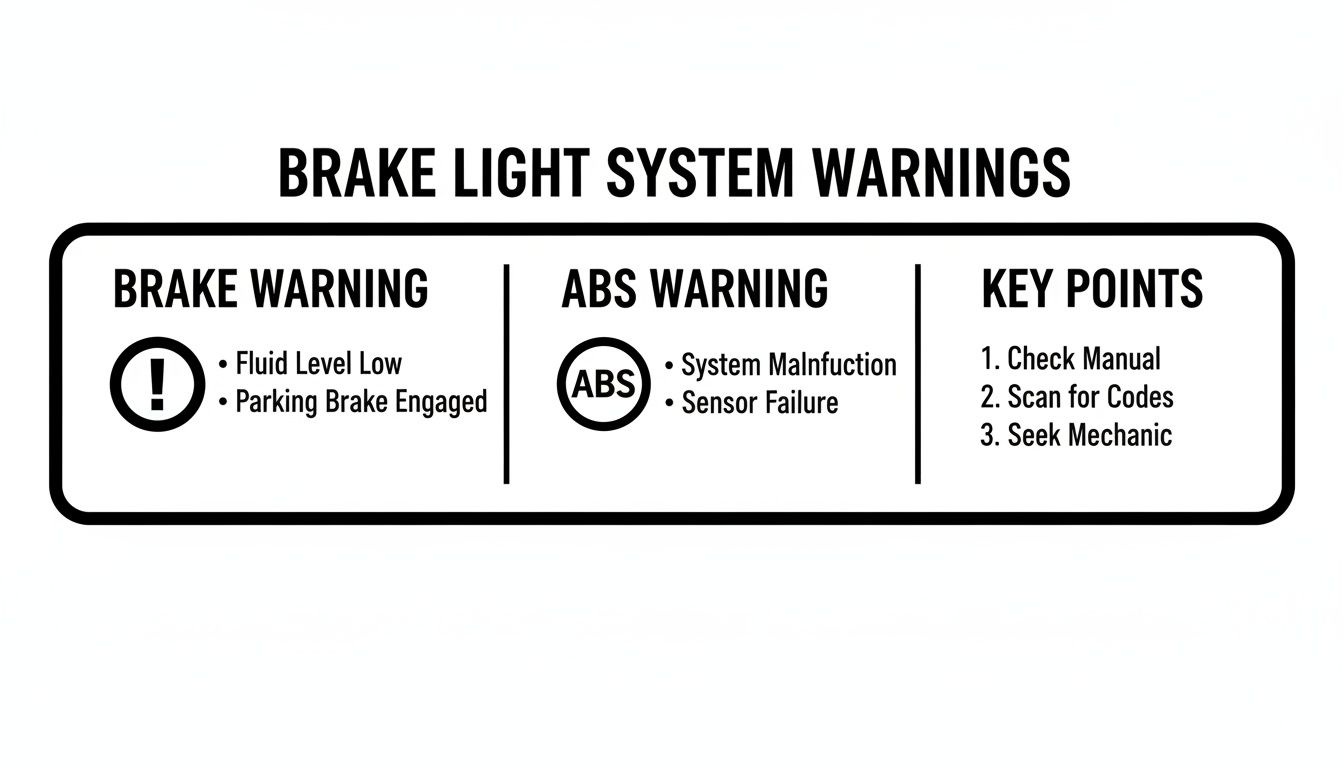
These lights are your vehicle’s early warning system, designed to alert you before a small issue becomes a major failure.
Important Tip: A low fluid level almost always points to another problem. As your brake pads wear, the fluid level will naturally drop a tiny bit over time. But a significant drop? That’s a classic sign of a leak somewhere in the system—and simply topping it off won't fix the underlying issue.
Performing this simple visual check should be a regular part of your maintenance routine. To see where it fits into the bigger picture, check out our complete car safety inspection checklist.
Identifying a Physical Brake Fluid Leak
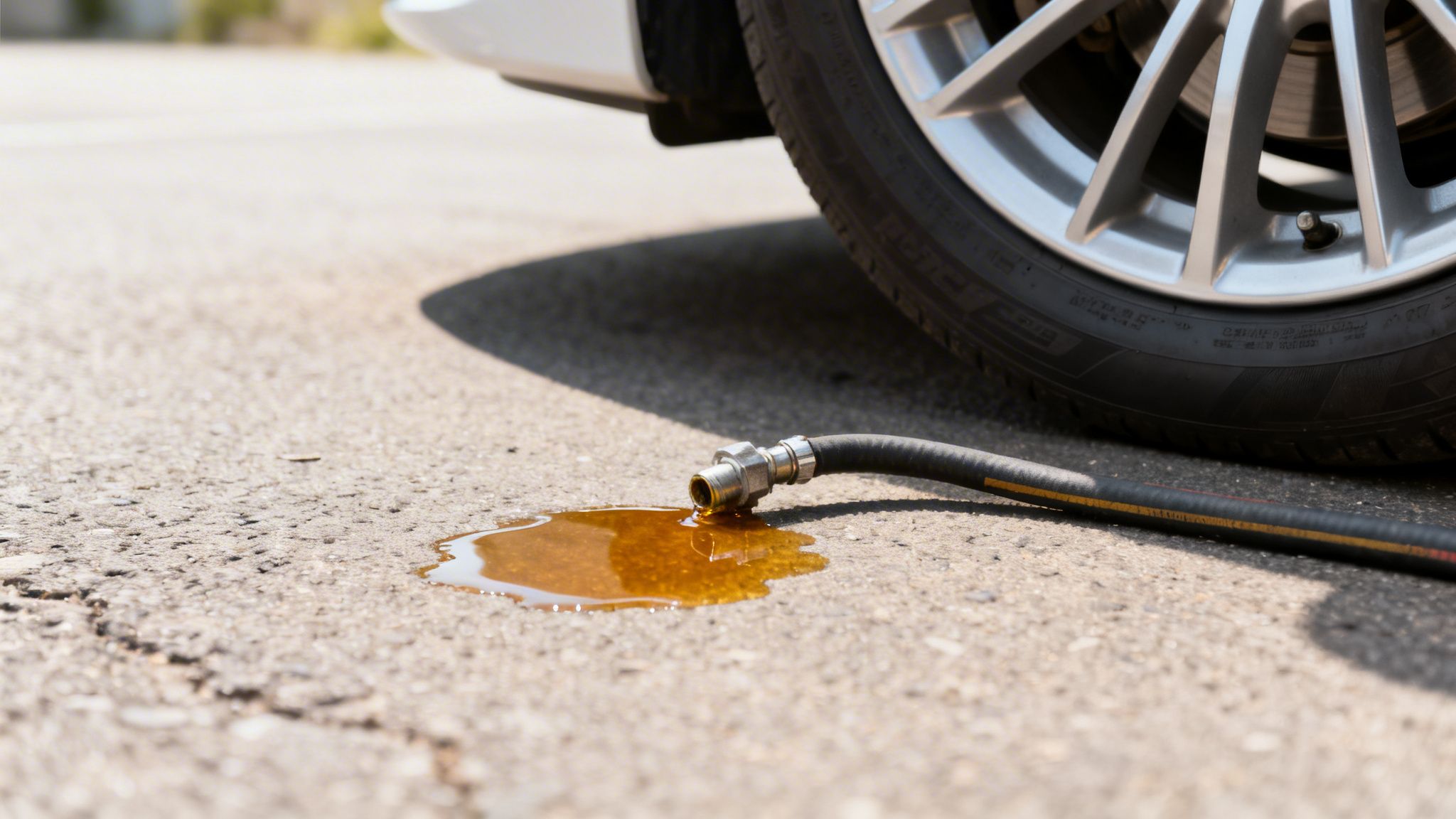
So you've checked the reservoir and confirmed your brake fluid is low. The next question is obvious: where did it go? Unlike motor oil, brake fluid doesn't get "used up" by your engine. A sudden or significant drop almost always points to a leak somewhere in the system.
A puddle under your car is the classic giveaway. If you see a clear-to-amber colored liquid that feels oily, that’s probably brake fluid. It has a distinct chemical smell that sets it apart from antifreeze or plain water condensation from your A/C. Leaks from old, worn-out hoses and seals are incredibly common, accounting for about 40% of low fluid cases. These parts often start to fail after 50,000-70,000 miles of use. If you want to dive deeper, you can read more about the common signs of brake fluid issues from other auto experts.
Common Leak Locations
Brake fluid leaks can be sneaky, but they have a few favorite hiding spots. If you’re playing detective, start your search here:
- Around the Wheels: Check for wetness or dark, oily stains on the inside of your tires or around the brake calipers. This is a tell-tale sign of a bad caliper seal.
- Along the Brake Lines: Get a flashlight and trace the thin metal lines that run from the master cylinder out to each wheel. They’re exposed to the elements and can rust or get nicked by road debris, causing tiny but dangerous leaks.
- Near the Master Cylinder: The master cylinder itself has several connection points where the brake lines attach. The seals here can degrade over time and start to seep.
A leak isn't just a maintenance task—it's a serious safety hazard. Even a slow drip lets air into the hydraulic system, which causes that spongy pedal feel and can lead to total brake failure. Pinpointing the source is non-negotiable.
So, What's Next? Getting a Professional Brake Inspection
Once you’ve spotted the warning signs—that spongy pedal, a dashboard light that just won’t quit, or a suspicious puddle under your car—it’s time to take action. Knowing how to tell if brake fluid is low is the first step, but what you do next is what really keeps you safe.
If you're dealing with a soft pedal or you can see a leak, your car is no longer safe to drive. Your braking power is seriously compromised, and the risk of complete brake failure is very real. The only smart move is to have your car towed to a trusted shop.
What a Professional Service Looks Like
At Express Lube & Car Care, our ASE-certified technicians don't just top off the fluid and send you on your way. We perform a comprehensive inspection to find the exact cause of the low fluid, ensuring the repair is safe and permanent.
Our process always includes:
- A full visual inspection of the entire brake system—master cylinder, lines, hoses, and calipers—to hunt down any leaks.
- Checking the condition of your brake pads and rotors, since extreme wear is a common reason for the fluid level to drop.
- Testing your existing brake fluid for moisture and contamination that can ruin its performance.
An experienced technician can immediately tell the difference between a simple fix, like worn-out brake pads, and something more serious like a corroding brake line. Getting the diagnosis right the first time saves you a ton of hassle and money.
After we find the issue, we’ll walk you through the necessary repairs and give you a clear, fair-priced estimate before we touch anything. For a closer look at what a full service involves, check out our guide to finding reliable brake service near me. Our goal is to get you back on the road with total confidence in your brakes.
Common Questions About Your Car's Brake Fluid
Once you know the signs of low brake fluid, a few other questions usually pop up. It's one thing to spot a problem, but understanding why these things matter is key to staying safe on the road.
A question we hear all the time is, "Can't I just keep topping it off?" It seems like an easy fix, but it's a really dangerous shortcut. Your brake system is a sealed hydraulic system—the fluid isn't supposed to just vanish.
If your brake fluid is low, it’s almost always pointing to a bigger issue like worn-out brake pads or a leak. Just adding more fluid is like putting a band-aid on a problem that needs stitches.
What Happens If I Use the Wrong Type of Fluid?
This is a big one. Your car’s manufacturer is very specific about the type of brake fluid you need (like DOT 3 or DOT 4), and for good reason. They all have different boiling points and chemical makeups.
Using the wrong fluid is a recipe for disaster:
- It can eat away at the seals and hoses in your brake lines, causing leaks.
- It could lower the boiling point, leading to "brake fade" when you need your brakes the most.
- Mixing different fluid types can cause them to gel up, clogging the system and leading to total brake failure.
Always, always check your owner's manual or ask a pro before pouring anything into that reservoir. This isn't a place for guessing games.
How Often Should I Get a Brake Fluid Flush?
Brake fluid flushes are one of the most overlooked maintenance items. The fluid is hygroscopic, which is a fancy way of saying it loves to absorb moisture right out of the air. Over time, that water contamination lowers the fluid's boiling point and can start corroding your brake system from the inside out.
As a general rule, most manufacturers recommend flushing your brake fluid every two to three years or every 30,000 miles. In a climate like Texas, where humidity and high heat are common, this service is even more critical for maintaining a safe and responsive brake system.
Flushing the system isn't an upsell; it's crucial preventative maintenance. To see what's involved, check out our guide on a fluid change in car maintenance for more details. Knowing the answers to these common questions helps you make smarter, safer decisions for your vehicle.
At Express Lube & Car Care, our ASE-certified technicians can answer all your questions and ensure your brake system is in top condition. Stop by for a professional inspection and service you can trust. https://www.expressluberichlandhills.com