

If you want to keep your car running for the long haul, regular fluid changes are one of the most important things you can do. It's a simple idea: drain out the old, worn-out liquids and replace them with fresh fluid that meets your car’s exact needs. Think of it as a direct investment in your vehicle's health, performance, and safety.
Why Your Car’s Fluids Are Its Lifeblood
It’s no exaggeration to say your car’s fluids are like its circulatory system. Just like blood keeps a body alive, these specialized liquids lubricate, cool, clean, and provide the hydraulic power that makes everything work. Ignoring them is a surefire way to cause premature wear and tear, leading to repairs that are as expensive as they are avoidable.
This guide will break down what each of those fluids does and why keeping them fresh is so critical. From the oil in your engine to the fluid in your brake lines, a little bit of knowledge goes a long way.
The Unsung Heroes Under the Hood
Every fluid has a very specific job, and when one starts to fail, it can set off a chain reaction that harms other parts of your car. These are the primary players working together to keep you on the road:
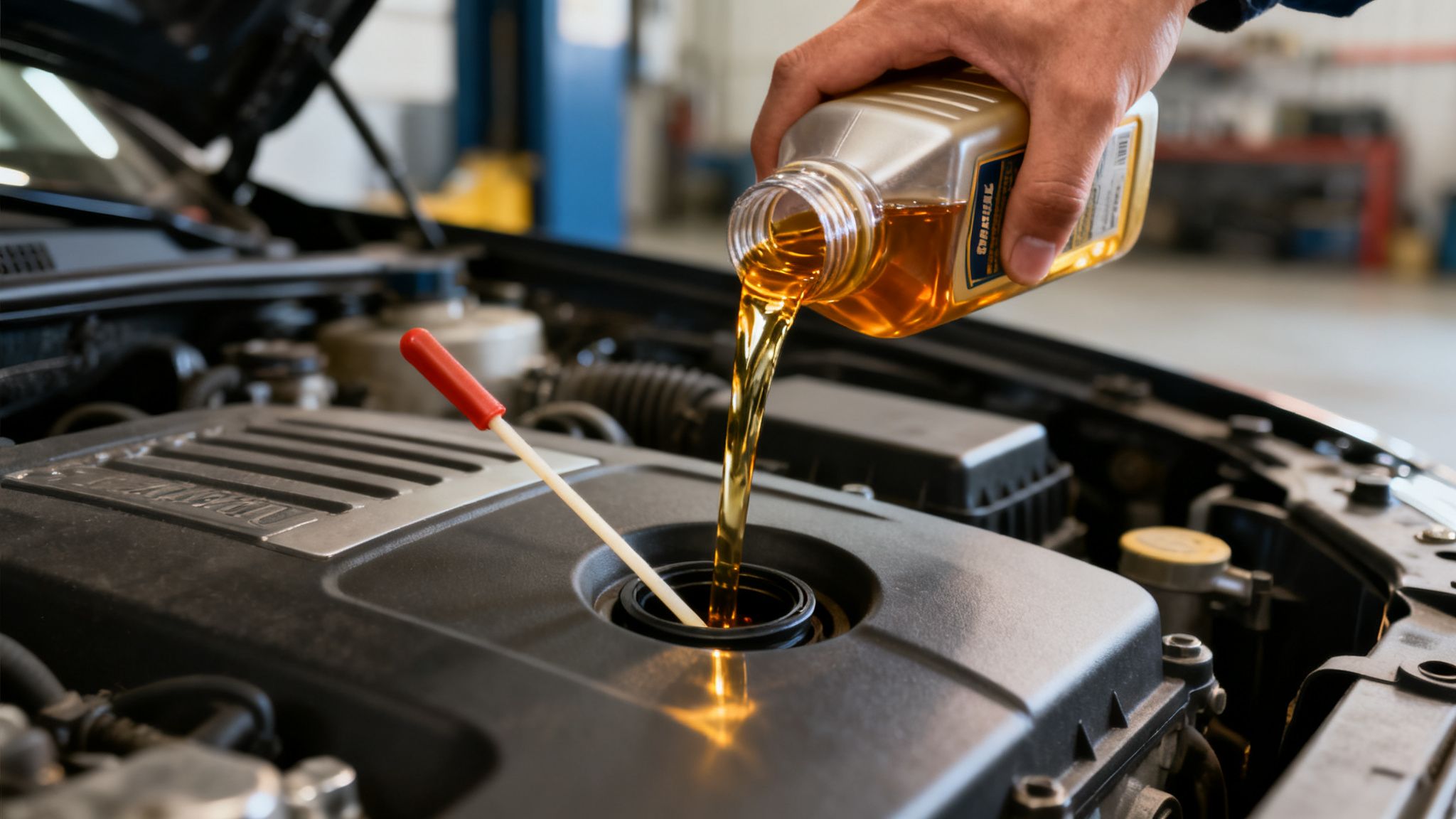
- Engine Oil: This is the big one. It lubricates all the moving parts to slash friction, helps cool the engine, and carries away gunk and harmful deposits.
- Transmission Fluid: Keeps your gear shifts smooth and prevents the incredibly complex parts inside your transmission from overheating.
- Coolant (Antifreeze): This is all about temperature control. It stops your engine from overheating in the summer and from freezing up in the winter.
- Brake Fluid: It’s what transfers the force from your foot on the pedal to the brakes at your wheels, allowing you to stop safely and reliably.
This map gives you a quick visual of how these core fluids are tied to your car's most important systems.
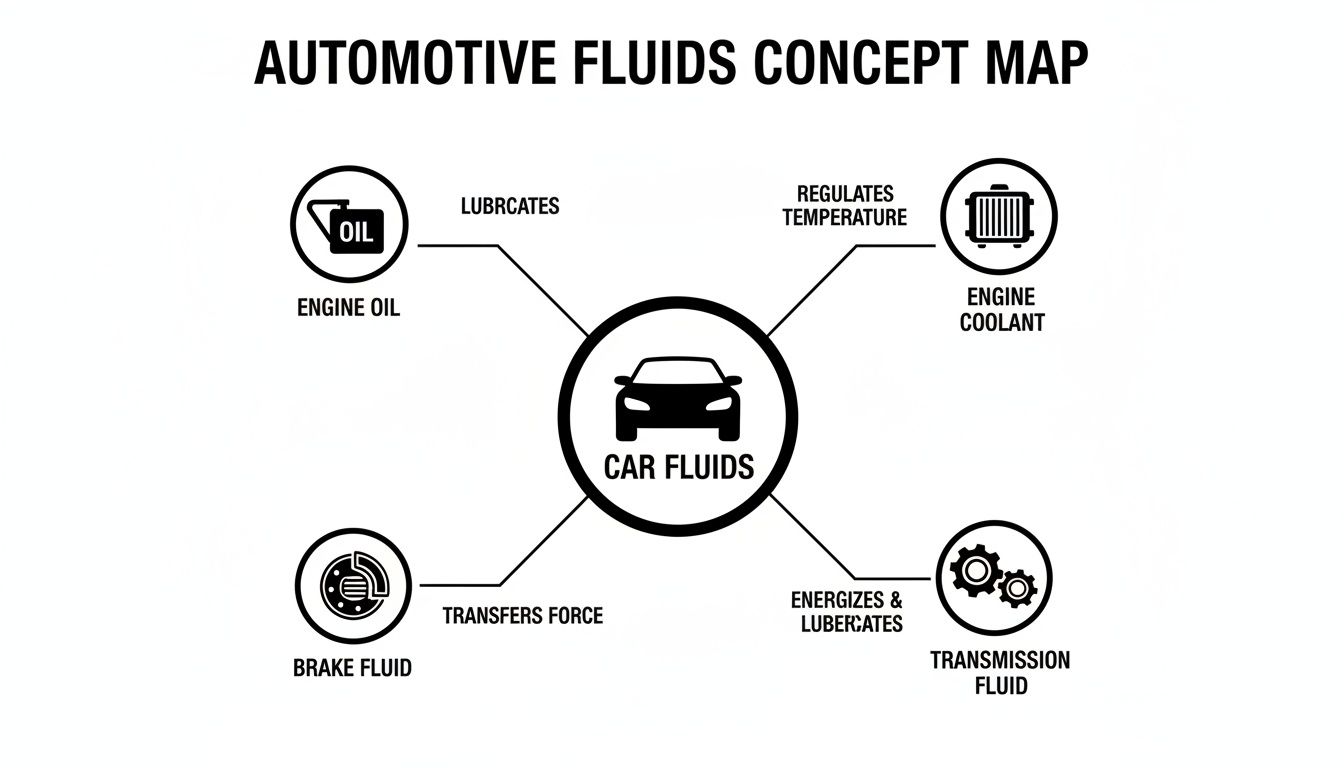
As you can see, each fluid is essential for a different system, which is why a complete approach to maintenance is so crucial.
Over time, intense heat and contamination break these fluids down, making them lose their ability to protect your engine. A timely fluid service isn't just a recommendation—it's a basic requirement for keeping your car dependable.
Staying on top of your fluid changes isn't just busywork; you're actively adding years to your vehicle's life and protecting your investment. You can learn more about how to create a smart schedule in our complete guide to vehicle maintenance. This proactive approach is the best way to stop small problems from snowballing into major mechanical failures, saving you a ton of time, stress, and money down the road.
The Critical Role of Engine Oil
If your car's fluids are its lifeblood, then engine oil is the heart. It’s arguably the single most important fluid in your vehicle, doing an incredibly tough, multi-tasking job every single time you turn the key.
Think of it as a bodyguard and a janitor for your engine's insides. Its main mission is to create a slick, protective film over all the moving parts, drastically cutting down on the intense friction that would otherwise grind your engine to a halt.
But it doesn't stop there. As it circulates, engine oil pulls a massive amount of heat away from components like the pistons and crankshaft, carrying it down to the oil pan to cool off. It’s also a powerful cleaning agent, trapping tiny particles of metal, soot, and other gunk, holding them in suspension until they get drained out at your next oil change. This is what prevents nasty, performance-robbing sludge from building up.
Choosing the Right Type of Engine Oil
Not all engine oil is created equal. The right choice really comes down to your car's age, what the manufacturer recommends, and even your personal driving habits. Generally, oils fall into three main buckets.
To make things a little clearer, here’s a quick breakdown of the three main types of oil you’ll find on the shelf.
Comparing Your Engine Oil Options
| Oil Type | Key Benefit | Change Interval | Best For |
|---|---|---|---|
| Conventional Oil | Most affordable option | Shorter (3,000-5,000 miles) | Older, low-mileage vehicles with simple engine designs. |
| Synthetic-Blend Oil | Better protection than conventional at a mid-range price | Moderate (5,000-7,500 miles) | Drivers wanting improved performance without the full cost of synthetic. |
| Full Synthetic Oil | Maximum performance, cleaning, and protection | Longest (7,500-15,000+ miles) | Modern turbocharged engines, high-performance cars, and extreme weather. |
Ultimately, full synthetic is often the best investment for modern cars. It’s engineered in a lab for superior performance, stands up to extreme temperatures, and keeps your engine exceptionally clean.
Understanding Oil Viscosity and Market Trends
You've probably seen numbers like SAE 0W-20 on a bottle of oil. This is its viscosity—a fancy word for how thick it is or how easily it flows. The "W" stands for winter, showing how it performs when it’s cold, while the second number shows its thickness once the engine is hot. Lighter oils like 0W-20 have become the new standard.
The global market for engine oil is massive, valued at USD 43.32 billion in 2025 and projected to climb to USD 52.76 billion by 2032. A huge driver of this growth is the demand for advanced synthetic oils, which now make up a 38.5% market share. Passenger cars dominate the market at 44.6%, with the 0W-20 viscosity grade leading the pack with a 21.7% share. Why? Because it’s so efficient at reducing friction that it can improve your fuel economy by up to 2-3%. You can see more on these engine oil market trends for yourself.
Key Takeaway: Always stick to the oil viscosity your car's manufacturer recommends. An oil that's too thick can strain the engine, while one that's too thin might not offer enough protection under heat and pressure.
Telltale Signs an Oil Change Is Overdue
Your car is pretty good at telling you when it's time for a fluid change in car maintenance, especially when it comes to the oil. Ignoring these signs is a fast track to expensive engine trouble.
Keep an eye out for these red flags:
- Dark and Gritty Oil: Fresh oil is a clean, amber color. If you check the dipstick and the oil is black, thick, or feels gritty, it’s full of junk and needs to be changed.
- Unusual Engine Noises: Hear any knocking, rumbling, or ticking sounds? That could be metal-on-metal contact because the oil isn't lubricating things properly anymore.
- Check Engine or Oil Light: This one is impossible to miss. If the oil pressure light comes on, it's a serious warning. Pull over safely and shut the engine off immediately to prevent catastrophic damage.
- Exhaust Smoke: Blue or gray smoke puffing out of your tailpipe is a classic sign that oil is leaking into the combustion chambers and getting burned.
- A Burning Oil Smell: If you catch a whiff of burning oil from inside the car, it's a good bet that oil is leaking onto a hot part of the engine.
And remember, that old "3,000-mile rule" is pretty much a thing of the past for most modern vehicles. Your owner's manual is your best friend for finding the correct service interval. For a closer look at what goes into a professional oil change, check out our guide on the oil and filter change service.
Keeping Your Drivetrain Running Smoothly
While engine oil gets all the glory, the fluids in your drivetrain are the unsung heroes doing some seriously heavy lifting. Think of your transmission, differential, and transfer case as the joints and muscles of your car. They're what take the raw power from the engine and actually get it to the wheels.
The fluids inside these components act like a protective cushion, preventing the metal-on-metal grinding that would otherwise turn expensive gears into dust. Ignoring a fluid change in car maintenance for your drivetrain can be a catastrophic, and costly, mistake.
Understanding Transmission Fluid
Your car's transmission is an incredibly complex piece of machinery. The fluid inside is just as specialized, working hard to cool, lubricate, and create the hydraulic pressure needed for seamless gear changes.
There are two main types you’ll run into:
- Automatic Transmission Fluid (ATF): This is a high-tech liquid, packed with detergents and anti-foaming agents. It lubricates all the intricate moving parts and acts as a hydraulic fluid, allowing your car to shift gears all on its own.
- Manual Transmission Fluid (Gear Oil): This stuff is much thicker and heavier. Its primary job is to coat and protect the gears and synchronizers in a manual gearbox, which handles a different kind of stress than an automatic.
Over time, heat and constant friction break this fluid down, stripping it of its protective qualities. If you want to get into the nitty-gritty, you can learn more about what a transmission fluid change involves and why it's so critical for your car.
Spotting the Warning Signs of Bad Fluid
Thankfully, your car will usually give you a few hints that its drivetrain fluids are on their last legs. Catching these signs early can be the difference between a simple service and a full transmission rebuild.
A big giveaway is the color and smell. Healthy ATF is typically a bright, translucent red with a slightly sweet smell. When it's old and burnt, it turns a murky dark brown or black and has a nasty, acrid odor.
Other red flags to watch out for include:
- Hesitant or Jerky Shifting: If your automatic transmission feels like it's stumbling over itself or shifts with a harsh clunk, the fluid is probably shot.
- Whining or Humming Noises: A distinct whining sound that changes in pitch when you accelerate or turn often points to low or worn-out fluid in the differential.
- Slipping Gears: This is a big one. If your engine revs up but the car doesn't accelerate, or it pops out of gear, the fluid can no longer create the hydraulic pressure needed to function.
A complete transmission failure can easily set you back $3,000 to $8,000, sometimes even more. A preventative fluid change, on the other hand, costs a tiny fraction of that, making it one of the smartest investments you can make for your car's health.
Service Intervals for Drivetrain Fluids
Unlike your engine oil, drivetrain fluids last a lot longer, but they definitely don't last forever. The first place you should always look is your owner’s manual, as every manufacturer has different recommendations.
As a general rule, most automakers suggest a transmission fluid service every 30,000 to 60,000 miles. If you put your vehicle through severe conditions—like towing, constant stop-and-go traffic, or battling the brutal Texas heat—you'll want to be on the shorter end of that range.
Differential and transfer case fluids can sometimes go as long as 100,000 miles, but they still need to be inspected and eventually replaced to prevent premature wear. When it comes to your car's most expensive components, being proactive is always the cheaper and safer route.
2. Coolant and Brake Fluid: Your Safety Essentials
While some fluids are all about performance, coolant and brake fluid are your car's most critical safety systems. Think of coolant as your engine's personal climate control, keeping it from melting down in the Texas heat or freezing up in a surprise cold snap. Brake fluid? That’s the non-negotiable hydraulic muscle that actually stops your car.
Ignoring either one is a gamble no driver should ever take. A cooling system failure can lead to catastrophic engine damage, and bad brake fluid can mean a total loss of stopping power when you need it most.
Keeping Your Engine's Temperature in Check
Your engine creates an unbelievable amount of heat. Coolant (you probably know it as antifreeze) circulates constantly through the engine and radiator to pull that heat away and keep things running at a stable temperature. Without it, metal parts would warp, and the engine block itself could crack.
But it also works in reverse. The "antifreeze" part of its name is crucial in the winter, preventing the water in your system from turning to ice, expanding, and destroying your radiator from the inside out. It's a true year-round protector.
Signs Your Coolant Needs Changing
Coolant doesn't last forever. Over time, its protective additives break down, and the fluid becomes acidic. When that happens, it starts eating away at your radiator, water pump, and hoses.
Keep an eye out for these tell-tale signs:
- Temperature Gauge Creeping Up: If your car is running hotter than usual, the coolant has likely lost its ability to transfer heat effectively.
- A Sweet, Syrupy Smell: That distinct odor is a classic sign of a coolant leak, often noticeable after you park.
- Colorful Puddles: Bright green, orange, or pink liquid under your car means you have a leak somewhere in the cooling system.
- Rusty or Murky Fluid: Pop the cap on your coolant reservoir (when the engine is cool!). The fluid should be a clean, bright color. If it looks like rusty water or has gunk floating in it, it’s contaminated and needs to be flushed out.
We generally recommend a full coolant flush and replacement every 30,000 to 50,000 miles, but it's always best to check your owner's manual for your vehicle's specific schedule.
The Unsung Hero: Brake Fluid
Brake fluid is probably the most overlooked fluid in your entire vehicle, yet it's arguably the most important. It works in a sealed hydraulic system to turn the light pressure from your foot on the pedal into the immense force required to bring thousands of pounds of metal to a screeching halt.
It acts as an incompressible messenger. When you press the pedal, that force is instantly and equally transferred to all four brakes, giving you that firm, confident stopping power you rely on.
The biggest enemy of brake fluid is moisture. It’s "hygroscopic," which is a fancy way of saying it actively absorbs water from the air. Just a 3% water contamination can lower the fluid's boiling point by over 25%, creating a massive safety risk.
When brake fluid boils from the heat of braking, it creates tiny air bubbles in the lines. Unlike liquid, air can be easily compressed. The next time you hit the brakes, your pedal will just squeeze those air bubbles instead of applying the brake pads. The result is a terrifyingly "spongy" pedal that sinks to the floor with little to no stopping power.
Why a Brake Fluid Flush is Non-Negotiable
Because it constantly absorbs moisture, flushing your brake fluid is a non-negotiable part of car maintenance. It’s not just about performance; it’s about basic safety for you, your passengers, and everyone else on the road.
The fluid also contains additives that prevent rust and corrosion inside the brake lines, master cylinder, and calipers. Once those additives wear out, internal rust can lead to sticky calipers and other expensive failures.
It’s best to have your brake fluid completely flushed and replaced every two to three years, no matter how many miles you’ve driven. At Express Lube & Car Care, our technicians can test your fluid’s moisture content in minutes and perform a full, professional flush to ensure your brakes are ready for anything.
Deciding Between DIY Checks and Professional Service
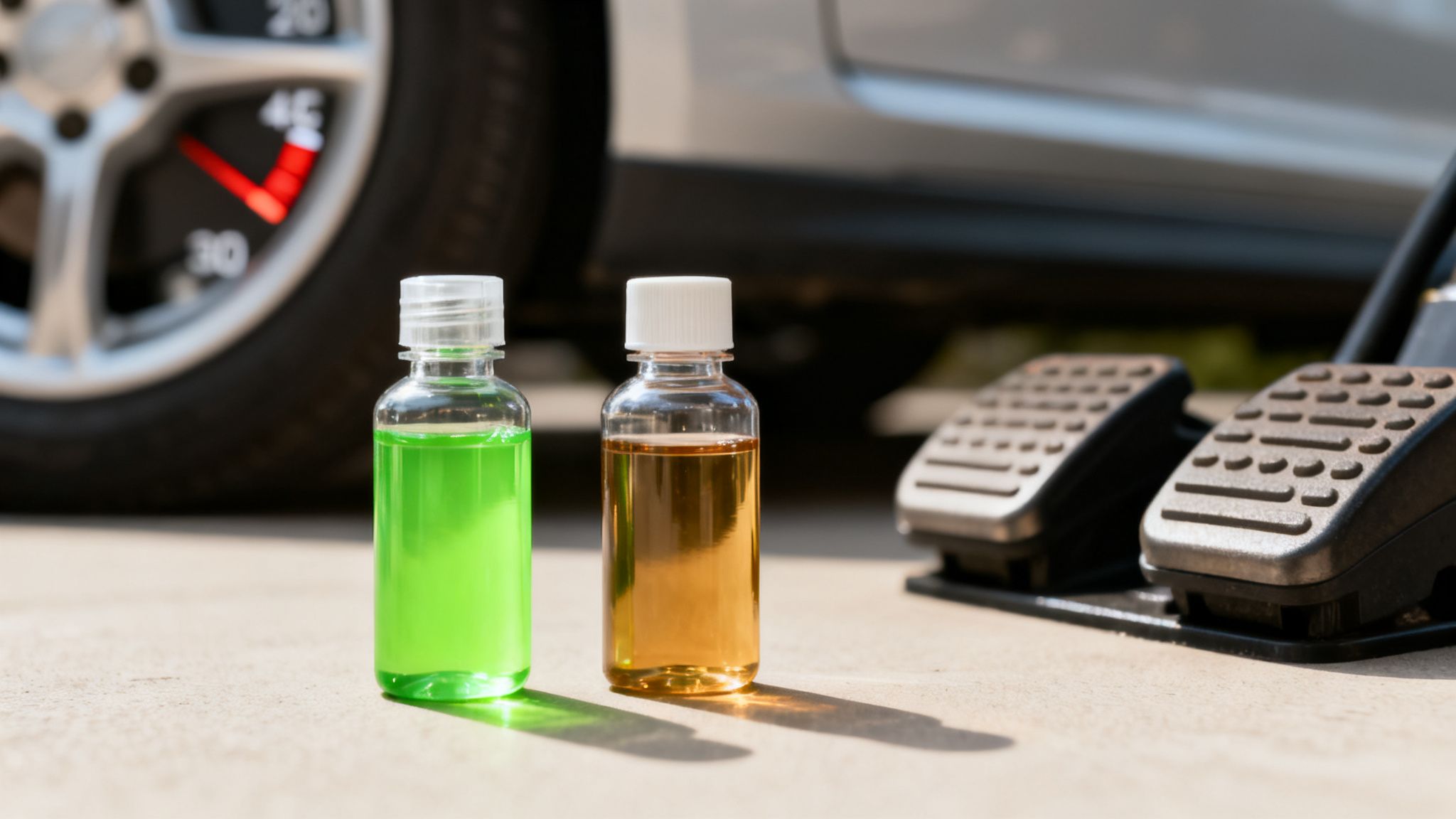
It’s great to get your hands dirty with basic car care. There’s a real satisfaction in knowing your own vehicle, and simple tasks like checking the oil dipstick or topping off your washer fluid are perfect for any car owner. These quick checks keep you in tune with your car's health and can help you catch small issues before they become big ones.
But there's a world of difference between a quick top-off and a full fluid flush. Checking a fluid level might take a minute, but a complete fluid change in car systems is messy, complicated, and can even be dangerous without the right know-how. This is where the line between a simple DIY task and a job for a professional gets very clear.
The Limits of DIY Fluid Changes
Trying to do a full fluid service in your driveway can get out of hand fast. For starters, you need a lot more than just a basic socket set. Draining and refilling your transmission or brake system correctly requires special tools like fluid extractors, pressure bleeders, and torque wrenches to do the job safely and effectively.
Then there's the fluids themselves. You’re dealing with some pretty nasty stuff.
- Safety Risks: Hot engine oil will give you a serious burn. Brake fluid is corrosive enough to strip the paint right off your car. And coolant is highly toxic to pets and local wildlife if it spills.
- Environmental Responsibility: You can’t just pour old fluids down the storm drain. Legally, you have to capture all of it, seal it in approved containers, and haul it to a designated recycling center—a major hassle that most people don't think about.
The real challenge of a DIY fluid change isn't just the draining and refilling. It’s the whole nine yards: having the right equipment, staying safe, and dealing with the hazardous waste afterward.
The Clear Advantages of Professional Service
When you bring your car to a trusted shop like Express Lube & Car Care, you’re getting more than just convenience. You're buying expertise and peace of mind. Our ASE-certified technicians do this all day, every day. We have the professional-grade equipment to do the job right and get it done efficiently.
This level of expertise is more important than ever. With 91.55% of American households owning at least one car, the demand for reliable auto care is huge. It's why the professional oil change industry is projected to hit $13.2 billion in revenue by 2025—a trend driven by owners who know preventative maintenance saves them money in the long run. You can read more about the growth of the professional oil change industry here.
Opting for a pro service means you get:
- Expert Diagnosis: Our techs can spot things you might miss, like a slow leak, a brittle hose, or a loose connection.
- The Correct Fluids: We stock the exact manufacturer-specific fluids your car needs to run its best. No guesswork.
- Proper Equipment: We use hydraulic lifts and specialized flushing machines to perform a complete service that’s impossible to replicate on your garage floor.
- Guaranteed Peace of Mind: You simply drive away knowing the job was done right, with no mess and no risk.
Your Top Fluid Change Questions Answered
Even after covering the basics, it's totally normal to have a few more questions. When it comes to a fluid change in car maintenance, there’s a lot to know. Let's tackle some of the most common questions we hear from drivers every day.
Think of this as your quick-reference guide. We’re here to clear up any confusion so you can feel confident about keeping your car running right.
How Do I Know Which Type of Fluid My Car Needs?
Your owner’s manual is always the best place to start. It lists the exact specifications the manufacturer designed your car to use. But here’s the thing: automotive technology and fluid formulas are always getting better.
That’s where a professional shop comes in. We use constantly updated databases to match your exact make and model with the latest and best fluids available. This takes all the guesswork out of it and ensures your engine, transmission, and other systems get the premium protection they need.
Can I Mix Different Types of Automotive Fluids?
This is a big one, and the short answer is no—mixing fluids is almost always a bad idea. At best, you’re wasting money. At worst, you’re setting yourself up for catastrophic damage.
Sure, topping off your conventional oil with a little synthetic won’t make your engine seize up on the spot, but it completely negates the benefits of the synthetic oil.
For other systems, the results are much more serious:
- Coolant: Mixing different types, like the common green and orange varieties, can cause a chemical reaction. This creates a thick gel that will clog your radiator and cause severe overheating.
- Brake Fluid: Using the wrong DOT-rated fluid can destroy the seals inside your brake system. That can lead to leaks and a total loss of braking power when you need it most.
Always stick to a complete drain and refill using the correct, manufacturer-approved fluid. It's the only way to guarantee the performance and safety of each system.
What Happens If I Delay a Fluid Change?
Putting off a fluid change is like seeing a small crack in your windshield and ignoring it. It seems minor at first, but it will eventually turn into a massive, expensive problem. Old fluids don’t just stop protecting your car—they start actively damaging it.
Worn-out oil turns into thick, engine-killing sludge that starves parts of lubrication. Old transmission fluid lets gears slip, overheat, and burn out. Brake fluid full of moisture can boil under pressure, leading to complete brake failure. A small investment in routine fluid services today prevents thousands in repair bills down the road.
When you need a professional, no-hassle fluid change in car care, trust the ASE-certified technicians at Express Lube & Car Care. We use the right fluids for your vehicle, get the job done quickly, and keep you safe on the road. Drive in today for service you can count on—https://www.expressluberichlandhills.com.