

Signs Your Car Needs Brake Repair in Richland Hills, TX
When you need honest, no-nonsense brake repair in Richland, you can count on the ASE-certified crew here at Express Lube & Car Care. We know brakes, and we get the job done right to make sure your vehicle stops safely every time. Best of all? No appointment needed.
Is Your Car Trying to Tell You Something?
That weird squeal when you pull up to a stoplight or a shaky feeling in the pedal isn't just a minor annoyance. Think of it as your car’s built-in alarm system, trying to get your attention before a small problem turns into a major safety issue on busy Richland roads.
Ignoring these sounds is like hitting snooze on a smoke detector—you just don't do it. Learning to interpret what your car is telling you is the first step to getting it fixed right. Each sound and feeling points to a specific part of your brake system that needs a look.
Common Brake Warning Signs
Most of the time, the first hints of brake trouble are things you hear or feel. Catching them early can be the difference between a simple, affordable fix and a much bigger, more expensive repair down the line.
Here are the big three we see all the time:
- A High-Pitched Squeal: This is the classic first sign. A tiny metal tab on your brake pads is designed to make this noise, telling you the pads are getting thin and it's time for a check-up.
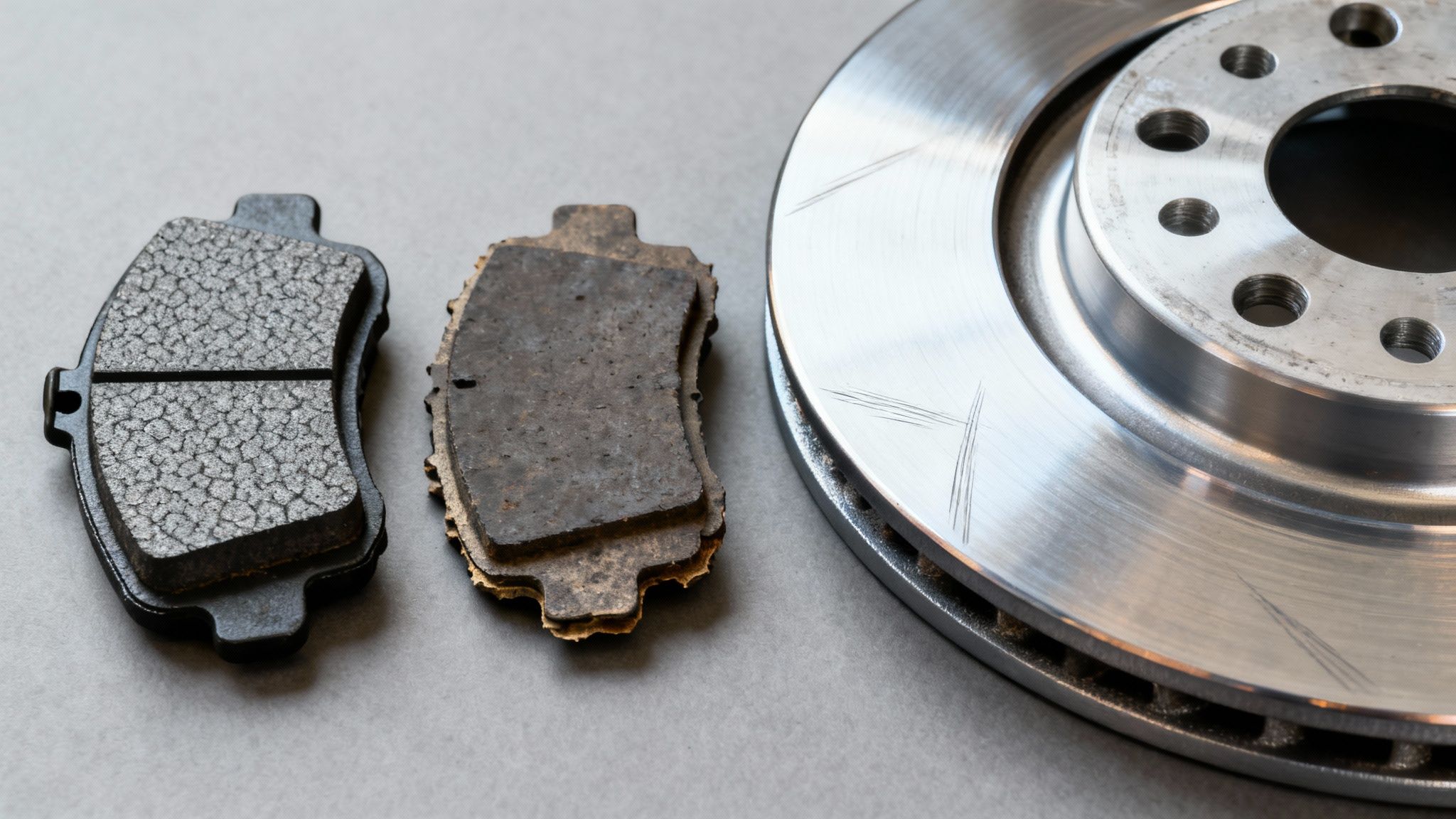
- A Deep, Grinding Noise: This one is much more serious. Grinding means your brake pads have likely worn away completely, causing metal to grind against metal. This can chew up your rotors in a hurry, turning a simple pad swap into a more involved job.
- A Spongy or "Soft" Pedal: If your brake pedal feels mushy or goes down way too far, it’s a red flag. It could be air in the brake lines or a deeper problem within the hydraulic system.
This flowchart can help you connect the dots between the symptom you're experiencing and what's likely causing it.
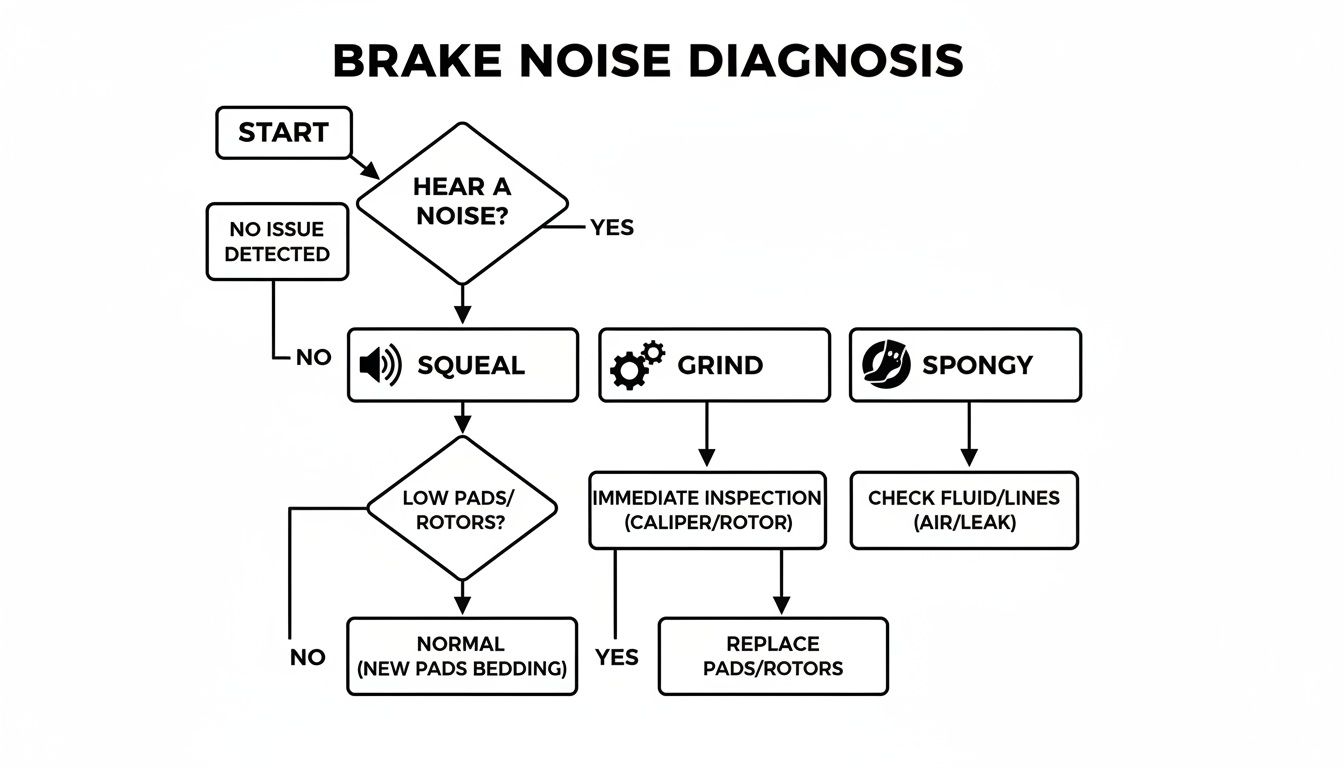
To help you get a better handle on these issues, we've put together a quick reference table.
Quick Guide to Brake Warning Signs
This table breaks down the common warning signs, what they probably mean, and how quickly you should get them checked out by a pro here in Richland.
| Warning Sign | What It Sounds/Feels Like | Potential Problem | Urgency Level |
|---|---|---|---|
| High-Pitched Squeal | A sharp, squealing noise when braking. | Brake pads are wearing thin. | Medium: Schedule an inspection soon. |
| Grinding or Growling | A harsh, metallic scraping or deep growl. | Pads are gone; metal-on-metal contact. | High: Stop driving and get it inspected immediately. |
| Spongy/Soft Pedal | The brake pedal feels mushy or sinks to the floor. | Air/moisture in brake lines or a fluid leak. | High: Do not drive. Tow it in for service. |
| Vibration or Pulsing | The steering wheel or pedal shakes during braking. | Warped brake rotors. | Medium: Have it checked to prevent further damage. |
| Vehicle Pulling | Your car pulls to one side when you brake. | Uneven brake wear or a stuck caliper. | High: This is a safety risk; inspect right away. |
| Brake Warning Light | The ABS or brake light on your dash is on. | Low fluid, sensor issue, or hydraulic problem. | High: Get a diagnostic check immediately. |
As you can see, different symptoms point to very different problems, from simple wear and tear to serious hydraulic failures. If you want to learn more about your car’s little quirks, our guide can help you diagnose car problems with a bit more confidence.
A Clear Look at Your Brake Service Options
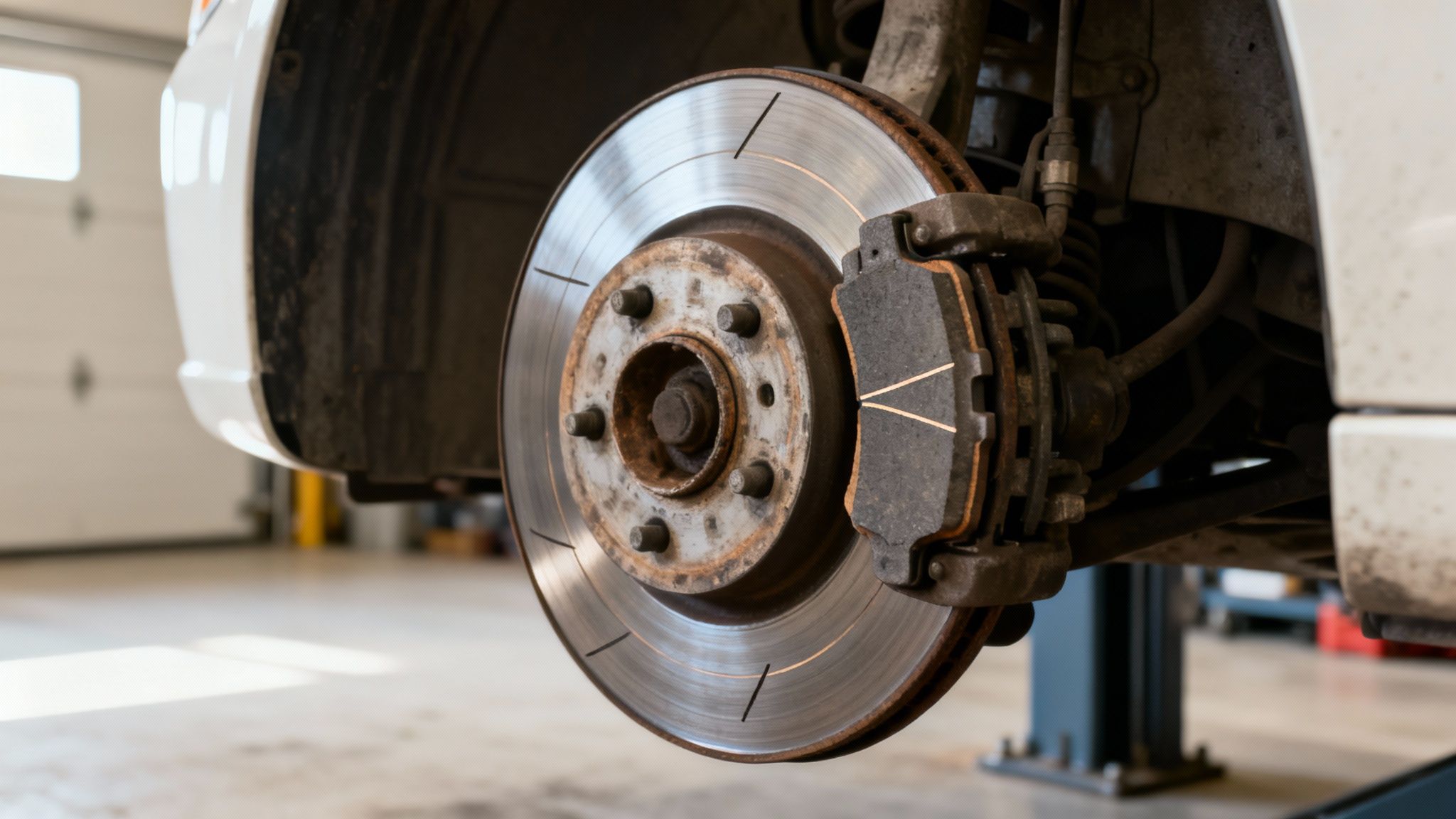
When you need a brake repair, it’s easy to feel a bit overwhelmed by the technical talk. The good news is that most brake services focus on just a few key parts that work together to bring your car to a safe stop.
Let's break them down so you know exactly what’s happening with your vehicle.
Think of your brake pads like the soles on your favorite pair of sneakers. They’re made to create friction against another part, which means they’re designed to wear down with use. Just like you replace your shoes when the soles get thin, your brake pads need to be replaced to keep their grip.
This is, by far, the most common service your braking system will need. The market for brake pads is expected to hit $8.56 billion globally in 2026, which just goes to show how routine this job is for drivers everywhere. You can read more about the global brake pad market outlook here.
For those of us navigating the stop-and-go traffic on I-820 here in Richland Hills, that wear and tear can happen 20-30% faster than for the average driver.
Pads, Rotors, and Fluid Explained
While the pads are the main wear-and-tear item, they press against another critical part: the brake rotors. These are the big metal discs you can sometimes spot behind your wheels.
- Brake Rotors: To stick with our shoe analogy, if the pads are the soles, the rotors are the pavement they stop on. With thousands of miles of friction, that "pavement" can get grooved, warped, or uneven.
- Resurfacing vs. Replacing: If the wear isn't too bad, our technicians can often "resurface" the rotor—smoothing it out to give your new pads a perfectly flat surface to grab onto. But if a rotor is too thin or badly warped, it has to be replaced for your safety.
The last piece of this puzzle is the hydraulic system, which runs on brake fluid.
Brake Fluid Flush: Think of this as an oil change, but for your brakes. Brake fluid naturally absorbs moisture from the air over time. This water contamination lowers the fluid’s boiling point, which can lead to a soft, "spongy" brake pedal and dangerously reduced stopping power.
A full fluid flush pushes all that old, contaminated fluid out and replaces it with fresh fluid. This restores solid pedal feel and protects the sensitive hydraulic components from rusting from the inside out.
Understanding how pads, rotors, and fluid work together makes it much easier to feel confident when you chat with our technicians about your options for brake repair in Richland.
What a Visit for Brake Repair Looks Like
We get it. The idea of getting your brakes fixed can feel stressful. But knowing what to expect turns a confusing errand into a simple, straightforward visit. When you come to Express Lube for brake service, our whole process is designed to be transparent so you can feel confident in the work we do. No jargon, no confusing upsells.
Your visit starts with a conversation. We’ll listen to your concerns about what you’ve been hearing or feeling. After that, one of our ASE-certified technicians gets to work on a complete brake system inspection—not just a quick glance, but a detailed look at your pads, rotors, calipers, and hydraulic lines to find the exact cause of the problem.
Our Transparent Process
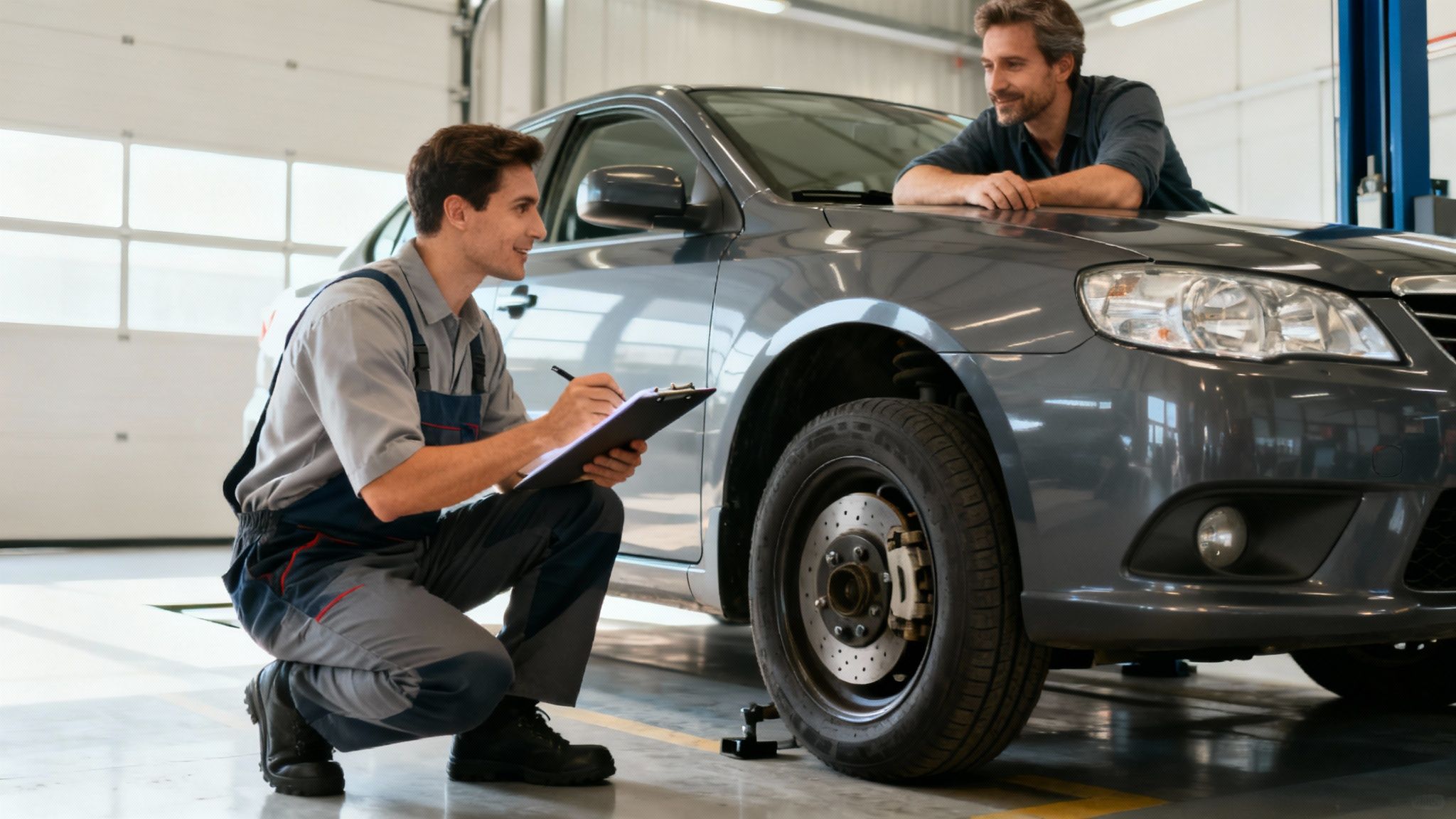
After the inspection, we don’t just hand you a quote and walk away. Our technician will bring you over, show you the worn-out parts on your vehicle, and explain in plain English why a repair is necessary for your safety.
Here’s a quick rundown of what our brake repair in Richland looks like, step-by-step:
- Listen and Learn: We start by talking about the symptoms you’ve noticed.
- Thorough Inspection: An ASE-certified tech carefully checks your entire brake system.
- Clear Explanation: We show you the issue and explain the fix without confusing car talk.
- Honest Quote: You get a clear, no-pressure estimate for the work we recommend.
- Expert Service: Once you give the go-ahead, our team gets it done right with high-quality parts.
- Final Check: We test-drive your car to make sure everything feels perfect before handing you the keys.
Our goal is to empower you with good information. We want you to drive away feeling confident not just in your brakes, but in the service you paid for. Trust is built on honesty, and that’s a promise we keep every single day.
An informed customer is a happy one. You’ll know exactly what’s being done to your car and, more importantly, why it matters. No surprises, no pressure—just honest advice and quality work you can count on.
Decoding the Cost of Brake Repair in Richland
Alright, let's get right to the question every driver has: what’s this going to cost? The truth is, there's no single price for a brake repair in Richland. It really comes down to a few key things specific to your car.
Think of it this way: a quick brake pad swap on a small sedan is going to be a lot different than a full brake job—pads, rotors, and calipers—on a heavy-duty work truck. Your vehicle’s make and model, the quality of parts we use, and how worn your current brakes are all factor into the final price.
Key Factors Influencing Your Quote
We believe in being upfront and honest, so here’s a quick look at what shapes your repair cost:
- Vehicle Type: Heavier vehicles and performance cars need bigger, tougher brake parts to stop safely. Naturally, these components cost a bit more than those for a standard compact car.
- Parts Quality: We stick with high-quality parts designed to last. Sure, you can find cheaper options out there, but they often wear out fast, meaning you'll just be back in the shop sooner.
- Extent of Damage: If you catch worn-out pads early, it’s a relatively simple and affordable fix. But if you wait until you hear that awful grinding sound, it usually means the rotors are shot, too, which adds to the repair bill.
Investing in your brakes is a direct investment in your safety and peace of mind on the road. It’s not just an expense—it’s the most important safety system your vehicle has.
The global market for hydraulic brake caliper repair kits was valued at a whopping $5.115 billion in 2024, which just goes to show how critical these parts are for vehicle safety everywhere. Here in Richland Hills, we trust premium kits from brands like Brembo and Bosch to make sure our repairs can handle our local traffic. If you'd like to dig deeper, we've put together a full guide to understanding your brake repair cost estimate.
Why an ASE-Certified Technician Matters
When it comes to your car’s most important safety feature, the hands working on your brakes are just as critical as the parts being installed. Trusting your **brake repair in Richland** to just anyone is a gamble you don’t want to take with your family’s safety on the line.
This is exactly where the ASE seal of approval makes a world of difference. An ASE-Certified Technician isn’t just a fancy title; it's a guarantee that a professional has passed tough, real-world exams and proven their expertise. They know modern brake systems inside and out.
The Value of Proven Expertise
Choosing a certified pro means your car is being serviced by someone who keeps up with the latest automotive technology. They have the skills to diagnose problems correctly the first time and perform repairs with the precision that industry standards demand.
Your family's safety isn't something to compromise on. An ASE-Certified technician gives you the peace of mind of knowing the job was done right, protecting you on those unpredictable Texas roads.
Brake systems are a massive, $38.97 billion global industry for a reason. More importantly, the NHTSA reports that brakes are a factor in 22% of all vehicle crashes, which really drives home the need for expert service. Here in Texas, our intense summer heat can actually accelerate brake wear by up to 15%, making professional checks from a certified team even more essential.
Our technicians have a deep understanding of every component, from disc to drum systems, ensuring a reliable and safe fix. You can learn more about our commitment to quality by reading about our ASE and RepairPal certifications, which truly set our shop apart. Investing in certified expertise isn't just another repair—it's an investment in your safety.
A Few Common Brake Repair Questions
It's smart to ask questions, especially when it comes to something as important as your brakes. We get it. To make sure you feel totally comfortable with the process, here are a few of the most common things Richland drivers ask us.
How Long Does a Typical Brake Repair Take?
We know you've got places to be. For a straightforward brake pad swap, our ASE-certified techs can usually get you rolling again in about one hour.
If the job is a bit more involved—say, we need to replace or resurface your rotors—it might take a little longer. No matter what, we'll give you a clear time estimate right after we take a look, so you can plan the rest of your day.
Do I Really Need to Replace My Brake Fluid?
Yes, and this is a big one for your safety. Over time, brake fluid naturally soaks up moisture from the air. That moisture lowers its boiling point, which can lead to that awful, spongy feeling when you press the pedal. Even worse, it causes rust inside your brake lines and can damage some very expensive parts.
Think of it like this: clean fluid gives you firm, reliable stopping power. We recommend a complete brake fluid flush every two or three years to keep the whole system clean and working exactly how it should.
Are You Going to Try and Sell Me Things I Don't Need?
Absolutely not. Our shop runs on trust and honest work—it's how we've built our reputation here in the Richland community.
After we inspect your brakes, we'll show you exactly what we see and explain what we recommend based on safety. You'll get a clear, itemized quote with no confusing jargon. We give you the facts so you can make the right call for your car and your budget, plain and simple. No high-pressure tactics, ever.
Ready for a brake check you can actually trust? The team at Express Lube & Car Care is here to help, no appointment needed. Swing by today for a free, no-obligation inspection and get the peace of mind you deserve. https://www.expressluberichlandhills.com