

High-mileage urban driving, harsh braking and acceleration, and mismatched tire pressure are the leading reasons rideshare tires wear out far faster than the manufacturer’s estimate. If you’re noticing bald spots, uneven shoulders, or replacing tires every few months, those three factors are almost certainly working against you. Right now, before your next ride, do these three things:
- Check all four cold tire pressures against the sticker inside your driver’s door jamb and inflate to spec.
- Walk around the car and look for sidewall bulges, cuts, or tread that looks noticeably lower on one side than the other.
- If you spot any damage, don’t drive on it. Book an ASE-certified inspection at Express Lube & Car Care before getting back on the road.
Key Takeaways
Rapid tire wear in rideshare driving comes down to three controllable factors: pressure, alignment, and driving behavior. Catching problems early is almost always cheaper than replacing tires prematurely.
| Point | Details |
|---|---|
| Check pressure regularly | Cold pressure to door-jamb spec prevents shoulder wear and heat buildup. |
| Rotate every few thousand miles | Balances front/rear wear differences common on FWD rideshare vehicles. |
| Inspect after hard impacts | Internal damage can exist with no visible sign; get a shop check after pothole or curb strikes. |
| Tire type matters | All-season or touring tires outlast winter compounds in urban stop-start city duty. |
| Express Lube & Car Care | ASE-certified same-day inspections with digital photo reports and a 24-month/24,000-mile warranty. |
Table of Contents
- What should you do right now to stop further tire wear?
- What actually causes rapid tire wear in rideshare driving?
- How do you measure tread depth and spot rapid wear?
- What’s the right maintenance schedule for high-mileage rideshare use?
- When should you stop driving and get a professional inspection?
- What happens during a professional tire inspection at Express Lube & Car Care?
- A note from our technicians at Express Lube & Car Care
- Fast tire inspection and same-day service for rideshare drivers
- Sources
- FAQ
What should you do right now to stop further tire wear?
Act within the next 15–60 minutes, ideally between rides:
- Check cold pressure on all four tires. Cold means the car has been parked at least three hours. Use the door-jamb placard, not the number molded into the tire sidewall. Front and rear specs often differ.
- Inflate to spec. Even two to three PSI low is enough to accelerate shoulder wear and build damaging heat.
- Do a full visual sweep. Look at the tread surface, both sidewalls, and the inner shoulder (crouch down and look under the car). Watch for cuts, bulges, embedded nails or screws, and any tread that looks noticeably lower on one side.
- Remove safe-to-remove debris. A nail in the tread that hasn’t caused a leak can often be plugged, but don’t pull it out yourself on the roadside.
- After any pothole or curb hit, avoid highway speeds. Internal structural damage can exist even when the tire looks intact from the outside. Consumer Reports recommends a professional inspection after hard impacts for exactly this reason.
Pro Tip: Keep a small digital tire gauge and a 12V portable inflator in your trunk. Log pressures weekly in your phone’s notes app. A pattern of one tire dropping faster than the others is an early sign of a slow leak or bead seating issue.
What actually causes rapid tire wear in rideshare driving?
Alignment and suspension problems
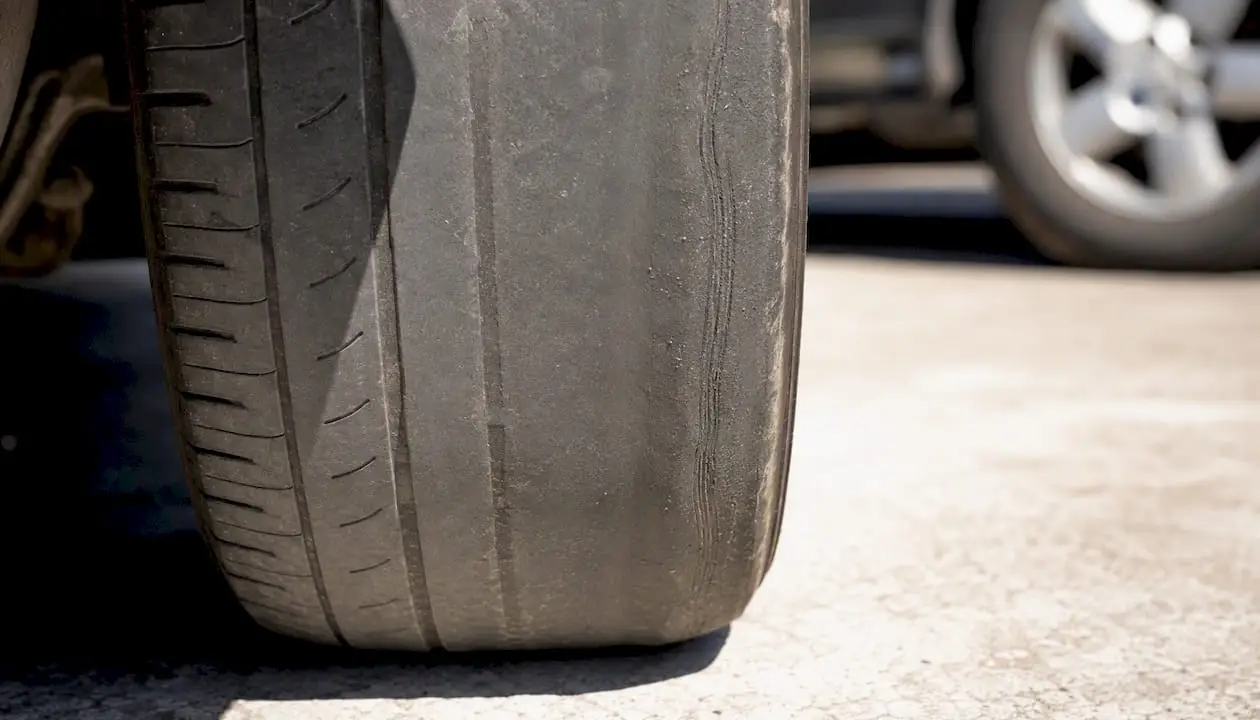
Misaligned wheels are one of the most common mechanical culprits. Toe misalignment scrubs the tire sideways with every rotation, creating feathered or one-sided wear. Camber problems wear the inner or outer shoulder down while the rest of the tread looks fine. Potholes and curb strikes can knock alignment out of spec in a single hit. Worn shocks or struts make things worse: they allow the tire to bounce and skip rather than maintain steady contact, producing a scalloped or cupped wear pattern you can feel as vibration. Bridgestone’s tire wear guidance maps each of these patterns directly to their mechanical cause, which makes visual diagnosis straightforward once you know what to look for.
Tire pressure effects
Underinflated tires flex excessively, concentrating heat and wear on both shoulders. Overinflated tires ride on a narrow center strip, wearing the middle of the tread faster than the edges. Either condition shortens tire life significantly and reduces grip.
Driving behavior in city stop-start conditions
A real-world study tracking 76 taxi vehicles over 22 months found that braking and acceleration events were the most influential driver behaviors for tire wear, with left-front tires wearing roughly 1.7 times faster than left-rear tires. For rideshare drivers doing constant city loops, that pattern is almost guaranteed. Hard braking scrubs rubber off the contact patch; rapid acceleration does the same from the other direction. Frequent tight cornering adds lateral scrub on top of that.
Tire type and position
That same fleet study found tire type and position were stronger overall predictors of wear than driving behavior alone. Winter tires, with their softer compounds, wore faster than all-season or summer tires in urban stop-start duty. If you’re running winter tires year-round to save a swap, you’re paying for it in replacement frequency. For taxi and private-hire operations, matching tire compound to actual duty cycle is one of the most cost-effective fleet decisions available.
Road hazards and hidden damage
A pothole can fracture the internal belt structure of a tire without leaving a visible mark on the outside. You might drive on it for days before a bulge appears or a sudden blowout occurs. Always inspect after a hard hit.
Load and passenger weight
Frequent passengers shift load distribution toward the rear on sedans and toward the front on minivans. Carrying extra cargo regularly pushes tires past their intended load rating, accelerating wear on the overloaded corners. If one tire consistently wears faster than its partner on the same axle, a wheel bearing dragging, a brake caliper sticking, or a persistent inflation difference is usually the cause.
How do you measure tread depth and spot rapid wear?
Follow these steps monthly, or every 3,000–4,000 miles for rideshare use:
- Check cold pressure first. Accurate tread readings mean nothing if the tire is underinflated and masking shoulder wear.
- Use a tread depth gauge or the quarter test. Insert a quarter into the tread groove with Washington’s head pointing down. If you can see the top of his head, you’re at or below 4/32 inch, which is the point to start shopping for replacements. At 2/32 inch, the tire is legally worn out in most U.S. states.
- Measure in three spots across the tread width: outer shoulder, center, and inner shoulder. A significant depth difference between those three points signals a pressure or alignment problem. For a detailed walkthrough, the tire tread depth check guide covers gauge technique step by step.
- Compare all four tires. A tire wearing noticeably faster than the others points to a localized mechanical issue, not just general use.
- Note the 3% rule. If tread depth varies by more than 3% across the width of a single tire, that variance indicates uneven contact, usually from misalignment or pressure error.
- Check for vibration and steering pull. A shimmy at highway speeds often means a wheel balance issue. A consistent pull to one side usually means alignment or a pressure difference between the front tires.
Record your readings in a simple log. Seeing tread drop 2/32 inch in 3,000 miles instead of the expected 8,000–10,000 miles tells you something mechanical is wrong, not just that you drive a lot.
What’s the right maintenance schedule for high-mileage rideshare use?
Rideshare driving raises maintenance frequency well above typical owner intervals because of high mileage and constant short trips that never let components fully warm up. A practical cadence looks like this:
| Service | Recommended Interval | What to Expect at the Shop |
|---|---|---|
| Tire pressure check | Weekly (cold) | Self-service or free at most shops |
| Tire rotation | Every 5,000 miles | Even out front/rear wear; balance included |
| Wheel alignment check | Every 6,000–10,000 miles or after any hard hit | Computerized measurement, adjust if out of spec |
| Suspension/shock inspection | Every 15,000 miles or at first sign of cupping | Visual and bounce test; replace if worn |
| Full digital vehicle inspection | Every oil change or every 5,000 miles | Photos, measurements, written report |
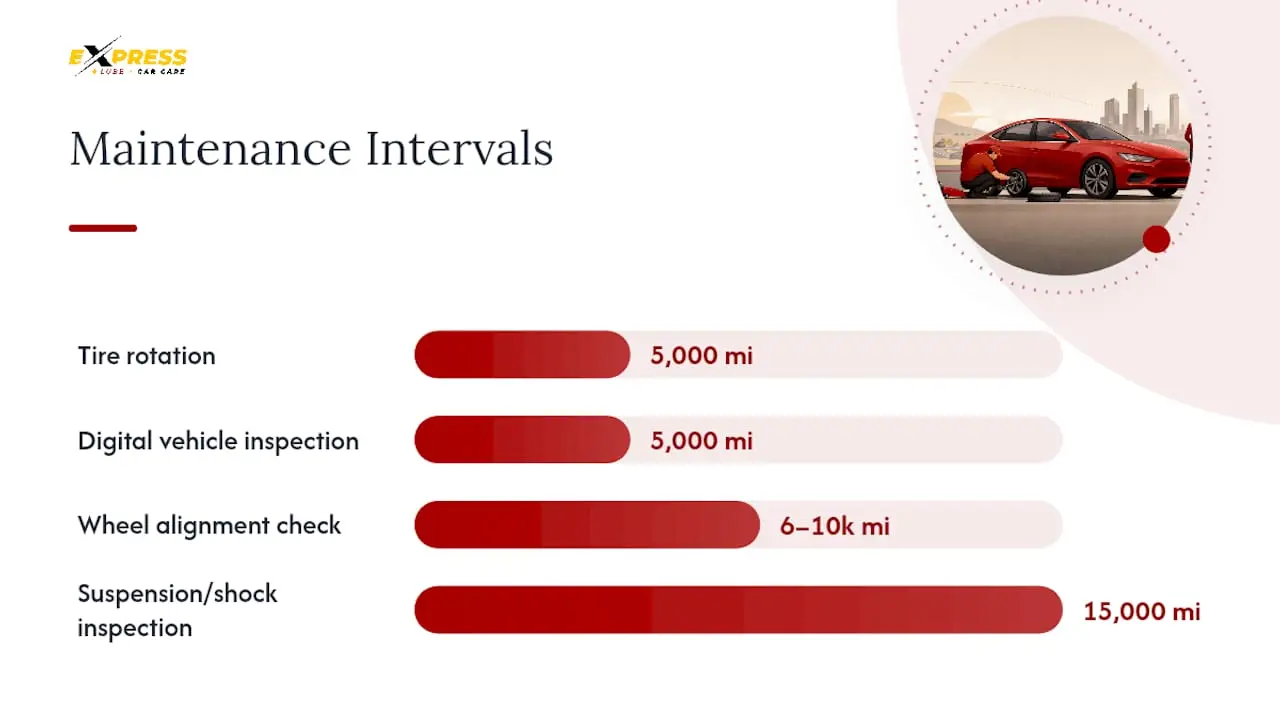
Front-wheel-drive cars, which cover most rideshare fleets, put steering, braking, and drive forces all on the front axle. That combination means front tires wear faster than rear tires almost universally. Regular rotation is the single most effective way to even that out.
For tire selection, monthly checks and earlier rotation intervals are especially important for rideshare drivers because frequent stop-start driving accelerates alignment drift. Choose a long-life touring or all-season tire rated for high mileage. Avoid running winter tires in warm months; the softer compound wears quickly in city conditions.
Pro Tip: Schedule your rotation and alignment check together. Most shops can do both in one visit, and catching alignment drift early costs far less than replacing a tire that wore out in 8,000 miles because nobody caught a 0.3-degree camber error.
When should you stop driving and get a professional inspection?
Some conditions are not DIY territory. Stop driving and get the car to a shop if you notice any of these:
- A visible bulge, bubble, or sidewall tear anywhere on the tire.
- Exposed cords or fabric showing through the tread or sidewall.
- Severe vibration or a sudden change in steering feel after hitting a pothole or curb.
- A consistent pull to one side that wasn’t there before a hard impact.
- One tire losing pressure repeatedly within days of being inflated, pointing to a puncture, damaged valve stem, or bead seating failure.
- Major tread depth differences between tires that appeared within just a few thousand miles.
Driving on a structurally compromised tire risks a blowout at highway speed. The cost of a tow and an inspection is a fraction of what a blowout-related accident or rim replacement costs.
What happens during a professional tire inspection at Express Lube & Car Care?
Here’s what the process looks like when you bring your car in:
- Digital intake with photos. The technician documents the vehicle’s current condition, including any visible tire or wheel damage, with photos attached to your inspection record.
- Pressure and tread depth measurements on all four tires. Readings are logged and compared to spec and to each other.
- Alignment check. A computerized measurement identifies any toe, camber, or caster deviation from factory spec.
- Suspension and shock inspection. The tech checks for worn struts, loose control arm bushings, and other components that cause scalloped or cupped wear.
- Wheel balance check. Imbalance shows up as vibration and accelerates wear at specific spots around the tire.
- Tire repair or replacement recommendation. If a plug or patch is viable, the tech will say so. If the tire is structurally compromised, replacement is the only safe option.
After a pothole strike, an ASE-certified technician will also check the rim for bending, the wheel bearing for damage, and the suspension arms for bending or cracking. These are things a visual inspection from the outside simply cannot catch. The digital vehicle inspection report with photos gives you a documented record useful for warranty claims or insurance purposes. Express Lube & Car Care backs its work with a 24-month/24,000-mile warranty, so you know exactly what you’re getting.
A note from our technicians at Express Lube & Car Care
We see the same patterns week after week: a rideshare driver comes in with one tire nearly bald, the other three looking fine, and no idea when it happened. Nine times out of ten, it started with a slow leak that went unchecked for a few weeks, or an alignment that drifted after a pothole hit nobody thought was serious enough to mention.
The fix is almost always simple once we catch it early. A weekly pressure check takes two minutes. Photographing a pothole hit and noting the date takes thirty seconds. Those two habits, combined with a rotation every few thousand miles, will save most drivers hundreds of dollars a year in premature tire replacement. Our ASE-certified techs use a digital inspection process so you can see exactly what we found, not just take our word for it. Walk in anytime, no appointment needed.
Fast tire inspection and same-day service for rideshare drivers
Rideshare drivers can’t afford downtime, and a tire problem that gets ignored between rides has a way of becoming a much bigger problem by the end of the week.
Express Lube & Car Care in Richland Hills offers same-day tire inspections, alignment checks, rotation, suspension diagnostics, and tire repair or replacement, all performed by ASE-certified technicians. Walk in without an appointment, or schedule ahead if you prefer. Every service is backed by a 24-month/24,000-mile warranty, and financing options are available if a repair turns out to be larger than expected. Bring any photos of recent impacts or damage, and let the team run a full digital vehicle inspection so you leave with a clear picture of your tires’ condition and a documented record for your files.
Sources
- Impact of vehicle type, tyre feature and driving behaviour on tyre wear under real-world driving conditions
- Tires that last the longest
- Tire tread wear & causes
- Is Uber Driving Draining Your Wallet? Car Maintenance Costs Revealed | ShunAuto
FAQ
What causes rapid tire wear in rideshare driving?
The main causes are high-mileage urban stop-start driving, harsh braking and acceleration, incorrect tire pressure, and misaligned wheels. A real-world taxi fleet study found that tire type and position were the strongest predictors of wear, with braking and acceleration events the most influential driver behaviors.
What is rapid tire wear, and how does it differ from normal wear?
Normal tire life for a passenger car varies depending on tire type and driving conditions. Rapid wear means a tire is losing tread depth significantly faster than expected, often showing major wear within 8,000 miles, typically because of a mechanical issue like misalignment or a pressure problem.
What is the 3% rule for tires?
Why is one tire wearing faster than the others?
A single tire wearing faster than the rest usually signals a localized mechanical issue: a wheel alignment problem on that corner, a sticking brake caliper creating drag, a wheel bearing in early failure, or a persistent inflation difference. A quick inspection at Express Lube & Car Care can identify which of these is the cause before the tire is ruined.