

Any lift kit, whether it’s a simple leveling kit or a full suspension build, requires a wheel alignment before you put serious miles on the vehicle. Raising ride height shifts caster, camber, and toe out of their factory positions, which changes how your tires contact the road and how the steering responds. Skip the alignment and you’re looking at accelerated tire wear, a steering pull you’ll fight on every highway run, and stress on components that weren’t designed to work at the new angles. Here’s what to do immediately:
- Avoid extended highway driving until the alignment is complete.
- Schedule a lifted-spec alignment, not a standard factory-spec alignment, with a shop experienced in modified vehicles.
- Confirm the shop has equipment and software that supports non-factory ride heights.
- Ask whether the technicians are ASE-certified and have hands-on experience with lifted trucks or SUVs.
The Specialty Equipment Market Association (SEMA) recognizes lifted-vehicle geometry as a distinct service category, and kit manufacturers like ReadyLIFT explicitly state in their installation instructions that a professional alignment is required after installation. Express Lube & Car Care’s ASE-certified technicians handle exactly this kind of post-lift work in Richland Hills.
Pro Tip: Don’t assume a “quick alignment” at any shop will do. Ask specifically whether they align lifted vehicles and whether they document lifted-spec targets on the printout.
Table of Contents
- How does lifting a vehicle change its suspension geometry?
- Which lift type causes the most alignment disruption?
- What happens if you skip the alignment after a lift?
- What does a professional post-lift alignment actually involve?
- How much does a post-lift alignment cost, and how long does it take?
- When is DIY alignment adjustment acceptable, and when should you see a shop?
- What should you ask and verify at the shop?
- Key Takeaways
- Our take on why lifted-spec alignments matter more than most shops admit
- Post-lift alignment service at Express Lube & Car Care
- Useful sources and further reading
- FAQ
How does lifting a vehicle change its suspension geometry?
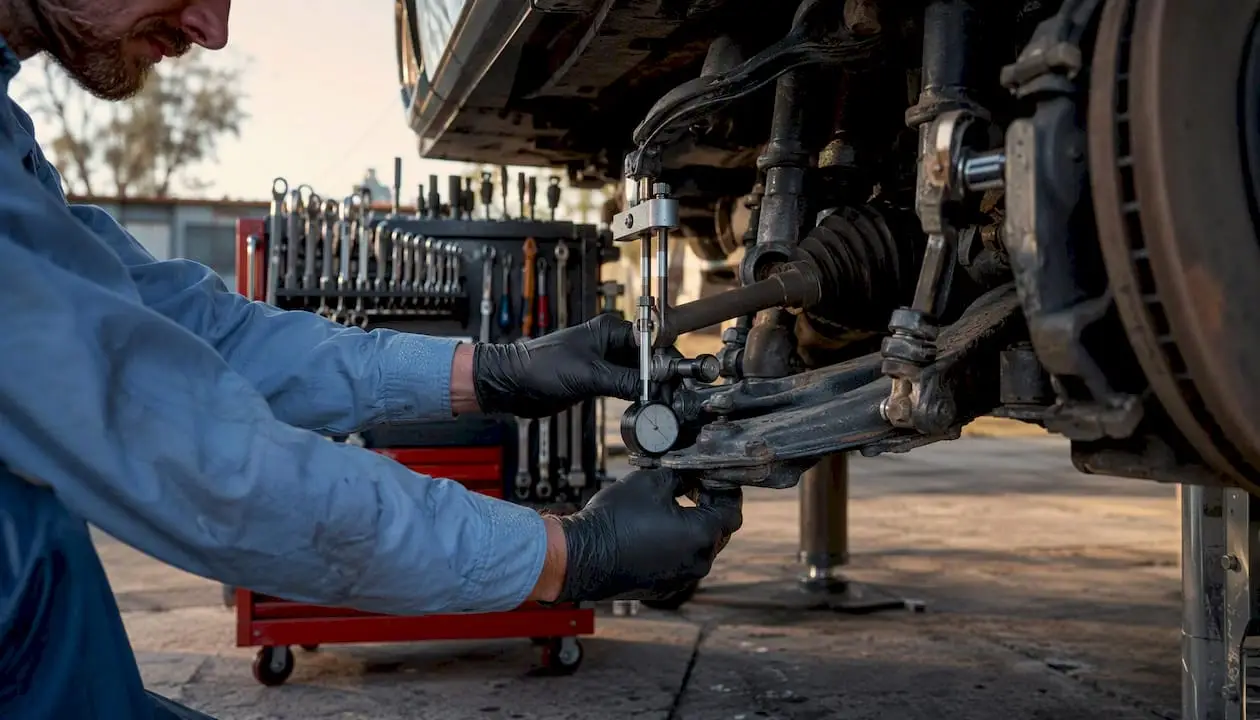
When you raise a vehicle’s ride height, you’re not just moving the body up. You’re changing the angles at which every suspension and steering component operates. Three measurements define where things end up: caster, camber, and toe.
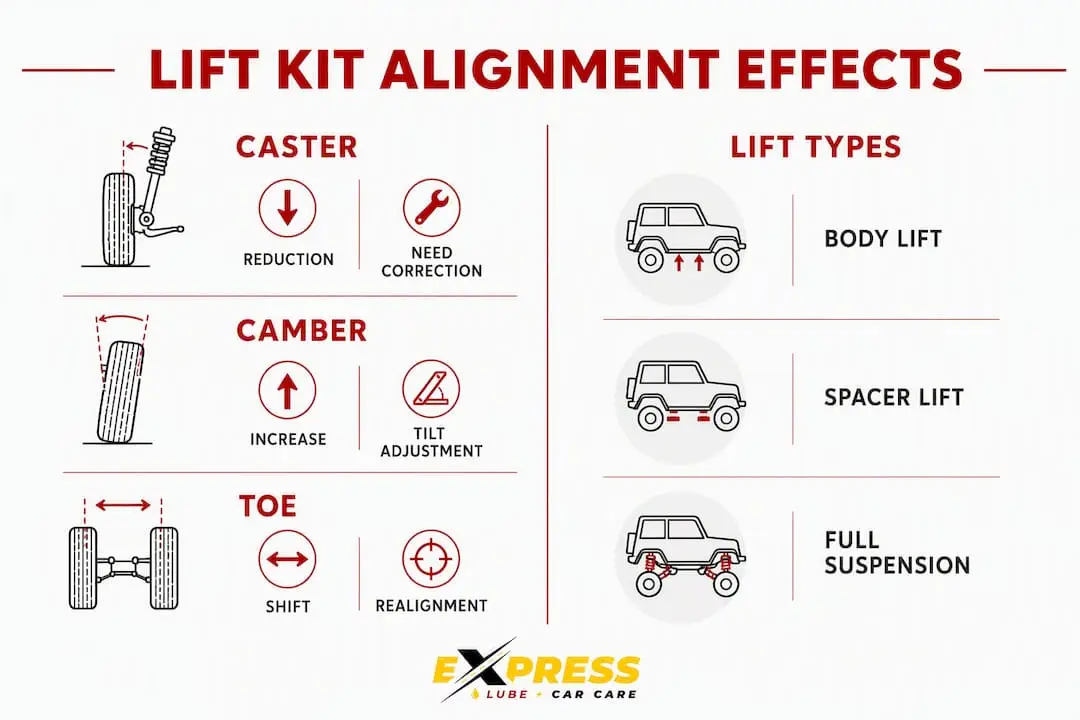
Caster is the forward or backward tilt of the steering axis when viewed from the side. Positive caster gives the steering its self-centering feel. Lifting a truck, especially on an independent front suspension (IFS) platform, typically reduces positive caster because the upper control arm pivot moves relative to the lower, flattening that angle. The result is steering that feels vague or requires constant correction.
Camber is the inward or outward tilt of the tire when viewed from the front. Most trucks run near-zero camber from the factory. A lift pushes the top of the tire outward, creating positive camber, which shifts the tire’s contact patch toward the outer edge. Left uncorrected, the outer tread wears faster than the inner.
Toe describes whether the fronts of the tires point inward (toe-in) or outward (toe-out) relative to each other. Raising the suspension changes the arc the tie rods travel through, which shifts toe. Even a small toe error causes rapid feathering across the tread face, the kind of wear that ruins a set of tires in a fraction of their expected life.
On solid-axle platforms like a Dana 44 or Dana 60, the geometry shift is different but equally real. The track bar and drag link angles change, which introduces bump steer and can contribute to the notorious “death wobble” on older solid-axle rigs if left unaddressed.
Factory alignment specs are a starting point, not the target. A lifted vehicle needs lifted-spec targets that account for the new ride height, the intended tire size, and how the truck will actually be used. Aligning a lifted truck back to factory numbers often makes the geometry worse, not better, because those numbers assume a stock suspension position.
Minor ride-height changes can shift alignment tolerances by measurable fractions of a degree, with some cases showing shifts up to 1.5 degrees. At that level, tire wear accelerates noticeably within a few thousand miles.
Which lift type causes the most alignment disruption?
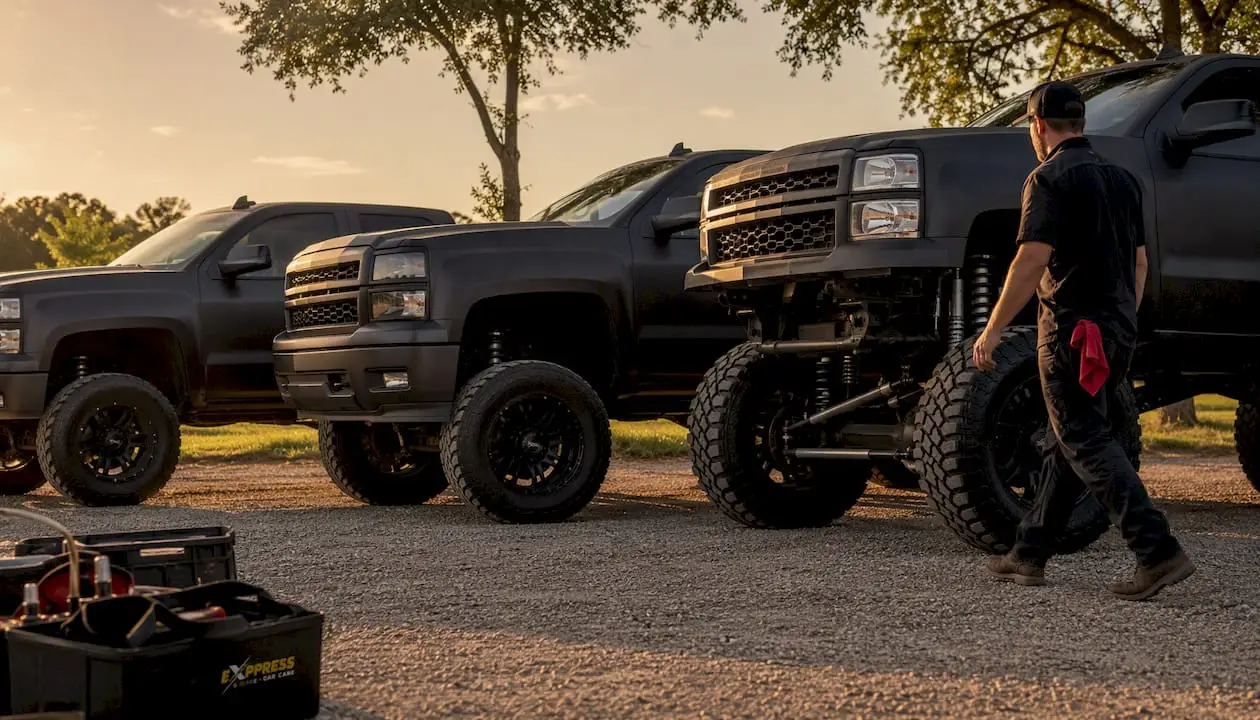
Not every lift hits geometry the same way. The type of lift you install determines how much the angles shift and what corrective hardware you’ll likely need.
| Lift Type | Typical Caster Change | Typical Camber Change | Toe Shift | Corrective Hardware Often Needed |
|---|---|---|---|---|
| Leveling kit (1–2 in.) | 1–2° reduction | 0.5–1° positive | Moderate | Cam bolts or caster correction shims |
| Spacer lift (2–3 in.) | 1–2° reduction | 0.5–1.5° positive | Moderate to significant | Adjustable UCAs, extended tie rods |
| Body lift (2–3 in.) | Minimal | Minimal | Minimal | Usually toe adjustment only |
| Suspension lift (3–6+ in.) | 2–4°+ reduction | 1–2°+ positive | Significant | Adjustable UCAs, caster correction kits, extended tie rods, track bar relocation |
Body lifts raise the cab and bed off the frame but leave the suspension geometry largely intact. The main alignment concern is tie-rod and steering shaft geometry, and most body lifts require only a basic toe correction.
Leveling kits and spacer lifts raise the front of the vehicle to match the rear, which is common on trucks that sit lower in the front from the factory. A 2-inch leveling kit commonly reduces caster by 1–2 degrees and increases positive camber by 0.5–1 degree on IFS trucks, enough to cause premature tire wear if you don’t correct it.
Full suspension lifts produce the most significant geometry changes. At moderate to large lift heights, factory control arms often can’t reach the needed adjustment range, and you’ll need aftermarket hardware to restore proper geometry.
Common corrective parts, in order of increasing lift height:
- Cam bolts: Inexpensive, work well for minor caster/camber corrections on smaller lifts.
- Adjustable upper control arms (UCAs): Allow precise caster and camber dialing on IFS trucks; often necessary at 3 inches and above.
- Caster correction kits: Shims or wedges that restore caster angle on solid-axle rigs.
- Extended tie rods and drag links: Required when the stock tie rod geometry creates bump steer at the new ride height.
- Track bar relocation brackets: Needed on solid-axle trucks to correct the lateral pull introduced by the new axle position.
Pro Tip: Before purchasing a lift kit, read the installation documentation carefully. Some kits include caster correction hardware in the box; others list it as a separate purchase. Knowing this upfront saves a second trip to the parts counter.
What happens if you skip the alignment after a lift?
Driving a lifted vehicle without correcting the alignment is a bit like wearing shoes on the wrong feet. It works, technically, but everything wears out faster and nothing handles the way it should.
The consequences stack up quickly. Failure to perform an alignment after a lift typically results in uneven tire wear, steering pull, and vague steering responsiveness. Beyond that, the problems get more serious:
- Accelerated tire wear: Camber and toe errors eat through tread unevenly, often destroying tires in a fraction of their rated life.
- Steering pull: The vehicle drifts to one side, requiring constant correction, which is fatiguing on long drives.
- Bump steer: The steering wheel kicks or jerks when you hit a bump, a direct result of incorrect tie-rod geometry.
- Ball joint and tie-rod stress: Components operating outside their designed angle range wear faster and can fail without warning.
- Death wobble risk: On solid-axle trucks, misaligned geometry combined with worn components can trigger a violent, hard-to-stop oscillation at highway speeds.
- Driveline vibration: Incorrect driveshaft angles from a suspension lift can cause vibration that worsens over time and damages U-joints.
The hidden failure risk is the one most owners underestimate. A truck can track straight down the road while its ball joints are operating at angles that shorten their life from years to months. You won’t feel it until something breaks, often at the worst possible moment. Checking for signs your car needs alignment is a good habit after any suspension work, but a post-lift alignment is the only real fix.
One safety note: a lifted vehicle with uncorrected geometry handles differently in emergency maneuvers. The altered caster and camber affect how the truck responds to sudden steering inputs, which matters when you need to avoid something in the road.
What does a professional post-lift alignment actually involve?
A post-lift alignment takes longer than a standard alignment because it’s a more involved process. Plan on a couple of hours, and here’s why that time is well spent.
What the shop should check and do:
- Inspect all steering components: tie rods, ball joints, control arm bushings, and drag links for wear or binding before measuring anything.
- Verify no binding in the suspension through the full range of travel.
- Measure caster, camber, and toe at the new ride height, not at a simulated stock height.
- Set lifted-spec targets based on the lift height, tire size, and intended use, not factory numbers.
- Adjust toe using the tie rods; adjust camber and caster using cam bolts, adjustable UCAs, or correction shims as applicable.
- Check track-bar and drag-link geometry on solid-axle rigs and correct bump steer if present.
- Re-torque all fasteners to spec after adjustments.
- Road test the vehicle, then re-check measurements after the suspension settles.
- Print the before/after alignment report with lifted-spec targets documented.
The reason this takes 2–3 hours rather than 45 minutes is that shops often re-check all hardware torque values at 500 miles post-installation and the initial alignment involves dynamic checks that a standard passenger-car alignment skips entirely. Setting lifted-spec targets also requires the technician to make judgment calls that factory software doesn’t automate.
Alignment machines may not auto-calculate corrections for modified geometry; a qualified shop either has aftermarket software that supports lifted vehicles or technicians experienced enough to set targets manually. That’s a meaningful difference from a shop that only handles stock vehicles.
Pro Tip: Ask the shop directly: “Do you have equipment or software that supports non-factory ride heights?” A shop that hesitates or says they’ll just use factory specs is not the right shop for a lifted vehicle.
How much does a post-lift alignment cost, and how long does it take?
Cost depends on the complexity of the lift and how much corrective work the geometry requires. Bundled lift installation that includes alignment often starts at a moderate price for basic leveling kits and increases for more complex suspension builds that require additional hardware like adjustable UCAs or track bar relocation.
| Service Scenario | Typical Time | Notes |
|---|---|---|
| Leveling kit + alignment (bundled) | Several hours total | Starting at a moderate price when bundled |
| Spacer or small suspension lift + alignment | Several hours total | May require cam bolts or UCAs |
| Full suspension lift + alignment | Extended time total | Often requires additional corrective hardware |
| Standalone post-lift alignment (already installed) | Couple hours | Longer if binding or hardware issues found |
Bundling the alignment with the installation is almost always the smarter move. The vehicle goes on the lift once, the technician installs the kit and immediately measures geometry at the new ride height, and you leave with a safe, documented alignment. Paying for a separate alignment appointment later costs more in labor and creates a window where you’re driving on uncorrected geometry.
Scheduling advice: Plan a follow-up inspection at 500 miles. ReadyLIFT’s installation instructions explicitly require a torque re-check at 500 miles after installation, and most reputable shops recommend a re-check alignment at that interval as well. Springs and hardware settle during break-in, and a small alignment correction at 500 miles is far cheaper than a set of tires worn out by uncorrected geometry. For larger builds, budget for a second alignment check at 500–1,000 miles.
For context on what suspension-related repairs cost when components fail prematurely, the auto repair cost comparison at Express Lube & Car Care gives a useful frame of reference.
When is DIY alignment adjustment acceptable, and when should you see a shop?
There’s a short list of things a knowledgeable owner can reasonably handle, and a longer list of things that genuinely require a shop with an alignment rack and experienced technicians.
Reasonable DIY tasks:
- Visual inspection of tie rods, ball joints, and control arm bushings for obvious wear or binding.
- Checking that no components are contacting the frame or body through the suspension’s range of travel.
- Basic toe adjustment if you have a proper toe gauge, a flat surface, and experience doing it correctly.
When you need a professional:
- Any lift over 2–3 inches, where factory hardware often can’t reach the needed adjustment range.
- Bump steer issues, which require measuring steering input vs. wheel movement through the suspension travel.
- Driveshaft angle concerns after a suspension lift.
- Any situation requiring adjustable UCAs, caster correction kits, or track bar relocation.
- When you’ve made adjustments and the steering wheel is still off-center or the truck still pulls.
Red flags that mean stop driving and get to a shop: visible component binding, a steering wheel that’s significantly off-center after adjustments, abnormal vibration above 50 mph, or any hint of death wobble. These aren’t symptoms to monitor. They’re reasons to schedule service immediately. If you’re noticing steering wheel vibration after a lift, that’s a signal the geometry needs professional attention.
What should you ask and verify at the shop?
Walking into a shop with the right questions protects you and confirms you’re getting a proper lifted-spec alignment, not a standard alignment applied to a modified vehicle.
Before the work starts, ask:
- Do you have experience aligning lifted vehicles, and what lift heights have you worked with?
- Does your alignment equipment or software support non-factory ride heights?
- Will you use lifted-spec targets and document the final angles on the printout?
- Are your technicians ASE-certified?
What the shop should show you when the job is done:
- A before/after alignment printout with lifted-spec targets clearly noted (not just factory spec columns).
- Documentation of any corrective parts installed (cam bolts, UCAs, shims).
- Confirmation that all fasteners were re-torqued to spec.
What to verify yourself on delivery:
- Road test the vehicle before leaving the lot. The steering wheel should be centered on a straight, level road.
- No pull to either side under normal driving.
- No unusual vibration or bump steer over road irregularities.
Pro Tip: Request a follow-up alignment window at 500–1,000 miles, especially on builds over 3 inches. Ask whether the shop will note this on your service record so the re-check is easy to schedule.
Key Takeaways
Any lift kit, regardless of size or type, requires a lifted-spec wheel alignment to correct caster, camber, and toe shifts before the vehicle is safe for regular driving.
| Point | Details |
|---|---|
| Alignment is required after any lift | All lift types, from leveling kits to full suspension builds, shift caster, camber, and toe. |
| Three angles always change | Caster, camber, and toe all shift when ride height increases; each affects handling and tire wear differently. |
| Expect 2–3 hours and realistic cost | A post-lift alignment takes 2–3 hours; bundled leveling kit installs start around $550 when alignment is included. |
| Use lifted-spec targets, not factory specs | Factory alignment numbers are a baseline, not the target; a proper shop documents lifted-spec angles on the printout. |
| Express Lube & Car Care | ASE-certified technicians in Richland Hills perform lifted-spec alignments with documented before/after printouts and a 500-mile re-check policy. |
Our take on why lifted-spec alignments matter more than most shops admit
We see a pattern at Express Lube & Car Care that’s worth being direct about: trucks come in after a lift with alignment work that was done to factory specs. The owner was told the alignment was “done,” and technically it was. But factory specs on a lifted truck often produce geometry that’s worse than leaving it alone, because those numbers assume a stock suspension position that no longer exists.
The lifted-spec approach isn’t just a preference. It’s the only way to account for the changed center of gravity, the new tie-rod arc, and the actual ride height the truck will live at. We use lifted-spec targets, document the before/after angles on every printout, and build a 500-mile re-check into the process because springs and hardware settle during break-in. Our technicians are ASE-certified and carry a 24-month/24,000-mile warranty on the work. That warranty only means something if the alignment was done right the first time, which is exactly why we don’t cut corners on the spec targets.
If your truck has been lifted and you’re not sure the alignment was done to lifted-spec, that uncertainty is worth resolving before it costs you a set of tires or a ball joint.
Post-lift alignment service at Express Lube & Car Care
Getting a lift kit installed is the exciting part. Getting the alignment right afterward is what keeps the build from becoming expensive in the wrong ways.
Express Lube & Car Care in Richland Hills handles post-lift alignments with the equipment and technician experience that modified vehicles actually require. Our ASE-certified team measures at your truck’s new ride height, sets lifted-spec targets, and documents the final angles on a printed report you take home. We bundle alignment with lift installation when possible, which saves you a second appointment and closes the safety gap between install and correction. Every alignment job is backed by our 24-month/24,000-mile warranty, and we offer easy financing for larger builds that require additional corrective hardware. Walk-ins are welcome, or you can book ahead at expressluberichlandhills.com to lock in your appointment time.
Useful sources and further reading
The sources below are worth bookmarking if you want to go deeper on any specific aspect of post-lift alignment.
| Source | What It Covers |
|---|---|
| ReadyLIFT Installation Manual (Toyota Tacoma 6" Lift) | Manufacturer-level alignment requirements and 500-mile torque re-check guidance |
| American Fusion Wheels: Post-Lift Alignment Guide | Clear explanation of why alignment is required after any lift type |
| Axleboy: After Lift Kit Install | Shop-level detail on what the alignment process involves and the 500-mile re-check |
| Tire World Utah: How Lifts Affect Wheel Alignment | Specific degree-level data on how leveling kits shift caster and camber on IFS trucks |
| Obsidian Forged Auto Supply: Truck Alignment After a Lift | Technical breakdown of every geometry angle affected by a lift |
| LiftPro Customs: What’s Included in a Lift Kit Install | Cost and bundling guidance for lift installation with alignment |
| KnowAllTheThings: 5 Alignment Issues After Lifting a Truck | Categorized list of the five most common alignment problems after a lift |
| Precision Diesel CA: Lift Kits and Truck Performance | Why lifted-spec targets differ from factory specs and how they affect performance |
Whichever shop you use, always request a printed alignment report with the lifted-spec targets noted. That printout is your proof the job was done correctly and your baseline for the 500-mile re-check.
FAQ
Do you need an alignment after installing a lift kit?
Yes, every lift kit requires a wheel alignment. Changing ride height shifts caster, camber, and toe out of safe operating ranges, and driving without correcting those angles causes uneven tire wear, steering pull, and accelerated component wear.
Will a 2-inch lift affect alignment enough to matter?
A 2-inch leveling kit commonly reduces caster by 1–2 degrees and increases positive camber by 0.5–1 degree on IFS trucks, which is enough to cause premature tire wear if left uncorrected. Even small lifts shift geometry in ways that a proper alignment needs to address.
What are the main disadvantages of a lift kit if alignment is skipped?
Skipping alignment after a lift leads to uneven tire wear, steering pull, bump steer, and accelerated wear on ball joints and tie rods. On solid-axle trucks, uncorrected geometry also raises the risk of death wobble at highway speeds.
How badly does a leveling kit affect alignment compared to a full suspension lift?
A leveling kit produces moderate geometry shifts, typically correctable with cam bolts or caster shims. A full suspension lift of 4 inches or more often requires adjustable upper control arms, extended tie rods, and sometimes track bar relocation, making the alignment correction significantly more involved.
How do you align a vehicle correctly after a lift kit?
A proper post-lift alignment uses lifted-spec targets rather than factory numbers, measures all three angles (caster, camber, toe) at the new ride height, and adjusts using whatever corrective hardware the lift requires. Express Lube & Car Care’s ASE-certified technicians document the before/after angles on a printed report and recommend a re-check at 500 miles.