

When a car won’t start, the quickest clue is what happens when you turn the key or press the button. Rapid clicking, a slow crank, a normal crank with no ignition, or total silence each point to a different part of the starting system. In most cases the cause is the battery, the starter or the charging system. Fuel and ignition problems come after those.
We see this every week at our shop in Richland Hills. Below, we walk through it the way a technician would: symptom first, then the safe checks you can do in a parking lot, then the point where you should stop and call someone.
TL;DR
- Clicking or no sound, dim dash lights: most likely a weak or dead battery or bad connections at the terminals.
- Slow, labored crank: the battery is fading, or the charging system isn’t keeping it topped up.
- Engine cranks normally but never fires: think fuel, spark or an anti-theft lockout, not the battery.
- Dies soon after a jump-start: the alternator is the prime suspect.
- Don’t keep cranking. If two or three tries do nothing, stop and diagnose. Repeated attempts can drain what’s left of the battery.
Table of Contents
- Start With the Sound: What Your Car Is Telling You
- Car Won’t Start but Has Power: Why the Lights Work and the Engine Doesn’t
- The No-Crank, No-Start Checklist You Can Do Safely
- Battery or Alternator? How to Tell
- When the Engine Cranks but Won’t Fire
- Why Texas Heat Matters More Than You Think
- What a Fix Might Cost, and How to Avoid Paying Twice
- Buying a Used Car? Catch Starting Problems Before You Sign
- Our Perspective: Why a Proper Diagnosis Beats a Guess
- Stranded in Richland Hills? Here’s How We Help
- When to Stop and Call for Help
- Frequently Asked Questions
- Get Your Car Running Again
- Sources
Start With the Sound: What Your Car Is Telling You
Before you open the hood, stop and listen. Try to start the car once, and pay attention to the sound and the dashboard.
| What you notice | Most likely cause | Next step |
|---|---|---|
| Rapid clicking, lights dim or flicker | Low battery charge or loose or corroded terminals | Check terminals, try a jump-start |
| One loud click, then nothing | Starter or starter solenoid | Have the starter tested |
| Slow, sluggish crank | Aging battery or weak charging | Battery and alternator test |
| Silence, dash fully dark | Dead battery or a failed connection | Check terminals, then jump-start |
| Silence, dash bright, no click | Starter circuit, ignition switch, or a safety interlock | Check park/neutral position, then a pro diagnosis |
| Cranks fine, never fires | Fuel delivery, spark, or immobilizer | Look for a security light, then diagnosis |
This lines up with what AAA describes: a rapid clicking when you turn the key usually means the battery doesn’t have enough charge to turn the engine over.
Car Won’t Start but Has Power: Why the Lights Work and the Engine Doesn’t
This is the most confusing version of the problem. The radio comes on, the dash lights up, and the engine still does nothing. It feels like the battery must be fine. Often it isn’t.
A battery can hold enough charge to run small loads like lights and a display, then fall flat when the starter asks for a big surge of current. Dim headlights, especially at idle, are a classic sign. AAA lists slow cranking, dim headlights and corroded terminals as signs of a failing battery.
If the battery is truly healthy, other causes include:
- A bad starter or solenoid. You hear a single click or nothing, but the lights stay bright.
- A worn ignition switch. The dash may flicker or go dark when you turn the key to start.
- A shift-lever problem. Automatics won’t crank unless the car senses Park or Neutral. Wiggle the lever and try again in Neutral.
- A security system lockout. A blinking key or lock icon on the dash can mean the car doesn’t recognize the key.
A tired battery and a bad starter can look nearly identical from the driver’s seat. Our five technician tests for battery, alternator or starter problems explain how we separate them with a meter instead of guessing.
The No-Crank, No-Start Checklist You Can Do Safely
These steps take about ten minutes and need no tools beyond a flashlight. Stop whenever something looks wrong.
- Confirm the basics. Make sure the car is in Park or Neutral, your foot is firmly on the brake, and the key fob is inside the car. If your fob battery is weak, hold it against the start button, as your owner’s manual describes.
- Look at the dash. Note whether the lights are bright, dim, or dark. Bright lights point away from the battery. Dark or flickering lights point toward it.
- Check the battery terminals. Look for white or blue-green crust and for clamps you can twist by hand. A loose or corroded terminal can act like a dead battery.
- Listen once more. Click, clicks, nothing, or a crank. That sound is your best clue.
- Try a jump-start if the battery is the likely cause. Follow the steps in your owner’s manual and see below for cautions.
- Note any warning lights or smells. A fuel smell, smoke or a flashing security light changes the plan. Don’t keep trying.
Jump-Starting: Do It Right
If the engine starts on a jump, you’ve learned something useful. Consumer Reports walks through the correct connection order, and AAA covers the safety checks to do before you connect cables. If you use a portable lithium jump pack, Consumer Reports notes that most need periodic checks to be sure they hold a charge, and the device must be rated for your battery and protected against reversed polarity connections, which can badly damage the electrical system.
If you drive an electric or hybrid vehicle, the rules differ. NHTSA explains that the 12-volt battery can often be jumped like a gas vehicle’s, but the high-voltage traction battery cannot be jump-started. Check your owner’s manual first.
Battery or Alternator? How to Tell
A jump-start brings the engine to life, but it doesn’t say which part failed. Here is the practical difference:
- Battery is the problem: the car starts with a jump and keeps running. It won’t restart later after sitting, or cranks slowly in the morning.
- Alternator is the problem: the car starts on a jump and then dies soon after. According to AAA, that is a sign the alternator can’t maintain the charge.
A battery warning light on the dash shouldn’t be ignored either. We wrote about why ASE tests matter before you replace a battery, and about the signs of a failing alternator.
The symptoms overlap enough that Consumer Reports says a professional check is worth it. Slow cranking and dimming lights show up with both failing batteries and charging problems.
When the Engine Cranks but Won’t Fire
If you hear the engine turning over at a normal speed, the battery and starter are doing their jobs. The engine needs three things to run: air, fuel and spark, delivered at the right time. Something in that chain is missing.
- Fuel delivery. A weak fuel pump, clogged filter or failed injector can leave the engine starved. A faint hum from the rear of the car when you turn the key to “on” is normal. Total silence there can be a clue.
- Ignition. Worn spark plugs, failing coils or ignition components can stop combustion.
- Sensors. A failed crankshaft or camshaft position sensor can keep the computer from firing the engine.
- Immobilizer or anti-theft. If the car doesn’t recognize the key, it may crank but refuse to run, or refuse to crank at all.
- Flooded engine. Too much fuel and too little air can occur after repeated short starts, especially if you keep cranking.
Here we stop recommending DIY. Fuel-system work involves flammable fuel under pressure, and guessing at sensors can turn into replacing parts that weren’t broken. Our technicians can handle fuel system and injection service, ignition and spark plug repair and check engine light diagnostics with scan tools and live data. Consumer Reports points out that a trouble code only points toward the problem and still takes an experienced professional to fully diagnose.
Why Texas Heat Matters More Than You Think
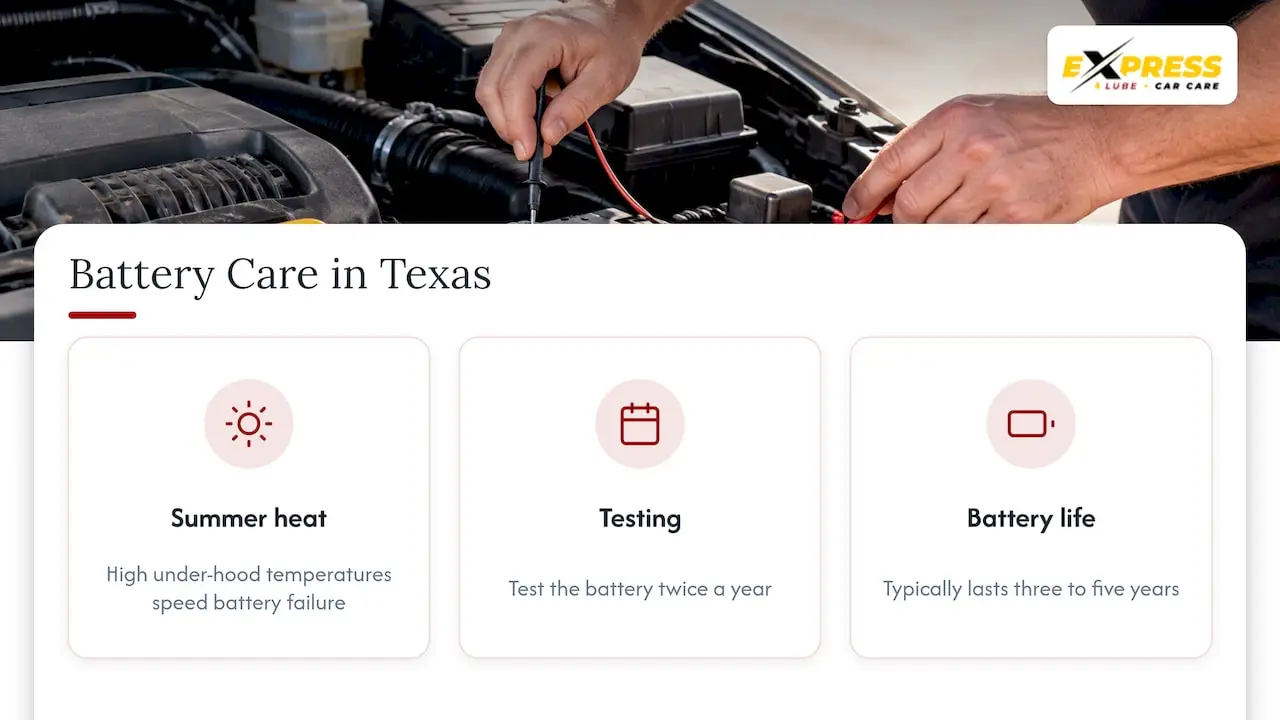
Many drivers assume a car that won’t start is a winter problem. In North Texas, summer does the quiet damage. Consumer Reports says most battery damage happens in summer, when high under-hood temperatures speed up internal failure. A cooler morning later in the year can be when it finally gives out, after months of wear.
That’s why we suggest testing the battery twice a year, as Consumer Reports also recommends, and not waiting for a no-start. AAA says a battery typically lasts three to five years, depending on climate and use. For Richland Hills drivers, our guides on how long car batteries last and battery maintenance tips for Texas drivers go deeper. If you’re also wondering what summer does to the rest of the car, see what summer car care includes.
If the Battery Dies After Sitting a Few Days
All cars lose a little charge when parked. But if a newer car goes dead after only a few days, Consumer Reports suggests the cause may be something drawing power, such as a faulty control module, not just an aging battery. If the problem returns after a new battery, ask for an electrical draw test. We cover the common culprits in what drains a battery overnight.
What a Fix Might Cost, and How to Avoid Paying Twice
AAA’s published ranges give you a realistic benchmark. According to AAA, battery replacement generally runs $100 to $300, and a starter or alternator replacement typically runs $300 to $800. Your actual cost depends on the vehicle, the part and the labor involved. European models and vehicles with batteries in the trunk or under a seat often cost more.
The bigger cost risk is replacing the wrong part. A new battery won’t help if the alternator is failing, and a new starter won’t help if the cause is a corroded ground cable. Testing first is cheaper than guessing.
One more caution: modern electronics can be fussy. Consumer Reports notes that radios and navigation systems may lose their settings when power is disconnected, and some systems need a security code or relearn procedure after a total power loss. Check your owner’s manual before disconnecting anything. If you’re thinking about doing it yourself, our DIY battery replacement guide lists what to prepare, and our note on AGM versus flooded batteries helps you pick the right type.
Buying a Used Car? Catch Starting Problems Before You Sign
Hard starts, slow cranks and weak batteries are some of the faults that hide on a short test drive. A good test drive checklist for spotting hidden faults helps you know what to watch for. We’d add one thing: have the car looked at by a shop before you buy. Our pre-purchase vehicle inspections cover the battery, charging system and more, so you aren’t inheriting somebody else’s no-start.
Our Perspective: Why a Proper Diagnosis Beats a Guess
Most no-start calls we hear come in with a theory attached. “It’s the battery.” “It must be the starter.” Sometimes the driver is right. Often the real answer is a loose clamp, a worn cable, a weak alternator or a battery that only fails when it’s hot.
That’s why we put testing first. Our ASE-certified technicians check the battery, charging output and starting circuit before recommending a part. We also use digital vehicle inspections with photos, so you can see what we see: the corroded terminal, the worn belt, the cracked cable. You decide with the evidence in front of you, not a sales pitch.
If we do the repair, qualifying work is backed by our 24-month/24,000-mile warranty. And because we take walk-ins, you don’t have to wait for a slot if your car limps in on a jump. We’d rather you spend ten minutes on a test than a weekend on the wrong part.
— Express Lube & Car Care
Stranded in Richland Hills? Here’s How We Help
If your car won’t start and you’re near Richland Hills, North Richland Hills or elsewhere in Tarrant County, we can test the battery, alternator and starter, then explain the results in plain language. We take walk-ins and appointments, and offer same-day service when possible. Our automotive services page lists everything we handle, from battery, alternator and starter service to electrical repairs and diagnostics. Fleet and rideshare drivers get priority attention, because downtime costs you money.
When to Stop and Call for Help
Some situations call for a tow or a professional, not another try:
- You smell gasoline or see smoke or fluid under the car.
- The battery case is swollen, cracked or leaking.
- You see sparks, or cables are hot or melted.
- The car is stopped somewhere unsafe. Get to safety first and call roadside help.
- The car starts on a jump but dies again, or won’t start again after sitting.
Frequently Asked Questions
What is the first thing to check when a car won’t start?
Start with what you hear and see. Check that the car is in Park or Neutral, look at how bright the dash lights are, and inspect the battery terminals for looseness or corrosion. Those three checks catch a large share of no-start problems in a couple of minutes.
How do you tell if it’s the starter or the battery?
Rapid clicking with dim lights usually points to the battery. A single loud click or silence with bright lights points more toward the starter. A jump-start helps narrow it down, but a battery and starter test gives a definite answer.
Can a car fail to start even if the battery is new?
Yes. Loose terminals, a failing alternator, a bad starter, a faulty ignition switch or something draining the battery can all cause it. If a new battery doesn’t solve it, ask for a charging system test and an electrical draw test.
What does it mean when the engine cranks but won’t start?
The battery and starter are working, so the problem is usually fuel, spark, sensors or the anti-theft system. A scan tool and fuel pressure check can find which one. This is a good time to stop guessing and bring the car in.
Is it safe to keep trying to start the car?
A couple of tries is fine, but repeated cranking can drain the battery further and can flood the engine. If it hasn’t started after two or three attempts, stop and check the basics or call for help.
Get Your Car Running Again
If your car won’t start, don’t let it ruin your week. Call us at (817) 284-8478 or stop by our Richland Hills shop to schedule service. Our ASE-certified technicians will find the cause, show you the photos and fix it right.
Sources
- 14 Reasons Why Your Car Won’t Start, AAA Automotive
- 13 Common Car Problems Explained, AAA Automotive
- How to Jump a Battery and Get Yourself Back on the Road, AAA Automotive
- How to Jump-Start a Car With a Dead Battery, Consumer Reports
- How to Make Your Car Battery Last Longer, Consumer Reports
- Car Batteries: Which Ones Do Best?, Consumer Reports
- Car Battery Installation and Maintenance, Consumer Reports
- What Does the Check Engine Light Look Like, and Really Mean?, Consumer Reports
- Electric and Hybrid Vehicles, NHTSA