

A car that won’t start does not automatically need a new battery, alternator, or starter. These components work together as part of the vehicle’s starting and charging systems, and problems with cables, connections, electrical loads, wiring, or other systems can create similar symptoms.
Slow cranking, clicking, repeated dead batteries, warning lights, or a vehicle that stalls can provide useful clues, but symptoms alone should not be used to decide which part needs replacement.
The best approach is to test the starting and charging system and identify the actual fault before replacing parts.
Table of Contents
- How Do the Battery, Alternator and Starter Work Together?
- What Are the Signs of a Battery Problem?
- What Are the Signs of an Alternator or Charging-System Problem?
- What Are the Signs of a Starter Problem?
- What Does Clicking When You Start the Car Mean?
- What If the Car Starts and Then Dies?
- What Else Can Cause Starting Problems?
- How Are Starting and Charging Problems Diagnosed?
- What Can Voltage Testing Tell You?
- Electrical Diagnosis in Richland Hills
- Frequently Asked Questions
How Do the Battery, Alternator and Starter Work Together?
The battery, starter, and charging system perform different jobs, but they depend on one another.
Battery
The battery stores electrical energy and supplies power needed for starting and other electrical functions when appropriate.
Starter
The starter uses electrical power to crank the engine so combustion can begin.
Alternator and Charging System
Once the engine is running, the charging system supplies electrical power and maintains the battery’s state of charge under appropriate operating conditions.
A problem in one part of the system can sometimes create symptoms that appear to involve another component. That’s why testing the system as a whole is more reliable than diagnosing from one symptom.
What Are the Signs of a Battery Problem?
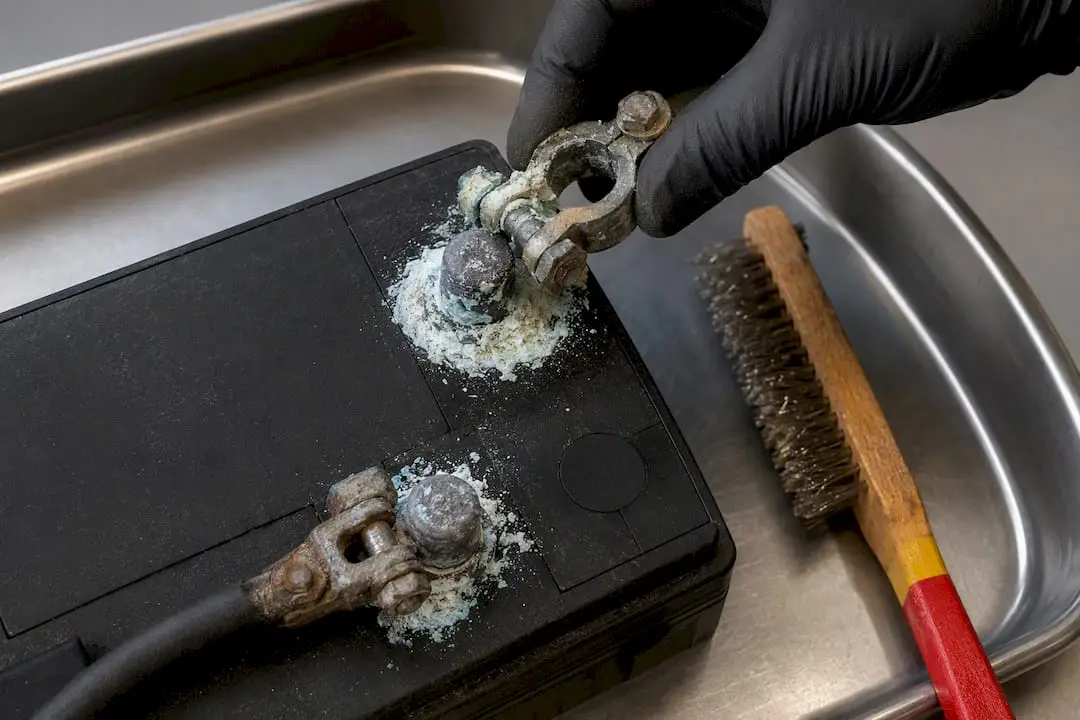
Possible battery-related symptoms can include:
- Slow engine cranking
- Repeated need for a jump start
- Electrical accessories behaving abnormally during starting
- Battery or charging warnings
- Visible corrosion or poor terminal connections
- A battery that does not maintain adequate charge
However, these symptoms do not automatically prove the battery itself has failed.
A discharged battery can result from a charging-system problem, parasitic electrical draw, loose or corroded connections, extended vehicle storage, or another condition.
Battery condition should therefore be evaluated together with state of charge, connections, starting performance, and charging-system operation.
For additional information, see our guide to common signs of a bad car battery.
What Are the Signs of an Alternator or Charging-System Problem?
The alternator is part of a larger charging system. A charging problem can affect the battery and many electrical systems throughout the vehicle.
Possible symptoms can include:
- Battery or charging-system warning light
- Repeated discharged battery
- Electrical accessories operating abnormally
- Lighting that changes unexpectedly in brightness
- Charging-system related diagnostic faults
- Unusual noises from the belt-driven accessory area
- Vehicle stalling or electrical shutdown under certain conditions
These symptoms can also involve wiring, connections, drive-belt problems, battery condition, electrical loads, control modules, or other faults.
A charging-system problem should be tested rather than diagnosed from symptoms alone.
Learn more about signs that may indicate an alternator or charging-system problem.
What Are the Signs of a Starter Problem?
A starter problem may prevent the engine from cranking normally.
Possible symptoms can include:
- No engine crank when starting is requested
- Intermittent starting
- Unusual clicking or mechanical noises
- Slow or inconsistent cranking
- Starter-related electrical faults
But a no-crank condition can also result from a discharged battery, poor cable connection, ground problem, relay, switch, wiring fault, security system, control issue, or another condition.
Testing is needed to determine whether the starter itself is faulty or whether it is simply not receiving the electrical power or control signal it requires.
What Does Clicking When You Start the Car Mean?
Clicking during a starting attempt is a useful symptom, but it does not identify one failed part by itself.
Depending on the vehicle and type of sound, possible causes can include:
- Low battery state of charge
- Poor battery-terminal connection
- High resistance in cables or grounds
- Starter-solenoid operation
- Starter problems
- Relay or control-circuit problems
The sound should be considered together with battery condition, electrical connections, voltage behavior during cranking, starter operation, and other test results.
What If the Car Starts and Then Dies?
A vehicle that starts and then stalls can have a charging-system problem, but an alternator should not automatically be replaced based on that symptom.
Depending on the vehicle, stalling can also involve:
- Fuel delivery
- Ignition
- Engine-management sensors
- Electrical power or ground problems
- Security or immobilizer systems
- Airflow or throttle-control problems
- Mechanical engine conditions
If charging voltage or electrical power is lost while the engine is running, the charging system should be evaluated. If charging operation is normal, diagnosis should continue into other systems that can cause the engine to stall.
What Else Can Cause Starting Problems?
Battery, alternator, and starter problems are only part of the starting-system picture.
Other possible causes include:
- Corroded or loose battery terminals
- Damaged battery cables
- Poor ground connections
- Parasitic electrical draws
- Fuses or relays
- Ignition-switch or start-control problems
- Neutral-safety or clutch-interlock systems
- Security-system faults
- Wiring or connector problems
- Fuel or ignition problems when the engine cranks but does not start
If the battery repeatedly goes dead after sitting, see our guide on what can cause a car battery to drain overnight.
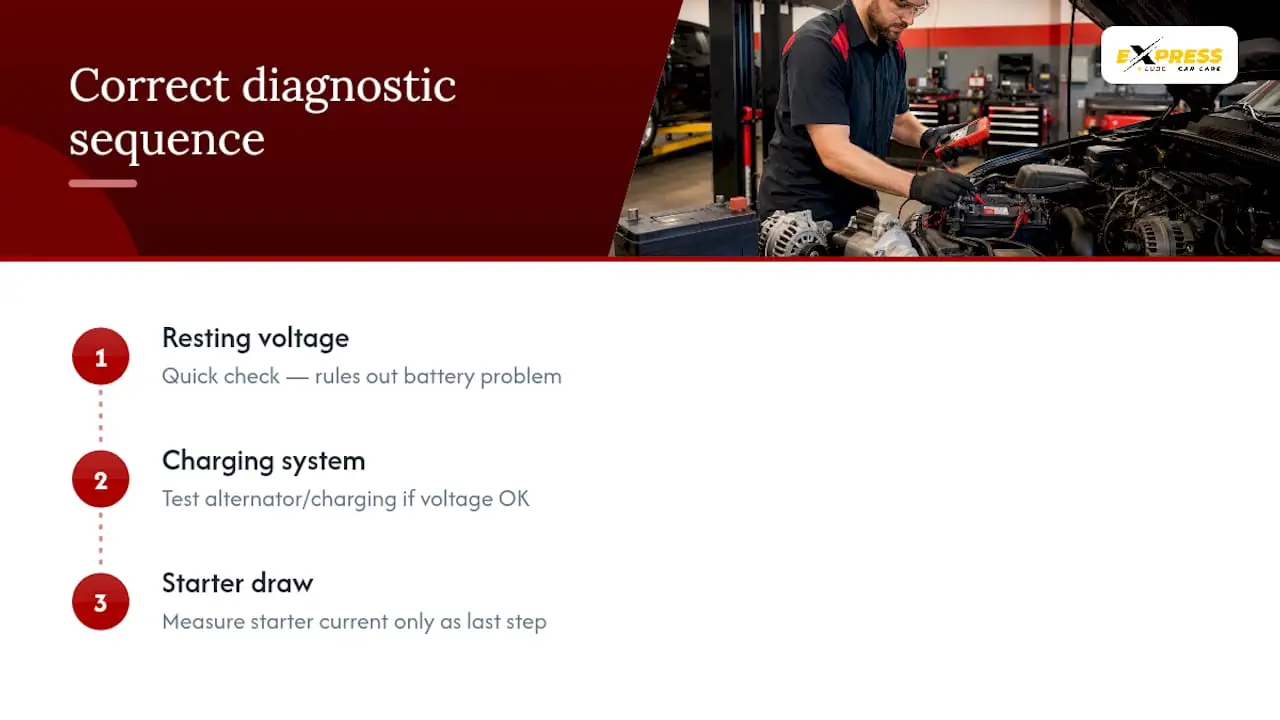
How Are Starting and Charging Problems Diagnosed?
The appropriate diagnostic process depends on the vehicle and symptoms.
Testing may include:
- Battery state-of-charge evaluation
- Battery condition or capacity testing
- Battery-terminal and cable inspection
- Voltage-drop testing where appropriate
- Charging-system testing
- Starter operation and current-draw evaluation
- Electrical ground inspection
- Parasitic-draw testing when appropriate
- Diagnostic trouble-code scanning
- Wiring, fuse, relay, and control-circuit testing
The objective is to determine whether the problem is the battery, charging system, starter, electrical connections, another electrical component, or a different vehicle system entirely.
What Can Voltage Testing Tell You?
Voltage measurements can provide useful information about battery state of charge and charging-system operation, but a single voltage number does not provide a complete diagnosis.
Expected readings can vary based on:
- Battery chemistry and condition
- Battery state of charge
- Vehicle charging strategy
- Engine temperature
- Electrical load
- Ambient conditions
- Vehicle manufacturer specifications
Modern vehicles may use computer-controlled charging strategies that intentionally vary charging voltage under different operating conditions.
A battery can also show an apparently reasonable open-circuit voltage yet still have insufficient capacity under load.
For those reasons, voltage should be interpreted together with appropriate battery, starting, charging, and electrical-system testing rather than used as a universal pass-or-fail threshold.
Auto Electrical Diagnosis in Richland Hills, TX
Express Lube & Car Care provides starting, charging, and electrical-system diagnosis for drivers in Richland Hills.
Our technicians can evaluate battery condition, starter operation, charging-system performance, electrical connections, wiring, parasitic battery drains, and related electrical concerns to help identify the cause before parts are replaced.
Learn more about our auto electrical and lighting repair services in Richland Hills.

If the vehicle will not start, repeatedly loses battery charge, or has another electrical concern, proper testing can help determine whether the problem involves the battery, starter, alternator, wiring, connections, or another system.
Frequently Asked Questions About Battery, Alternator & Starter Problems
How can I tell if the battery, alternator, or starter is bad?
Symptoms can provide clues, but the three systems can produce overlapping problems. Battery condition, charging-system operation, starter performance, electrical connections, and other relevant systems should be tested before deciding which component has failed.
Does clicking mean the starter is bad?
Not necessarily. Clicking can occur with a weak or discharged battery, poor electrical connections, cable or ground problems, starter-solenoid operation, starter faults, or other control-circuit issues.
If my car starts with a jump, does that mean the battery is bad?
No. A successful jump start indicates that additional electrical power allowed the engine to crank or start. It does not by itself determine why the battery was discharged or whether the battery, charging system, electrical connections, or another condition caused the problem.
If my car starts and then dies, is the alternator bad?
Not automatically. Loss of charging-system output can contribute to stalling, but fuel, ignition, sensor, electrical, security, airflow, and mechanical problems can also cause an engine to stall. Testing is needed to determine the cause.
Can a bad alternator damage a battery?
A charging-system problem can affect battery state of charge and battery life. If a battery repeatedly becomes discharged or fails prematurely, both battery condition and charging-system operation should be evaluated.
Can a good battery still show starting problems?
Yes. Starting problems can involve cables, grounds, the starter, control circuits, security systems, electrical connections, or other vehicle systems even when the battery itself is serviceable.
Can voltage alone tell me whether my battery is good?
No. Voltage is useful information, but it does not fully measure battery capacity or performance under load. Battery testing should consider state of charge, condition, capacity, and vehicle-specific requirements.
What causes a battery to keep dying overnight?
Possible causes include an aging or damaged battery, parasitic electrical draw, lights or accessories remaining active, charging-system problems, wiring faults, or other electrical conditions.
Does Express Lube & Car Care diagnose electrical problems?
Yes. Express Lube & Car Care in Richland Hills provides battery, starting, charging, wiring, lighting, and other auto-electrical diagnostic and repair services.
Battery keeps dying, car won’t crank, or electrical system acting strangely? Express Lube & Car Care provides auto electrical diagnosis and repair in Richland Hills, TX to identify the cause before parts are replaced.