

Your car's battery is the unsung hero of your daily commute, responsible for powering everything from the engine starter to your stereo. But like all components, it has a finite lifespan, and failure often comes with inconvenient, if not dangerous, consequences. Ignoring the early whispers of a weak battery can leave you stranded in a parking lot, late for an important meeting, or worse, with a car that won't start in an emergency.
In Texas, where extreme heat can significantly shorten battery life, proactive awareness is your best defense against unexpected breakdowns. This guide is designed to empower every driver, from the daily commuter in Richland Hills to fleet managers across Northeast Tarrant County, with the knowledge to identify the key signs of a bad car battery. We will break down the subtle and not-so-subtle symptoms, explain what's happening under the hood, and provide actionable steps to take.
By learning to recognize these indicators-such as a slow engine crank, dimming lights, or a dashboard warning-you can address the problem on your terms. This ensures your vehicle remains reliable, safe, and ready for the road ahead. We’ll also cover simple DIY checks, explain when to seek professional help from ASE-certified technicians like those at Express Lube & Car Care, and show how preventive maintenance can save you from the stress and expense of a roadside emergency.
1. Slow Engine Cranking or Difficulty Starting
One of the first and most common signs of a bad car battery is a noticeable change in how your engine starts. Instead of turning over instantly with a quick, crisp sound, the engine will crank slowly and laboriously. You might hear a sluggish "rur-rur-rur" sound that lasts several seconds before the engine finally catches. This happens because a weakening battery can no longer deliver the strong, immediate burst of amperage the starter motor needs to rotate the engine's heavy internal components.
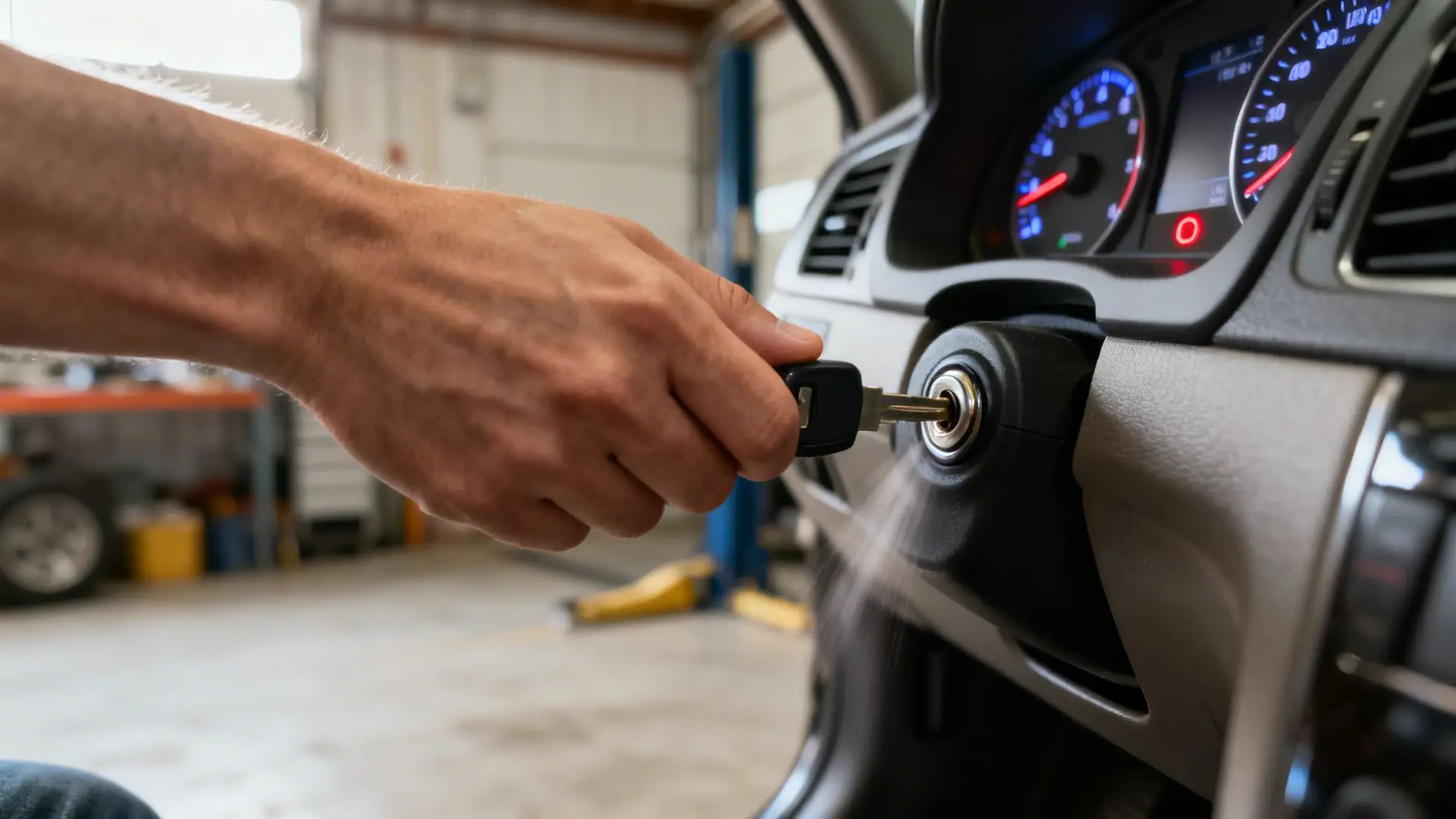
The battery's primary job is to provide this initial jolt of power. As its internal chemical components degrade over time, its voltage drops, especially under a heavy load like starting the engine. A healthy battery maintains around 12.6 volts, but a failing one will dip significantly, reducing the power sent to the starter.
Why You Can't Ignore a Slow Crank
This symptom is a direct indicator of declining battery health and often gets worse over a short period. What begins as a minor annoyance can quickly escalate, leaving you stranded with a vehicle that won't start at all. Cold weather in Northeast Tarrant County can dramatically worsen the problem, as low temperatures slow the battery's chemical reactions and thicken engine oil, making the starter's job even harder.
Key Insight: A slow crank is your car's early warning system. It's the battery telling you it's struggling to perform its most demanding task. Acting on this signal is the difference between a quick, preventative battery replacement and an inconvenient tow.
What to Do About It
If you notice a change in your engine's cranking speed, start paying close attention.
- Monitor Consistency: Does it happen every morning, or only on colder days? A consistent slow start points directly to battery degradation.
- Don't Delay: The problem will not fix itself. Schedule a check-up before the battery fails completely.
- Get a Professional Test: The most reliable action is to get a professional battery test. At Express Lube & Car Care, we offer walk-in battery testing to give you a clear, immediate answer on your battery's health and remaining life.
2. Dim or Flickering Dashboard and Headlights
Another clear sign of a bad car battery is the inconsistent performance of your vehicle's electrical system, most visibly seen in your lights. If you notice your headlights, dashboard lights, or interior cabin lights are dimmer than usual or seem to flicker, your battery is likely struggling to provide stable power. This happens because a weakening battery's voltage drops below the level needed to consistently run all your car's electronics.

Unlike a slow crank that only happens during startup, this symptom can appear while you are driving, especially at idle. For example, a driver in Richland Hills might notice their lights flicker at a stoplight but then brighten up when they accelerate. This is because at idle, the battery helps power the car's systems, but when you rev the engine, the alternator takes over more of the load.
Why You Can't Ignore Dimming Lights
Dimming or flickering lights are more than just a nuisance; they are a direct safety concern. Inadequate headlight brightness can significantly reduce your visibility at night, making it harder to see obstacles or for other drivers to see you. This symptom indicates the battery can no longer support the electrical demands of the vehicle, a problem that often worsens when you use multiple accessories at once, like the air conditioning and radio. It could also point to a problem with your charging system; you can learn more about the signs of a failing alternator to help distinguish between the two.
Key Insight: Flickering lights are your car's electrical system crying out for help. It means the battery is failing to maintain a stable voltage, jeopardizing both convenience and safety.
What to Do About It
If your vehicle's lights are acting erratically, take these steps to diagnose the issue before it leaves you in the dark.
- Observe at Idle: Pay close attention to your lights when stopped. If they brighten noticeably when you rev the engine, the battery is a likely culprit.
- Test Under Load: Turn on your headlights, A/C, and radio simultaneously. If the lights dim significantly, the battery is struggling to keep up with the demand.
- Don't Drive with Unsafe Lights: If your headlights are too dim for safe driving, it's time for an immediate inspection. Bring your car to Express Lube & Car Care for a quick walk-in check. We can determine if the problem is your battery or another part of the electrical system.
3. Electrical Components Malfunctioning or Acting Erratically
When your car's electrical accessories begin to behave unpredictably, a failing battery is a likely culprit. You might notice power windows moving more slowly than usual, your infotainment system freezing or randomly resetting, or heated seats that refuse to turn on. These problems are often signs of a bad car battery because it can no longer provide the steady, consistent voltage that modern vehicle electronics require to function correctly.
A healthy battery supplies a stable current, but as it weakens, its voltage can fluctuate, especially when multiple accessories are used at once. This unstable power delivery confuses the vehicle's electronic control modules and sensors, leading to erratic performance. For example, a family in Richland Hills might notice their radio freezing and windows struggling during their daily commute, indicating the battery is straining to keep up with the car's electrical demands.
Why You Can't Ignore Electrical Glitches
These seemingly minor electrical issues are more than just an annoyance; they signal a fundamental problem with your vehicle's power supply. The onboard computer, or ECU, relies on stable voltage to manage everything from engine performance to safety systems. Unstable power can lead to incorrect sensor readings and unpredictable system behavior, which could compromise your vehicle's reliability.
Fleet managers, for instance, might observe inconsistent power door lock operation across several vehicles, a sign that the batteries are failing and cannot support the electrical load. Ignoring these symptoms risks a complete battery failure that could leave you stranded without any power at all.
Key Insight: Random electrical problems are your vehicle's way of showing it has an unstable power source. The battery is often the weak link, and these glitches are a clear warning that its ability to deliver consistent voltage is declining.
What to Do About It
If you notice multiple electronic systems acting up, it's time to investigate the battery.
- Document the Issues: Keep a log of which components are failing (radio, windows, lights) and when the problems occur. Note if they get worse when you turn on more accessories, like the AC and headlights simultaneously.
- Reduce Electrical Load: As a temporary measure, try turning off non-essential accessories like the radio, seat heaters, and interior lights to see if performance improves. This can help confirm the battery is struggling under load.
- Get a Professional Test: The fastest way to diagnose the problem is with a professional battery test. Don't assume an individual component is broken until the battery is confirmed to be healthy. At Express Lube & Car Care, we can quickly determine if voltage instability from a weak battery is the root cause.
4. Clicking Sound When Turning the Key or Pressing the Start Button
When you attempt to start your car and are met with a rapid, staccato clicking sound instead of the engine turning over, it’s a classic symptom of a severely drained or failed battery. This distinct chattering noise comes from the starter solenoid, an electromagnetic switch responsible for engaging the starter motor. It’s one of the most definitive signs of a bad car battery because it signals that there isn't even enough power to begin the cranking process.
The solenoid requires a specific amount of voltage to create a strong magnetic field that pushes a gear to engage the engine's flywheel. When the battery's voltage is critically low, it can only provide enough energy to briefly activate the solenoid. The switch clicks on, but the voltage immediately drops, causing it to click off. This cycle repeats very quickly, creating the audible chattering sound that signals a battery with almost no power left.
Why You Can't Ignore the Clicking
A clicking sound is not a subtle warning like a slow crank; it's a final cry for help. It means your battery has insufficient power to perform its core function. For a commuter in Northeast Tarrant County, this often happens without warning, especially if a car sits unused for a few days, leaving them completely stranded. Continuing to turn the key will only drain the last remnants of power, making a jump-start more difficult.
Key Insight: The rapid clicking sound is the starter solenoid telling you the battery's voltage is too low to engage the starter motor. Unlike a slow crank, which indicates a weak battery, a click often signifies a dead one.
What to Do About It
If you hear this sound, your next steps are critical to avoid further draining the battery.
- Stop Trying to Start It: Do not repeatedly turn the key or press the start button. After one or two attempts, stop.
- Listen Carefully: Pay attention to the sound. A single, solid click could indicate a starter problem, but a rapid, continuous clicking almost always points to the battery.
- Prepare for a Jump-Start or Replacement: This is the time to use jumper cables or a portable jump-starter if you have one. If a jump-start works, drive directly to a service center for a battery test, as the battery may no longer hold a charge.
- Get a Professional Diagnosis: The quickest way to resolve the issue is to call for roadside assistance or contact a professional. At Express Lube & Car Care, our technicians can quickly determine if it’s a dead battery or another electrical issue and provide an immediate replacement.
5. Swollen, Bloated, or Damaged Battery Case
Beyond electrical symptoms, one of the most serious signs of a bad car battery is a physical change to its case. If you look under the hood and notice the battery sides are bulging or swollen, it's a critical warning sign. This bloating is caused by a dangerous internal pressure build-up from gas production, which can result from extreme heat, internal cell failure, or overcharging due to a faulty alternator.
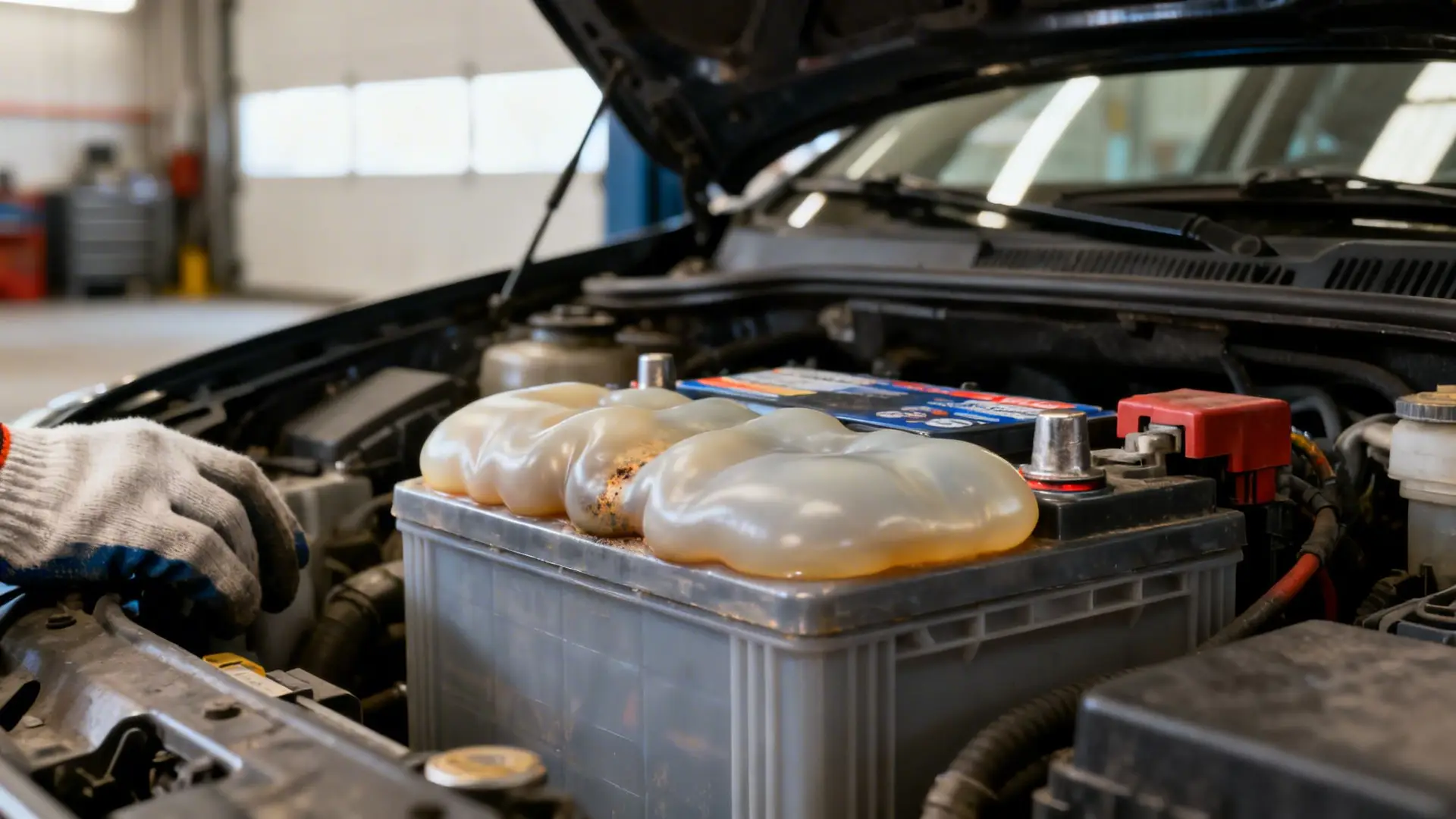
Unlike a slow crank or dim lights, a swollen battery case is an immediate safety hazard. The internal pressure can cause the case to crack or rupture, leaking corrosive battery acid onto surrounding components and creating a risk of fire or even a small explosion. For example, a vehicle owner in Richland Hills might discover their battery appears bloated during a routine oil check; this is an immediate signal to stop using the vehicle and seek professional service.
Why You Can't Ignore a Swollen Case
A deformed battery case is not a problem that will stabilize or fix itself; it's an indication of a catastrophic internal failure. The battery is compromised and unstable. Continuing to operate a vehicle with a swollen battery puts you, your passengers, and your vehicle at significant risk. The intense Texas heat can accelerate this process, making regular visual inspections even more important for drivers in Northeast Tarrant County.
Key Insight: A swollen battery case is a physical sign of critical internal failure. It’s no longer just a power issue; it’s a serious safety hazard that requires immediate professional attention to prevent acid leaks, damage to other components, or fire.
What to Do About It
If you discover your battery case is swollen, cracked, or leaking, take immediate and cautious action.
- Stop Driving the Vehicle: Do not attempt to start the engine or charge the battery. The internal pressure makes it highly unstable.
- Inspect with Caution: If you must handle the battery, wear protective gloves and eyewear to shield yourself from potential acid leaks.
- Seek Immediate Professional Help: This is not a DIY situation. Have your vehicle towed to a professional service center like Express Lube & Car Care for safe removal and diagnosis. Our technicians can also check your alternator to ensure it wasn't the cause of the overcharging.
6. Battery Age of 3+ Years or Visible Corrosion and White/Blue Deposits
Sometimes, the most reliable signs of a bad car battery are found with a simple visual inspection and a check of the calendar. While not a performance symptom like a slow start, a battery's age and physical condition are critical indicators of its impending failure. Most car batteries have a lifespan of about three to five years, but this can be significantly shorter in hotter climates. Additionally, visible corrosion on the battery terminals signals a chemical problem that is actively hampering performance.
The presence of white, blue, or greenish crusty deposits around the battery's metal posts is a sign of leaking battery acid or gas. This corrosion acts as an insulator, creating resistance that chokes the flow of electricity from the battery to your car's electrical system. This means that even a battery that still holds a decent charge might behave like it's weak or dying because the power can't get where it needs to go.
Why You Can't Ignore Age and Corrosion
A battery's age is a countdown timer. In the intense heat of a Texas summer, the chemical reactions inside a battery accelerate, causing internal components to degrade much faster. A battery that might last five years in a cooler climate may only survive three in Northeast Tarrant County. Ignoring this timeline is a gamble that often ends with a dead battery at the worst possible moment. Similarly, allowing corrosion to build up is like letting rust accumulate on a critical machine part; it will eventually cause a complete failure.
Key Insight: Age and corrosion are the two most predictable signs of a bad car battery. While other symptoms tell you a battery is failing, these factors tell you a battery will fail soon, giving you a chance to act proactively.
What to Do About It
If your battery is getting older or showing signs of wear, it's time for a closer look.
- Check the Date Code: Look for a sticker on the top or side of the battery. It usually has a code like "4/22," indicating it was manufactured in April 2022. If your battery is over three years old, it's living on borrowed time.
- Inspect Terminals Regularly: During routine fluid checks, glance at the battery terminals. If you see minor powdery buildup, you can clean it carefully. However, heavy, crusty deposits warrant a professional service.
- Get a Professional Test: The best way to know for sure is with a professional load test. At Express Lube & Car Care, our technicians can quickly test your aging battery to determine its true health and advise if replacement is needed before it leaves you stranded.
7. Battery Warning Light on Dashboard (Check Engine or Battery Icon)
Modern vehicles are equipped with a sophisticated onboard diagnostic system that constantly monitors your car's health. When a specific dashboard light illuminates, usually shaped like a small battery, it's a direct message from your car's computer that something is wrong within the charging system. This system includes both the battery and the alternator. The light signifies that the battery isn't being charged correctly or its voltage has fallen below the safe operational level.
This dashboard warning is one of the most urgent signs of a bad car battery or related electrical issue. For example, a commuter might see the light appear right after starting their car and notice it stays on for the entire drive. In other cases, the light might flicker intermittently, perhaps when you accelerate or turn on accessories, pointing to an unstable connection or a failing component.
Why You Can't Ignore a Dashboard Warning Light
This warning light is not a suggestion; it’s an immediate call to action. While it’s a clear signal of an electrical problem, it doesn't specify whether the root cause is the battery or the alternator. Ignoring it can leave you stranded, as the battery will eventually be depleted of all power if it's not being recharged. The vehicle will run on battery power alone until it dies completely, shutting off all electrical systems, including the engine.
Key Insight: A battery warning light is your car's most direct alert about a critical charging system failure. It requires immediate professional diagnosis to prevent a complete vehicle shutdown and a potential tow.
What to Do About It
If the battery light comes on, your next steps are crucial.
- Note the Conditions: Pay attention to when the light appears. Does it happen at idle, during acceleration, or is it on constantly? This information helps our technicians diagnose the issue faster.
- Don't Assume: The light often points to a failing alternator, not just a bad battery. Avoid replacing the battery without a proper diagnostic test, as this may not solve the underlying problem.
- Seek Immediate Help: Do not embark on long trips. Head directly to a professional auto care center. At Express Lube & Car Care, we can perform a full charging system analysis to pinpoint the exact cause, whether it's the battery, alternator, or wiring.
8. Vehicle Dead After Sitting Unused or Not Starting After Extended Parking
A healthy battery should hold its charge for several weeks, but if your car won't start after sitting idle for just a few days, it's a clear sign of trouble. This symptom points to a battery that can no longer retain its stored energy, a common issue as its internal chemistry degrades. For example, a commuter might find their car dead on Monday morning after parking it on Friday, or a family in Richland Hills returns from vacation to a vehicle that shows no signs of life.
When a battery ages, its capacity to hold a charge diminishes significantly. However, this issue can also be caused by a "parasitic drain." This occurs when an electrical component, like a faulty alarm, an interior light, or a computer module, continues to draw power even when the car is turned off, slowly draining the battery overnight or over a few days. Determining the root cause is crucial.
Why You Can't Ignore a Car That Dies When Parked
This problem is more than just an inconvenience; it’s a direct signal that your battery is either failing or your vehicle's electrical system has a fault. Repeatedly jump-starting a vehicle in this state is not a solution and can cause damage to the alternator and other sensitive electronics. It’s essential to diagnose the problem correctly to avoid being stranded and prevent costly electrical repairs down the road.
Key Insight: If your car can't survive a weekend without being driven, the battery has lost its resilience. It's time to find out if the battery is the culprit or if something else is quietly draining its power.
What to Do About It
If you find yourself with a dead battery after it sits unused, take these steps to diagnose and resolve the issue.
- Note the Timeline: How long did the car sit before it wouldn't start? A few days points to a weak battery or a significant parasitic drain, while several weeks might be normal for an older battery.
- Limit Jump-Starts: Jump-start the car only once to get it to a service center. If it dies again quickly, you have a more serious problem than just an old battery. For a detailed breakdown, you can learn what causes a car battery to drain overnight.
- Seek a Professional Diagnosis: At Express Lube & Car Care, we can perform a comprehensive test to check both your battery’s health and look for parasitic drains. This dual approach ensures we fix the right problem the first time.
8-Point Comparison: Signs of a Bad Car Battery
| Symptom | 🔄 Diagnosis Complexity | ⚡ Speed to Detect / Resolve | Resource Requirements | 📊 Expected Outcome (Confidence) ⭐ | 💡 Ideal Use Cases / Key Tips |
|---|---|---|---|---|---|
| Slow Engine Cranking or Difficulty Starting | Low — easy to notice but multiple causes | Quick to detect; moderate time to confirm/repair | Multimeter/battery load tester, basic starter/alternator checks | Likely battery weakening; ⭐⭐⭐ | Early warning—get battery test; schedule replacement before stranding |
| Dim or Flickering Dashboard and Headlights | Medium — can be battery, alternator, or connections | Detected while driving; resolution may take longer | Voltage meter, alternator diagnostic tools | Ambiguous between battery/alternator; ⭐⭐⭐ | Safety concern—test at idle vs. rev; seek shop diagnosis promptly |
| Electrical Components Malfunctioning / Erratic Behavior | Medium–High — intermittent and multi-system | Intermittent detection; diagnosis can be time-consuming | ECU diagnostics, voltage monitoring, shop diagnostic equipment | Indicates voltage instability; ⭐⭐ | Document failures, reduce electrical load, bring for voltage/ECU check |
| Clicking Sound When Starting | Low — distinct and recognizable | Immediate detection; urgent action required | Jump starter/jumper cables, battery test, possible replacement | High confidence of imminent battery failure; ⭐⭐⭐⭐ | Do not keep cranking—jump once or call roadside; prepare for replacement |
| Swollen / Bloated / Damaged Battery Case | Very low — visually obvious | Immediate detection; urgent replacement needed | Safe removal tools, protective gloves, disposal service | Definitive sign of severe failure/overcharge; ⭐⭐⭐⭐⭐ | Do not charge or use—transport to shop for safe removal and testing |
| Battery Age ≥3 Years or Visible Corrosion | Low — preventive indicator | Easy to check; proactive replacement is quick | Visual inspection, date-code check, terminal cleaning supplies | Good predictor of impending failure; ⭐⭐⭐⭐ | Replace proactively at ~3–4 years in hot climates; clean terminals lightly |
| Battery Warning Light on Dashboard | Medium — electronic alert but source ambiguous | Immediate alert; requires diagnostic testing | OBD-II scanner, voltage/charging system tests | Signals charging-system fault (battery or alternator); ⭐⭐⭐ | Don’t ignore—record conditions when lit and have codes read promptly |
| Vehicle Dead After Sitting Unused / Not Starting After Parking | Medium — could be battery or parasitic drain | Detected after inactivity; may strand and need longer diagnosis | Parasitic draw test, battery capacity test, jump-start tools | Shows inability to hold charge or parasitic drain; ⭐⭐⭐⭐ | Jump-start once then test; request parasitic draw and battery capacity diagnostics |
Drive with Confidence: Your Next Steps for a Healthy Battery
Recognizing the subtle and overt signs of a bad car battery is more than just car knowledge; it's a critical skill for avoiding the stress and potential danger of being stranded. Your vehicle communicates its needs through clear indicators, from the slow, labored crank of the engine on a cold morning to the dim, flickering lights that signal a weakened power source. Understanding these warnings empowers you to take control before a minor issue becomes a major inconvenience.
The insights from this article are your first line of defense. By now, you know what a swollen battery case signifies, why a dashboard warning light demands immediate attention, and how even a battery's age can be a red flag. Ignoring these symptoms is a gamble that rarely pays off. Instead of waiting for a complete failure, the key is to be proactive. A vehicle that struggles to start today is a vehicle that may not start at all tomorrow, disrupting your work commute, family plans, or daily errands.
From Knowledge to Action: Your Proactive Checklist
Now that you can identify the problems, what are the immediate, actionable steps you should take? Don’t let uncertainty paralyze you. Use this simple guide to move forward with confidence:
- Listen and Look: Pay close attention to your car's sounds and electrical behavior. Does the engine crank slower than it used to? Are your headlights dimmer at idle? These are often the very first signs of a bad car battery.
- Perform a Visual Inspection: Regularly check under the hood. Look for the tell-tale signs of corrosion (white or blue fuzzy deposits) on the terminals and ensure the battery case isn't swollen or cracked.
- Don't Dismiss the Dashboard: The battery or check engine light is your car’s direct plea for help. It’s a clear signal to seek professional diagnostics sooner rather than later.
- Get a Professional Test: If you notice any of the signs we've covered, or if your battery is over three years old, a professional test is the most reliable way to know its true condition. This simple step can save you from the headache of a roadside breakdown.
If your car is completely dead or won't start after sitting for a while, it's a clear sign of battery trouble. The diagnostic process involves checking the power source, connections, and related components. For more in-depth troubleshooting a vehicle that won't start, you can review resources on similar electrical systems, as many principles of battery diagnosis are universal.
Ultimately, mastering this knowledge transforms you from a passive driver into an informed vehicle owner. It replaces anxiety with assurance, ensuring every turn of the key leads to a reliable start. This proactive approach not only protects your schedule and your wallet but also contributes to the overall safety and longevity of your vehicle.
Don't wait for a dead battery to leave you stranded. Visit Express Lube & Car Care in Richland Hills for a fast, free, no-appointment-needed battery and charging system test. Our expert technicians will give you an honest assessment and get you back on the road with confidence.