

Summer car care is defined as a targeted set of vehicle maintenance tasks performed before and during hot weather to prevent breakdowns, protect key systems, and keep you safe on the road. According to AAA data, battery failure, flat tires, and overheating rank as the top three causes of summer roadside breakdowns, and every one of them is preventable. What does summer car care include? At its core: fluid checks, tire inspection, battery testing, cooling system service, air conditioning maintenance, and exterior protection. The good news is that a 30-minute maintenance routine covers all of it. This guide walks you through each task so you can head into summer with confidence instead of a repair bill.
What does summer car care include for your vehicle’s fluids?
Fluids are the lifeblood of your car, and summer heat puts every one of them under extra stress. Checking coolant, oil, brake fluid, and washer fluid before temperatures climb is the single most effective step you can take to prevent heat-related engine failures. Each fluid serves a different system, and letting any one of them run low or degrade in summer is asking for trouble.
Here is what to check and why it matters:
- Coolant (antifreeze): Check the level only when the engine is cold. Use a hydrometer to test concentration, aiming for freeze protection down to at least -34°F. Dirty or discolored coolant means it is time for a flush. Weak coolant causes scaling and corrosion inside the engine, which is a performance issue, not just a safety one. For a deeper look at coolant types and maintenance, the engine coolant guide at Express Lube & Car Care covers it well.
- Engine oil: Check the dipstick with the engine off and parked on level ground. Summer heat thins oil faster, so if you are approaching your change interval, do not wait. Fresh oil with the correct viscosity rating for your climate keeps engine parts from grinding under heat load.
- Brake fluid: This one gets overlooked. Brake fluid absorbs moisture over time, which lowers its boiling point. In summer, especially during mountain driving or stop-and-go traffic, degraded brake fluid can boil and cause brake fade.
- Power steering fluid: Low or dirty power steering fluid makes steering sluggish and can damage the pump. A quick visual check of the reservoir takes 30 seconds.
- Windshield washer fluid: Summer bugs and road grime hit fast. Keep the reservoir full with a fluid rated for summer use, not diluted water, which can grow bacteria in the tank.
Pro Tip: Top off fluids in the morning before a drive, not right after. Hot engines and pressurized systems can cause burns or inaccurate readings.
How should you inspect and prepare your tires for summer driving?
Tires are your only contact with the road, and hot pavement makes tire failures more dangerous and more common. Tires should be replaced when tread depth falls below 4/32 inch before summer trips, because wet pavement traction drops sharply below that threshold. Sidewall cracks and bulges are signs of heat damage that require immediate attention, not a “watch and wait” approach.
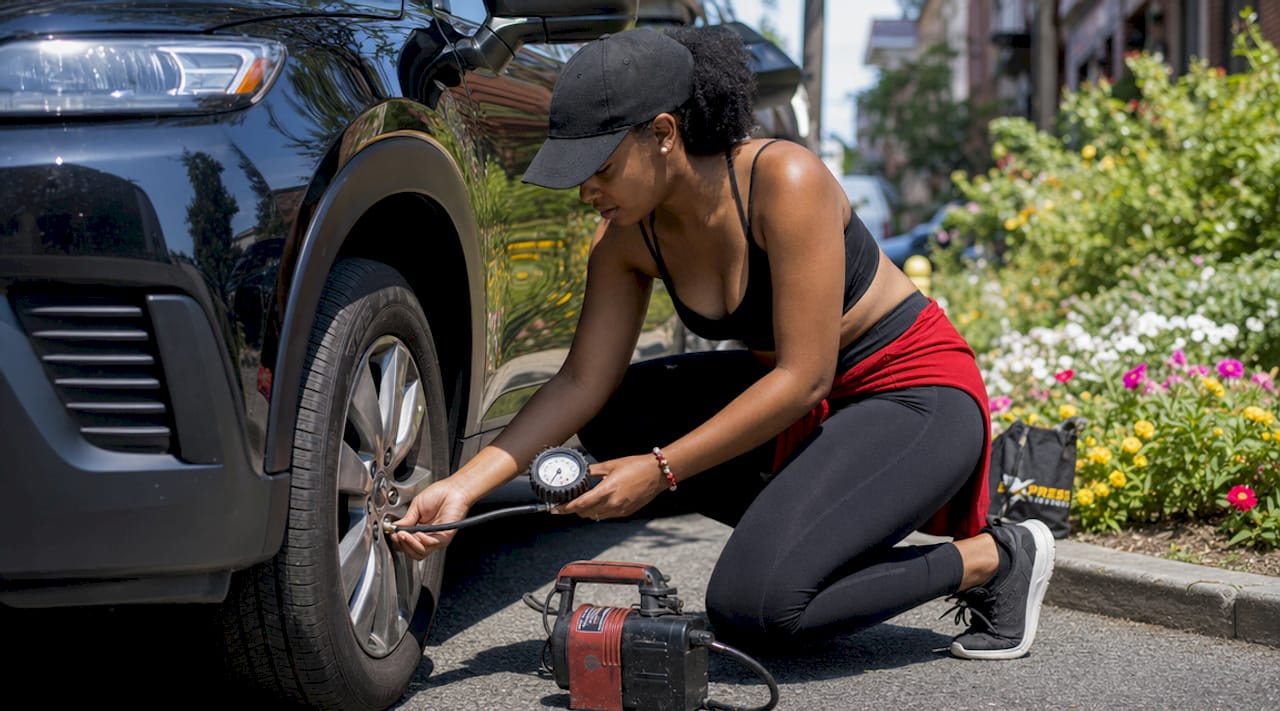
Start with tire pressure. Heat causes air to expand, so a tire that reads correctly in the morning can be overinflated by afternoon. Check pressure when the tires are cold, before you have driven more than a mile, and match the number on the sticker inside your driver’s door jamb, not the maximum printed on the tire sidewall.
| Condition | Risk | Action |
|---|---|---|
| Under-inflated tires | Increased heat buildup, blowout risk | Inflate to door jamb spec when cold |
| Over-inflated tires | Reduced contact patch, poor handling | Release air to correct pressure |
| Tread below 4/32 inch | Poor wet traction, hydroplaning | Replace tires before summer trips |
| Sidewall cracks or bulges | Sudden blowout risk | Replace immediately |
The penny test is a quick tread check: insert a penny into the tread groove with Lincoln’s head pointing down. If you can see the top of his head, the tread is below 2/32 inch and the tire is legally worn out. For summer safety, the 4/32 inch benchmark is the smarter cutoff.
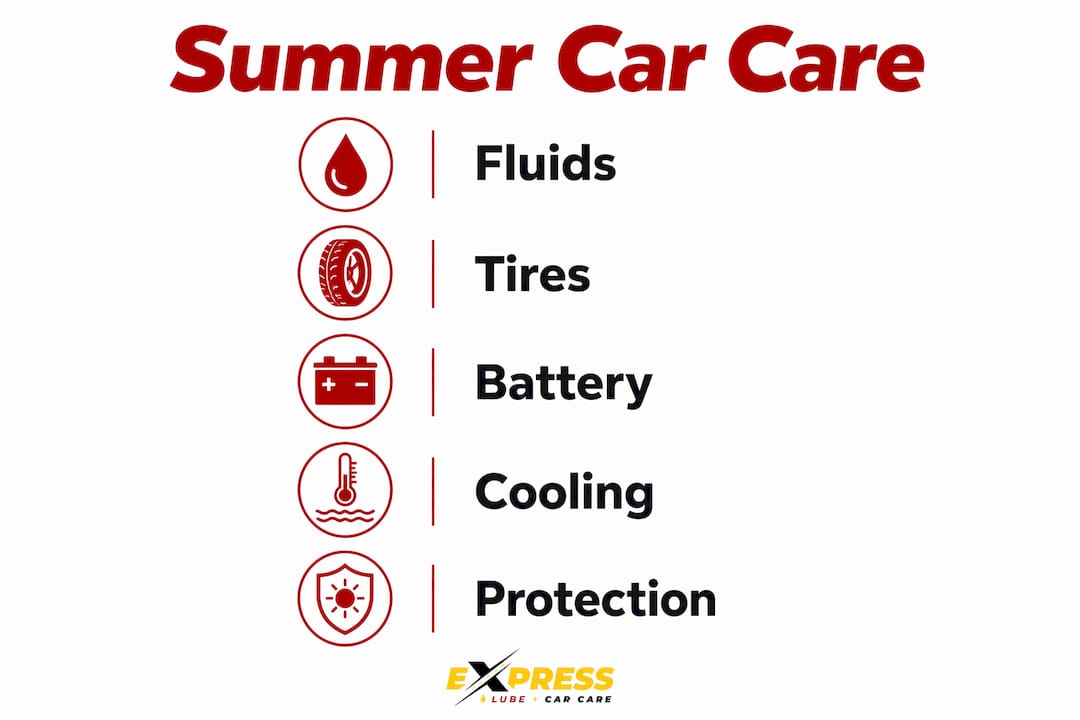
Rotate and balance your tires at the start of summer if you have not done so in the last 5,000 to 7,500 miles. Uneven wear from skipped rotations creates weak spots that heat amplifies into blowouts.
Pro Tip: Check tire pressure first thing in the morning, before the car has moved. That is the only reading that counts as “cold pressure” for accurate comparison to your vehicle spec.
What summer-specific battery maintenance should you perform?
Battery failure is the number one cause of summer roadside breakdowns because heat accelerates the chemical degradation inside the battery. Most drivers assume batteries only fail in winter cold, but the heat is actually what kills them. The cold snap in fall just exposes the damage that summer already did.
A resting voltage test tells you if a battery has charge. A load test tells you if it can actually deliver power under the strain of starting a hot engine. Load testing is the superior diagnostic because it simulates real cranking conditions and catches batteries that pass a static test but fail when it counts. AutoZone and O’Reilly Auto Parts both offer free battery load tests, so there is no reason to skip this step.
What to check at home before you go:
- Terminal condition: Look for white or blue powdery buildup on the terminals. That corrosion increases resistance and can prevent starting. Clean it off with a mixture of baking soda and water, then rinse and dry.
- Cable connections: Wiggle both cables. They should feel tight with zero movement. Loose connections cause intermittent starting failures that are maddening to diagnose.
- Battery age: Most batteries last three to five years. If yours is approaching that range, a load test is not optional.
- Voltage reading: A fully charged battery reads 12.6 volts or higher at rest. Below 12.4 volts suggests it is not holding a full charge.
For Texas drivers in particular, the battery maintenance tips from Express Lube & Car Care are worth reviewing since extreme heat shortens battery life faster than most manufacturers’ estimates.
Pro Tip: Keep a quality jump starter pack in your trunk. A compact lithium jump starter from brands like NOCO or Clore Automotive fits in a glove box and can save you a two-hour wait on a 100-degree afternoon.
How can you ensure your cooling system and A/C are summer-ready?
The cooling system and air conditioning work as a team in summer, and both need attention before the heat arrives. Testing A/C, checking coolant level and concentration, and setting correct tire pressure are the three most important summer prep tasks to avoid common breakdowns. Skipping the cooling system inspection is how engines overheat on the highway in July.
Check coolant level at the reservoir when the engine is cold. If it is low, top it off with the correct type for your vehicle, since mixing coolant types can cause gelling and reduced protection. Use a hydrometer to test concentration, aiming for protection to at least -34°F. That number matters in summer because it also reflects the coolant’s ability to resist boiling at high temperatures.
Inspect radiator hoses and heater hoses by squeezing them when the engine is cold. A healthy hose feels firm but pliable. A hose that feels soft and spongy, or one that has visible cracks or swelling near the clamps, is close to failing. Hose failure on a hot day means an instant overheat.
Check the serpentine belt for fraying, glazing, or cracking. This belt drives the water pump, alternator, and A/C compressor. If it snaps, you lose all three at once.
For A/C, weak airflow commonly points to low refrigerant, a worn compressor belt, or a clogged cabin air filter. Check the cabin air filter first since it is the easiest fix. A filter packed with a year’s worth of dust and pollen cuts airflow dramatically, and most drivers have never replaced theirs. For a full walkthrough on diagnosing A/C problems yourself, the DIY car AC fix guide is a solid starting point.
Pro Tip: Run your A/C on full blast for five minutes before a long trip and note whether it gets genuinely cold within the first two minutes. If it takes longer or never gets cold, schedule a refrigerant check before summer peaks.
| Cooling system component | What to check | Warning sign |
|---|---|---|
| Coolant level and concentration | Reservoir level; hydrometer test | Low level; protection above -34°F |
| Radiator and heater hoses | Firmness, visible cracks, swelling | Soft, spongy, or cracked hoses |
| Serpentine belt | Surface condition, tension | Fraying, glazing, visible cracks |
| Cabin air filter | Airflow quality; visual inspection | Restricted airflow; dirty filter |
What exterior and interior maintenance helps protect your car from summer heat?
Heat and UV rays do visible damage to your car’s paint, plastic trim, and interior surfaces over a single summer if you do not take steps to protect them. Waxing at the start of summer and using sunshades consistently are the two most effective methods for reducing that damage. UV rays fade paint and make plastic brittle, and prevention costs far less than restoration.
Waxing creates a sacrificial layer between your paint and the sun. A quality carnauba wax or paint sealant applied at the start of the season lasts two to three months. For paint protection steps that go beyond a basic wax, car paint protection methods like ceramic coatings offer longer-lasting UV defense.
Inside the car, a reflective sunshade in the windshield can drop cabin temperature by 30 to 40 degrees. That matters for your dashboard, which cracks and warps under repeated heat exposure, and for your steering wheel, which can get hot enough to cause burns. Shade parking alone is not reliable because the sun moves throughout the day and cabin temperatures still rise to dangerous levels even under a tree.
Here are the key exterior and interior protection steps:
- Apply a coat of wax or paint sealant before Memorial Day weekend
- Use a reflective windshield sunshade every time you park outside
- Apply a UV-protectant trim restorer to rubber and plastic exterior pieces
- Condition leather or vinyl seats with a product like 303 Aerospace Protectant to prevent cracking
- Never leave children or pets in a parked car, even with windows cracked. Temperatures inside can reach lethal levels within minutes.
Pro Tip: Tint your windows if you have not already. Even a light factory-legal tint blocks a significant portion of UV radiation and keeps the interior cooler without requiring any daily action from you.
Key takeaways
Summer car care requires addressing fluids, tires, battery, cooling system, A/C, and exterior protection before peak heat arrives to prevent breakdowns and protect your vehicle.
| Point | Details |
|---|---|
| Fluids first | Check coolant, oil, brake fluid, and washer fluid before temperatures climb to prevent heat-related failures. |
| Tire pressure and tread | Inspect cold tire pressure against door jamb specs and replace tires with tread below 4/32 inch. |
| Battery load test | Get a free load test at AutoZone or O’Reilly to catch heat-damaged batteries before they strand you. |
| Cooling system and A/C | Inspect hoses, belts, and coolant concentration; replace the cabin air filter to restore A/C airflow. |
| Exterior and interior protection | Wax paint, use a sunshade consistently, and condition interior surfaces to prevent UV and heat damage. |
What we have learned from years of summer prep
Here is something I see every summer at Express Lube & Car Care: drivers come in after a breakdown and say they knew something felt off but figured it could wait. The battery was sluggish on cold mornings. The A/C was not quite as cold as last year. The tires looked a little low. None of those things feel urgent until you are sitting on the shoulder of I-820 at 2 p.m. in August.
The honest truth is that most summer breakdowns are not mechanical mysteries. They are deferred maintenance that heat finally forces to a conclusion. A battery that would have limped through another mild spring fails on the first 100-degree day. A hose that was soft but holding gives out when the engine runs hot for an hour on the highway.
What I recommend to every driver is this: do not wait for symptoms. Run through a basic summer car maintenance checklist in late April or early May, before the heat is already here. The car care checklist for busy schedules we put together takes about 30 minutes and covers every system that summer puts under stress. That half hour is worth more than most people realize.
The other thing I want to say is that DIY checks have real limits. Checking fluid levels and tire pressure at home is smart and easy. But a battery load test, a coolant system pressure test, and an A/C refrigerant check require equipment and training. Knowing which tasks you can handle and which ones need a professional is itself a form of good car ownership.
— Express Lube & Car Care
Get your car summer-ready at Express Lube & Car Care
Summer is not the time to find out your car was not ready for it. At Express Lube & Car Care in Richland Hills, TX, our certified ASE technicians handle every item on your summer vehicle preparation list, from battery load tests and coolant flushes to A/C refrigerant checks and tire inspections. No appointment needed. Walk in, and we will get you taken care of quickly and honestly.
Check out our current oil change and service specials to see what we have running this season. Whether you need a quick fluid top-off or a full pre-summer inspection, we make it easy to get in and out without the dealership wait or the dealership price. Come see us before the Texas heat peaks.
FAQ
What does summer car care include?
Summer car care includes checking and servicing fluids, tires, battery, cooling system, air conditioning, brakes, and exterior protection. These tasks prevent overheating, AC failure, and tire blowouts, which are the most common summer breakdowns.
How often should I check tire pressure in summer?
Check tire pressure at least once a month and always before a long trip, measuring when the tires are cold. Heat causes air to expand, so pressure can shift significantly between morning and afternoon readings.
How do I know if my car battery will survive summer?
A resting voltage check is not enough. Get a free load test at AutoZone or O’Reilly Auto Parts, which simulates real cranking conditions and detects heat-accelerated battery degradation that a static test misses.
What coolant level is safe for summer driving?
Coolant should be at the full mark on the reservoir with a concentration that protects down to at least -34°F. Check coolant only when the engine is cold and use a hydrometer to verify concentration, not just the level.
Can I do summer car maintenance myself?
You can handle fluid level checks, tire pressure, cabin air filter replacement, and battery terminal cleaning at home. Battery load tests, A/C refrigerant service, and cooling system pressure tests require professional equipment and are best handled by a certified technician.