

For most everyday cars and trucks, a flooded (wet cell) battery still does the job at a lower upfront cost, but AGM wins when you need better vibration resistance, a sealed design, or support for start-stop and power-hungry electronics. The real tradeoff comes down to money versus convenience: flooded batteries need occasional water top-offs and cost less, while AGM costs more but demands almost no maintenance. If you are not sure which one your vehicle needs, you can have a diagnostic test done to help determine the right fit.
TL;DR:
- For start stop vehicles and cars with heavy electronics, AGM handles frequent cycling better, but it needs an AGM compatible charger and careful control of heat.
- Flooded batteries need electrolyte checks every few months, distilled water, and occasional equalizing when the manufacturer recommends it; charging areas also need ventilation.
- For RV house batteries and solar setups, choose a purpose built deep cycle battery rather than an automotive starter battery, regardless of chemistry.
- Before replacing a battery that will not hold a charge, have the charging system tested; technicians can check voltage, load, alternator output, and parasitic draw.
Table of Contents
- AGM vs flooded battery at a glance
- How each battery is built
- How they perform on the road
- Charging and maintenance done right
- Safety, storage, and disposal
- Cost versus lifespan over time
- Which battery fits your vehicle or application
- How to tell which battery you have, and jump-start rules
- A maintenance checklist that extends battery life
- What our ASE technicians check before recommending a battery
- What technicians see most often
- Getting the right battery installed in Richland Hills
- FAQ
- Sources
AGM vs flooded battery at a glance
Before you buy, it helps to see how these two technologies stack up on the things that actually affect your wallet and your daily drive.
- Maintenance: Flooded batteries need periodic water top-offs and occasional equalizing charges; AGM batteries are sealed and need none of that.
- Cost: Flooded batteries carry a lower purchase price; AGM batteries cost more upfront but often return that investment through longer service life in demanding applications.
- Cycle life: AGM generally tolerates deeper discharges and more charge cycles before capacity drops off, according to a Power-Sonic comparison.
- Charging: Both need the correct voltage profile, but AGM is more sensitive to overcharging and benefits from a charger with a dedicated AGM setting.
- Safety: Flooded batteries vent hydrogen gas during charging and require ventilation; AGM batteries recombine most of that gas internally and vent far less, enhancing safety in enclosed spaces.
- Vibration resistance: AGM’s tightly packed plates and absorbed electrolyte handle rough roads and off-road use noticeably better than flooded designs.
How each battery is built
A flooded battery uses lead plates submerged in a liquid sulfuric acid electrolyte, with vented caps that let gas escape and allow you to check or add water. An AGM (absorbent glass mat) battery is a sealed, valve-regulated design where the electrolyte is held in a fiberglass mat pressed against the plates rather than sloshing freely.
That construction difference explains almost everything else. Flooded cells gas off hydrogen and oxygen as they charge, according to the DOE primer on lead-acid batteries, which is why they need occasional water and a hydrometer check. AGM recombines most of that gas internally, so it stays sealed and maintenance-free, but you also lose the ability to check electrolyte levels directly.

How they perform on the road
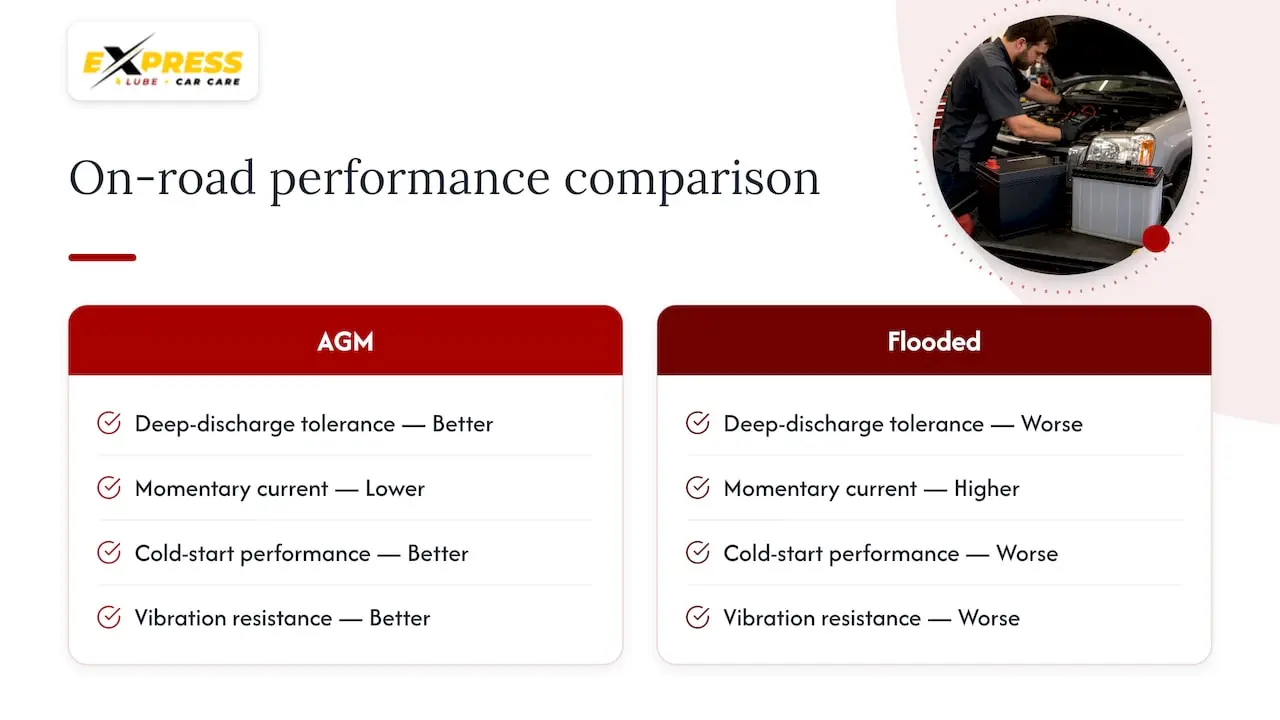
Cycle life depends heavily on how deep you discharge a battery and how thick its plates are. AGM batteries generally tolerate deeper, more frequent discharges without the capacity loss that flooded batteries experience under the same abuse, per the Power-Sonic comparison.
Reserve capacity, the ability to deliver steady current when the alternator isn’t charging, matters for accessories and emergency starts. Flooded batteries can handle higher momentary discharge rates in some cases, which is part of why they remain common for straightforward starter use, as noted in the same comparison.
Temperature swings affect both chemistries, but AGM holds up better in cold starts because its internal resistance is lower. Vibration is where AGM pulls ahead clearly: the compressed glass-mat construction resists plate damage on rough roads, off-road trails, and powersports applications far better than a flooded cell’s loose liquid electrolyte.
Charging and maintenance done right
Getting the charging voltage wrong is the fastest way to shorten either battery’s life. A multi-stage charger that moves through bulk, absorption, and float stages protects both chemistries, but AGM is more sensitive to overcharge and heat, according to EERE’s battery guidance for solar systems.
- Flooded batteries: check electrolyte levels every few months and top off with distilled water, never tap water.
- Flooded batteries: schedule an equalizing charge periodically if the manufacturer recommends it, to even out cell voltage.
- AGM batteries: use a charger with a dedicated AGM setting, and avoid sustained overcharging or excessive heat near the battery.
- Both types: if your vehicle’s dash shows slow cranking or dimming lights, have the charging system tested rather than guessing.
Pro Tip: If you’re replacing a charger or jump box, confirm it has an AGM-compatible setting before you use it on a sealed battery.
Safety, storage, and disposal
Flooded batteries release hydrogen during charging, and that gas becomes explosive at roughly 4% concentration in air, per the DOE primer, so they need ventilated storage and charging areas. AGM batteries vent far less gas thanks to internal recombination, making them safer for sealed compartments. Both types are recyclable through standard battery recycling programs, and most auto parts retailers accept old batteries for proper disposal.
Cost versus lifespan over time
AGM batteries typically cost more than flooded batteries of similar size, largely because of the sealed construction and glass-mat materials. That gap narrows when you factor in maintenance: a flooded battery that isn’t watered or equalized on schedule can fail early, while a well-matched AGM often lasts through more deep-discharge cycles without intervention. Expect either type to last several years in normal use when the charging system is healthy and maintenance, if required, is kept up. For a deeper look at what shortens battery life, see our guide on how long car batteries last.
Which battery fits your vehicle or application
The right choice depends on how you use your vehicle, not just the price tag.
- Standard SLI starter use (sedans, trucks): a flooded battery usually covers the job at a lower cost if you’re willing to check it occasionally.
- Start-stop vehicles and vehicles with heavy electronics: AGM handles the frequent cycling and parasitic draw better.
- Powersports, marine, and off-road vehicles: AGM’s vibration resistance makes it the safer long-term pick.
- RV house batteries and solar setups: a purpose-built deep-cycle battery, not a standard automotive flooded or AGM starter battery, is the correct choice for repeated deep discharges, as outlined in EERE’s solar battery guidance.
- Unsure which your vehicle needs? An ASE diagnostic can match the battery spec to your electrical load before you buy.
How to tell which battery you have, and jump-start rules
- Check the battery case label: flooded batteries usually have removable vent caps, while AGM cases are fully sealed.
- If you can lift a cap and see liquid, it’s flooded; if there’s no cap at all, it’s almost certainly AGM.
- Both types can be jump-started safely using standard jumper cables and the usual polarity precautions.
- If the battery won’t hold a charge after jump-starting, have the charging system tested rather than repeating the jump. See our rundown of signs of a bad car battery for more clues.
A maintenance checklist that extends battery life
A few consistent habits make a real difference for either chemistry.
- Clean terminals and check cable torque every few months to prevent corrosion-related voltage drop.
- Match your charger’s settings to your battery type, especially for AGM.
- Store vehicles that sit for weeks in a cool, dry spot, and consider a maintainer during winter.
- Review our car battery maintenance tips for a seasonal schedule.
Pro Tip: If a battery won’t hold a charge after a full recharge cycle, it’s usually time to replace it rather than keep topping it off.
For terminal corrosion, a non-acid cleaner is gentler on surrounding metal and coatings than an acid-based product, a distinction detailed in this guide to acid versus non-acid cleaners.
What our ASE technicians check before recommending a battery
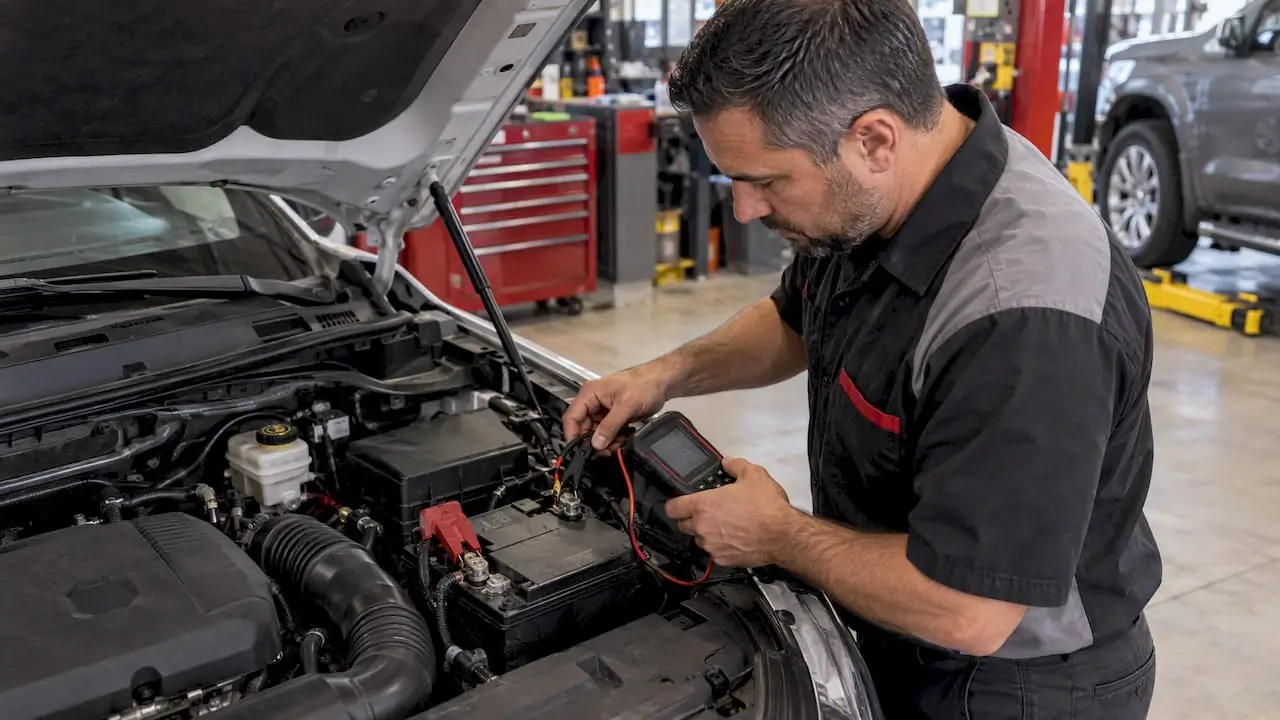
Technicians typically run a voltage test, a load test, alternator output check, and a parasitic draw test before recommending replacement, using digital inspections to show the readings. Qualifying repairs may come with a warranty. If you’re unsure about your battery’s condition, same-day diagnostics are often available locally. For a closer look at how these tests work, see our guide to battery, alternator, or starter problems.
What technicians see most often
The most common mistake we see is the wrong battery type installed for the vehicle’s actual duty cycle, or a charging problem ignored until the battery takes the blame. A quick shop test usually settles it faster than guesswork.
— Express Lube & Car Care
Getting the right battery installed in Richland Hills
Picking between AGM and flooded is only half the job: the other half is confirming your charging system can support whichever battery you choose. Our battery, alternator, and starter service pairs with full ASE diagnostics and digital inspections, so you see the actual voltage and load readings before we recommend anything.
Battery replacements and repairs may come with a warranty, and both walk-ins and scheduled appointments are often accepted. Visit our services page to see the full range of battery and electrical work we handle, or call us at (817) 284-8478 to get a same-day diagnostic scheduled.
FAQ
What are the disadvantages of AGM batteries?
AGM batteries cost more upfront than flooded batteries and are more sensitive to overcharging and excessive heat. They also can’t be topped off with water, so a damaged or dried-out AGM typically needs full replacement rather than repair.
Which battery is better, AGM or flooded?
Neither is universally better: flooded batteries cost less and suit standard starter use if you’re willing to check electrolyte levels, while AGM costs more but handles vibration, deep cycling, and sealed installs better, according to Power-Sonic’s comparison. The right pick depends on your vehicle’s electrical demands and how it’s driven.
How to tell if you have a flooded battery or AGM?
Check the case: flooded batteries usually have removable vent caps you can open to see liquid electrolyte, while AGM cases are fully sealed with no caps. The battery label often states the type directly as well.
Is it okay to jump start an AGM battery?
Yes, AGM batteries can be jump-started the same way as flooded batteries, using standard jumper cables and correct polarity. If the battery won’t hold a charge afterward, have the charging system tested rather than jump-starting it repeatedly.
Sources
- DOE primer on lead-acid storage batteries (DOE-HDBK-1084-95)
- Battery power for your residential solar electric system (EERE fact sheet)
- Flooded batteries vs. AGM batteries: Understanding the differences (Power-Sonic)