

Before you break out the tools for a battery swap, you first need to be sure the battery is actually the problem. Telltale signs like a slow, sluggish engine crank, dimming headlights, or that dreaded clicking sound when you turn the key are classic clues. These symptoms are your car’s way of telling you the battery is failing and needs attention before it leaves you stranded.
Recognizing the Signs of a Dying Car Battery
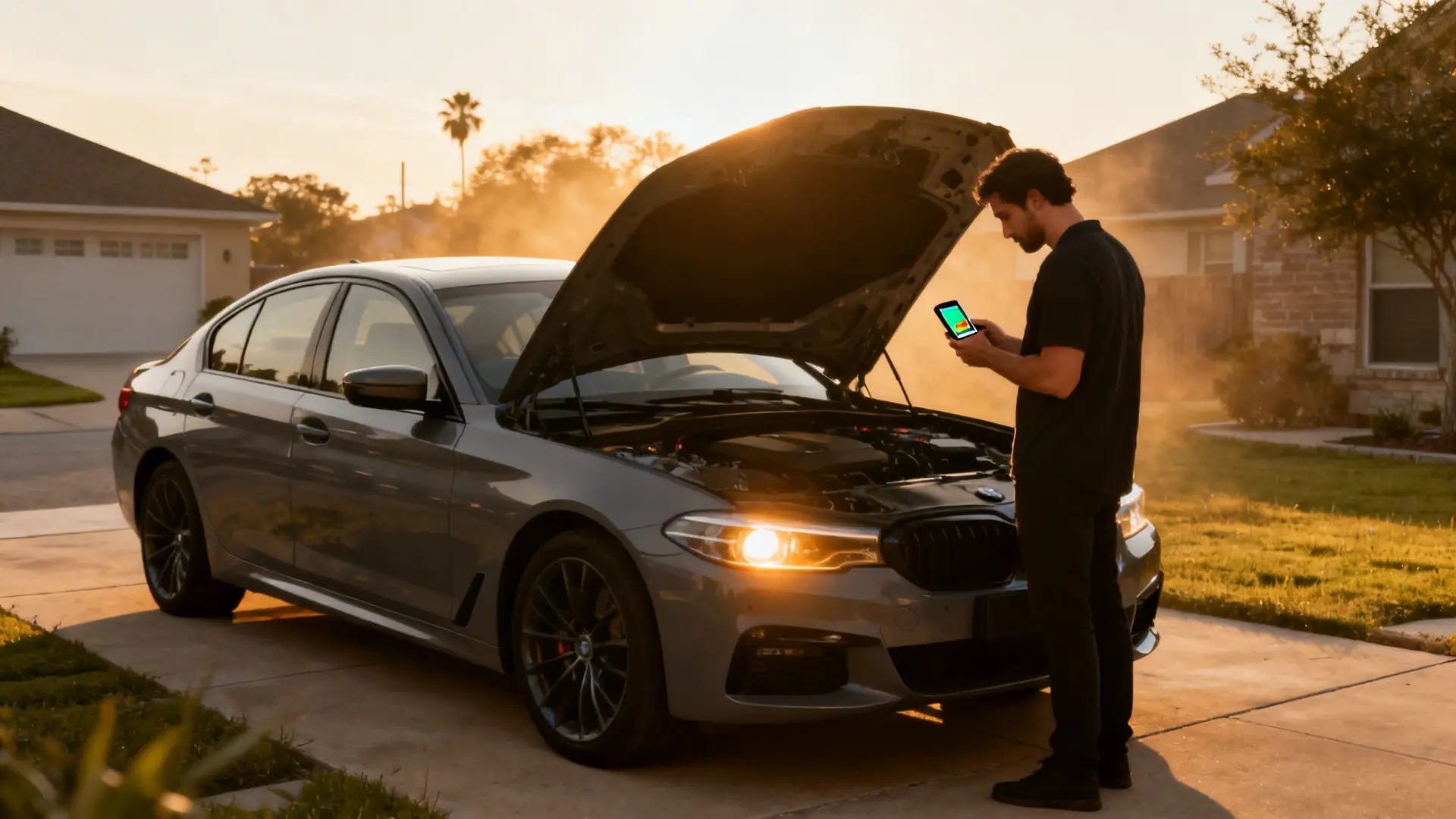
Your car’s battery is the workhorse of your electrical system, but it doesn't last forever. Learning to spot the early warning signs is the best way to dodge a surprise breakdown. The clues often start small and can easily be mistaken for something else.
The most common sign? A slow engine crank. When you turn the key, listen closely. Does the engine sound lazy or like it's struggling to turn over? A healthy battery gives you a strong, crisp start, while a weak one will sound tired, especially on a chilly morning.
Electrical Gremlins and Odd Behavior
Beyond a sluggish start, keep an eye on your car's electronics. A dying battery can’t supply steady power, which often leads to some strange behavior from your accessories.
Look out for these common electrical clues:
- Dimming Lights: Your headlights or interior lights might dim when you start the car or run the A/C. This is a telltale sign the battery is straining under the load.
- Warning Lights: That little battery-shaped light on your dash is a direct warning that the charging system needs a look.
- Erratic Accessories: If your radio keeps resetting its presets or your power windows move slower than usual, it’s often due to low voltage from a failing battery.
A dead battery is more than just an inconvenience; it’s a leading cause of breakdowns. According to AAA, battery failure is behind 38% of all roadside assistance calls. For drivers here in Richland Hills, the brutal Texas heat can slash a battery's lifespan by 20-30%, meaning we often face this issue more frequently.
That rapid clicking sound you hear when turning the key is a dead giveaway. It’s the starter solenoid trying to engage, but there isn't enough juice in the battery to actually crank the engine.
Other Telltale Signs
Sometimes the problem isn't just electrical—it's physical. A quick visual inspection can tell you a lot. Pop the hood and look for a swollen or bloated battery case, which is a clear sign of internal damage from heat. Also, check the terminals for a crusty, white or blueish powder. This corrosion can block the flow of electricity.
If you think a parasitic drain is killing your battery while it sits, our guide on what causes a car battery to drain overnight can help you track down the source. For a more modern approach, advanced tools for vehicle health monitoring can give you real-time data on your battery’s condition, helping you catch problems before they start.
Choosing the Right Battery and Gathering Your Tools
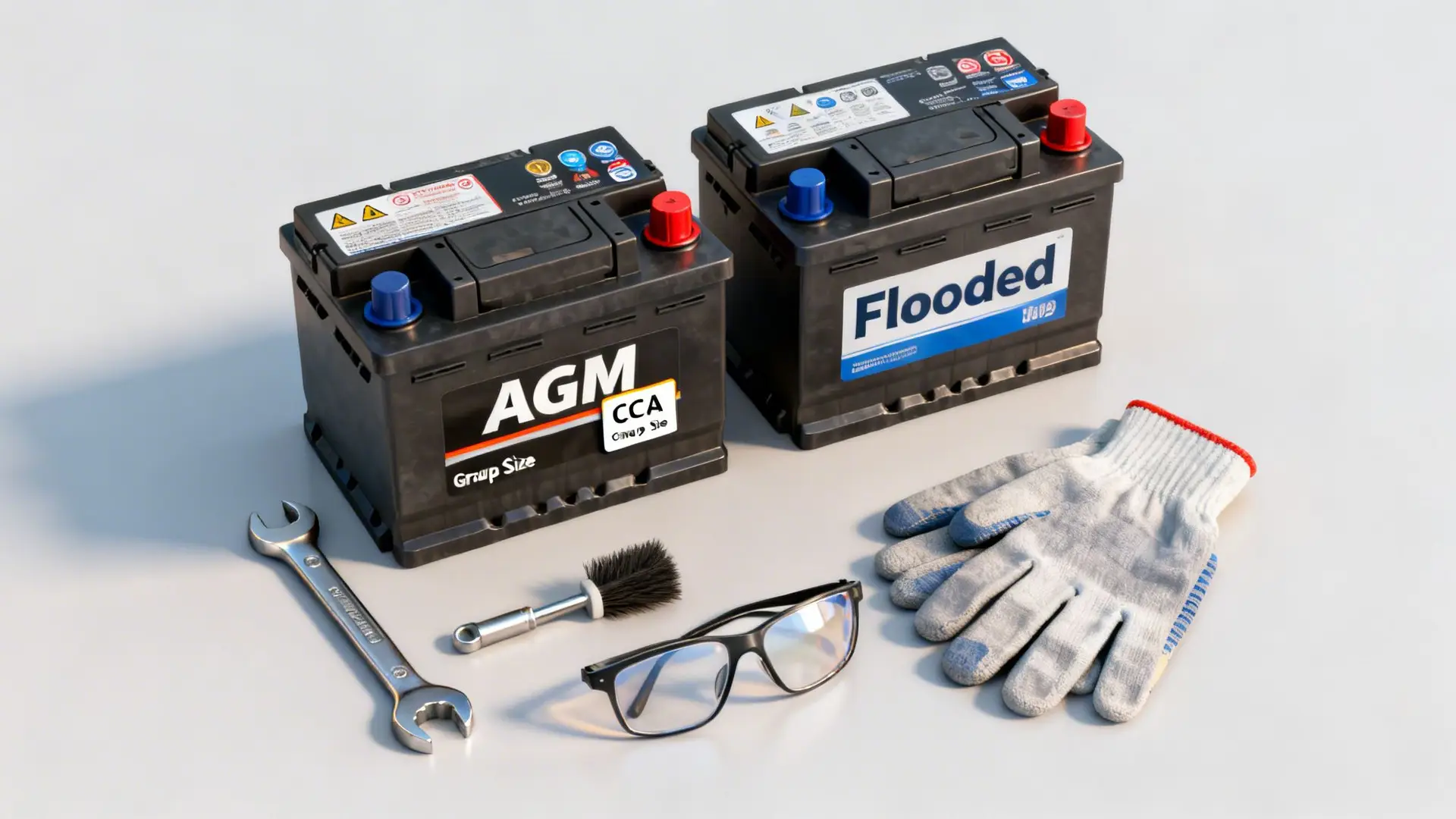
Before you even pop the hood, the most important part of this job happens at the auto parts store. Walking in and seeing a wall of batteries can be intimidating, but picking the right one is simpler than it looks once you know what to look for.
The first thing to get right is the battery group size. This isn't just a suggestion—it’s a specific code (like "Group 24F" or "Group H6") that dictates the battery's exact physical dimensions and where the positive and negative terminals are located. Your owner’s manual will tell you the right size. Grabbing the wrong one means it either won’t fit in the tray or, worse, the terminals could be reversed, risking serious damage to your car's electronics.
Making Sense of the Specs
Once you’ve got the group size, you'll see a few other important numbers on the label. These ratings directly impact how your car performs, especially when you need it most.
Cold Cranking Amps (CCA): This is all about starting power in the cold. It measures how much juice the battery can deliver at 0°F. Always meet or slightly exceed your car manufacturer’s minimum CCA rating. A little extra CCA is cheap insurance for those surprise freezes we sometimes get in Richland Hills.
Reserve Capacity (RC): Think of this as your safety net. It’s the number of minutes your battery can power essential systems (like your lights and ignition) if your alternator suddenly dies. A higher RC gives you more time to pull over safely.
Choosing the right battery also means understanding what's inside. For a deeper dive, it's worth learning the real difference in lithium vs regular batteries and how they function.
We've put together a quick table to help you compare the most common battery types you'll encounter.
Choosing Your New Car Battery
A comparison of common car battery types to help you select the best fit for your vehicle and driving needs.
| Battery Type | Best For | Key Feature | Average Lifespan |
|---|---|---|---|
| Flooded Lead-Acid | Older vehicles with basic electronics | Most affordable and widely available | 3-5 years |
| Absorbent Glass Mat (AGM) | Modern cars with start-stop tech and electronics | Better deep-cycle resistance and vibration-proof | 4-6 years |
| Enhanced Flooded (EFB) | Entry-level start-stop vehicles | A durable step-up from standard flooded batteries | 3-5 years |
For most newer vehicles loaded with screens, sensors, and start-stop features, an Absorbent Glass Mat (AGM) battery is the way to go. They’re built to handle the constant power cycling and are much more resilient than a standard flooded battery. Knowing how long a car battery should last can also help you decide if it's time for an upgrade.
Gathering Your Gear
With the new battery picked out, it's time to round up your tools. You don't need a professional-grade setup, but having these few items will make the job go smoothly and, more importantly, safely.
Here's your must-have list:
- Socket wrench set or combination wrenches: You'll likely need 10mm, 12mm, or 13mm sockets to handle the terminal clamps and the hold-down bracket.
- Battery terminal cleaner: This little wire brush is perfect for scrubbing away any white or blueish corrosion, ensuring a clean, solid connection for your new battery.
- Anti-corrosion spray or felt washers: A small, cheap investment to prevent future corrosion from building up on the new terminals.
- Safety glasses and gloves: This is non-negotiable. You're working with corrosive acid and the potential for sparks. Protect your hands and eyes.
How to Safely Remove the Old Battery
Alright, this is where you need to pay close attention. With your tools laid out and the new battery waiting, it’s time to get the old one out. The steps are simple, but the order you do them in is everything. Getting it wrong can create dangerous sparks and even damage your car's electronics.
Before you touch a single wrench, make sure the engine is completely off and the keys are nowhere near the ignition. This is also the point where you put on your safety glasses and gloves. You're working with electricity and potentially corrosive acid, so protecting your eyes and hands is a must.
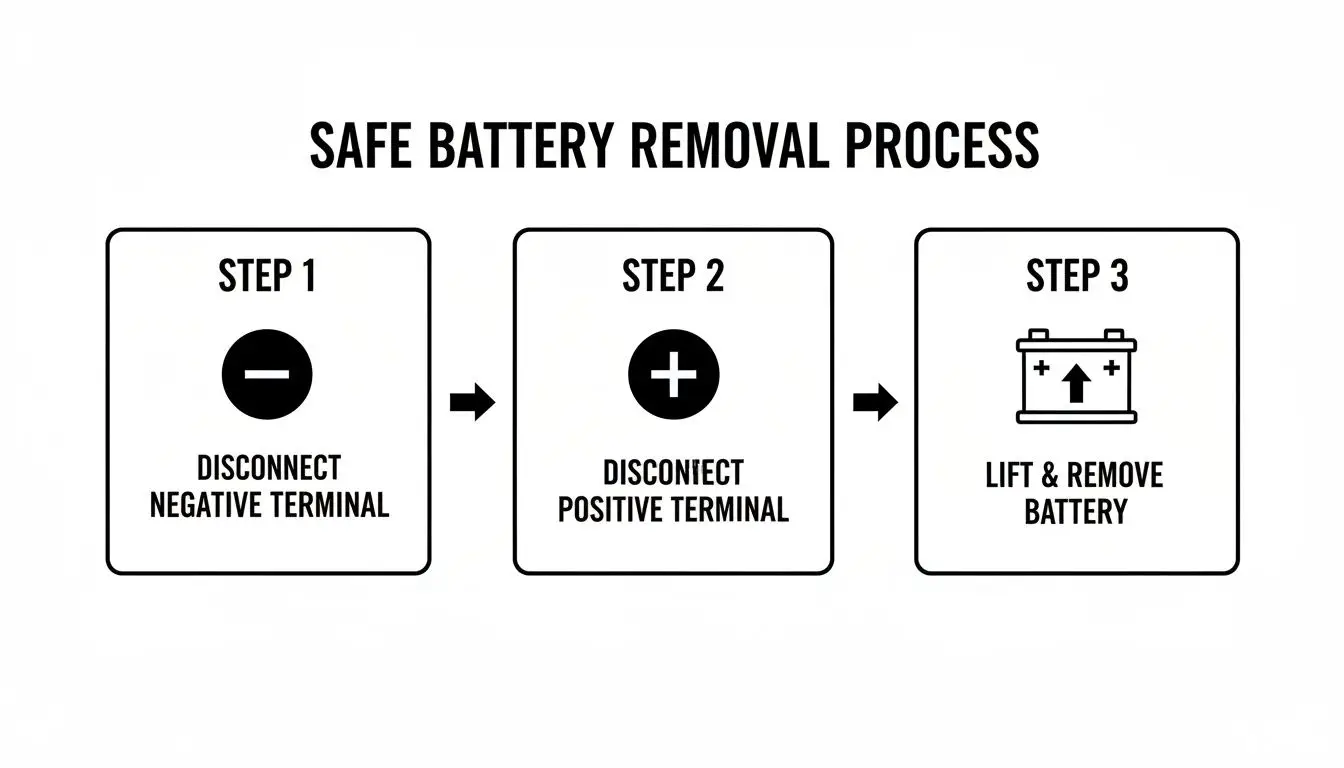
Disconnect the Negative Terminal First. Always.
This is the most important rule of the entire job: always disconnect the negative terminal first.
The negative terminal is almost always black and will have a minus sign (–) stamped nearby. The positive is typically red with a plus sign (+).
So, why does the order matter so much? Your car's metal frame is the "ground" for the whole electrical system. If you try to loosen the positive terminal first and your metal wrench accidentally bumps against any part of the engine or frame, you’ve just created a direct short circuit. That means big sparks, fried computer modules, and a very bad day.
When you disconnect the negative cable first, you break the entire circuit. After that, you can work on the positive side without worry. Even if your tool touches the frame, nothing will happen because the electrical loop is already open.
A single spark from a slipped wrench can do more than just startle you—it can cause serious damage to sensitive electronics. Following the negative-then-positive rule is the best way to prevent a costly mistake.
Dealing with Stuck Terminals and Brackets
Grab your socket wrench—it's often a 10mm socket you'll need—and loosen the nut on the negative cable clamp. You don't have to take the nut all the way off, just get it loose enough to wiggle the cable off the battery post.
If the clamp is stuck on with corrosion, don’t try to pry it off with a screwdriver. You could easily damage the terminal post or the cable itself. A cheap battery terminal puller tool is the right way to do it, or you can gently twist the clamp back and forth until it breaks free. A lot of buildup can be a real pain; our guide on how to prevent car battery corrosion can help you avoid this problem in the future.
Once the negative cable is off, tuck it safely to the side where it can't accidentally touch the battery post again. Now you can repeat the exact same process for the positive terminal.
With both cables disconnected, the last thing holding the battery in place is the hold-down bracket. This might be a small block at the base of the battery or a strap that goes over the top. Use your socket wrench to remove the bolt, set the bracket aside, and lift the old battery straight up and out of its tray. Just be ready for the weight—most car batteries weigh between 30 and 50 pounds.
Installing Your New Battery and Making Final Checks
With the old battery safely removed, you're in the home stretch. But don't just drop the new one in and call it a day. A few minutes of prep work right now can make a huge difference in how well your new battery performs and how long it lasts.
First, take a look at the battery tray. It’s probably caked with dirt, leaves, and maybe even some crusty residue from the old battery. That gunk can trap moisture and accelerate corrosion, so give it a good cleaning with a shop towel. A simple mix of baking soda and water is perfect for neutralizing any old acid. While you're at it, hit the cable terminals with your wire brush until they’re shiny. You want a clean, bright metal-on-metal connection for solid power flow.
The Right Way to Connect
Now you can carefully set the new battery onto the clean tray, making sure it sits flat and the terminals are on the correct side. Fasten the hold-down bracket you removed earlier, tightening it just until the battery is secure and doesn't wiggle. Be careful not to crank down on it too hard, as you can easily crack the battery's plastic case.
When it's time to hook up the cables, the connection order is critical for safety and is the exact opposite of how you removed them.
- First, connect the POSITIVE (+) cable. This is the red one. Slide the clamp onto the post and tighten it down with your wrench.
- Second, connect the NEGATIVE (-) cable. This is the black one. Attach it and tighten it securely to complete the circuit.
This "positive-first" rule is a big deal. Because the negative cable isn't connected to anything yet, the car's electrical circuit is still open. If your metal wrench happens to touch the car's frame while you're tightening the positive terminal, no sparks will fly. Once that's secure, connecting the negative ground cable is the final, safe step.
This graphic shows the removal process, which you'll simply reverse for installation—always starting with the positive terminal.
Pro Tip: When tightening the terminal clamps, go for a "snug" fit. You shouldn't be able to twist or wiggle the connector on the post by hand. If you overtighten, you can damage the soft lead posts on your brand-new battery and cause connection problems.
Final Checks and First Start
With the terminals tight, give them a quick spray of anti-corrosion protector or pop on some felt anti-corrosion washers. This little step is your best defense against the fuzzy blue and white buildup that causes starting issues down the road.
Battery replacement is a common job for a reason. In 2024 alone, automotive lead battery shipments in North America are expected to hit 159 million units. For those of us in Richland Hills, TX, the brutal summer heat can slash a battery's lifespan by up to 50%, making this a familiar task. This is also why many drivers are switching to more durable AGM batteries, which you can learn more about from the Battery Council International.
Alright, moment of truth. Get in, turn the key, and start your engine. You should hear a strong, confident crank and an immediate startup. Let the car idle for a few minutes. This gives the alternator a chance to top off the new battery and lets the car's computer system recalibrate itself.
Before you go for a drive, quickly test your headlights, radio, and interior lights. If everything works as it should, close the hood. You're good to go
When to Skip DIY and See a Professional
There's a lot of pride in doing your own car work, but replacing a modern battery isn't always the simple swap it used to be. Sometimes, knowing when to put the tools down is the smartest call you can make—saving you from a massive headache and potentially expensive electrical damage.
A huge red flag is battery location. If you pop the hood and don't see the battery right away, the job just got ten times harder. Many newer cars have batteries hidden in the trunk, under a rear seat, or even tucked away in a front wheel well. Getting to them often means removing other parts first.
Complex Electrical Systems and Resets
Beyond tricky locations, the real issue is your car's computer system. On most modern vehicles, you can't just disconnect the power without causing problems. The onboard computer often needs to be "re-registered" to even recognize that a new battery has been installed.
If you skip this critical step, you can run into some serious trouble:
- Improper Charging: The car’s smart charging system might overcharge or undercharge the new battery, dramatically shortening its lifespan.
- Lost Settings: It's not just about your radio presets. The car can "forget" important learned data for the engine, transmission, and even climate control systems.
- Warning Lights: A new battery that isn't properly registered can trigger a whole host of persistent warning lights on your dash.
This is where leaving it to a trusted shop gives you real peace of mind. For drivers in Richland Hills, a quick trip to Express Lube & Car Care is the easiest solution.
Our ASE-certified technicians have the right diagnostic tools to ensure your new battery is properly registered with your car's computer. This crucial step protects your vehicle's complex electrical systems and prevents bigger problems down the road.
At Express Lube & Car Care, we take care of the entire process. We'll preserve your car's memory settings, install the exact right battery for your make and model, and handle the safe, eco-friendly recycling of your old one.
Best of all, there’s no appointment needed. Just swing by, and we’ll get you back on the road safely and quickly. We often have local coupons to make the service even more affordable, giving you a fast, reliable way to know the job was done right.
Frequently Asked Questions About Car Battery Replacement
So you've swapped out the battery, but a few questions might still be nagging you. From costs to weird electrical glitches, getting straight answers is key to knowing the job was done right—or deciding it’s time to call in a pro.
Here’s a rundown of the common things people ask after tackling a battery replacement.
How Much Does It Cost to Replace a Car Battery?
The price really depends on what you drive. For an older, simpler vehicle, a standard battery might only set you back $100 to $200.
However, most modern cars are packed with electronics and start-stop features that demand a premium AGM (Absorbent Glass Mat) battery. These are more robust and typically cost anywhere from $200 to over $350. If you have a shop do the work, remember to account for installation. At Express Lube & Car Care, we give you clear, upfront pricing for everything, and you can usually find local coupons on our site to make it even more affordable.
Will I Lose My Radio Presets if I Replace the Battery?
More than likely, yes. When the old battery comes out, your car loses power to its electronic memory. That means your radio stations, clock, and sometimes even your power seat settings will get wiped.
Pro Tip: You can avoid this hassle with a "memory saver." It's a small tool that plugs into your car's OBD-II port or cigarette lighter, providing just enough power to keep your settings intact while you work. Our techs use them every time we do a battery replacement to make sure you don't have to reprogram everything.
How Do I Dispose of My Old Car Battery?
This is a big one for safety and the environment. You can never just throw an old car battery in your regular trash. They’re full of lead and corrosive acid, making them hazardous waste.
Luckily, recycling them is simple. By law, any place that sells car batteries—including auto parts stores and shops like Express Lube & Car Care—has to accept your old one for recycling. Many will even give you a small credit or refund for the "core charge" when you bring it in.
My Car Still Won't Start With a New Battery. What's Wrong?
This is definitely frustrating, but it’s also a huge clue. If a brand-new, fully charged battery didn't solve the problem, the battery wasn't the real issue. The culprit is almost always somewhere else in the starting and charging system.
Here’s what to look for:
- A Bad Alternator: The alternator’s job is to recharge the battery as you drive. If it’s failed, it won't be long before your new battery is just as dead as the old one.
- Corroded or Loose Cables: A new battery can't do its job if the power can't get through dirty or loose terminal connections.
- A Faulty Starter: The starter is the motor that actually turns the engine over. If it’s burned out, all the battery power in the world won't get you started.
- A Parasitic Drain: This is when something in the car keeps drawing power after it's been turned off, slowly draining the battery overnight.
If you’ve hit this wall, it's time for a professional diagnosis. Our technicians have the tools to run a full system test and find the real problem fast.
Not feeling 100% confident, or just want the peace of mind that comes with professional service? Let our ASE-certified technicians at Express Lube & Car Care take care of it. We offer service with no appointment needed, handle the eco-friendly disposal, and guarantee every connection is perfect. Stop by our shop in Richland Hills or find the location nearest you at https://www.expressluberichlandhills.com for quick, reliable help.