

ABS prevents your wheels from locking up during hard braking by rapidly modulating brake pressure, keeping your tires at the edge of grip so you can still steer. If ABS activates, press the brake pedal firmly and hold it there, steer around whatever is in your path, and do not pump the pedal. That last point matters more than most drivers realize: pumping the pedal actually overrides the system and reduces its effectiveness, according to NHTSA driver guidance. Picture a car stopped suddenly in your lane on the highway. Without ABS, your wheels lock, you skid straight into it. With ABS, you can brake hard and still steer around it.
Table of Contents
- The four main ABS components and what each one does
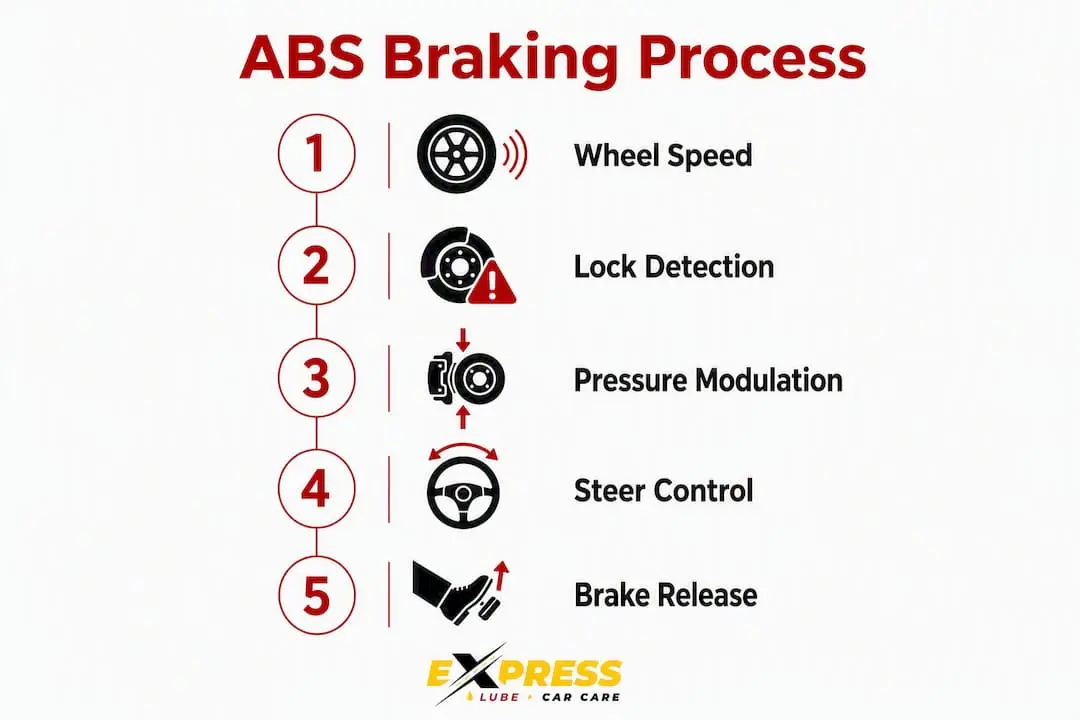
- How ABS detects wheel lock and modulates pressure in real time
- ABS system types: what channels and sensors actually mean
- When ABS helps — and when it can actually increase stopping distance
- ABS warning light, common faults, and what to do next
- Exactly what to do when ABS activates
- Can you turn ABS off? What most drivers need to know
- ASE technician tips for ABS maintenance and diagnostics
- Key Takeaways
- What we actually see when ABS faults come through the shop
- ABS service and diagnostics at Express Lube & Car Care
- Useful sources for further reading
- FAQ
The four main ABS components and what each one does
Understanding the hardware makes everything else click. Geotab’s ABS glossary identifies four core parts that work together to detect wheel slip and modulate brake pressure:
- Wheel speed sensors: Mounted at each wheel hub, these sensors monitor how fast each wheel is spinning. The moment one wheel starts decelerating faster than the others, the sensor flags it.
- ABS controller (ECU/modulator): The brain of the system. It reads sensor data dozens of times per second and decides when to cut, hold, or restore brake pressure to each wheel.
- Hydraulic valves: Positioned in the brake lines, these solenoid-operated valves open and close on the controller’s command to reduce or maintain pressure at each wheel.
- Electro-hydraulic pump: When the valves release pressure to prevent a lockup, this pump restores pressure to the brakes so stopping force is not lost entirely.
These four parts sit on top of your standard braking hardware — the master cylinder, brake lines, calipers, and rotors. ABS does not replace any of that; it adds a control layer between the pedal and the calipers. ABS also shares its wheel speed sensors with related safety systems. Electronic stability control (ESC) and traction control both rely on the same sensor network, which is why a single faulty wheel speed sensor can trigger warning lights for multiple systems at once.
When a component fails, you usually know it. A damaged sensor or a failed pump typically triggers the amber ABS warning light on your dashboard. You might also notice a change in pedal feel during normal braking, though that is less common. A labelled diagram of the hydraulic circuit, showing the master cylinder, modulator block, and individual wheel circuits, is the clearest way to visualize how pressure flows and where each component sits — your vehicle’s owner’s manual usually includes one specific to your model.
How ABS detects wheel lock and modulates pressure in real time
The sequence happens fast, far faster than any driver could replicate manually.

| Stage | What happens | Driver perception |
|---|---|---|
| 1. Detection | Wheel speed sensor signals rapid deceleration | None yet |
| 2. Valve closes | Controller shuts the hydraulic valve; pressure holds | Pedal firms up slightly |
| 3. Pressure release | Valve opens briefly; pressure drops to prevent lockup | Pedal pulses |
| 4. Pump restores | Electro-hydraulic pump rebuilds pressure | Rhythmic tapping noise |
| 5. Re-apply | Valve closes again; pressure rises toward braking force | Cycle repeats |
That cycle repeats continuously until either the hazard is avoided or the vehicle slows to roughly 2.5 mph (about 4 km/h), at which point Bosch’s ABS system disengages automatically so the car can roll to a natural stop without the system fighting itself.
The speed of modulation is what separates ABS from a driver’s best effort. Modern ABS systems can modulate brake pressure up to several tens of times per second, compared to a lower rate in earlier systems. No human can pump a brake pedal anywhere close to that rate.
The pulsing you feel in the pedal and the tapping noise you hear are both normal. They come from the solenoid valves opening and closing rapidly. Do not lift your foot when this happens — that is the system doing exactly what it was designed to do.
Modern ABS algorithms aim to keep each tire at the peak of its friction curve, the point where it generates maximum grip without sliding. Bosch’s engineering guidance describes this as keeping tires at the “limit of adhesion,” which delivers consistent braking force while preserving steering control.
ABS system types: what channels and sensors actually mean
“Channels” refers to how many independent brake circuits the ABS controller can modulate separately. “Sensors” refers to how many wheels have individual speed sensors feeding data to the controller. More channels and sensors generally means finer, per-wheel control.
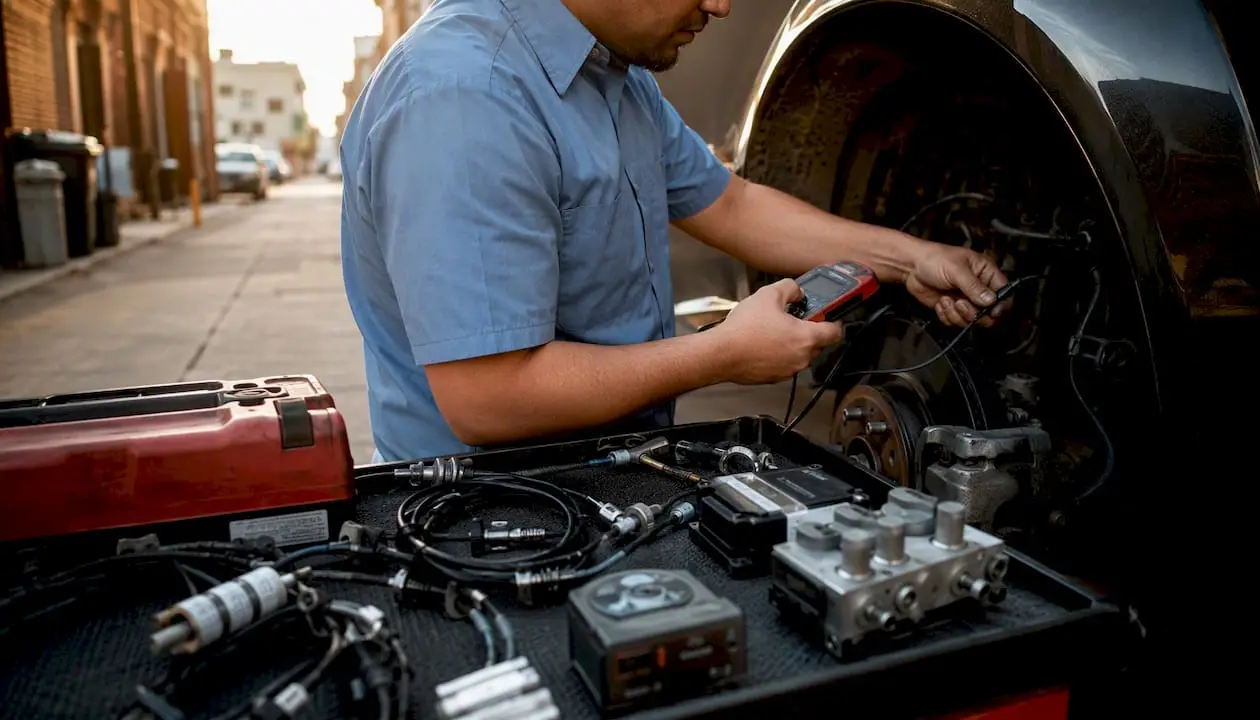
| System type | Channels | Sensors | How it controls braking |
|---|---|---|---|
| Single-channel | 1 | 1 | Controls rear axle only; common on older light trucks |
| Three-channel | 3 | 3 | Two front wheels independent, rear axle shared |
| Four-channel / four-sensor | 4 | 4 | Each wheel controlled independently |
Wikipedia’s ABS entry notes that four-channel, four-sensor systems provide the best independent wheel control because the controller can respond to each wheel’s specific traction conditions rather than averaging across an axle. On a road where one front wheel is on dry pavement and the other is on ice, a four-channel system handles them separately. A single-channel rear system cannot.
The practical implication for repair costs: more sensors mean more components that can fail, and replacement sensors for four-channel systems cost more than a single rear sensor. That said, the safety benefit of per-wheel control on mixed-traction surfaces is substantial, and four-channel systems are standard on many passenger cars sold in the United States today.
When ABS helps — and when it can actually increase stopping distance
ABS’s primary job is to preserve your ability to steer during hard braking, not to guarantee the shortest possible stopping distance on every surface. NHTSA’s ABS guidance makes this distinction clearly, and it is one the average driver misunderstands.
On dry or wet pavement, ABS typically reduces stopping distance while maintaining steerability. The tires stay near peak grip, and the car stops efficiently. On loose surfaces, the story changes.
On loose gravel, deep snow, or sand, ABS can actually increase stopping distance. NHTSA explains that a locked wheel on loose material creates a wedge effect — the tire digs in and piles material in front of it, which adds stopping resistance. ABS prevents that wedge from forming, so the car may take longer to stop on those surfaces.
Here is a quick surface-by-surface breakdown:
- Dry pavement: ABS reduces stopping distance and maintains steer control. Best-case scenario for the system.
- Wet pavement: ABS prevents hydroplaning-related lockup and keeps steer control. Generally shorter stopping distance than locked wheels.
- Loose gravel: ABS may increase stopping distance. Steerability is preserved, but the wedge effect is lost.
- Deep snow or ice: Similar to gravel. Stopping distance can be longer with ABS, though you retain the ability to steer around obstacles.
The takeaway: ABS is not a substitute for appropriate following distance or winter tires. On loose surfaces, leave extra room and drive accordingly.
ABS warning light, common faults, and what to do next
When the amber ABS warning light comes on, the anti-lock feature is disabled, but your standard brakes still work. You can stop the car normally. What you have lost is the modulation layer that prevents lockup during hard braking.
Common causes for ABS faults, roughly in order of frequency:
- Damaged or dirty wheel speed sensor: Road debris, corrosion, or a cracked sensor body interrupts the signal. This is the most common cause.
- Corroded or broken tone ring: The toothed ring the sensor reads can rust or crack, especially on high-mileage vehicles. See high-mileage vehicle servicing for more on this.
- Wiring or connector damage: Chafed wires or corroded connectors between the sensor and the ABS module cause intermittent or permanent faults.
- Low brake fluid: Some ABS modules monitor fluid level and will flag a warning if pressure drops below a threshold.
- Failed hydraulic modulator or pump: Less common but more expensive. Usually presents alongside a noticeable change in brake pedal feel.
What to do when the ABS light comes on:
- Check your brake fluid level first. If it is low, top it off and monitor for leaks.
- Drive cautiously. Increase your following distance and avoid situations that would require emergency braking.
- Avoid driving in conditions where hard braking is likely — wet roads, heavy traffic, or mountain driving.
- Book a diagnostic with a certified shop as soon as practical. An ABS fault code scan takes about 30 minutes and pinpoints the cause.
- Do not ignore the light for weeks. A disabled ABS system is a real safety reduction, even if normal braking still works.
Exactly what to do when ABS activates
Most drivers panic the first time they feel the pedal pulse. That reaction is understandable, but it is also the wrong one. Here is what to do and what to avoid:
Do:
- Keep firm, steady pressure on the brake pedal. Let the system modulate for you.
- Steer around the obstacle. ABS exists specifically so you can do this.
- Keep both hands on the wheel with a relaxed but controlled grip.
- Stay focused on where you want the car to go, not on the obstacle itself.
Don’t:
- Pump the brake pedal. This overrides ABS and reduces stopping effectiveness.
- Release the pedal in surprise when you feel the pulsing. That is the system working.
- Overcorrect the steering. Smooth, deliberate inputs are more effective than jerky ones.
On loose gravel or snow, where ABS may extend stopping distance, increase your following distance before you need to brake. The system still preserves steerability, but giving yourself more room is the smarter adjustment. A car safety inspection checklist that includes tire condition and tread depth pairs well with ABS awareness, since tire grip is the foundation everything else depends on.
Can you turn ABS off? What most drivers need to know
For most drivers in most vehicles, the short answer is no. Production cars sold in the United States do not include a switch to fully disable ABS. The system is always active when the ignition is on.
Some performance-oriented vehicles offer driver modes that alter ABS behavior:
- Track mode or sport mode: On certain sports cars and performance SUVs, these modes reduce ABS intervention to allow more aggressive braking techniques. They are designed for experienced drivers on closed courses, not public roads.
- Off-road mode: Some trucks and SUVs include a mode that modifies ABS calibration for loose surfaces, allowing more wheel slip to take advantage of the wedge effect described earlier.
- Full disable: Rare, and typically found only on dedicated track vehicles or through aftermarket modification. Not recommended for street driving.
The recommendation for everyday drivers is straightforward: leave ABS enabled. If your ABS light is on and the system is already disabled by a fault, get it diagnosed and repaired rather than treating the fault as an acceptable workaround. A certified ASE technician can scan fault codes and identify whether the issue is a sensor, wiring, or a more involved hydraulic repair.
ASE technician tips for ABS maintenance and diagnostics
ABS components do not need separate scheduled maintenance the way brake pads or fluid do, but they benefit from attention during routine brake service. Here is what a thorough technician checks:
Pro Tip: Inspect wheel speed sensors and their wiring harnesses every time brake pads are replaced. The sensor sits right next to the rotor, and the heat and debris from worn pads can damage the sensor body or connector before any warning light appears.
Maintenance checklist:
- Inspect wheel speed sensors for physical damage, corrosion, and secure mounting.
- Check tone rings (reluctor rings) for rust, cracks, or missing teeth, especially on vehicles over 80,000 miles.
- Verify brake fluid condition and level. Contaminated or low fluid affects hydraulic modulator performance.
- Look for chafed or pinched wiring near the wheel wells, where harnesses flex with suspension movement.
- Check for uneven brake pad wear, which can indicate a sensor or caliper issue affecting braking balance.
What a shop diagnostic includes:
A technician will connect a scan tool to read ABS fault codes, then test individual wheel speed sensors with a digital multimeter or oscilloscope to verify signal quality. Tone ring condition is checked visually and by comparing sensor readings across all four wheels. The hydraulic modulator and pump are verified for correct operation. A full ABS diagnostic at a qualified shop typically takes 30–60 minutes, depending on what the codes point to.
Repairs range from a straightforward sensor swap (often under an hour of labor) to a hydraulic modulator replacement, which is more involved. Whatever the repair, a shop backed by a solid warranty gives you confidence the fix will hold. Your car maintenance checklist should include a brake system inspection at least once a year or every 12,000 miles, whichever comes first.
When to stop waiting and book a visit: if the ABS light is on, if you notice uneven braking, or if the pedal feels different than usual during normal stops, those are all reasons to get a diagnostic before the next long drive.
Key Takeaways
ABS preserves your ability to steer during hard braking by modulating pressure up to about 40 times per second, but on loose surfaces like gravel or deep snow it can increase stopping distance.
| Point | Details |
|---|---|
| ABS’s primary purpose | Maintains steerability during hard braking, not always a shorter stopping distance. |
| Correct driver response | Hold firm, steady pedal pressure and steer; never pump the pedal when ABS activates. |
| Loose-surface limitation | On gravel, deep snow, or sand, ABS may increase stopping distance by preventing the wheel-wedge effect. |
| Warning light action | ABS disabled but standard brakes still work; get a diagnostic soon and drive with extra caution. |
| Express Lube & Car Care | Offers ABS diagnostics, sensor replacement, and brake service backed by a 24-month/24,000-mile warranty. |
What we actually see when ABS faults come through the shop
Most drivers who come in with an ABS warning light are surprised by two things: how straightforward the diagnosis usually is, and how long they had been driving with the fault before noticing. At Express Lube & Car Care, our ASE-certified technicians run a full fault code scan first, then go hands-on with the sensors and wiring before recommending any parts. Nine times out of ten, the culprit is a corroded wheel speed sensor or a damaged tone ring, both of which are clean, defined repairs.
What I find worth saying plainly: ABS is one of those systems where the conventional wisdom gets it slightly wrong. Most drivers think ABS is about stopping faster. It is not. It is about stopping in a way that lets you still control where the car goes. That distinction changes how you should think about following distance, tire condition, and surface awareness. A car with perfectly functioning ABS and bald tires is still a dangerous car. The system can only work with the grip the tires provide.
Transparent pricing and a 24-month/24,000-mile warranty on workmanship mean you know what you are paying before we start and you are covered if something needs revisiting. That is the standard we hold ourselves to on every brake and ABS repair.
ABS service and diagnostics at Express Lube & Car Care
If your ABS warning light is on or your brakes feel off, Express Lube & Car Care in Richland Hills handles the full diagnostic and repair process, no appointment required for most visits.
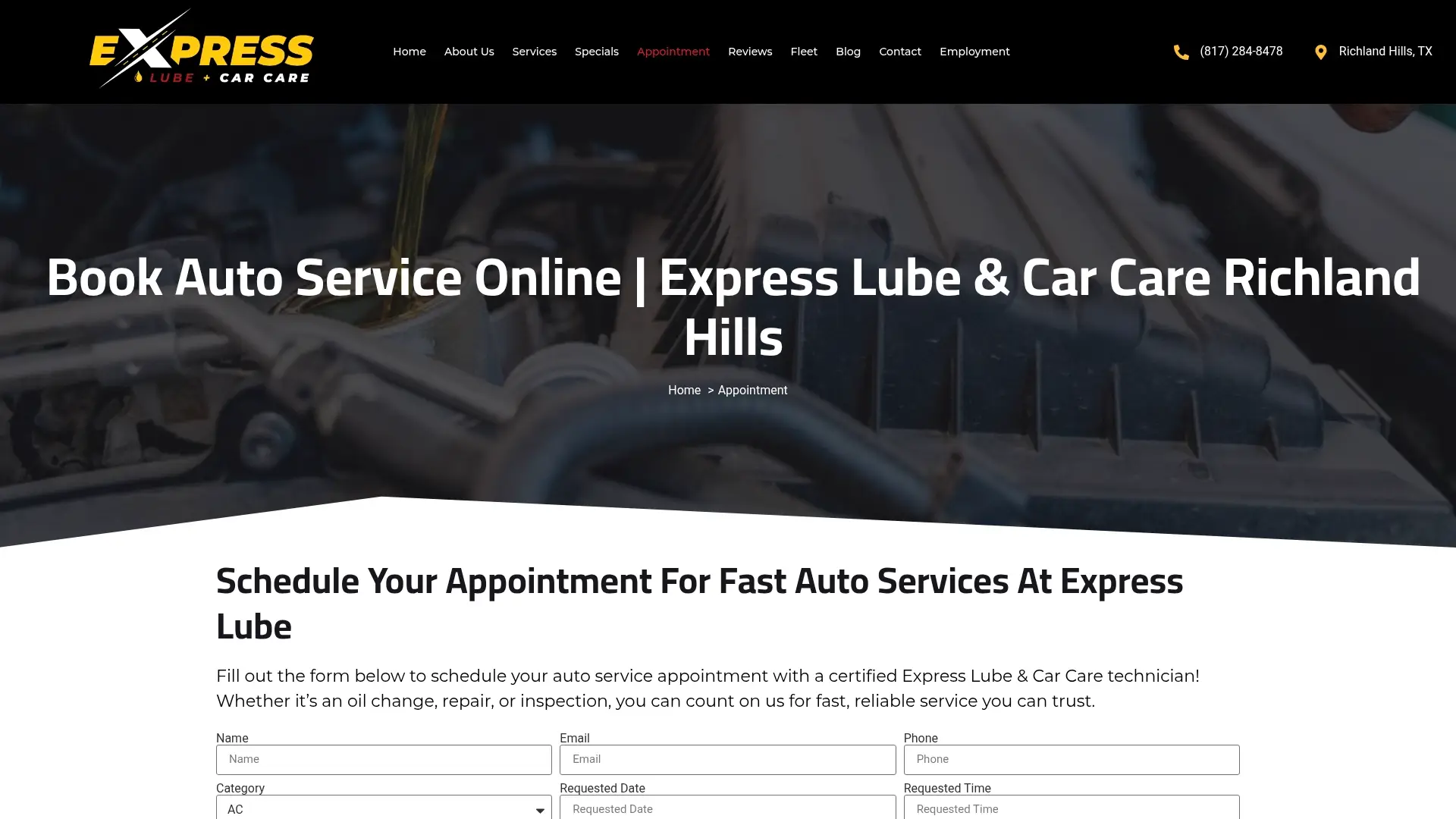
A typical ABS diagnostic visit includes a fault code scan, individual wheel speed sensor testing, tone ring inspection, wiring harness check, and a hydraulic modulator review. You get a written estimate before any work begins, and every repair is backed by our 24-month/24,000-mile warranty. For larger repairs, easy financing options are available so cost does not delay a safety fix. Our ASE-certified technicians bring the same diagnostic rigor to ABS work as they do to every other system in your vehicle. Walk in or book online to get your ABS system checked and your confidence back on the road.
Useful sources for further reading
These are the primary references behind this article. Each one is worth bookmarking if you want to go deeper on a specific aspect of ABS technology or safety research.
| Source | What it covers | Best for |
|---|---|---|
| NHTSA ABS guidance | Steerability-first purpose, driver behavior, surface limitations | Safety claims, driver action guidance |
| Bosch Mobility ABS | Modulation rates (40/sec), disengagement threshold, friction curve targeting | Technical operation details |
| Wikipedia: Anti-lock braking system | System types, channels/sensors, ESC/traction control integration | Background and system architecture |
| Geotab ABS glossary | Component definitions: sensors, ECU, valves, pump | Component identification |
| MIT 2.972 ABS report | Lucas-Girling system mechanics, disc brake operation | Engineering-level detail |
Your vehicle’s owner’s manual is also worth consulting for model-specific ABS behavior, including whether your car has a sport or off-road mode that alters ABS calibration.
FAQ
What are the disadvantages of ABS?
On loose surfaces like gravel, deep snow, or sand, ABS can increase stopping distance because it prevents the wheel-wedge effect that helps slow a vehicle on loose material. The system also adds complexity and repair cost compared to a standard brake setup.
How often does ABS kick in during normal driving?
Most drivers rarely trigger ABS under normal conditions. It activates only during hard braking that approaches wheel lockup, which typically happens in emergency stops or on slippery surfaces.
Can ABS be turned off?
Most production vehicles in the United States do not allow drivers to fully disable ABS. Some performance cars offer sport or track modes that reduce ABS intervention, but those are designed for controlled driving environments, not everyday roads.
Should you drive with ABS on or off?
Leave ABS enabled for all everyday driving. If a fault has disabled the system, your standard brakes still work, but increase your following distance and get a diagnostic at a certified shop as soon as you can.