

A musty car A/C smell almost always comes from moisture sitting on the evaporator, a clogged condensate drain, or a dirty cabin filter feeding bacteria and mold. Start by pulling the cabin filter and checking under the passenger side of the dashboard for a drip while the A/C runs. If the smell is sweet or fuel-like, or it doesn’t clear up after basic DIY steps, skip the home remedies and get it looked at professionally.
TL;DR:
- Replacing a dirty or moldy cabin air filter can significantly reduce or eliminate musty odors, often providing the highest return on investment.
- A clogged condensate drain causes excess moisture to pool inside the evaporator housing, creating an ideal environment for mold and bacteria growth.
- Using a specialized evaporator disinfectant spray into the intake, with the fan on high and windows down, can help eliminate biofilm buildup causing persistent odors.
- If water is not dripping outside when the A/C runs, the drain likely needs clearing, and a vacuum or foam cleaner can be used to remove debris safely.
- Persistent smells, water pooling inside the cabin, or weak airflow after DIY fixes indicate the need for professional diagnosis and cleaning.
Table of Contents
- Quick DIY Checklist for a Musty AC Smell
- What’s Actually Causing That Musty Smell?
- How to Clear a Clogged Drain and Deep-Clean the Evaporator
- When It’s Time to Call a Professional
- Keeping the Musty Smell From Coming Back
- What We See on the Shop Floor
- Get Your AC Smell Fixed at Express Lube & Car Care
- Sources
- FAQ
Quick DIY Checklist for a Musty AC Smell
Before you assume the worst, run through these checks. Most musty odors clear up with one of these fixes, and none of them require special tools.
- Pull the cabin air filter and look at it. If it’s gray, packed with debris, or smells like a wet basement, replace it. This is often the single highest-ROI fix for odor complaints.
- Check for a drain drip. With the engine running and A/C on, look under the passenger-side firewall for water dripping onto the ground. No drip usually means a clogged drain.
- Spray an automotive plenum disinfectant. Remove the cabin filter first, then spray into the intake with the windows down and the fan on high, following the product label.
- Dry the evaporator before shutdown. Run the fan on high with the compressor off for the last minute of your drive.
Pro Tip: Never use household disinfectant sprays near the blower motor or wiring. Stick to products labeled specifically for automotive A/C systems, and keep the filter out during spraying so it doesn’t soak up chemical residue.
Skip step 3 if you’re not comfortable reaching the plenum intake. It’s usually tucked under the hood near the wiper cowl, and forcing access can crack plastic housing that’s already brittle from age.
What’s Actually Causing That Musty Smell?
Your A/C system pulls humid air across a cold evaporator core, and that core stays damp long after you park. That dampness is exactly what mold, mildew, and bacteria need to grow, which is why the smell tends to hit hardest in the first few seconds after startup, then fade as airflow dries things out. Newer vehicles pack evaporator fins tighter for efficiency, and tighter fins trap more moisture and debris than older, more open designs.
A few other culprits show up just as often:
- A clogged condensate drain lets water pool in the evaporator housing instead of draining outside, turning a normal amount of moisture into a breeding ground.
- A dirty cabin filter feeds the evaporator with dust, pollen, and organic material, essentially supplying food for whatever’s growing back there.
- Startup-only odor is the classic sign of evaporator contamination and usually isn’t dangerous, just annoying.
Not every smell is mold, though. A sweet odor points to a coolant leak, and a burning or fuel-like smell can mean a mechanical or electrical problem that needs immediate attention, not an air freshener. Motor1’s breakdown of car A/C smells is a solid gut check if you’re unsure which category yours falls into.
How to Clear a Clogged Drain and Deep-Clean the Evaporator
Once you’ve confirmed there’s no drip at the firewall, the drain is your next stop. Here’s how to tackle it without making things worse:
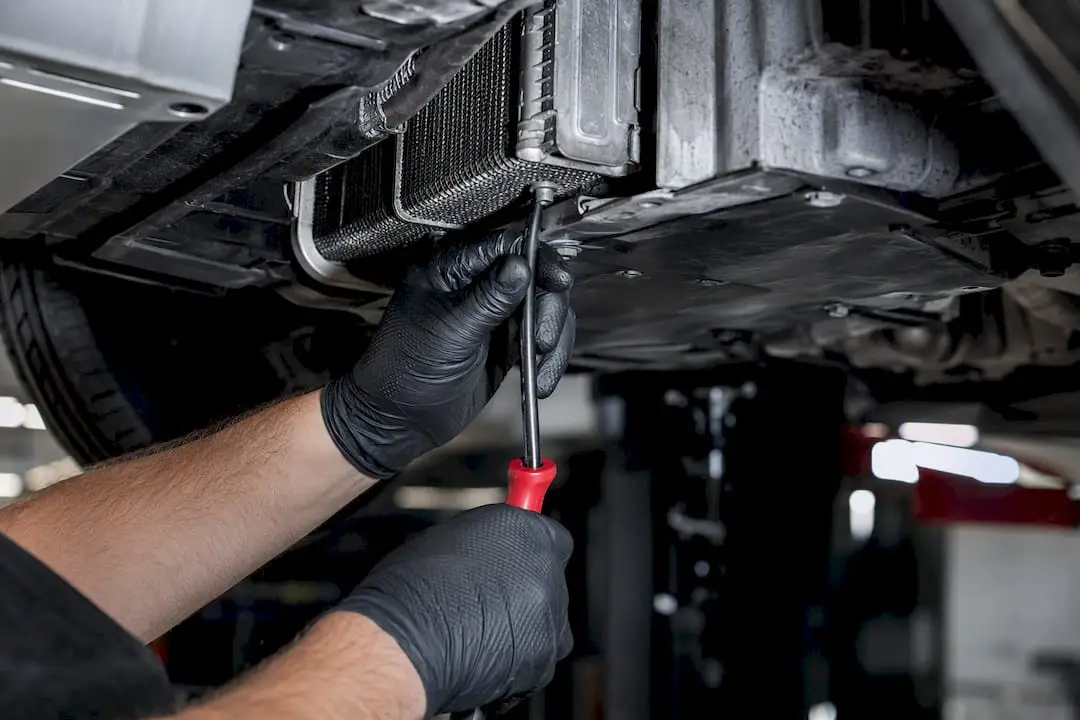
- Locate the drain tube on the underside of the vehicle, usually near the base of the firewall on the passenger side.
- Use a wet/dry vacuum on the drain outlet to pull debris out from below rather than pushing it in.
- Avoid wire snakes or coat hangers. They feel like a quick fix, but they can puncture the evaporator housing, turning a $20 problem into a much bigger repair.
- Apply a foaming evaporator cleaner if the filter and drain check out fine but the smell persists. These products expand to coat the fins, then liquefy and flush out through the drain.
That’s the ceiling for most home fixes. Consumer Reports notes that plenum sprays and fan-drying help with surface-level odor, but deeper contamination often needs professional treatment. Household air fresheners and aerosol odor bombs don’t reach biofilm buried in the evaporator fins. They mask the smell for a day or two, then it comes right back.
Pro Tip: If you’ve replaced the filter, cleared the drain, and sprayed the plenum and the smell is still there after a week, you’re dealing with biofilm a consumer product can’t touch. That’s the point to stop DIY-ing it.
When It’s Time to Call a Professional
Some signs mean it’s time to hand the problem to a shop instead of another round of home remedies. Persistent odor after you’ve tried the DIY steps, water pooling inside the cabin, a sweet or fuel-like smell, or noticeably weak airflow all point to something a spray bottle won’t fix.
A proper A/C inspection typically covers:
- Cabin filter condition and replacement
- Drain line clearing and function testing
- Evaporator cleaning through foaming or fogging treatment
- Refrigerant leak checks
- Blower housing and cowl debris removal
At Express Lube & Car Care, every A/C inspection includes a digital vehicle inspection with photos, so you can actually see what’s going on inside the housing before approving any work. Our ASE-certified technicians handle these jobs regularly, and most odor complaints resolve with an evaporator clean and a fresh cabin filter, backed by our 24-month/24,000-mile warranty on qualifying repairs. If you want a broader diagnostic first, our step-by-step guide to diagnosing car A/C problems walks through how to separate a mildew smell from something more serious, like a heater core or exhaust leak.
Pro Tip: Bring your car in with the A/C running if you can. A technician catching the smell live, especially right at startup, makes diagnosis faster and more accurate.
Keeping the Musty Smell From Coming Back
Fixing it once doesn’t mean you’re done. A little routine maintenance keeps mold and mildew from setting up shop again.
- Replace your cabin air filter on a regular schedule, and check it more often if you park near trees or drive through humid, high-pollen areas.
- Default to fresh-air mode rather than recirculation when conditions allow, since stale recirculated air holds more moisture.
- Run the fan for a minute with the compressor off before you shut the engine down, so the evaporator dries instead of sitting wet overnight.
- Keep the cowl intake clear of leaves and debris, since that’s where the plenum pulls outside air from.
- Add an A/C check to your regular service visits so a technician catches early drain or filter issues before they turn into odor problems.
Our guide on what a cabin air filter actually does covers replacement intervals in more detail if you want a maintenance baseline to work from.
What We See on the Shop Floor
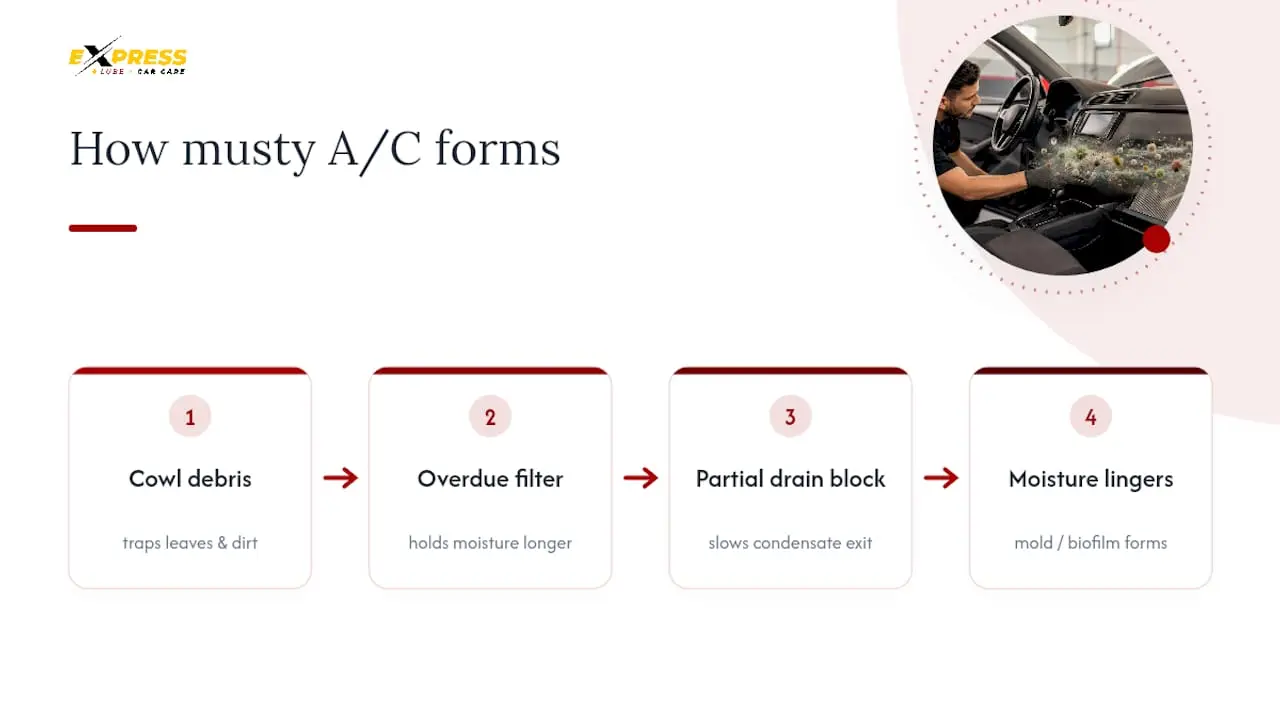
Most musty A/C complaints we run into aren’t caused by one single problem. It’s usually a combination: debris in the cowl area, a filter that’s overdue, and a drain that’s partially, not fully, blocked. That combination lets moisture linger just long enough for mold to take hold, even in a car that’s only a few years old.
Digital inspection photos help here more than you’d think. Customers see the actual grime on their filter or the buildup in the drain line, which makes the “why” behind the repair obvious instead of taking our word for it. Most cases wrap up in a single visit. Deep fabric or padding contamination is the exception, and that takes longer to fully resolve.
Get Your AC Smell Fixed at Express Lube & Car Care
Skip the guesswork and the trial-and-error spray bottles. Express Lube & Car Care runs a full A/C inspection that finds the actual source of a musty smell instead of just masking it.

Our technicians check the drain line, clean or replace the cabin filter, and apply evaporator foaming or fogging treatment when biofilm has built up past what a consumer spray can reach. Every job comes with a digital inspection complete with photos, so you see exactly what’s causing the odor before we touch anything. Our ASE-certified technicians back qualifying repairs with a 24-month/24,000-mile warranty, and walk-ins are always welcome if you’d rather not wait for an appointment. If your filter alone is the culprit, our filter replacement service in Richland Hills gets it swapped out fast and at honest pricing. Schedule your A/C inspection online or call (817) 284-8478 to get it taken care of this week.
Sources
For more detail on the mechanics behind musty A/C smells, AutoZone’s guide to fixing AC condensation breaks down the evaporator’s role step by step. If you’re curious about interior upkeep beyond the A/C system, Diamond Brite’s guide to cleaning a car dashboard covers surface care that helps keep cowl and vent areas free of the debris that feeds odor problems.
- How to fix condensation from car AC — AutoZone DIY
- Get rid of musty smell from cars air conditioner — Consumer Reports
- Why my car AC smells bad? — Motor1
FAQ
Why does my car AC smell musty when I first start it?
Moisture sitting on the evaporator core from your last drive creates a damp environment where mold and bacteria grow overnight, and that smell blows out first before fresh airflow clears it.
Can a dirty cabin air filter cause AC odor?
Yes. A clogged filter feeds the evaporator with dust and organic debris that speeds up microbial growth, and replacing it is often enough to fix mild odor on its own.
How do I know if my AC drain is clogged?
Run the engine with the A/C on and check under the passenger-side firewall for a water drip; no drip usually means the drain is blocked and needs clearing.
Is a musty AC smell dangerous to breathe?
It’s unpleasant and can bother people with allergies or respiratory sensitivity, but it’s generally not dangerous. A sweet or fuel-like smell is a different story and needs prompt attention.
When should I take my car to a shop for AC odor?
If the smell persists after replacing the filter, checking the drain, and using a plenum disinfectant, or if you notice water inside the cabin or reduced airflow, it’s time for a professional inspection at a shop like Express Lube & Car Care.