

A cabin air filter is the part of your car’s HVAC system that traps dust, pollen, exhaust soot, and mold spores before that air reaches you and your passengers. If yours hasn’t been checked in the last year, or your vents smell musty or blow weaker than they used to, it’s worth pulling it out for a look this week. A cabin filter typically needs replacement every 12,000 to 15,000 miles, and swapping one out is one of the cheapest, fastest wins in routine car care.
We get asked about this constantly at the shop, usually by someone who just noticed their defroster isn’t clearing the windshield like it used to. It’s a small part, but it does more work than most drivers realize.
Key Takeaways
A cabin air filter protects your health and your HVAC system by trapping dust, pollen, and pollutants before they reach the passenger compartment, and it typically needs replacement every 12,000 to 15,000 miles.
| Point | Details |
|---|---|
| What it does | Traps dust, pollen, soot, and mold spores before they enter the cabin’s air supply. |
| When to inspect | Check every few months, or sooner if you notice weak airflow or odors. |
| When to replace | Follow the 12,000 to 15,000 mile guideline, or sooner in dusty or heavy-traffic conditions. |
| Upgrade for exposure | Choose activated charcoal or HEPA filters if you commute in traffic or have allergies. |
| Where to get it done | Express Lube & Car Care offers same-day, walk-in filter replacement backed by a 24-month/24,000-mile warranty. |
Table of Contents
- What Is a Cabin Air Filter and Where Is It Located?
- What Types of Cabin Air Filters Actually Remove Pollutants?
- Why a Clean Cabin Filter Matters More Than You’d Think
- Signs Your Cabin Filter Needs Replacing (and What Happens If You Wait)
- How Often Should You Replace a Cabin Air Filter?
- How to Check and Replace Your Cabin Air Filter Yourself
- Simple Maintenance Habits That Extend Filter Life
- When a Cabin Air Filter Problem Needs a Professional
- Our Take on Cabin Filter Care After Years of Seeing It Ignored
- How Express Lube & Car Care Handles Filter Service and HVAC Checks
- Sources
- FAQ
What Is a Cabin Air Filter and Where Is It Located?
A cabin air filter sits inside your HVAC intake system, positioned to catch outside pollutants before that air gets blown through your vents. Think of it as a screen door for your car’s interior. Everything from road grit to pollen to diesel exhaust has to pass through it before it hits your face or your kids’ car seats.
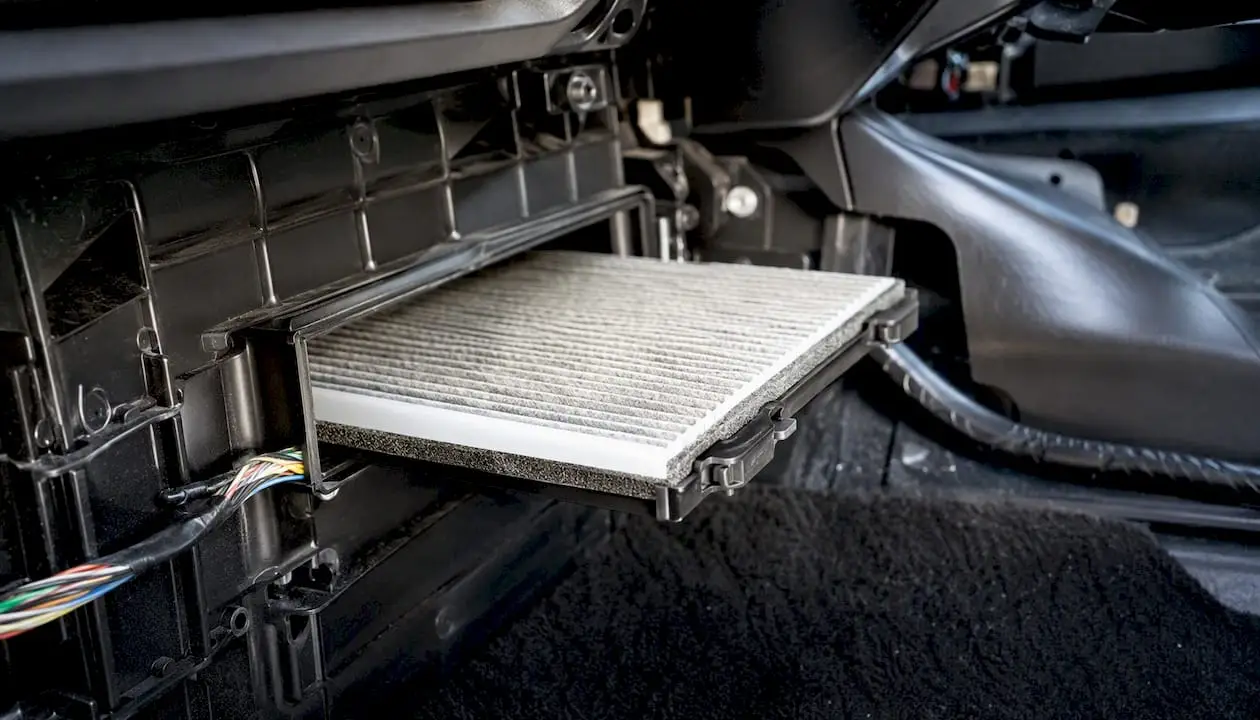
Most cars built since the early 1990s either have one installed or a designated slot waiting for one, come equipped with cabin filtration](https://www.autocare.org/docs/default-source/communities-files/fmc/bulletins/13-2-the-importance-of-servicing-cabin-air-filters.pdf?sfvrsn=5ddcc4f0_2) or are pre-wired for it, so odds are good yours has one somewhere.
Where exactly? It varies by make and model, but here’s what we see most:
- Behind the glove box — the most common spot on sedans and many SUVs
- Under the dash on the passenger side, sometimes requiring a kick panel removal
- Near the cowl or under the hood, typically on the passenger side firewall
Because placement isn’t standardized, checking your owner’s manual first saves you from poking around blind. If you’re not sure where to start, our guide to finding your car’s air filter walks through the most common access points.
People confuse the cabin filter with the engine air filter all the time, and honestly, it’s an easy mix-up since both are called “air filters.” They do completely different jobs.
| Feature | Cabin Air Filter | Engine Air Filter |
|---|---|---|
| Purpose | Filters air entering the passenger cabin | Filters air entering the engine for combustion |
| Location | Behind glove box, under dash, or near cowl | Inside the engine bay, in the intake box |
| Protects | Your health and HVAC system | Engine performance and fuel efficiency |
| Symptoms when dirty | Weak airflow, odors, fogging | Reduced power, poor gas mileage |
What Types of Cabin Air Filters Actually Remove Pollutants?
Not all cabin filters do the same job, and picking the right type matters more than most drivers assume. There are three main categories, and each one targets a different kind of contaminant.
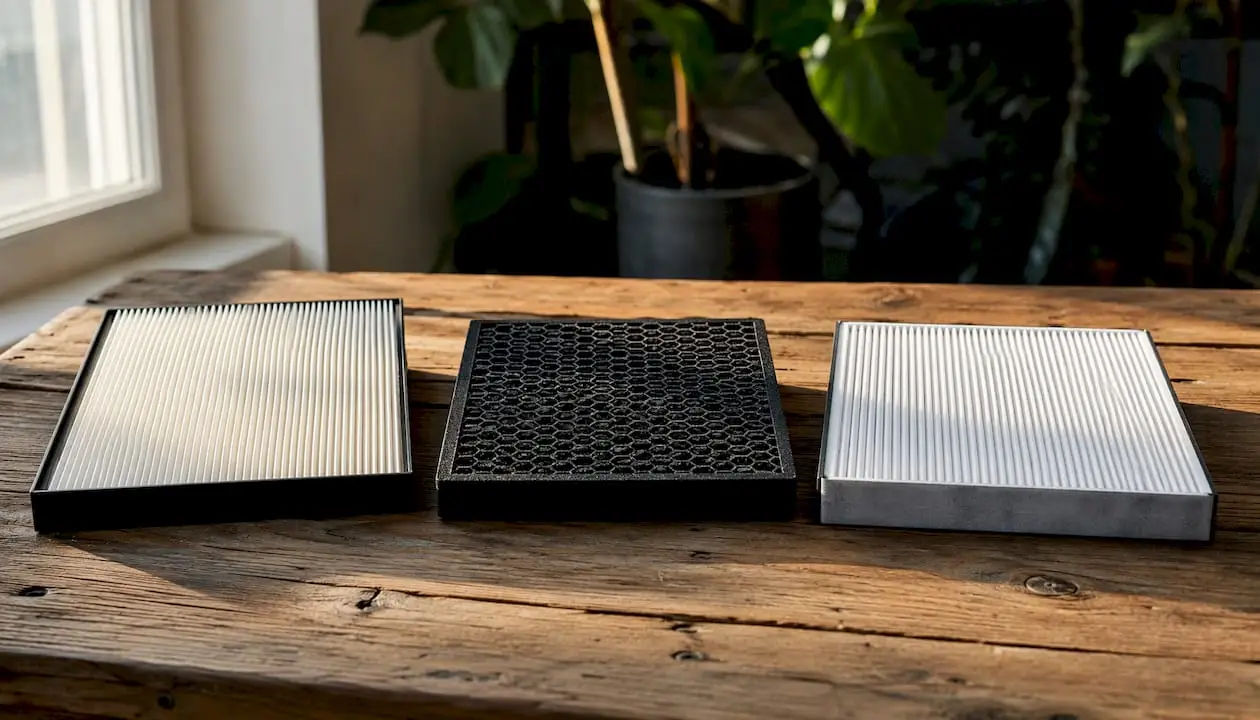
Particulate (paper) filters are the standard option in most factory installs. They’re made of pleated paper or synthetic media that physically traps dust, pollen, and larger debris. They’re affordable and do a solid job for typical suburban driving, but they don’t touch gases or odors.
Activated-charcoal (combination) filters add a layer of carbon to that same particle-trapping media. That carbon layer adsorbs gases and odors, including some nitrogen oxides from nearby traffic. If you commute through downtown or sit in stop-and-go traffic behind diesel trucks, this is usually the upgrade worth paying for.
HEPA-grade or electrostatic filters sit at the top of the lineup. Some suppliers claim these capture up to 99.97% of particles as small as 0.3 microns, which is a serious jump over standard paper media. The catch: they can restrict airflow more than standard filters if they’re not engineered specifically for your vehicle’s blower system.
| Filter Type | What It Removes | Best For |
|---|---|---|
| Particulate (paper) | Dust, pollen, larger debris | Everyday driving, budget-conscious owners |
| Activated charcoal | Particles plus gases and odors | Urban commuters, heavy traffic exposure |
| HEPA/electrostatic | Ultra-fine particles down to 0.3 microns | Allergy sufferers, sensitive respiratory conditions |
If you’ve got seasonal allergies or drive through a lot of construction dust, the charcoal or HEPA options are worth the few extra dollars. For standard commuting with no particular sensitivities, a quality paper filter does the job fine.
Why a Clean Cabin Filter Matters More Than You’d Think
A working cabin filter does two jobs at once: it protects your health, and it protects your HVAC system from wearing itself out. Neither gets much attention until something goes wrong.
Here’s the number that surprises most people. Without proper filtration, cabin air can become up to five times more polluted than the air outside your car, and your HVAC system cycles a very large volume of air through the cabin every hour. That’s a lot of exposure if the filter isn’t doing its job. The Filter Manufacturers Council notes roughly 40 million Americans deal with allergies that a clean filter can help ease, since modern filters catch particles down to 3 to 5 microns.
On the mechanical side, a clogged filter forces your blower motor to work harder to push air through, which shortens its life over time. It also allows moisture and debris to build up on the evaporator core, and it’s the reason your windshield fogs up faster on cold or rainy mornings when the filter’s overdue. Replacing it often restores defogging performance almost immediately.
Signs Your Cabin Filter Needs Replacing (and What Happens If You Wait)
Your car usually tells you before the filter fully fails. You just have to know what to listen for.
- Weaker airflow from the vents, even with the fan on high
- Musty or moldy smell, especially when you first start the A/C or heat
- Increased sneezing or allergy symptoms while driving
- Windshield fogging that’s harder to clear than usual
- Whistling or straining noise from the blower motor
Ignore these signs long enough, and the consequences stack up. A clogged filter makes your blower motor work overtime, which can shorten its lifespan. Moisture trapped behind a saturated filter can lead to mold or bacterial growth on the evaporator, and that smell doesn’t always go away just by swapping the filter once the buildup has taken hold.
Pro Tip: If your car smells musty even after a fresh filter goes in, don’t assume the new filter is bad. That’s usually a sign the odor has already colonized the evaporator core, and a filter swap alone won’t fix it. That’s when a professional A/C system cleaning, not another filter, is the actual solution.
How Often Should You Replace a Cabin Air Filter?
The standard guideline is every 12,000 to 15,000 miles, or about once a year, whichever comes first. But that number shifts depending on where and how you drive.
Several conditions shorten a filter’s usable life:
- Heavy city driving with lots of stop-and-go traffic
- Living in a dusty, dry climate or driving unpaved roads regularly
- Frequent idling in traffic or drive-throughs
- Recent home renovation or construction dust exposure
- Wildfire smoke or seasonal pollen spikes
If you check any of those boxes, cut the interval down. Every six months isn’t overkill if you’re commuting through downtown traffic daily.
Cost is where DIY versus shop service really diverges:
| Option | Typical Cost Range | What’s Included |
|---|---|---|
| DIY filter only | $15 to $40 | Just the replacement filter, no labor |
| Shop replacement | $50 to $90 | Filter plus labor, often 15 minutes |
| Shop with HVAC inspection | $80 to $150 | Filter, labor, and a check of blower/evaporator health |
The simplest decision rule: follow your owner’s manual first, default to the 12,000 to 15,000 mile window if the manual is vague, and move up your timeline any time you’re seeing symptoms before that mark.
How to Check and Replace Your Cabin Air Filter Yourself
Before you touch anything, confirm your filter’s exact location using your owner’s manual. Locations vary enough between models that guessing can cost you a broken clip.
Tools you’ll likely need:
- New cabin air filter (matched to your make/model)
- Flathead screwdriver or trim removal tool
- Flashlight
- Shop rag or small vacuum (optional, for cleanup)
Steps:
- Open the glove box and remove any contents.
- Release the side stops or tabs holding the glove box in place (check both sides; some models have a damper arm you’ll need to disconnect).
- Let the glove box swing down or lift it out, exposing the filter housing.
- Slide out the old filter and note the airflow direction arrow printed on its frame.
- Inspect it. If it’s gray, packed with debris, or holding visible dust, replace it.
- Insert the new filter in the same orientation as the old one. The airflow arrow should point toward the blower, not away from it.
- Reattach the glove box and test the HVAC system on high fan speed to confirm nothing’s blocking airflow.
Common mistakes we see: forcing the glove box past a stuck retaining clip (it snaps easier than you’d think), and installing the new filter backward, which reduces its effectiveness. Many aftermarket filter makers publish model-specific installation videos if you want visual confirmation before starting.
Pro Tip: If your vehicle’s filter is buried under the hood instead of behind the glove box, don’t force it. Some of these housings have tricky, easy-to-crack clips, and that’s exactly the kind of job where a quick shop visit costs less than a replacement housing.
Simple Maintenance Habits That Extend Filter Life
A little routine attention stretches the time between replacements and keeps your HVAC system running clean.
Do a quick visual check every few months, especially if your filter is easy to access. If you can see it without removing panels, a light vacuum between full replacements can buy you extra time. Just don’t rely on vacuuming alone once the media itself starts breaking down.
Seasonal timing matters too. Spring pollen season is peak stress for filters in most climates, so checking in early spring catches problems before allergy season hits full force. Winter defogging performance is your early warning system. If your windshield takes longer to clear than it used to, that’s often the filter talking. And any time you’ve driven through a construction zone or dusty rural road for an extended trip, it’s worth a look afterward.
If your exposure has changed, your filter type should too. Urban commuters who’ve been running standard paper filters often notice a real difference switching to activated charcoal, particularly if odor from traffic has become a daily annoyance.
Pro Tip: Keep a spare filter in your glove box or trunk if you drive through frequent dust or wildfire smoke. A five-minute swap after a smoky drive protects your HVAC system a lot more than waiting for the scheduled interval.
When a Cabin Air Filter Problem Needs a Professional
Some symptoms go beyond what a filter swap alone can fix. If odors persist after a fresh filter install, that usually points to biological growth on the evaporator core, which requires professional cleaning to fully resolve. Broken mounting clips, unusual blower motor noises that don’t clear up with a new filter, or a filter that’s caked with debris again within just a few weeks are all signs worth a shop visit.
When you bring a car in for this, a technician typically checks the evaporator for contamination, tests blower motor load under different fan speeds, and confirms the housing seals properly so unfiltered air isn’t sneaking past the filter edges. Some shops also offer duct sanitization if odor has spread beyond the filter itself.
Worth asking your shop:
- Is there a warranty on the filter and labor?
- Do you inspect or sanitize the evaporator as part of the service?
- Would a filter upgrade (charcoal or HEPA) make sense for my driving conditions?
- Are there signs of blower motor strain I should know about?
Our Take on Cabin Filter Care After Years of Seeing It Ignored
Here’s what we notice more than anything else: most drivers don’t think about their cabin filter until something’s clearly wrong, and by then they’ve usually been breathing dirty air for months. That’s backwards. This is one of the few maintenance items where the fix is cheap, fast, and preventive, yet it consistently gets pushed to the bottom of the list behind oil changes and tire rotations.
Our ASE-certified technicians check the cabin filter as part of routine service visits, not as an upsell afterthought. If it’s due, we’ll show you the old one. Dirty filters make the case for themselves. If it’s still in decent shape, we’ll tell you that too. Every service we perform is backed by our 24-month/24,000-mile warranty, so there’s no guesswork about whether the part or the labor holds up.
If you’re comfortable popping open the glove box and swapping a filter yourself, go for it. That’s a reasonable DIY job for most vehicles. But if your filter’s buried somewhere awkward, if you’re dealing with persistent odors, or if you just want it handled correctly the first time, that’s exactly when a quick shop visit makes more sense than guessing.
How Express Lube & Car Care Handles Filter Service and HVAC Checks
If you’d rather not deal with a stuck glove box clip or you’re not sure whether your car needs a standard, charcoal, or HEPA-grade filter, that’s exactly the kind of quick call our team makes every day.
Express Lube & Car Care handles cabin filter replacement as a same-day, no-appointment service, meaning you can walk in, get the filter checked and swapped, and be back on the road without scheduling around it. Our ASE-certified technicians inspect the evaporator and blower system while they’re in there, not just the filter itself, so you’re not paying twice if a bigger HVAC issue is brewing. Every replacement is backed by our 24-month/24,000-mile warranty, and our pricing is upfront before any work starts. If your filter’s overdue, or you’ve been dealing with musty vents or a foggy windshield, check out our filter replacement services or stop by for a walk-in inspection today.
Sources
- The Importance of Servicing Cabin Air Filters
- How often to change?
- What advantage is activated charcoal treatment for a cabin filter?
- The Importance of Cabin Air Filter Replacement for Your Vehicle | AAA Oregon/Idaho
- Cabin air filter (iFixit)
FAQ
What happens if I don’t change my cabin air filter?
A clogged filter reduces airflow, strains your blower motor, and lets dust, pollen, and odors build up inside your vehicle. It can also lead to persistent musty smells and windshield fogging that a new filter alone may not fix if mold has reached the evaporator.
Is a cabin air filter really necessary?
Yes. It’s the only barrier between outside pollutants and the air you breathe inside your car, and without it, cabin air can become up to five times more polluted than the air outside.
How much does it cost to replace a cabin air filter?
DIY filters typically run $15 to $40, while shop replacement with labor usually falls between $50 and $90. Adding a full HVAC inspection can push the total to $80 to $150.
How often should a cabin air filter be changed?
A common guideline is every 12,000 to 15,000 miles or about once a year, though drivers in dusty or high-traffic conditions should replace it more often.
Can Express Lube & Car Care replace my cabin air filter same day?
Yes, Express Lube & Car Care offers walk-in cabin filter replacement with no appointment needed, backed by a 24-month/24,000-mile warranty on parts and labor.