

When you pop the hood looking for "the" air filter, you might be surprised to learn your car actually has two of them. It's a common point of confusion, but they serve completely different purposes in entirely different locations.
You've got the engine air filter, which protects your engine, and the cabin air filter, which cleans the air you and your passengers breathe.
Your Car Has Two Air Filters, Not Just One
Think of the engine air filter as your car's lungs. It's the gatekeeper, stopping dirt, dust, and all sorts of road grime from getting sucked into the engine where it can cause some serious damage. A clean engine filter is non-negotiable for good performance and even helps with gas mileage.
Then there's the cabin air filter. This one's all about your comfort. It filters the air that blows through your AC and heat vents, trapping pollen, exhaust fumes, and other nasty stuff you don't want to breathe. If you've ever had a funky, musty smell coming from your vents, a clogged cabin filter is almost always the culprit.
This quick illustration shows how each one plays a distinct role in your vehicle's overall health and your comfort.
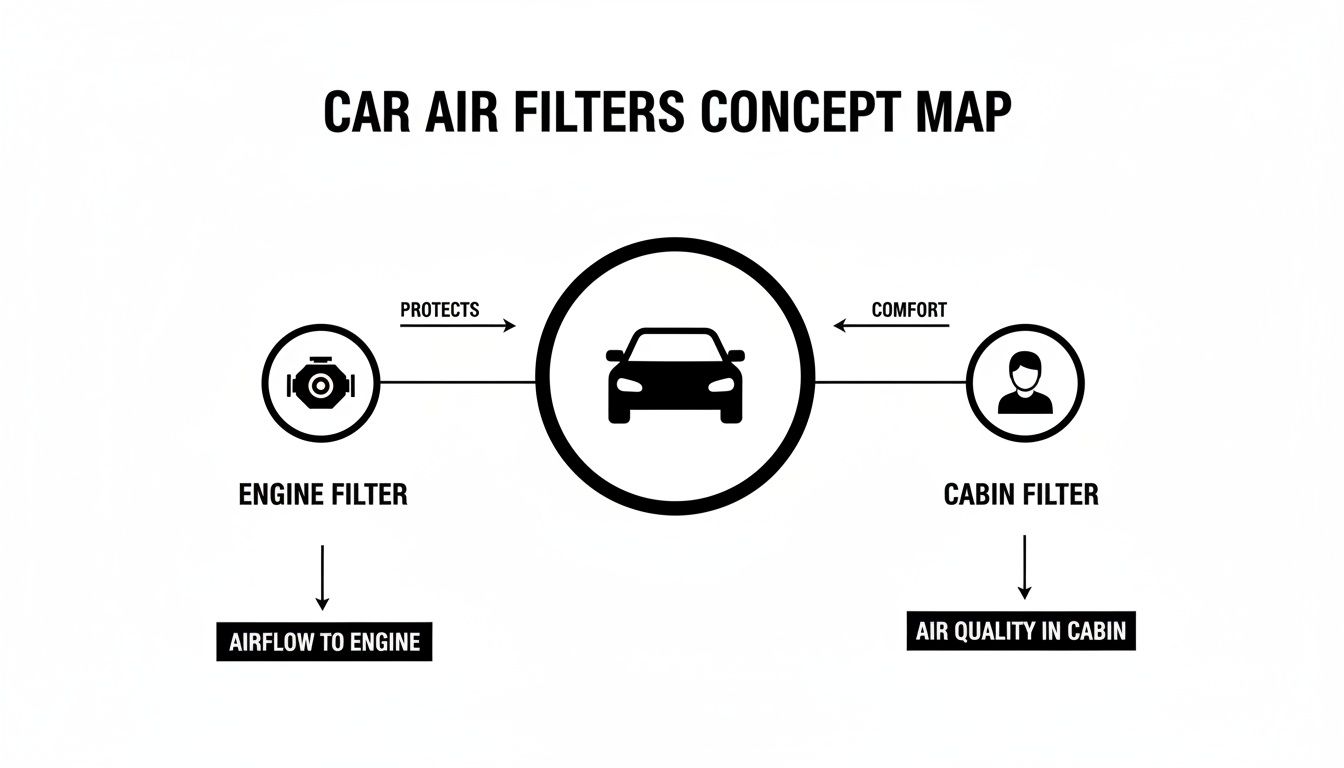
As you can see, one filter keeps the engine running smoothly, while the other keeps the air inside fresh. Keeping both of them clean is a simple but super important piece of regular vehicle upkeep.
Wondering how often you should check them? It's a key part of our complete car maintenance checklist and an easy way to prevent bigger problems down the road.
Engine Filter vs Cabin Filter At a Glance
Still a little fuzzy on which is which? Here’s a straightforward breakdown to help you keep them straight. This table cuts right to the chase.
| Filter Type | Main Purpose | Common Location | Signs of a Dirty Filter |
|---|---|---|---|
| Engine Air Filter | Protects the engine from contaminants like dust and debris. | Inside a large, black plastic box under the hood. | Poor acceleration, lower gas mileage, check engine light. |
| Cabin Air Filter | Filters the air entering the passenger cabin. | Usually behind the glove compartment or under the dash. | Weak airflow from vents, musty or unpleasant odors. |
Bottom line: both filters are essential. One protects your investment, and the other protects your health. Ignoring either one just isn't worth it.
Alright, let's pop the hood and find that engine air filter.
First thing's first: make sure your car is parked on level ground with the engine off and completely cool. You don’t want to be working around a hot engine.
You’re looking for a big, black plastic box under the hood. We call this the airbox, and it’s where your engine air filter lives. It’s usually a square or rectangle sitting somewhere near the front or side of the engine bay.
Where to Look in Your Vehicle
The exact spot changes a bit depending on what you drive, but they're all pretty similar.
- Cars and Sedans: The airbox is usually near a fender, connected to a big, flexible rubber tube that snakes its way over to the engine.
- SUVs and Trucks: These typically have a larger, more obvious airbox right up front. They're designed that way to pull in as much cool, fresh air as possible.
This setup isn't random. Most modern vehicles place the air filter inside a sealed plastic airbox within 12–24 inches of the front grille. Why? Because cool air is denser, and that helps with engine performance. Since the late 1990s, this design has become the standard, and today, more than 90% of new cars use this kind of drop-in filter system for better fuel efficiency. You can read more about how this has evolved across the auto industry on mordorintelligence.com.
My Go-To Trick: If you’re stuck, just find the thickest plastic tube you can see under the hood. Follow it from the engine back, and it will lead you straight to the airbox every time.
Getting Inside the Airbox
Once you've found the airbox, opening it is usually a piece of cake. The lid is almost always held on by one of two things:
- Metal Clips: You can usually just pop these open with your fingers. A flathead screwdriver can help if they're a little tight.
- Screws: Some are held down with a few Phillips or Torx head screws. Just grab the right screwdriver, and you’re in business.
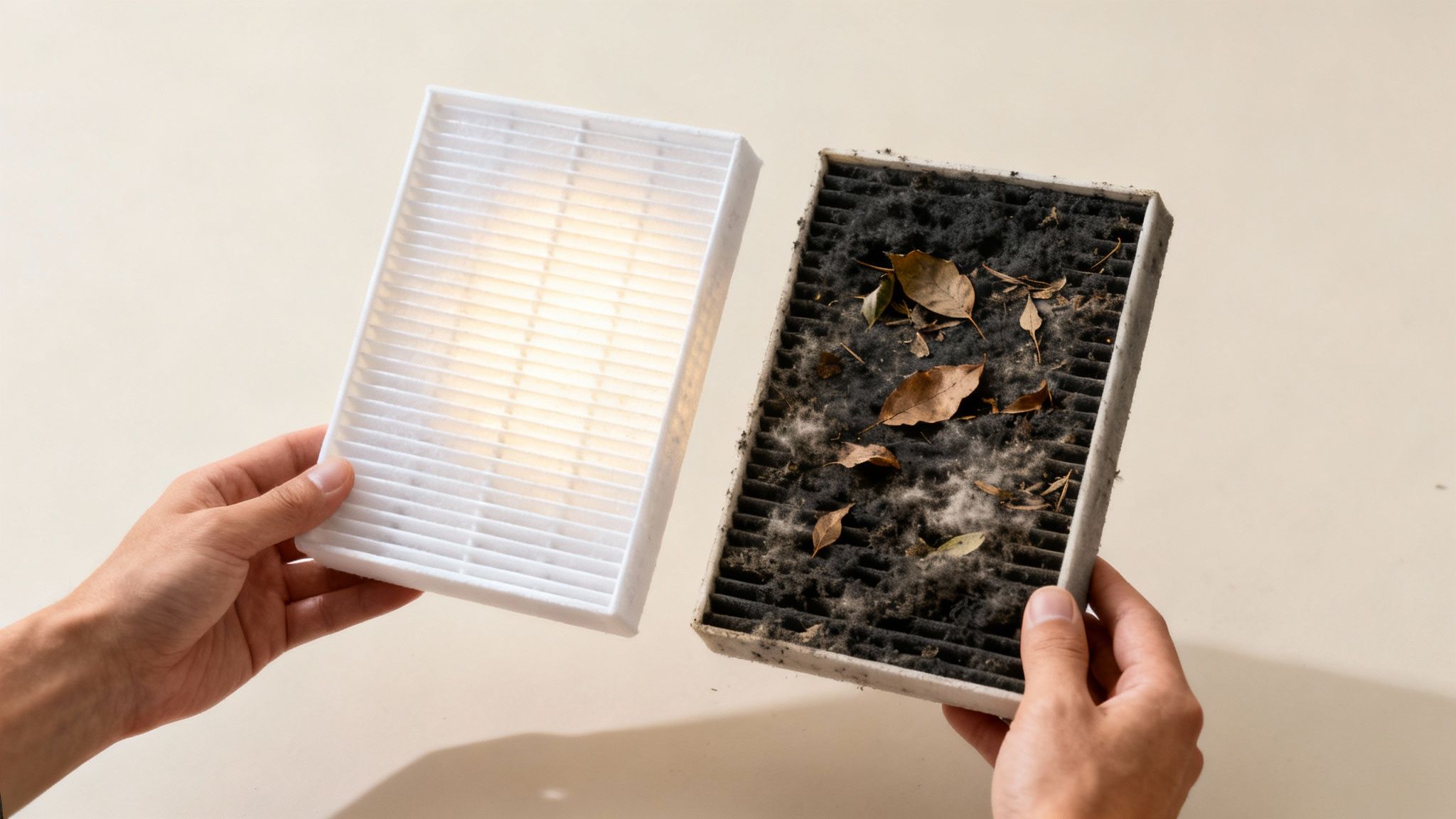
You don't need to take the whole box out—just unfasten the lid. Lift it up, and you’ll see the filter sitting right there. It’ll look like a flat panel made of pleated paper.
Just lift the old filter out, and you're ready to see if it needs replacing. It’s as simple as that.
Locating Your Cabin Air Filter for Fresh Air
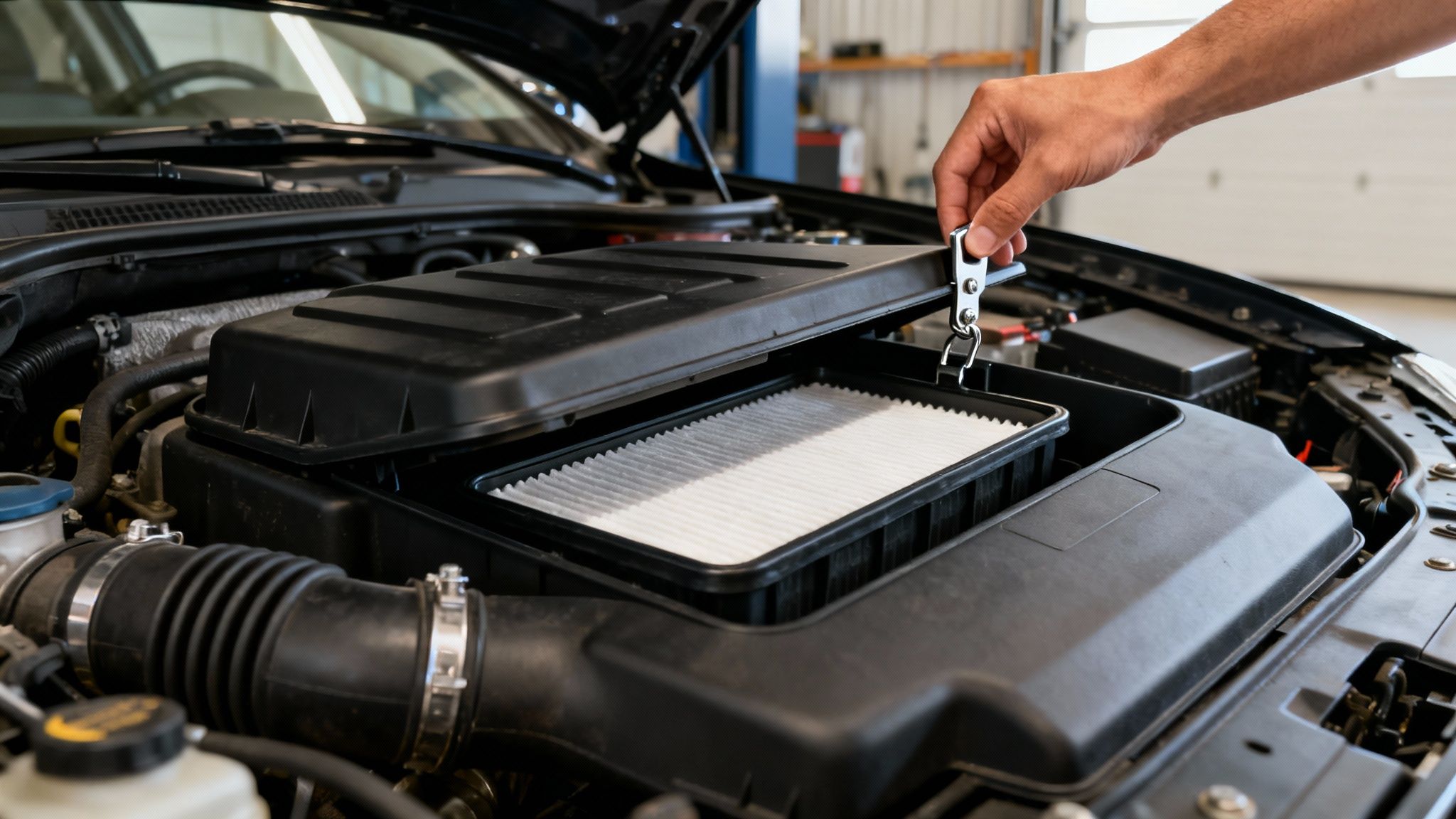
Alright, now let's track down the filter that keeps the air inside your car fresh. The cabin air filter is almost always tucked away somewhere in the passenger compartment, so you won’t find it under the hood with its engine-focused cousin. The good news is, it's usually pretty easy to get to.
By far, the most common spot is directly behind the glove box. To get to it, you’ll likely need to empty out your glove box, unclip a little support arm, and then squeeze the sides to let it swing all the way down. Once it's out of the way, you should see a small rectangular cover—that's your filter housing.
Other Common Locations
While the glove box is the go-to spot for most manufacturers, some vehicles like to be different. If you don't see it there, don't give up just yet.
- Under the Dashboard: Some cars hide the filter under the dash on the passenger side. You might have to remove a small plastic panel near the floor to access it.
- Near the Windshield: A less common but possible location is under the hood, buried in the cowl area (the plastic trim right at the base of your windshield).
If you've noticed a funky, musty smell when you turn on the AC or the airflow seems weak, a clogged cabin filter is the number one suspect. This little part plays a huge role in your car's comfort and is essential for properly functioning heating and cooling systems.
A dirty cabin air filter does more than just make the air smell bad. It traps pollen, dust, and pollutants that can aggravate allergies, making a clean filter essential for a healthier drive, especially during Texas allergy seasons.
Because these filters need regular changing, a huge aftermarket has sprung up around them. While plenty of people tackle this job themselves, a professional cabin filter swap at a shop like ours only takes about 10–20 minutes. We're used to navigating the tricky clips and panels, so we can get it done fast. The growth of this market is a testament to how important this simple maintenance task is.
What a Dirty Air Filter Actually Looks Like
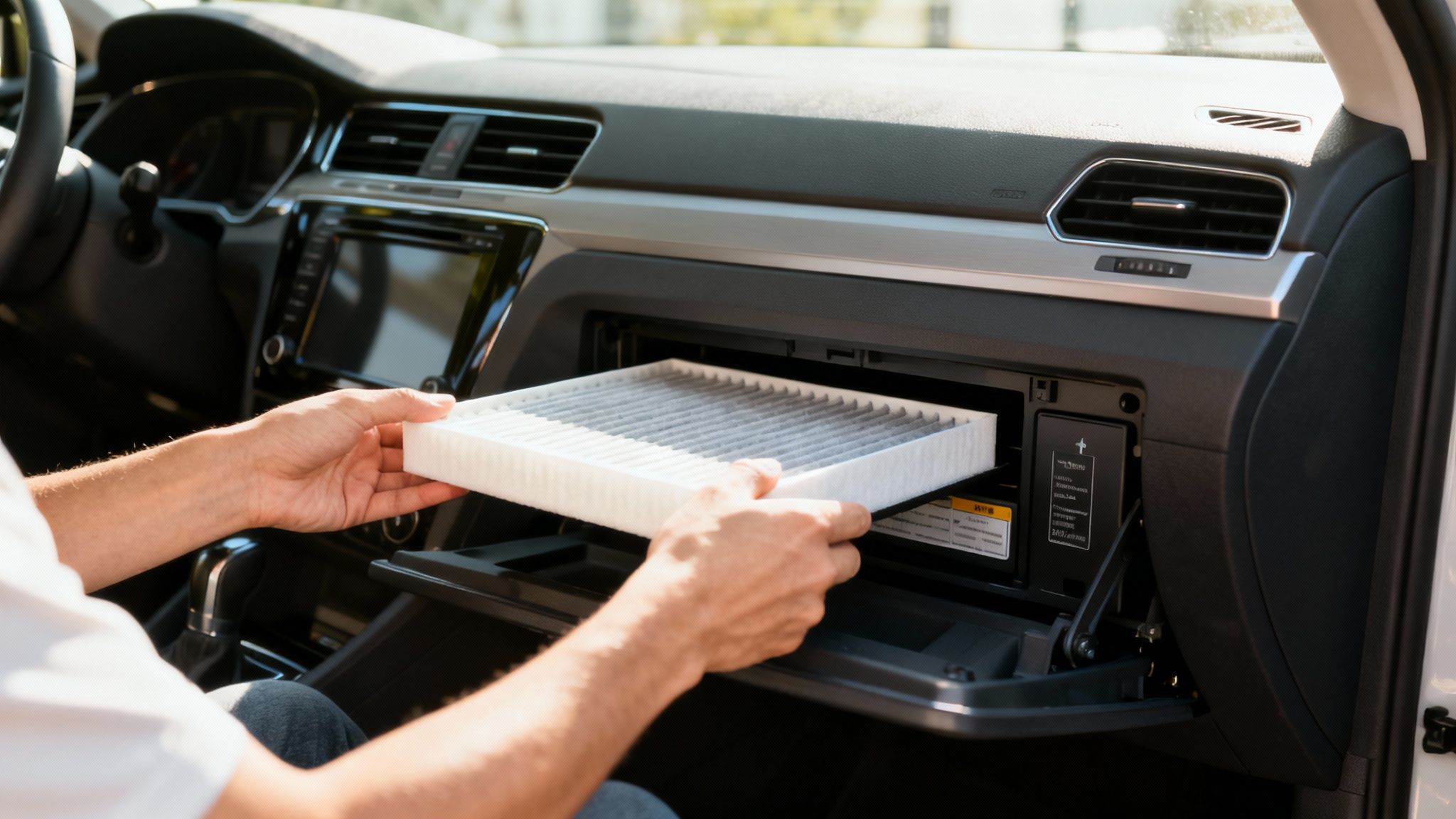
So, you’ve found the filter. Now for the moment of truth: is it still good, or is it time for a new one? Thankfully, this isn't something you need to guess about. The evidence is usually pretty clear.
A brand-new filter is clean and crisp—either bright white or a pale off-white color. A used one, on the other hand, will look like it's been through a war. It’ll be discolored, ranging from a dingy gray to nearly black, depending on how many miles it has seen.
The Visual Inspection
When you pull it out, you'll see exactly what it has been protecting you and your engine from. That caked-on gunk is a good sign the filter did its job, but it also means it's running out of room to trap anything else.
- Engine Filter Gunk: Expect to find the rough stuff here—dirt, sand, leaves, bits of twigs, and even bugs.
- Cabin Filter Gunk: This one usually looks grimy with finer stuff like dust, pollen, and road soot.
Here’s a simple trick I’ve used for years: the flashlight test. Hold the filter up to a bright light. If you can barely see any light coming through the pleated material, it’s too clogged to work right.
Key Takeaway: If light can't get through, air can't either. For your engine, that means less power and worse fuel economy. For your cabin, it means a weak AC and funky smells.
A clogged filter directly hurts your car’s performance. The engine struggles for air, making it feel sluggish when you hit the gas. In the same way, a packed cabin filter makes your blower motor work overtime, resulting in weak airflow from your vents. Seeing that built-up grime is the most reliable sign that it’s time for a replacement.
When to Let a Professional Handle It
While checking and replacing your air filters is usually a pretty simple job, there are definitely times when it’s smarter to just let a professional handle it. Sometimes, what looks like a 10-minute task can turn into a huge headache.
We see it all the time. The plastic clips on the airbox get brittle from years of heat and snap the second you try to open them. Or maybe the last person to touch it overtightened the screws, and now they're stripped and won't budge without special tools. Trying to force these parts can lead to much more expensive repairs.
Our advice? If something doesn't move with gentle, reasonable force, just stop. It’s way better to pause and bring it into the shop than to break a housing or clip that's a pain to replace.
Why Bringing It to the Shop Makes Sense
Our ASE-certified technicians at Express Lube & Car Care deal with these exact scenarios every single day. We know where the filters are hiding on just about any car and have the right touch to get stubborn parts loose without causing damage.
Here's when a quick trip to see us is your best bet:
- Hard-to-reach filters: On some cars, the filter is buried behind other components that have to be removed first. It’s a job you don’t want to tackle in your driveway.
- Stripped screws or stubborn clips: We’ve got the right tools and tricks to handle fasteners that refuse to cooperate.
- Just to be sure: We can inspect both filters during a routine oil change and catch a potential issue before it starts affecting your engine or air quality.
This is a perfect example of how routine service can save you a real hassle down the road. Our team gets the job done right, keeping your car running its best around Richland Hills.
For more details, check out our guide to expert filter replacement and let us take care of it for you.
Your Top Air Filter Questions Answered
Okay, so you know where to find your air filters. But you probably still have a few questions floating around. Let's clear up some of the most common ones we hear from drivers at the shop.
How Often Should I Really Replace My Air Filters?
The owner's manual is a good starting point, but let's get real. For your engine air filter, a good rule of thumb is every 15,000 to 30,000 miles. The cabin air filter should be swapped out more often—about every 15,000 miles, or at least once a year.
But here in North Texas, those are just suggestions. If you're constantly driving down dusty backroads or dealing with our legendary allergy seasons, you’ll want to check and change them more frequently. Your engine's performance and your sinuses will thank you.
Can a Dirty Filter Actually Trigger My Check Engine Light?
Absolutely. A severely clogged engine air filter can definitely set off your check engine light. It's one of the first things a mechanic checks for.
When the filter is completely choked with dirt, it starves your engine of the air it needs. This messes with the mass airflow sensor's readings, and when the car's computer gets data it doesn't like, boom—that little light on your dash comes on.
Pro Tip: Don't panic when the check engine light appears. Before you assume the worst, remember that a simple, inexpensive filter swap could be the fix. It might just save you from a much bigger headache and a more expensive repair bill.
Does the Brand of Filter Matter?
People ask this all the time. You have two main choices: OEM (from your car's manufacturer) or aftermarket. Honestly, a high-quality aftermarket filter from a shop you trust provides a fantastic balance of performance and value. It will do the job just as well as the pricier OEM version.
When you'd rather leave it to the pros, the ASE-certified technicians at Express Lube & Car Care can handle your filter inspections and replacements in minutes. Swing by our Richland Hills shop for quick, expert service you can count on. https://www.expressluberichlandhills.com