

You check your oil on a Saturday morning, wipe the dipstick, look down, and your stomach drops. The oil is black. Maybe you just had it changed not that long ago, or maybe the vehicle is running fine and the color alone caught you off guard.
That reaction is normal. A lot of drivers assume black oil means the engine is in trouble, the last oil change was done wrong, or the oil is already worn out.
Most of the time, that’s not what’s happening.
What causes engine oil to turn black usually comes down to the oil doing one of its main jobs: carrying away the byproducts of combustion and keeping contaminants suspended instead of letting them bake onto engine parts. In newer vehicles, especially ones with modern fuel systems, oil can darken much faster than many people expect without that meaning anything is failing. The trick is knowing when black oil is harmless and when it points to a real mechanical problem.
That Alarming Moment You See Black Oil on the Dipstick
A driver comes in, pops the hood, and says the same thing I hear all the time: “I checked the dipstick and the oil is black. Is my engine going bad?”
Usually, the answer is no.
Color gets too much attention by itself. Fresh oil starts out amber, so people naturally expect it to stay that way for a while. Then they pull the dipstick after a week or two, or after a stretch of errands around Richland Hills, and it already looks dark. That feels wrong, especially if they remember older cars where the oil seemed cleaner for longer.
Why the color alone doesn’t tell the whole story
Engine oil lives in a dirty environment. It’s circulating through an engine that creates heat, combustion byproducts, moisture, and tiny particles every time you drive. If the oil stayed perfectly clean-looking, that would be more suspicious than reassuring.
What matters more than “black” is how the oil behaves.
Practical rule: Black oil that still feels smooth and sits at the proper level is often normal. Black oil with grit, foam, or a strange smell deserves a closer look.
A lot of newer engines also darken oil quickly for reasons that aren’t obvious from the driver’s seat. That’s one reason generic advice online can be misleading. It often treats all black oil like a warning sign, when in many vehicles it’s a routine result of how the engine burns fuel and how the oil’s detergent package works.
What drivers usually expect, and what really happens
After an oil change, three things are typically expected:
- Clean color: They want to see amber oil for a long time.
- A long visual grace period: They assume dark oil means the service interval is already over.
- A simple yes-or-no answer: Black must mean bad, clear must mean good.
Real life is messier. Oil can darken quickly and still protect the engine well. It can also look dark for a normal reason while another issue is developing separately. That’s why technicians don’t diagnose oil condition by color alone.
Understanding Your Engine Oil's Real Job
Black oil worries a lot of drivers because it looks dirty. In many engines, especially newer GDI models, some darkening shows the oil is carrying away the byproducts your engine creates every time it runs.
Oil has several jobs at once. It reduces friction between moving parts, helps control heat, supports a tight seal around the rings and cylinder walls, and keeps contaminants suspended long enough for the oil filter to catch what it can. If the oil could not hold that material in suspension, much more of it would bake onto engine parts as sludge and varnish.
Oil cleans while it protects
The cleaning role is the part many drivers never get told.
Engine oil works a lot like wash water with soap in it. The fluid gets dirty because it is picking up unwanted material. Inside an engine, that material includes soot, moisture, oxidized oil residue, and tiny wear particles. A darker color often means the detergents and dispersants in the oil are doing their job instead of letting contamination settle onto internal surfaces.
That point matters even more on modern GDI engines. These engines often darken oil faster than older port-injected designs, sometimes long before the oil is worn out. I see that concern regularly at the shop. A driver checks the dipstick a week or two after service, sees dark oil, and assumes something is wrong. Many times, the oil is handling normal combustion byproducts from a modern engine design.
Additives do a lot of the heavy lifting
Modern motor oil is more than base oil. Its additive package does much of the protection work that drivers never see.
Detergents help prevent deposits. Dispersants keep fine contamination spread through the oil instead of clumping together. Anti-wear additives protect metal surfaces under load. Antioxidants slow breakdown from heat. All of that is why the correct oil specification matters just as much as the brand on the bottle.
The filter matters too. Oil can suspend contaminants, but the filter has to back it up by trapping the larger particles it can catch. If you want to see how that part of the system affects protection, our guide to good oil filters for cars explains what separates a decent filter from a cheap one.
Clean-looking oil is not the goal
What matters is whether the oil is still protecting the engine as designed.
Good oil should keep contamination under control, flow properly at startup, maintain its protective film at operating temperature, and match the engine’s required viscosity and specification. That is why color by itself is a weak diagnostic tool. In a lot of late-model vehicles, especially GDI cars that see short trips around Richland Hills, oil can turn dark fairly quickly and still be doing exactly what it should.
Oil that turns dark while staying smooth, properly filled, and free of burnt smell or foam is often doing normal cleaning work.
The Seven Main Reasons Your Engine Oil Turns Black
Black oil can mean normal engine operation, or it can point to a problem. On late-model cars, especially GDI engines that spend a lot of time on short Richland Hills trips, quick darkening is often expected.
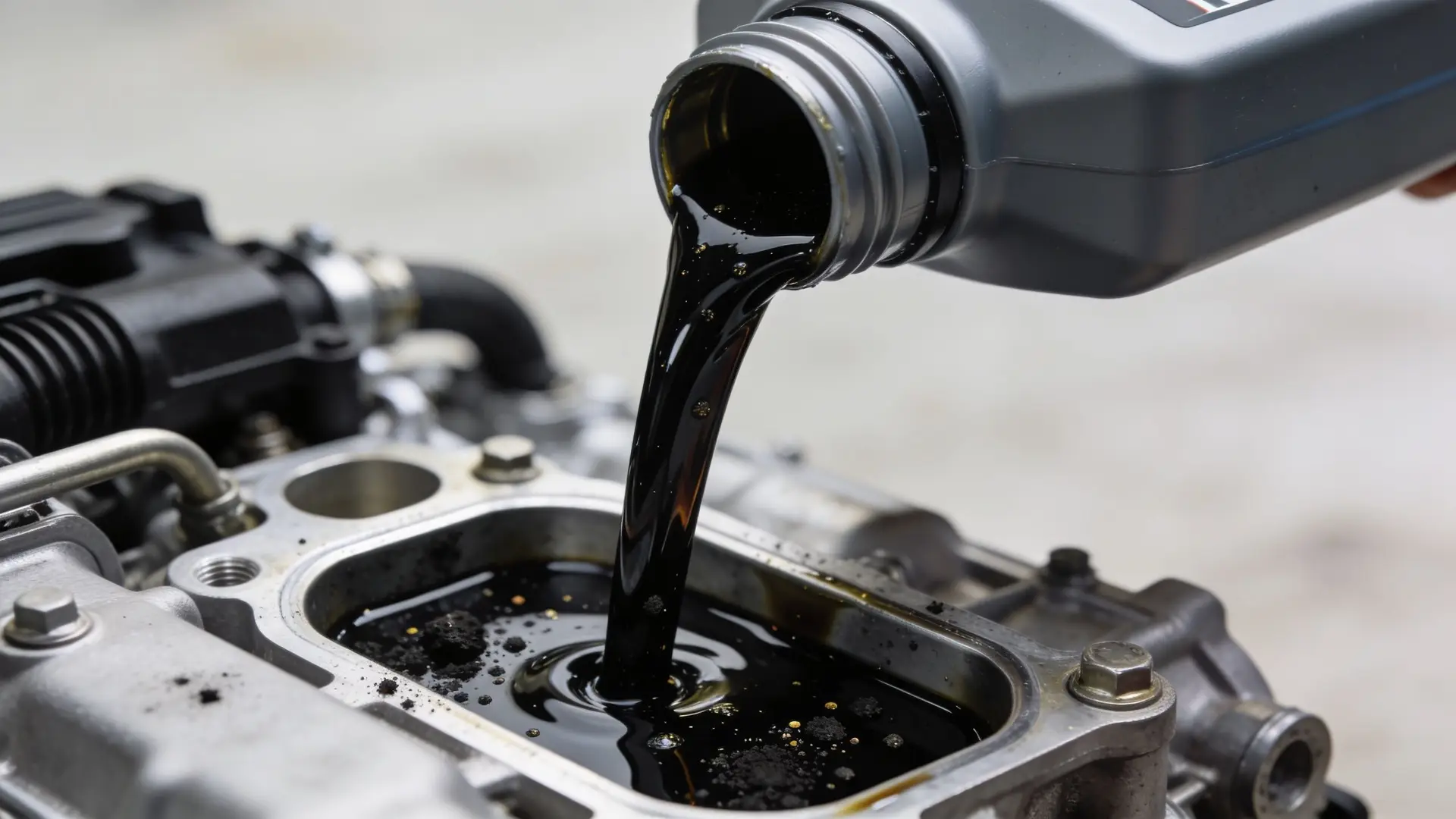
Soot from combustion, especially in GDI engines
This is the reason I explain most often at the shop.
Modern gasoline direct injection engines tend to put more fine soot into the oil than older port-injected engines. That is one reason a newer non-diesel car can have dark oil surprisingly early in the interval. If the oil still feels smooth, the level is stable, and the engine is running normally, fast blackening in a GDI engine is usually not a red flag by itself.
Short trips make this more noticeable because cold starts create dirtier combustion and give the oil less time at full operating temperature.
Heat and oxidation
Oil lives in a hot environment. Every trip exposes it to heat, then another cool-down cycle. Over time, that darkens the oil and slowly changes it chemically.
Some darkening from heat is routine. Trouble starts when heat is excessive, repeated, or paired with other warning signs such as burnt smell, heavy consumption, or thick deposits under the oil cap.
Detergent and dispersant activity
Good oil is supposed to hold contamination in suspension so it can be carried away from engine parts and filtered over time. As that cleaning action happens, the oil often gets darker.
That can worry drivers who expect fresh-looking amber oil on the dipstick. In practice, darker oil can be a sign the additive package is doing its job and keeping contaminants off internal surfaces.
Fuel dilution
Gasoline can slip past the piston rings and mix with the oil, especially with repeated cold starts, short runs, rough running, or certain injector problems. That can darken the oil, but color is not the main concern here.
Fuel dilution thins the oil. Thinner oil gives up film strength, which means less protection for bearings, timing components, and other loaded parts. If the dipstick sample smells strongly like fuel or seems unusually runny, the engine should be checked.
Coolant contamination
Coolant in the oil points to a leak, not normal wear. Depending on how much is present, the oil may look muddy, creamy, or foamy instead of black.
This needs quick attention because coolant contamination can damage bearings fast and reduce lubrication across the engine.
Microscopic metal wear
Every engine creates a small amount of wear material. The oil filter catches larger particles, but very fine metallic debris can still affect how the oil looks and feels if wear increases or service intervals get stretched.
Texture matters a lot here. Oil that feels gritty deserves more attention than oil that is merely dark. A better filter helps control what circulates through the system, and our guide to good oil filters for cars explains what separates a quality filter from a bargain one.
Moisture and condensation from short-trip driving
Short-trip driving is hard on oil. The engine may never stay hot long enough to boil off moisture, and those same trips often create more combustion byproducts.
That combination can darken oil quickly. It is common on vehicles used mostly for school runs, quick errands, and stop-and-go local driving.
Sludge and neglected service history
Old, overworked oil usually looks different from normally dark oil. It tends to be heavier, dirtier, and more opaque, with a sticky residue that clings to the dipstick or cap.
That kind of black oil points to overdue service, poor maintenance history, or internal buildup. In those cases, the color is only part of the story. The condition of the oil is the bigger concern.
Normal Black vs Problematic Black How to Tell the Difference
You pull the dipstick, see black oil, and assume something is wrong. For a lot of drivers in Richland Hills, especially those with newer GDI engines, that moment is more alarming than it needs to be.
Dark oil can be completely normal. What matters is whether the oil still looks and feels like it is doing its job.
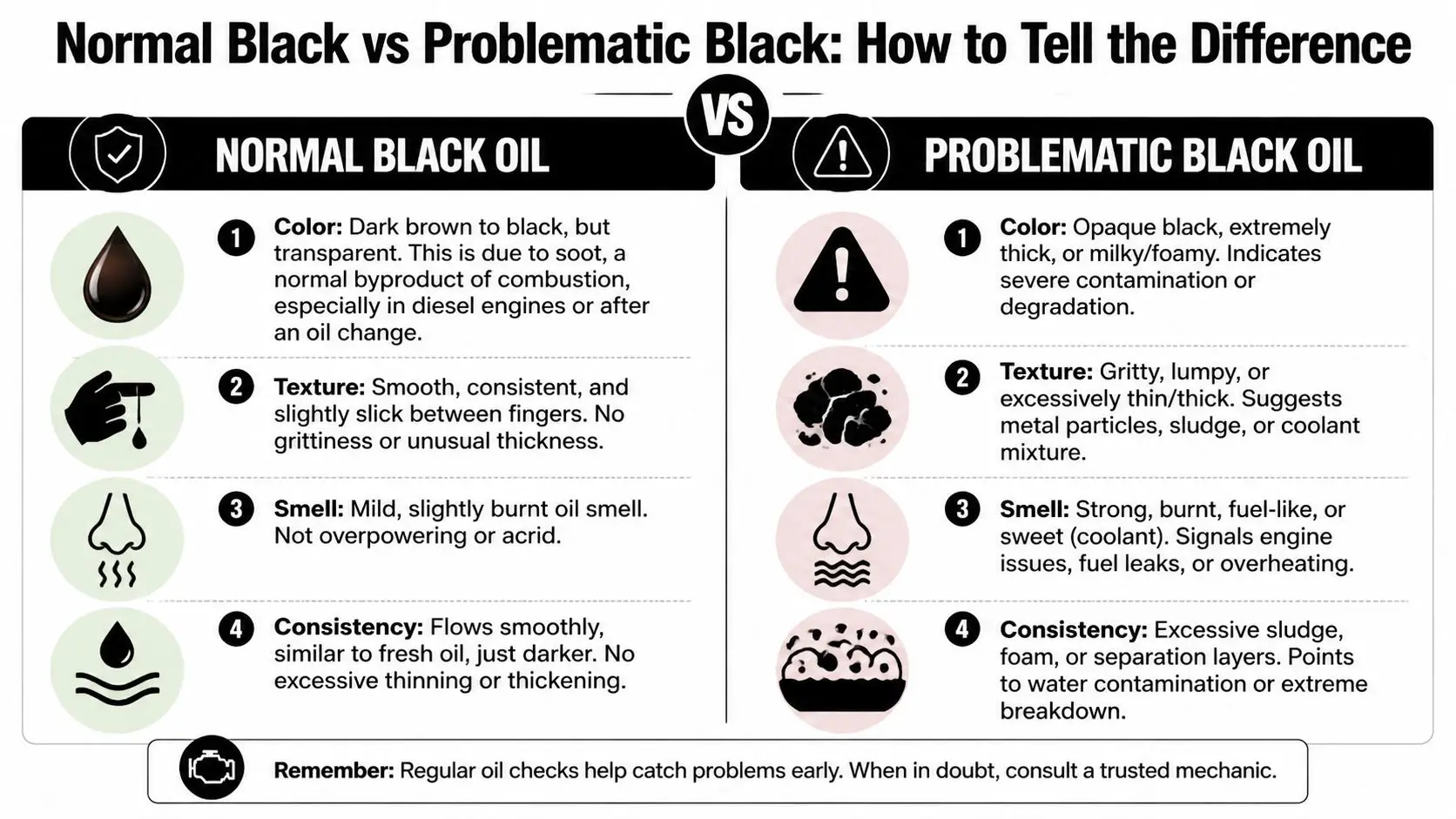
What normal black oil usually looks and feels like
In many modern engines, especially Gasoline Direct Injection models, oil can turn dark faster than drivers expect. That alone does not mean the oil has failed or the engine is wearing out. I see this regularly on well-maintained vehicles that run perfectly and are right on schedule for service.
Normal black oil is usually smooth, slick, and evenly fluid on the dipstick. It may leave a dark stain on a paper towel, but it should still spread cleanly without chunky residue, foam, or a muddy appearance.
If the engine is running smoothly, the level is staying consistent, and there are no warning lights, dark oil by itself is usually just a sign that the oil is holding contamination in suspension, which is part of its job.
In many GDI engines, quick blackening is common. Grit, sludge, or a strange smell are the real warning signs.
What problematic black oil tends to signal
Problem oil usually comes with extra clues. The biggest red flags are grit, foam, milkiness, sludge-like thickness, or oil that suddenly feels unusually thin. Smell matters too. A fuel-heavy odor can point to dilution, a burnt smell can suggest overheating, and a sweet smell can raise concern about coolant getting into the oil.
Texture matters more than color in this situation. Black oil that still feels slick and uniform is very different from black oil that feels abrasive or leaves sticky deposits on the dipstick.
Oil Condition Check Normal vs Problematic
| Symptom | Normal Black Oil | Problematic Black Oil |
|---|---|---|
| Color | Dark brown to black | Dark with other warning signs, or milky and foamy |
| Texture | Smooth and slick | Gritty, lumpy, or sludge-like |
| Smell | Mild oil smell | Strong fuel, burnt, or sweet odor |
| Consistency | Flows normally on dipstick | Noticeably too thin or too thick |
| Level trend | Stays reasonably stable between checks | Drops quickly or changes in an unusual way |
A simple driveway check
After pulling the dipstick, wipe a drop of oil onto a clean paper towel and smear it across the surface. That quick check can tell you a lot before you ever step into a shop.
Look for these cues:
- Smooth spread: Usually a normal sign, even if the oil is dark
- Sparkly look or gritty feel: Can point to wear material
- Milky streaks: May suggest coolant contamination
- Very watery spread with a fuel smell: May indicate fuel dilution
Oil type can also affect how the oil holds contaminants and how long it stays stable in service. If you want help comparing options for your vehicle, our guide on choosing between conventional and synthetic oil explains the practical trade-offs.
A Quick Guide to Checking Your Oil at Home
Checking your oil at home takes only a few minutes, and it gives you useful information before a warning light ever comes on.
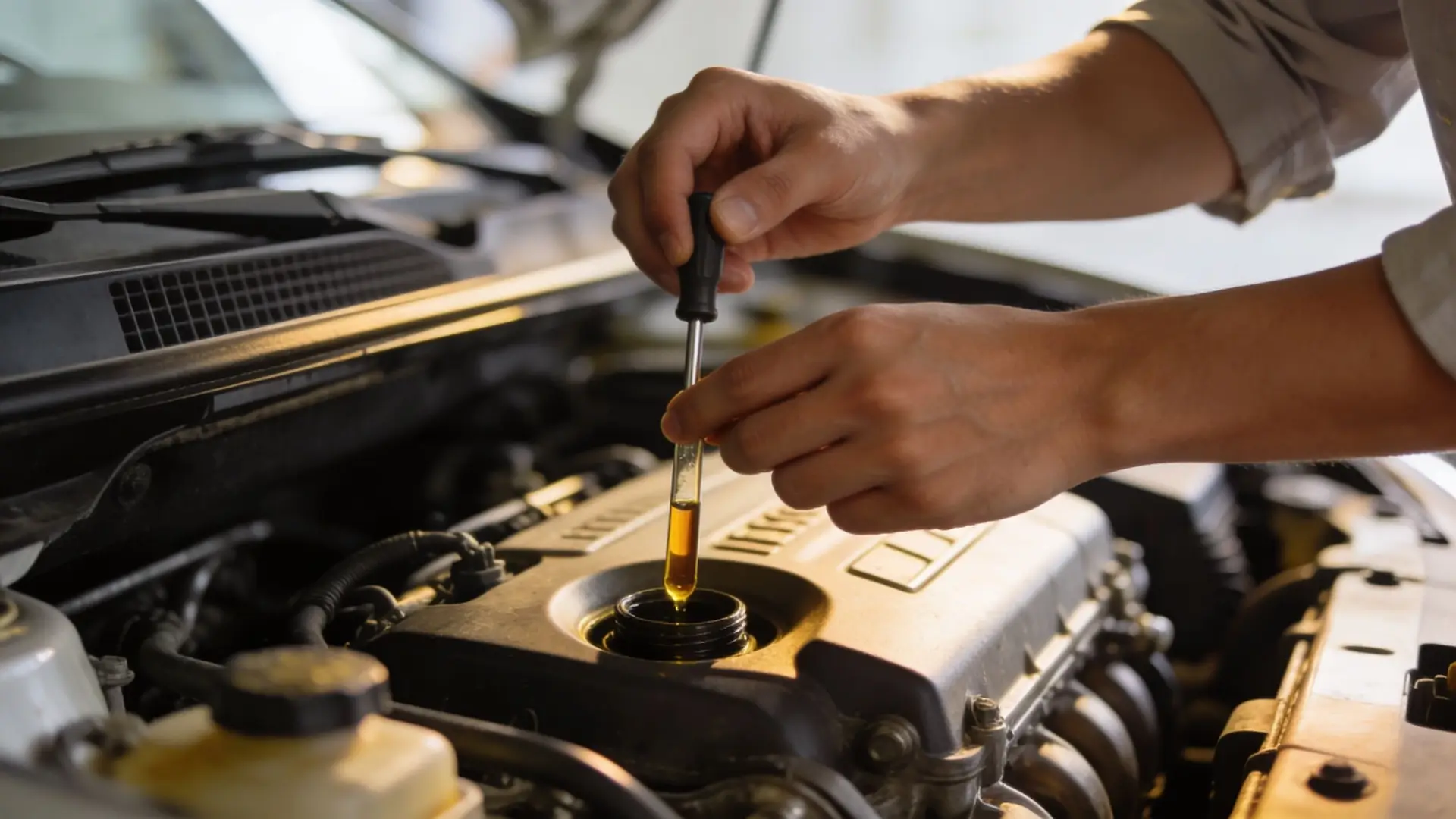
Start with a level surface and a calm engine
Park on flat ground. Turn the engine off and give the oil time to settle before checking. You want the reading to reflect what’s in the pan, not oil still splashed around the upper engine.
Then open the hood and find the dipstick. It usually has a bright handle.
Use the dipstick the right way
Pull it out once and wipe it clean with a paper towel or rag. Reinsert it fully, then pull it back out and read both the level and the condition.
Check two things at the same time:
- Oil level between the marks or holes on the dipstick
- Oil appearance on the end and on the wipe
If you’re not sure what your dipstick marks mean or want a more detailed walk-through, this guide on how to check your car oil level is worth bookmarking.
What you’re looking for
You’re not trying to perform a lab test in the driveway. You’re looking for obvious signs that the oil is either normal or abnormal.
Pay attention to:
- Level: Low oil needs attention even if the oil looks normal.
- Texture: Smooth is good. Grit isn’t.
- Consistency: It should not look foamy or unusually watery.
- Smell: Fuel smell, burnt smell, or sweet smell deserves caution.
A short visual demo can help if you prefer seeing the process done first:
A few mistakes to avoid
People often get false alarms because they check oil in a hurry.
- Don’t read the first pull only: Wipe and reinsert first.
- Don’t check on a steep slope: The reading can be misleading.
- Don’t judge by color alone: Condition matters more.
- Don’t ignore sudden changes: A fast level drop or strange smell means something changed.
If the oil is black but smooth, the engine may be perfectly fine. If it’s black and gritty or black and foamy, stop treating it like a routine maintenance question.
When to Visit the Experts at Express Lube & Car Care
Some oil concerns are normal maintenance questions. Others cross into diagnosis territory.
If the oil is dark and the vehicle is running normally, you may only need a routine service check and a look at the maintenance schedule. If the oil has other warning signs, it’s time to let a technician inspect it in person.
Red flags that shouldn’t wait
These are the big ones:
- Milky or foamy oil: This can point to coolant contamination.
- Gritty oil on the dipstick: That suggests wear particles are circulating.
- Strong fuel smell: This can indicate fuel dilution.
- Sharp burnt odor: Possible overheating or oil breakdown.
- Sudden oil loss: If the level drops quickly, something is wrong.
- Warning lights or rough running: Don’t assume the dark oil is the only issue.

What a shop can confirm that a dipstick can’t
A dipstick is useful, but it can’t tell you the full story. When there’s real concern, technicians can narrow down whether the problem involves contamination, internal wear, cooling-system leaks, or another engine issue.
That may include:
- Oil condition evaluation: Looking beyond color to texture, odor, and service history
- Filter inspection: Checking whether contamination is being managed properly
- Leak diagnosis: Finding external or internal fluid crossover problems
- Follow-up mechanical testing: Used when symptoms point beyond routine maintenance
The practical trade-off
Waiting too long can turn a manageable issue into a more expensive repair. Overreacting to normal black oil can waste money and lead to unnecessary service. The sweet spot is simple: don’t panic over color alone, but don’t ignore texture, smell, level changes, or warning lights either.
That approach keeps you from doing too much or too little.
Frequently Asked Questions About Engine Oil
Why did my oil turn black so fast
Fast-darkening oil is often normal, especially in newer engines we see every day at the shop. In many late-model cars and SUVs, oil can turn dark well before the next service is due because it is holding combustion byproducts in suspension and keeping them away from engine parts.
If your vehicle has a modern direct-injection engine, quick color change by itself usually is not a reason to panic. What matters more is whether the oil level is staying steady, the engine is running normally, and you are still within the manufacturer’s service interval.
Should I change oil just because it looks black
Color alone is a weak reason to change oil early. Use the oil life monitor if your vehicle has one, or follow the mileage and time interval listed in the owner’s manual.
I tell Richland Hills drivers to check the whole picture. Oil that is dark but smooth and at the proper level is very different from oil that is low, gritty, milky, or smells strongly burnt.
What color oil is actually bad
The bigger warning signs are condition and contamination, not just darkness. Milky oil can point to coolant mixing with oil. Foamy oil can suggest contamination or aeration. Gritty or sludge-like oil can mean neglected service or internal problems.
A sharp fuel smell or sudden level increase also deserves attention.
Is there a simple way to think about this
Engine oil works as a cleaner, lubricant, and heat carrier all at once. As it does that job, it rarely stays honey-colored for long.
The practical takeaway is simple. Dark oil can be normal. Dirty texture, strange smell, level changes, warning lights, and drivability problems are the signs that deserve a closer look. For a similar maintenance mindset in another part of the home, these residential window cleaning tips make the same basic point: judge the condition by performance and warning signs, not appearance alone.
If your oil looks black and you want a confident answer, not a guess, visit Express Lube & Car Care. Our ASE-certified team in Richland Hills can inspect the oil, check for red flags, and help you tell the difference between normal darkening and a problem that needs repair.