

You usually notice brake problems at the worst time. You're heading to work, easing up to a red light, and the pedal feels different. Or the car starts making that high-pitched noise you hoped would go away on its own. Most drivers don't start by searching for a “brake service kit.” They start with a symptom, a worry, and one simple question: do my brakes need attention right now?
That's the right question. A brake service kit matters, but the central issue is the service around the kit. New pads alone don't guarantee safe, smooth braking. Good brake work means the right parts, the right inspection, clean contact points, proper lubrication where it belongs, correct measurements, and final verification before the car goes back on the road.
What Is a Brake Service Kit Really?
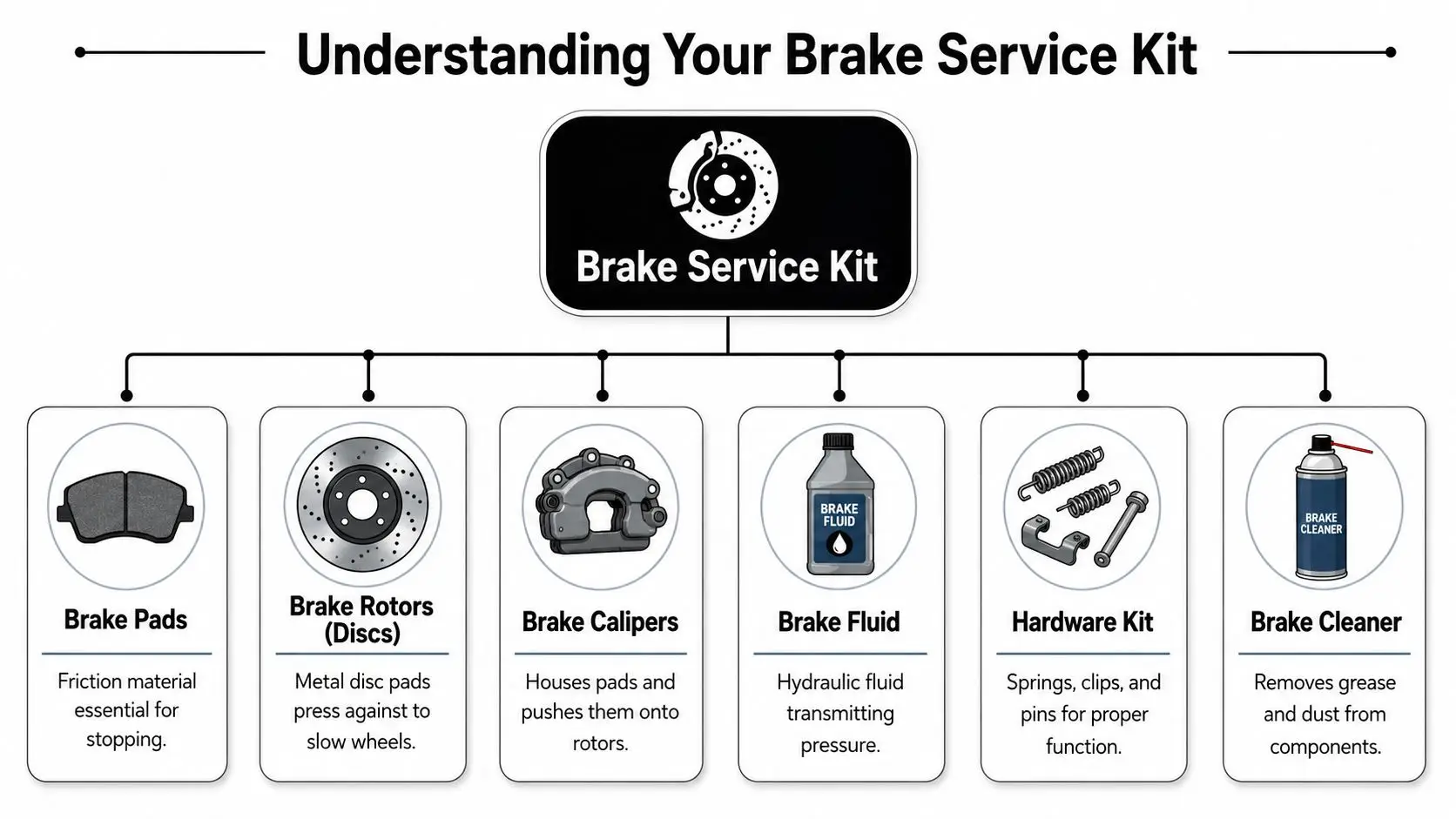
A brake service kit isn't one magic box that fixes every brake problem. In practice, it's a matched group of parts and service items used to restore braking in a complete, sensible way. It functions as a recipe. If one ingredient is wrong, the whole result changes.
Years ago, replacement brake work was more generic. Consumer Reports notes that about 25 years ago, disc and drum brakes typically used only two friction-material types, semimetallic and asbestos, and aftermarket suppliers rarely offered multiple performance grades. Today, replacement pads come in categories such as semimetallic and ceramic, and ceramic pads are described as cleaner, quieter, and more expensive. The same report also notes that there are no government regulations covering replacement brake pads, which is why choosing a matched, quality setup matters for stopping behavior, noise, rotor wear, and heat management in the aftermarket Consumer Reports on replacement brake pad categories and regulation.
What's usually part of the job
Some people use the term to mean parts only. Others mean the tools used to perform the work. In the shop, what matters is whether the kit supports a complete brake service, not a partial swap.
- Brake pads or brake shoes are the friction material. They do the actual stopping work.
- Rotors or drums are the surfaces those friction materials press against.
- Hardware includes clips, springs, shims, and pins that help the brakes release and operate properly.
- Brake fluid service items may also come into play when the system needs bleeding or inspection.
- Cleaning supplies matter because dirty contact points can ruin an otherwise good brake job.
- Application-specific parts matter because one vehicle may respond well to ceramic pads while another may need a different setup.
Why the match matters
A brake job is like fitting running shoes with the right insoles. You can force the wrong combination to work for a while, but it won't feel right and it won't wear correctly. That's why drivers who are already thinking about overall vehicle care often benefit from broader maintenance resources too, such as Top Motor Keys vehicle security maintenance, because brake safety is one part of keeping the whole vehicle dependable.
Practical rule: A brake service kit should support the vehicle's braking system as a whole, not just replace the visibly worn part.
If your vehicle needs rotors as part of the job, it also helps to understand when replacement makes more sense than trying to reuse worn surfaces. This overview of brake rotor replacement service is a good place to start.
7 Telltale Signs Your Brakes Need Service
Most brake problems announce themselves before total failure. The problem is that drivers get used to the warning signs. They turn up the radio, press a little harder, and keep going.
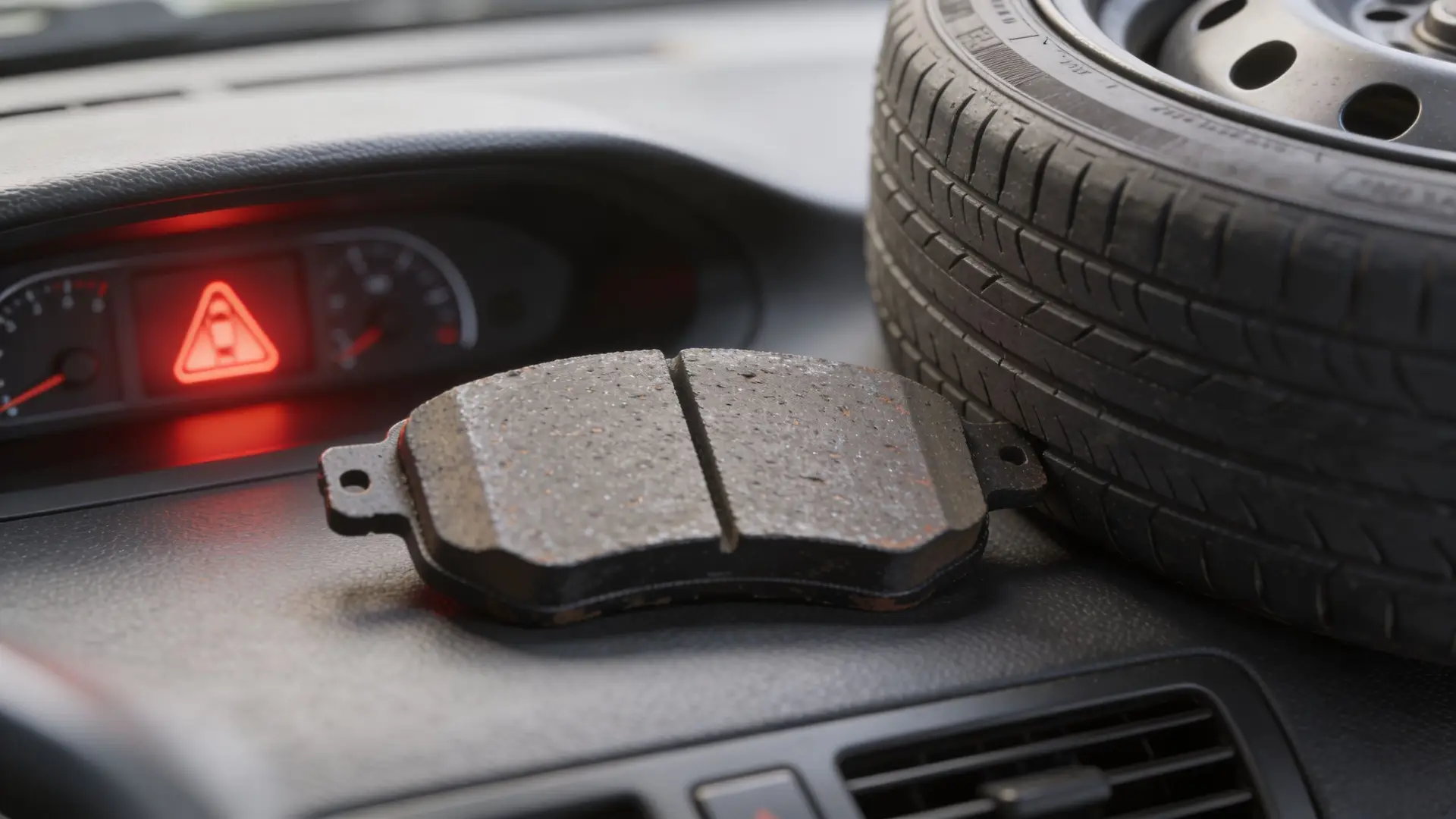
Listen to what the car is telling you
Here are seven common signs that brake service shouldn't wait:
Do you hear squealing when you slow down?
That often points to worn pads or hardware that isn't doing its job cleanly.Do you hear grinding?
That's more serious. Grinding can mean the friction material is worn down far enough that metal parts are contacting surfaces they shouldn't.Does the steering wheel or brake pedal shake during braking?
Vibration can mean the braking surfaces aren't operating evenly.Does the pedal feel soft or sink lower than normal?
That can point to hydraulic issues, air in the system, or other faults that a simple parts swap won't fix.Does the car pull to one side?
Uneven braking force can come from sticking components, uneven pad wear, or hardware problems.Does braking feel weaker than it used to?
You know your vehicle. If it takes more effort or more distance to slow down, that matters.Do you smell something hot after normal driving?
Heat and drag can point to a brake that isn't releasing properly.
What these signs usually mean
Not every symptom means you need the same repair. A squeal might be a routine wear issue. A pull or a soft pedal often means the brake service needs to go deeper than pads and rotors.
If you've noticed one wheel wearing faster than another, this guide on what causes uneven brake pad wear can help you understand why that happens.
A quick visual can help you connect those symptoms to the parts involved:
Ignore brake noise long enough, and a smaller service can turn into a bigger repair. The system rarely gets better on its own.
DIY vs Professional Brake Service Which Is Right for You
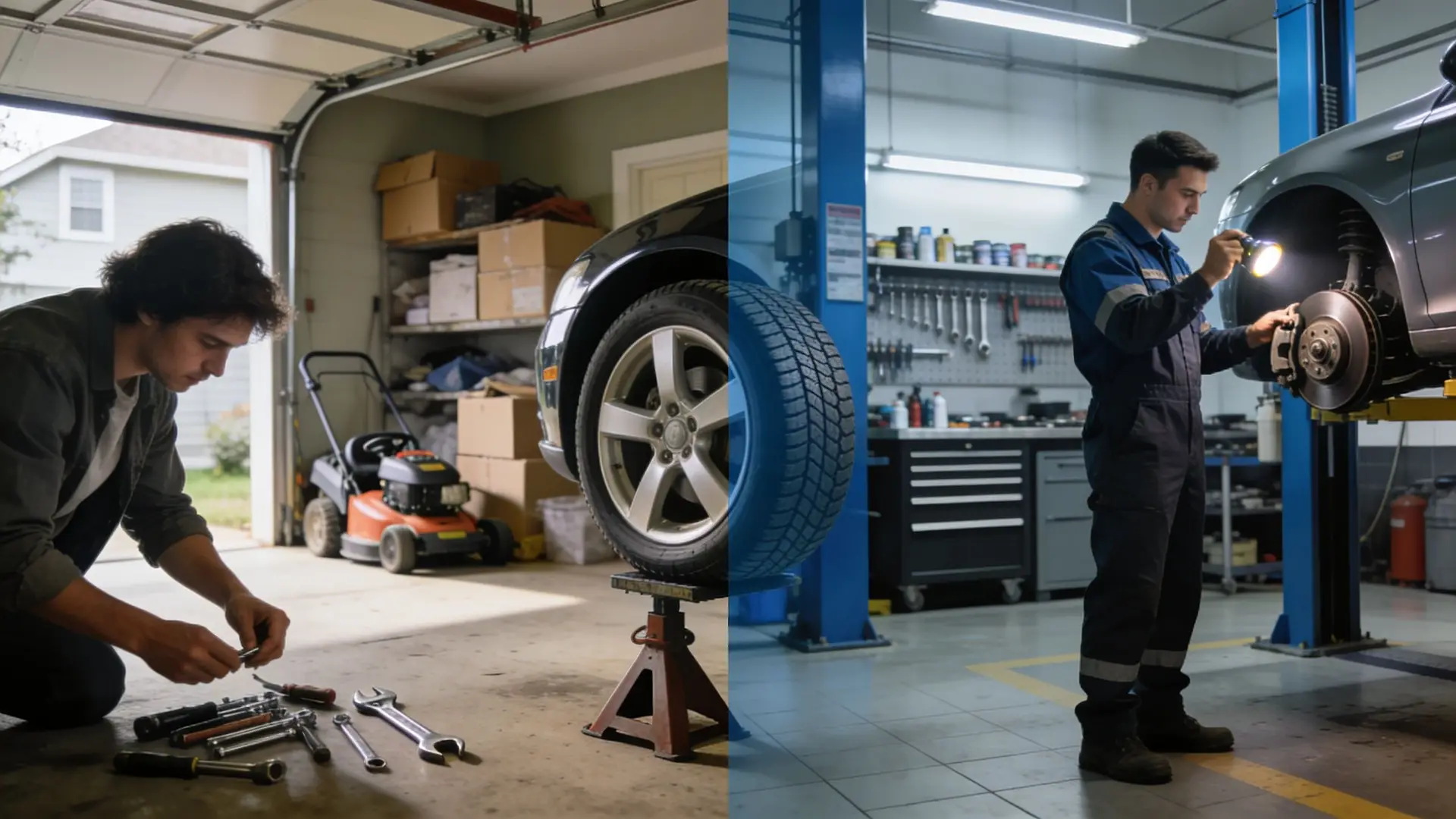
Some brake work is within reach for an experienced DIYer. That's true. If you've got the right tools, the right information, and enough time, a basic pad and rotor job on a familiar vehicle can be manageable.
However, many people confuse a brake service kit with a complete solution.
What DIY gets right
DIY can make sense when the job is straightforward and the person doing it understands brake fundamentals. There's value in seeing the parts firsthand, checking wear patterns, and knowing the work was done carefully.
A home mechanic also controls the parts choice. That matters because pad material, hardware quality, and rotor condition all affect the final result.
Where DIY often goes wrong
Retail and professional tool sets show this core issue clearly. Brake service kits are often tool bundles for caliper compression, pad spreading, drum brake spring work, bleeder tasks, hanger tools, and cleanup. They help you perform the service, but they do not fix seized slide pins, worn calipers, contaminated fluid, warped rotors, or electronic parking brake retraction requirements.
Powerbuilt's professional-style kit is a good example of what proper brake work often requires. These kits commonly combine piston tools, pad spreaders, brake spring pliers, shoe spring retaining tools, drum brake adjusting tools, and multiple bit sockets for common fasteners, which reduces tool improvisation and helps avoid damaged hardware Powerbuilt brake service kit tools and applications.
Here's the practical comparison:
| Factor | DIY brake work | Professional brake service |
|---|---|---|
| Tool needs | You may need piston tools, spring tools, bit sockets, torque tools, and bleeding equipment | The shop already has vehicle-appropriate tools |
| Time | Often longer than expected, especially if hardware is stuck | Usually more efficient because the process is routine |
| Inspection depth | Depends on your experience | Typically includes checking the full brake system condition |
| Risk | Incorrect installation can cause noise, pull, drag, or poor pedal feel | Lower risk when measurements and procedures are followed |
| Vehicle complexity | Older simple systems are easier | Modern systems can require more specialized procedures |
When professional service is the smarter move
If the job involves a soft pedal, a parking brake issue, uneven wear, frozen hardware, or anything hydraulic, professional service usually saves time and prevents repeat work. Even bleeding the system sounds simple until you run into trapped air, sequence issues, or fluid contamination. If you want to understand that side of the job better, this article on how to bleed brakes shows why brake hydraulics deserve respect.
Shop-floor reality: Most comeback brake jobs aren't caused by the new pads. They're caused by the parts around them that were never inspected or serviced correctly.
The Express Lube Brake Service Process
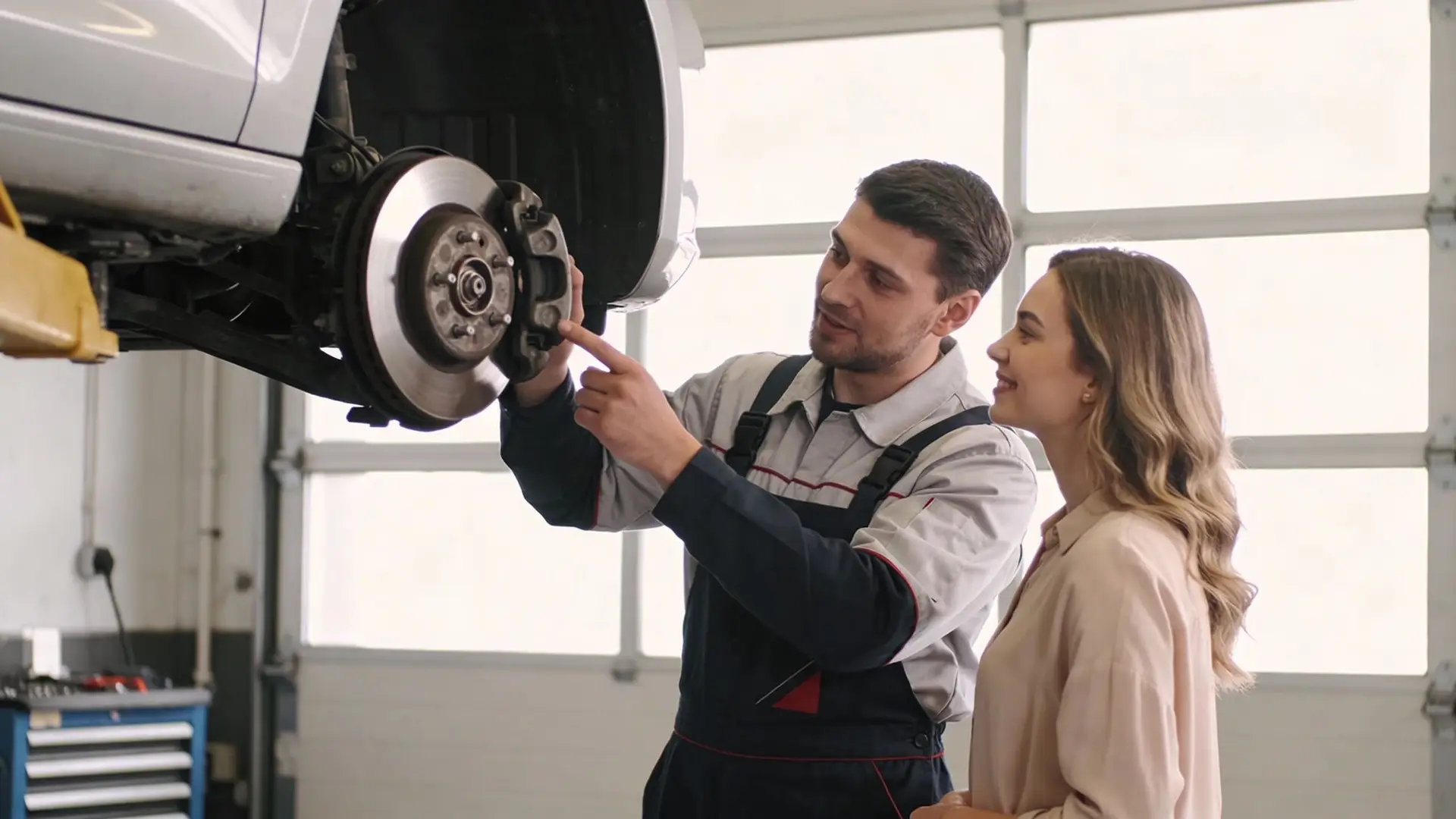
Brake service starts the moment a driver describes the problem. A squeal on the first stop of the morning points us in a different direction than a shake in the pedal at highway speed or a pull during hard braking. Good brake work begins with that detail, because the fix is based on the symptom, the wear pattern, and the condition of the whole assembly.
What gets checked during service
A brake service kit matters only if the service around it is done right. Pads, rotors, clips, and shims are the parts. The result depends on inspection, cleaning, lubrication, correct measurements, and final verification.
NHTSA service guidance calls for cleaning corrosion and contamination before measuring rotor thickness, checking thickness at 8 points around the rotor, comparing those readings to the vehicle maker's minimum specification, inspecting caliper slide pins and boots, cleaning pad backing plates and shims, and tightening fasteners to the correct torque NHTSA brake service guidance on rotor measurement and reassembly checks. That is how you avoid noise, uneven wear, pedal issues, and repeat repairs.
What a complete service looks like
At the shop level, the process usually follows a clear order:
- Confirm the complaint with the driver and inspect the system for wear, damage, leaks, and heat spots.
- Measure pads, rotors, or drums so the repair plan matches the actual condition of the brakes.
- Clean rust and debris from contact points because new parts cannot move correctly on dirty surfaces.
- Check and service caliper slides, boots, and hardware so the brakes release and apply evenly.
- Install quality replacement parts as needed based on measurements and the vehicle's use.
- Lubricate the correct areas with the correct products to prevent sticking and noise.
- Torque fasteners to spec and verify pedal feel and operation before the vehicle goes back on the road.
That is the difference between a parts swap and a brake service.
One option for drivers who want that kind of complete brake work is Express Lube & Car Care, which offers brake inspections, brake pad replacement, rotor resurfacing or replacement, and brake fluid checks as part of its service lineup.
Why verification matters
The job is not finished when the new parts are bolted on. It is finished when the brakes apply smoothly, release properly, the pedal feels right, and the vehicle leaves without a preventable noise or pull.
I have seen plenty of fresh pads installed over frozen slides, glazed rotors, or hardware buried in rust. Those jobs come back. Clean, measured, correctly assembled brakes last longer and feel better because every part in the system is doing its share.
Clean parts on dirty contact points still make a dirty brake job.
That is why the service matters as much as the kit.
Brake Service Cost and Time Expectations in Richland Hills
Drivers usually want two answers right away. What's this going to cost, and how long will I be without my car?
The honest answer is that brake service pricing depends on the vehicle, the brake design, the condition of the existing parts, and how complete the repair needs to be. A front pad replacement on one commuter car is not the same job as servicing a vehicle with damaged rotors, seized hardware, or a hydraulic concern. That's why very cheap quotes can be misleading. Sometimes they reflect a smaller scope, not a better value.
What affects the final price
A brake service kit can help organize the repair and reduce guesswork, but the invoice is still shaped by the condition of the vehicle.
- Vehicle type affects parts selection and labor access.
- Pad material choice changes noise characteristics, dust levels, and part cost.
- Rotor or drum condition determines whether resurfacing is possible or replacement makes more sense.
- Hardware and caliper condition can turn a simple service into a more involved repair.
- Fluid condition may require additional brake system attention.
What affects turnaround time
Some brake jobs move quickly. Others slow down because the vehicle needs more than expected after inspection. Rusted fasteners, frozen slides, worn boots, or fluid issues can all add time.
The best way to avoid that kind of surprise is staying ahead of the wear. Brake inspections are recommended at least every 6 months or every 6,000 miles, whichever comes first, according to the maintenance guidance cited by R1 Concepts, and that schedule helps catch problems earlier when repairs are often simpler and more cost-effective brake inspection intervals and brake kit efficiency guidance.
How to think about value
A low price on partial brake work can cost more later if the vehicle comes back with noise, pull, or uneven wear. Good value comes from doing the right amount of service the first time.
For many local drivers, that also means looking at shop specials, community discounts, and timing maintenance before the repair grows. If your brakes are already talking to you, waiting usually doesn't make the job cheaper.
Your Next Step for Safer Braking
A brake service kit is useful. A complete brake service is what protects you.
That distinction matters. A kit can be smart preventive maintenance, but it doesn't answer every question. Separate parts may still be needed, and only a proper inspection can confirm whether the caliper, slides, and fluid are still serviceable. That's the difference between a repair that lasts and one that sends you back to the shop with the same complaint. Specialty brake parts suppliers make that point clearly too: a kit helps organize and support the job, but inspection determines whether the rest of the system is still fit for service brake repair kits and when additional parts may be needed.
If your pedal feels different, your car pulls, or your brakes are making noise, don't wait for a more expensive failure. Get them checked while the problem is still manageable. For most drivers, the smartest next step isn't ordering a box of parts. It's having someone verify what the vehicle needs.
If your brakes are making noise, shaking, pulling, or just don't feel right, stop by Express Lube & Car Care for a brake inspection. You'll get a clear look at what's worn, what's still serviceable, and what repair makes sense for your vehicle and budget.