

A soft or spongy brake pedal almost always means air, moisture, or a leak has gotten into your hydraulic brake system, and it deserves attention right away. If the pedal sinks toward the floor or you have to pump it to get any stopping power, stop driving and get the vehicle inspected before you get back on the road. Waiting rarely makes this problem better.
TL;DR:
- A soft or spongy brake pedal is most often caused by air in the brake lines, moisture-contaminated fluid, or external leaks affecting hydraulic pressure.
- Immediate actions include applying steady pressure, shifting to neutral, turning on hazards, and stopping if the pedal becomes unresponsive or sinks to the floor.
- Before visiting a mechanic, check brake fluid level, look for leaks around wheels and master cylinder, and pump the pedal to detect internal leaks.
- Professional repair is required if the pedal sinks to the floor, there are visible leaks, or longer stopping distances occur, with diagnostics including pressure tests and component inspections.
- Routine maintenance like fluid flushes every 2 to 3 years, using proper DOT fluid, and inspecting lines can prevent a soft pedal from developing.
Table of Contents
- What causes a soft or spongy brake pedal
- What to do the moment your brake pedal feels soft
- Simple checks and DIY fixes before you head to a shop
- When a soft pedal means it’s time for professional service
- Preventing a soft pedal before it starts
- How we approach a soft brake pedal at Express Lube & Car Care
- Get your brakes checked without the wait or the guesswork
- Sources
- FAQ
What causes a soft or spongy brake pedal
Your brake system relies on fluid that does not compress, so when the pedal feels mushy, something is letting air or extra give into that closed loop. A few culprits show up again and again:
- Air in the brake lines, often from a recent repair, a loose fitting, or a slow leak, compresses under pressure instead of pushing fluid firmly to the calipers.
- Contaminated or moisture-heavy fluid, since brake fluid is hygroscopic and pulls in water over time, which lowers its boiling point and can create vapor pockets under heavy braking, according to AAA.
- External leaks at the master cylinder, calipers, wheel cylinders, or brake lines, which drop fluid volume and pedal firmness together.
- Internal master cylinder seal failure, where the pedal sinks slowly under steady pressure because fluid bypasses the seals instead of building pressure.
- ABS or hydraulic module faults, including issues tied to regenerative braking blending in EVs, which can affect how firm the pedal feels even with a mechanically sound system.
- Sticking or seized calipers, which throw off pedal feel and braking balance even when fluid levels look normal.
Signs your brakes need attention often overlap with these causes, so a soft pedal is rarely an isolated complaint. SAE research on moisture detection in brake fluid confirms that absorbed water reduces boiling temperature and can make fluid compressible under heat, which is an underappreciated cause of a spongy pedal even when there is no visible leak.
What to do the moment your brake pedal feels soft
If you notice the softness while driving, act calmly but quickly.
- Keep both feet ready and apply firm, steady pressure to the brake pedal rather than pumping rapidly.
- If the pedal is unresponsive or continues sinking, shift into neutral (or press the clutch in a manual), turn on your hazards, and ease toward a safe stop.
- If the pedal hits the floor or the brakes feel ineffective, stop driving entirely and call for a tow or roadside help rather than continuing on.
- If you only notice a mild, slow-onset sponginess at low speed, you can plan a same-day check rather than treating it as a roadside emergency.
Pro Tip: A pedal that sinks straight to the floor usually signals a sudden, severe hydraulic failure, and guidance on stopping safely when this happens is worth knowing before you ever need it. According to AAA, a soft pedal that requires more effort than usual signals a hydraulic compromise and calls for prompt professional inspection.
Simple checks and DIY fixes before you head to a shop
Before assuming the worst, a few low-risk checks can narrow down what you are dealing with.
- Check your brake fluid level and color against the reservoir markings; our guide to telling if brake fluid is low walks through what healthy fluid looks like versus fluid that needs replacing.
- Look under the vehicle and around each wheel and the master cylinder for wet spots, drips, or fluid residue.
- With the engine off, pump the brake pedal a few times, then hold steady pressure. If it slowly sinks toward the floor, that points to an internal leak rather than trapped air.
- Understand that bleeding the brakes helps when air entered after a hose or line was opened, but it will not fix an internal master cylinder leak or a failing seal.
Pro Tip: Never mix different DOT fluid types, and never keep driving on a pedal that sinks all the way to the floor just because it “still stops eventually.” If bleeding sounds like the right move, our step-by-step bleeding guide explains the process and where drivers commonly go wrong.
When a soft pedal means it’s time for professional service
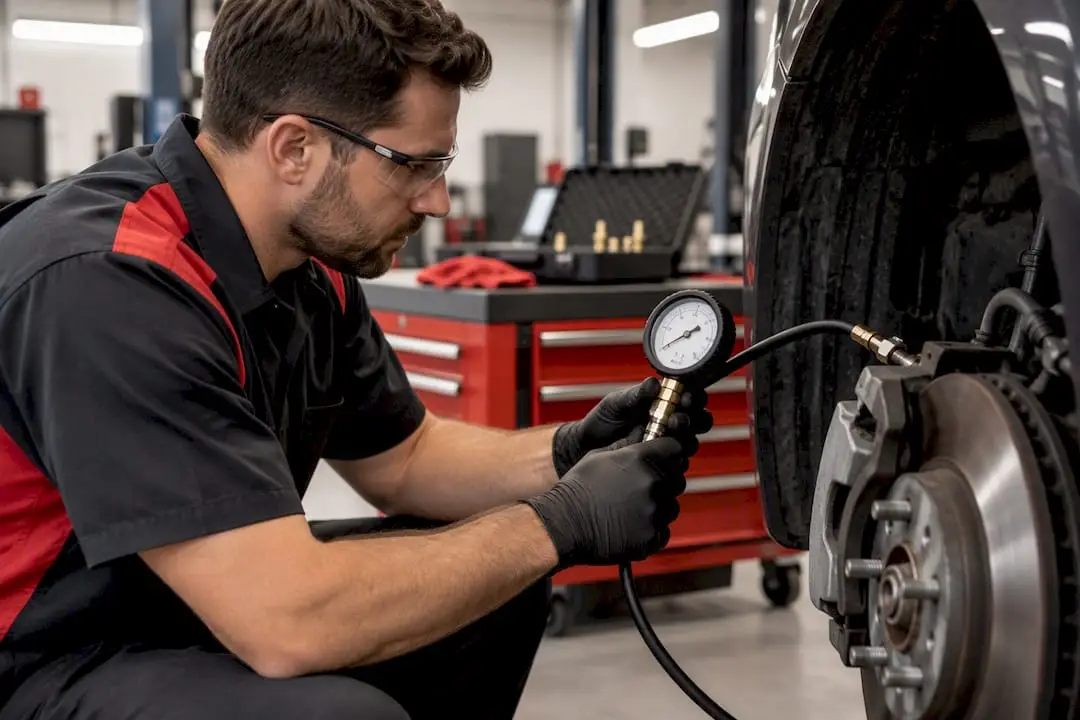
Some warning signs mean it is time to stop troubleshooting and get the car looked at: a pedal that sinks to the floor, visible fluid leaks, a brake warning light, or noticeably longer stopping distances. These point to problems that go beyond a quick fix.
A proper shop diagnosis typically includes:
- Pressure testing the hydraulic system to isolate where the softness originates.
- Inspecting the master cylinder, calipers, wheel cylinders, and lines for wear or leaks.
- Scanning ABS and hydraulic control modules for stored fault codes.
- Flushing and bleeding the brake fluid to remove air or moisture-contaminated fluid.
Repairs like master cylinder replacement, caliper service, or line repair are not reasonable DIY projects for most drivers, since internal seal failures and ABS module faults require specialized tools and testing to diagnose correctly.
Preventing a soft pedal before it starts
A little routine maintenance goes a long way toward keeping your pedal firm and predictable.
- Have your brake fluid flushed roughly every 2 to 3 years, since AAA notes this interval helps prevent moisture-related failures.
- Ask your technician to check hoses, lines, and fittings during routine service instead of waiting for a symptom to show up.
- Use the DOT-specified fluid for your vehicle, and replace fluid that looks dark or contaminated rather than just topping it off.
- Avoid prolonged hard braking or towing beyond your vehicle’s rated capacity, since sustained heat can push moisture-laden fluid closer to its boiling point.
How we approach a soft brake pedal at Express Lube & Car Care
Technicians run digital inspections with photos so you can see what is happening in your brake system before any work begins. When a pedal sinks or feels spongy, it is treated as a safety issue first, with recommendations for a tow or immediate repair whenever hydraulic failure looks likely. Repairs may come with a warranty, and walk-ins are often welcome.
— Express Lube & Car Care
Get your brakes checked without the wait or the guesswork
A soft pedal is not something to schedule for “someday.” Professional auto care providers handle brake inspections, fluid flushes, bleeding, and repair or replacement of master cylinders, calipers, and lines, often with same-day service available.
- Technicians diagnose the cause using digital inspection photos you can review.
- Some repairs may be backed by a warranty.
- Walk-ins are often welcome, with same-day service available when schedules are tight.
Visit our brake repair page to see the full scope of what we handle, or call (817) 284-8478 to schedule your inspection today.
Sources
This article draws on AAA guidance on brake warning signs, federal service-brake performance standards, SAE research on brake fluid moisture, and AAA’s stuck-pedal emergency guidance.
- How to Know if Your Brakes Are Going Bad — AAA
- The Development of an Alarm Device for the Moisture Content in the Hydraulic Fluid of the Automobile Brake System — SAE
FAQ
How do you fix a soft brake pedal?
The fix depends on the cause: bleeding removes trapped air, a fluid flush addresses moisture contamination, and leaks or a failing master cylinder require component repair or replacement. A shop needs to pressure test the system first to know which fix actually applies.
Why is my brake pedal soft but no leaks?
A soft pedal without visible leaks often points to air trapped in the lines or moisture-contaminated fluid that lowers its boiling point, as SAE research describes. It can also mean an internal master cylinder seal is bypassing fluid without any external sign.
Why is my brake pedal softer than usual?
A gradual change in pedal feel usually means fluid has absorbed moisture over time or a small leak has developed somewhere in the hydraulic system. AAA recommends professional inspection promptly whenever pedal feel changes, since these issues typically worsen rather than resolve on their own.
Is it safe to drive with a soft brake pedal?
Driving with a soft pedal is risky because it usually signals reduced hydraulic pressure and longer stopping distances. If the pedal sinks to the floor or braking feels significantly weaker, stop driving and arrange a tow or professional inspection rather than continuing your trip.