

Car service pricing is defined by a combination of labor rates, parts costs, geographic market conditions, and repair complexity. These variables interact differently at every shop, which is exactly why car service prices differ so widely from one estimate to the next. A brake job that costs $180 at an independent shop in Memphis might run $350 at a dealership in San Francisco. Understanding what drives those numbers puts you in control of every service decision you make.
Why do car service prices differ so much?
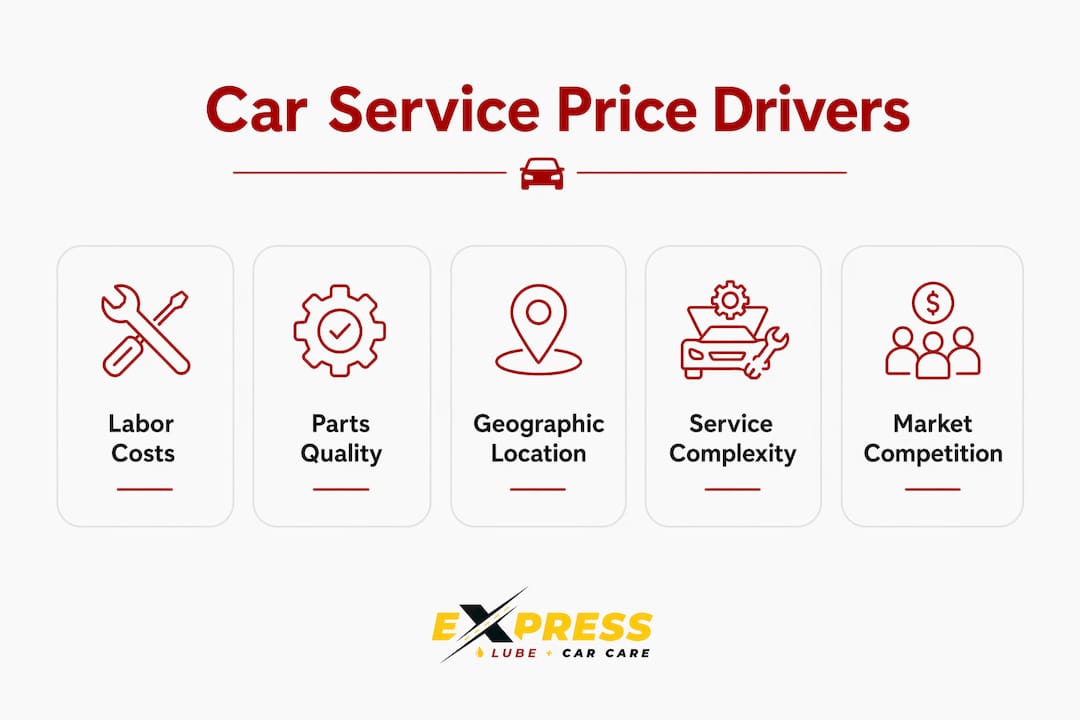
Labor, parts, location, and service type are the four core variables in car repair pricing differences. None of them work in isolation. A shop’s labor rate reflects its overhead, its technicians’ certifications, and the local job market. Parts pricing depends on whether the shop uses OEM, aftermarket, or remanufactured components. Geography sets the floor for what everything costs. And the complexity of the repair determines how many hours and how much equipment the job requires. When all four factors stack up differently, the price gap between two shops for the same repair can feel almost random. It is not random at all.
How do labor costs drive car service price differences?
Labor is the single largest line item on most repair invoices, and it varies more than most car owners realize. Dealership labor rates range from roughly $150 to $250 per hour, while independent shops typically charge $90 to $150 per hour. That gap alone can add hundreds of dollars to a single repair.
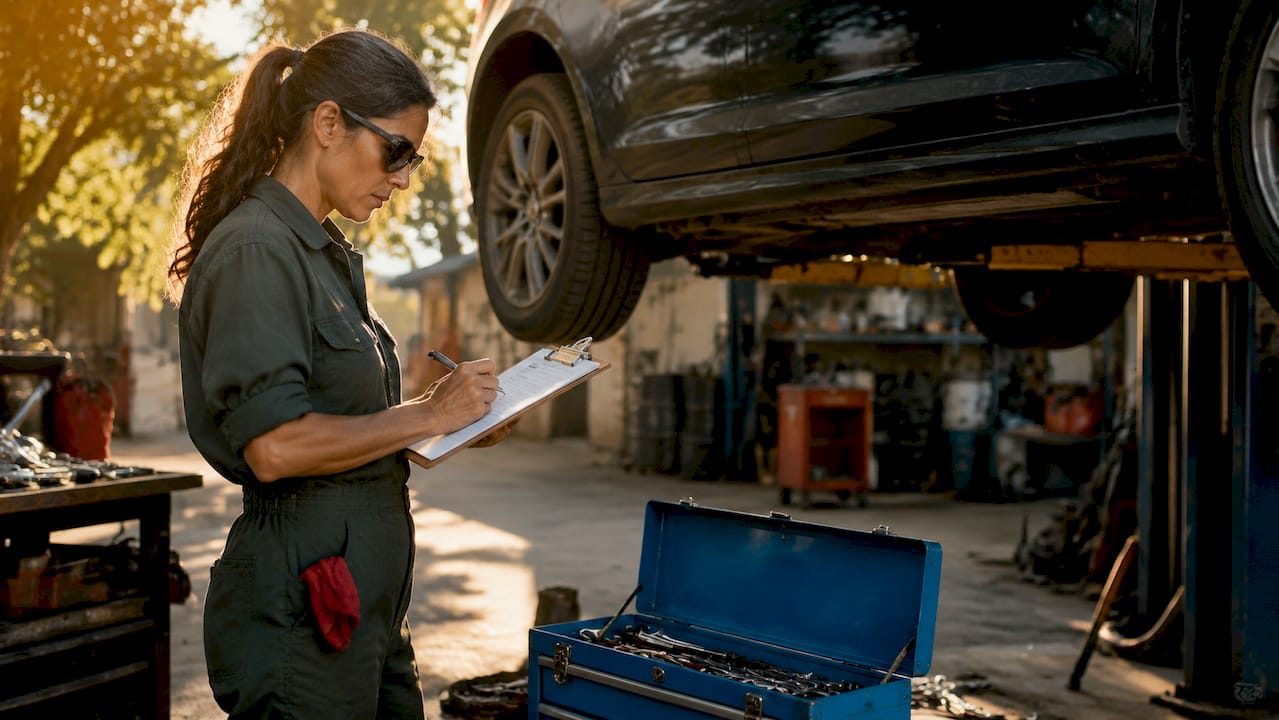
The billing method matters just as much as the rate. Most shops use a flat rate system, where standardized repair times are set by software tools like Mitchell 1 or AllData. A job listed as 2.5 hours gets billed at 2.5 hours whether the technician finishes in 90 minutes or takes three hours. That system protects efficient technicians but can obscure the true cost of labor for car owners reading an invoice.
Geographic wage differences compound the problem. A certified ASE technician in a high cost-of-living city commands a higher wage, and that cost passes directly to you. Shops in lower-wage markets simply have less overhead to recover.
- Dealership rates: $150–$250/hr, reflecting brand-specific training and proprietary tools
- Independent shop rates: $90–$150/hr, often staffed by experienced technicians
- Flat rate billing: Charges are based on standardized job times, not actual hours worked
- Technician certification: ASE-certified technicians typically command higher rates than uncertified ones
- Commission-based advisors: Dealership service advisors often work on commission, which can push recommended services beyond what your vehicle actually needs right now
Pro Tip: Ask any shop for a written estimate that separates labor hours from the hourly rate. That one step lets you compare apples to apples across multiple quotes.
How do parts quality and sourcing affect the final bill?
Parts are the second biggest variable in auto service cost variations, and the choices shops make on sourcing directly affect what you pay upfront and what you pay later. Aftermarket parts save customers 30–50% on initial cost compared to OEM equivalents. That sounds like a win, but lower-quality aftermarket parts often fail sooner, which means paying labor charges again for the same repair.
OEM parts, which are made by or for the original vehicle manufacturer, carry a higher price tag because they are built to exact factory specifications. They also typically come with a manufacturer warranty. Remanufactured parts sit in the middle: they are rebuilt to meet original specs and usually cost less than new OEM components while lasting longer than budget aftermarket options.
Shops also add a markup to parts, typically 25–50%, to cover the labor warranty liability they take on. If a part fails after installation, the shop is responsible for the re-labor cost. Bringing your own parts is generally discouraged for this reason. If you supply the part and it fails, you pay for the labor again yourself.
- OEM parts: Highest upfront cost, factory specifications, manufacturer warranty
- Aftermarket parts: 30–50% cheaper initially, quality varies widely by brand
- Remanufactured parts: Middle-ground cost, rebuilt to original specs, solid longevity
- Shop markup: Standard 25–50% added to parts cost to cover warranty liability
Pro Tip: Ask your shop which brand of aftermarket part they use and whether it carries a warranty. A reputable shop will use name-brand aftermarket components, not the cheapest option available.
How does geography shape what you pay for car service?
Location is one of the most underappreciated factors affecting car service costs. Identical repairs vary by an average of 47.3% across 50 major U.S. cities, with some repairs showing more than 150% variance between expensive coastal cities and cheaper inland markets. That is not a small difference. It is the difference between a manageable bill and a genuinely painful one.
Commercial rent is a major driver. Rent costs alone explain up to 40% of geographic price variance. A shop in San Francisco pays $35–$45 per square foot, while a comparable shop in Memphis pays $8–$12 per square foot. That overhead gap shows up directly in labor rates and parts markups.
| Market Type | Typical Labor Rate | Commercial Rent (per sq ft) | Price Variance vs. National Avg. |
|---|---|---|---|
| High-cost coastal city | $180–$250/hr | $35–$45 | Up to +50% |
| Mid-size metro | $120–$160/hr | $18–$28 | Near average |
| Lower-cost inland city | $90–$120/hr | $8–$12 | Up to -30% |
Local competition also plays a role. Markets with more independent shops tend to have more competitive pricing. Regulatory compliance costs, including emissions testing equipment and environmental disposal fees, add another layer of overhead that varies by state.
How does service complexity change the cost?
Not all car maintenance is created equal, and the type of service you need is one of the clearest predictors of cost. A basic oil change at a shop like Express Lube & Car Care is a straightforward, fast service. A transmission rebuild is a multi-day job requiring specialized tools, deep technical knowledge, and expensive components. The fair price for an oil change looks nothing like the cost of a timing belt replacement, even at the same shop.
Your vehicle’s make, model, and age add another layer. Higher-end vehicles incur higher service costs because they require specialized training, proprietary diagnostic tools, and expensive OEM components. A brake job on a standard sedan costs far less than the same job on a European luxury vehicle.
Here are the key factors that add complexity and cost to any repair:
- Diagnostic time: Complex electrical or computer-related issues require hours of diagnostic work before any physical repair begins.
- Specialized equipment: Some repairs need manufacturer-specific tools that only certain shops own.
- Technician expertise: Advanced certifications and brand-specific training command higher labor rates.
- Parts availability: Rare or imported parts take longer to source and often cost more.
- Vehicle age: Older vehicles may have corroded fasteners or worn components that extend labor time significantly.
- Repair scope: A job that uncovers additional damage mid-repair will expand in both time and parts cost.
Understanding types of vehicle repair services helps you set realistic expectations before you walk into any shop.
Practical tips for managing car service costs
You do not have to accept the first estimate you receive. Getting two or three quotes for any repair over $200 is standard practice and most shops expect it. The key is comparing estimates at the same level of detail, not just the bottom line.
Independent shops offer better negotiation opportunities and generally lower rates, and many are staffed by experienced technicians who previously worked at dealerships. Choosing a local auto shop over a dealership often means lower overhead costs passed on to you without sacrificing quality.
- Request itemized estimates: Separate labor hours, labor rate, and parts cost on every quote.
- Ask about parts options: Find out if OEM, aftermarket, or remanufactured parts are being used and why.
- Check the warranty: A reputable shop warranties both parts and labor, typically for 12 months or 12,000 miles.
- Read the invoice before you pay: Confirm that what was quoted matches what was charged.
- Ask about flat rate billing: Understanding the billed hours versus actual hours helps you spot inflated charges.
Key takeaways
Car service pricing is determined by four interacting variables: labor rates, parts sourcing, geographic overhead, and repair complexity, and understanding each one gives you real leverage when comparing estimates.
| Point | Details |
|---|---|
| Labor rates vary widely | Dealerships charge $150–$250/hr; independent shops charge $90–$150/hr for the same work. |
| Parts quality affects long-term cost | Aftermarket parts save 30–50% upfront but often cost more over time due to earlier failure. |
| Geography drives major price gaps | Identical repairs vary by 47.3% across U.S. cities, largely due to rent and wage differences. |
| Service complexity multiplies costs | Luxury vehicles, older cars, and complex repairs require specialized tools and expertise. |
| Independent shops offer more flexibility | Consumer Reports data shows higher satisfaction and better negotiation at independent shops. |
What we have learned from years of watching car owners overpay
The most common mistake I see car owners make is treating every estimate as a fixed price. It is not. Labor rates, parts choices, and even diagnostic fees are often negotiable, especially at independent shops. The car owners who get the best value are the ones who ask questions before they approve any work.
The second thing I have noticed is that cheap parts almost always cost more in the long run. A $40 brake pad that lasts 18 months will cost you more in total labor than a $70 pad that lasts four years. The math is simple, but the upfront sticker price makes it easy to miss.
Transparency is the real differentiator between a shop worth trusting and one worth avoiding. A good shop explains every line on your estimate before you sign it. If a service advisor cannot tell you why a specific part was chosen or how many labor hours a job requires, that is a signal worth paying attention to. At Express Lube & Car Care, we make it a point to walk every customer through their estimate so there are no surprises on the final invoice.
— Express Lube & Car Care
Honest pricing at Express Lube & Car Care
Express Lube & Car Care gives every customer a clear, itemized estimate before any work begins. Our certified ASE technicians explain the parts being used, the labor time involved, and why each service is recommended. No commission-based pressure. No mystery markups.
Walk-in appointments are always welcome, and our current service specials make routine maintenance genuinely affordable. From oil changes to more involved repairs, you get honest pricing backed by quality workmanship. Drivers in the Richland Hills area trust us because we treat every estimate as a conversation, not a transaction.
FAQ
Why do dealerships charge more than independent shops?
Dealerships charge $150–$250/hr compared to $90–$150/hr at independent shops, reflecting higher overhead, brand-specific training, and commission-based service advisors who may recommend additional services.
What makes car service more expensive in some cities?
Commercial rent and technician wages vary dramatically by region. Shops in high-cost cities like San Francisco pay $35–$45 per square foot in rent versus $8–$12 in lower-cost markets, and those costs pass directly to customers.
Are aftermarket parts a good way to save money on repairs?
Aftermarket parts cost 30–50% less upfront, but lower-quality options fail sooner and require additional labor charges. Ask your shop which brand they use and whether it carries a warranty before agreeing to aftermarket components.
What is flat rate billing and how does it affect my invoice?
Flat rate billing charges you for a standardized job time set by industry software like Mitchell 1, regardless of how long the repair actually takes. A 2.5-hour job is billed at 2.5 hours even if the technician finishes faster.
How can I tell if a car service estimate is fair?
Request an itemized estimate that separates labor hours, the hourly rate, and parts costs. Compare at least two or three quotes for any repair over $200, and confirm that the shop warranties both parts and labor before approving the work.