

Same day vehicle maintenance is defined as completing essential car care tasks within a single day, either through quick DIY fixes at home or a focused visit to a professional shop. Busy car owners lose time and money every week by skipping small tasks that take under 10 minutes or by arriving at a shop unprepared. The good news is that a well-planned approach to quick vehicle repair advice and one day car care hacks can keep your car safe and running well without eating up your whole day. Express Lube & Car Care works with drivers like you every day, and the pattern is clear: preparation is what separates a same-day win from a frustrating delay.
What same day vehicle maintenance tips actually work?
The most effective same day vehicle maintenance tips fall into two categories: tasks you can handle yourself in minutes, and professional services you can complete in a single shop visit with the right preparation. Most car owners focus only on the second category and miss the first entirely. Knowing both gives you real control over your vehicle’s health, even on your busiest days.
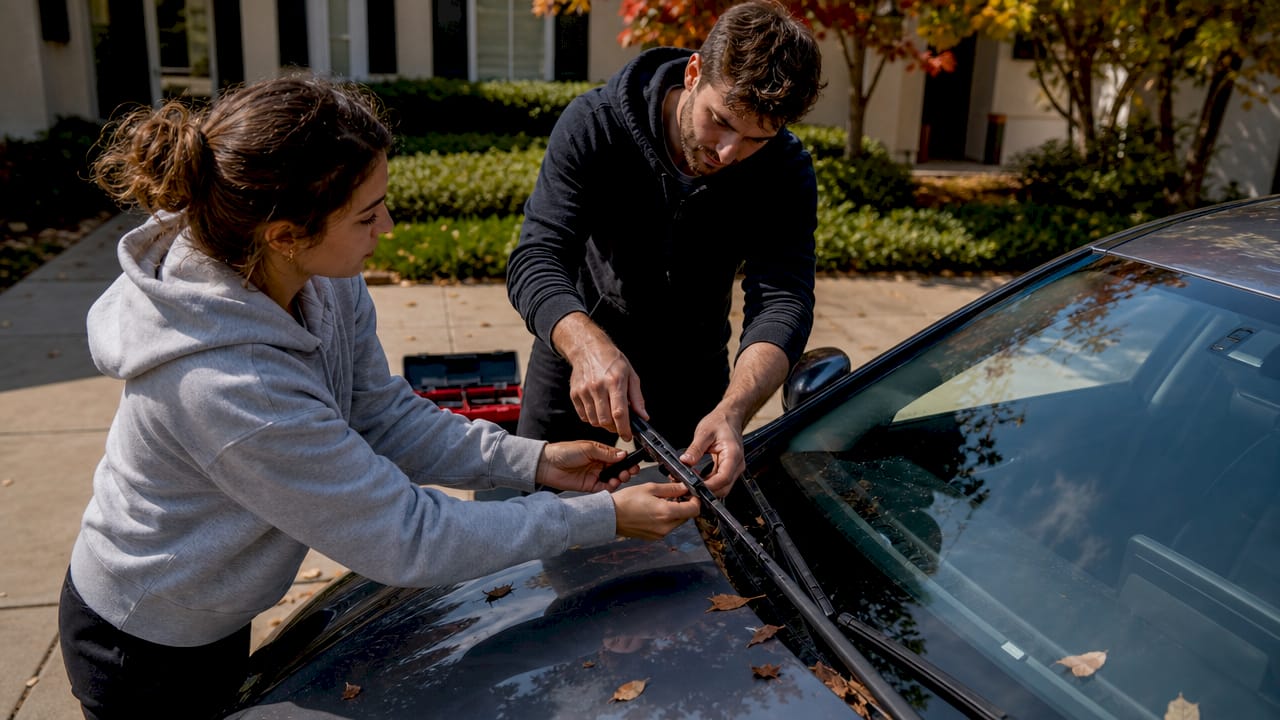
Modern vehicles require timely fluid and filter maintenance well before you notice any problem. Waiting until something feels wrong means you are already behind. The manufacturer’s recommended schedule exists for a reason, and staying ahead of it is the single best way to avoid emergency repairs.
Which DIY tasks can you finish in under 10 minutes?
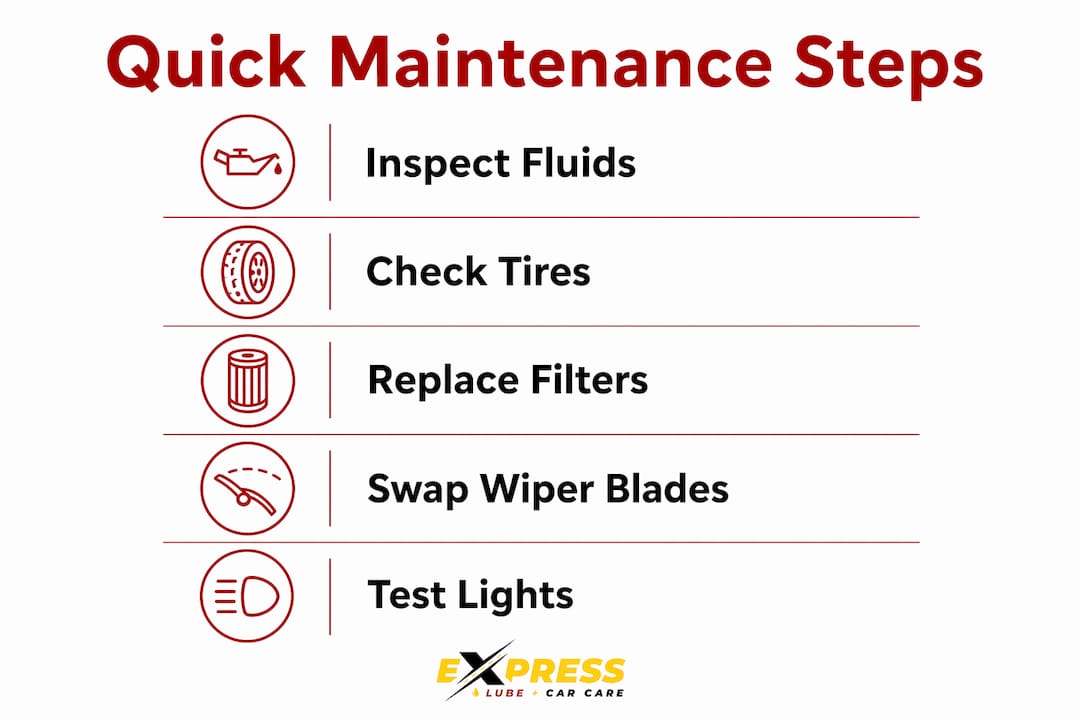
Replacing cabin air filters, engine air filters, wiper blades, and bulbs typically takes 5–10 minutes and requires no specialized tools. That means you can knock out four separate maintenance items during a lunch break or while your coffee brews. Most car owners do not realize how accessible these tasks are until they try one.
Here are the quick DIY tasks worth doing today:
- Cabin air filter: Slide out the glove box, pull the old filter, and snap in the new one. No tools needed. A clogged filter makes your HVAC system work harder and reduces air quality inside the car.
- Engine air filter: Pop the hood, unclip the air box, and swap the filter. A dirty engine air filter reduces fuel efficiency and throttle response.
- Wiper blades: Lift the arm, press the release tab, and click the new blade in. Worn blades are a safety issue in rain, not just an annoyance.
- Burned-out bulbs: Most modern headlight and taillight bulbs are accessible from behind the housing. Check your owner’s manual for the exact bulb type before buying.
- Tire pressure check: Use a $10 gauge or a gas station air pump. Low pressure increases tire wear and reduces fuel economy.
These tasks are covered in more detail in this simple car repairs guide if you want step-by-step photos for each one.
Pro Tip: Schedule these five-minute tasks around existing errands. Do a wiper blade swap while your car is parked at the grocery store, or check tire pressure every time you fill up with gas. Stacking small tasks onto existing habits means they actually get done.
How to prepare for efficient same-day professional service
A professional same-day service visit typically involves a 30-minute check-in, 1–2 hours of diagnosis, and roughly 1 hour of labor, depending on parts availability. That timeline can stretch significantly if you arrive without clear information about your vehicle’s symptoms. Preparation is what keeps the clock moving.
Follow these steps before your visit to any shop:
- Write down your symptoms. Describe exactly what you hear, feel, or smell, and when it happens. “A grinding noise when I brake at speeds above 40 mph” is far more useful than “something sounds weird.”
- Note your odometer reading. Technicians use mileage to cross-reference your manufacturer’s maintenance schedule and flag overdue services.
- List your recent service history. If you had an oil change, tire rotation, or brake inspection in the last six months, say so. This prevents duplicate work and helps narrow down the problem.
- Record any warning lights. Note whether a check engine light is flashing or steady. That distinction changes the urgency of the diagnosis entirely.
- Provide a direct contact number. Shops need to reach you quickly for repair approvals. A missed call can add hours to your wait time.
- Set clear approval limits. Tell the shop upfront what dollar amount you authorize without a callback. This removes a common bottleneck in same day car servicing.
A well-prepared appointment with symptom notes, a service logbook, and clear contact information reduces the likelihood of delays and missed issues. Shops that receive complete information at check-in can order parts earlier and assign the right technician from the start.
Which symptoms need same-day professional attention right now?
Three symptoms require you to stop driving immediately and seek professional help the same day, regardless of your schedule. These are not situations where you wait for a convenient appointment.
- Flashing check engine light: A steady check engine light can often wait a day or two. A flashing check engine light signals an active misfire that can destroy your catalytic converter within miles. Acting immediately prevents a $200 repair from becoming a $1,500 one.
- Rising engine temperature gauge: An overheating engine can warp the cylinder head in minutes. Pull over, turn off the engine, and call for a tow. Do not add cold water to a hot radiator.
- Burning smell or smoke: Either symptom points to an electrical fault, an oil leak onto hot components, or a brake issue. All three are fire risks.
Ignoring a flashing check engine light is one of the most expensive mistakes a driver can make. The misfire it signals dumps raw fuel into the catalytic converter, melting the substrate inside. What starts as a $150 ignition coil replacement can escalate to a $1,500 catalytic converter replacement within a single drive.
Symptoms that can wait for a scheduled appointment include a steady check engine light with no drivability issues, minor oil seepage on the driveway, a slow tire leak you can monitor daily, and a slightly rough idle that does not worsen. These are real problems, but they are not emergencies. Knowing the difference saves you from panic and from ignoring things you should not.
Step-by-step: troubleshoot common car problems before you visit a shop
Arriving at a shop with diagnostic information already in hand cuts your service time significantly. A free OBD-II scan at many auto parts stores pre-diagnoses faults, saving shop diagnostic time and helping you approve needed repairs faster. Many car owners skip this step and pay for it in wait time.
- Scan for fault codes. Use a personal OBD-II scanner or visit an auto parts store for a free scan. Write down every code, not just the first one.
- Check battery voltage. A fully charged battery reads 12.6 volts at rest. Anything below 12.2 volts suggests the battery is weak. A bad battery mimics dozens of other electrical faults.
- Inspect tire pressure and tread. Use a gauge on all four tires, including the spare. Insert a quarter into the tread groove. If you can see the top of Washington’s head, the tires need replacing.
- Check all fluid levels. Engine oil, coolant, brake fluid, power steering fluid, and windshield washer fluid each have a reservoir with a min/max marker. Low brake fluid often signals worn brake pads, not just a fluid issue.
- Listen and feel during a short test drive. Note whether noises happen during acceleration, braking, turning, or at specific speeds. This narrows the diagnosis before you even talk to a technician.
Pro Tip: Take a short video on your phone of any unusual noise or vibration before you go to the shop. Technicians cannot always reproduce intermittent problems on demand, and a 30-second clip can save an hour of diagnostic time.
| Symptom | First check | Urgency |
|---|---|---|
| Check engine light (steady) | OBD-II scan for fault code | Schedule within a week |
| Check engine light (flashing) | Stop driving, call shop | Immediate |
| Overheating gauge | Coolant level, pull over | Immediate |
| Grinding brakes | Brake pad thickness | Same day |
| Dead battery | Voltage test | Same day |
| Slow tire leak | Tire pressure, inspect for debris | Monitor daily |
Routine monthly checks of oil, tire pressure, and coolant, plus periodic tire rotations and fluid services, prevent the majority of common breakdowns. Most breakdowns are avoidable. That is not a reassuring platitude. It is a mechanical fact.
Key Takeaways
Same-day vehicle maintenance succeeds when you combine quick DIY tasks, thorough preparation, and clear communication with your service provider.
| Point | Details |
|---|---|
| DIY tasks take under 10 minutes | Cabin filters, wiper blades, and bulbs require no tools and can be done anywhere. |
| Preparation cuts shop time | Symptom notes, mileage, and a direct contact number keep same-day service on schedule. |
| Three symptoms need immediate action | A flashing check engine light, overheating gauge, or burning smell require same-day professional care. |
| OBD-II scans speed up repairs | A free fault code scan before your visit helps technicians approve and start repairs faster. |
| Routine checks prevent emergencies | Monthly oil, tire, and coolant checks stop most breakdowns before they start. |
What I’ve learned about same-day car care after years at the shop
The biggest mistake busy car owners make is treating maintenance as something to catch up on rather than something to stay ahead of. We see it constantly at Express Lube & Car Care. A driver comes in with three overdue services, a warning light they have been ignoring for two weeks, and a hope that everything can be fixed in an hour. It rarely works that way.
The owners who get in and out the same day are almost always the ones who show up prepared. They have written down their symptoms. They know their mileage. They have already run a fast turnaround repair search and understand what a realistic timeline looks like. That preparation is not complicated. It takes five minutes the night before.
My honest advice: treat your car like a business tool, not a household appliance. A business tool gets scheduled maintenance, gets inspected when something feels off, and gets taken seriously when it signals a problem. That mindset shift is worth more than any single tip in this article.
— Express Lube & Car Care
Express Lube & Car Care is ready when your schedule is tight
Busy drivers in the Richland Hills area do not need to block off a full day for quality car care.
Express Lube & Car Care offers walk-in service with no appointment required, certified ASE technicians, and honest communication at every step. Whether you need a quick oil change special to stay on your manufacturer’s schedule or a same-day engine diagnostic for a warning light you cannot ignore, the team is ready to get you back on the road fast. Transparent pricing and realistic timelines mean no surprises. Check out the time-saving maintenance tips on the Express Lube & Car Care blog to keep building your car care knowledge between visits.
FAQ
What is same-day vehicle maintenance?
Same-day vehicle maintenance covers any car care task completed within a single day, from quick DIY fixes like filter swaps to professional shop services like oil changes and brake inspections.
Which DIY car maintenance tasks take the least time?
Replacing cabin air filters, engine air filters, wiper blades, and burned-out bulbs each takes 5–10 minutes and requires no specialized tools.
How do I speed up a same-day shop visit?
Arrive with a written symptom description, your current odometer reading, recent service history, and a direct phone number for repair approvals. Clear preparation is the single biggest factor in same-day completion.
When should I stop driving and seek emergency vehicle maintenance?
Stop driving immediately if your check engine light is flashing, your temperature gauge is rising toward the red zone, or you smell burning or see smoke. All three symptoms signal conditions that worsen with every mile driven.
Does a free OBD-II scan really help at the shop?
A free scan at an auto parts store gives you fault codes before you arrive, which helps technicians skip basic diagnostic steps and move directly to repair approvals, cutting your total wait time.