

Car maintenance time saving tips are practical methods that help busy drivers keep their vehicles safe and running well without spending entire weekends in the garage. Sources like Consumer Reports, iFixit, and Cars.com consistently show that the biggest time losses come not from the tasks themselves, but from poor planning and skipping small jobs until they become big ones. The real efficiency win comes from combining quick DIY tasks with smart scheduling, so your car stays reliable without eating into your life. This article gives you both.
1. Check tire pressure monthly with a digital gauge
Checking tire pressure monthly is one of the fastest, highest-return habits a busy driver can build. The recommended pressure for your specific vehicle is printed on the driver’s doorjamb sticker, so there is no guesswork involved. A digital gauge with an illuminated readout makes the job take under two minutes per tire, even in a dim parking garage.
Skipping this check leads to uneven tire wear, reduced fuel economy, and blowout risk. None of those outcomes are quick fixes. Keeping a digital gauge in your glove box means you can do this check anywhere, anytime, without a separate trip to a shop.
Pro Tip: Pair your monthly tire pressure check with your first fill-up of the month. You are already at the car, already thinking about it, and the habit sticks.
2. Replace wiper blades before they start streaking
Wiper blades last about six months before they begin to streak and reduce visibility in rain. Replacing them in your driveway takes about five minutes and requires no tools. The real time cost of ignoring this is driving blind in a downpour and either pulling over or, worse, having an accident.
Most auto parts stores like AutoZone and O’Reilly Auto Parts will install the blades for free if you buy them there. That makes this one of the most time-efficient car care tasks available. Buy a set every spring and fall, and you will never think about it again.
3. Swap cabin and engine air filters yourself
Cabin air filter replacement takes about five to ten minutes and requires nothing more than a screwdriver in most vehicles. Engine air filters are similarly straightforward. Both are tasks that iFixit lists among the maintenance jobs anyone can handle without mechanical training.
A clogged cabin filter reduces HVAC performance and air quality inside the car. A dirty engine air filter hurts fuel economy and acceleration. Replacing both at home costs a fraction of shop labor rates and takes less time than driving to a service center. Check your owner’s manual for the replacement interval, which is typically every 15,000 to 30,000 miles depending on your driving environment.
4. Replace burned-out bulbs without a mechanic
Headlight and taillight bulb replacement is one of the most overlooked quick car maintenance hacks available. On most modern vehicles, accessing the bulb housing from inside the engine bay takes two minutes. iFixit provides free, vehicle-specific guides that walk you through the exact steps with photos.
Driving with a burned-out light is a traffic stop waiting to happen, and that costs far more time than the fix. Keeping a spare bulb set in your trunk means you can swap one out in a parking lot the moment you notice the problem. This is the definition of time-efficient car care.
5. Keep washer fluid topped up at all times
Running out of windshield washer fluid sounds minor until you are behind a salt-spraying truck in winter and your windshield turns opaque. Consumer Reports includes topping up washer fluid as one of the baseline habits every driver should maintain. A gallon jug costs under five dollars and takes thirty seconds to pour.
The broader principle here is that keeping consumables stocked at home prevents emergency stops. Buy washer fluid, wiper blades, and air filters in bulk when they are on sale. Store them in your garage, and you will never make a last-minute parts run again.
Pro Tip: Keep a small tote in your garage with your most-used maintenance supplies: washer fluid, a spare bulb set, a tire gauge, and your owner’s manual. When something needs attention, everything is in one place.
6. Build a maintenance schedule around your owner’s manual
The owner’s manual is the most underused time-saving tool in your car. It tells you exactly when each service is due, which means you stop guessing and stop over-servicing. Oil change intervals for most modern vehicles fall between 7,500 and 10,000 miles, which means many drivers are making unnecessary shop trips based on outdated advice.
Building a maintenance calendar around actual manufacturer recommendations reduces total appointments per year. Use Google Calendar, the MyCarfax app, or even a simple note on your phone to set reminders at the right mileage intervals. When a reminder fires, you act. When it does not, you drive.
Pro Tip: Set your maintenance reminders to trigger 500 miles before the service is due. That gives you a window to schedule at a convenient time rather than scrambling when you are already overdue.
7. Group fluid checks into a single session
Grouping related maintenance tasks by type and frequency is one of the most effective ways to reduce total time spent on upkeep. Checking oil, coolant, brake fluid, and power steering fluid together takes about ten minutes and replaces what would otherwise be four separate occasions to pop the hood.
Cars.com recommends treating fluid checks as a single routine rather than individual tasks. The logic is simple: you are already under the hood, the car is already cool, and the tools are already out. Batching these checks into one monthly or quarterly session protects your weekends from repeated, fragmented interruptions.
8. Schedule short jobs during busy weeks, long jobs on open days
Cabin filter swaps and bulb replacements take under fifteen minutes and fit into a lunch break or a Tuesday evening. Brake pad replacement, on the other hand, can take two to four hours depending on your skill level and vehicle. Treating these two categories the same way is how people lose entire Saturdays to car maintenance.
The fix is simple: keep a running list of pending tasks sorted by time required. When a light week opens up, tackle a longer job. When your schedule is packed, knock out a quick one. This approach, which Family Handyman calls separating short jobs from long jobs, protects your time without letting maintenance fall behind.
9. Know which tasks to DIY and which to hand off
The decision between DIY and professional service comes down to four factors: skill, time, safety, and cost. Choosing DIY vs. shop service is not a fixed answer. It changes based on the task and your current situation.
| Task | DIY or Professional? | Time Required | Notes |
|---|---|---|---|
| Tire pressure check | DIY | 2 minutes | Digital gauge, no tools needed |
| Wiper blade replacement | DIY | 5 minutes | Free install at most parts stores |
| Cabin air filter | DIY | 5 to 10 minutes | No tools required on most vehicles |
| Oil change | DIY or Pro | 10 to 15 minutes with experience | Gets faster with practice |
| Brake pad replacement | Professional | 2 to 4 hours | Safety risk without proper tools |
| Brake fluid change | Professional | 30 to 60 minutes | Requires bleeding the system correctly |
Consumer Reports puts it plainly: stick to basic upkeep you can do yourself and leave complex tasks to certified mechanics. That balance is what keeps you safe and keeps your schedule intact.
10. Keep detailed service records to avoid wasted time later
Maintaining good service records protects your warranty and speeds up every future shop visit. Missing documentation can lead to denied warranty claims and hours of back-and-forth with a dealership. That is a time cost that far exceeds the two minutes it takes to log a service entry.
The most practical method is photographing your odometer and the service receipt immediately after any maintenance, then saving both to a dedicated phone album or a free app like Drivvo. When you walk into a shop with a complete digital record, the technician can get to work immediately. No delays, no disputes, no wasted time. You can find a solid starting point with this car care checklist built specifically for busy schedules.
11. Stock your car and garage with the right tools
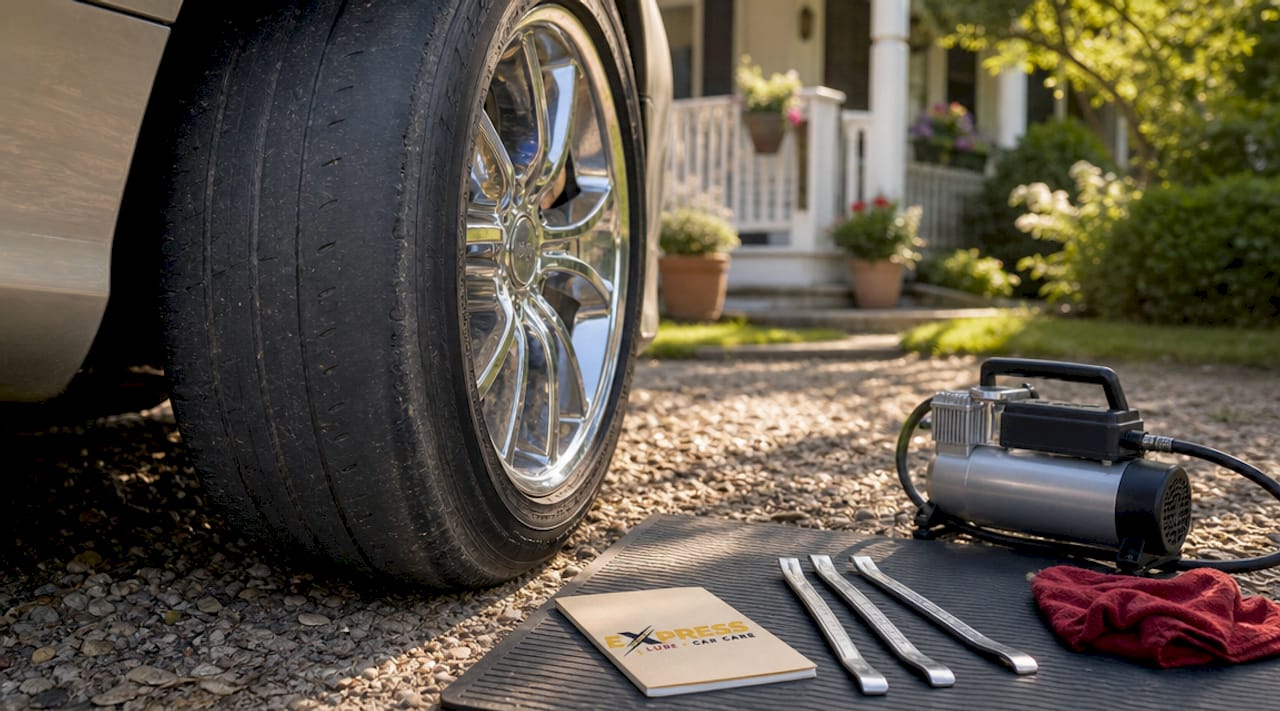
Carrying essential tools in your vehicle enables timely upkeep without extra trips. A digital tire pressure gauge, a portable inflator, and a basic toolkit cover the majority of quick roadside and driveway tasks. iFixit recommends a starter toolkit that includes screwdrivers, pliers, and a socket set for handling filter changes and bulb replacements at home.
The portable inflator is worth calling out specifically. A 12-volt inflator that plugs into your car’s power outlet can bring an underinflated tire to the correct pressure in under three minutes. That replaces a detour to a gas station and a search for a working air pump. These tools pay for themselves the first time you use them. For a broader look at what you can handle at home, this guide to simple car repairs is worth bookmarking.
Key takeaways
The most time-efficient approach to car maintenance combines quick DIY tasks, smart scheduling, and accurate service records to prevent both breakdowns and wasted shop visits.
| Point | Details |
|---|---|
| DIY quick tasks first | Tire pressure, wiper blades, and filters take under 10 minutes and require no special skills. |
| Group related checks | Batch fluid inspections into one session to avoid repeated under-hood visits. |
| Schedule by time required | Reserve short jobs for busy weeks and longer jobs like brake work for open days. |
| Keep service records | Photographing receipts and mileage protects your warranty and speeds up shop visits. |
| Know your limits | Brake work and fluid system repairs belong with a certified mechanic for safety. |
What we have learned from years of helping busy drivers
Here is something I see constantly at Express Lube & Car Care: customers who come in stressed because a small issue became a big one. Nine times out of ten, it was not a lack of mechanical skill that caused the problem. It was a lack of a system.
The drivers who keep their cars in the best shape are not the ones who know the most about engines. They are the ones who check tire pressure while they pump gas, who swap wiper blades in the fall before the first rain, and who keep a simple log of what was done and when. These are five-minute habits, not weekend projects.
We also see the flip side: people who try to DIY brake work or flush their own brake fluid without the right tools, and end up spending more time and money correcting the mistake than a professional job would have cost. The honest truth is that knowing where your time is best spent is itself a skill. Some tasks genuinely save you time and money when you do them yourself. Others genuinely do not.
My advice is to start with the list in this article and pick two or three tasks you are not currently doing. Build those into your routine before adding more. The goal is not to become a mechanic. The goal is to stop letting small things become expensive, time-consuming problems.
— Express Lube & Car Care
Get fast, reliable service when you need a pro

When a job calls for a certified technician, Express Lube & Car Care in Richland Hills makes it easy to get in and out without disrupting your day. No appointment is needed for most services, and our ASE-certified technicians handle everything from oil changes to brake work with honest pricing and no surprises. Check out our current oil change and service specials to see what fits your schedule and budget. We are built for busy drivers, and we keep your car ready so you can keep moving.
FAQ
What are the quickest car maintenance tasks I can do myself?
Tire pressure checks, wiper blade replacement, and cabin air filter swaps each take under ten minutes and require no special tools. These are the highest-return tasks for any busy driver.
How often should I check my car’s fluid levels?
Grouping all fluid checks into one monthly session covers oil, coolant, brake fluid, and washer fluid in about ten minutes. Checking them together prevents repeated under-hood visits throughout the month.
When does DIY maintenance actually save time?
DIY saves time on simple, repeatable tasks like oil changes, which take 10 to 15 minutes once you have done them a few times. Complex jobs like brake pad replacement take two to four hours and carry safety risks, making professional service the faster and safer choice.
Why do service records matter for saving time?
Good maintenance records prevent warranty disputes and let technicians start work immediately without chasing down your vehicle’s history. Missing documentation is one of the most common causes of avoidable delays at a shop.
How do I avoid forgetting scheduled maintenance?
Set digital reminders in Google Calendar or an app like MyCarfax at 500 miles before each service interval. Triggering reminders early gives you a scheduling window instead of a deadline.