

Routine car maintenance is the set of regular inspections, fluid checks, parts replacements, and scheduled services that keep your vehicle safe, efficient, and reliable on the road. The industry term for this practice is preventive maintenance, and getting repairs early is the single most effective way to extend vehicle lifespan and reduce long-term costs. The average U.S. car was 12.6 years old in 2024, according to Consumer Reports. That number reflects how well-maintained vehicles can stay on the road far longer than most people expect. This article covers the core tasks, safety benefits, EV versus gasoline differences, and practical habits that make preventive maintenance work for you.
What does routine car maintenance actually include?
The role of routine car maintenance covers more ground than most drivers realize. It goes well beyond oil changes. A complete preventive maintenance program includes fluid checks, filter replacements, tire care, brake inspections, battery testing, and light verification. Following your owner’s manual schedule is the baseline. Consumer Reports and Toyota both confirm that sticking to manufacturer-recommended intervals prevents both under-maintenance and unnecessary spending.
Here is a practical breakdown of the most common tasks and how often to perform them:
- Oil and filter change — Every 5,000–7,500 miles for conventional oil, or every 10,000–15,000 miles for full synthetic, depending on your vehicle.
- Tire pressure check — Monthly and before every long trip. Check tire pressure using the number printed on the driver’s doorjamb, not the tire sidewall.
- Brake inspection — At least once a year, or whenever you notice squealing, grinding, or longer stopping distances.
- Air filter replacement — Every 15,000–30,000 miles, depending on driving conditions.
- Battery test — Every two years, or before winter and summer extremes.
- Coolant and transmission fluid top-up — Per manufacturer schedule, typically every 30,000–60,000 miles.
- Wiper blade replacement — Every six to twelve months, or when streaking appears.
- Lights check — Monthly. Walk around your car and confirm all headlights, brake lights, and turn signals work.
- Tire tread depth — Check monthly with a tread depth gauge or the penny test.
- Exterior wash and wax — Every one to two months to protect paint and prevent rust.
DIY tasks like checking tire pressure and topping off windshield washer fluid are simple and take under five minutes. Brake inspections, transmission service, and battery replacements are better left to certified ASE technicians. Knowing the difference saves you money and keeps you safe.
Pro Tip: Keep a physical or digital maintenance log and use the same shop for all your services. A consistent service record lets your mechanic spot slow-growing problems before they become expensive failures.

How does routine maintenance improve safety and performance?
Skipping maintenance does not just cost money. It puts you and other drivers at risk. One in three vehicles attended by RAC patrols have dangerously low oil levels. Low oil accelerates engine wear and can cause complete engine failure at highway speeds.
The safety connection goes deeper than oil. A telematics study published in MDPI found that harsh braking events increase expected crash frequency by approximately 1% per event. Well-maintained brakes respond faster and more predictably, which directly reduces the number of harsh braking situations you encounter. Maintenance is not just about keeping the car running. It is about keeping you in control.
Tire pressure is another area where the numbers are clear. Properly inflated tires improve fuel economy by up to 6%, according to Toyota citing U.S. Department of Energy data. That translates to real savings at the pump over a full year of driving. Under-inflated tires also wear unevenly and reduce handling precision, especially in wet or emergency conditions.
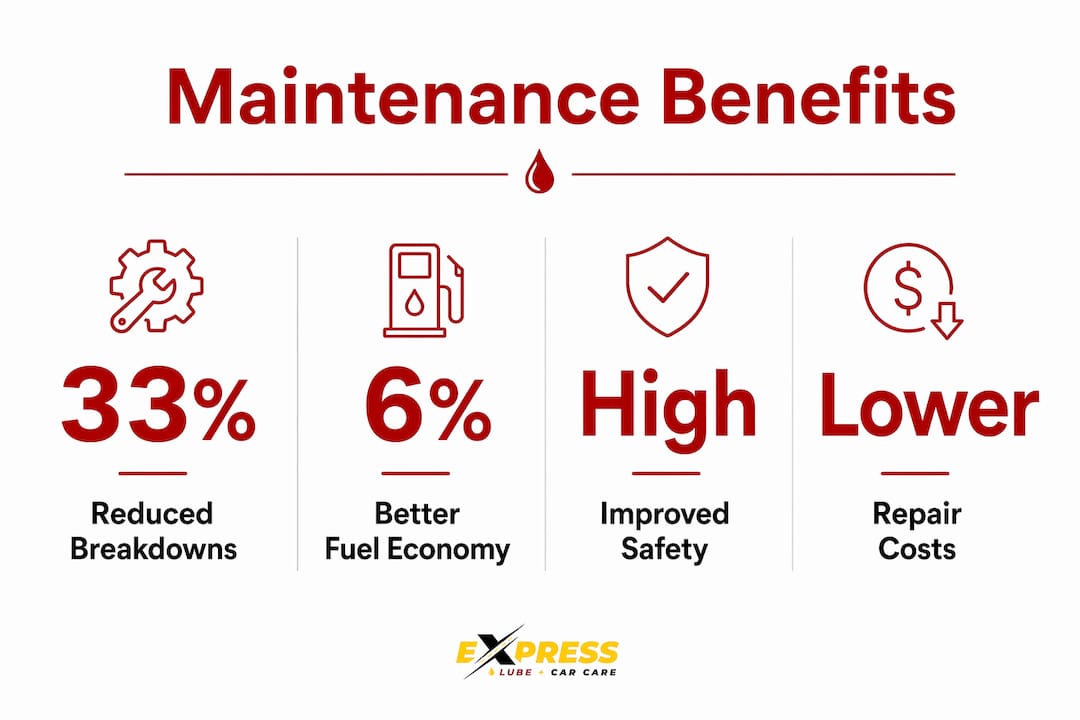
Consumer Reports notes that catching small problems early prevents them from becoming large, expensive ones. A worn serpentine belt costs around $100 to replace. If it snaps while you are driving, the repair bill can exceed $1,000 and leave you stranded. The math strongly favors staying ahead of problems.
Beyond breakdowns, routine checks protect your lights, brakes, and tires, which are the three systems most directly linked to accident prevention. A car safety inspection checklist before long trips takes less than ten minutes and covers all three. That ten minutes is one of the highest-value habits any driver can build.
EV vs. gasoline car: how maintenance needs differ
Many EV owners assume their car needs far less maintenance than a gasoline vehicle. That assumption is partially correct and partially dangerous. Routine maintenance for EVs still requires scheduled inspections for brakes, cooling systems, and battery health, even though oil changes are eliminated entirely.
Here is a direct comparison of maintenance tasks across both vehicle types:
| Maintenance Task | Gasoline Car | Electric Vehicle (EV) |
|---|---|---|
| Oil change | Every 5,000–10,000 miles | Not required |
| Tire pressure check | Monthly | Monthly |
| Brake inspection | Annually | Annually (regenerative braking reduces wear but does not eliminate it) |
| Cabin air filter | Every 15,000–25,000 miles | Every 15,000–25,000 miles |
| Coolant service | Every 30,000–60,000 miles | Required for battery thermal management |
| Battery check | Every 2 years | Annual battery health inspection |
| Transmission fluid | Per manufacturer schedule | Not applicable (single-speed drive unit) |
| Wiper blades | Every 6–12 months | Every 6–12 months |
The table makes one thing clear: EVs share most of the same routine checks as gasoline cars. The difference is in the powertrain-specific tasks, not the safety-critical ones. Toyota emphasizes this point directly, noting that both vehicle types require consistent scheduled care to perform reliably.
One practical note: not every shop is equipped to service EVs properly. When choosing a mechanic for your EV, look for technicians certified in high-voltage systems. For gasoline vehicles, ASE certification remains the standard benchmark for quality. You can review your vehicle maintenance schedule to confirm which tasks apply to your specific make and model.
How to build a car maintenance routine that actually sticks
The biggest reason drivers skip maintenance is not cost. It is friction. When there is no system in place, services get pushed back, then forgotten entirely. Building a simple routine removes that friction.
Start with pre-trip checks. The RAC recommends a quick walk-around before any long drive using the FORCES acronym: Fuel, Oil, Rubber (tires), Coolant, Electrics, Screenwash. This takes about three minutes and catches the most common breakdown causes before they strand you on the highway.
- Set calendar reminders for monthly checks like tire pressure and lights. Pair them with something you already do, like the first of every month.
- Schedule your annual service in advance. Book it the same week every year so it never slips. Many shops, including Express Lube & Car Care, accept walk-ins, which removes the scheduling barrier entirely.
- Keep your owner’s manual accessible. The manufacturer’s recommended intervals are more reliable than generic advice. Intervals vary significantly between makes and models.
- Use a maintenance app or notebook. Apps like Drivvo or a simple notebook work equally well. The goal is a written record, not a perfect system.
- Know when to call a professional. Anything involving brakes, suspension, or electrical systems should go to a certified mechanic. DIY on safety-critical systems is a false economy.
Pro Tip: Dashboard warning lights are a last resort, not a first alert. Physical inspections catch problems that sensors miss entirely. Never rely on your dashboard alone to tell you when something needs attention.
For drivers with packed schedules, a car care checklist for busy schedules can help you prioritize the highest-impact tasks without spending hours in the shop.
Key takeaways
Preventive maintenance is the most cost-effective way to protect vehicle safety, extend lifespan, and avoid expensive repairs across both gasoline and electric vehicles.
| Point | Details |
|---|---|
| Start with the basics | Oil, tires, brakes, and lights cover the majority of breakdown and accident risks. |
| Follow manufacturer intervals | Owner’s manual schedules prevent both under-maintenance and unnecessary spending. |
| EVs still need regular care | Battery health, brakes, and cooling systems require scheduled inspections even without oil changes. |
| Build a written record | A consistent service history at one shop enables predictive diagnostics and catches slow-growing issues. |
| Act early on small problems | Addressing minor issues before they worsen is the single biggest driver of long-term cost savings. |
What we’ve learned after years of seeing what actually breaks down
At Express Lube & Car Care, we see the same pattern repeat itself constantly. A driver comes in for an oil change, and we find brake pads worn to metal, a battery on its last legs, and tires running 10 PSI low. None of those issues triggered a dashboard light. All of them were weeks away from causing a real problem.
The uncomfortable truth is that most car trouble is predictable. The vehicles that hold up longest are not the most expensive ones. They are the ones whose owners show up on schedule, keep a service record, and ask questions when something feels off.
We also see the opposite mistake: drivers who over-maintain based on outdated advice. Changing oil every 3,000 miles on a modern synthetic-oil engine is not protective. It is just expensive. Consumer Reports has said this clearly: overdoing maintenance means overpaying. The goal is to follow your manufacturer’s schedule, not to exceed it out of anxiety.
One more thing worth saying directly. Trusting a qualified technician is not a sign of ignorance. It is smart risk management. A certified ASE mechanic sees hundreds of vehicles a year. They recognize patterns that no dashboard alert will ever catch. Framing maintenance as part of your vehicle risk management strategy, rather than just a repair budget line, changes how you prioritize it. And that shift in thinking is what separates drivers who stay safe from those who get caught off guard.
— Express Lube & Car Care
Keep your vehicle in top shape with express lube & car care
If you have been putting off a service or are not sure where your vehicle stands, Express Lube & Car Care in Richland Hills is ready to help. We are ASE and RepairPal certified, which means every technician working on your car meets a verified standard of competence. No appointment is needed for most services, so you can stop in when it works for you.
From oil changes to engine diagnostics, we cover the full range of routine vehicle care. Check out our current oil change and service specials to see what is available right now. Honest pricing, transparent communication, and fast turnaround are what we deliver every visit. Your car works hard for you. Let us help you keep it that way.
FAQ
What is included in routine car maintenance?
Routine car maintenance includes oil changes, tire pressure checks, brake inspections, fluid top-ups, filter replacements, battery tests, and light verification. Consumer Reports recommends following your owner’s manual for specific intervals by make and model.
How often should i service my car?
Most vehicles need a basic service every 5,000–10,000 miles, depending on oil type and manufacturer guidelines. Annual inspections covering brakes, tires, and fluids are recommended regardless of mileage.
What happens if i neglect routine car maintenance?
Neglecting maintenance increases breakdown risk significantly. RAC data shows one in three vehicles attended by patrols have dangerously low oil levels, and worn brakes directly increase crash frequency according to MDPI research.
Do electric vehicles need routine maintenance?
Yes. EVs skip oil changes but still require scheduled inspections for battery health, brakes, cooling systems, cabin air filters, and tire pressure. Toyota confirms that both gasoline and electric vehicles need consistent preventive care.
Can i do any car maintenance myself?
Yes, several tasks are straightforward DIY jobs. Checking tire pressure, topping off fluids, replacing wiper blades, and testing lights are all safe for most drivers. Brake work, suspension repairs, and electrical diagnostics should go to a certified mechanic.