

Hot pavement and high ambient temperatures raise internal tire pressure and push rubber compounds toward their thermal limits, and that combination is the core reason summer is blowout season. The single most effective thing you can do right now: check your cold tire pressure monthly and set it to the PSI listed on your vehicle’s door jamb, not the number stamped on the tire sidewall.
A few trusted references worth knowing before we get into the details:
- NHTSA has issued direct safety advisories urging drivers to check tires during hot weather because heat raises the risk of failure at highway speeds.
- TPMS (Tire Pressure Monitoring System) alerts you to significant pressure loss, but it often triggers only after substantial damage is already building.
- ASE-certified technicians are the right people to call when you spot anything unusual, from a sidewall bubble to uneven tread wear.
Key Takeaways
Summer heat raises internal tire temperatures and pressure simultaneously, and underinflation is the single biggest factor that turns that heat into a blowout.
| Point | Details |
|---|---|
| Cold pressure checks prevent most failures | Check monthly and before long trips, using the door-jamb PSI, not the tire sidewall number. |
| Underinflation plus heat is the biggest risk | A tire 10 PSI low runs 20–30°F hotter, sharply increasing belt separation risk. |
| Sidewall damage means replace immediately | Bubbles, bulges, or exposed cords are not repairable and require replacement before driving. |
| Visual checks miss internal damage | Tires can look normal while internally overheating; professional inspection is the only reliable catch. |
| Express Lube & Car Care offers same-day inspections | ASE-certified techs in Richland Hills provide digital inspections with photos and a 24-month/24,000-mile warranty. |
Table of Contents
- How Summer Heat Causes Tire Blowouts
- How to protect your tires from summer heat
- What to do if a tire blows out while you are driving
- When should you take your tires to a shop?
- How to check tire pressure correctly in hot weather
- What the data says about heat, tires, and failure thresholds
- Ready for a summer tire inspection in Richland Hills?
- Sources
- FAQ
How Summer Heat Causes Tire Blowouts
Heat does not destroy a tire in one dramatic moment. It works through a chain of physical events, each one making the next more likely.
Air expansion is the starting point. For every 10°F rise in ambient temperature, tire pressure increases by roughly 1 PSI. On a 95°F Texas afternoon, that alone can push a properly inflated tire several PSI above its recommended range. Add highway driving, and internal friction generates even more heat on top of that.
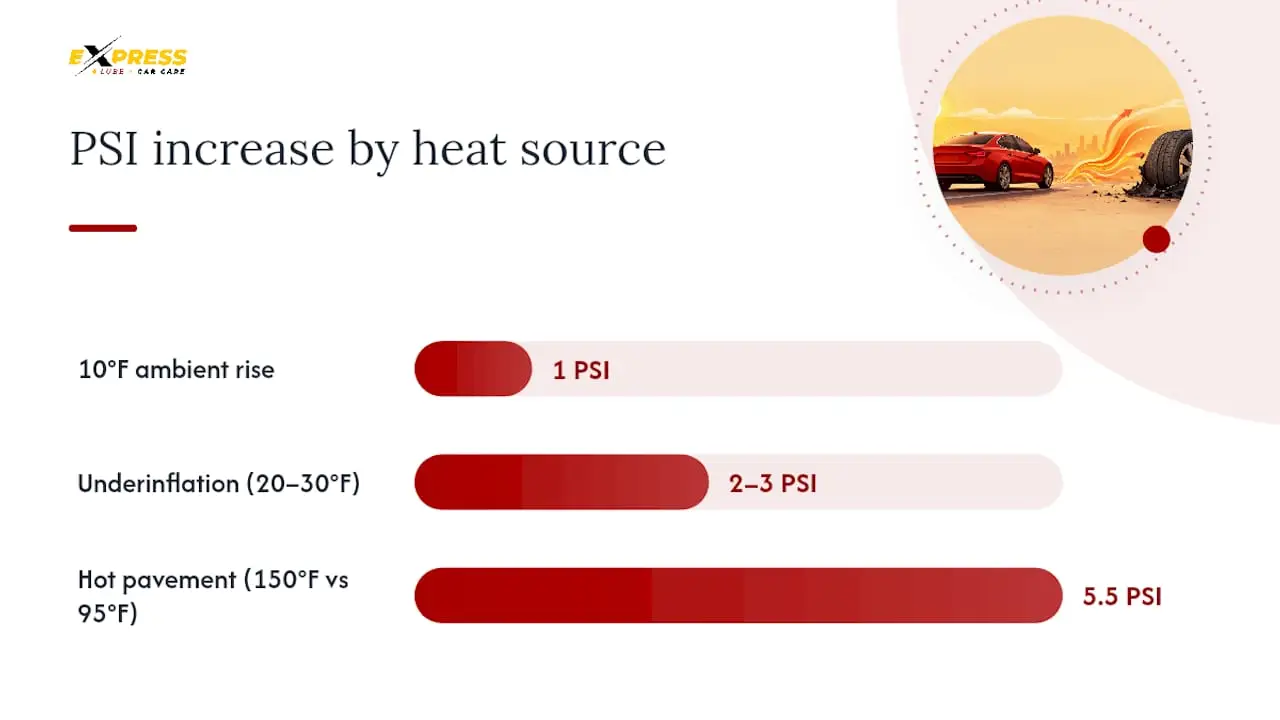
Pavement makes it worse from below. Asphalt surface temperatures can exceed 150°F on hot summer afternoons, meaning your tires are absorbing heat from the road at the same time they are generating their own. It is a double heat load most drivers never think about.

Underinflation turns up the dial on all of it. A tire running 10 PSI low flexes more with every rotation, creating internal friction that can make it run 20–30°F hotter than a properly inflated tire under the same conditions. That extra heat softens the rubber compound, weakens the adhesive bonding the steel belts, and sets up tread separation or a sudden structural failure.
The other risk factors that compound with heat:
- Age and UV degradation: Rubber oxidizes over time. Tires older than six years are more vulnerable to heat-related cracking and belt failure, even if the tread looks fine.
- Impact damage: Hitting a pothole or curb can damage internal cords without leaving a visible mark. Heat then exploits that hidden weakness.
- Overloading: Exceeding your vehicle’s load rating increases sidewall flex and internal temperature, especially on long highway runs.
- Speed: Sustained driving above a tire’s speed rating accelerates heat buildup faster than the tire can dissipate it.
The hidden danger: Tires can be internally compromised while appearing completely normal from the outside. A visual check alone is not enough in summer.
How to protect your tires from summer heat
This checklist covers the highest-impact steps in priority order. Work through it before your next long trip.
- Check cold pressure monthly. Do it before driving, after the car has sat at least three hours. Compare to the door-jamb sticker, not the tire sidewall. Adjust to the recommended PSI.
- Inspect sidewalls and tread before every long drive. Look for bulges, bubbles, cracks, or uneven wear. Any bulge or bubble means the tire needs replacement before you drive.
- Check tread depth. The penny test works: insert a penny into the tread groove with Lincoln’s head down. If you can see the top of his head, you are at or below 2/32" and the tire needs replacing.
- Respect load limits. Check your owner’s manual for the maximum load rating and stay under it, especially on summer road trips with a full car and luggage.
- Moderate your speed on long hot runs. Every tire has a speed rating. Sustained high-speed driving on hot pavement accelerates heat buildup beyond what the tire can safely handle.
- Replace winter tires before summer. Soft cold-weather compounds overheat quickly on hot pavement and should never be used for sustained summer driving.
- Do not ignore TPMS warnings, but do not rely on them alone. TPMS catches significant pressure loss, but it often misses the gradual underinflation that leads to overheating. Manual monthly checks fill that gap.
Pro Tip: For long summer road trips, pair your pre-trip safety checklist with a tire pressure check the morning of departure, before the car heats up.
What to do if a tire blows out while you are driving
A blowout at highway speed is loud and disorienting. Your instinct will be to brake hard. That instinct is wrong.
- Grip the steering wheel firmly with both hands. The car will pull toward the blown tire. Hold your line.
- Ease off the accelerator gradually. Do not lift suddenly or stomp the brake.
- Let the car decelerate on its own while you maintain a straight path.
- Steer gently toward the shoulder once you have stabilized the vehicle.
- Brake lightly and progressively only after you have slowed significantly.
- Turn on your hazard lights as soon as you are safely decelerating.
- Pull completely off the road onto a flat, stable surface away from traffic.
- Call for roadside assistance if you are on a busy highway, in an unsafe location, or if you are not confident changing the tire yourself.
Never change a tire on a live lane of traffic. If conditions are unsafe, stay in the car with your seatbelt on and hazard lights running until help arrives.
When should you take your tires to a shop?
Some tire damage is repairable. A lot of it is not, and guessing wrong is dangerous.
Replace immediately — do not drive on these:
- Sidewall bubbles or bulges (internal structural failure)
- Visible cords or fabric showing through the tread
- Tread separation or chunks missing from the surface
- Any tire that has run flat, even briefly
A patch or plug may be an option when:
- The puncture is in the center tread area (not the shoulder or sidewall)
- The hole is smaller than 1/4 inch in diameter
- The tire has not been driven on while flat
Age and mileage benchmarks: Most manufacturers recommend replacing tires at six years regardless of appearance, and no later than ten years from the manufacture date (found on the sidewall as a four-digit DOT code). Mileage-wise, most passenger tires are designed for 50,000–70,000 miles, but heat, load, and driving style all affect that.
On the cost side, a basic passenger tire repair (plug or patch) typically runs $15–$30. Tire replacement varies widely by size and brand, but budget $100–$250 per tire for a mid-range passenger option, plus mounting, balancing, and disposal fees. An ASE-certified inspection with digital photos gives you documented proof of what was found and what was done, which matters when you are making a repair-versus-replace call.
How to check tire pressure correctly in hot weather
The most common mistake: checking pressure after driving and then adjusting from that reading. Hot tires read higher than their true cold pressure, so you will underinflate if you bleed air from a hot tire.
- Let the car sit for at least three hours (or check first thing in the morning before driving).
- Use a quality digital gauge. Stick gauges are less accurate and harder to read.
- Find your recommended PSI on the driver’s door jamb sticker, not the tire sidewall. The sidewall number is the tire’s maximum, not your vehicle’s target.
- Check all four tires plus the spare.
- If a tire reads high on a hot day, do not release air. Wait until the tire is cold, then recheck. Releasing air from a hot tire will leave you underinflated once it cools.
- Add a portable digital gauge and a compact inflator to your car kit. Both are inexpensive and remove any excuse for skipping the monthly check.
Pro Tip: Keep a summer car care guide bookmarked on your phone so you can run through the full seasonal checklist in under ten minutes.
What the data says about heat, tires, and failure thresholds
The numbers behind summer blowouts are worth knowing, because they explain why the risk spikes so fast.
High-speed summer driving can push internal tire temperatures above 180°F, and asphalt can reach 150°F or more on a hot afternoon. At those temperatures, rubber compounds soften measurably, and the adhesive bonding steel belts to the tire body begins to weaken. That is the physical mechanism behind tread separation, which is often mislabeled a blowout but is actually a structural failure of the belt package.
| Temperature Threshold | What Happens to the Tire |
|---|---|
| 150°F+ (asphalt surface) | Heat absorbed from below adds to internal thermal load |
| 180°F+ (internal, highway driving) | Rubber compounds approach thermal softening limits |
| 20–30°F above normal (underinflated) | Belt adhesive stress increases; separation risk rises sharply |
The core problem with visual checks: Experts warn that tires can be internally overheating and at risk of failure while still looking completely normal from the outside. TPMS confirms pressure, not structural integrity. Only a hands-on inspection by a trained technician can catch what the eye misses.
TPMS is a useful early-warning tool, but it was designed to alert you to significant pressure loss, not to diagnose internal heat damage. Manual monthly checks and a professional inspection before long summer trips remain the most reliable safety net.
Our take at Express Lube & Car Care
The tires we see fail most often in summer share a pattern: they were underinflated, older than six years, or had taken an impact hit that nobody noticed. The driver had no warning because the tire looked fine. That is exactly why we recommend a monthly cold-pressure check and a pre-trip inspection before any long summer drive, not just when the TPMS light comes on.
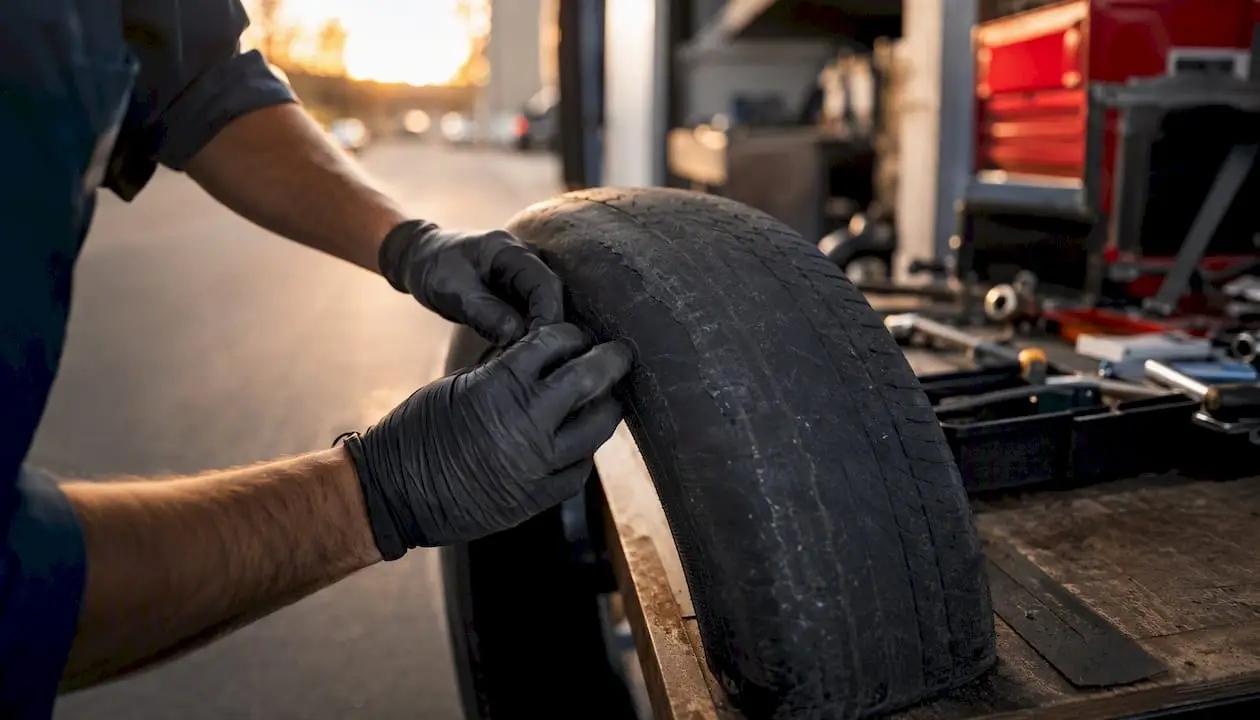
Our ASE-certified technicians perform digital vehicle inspections with photos, so you can see exactly what we found and make an informed decision. No guesswork, no pressure. If a tire is borderline, we will tell you what we see and let you decide.
Ready for a summer tire inspection in Richland Hills?
Catching a heat-related tire problem before it becomes a blowout takes about fifteen minutes at the shop. At Express Lube & Car Care, our ASE-certified technicians check pressure, inspect sidewalls and tread, run TPMS diagnostics, and flag any damage that needs attention, all with digital photos so you see what we see.
No appointment needed. Walk in, and we will get you back on the road with confidence. Every repair comes backed by our 24-month/24,000-mile workmanship warranty, and we offer easy financing if a tire replacement is in order. For long-trip prep, our vehicle safety tips for highway travel resource pairs well with a quick shop visit before you head out.
Sources
- The Complete Guide: How Heat Affects Your Car’s Tires (and What to Do About It)
- Why do tires burst more in summer? | HowStuffWorks
- Can Tires Overheat and What Should You Do About It – Tire Advise
- Summer heat poses hidden risks to car tires, experts warn of increased blowout chances
Check your vehicle’s owner’s manual for manufacturer-specific tire pressure and replacement recommendations, and review NHTSA safety advisories regularly for updated guidance.
FAQ
Are tire blowouts more common in summer?
Yes. Summer is widely called blowout season because high ambient temperatures and hot pavement raise internal tire temperatures, compounding stress from underinflation, age, or prior impact damage.
Can heat alone cause a tire blowout?
Heat is rarely the sole cause, but it is the multiplier. It amplifies existing weaknesses like underinflation or impact damage to the point of failure, especially at highway speeds.
What is the most common cause of tire blowouts?
Underinflation is the leading contributor. A tire running 10 PSI low generates 20–30°F more internal heat, which accelerates belt adhesive failure and tread separation under summer driving conditions.
How can I protect my tires from summer blowouts?
Check cold tire pressure monthly, inspect sidewalls for bulges or cracking, respect load limits, and get a professional inspection before long summer trips, especially if your tires are more than six years old.
When should I see a shop about my tires?
Any sidewall bubble, visible cord, or tread separation requires immediate professional attention. For general summer readiness, an ASE-certified inspection at a shop like Express Lube & Car Care can catch internal damage that looks fine from the outside.