

If your car heater is blowing cold air, start with two checks: coolant level and heater-hose temperature at the firewall. Together, those two checks identify the majority of no-heat problems in a few minutes, before you spend a dime on diagnosis.
What you’re likely dealing with depends on the symptom:
- No airflow at all: blown fuse, failed blower motor, or a burned-out blower resistor.
- Airflow but no warmth: low coolant, a stuck-open thermostat, or a clogged or plugged heater core.
- Hot on one side only: a stuck blend door or failed actuator, not a coolant problem at all.
Pro Tip: Never open the coolant reservoir or radiator cap while the engine is warm or hot. Pressurized coolant can cause severe burns. Wait until the engine is fully cool, and if you visit a shop, jot down when the problem started and whether you’ve noticed any smell, fogging, or coolant loss.
Key Takeaways
A car heater that won’t produce warm air almost always traces back to low coolant, a blocked heater core, a failed blower component, or a stuck blend door.
| Point | Details |
|---|---|
| Start with two checks | Coolant level and heater-hose temperature at the firewall identify most causes in minutes. |
| Match symptom to cause | One-sided heat points to a blend door; no airflow points to a fuse or blower motor. |
| Know your DIY limits | Cabin filters and fuses are safe DIY fixes; heater-core leaks and actuator jobs need a shop. |
| Expect a real diagnostic process | Pressure tests, hose-temperature checks, and scan-tool readings confirm the actual fault before repair. |
| Choose a shop with proof | Express Lube & Car Care backs heater repairs with ASE-certified technicians, a 24-month/24,000-mile warranty, and photo-documented digital inspections. |
Table of Contents
- Quick Diagnostic Checklist for a Heater Not Working
- Why Is My Heater Not Working? Common Causes Explained
- When to DIY and When to Call a Shop
- How Express Lube & Car Care Fixes a Car Heater That Won’t Warm Up
- Sources
- FAQ
Quick Diagnostic Checklist for a Heater Not Working
Before you assume the worst, run through this sequence. It takes about ten minutes and tells you whether you’re looking at a cheap fix or a job for a lift and a technician.
Park on level ground, let the engine idle until it reaches normal operating temperature, then shut it off and let it cool before touching anything under the hood. Opening a hot cooling system is genuinely dangerous, not just inconvenient.
- Check the coolant reservoir. Coolant should sit between the “low” and “full” marks when the engine is cold. If it’s near or below the low line, that alone can explain weak or absent heat.
- Feel both heater hoses at the firewall after warm-up. If both are hot, coolant is flowing through the heater core as it should. If one hose is hot and the other stays cool, the heater core is likely plugged or a control valve is closed.
- Test the blower at every fan speed. If it only works on high, suspect a failed blower resistor. If it doesn’t run at any speed, check the blower fuse before assuming the motor itself is dead.
- Inspect the cabin air filter. A filter packed with debris chokes airflow through every vent, heat included, and it’s one of the easiest fixes available to you.
- Notice which side blows hot. Heat on the driver’s side and cold on the passenger side (or vice versa) usually points to a blend-door or actuator fault, not a coolant issue.
- Smell for sweet, syrupy odor or notice fogging on the inside of the windshield. Both are classic signs of a heater core leaking coolant into the cabin, and that’s not something to drive around with.
Pro Tip: If you smell antifreeze or see fog forming on the glass, stop driving with the heater on and get the car inspected. Breathing vaporized coolant isn’t something to shrug off.
Why Is My Heater Not Working? Common Causes Explained
Most no-heat complaints trace back to one of six culprits, and each one behaves differently enough that you can usually narrow it down before a technician even pulls a scan tool.
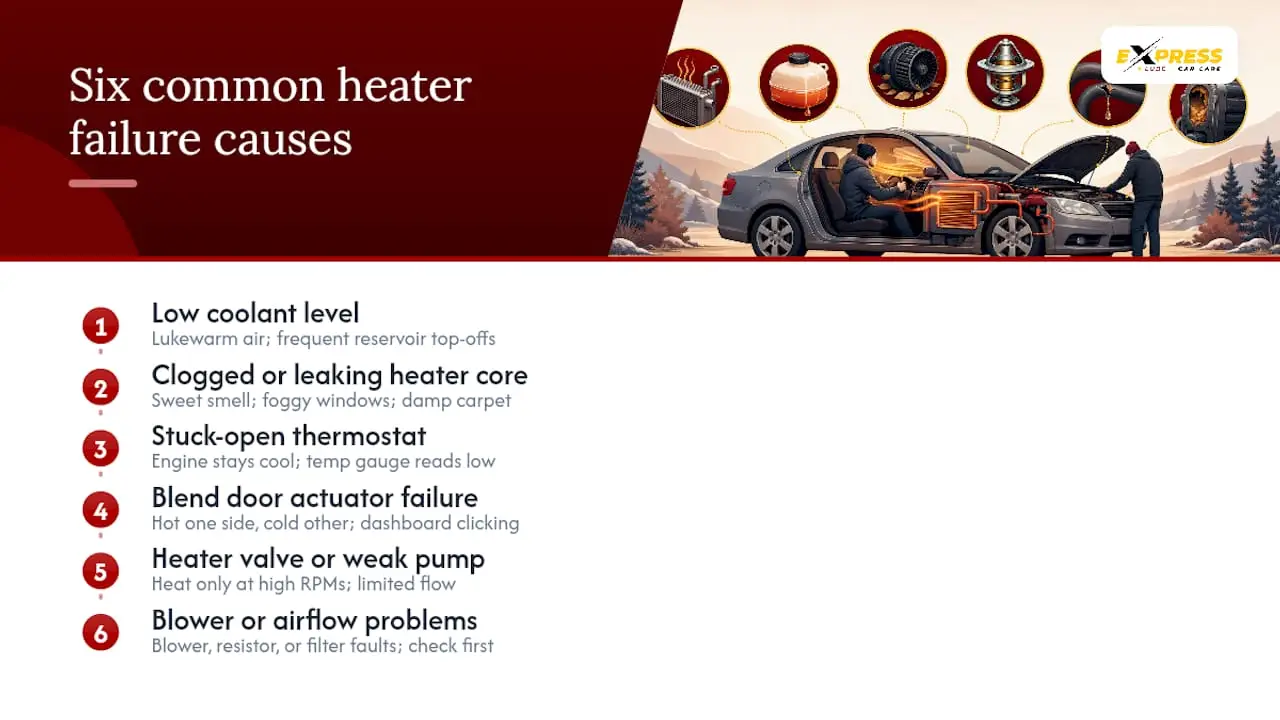
Low coolant level is the most common cause of a heater that blows lukewarm or cold air even after the engine warms up. It often comes from a slow leak at a hose, the radiator cap, the water pump, or in worse cases, a failing head gasket. If you’re topping off coolant every week or two, something is leaking and needs attention beyond just refilling the reservoir.
A clogged or leaking heater core shows up as a sweet smell, foggy windows, damp carpet on the passenger floor, or one cold heater hose while the other stays hot. Depending on severity, a flush can sometimes restore flow through a partially blocked core, but a leaking core almost always needs replacement, since flushing a cracked core just pushes coolant into the cabin.
A stuck-open thermostat keeps the engine from reaching full operating temperature, which starves the heater core of the hot coolant it needs. Watch your temperature gauge. If it never climbs to its normal spot, or climbs unusually slowly, the thermostat is a prime suspect before you touch anything heater-related.
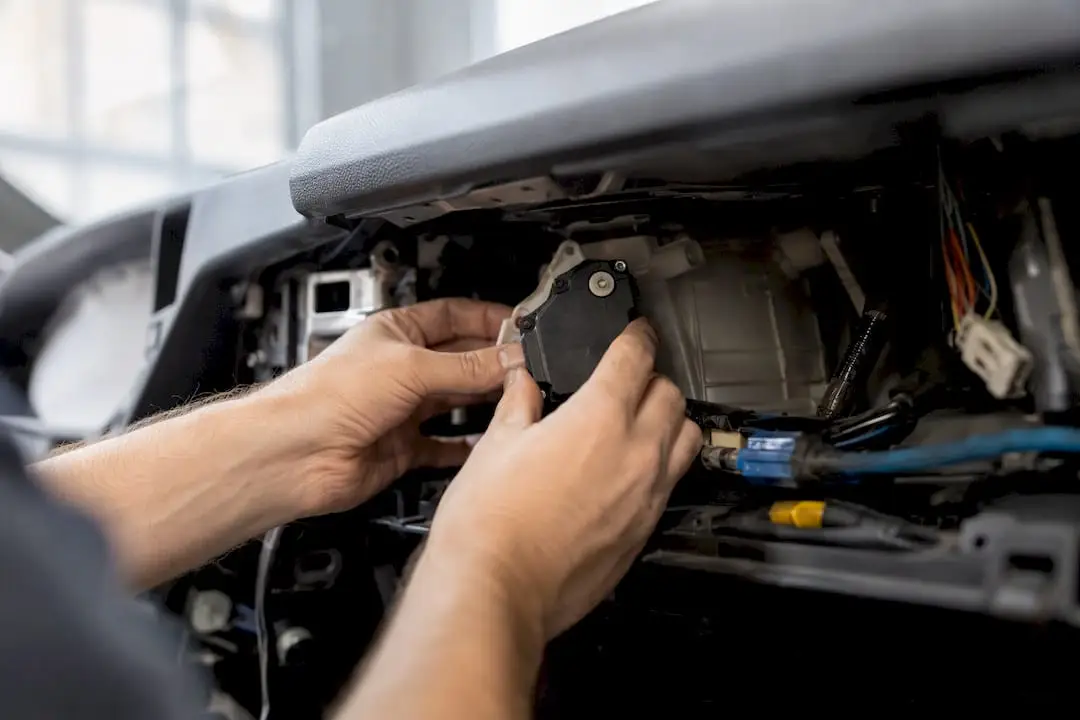
Blend door and actuator failures cause hot air on one side of the cabin and cold on the other, along with clicking or grinding noises behind the dashboard as the actuator tries and fails to move the door. This is an increasingly common failure on modern vehicles, especially those with electronic climate control rather than cable-actuated systems.
A closed heater control valve or a weak water pump limits coolant flow into the core, sometimes producing heat only at higher engine speeds. Roughly one in five no-heat complaints traces back to blower or airflow issues rather than the heater core itself, which is why blower motors, resistors, and cabin filters deserve a look before anyone condemns the core.
When to DIY and When to Call a Shop
Some heater problems are a fifteen-minute fix. Others require pulling half the dashboard. Knowing which is which saves you time and money.
Handle these yourself:
- Replacing a clogged cabin air filter
- Swapping a blown blower fuse
- Topping off coolant when the engine is cool (as a temporary measure, not a permanent fix)
Bring it to a shop for:
- Any sign of a heater-core leak (sweet smell, fogging, coolant on the floor)
- Blend-door or actuator repairs, which usually mean partial dashboard removal
- Suspected internal HVAC electrical faults or wiring issues
- Overheating, steam, or head-gasket symptoms alongside no heat
When you bring the car in, an ASE-certified technician will typically run through a set sequence:
- Visual inspection of hoses, connections, and coolant condition
- Pressure test of the cooling system to catch hidden leaks
- Heater-hose temperature check at the firewall
- Scan-tool check of HVAC blend-door position and any stored codes
- Coolant flush or heater-core flow test if a blockage is suspected
Repair time varies widely by job. A blower resistor swap often takes under an hour. A blower motor replacement usually runs one to two hours. Heater-core replacement is the big one, frequently eight to twelve hours or more depending on how deep into the dashboard the technician has to go, since the core often sits behind the entire climate-control housing. Cost estimates follow that same range, from a modest parts-and-labor bill for a resistor to a considerably larger one for full heater-core replacement. Ask your shop for a written estimate before work begins so there are no surprises.
An ASE-certified shop’s view on heater failures
We see a predictable spike in no-heat complaints every fall, usually the same handful of causes: low coolant, a tired blower resistor, or a blend door that’s finally given up. Prompt diagnosis matters more than people realize, since a working heater also clears the windshield fog and keeps you seeing the road, not just keeps you warm. Our technicians run coolant and hose-temperature checks before touching a part, so you’re not paying to replace something that wasn’t broken. Every job comes with a digital inspection, photos included, and backed by a 24-month, 24,000-mile warranty on the work.
How Express Lube & Car Care Fixes a Car Heater That Won’t Warm Up
Express Lube & Car Care is built for exactly this kind of diagnosis. No appointment needed, no guessing games. Walk in, and our technicians run the same sequence outlined above, coolant condition, hose temperatures, blend-door scan, before recommending a single repair.

Our heater services cover the full range: diagnostic packages that pinpoint the actual fault, heater-core flush or replacement, blend-door and actuator repair, and blower motor or resistor swaps. Every technician on the floor is ASE-certified, every repair carries our 24-month, 24,000-mile warranty, and every diagnosis comes with a digital vehicle inspection complete with photos, so you see exactly what we saw. Pricing is transparent before we touch your car, and if a heater-core job stretches your budget, we offer easy financing and check our current service specials for ways to trim the bill.
Quick jobs like a blower resistor or fuse are often same-day. Heater-core replacement takes longer given the labor involved, but you’ll know the timeline upfront. Bring your car in, tell us what you’ve noticed, and schedule your visit today.
Sources
- Cars
- Why Is My Car Heater Not Working? — AutoZone DIY
- Diagnostic: Why Is the Heater in My Car Not Working — O’Reilly Auto
- How your car’s heater system works (and why it needs annual inspection) — L&S Quality Auto Repair
FAQ
Why Is My Car Heater Blowing Cold Air All of a Sudden?
The most common causes are low coolant, a stuck-open thermostat, or a plugged heater core; check coolant level and heater-hose temperature first.
Why Is My Heater Only Warm on One Side?
A stuck or failed blend-door actuator is the most likely cause of uneven heat between the driver and passenger sides, not a coolant problem.
Can a Clogged Cabin Air Filter Cause No Heat?
Yes. A dirty cabin air filter restricts airflow through every vent, weakening both heater and defroster output, and replacing it is usually a quick fix.
How Long Does Heater Core Replacement Take?
Heater-core replacement is a labor-intensive job that can require many hours due to partial dashboard removal, while blower motor swaps usually take significantly less time.
Should I Keep Driving With No Heat in Winter?
You can drive short distances, but reduced defrosting hurts windshield visibility, so get the car inspected soon. Express Lube & Car Care offers walk-in diagnostics with no appointment needed.