

A fleet maintenance program is a service account with a local auto shop that handles scheduled preventive care and repairs for your company vehicles under one relationship, one set of records, and one predictable bill. The upside is straightforward: less downtime, fewer surprise invoices, and a single point of contact instead of five different receipts scattered across five different drivers. Express Lube & Car Care runs a program built around that idea, backed by ASE-certified technicians and a 24-month warranty or a mileage-based warranty covering the work performed.
Here’s what that typically covers:
- Scheduled oil changes, fluid checks, and tire rotations on a mileage or time trigger
- Brake and battery inspections built into every visit
- Digital vehicle inspections with photos so you can see the problem, not just read about it
- One consolidated invoice instead of a stack of receipts from different drivers
Pro Tip: Ask any shop you’re considering for a sample digital inspection report before you sign anything. If they can’t produce one, they’re probably not set up for fleet work yet.
Key Takeaways
A shop-run fleet maintenance program reduces downtime and cost by pairing a written preventive schedule with a tested vendor relationship, not just the lowest quote.
| Point | Details |
|---|---|
| Start with a pilot | Test one to three vehicles for 30 to 90 days before committing your full fleet. |
| Demand written SLA terms | Get diagnostic turnaround, estimate timing, and priority scheduling in writing. |
| Use DVI reports to triage | Photos and notes separate safety-critical repairs from optional upsells. |
| Verify ASE certification | Ask directly how many certified technicians are on staff before signing anything. |
| Express Lube & Car Care fits the model | Offers ASE-certified technicians, DVI reporting, consolidated invoicing, and a 24-month/24,000-mile warranty for fleet accounts. |
Table of Contents
- What Does a Fleet Maintenance Program Include?
- How Do You Vet a Local Shop for Fleet Work?
- What Should Fleet Pricing and Contract Terms Look Like?
- How Do You Onboard a New Fleet Shop With a Pilot?
- How Do You Manage Scheduling and Reporting Once You’re Live?
- What Training Does Your Team Need to Support the Program?
- What Safety and Environmental Rules Apply to Fleet Maintenance?
- Preventive vs. Predictive: Which Maintenance Strategy Fits Your Fleet?
- Can Fleet Maintenance Programs Connect With Telematics Software?
- What Most Fleet Owners Get Wrong About Choosing a Shop
- Get Your Fleet Started With Express Lube & Car Care
- Sources
- FAQ
What Does a Fleet Maintenance Program Include?
Every solid fleet maintenance program starts with the same backbone: preventive work that keeps trucks and vans off the lift and on the road. That means recurring oil and filter changes, fluid checks across brake, coolant, power steering, and transmission systems, tire rotations, and battery and brake inspections at every visit, according to Autosist’s fleet maintenance guide. That’s the floor, not the ceiling.
Higher-tier programs add engine diagnostics, HVAC service, suspension checks, and DOT or annual inspections where your vehicles require them. The best shops layer in digital vehicle inspections (DVI) with time-stamped photos and technician notes, so you’re not taking anyone’s word for a failing brake pad. You’re looking at it yourself.
Skipping planned maintenance isn’t a savings play. Reactive repairs commonly run three to five times the cost of a planned service visit, according to Dave’s Fleet Repair, and that gap widens the longer a small issue sits unaddressed. A worn serpentine belt costs you a $40 part today or a stranded delivery van and a tow bill next month.
What you should expect as deliverables, not just services:
- A written PM schedule tied to mileage or calendar intervals
- DVI reports with photos attached to every visit
- One consolidated monthly invoice across every vehicle
- A running service history for each vehicle in the fleet
That history matters more than most owners realize. When a truck starts having the same electrical gremlin every six months, a shop with your full service record catches the pattern. A shop that’s never seen the vehicle before starts from zero every time. For more on how scheduled service protects fleet vehicles specifically, see why fleet vehicles need scheduled service to thrive.
How Do You Vet a Local Shop for Fleet Work?
Ten minutes on the phone tells you almost everything you need to know. Ask these questions in order, and pay attention to how confidently the shop answers, not just what they say.
- How many ASE-certified technicians are on staff, and in what specialties?
- Have you serviced our specific vehicle types (box trucks, vans, SUVs) before?
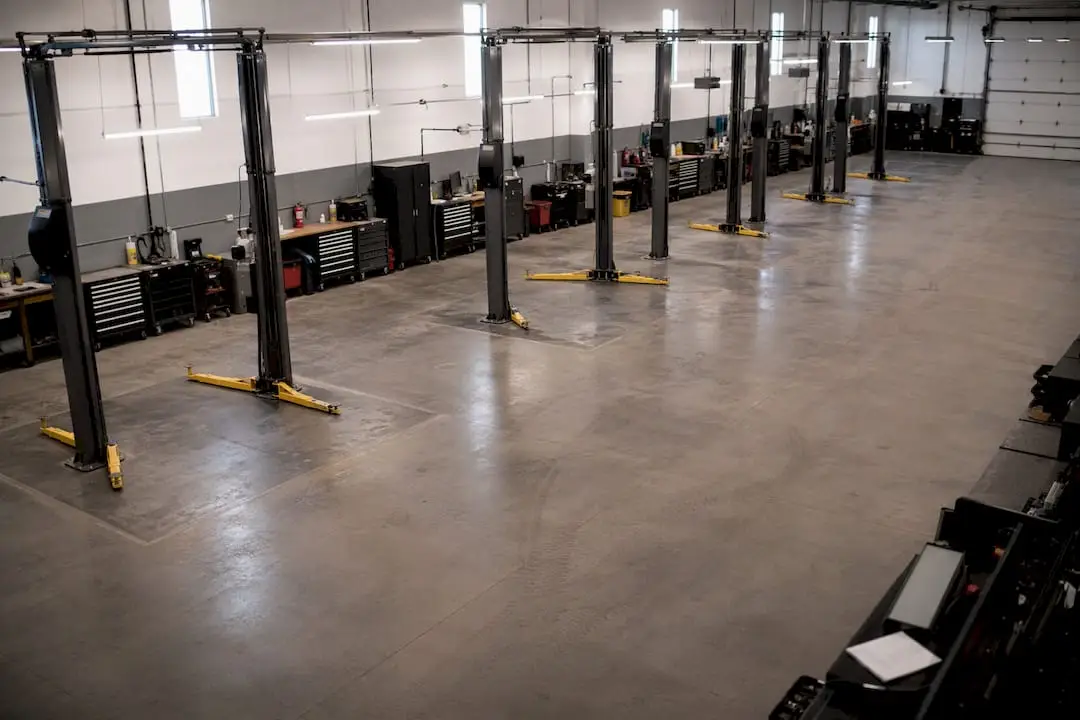
- What’s your lift capacity, and do you have bays that fit our largest vehicle?
- Can you perform DOT or state annual inspections in house?
- How do you source parts, and what’s your typical wait time on a backorder?
- What’s your diagnostic turnaround time on a check-engine light?
- Do fleet accounts get priority bay scheduling over walk-in traffic?
- What happens if a fleet vehicle breaks down after hours?
- How do you bill: net terms, monthly consolidated invoice, or per visit?
- Can you provide two references from current fleet or small business customers?
Certification counts more than most owners assume. Shops with ASE-certified staff are demonstrating a verified skill standard rather than a marketing claim, and asking about it directly, along with diagnostic turnaround and parts inventory, is standard advice from Automotive Fleet.
Watch for red flags: no sample inspection report available, no written turnaround commitment, vague answers about lift clearance, or an inability to name a single fleet reference. A shop that hesitates on any of these is telling you something.
Pro Tip: Ask to physically walk the shop floor before committing. A five-minute visit reveals more about lift capacity and bay organization than any phone call ever will.
What Should Fleet Pricing and Contract Terms Look Like?
Most local shops price fleet accounts one of two ways: a per-vehicle flat rate for routine services, or a discounted hourly labor rate plus parts at a capped markup. Either can work. What matters is that the terms are written down before your first vehicle rolls in.
A written one-page program overview functions as a practical Service Level Agreement, spelling out inclusions, pricing tiers, minimums, and turnaround expectations so nobody argues about it three months in. Insist on seeing this document before you sign anything longer.
Your contract should specify:
- Whether pricing is flat-rate, hourly, or tiered by vehicle count
- Billing cadence (monthly consolidated invoice versus per-visit)
- A parts markup cap, stated as a percentage
- A minimum monthly volume or vehicle count, if one applies
- A written diagnostic turnaround commitment, in hours, not “as soon as possible”
On the SLA side, four items protect your uptime specifically: guaranteed diagnostic turnaround, a promised estimate delivery window, priority bay scheduling for fleet vehicles over walk-in traffic, and a named emergency contact line for after-hours breakdowns. Bulk pricing on routine services can meaningfully lower your per-vehicle cost over a year; see how bulk service pricing helps fleets cut costs for how that math typically works.
How Do You Onboard a New Fleet Shop With a Pilot?
Don’t hand over your entire fleet on day one. A short pilot protects you from a bad fit without disrupting your whole operation.
- Pick one to three representative vehicles. Choose a mix that reflects your fleet, not just the easiest van to schedule.
- Define your success metrics up front. Track actual diagnostic turnaround against what was promised, invoice clarity, and comeback rate (repeat visits for the same unresolved issue).
- Set a 30 to 90 day evaluation window. Long enough to see a real service cycle, short enough that a bad match doesn’t cost you a quarter.
- Request the paperwork before day one. Get the one-page program overview, a sample consolidated invoice, and an example DVI report so you know what to expect.
- Compare results against the SLA in writing. If turnaround, billing, and communication all hold up, expand. If not, walk.
Running a small pilot first is standard advice for exactly this reason, according to AutoMK’s guidance on choosing repair shops for fleets: it lets you evaluate communication, turnaround, and invoicing clarity before the whole fleet is on the line. If the pilot vehicles come back with clean paperwork and no repeat problems, you’ve got your answer.
How Do You Manage Scheduling and Reporting Once You’re Live?
The relationship doesn’t run itself once the pilot’s over. It runs on three habits: using the inspection reports, keeping a real schedule, and naming one person on each side who owns the account.
Digital vehicle inspection reports with photos let you triage repairs by actual risk instead of guesswork. Transparent DVI reporting helps managers separate safety-critical repairs from nice-to-have upsells, according to Fleetworthy, which matters when a shop flags four issues and you need to know which one keeps a driver safe this week.
Build your scheduling around triggers, not memory:
- Set mileage or calendar based PM triggers for each vehicle class
- Feed those triggers into whatever dispatching or booking system you already use
- Assign a single point of contact on your side and one at the shop
- Request a monthly maintenance summary, not just individual invoices
- Establish an escalation contact for anything urgent between visits
Pro Tip: Keep a shared spreadsheet or simple log of every DVI flag marked “safety” versus “cosmetic.” After two or three months, you’ll start to see which vehicles are draining your budget and why.
Independent shops tend to be better at this long game than large chains. Locally operated shops are more likely to track detailed histories and proactively flag recurring issues for repeat customers, according to reporting on local versus dealership repair trends, because your account is worth protecting, not just processing.
What Training Does Your Team Need to Support the Program?
A fleet maintenance program only works as well as the people feeding information into it on your side. You don’t need a mechanic on staff, but you do need someone who understands enough to spot a problem and communicate it clearly.
Start with your drivers. They should know how to log a basic symptom (grinding brakes, a warning light, a fluid puddle under the vehicle) and who to call immediately. A five-minute training session covering “what counts as urgent” prevents a driver from ignoring a warning light for three weeks because they didn’t know it mattered.
Your dispatcher or office manager needs a different skill set: reading a DVI report well enough to prioritize a repair, understanding your SLA well enough to hold the shop accountable, and knowing your PM schedule well enough to book vehicles before they’re overdue. This person becomes your single point of contact with the shop, so give them the authority to approve routine repairs without waiting on a chain of sign-offs.
If you’re managing more than a handful of vehicles, designate a backup contact too. Fleet maintenance breaks down fastest when the one person who understands the account goes on vacation and nobody else knows the shop’s contact information or the last vehicle’s service history. Cross-training two people, even loosely, keeps a single absence from stalling your whole schedule.
What Safety and Environmental Rules Apply to Fleet Maintenance?
Fleet vehicles carry compliance obligations that personal cars don’t, and your maintenance program should account for that directly rather than treating inspections as optional extras.
Depending on your vehicle types and how they’re used, you may be subject to DOT annual inspections, state-level safety inspections, or industry-specific requirements if you haul certain goods or operate commercial passenger vehicles. Confirm with your shop, before you sign a contract, whether they can perform these inspections in house or whether you’ll need a separate provider. A shop that can’t answer this question confidently isn’t ready for full compliance responsibility.
Environmental rules matter too, particularly around fluid disposal. Used oil, coolant, and brake fluid are all regulated waste in most states, and a shop handling your fleet’s volume should have documented disposal procedures, not an informal arrangement. Ask directly how they manage used oil and fluid disposal; a shop that can’t describe its process clearly is a liability you don’t want attached to your business.
Tire disposal and battery recycling follow similar patterns. These aren’t glamorous questions, but they’re the ones that protect you if a regulator ever asks how your fleet’s waste stream is handled. Building this into your vetting checklist alongside the operational questions keeps you from discovering a gap after it’s already a problem.
Preventive vs. Predictive: Which Maintenance Strategy Fits Your Fleet?
Preventive maintenance runs on a schedule: change the oil every 5,000 miles, rotate tires every other visit, inspect brakes at every service regardless of how they look. It’s simple, it’s proven, and it’s the backbone of nearly every fleet maintenance program worth having.
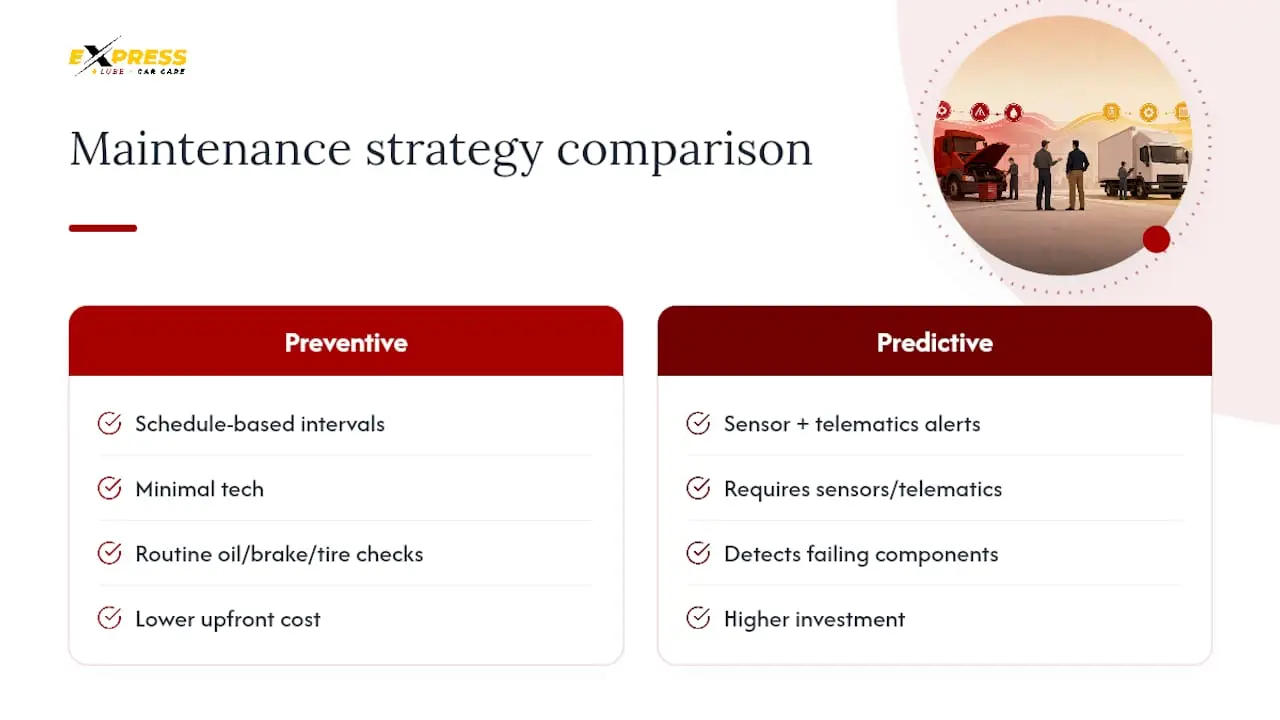
Predictive maintenance is a different approach entirely. It uses sensor data, often fed through telematics, to flag a component before it fails based on actual wear patterns rather than a fixed interval. It can catch a failing alternator or a bearing on its way out before the symptom shows up on a driver’s dashboard.
For most small and mid-size fleets working with a local shop, preventive maintenance does the heavy lifting, and predictive tools are a layer on top, not a replacement. You don’t need predictive sensors to catch an overdue oil change. You do need them if you’re running a larger fleet where a single unplanned breakdown costs real money in missed deliveries or idle labor.
The practical move is starting with a strong preventive schedule through your shop, then adding predictive elements as your fleet grows or your vehicles get more expensive to lose for a day. A five-vehicle landscaping fleet probably doesn’t need predictive sensors. A twenty-vehicle delivery operation running tight schedules might find them worth the investment.
Can Fleet Maintenance Programs Connect With Telematics Software?
If your fleet already runs telematics or a dispatching platform, your maintenance program should talk to it, not run in a separate silo. The most useful connection point is simple: mileage and engine-hour data from your telematics system feeding directly into your shop’s PM scheduling, so services trigger automatically instead of depending on someone remembering to check an odometer.
Some shops can accept exported mileage reports or integrate basic reminders based on data you share from your existing platform. Even without a deep technical integration, you can build a manual bridge: export mileage data monthly, forward it to your shop contact, and let them flag which vehicles are approaching their next service window.
The goal isn’t complexity for its own sake. It’s making sure a vehicle logging heavy engine hours on a job site doesn’t slip past its oil change window just because nobody manually checked the number. If you’re evaluating vendors, ask directly whether they’ve worked with fleets using telematics data before, and how they’d want that data shared. A shop’s answer here tells you a lot about how organized their scheduling process actually is.
What Most Fleet Owners Get Wrong About Choosing a Shop
Most advice on fleet maintenance treats it like a procurement decision: get three quotes, pick the cheapest, move on. That’s backward. Price matters, but the variable that actually determines whether your fleet stays on the road is turnaround time and communication consistency, not the per-oil-change rate.
The conventional wisdom also oversells contract length as a sign of commitment. A shop pushing you toward a long-term commitment before you’ve run a single pilot vehicle through their bays is asking you to trust a relationship you haven’t tested. A 30 to 90 day pilot with one or two vehicles tells you more about a shop’s real turnaround and billing habits than any sales pitch does.
What deserves priority first: a written diagnostic turnaround commitment and a sample DVI report. Everything else, pricing tiers, contract minimums, billing cadence, is negotiable once you’ve confirmed the shop actually does what it says on a real vehicle. Skip the pilot, and you’re negotiating contract terms for a relationship you haven’t verified yet.
— Express Lube & Car Care
Get Your Fleet Started With Express Lube & Car Care
Express Lube & Car Care runs its fleet program the way this article recommends you vet one: ASE-certified technicians on staff, digital vehicle inspections with photos on every visit, and a 24-month warranty or a mileage-based warranty backing the repairs performed. No-appointment walk-ins mean a fleet vehicle with an unexpected issue doesn’t have to wait days for an opening.
Fleet accounts get consolidated monthly invoicing instead of a pile of separate receipts, and you can request a one-page program overview before committing a single vehicle. Start with a pilot: bring in one or two vehicles for their next scheduled service and see the DVI reporting and turnaround for yourself. Current oil change and service specials make that first visit an easy way to test the relationship without a big upfront commitment. If a repair comes up mid-pilot, the 24-month warranty covers the work, and financing options are available for larger jobs. Book your first fleet vehicle through the appointment page and see how the turnaround compares to what you’re using now.
Sources
- Autosist — Best fleet maintenance software (guide)
- Automotive Fleet — How ASE certifications empower technicians
- AutoMK — How to choose the right repair shops for fleet maintenance
FAQ
How much does a fleet maintenance program typically cost?
Pricing depends on vehicle count and service tier, but most shops offer either a flat per-vehicle rate or a discounted hourly labor rate with a capped parts markup. Ask for written pricing tiers before comparing shops.
How long should a pilot program run before committing my full fleet?
A pilot of one to three vehicles over 30 to 90 days gives you enough service cycles to judge turnaround, invoicing clarity, and comeback rate.
What does a digital vehicle inspection (DVI) actually include?
A DVI is a photo and note-based report a technician creates during service, documenting what they found so you can see the issue rather than take a verbal description on faith.
Can a local shop handle DOT or annual state inspections for fleet vehicles?
Some shops offer this in house and some don’t, so confirm it directly during vetting since it’s one of the ten essential questions fleet managers should ask before signing on.
What turnaround time should I expect on diagnostics?
Turnaround varies by shop and issue complexity, but any provider worth using should give you a written diagnostic turnaround commitment rather than an open-ended “we’ll call you.”