
Local mechanics understand regional vehicle needs better than national chains because they work in the same conditions you drive in every day. They know whether your roads are riddled with potholes, whether summer heat regularly pushes past 100°F, and whether stop-and-go freeway traffic is grinding your brakes down faster than the factory schedule accounts for. That firsthand, community-level knowledge shapes every recommendation they make.
Here is what sets a knowledgeable neighborhood mechanic apart:
- They factor in local climate when scheduling cooling system and battery checks
- They recognize brake wear patterns tied to your specific commute, not a national average
- They stay current on state and local emissions rules, including California smog protocols and OBD-II readiness requirements
- They maintain long-term vehicle histories that make predictive maintenance possible
- They source parts through regional suppliers, which speeds up repairs on older or locally common vehicles
Why local mechanics know regional needs better than chains
Regional driving conditions create vehicle stress that a one-size-fits-all maintenance schedule simply cannot address. The California Bureau of Automotive Repair confirms that high summer temperatures and traffic congestion significantly influence maintenance needs, with local shops tailoring brake inspections and engine cooling checks to match those exact stressors. A mechanic in inland California treats AC strain and thermal battery fatigue as routine concerns, not edge cases.
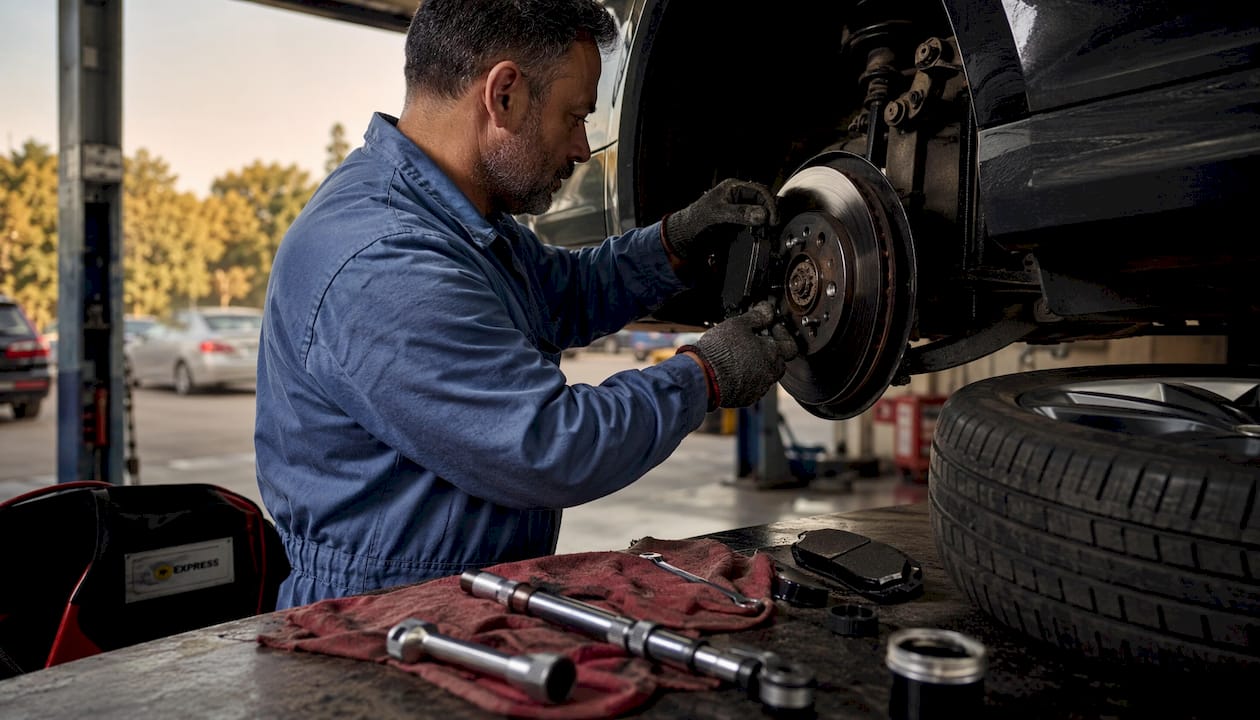
Traffic patterns matter just as much as temperature. Suburban stop-and-go commutes accelerate brake pad wear and put repeated stress on automatic transmissions. Mountain roads create alignment drift and suspension fatigue that flat-highway driving never produces. A mechanic who drives those same roads to work every morning spots the wear patterns early.
Pro Tip: Ask your mechanic directly: “What do you see most often on cars driven around here?” A good local shop will have a specific, confident answer. Vague responses are a red flag.
Road surface quality adds another layer. Curb-heavy suburban streets cause toe and camber shifts that a national chain’s standard alignment check may not catch. Sanded winter roads in northern states accelerate corrosion on brake lines and undercarriage components. Local mechanics adjust their inspection checklists accordingly, because they have seen what those roads do to vehicles over time.
-
- High heat regions: more frequent coolant pressure tests and battery load checks
- Heavy snow or sanded roads: seasonal undercarriage and brake line inspections
- Stop-and-go urban corridors: shorter brake inspection intervals
- Mountain or off-road terrain: suspension and alignment checks after every season
- Humid coastal areas: accelerated rust checks on exhaust and frame components
How personalized service from a local mechanic protects your car
Long-term relationships between drivers and their mechanics produce something a chain garage cannot replicate: a complete, living vehicle history. When a mechanic has serviced your car for three years, they remember the transmission flush you skipped, the slow coolant leak they flagged last spring, and the fact that you drive 40 miles each way to work. That context changes every recommendation they make.
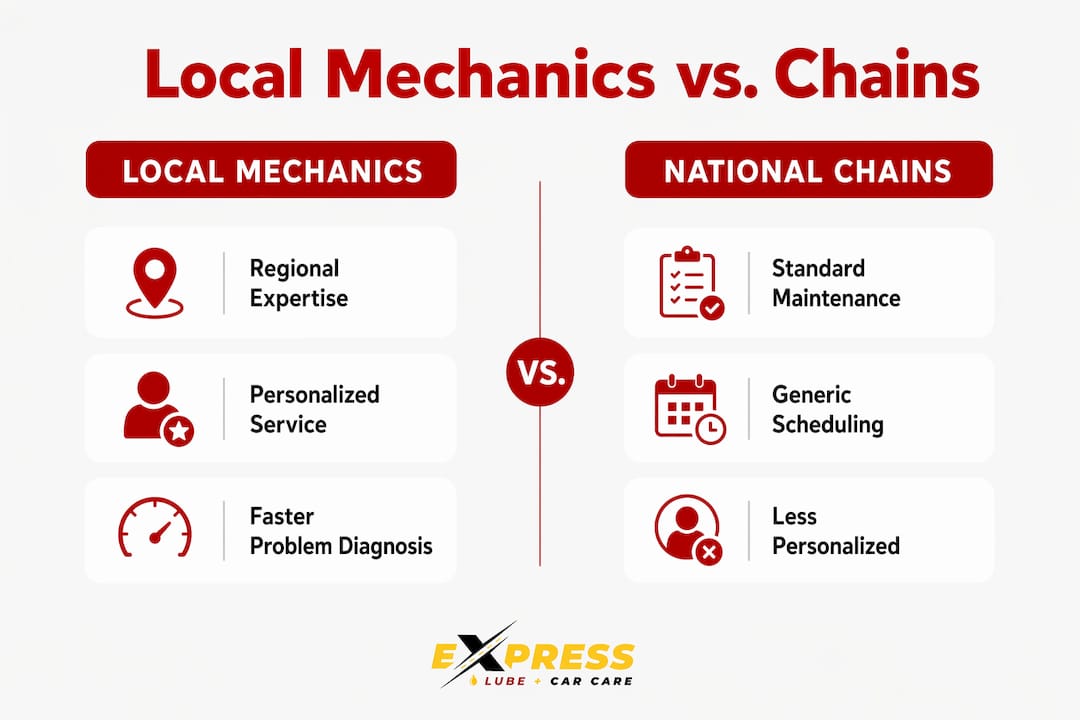
According to industry sources, local shops operate on trust and accountability, with clients knowing exactly who is working on their car. You speak directly with the technician, not a service advisor reading from a script. That direct line of communication means your concerns actually reach the person holding the wrench.
Pricing flexibility is another real advantage. Independent shops carry lower overhead than corporate chains and are not beholden to upsell quotas. They fix what is broken and flag what needs attention soon, without manufacturing urgency. Community-reinvested local shops sustain skilled local jobs and build loyalty through transparent, personalized care that keeps profits circulating in the neighborhood rather than flowing to distant shareholders.
- Long-term vehicle records enable predictive, not reactive, maintenance
- Direct technician communication removes the corporate middleman
- No upsell quotas mean repair recommendations reflect actual vehicle needs
- ASE certification is considered a mark of trust by many drivers
- Flexible scheduling, including earlier hours or later closing times, accommodates busy drivers
How local mechanics navigate emissions laws and state regulations
California’s smog rules are among the strictest in the country, and a mechanic unfamiliar with the South Coast Air Basin’s specific requirements can send you home with a car that fails inspection. Local mechanics in regulated areas conduct targeted diagnostics on OBD-II readiness monitors, evaporative system integrity, and catalytic converter efficiency, all calibrated to state thresholds rather than generic federal minimums.
This matters beyond California. Texas, New York, and Colorado each carry their own inspection and emissions protocols. A local mechanic who has been prepping cars for your state’s annual inspection for a decade knows exactly which monitors need to be fully ready, which failure triggers are most common on vehicles driven in your climate, and how to address them cost-effectively before you pull into the testing lane.
- OBD-II readiness: local mechanics know which monitors your state’s test actually checks
- Evaporative system leaks: a common California smog failure that regionally experienced mechanics catch early
- Catalytic converter efficiency: monitored against local thresholds, not just federal baselines
- State-specific inspection prep: reduces the chance of a costly retest fee
- Regulation-aligned repair options: local shops recommend fixes that satisfy compliance without unnecessary parts replacement
Tips for choosing the right local mechanic for your area
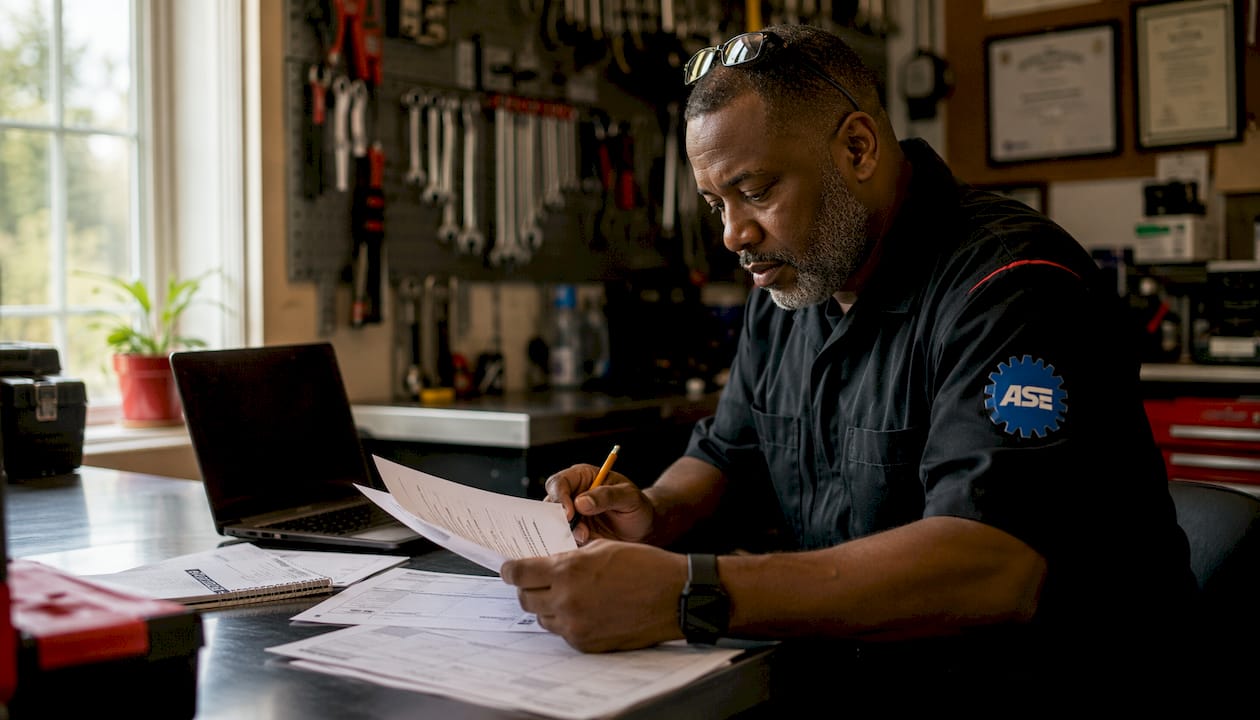
The single most reliable credential to look for is ASE certification. ASE-certified technicians have passed standardized exams across specific repair categories, and that credential signals both technical competence and a commitment to ongoing training. It is the baseline, not the ceiling.
Beyond certification, local reviews tell you things a credential cannot. A shop with consistent five-star ratings from drivers in your zip code is demonstrating real-world performance in your specific conditions. Look for reviews that mention specific repairs, not just generic praise, and pay attention to how the shop responds to negative feedback.
- Verify ASE certification for the technicians who will actually work on your car
- Read local reviews on Google and the Better Business Bureau, focusing on repair-specific feedback
- Ask whether the shop has experience with your vehicle’s make and model in your local climate
- Request a written estimate before any work begins and confirm the shop explains repairs clearly
- Check that the shop uses professional diagnostic tools, not just a basic code reader
Pro Tip: Visit the shop before you need a repair. A clean, organized bay, posted certifications, and a mechanic willing to answer questions without pressure are all good signs.
Expert perspective: how certified local mechanics use regional knowledge proactively
ASE-certified local mechanics function as vehicle advocates, not just service technicians. They use long-term records to spot failure patterns before a warning light appears. Local shops identify regional make-and-model-specific failure trends earlier than national chains, enabling more targeted preventive repairs. For example, certain electrical issues surface in vehicles regularly exposed to intense summer heat, and a local mechanic who has seen that pattern across dozens of cars in the same neighborhood catches it faster.
Parts sourcing is another area where local expertise pays off. Long-standing supplier relationships allow local shops to rapidly source specialized or legacy parts, improving turnaround time and repair accuracy, especially for older vehicles that are common in a specific region. A national chain ordering through a centralized warehouse cannot match that speed or flexibility.
Local mechanics also invest in professional-grade diagnostic equipment. The assumption that only dealerships have access to advanced scan tools is outdated. Established independent shops run the same OBD-II software, scope testing, and live data analysis that dealerships use, combined with the regional context that makes those readings meaningful. That combination of technology and local knowledge is what separates a great neighborhood shop from a generic one.
Key Takeaways
Local mechanics deliver better regional vehicle care because their hands-on experience with local climate, traffic, and regulations produces maintenance recommendations that national chains simply cannot match.
| Point | Details |
|---|---|
| Regional climate drives maintenance | High heat, snow, and humidity each accelerate specific wear; local mechanics adjust inspection schedules accordingly. |
| Long-term vehicle history matters | Mechanics who know your car’s past can predict and prevent failures before they become expensive. |
| ASE certification builds trust | ASE certification is considered a mark of trust by many drivers. |
| Local emissions expertise saves money | Mechanics familiar with state-specific smog and OBD-II rules help you pass inspections the first time. |
| Regional parts sourcing speeds repairs | Direct supplier relationships mean faster access to the right parts, especially for older or locally common vehicles. |
Choosing Express Lube & Car Care for your regional vehicle needs
Express Lube & Car Care serves drivers in the Richland Hills area with ASE-certified technicians who understand the specific demands of North Texas driving. No appointment needed. Walk in for everything from a routine oil change to a full diagnostic, and you will get a clear estimate before any work starts. The team backs every repair with a 24-month warranty, and current service specials make staying on top of maintenance easier on your budget. If you want to understand exactly what your car needs for local conditions, Express Lube & Car Care is the place to start.
FAQ
What makes a local mechanic better than a national chain?
Local mechanics know the specific climate, road conditions, and traffic patterns in your area, which lets them tailor maintenance recommendations to your actual driving environment rather than a generic national schedule.
What are the 3 C’s of mechanics?
The 3 C’s stand for Condition, Cause, and Correction, guiding thorough and traceable repairs.
What is the 30-60-90 rule for cars?
The 30-60-90 rule refers to common service milestones where specific components typically need inspection or replacement. Your local mechanic may adjust these intervals based on regional driving conditions.
How do you tell if a mechanic is good?
Look for ASE certification, written estimates before work begins, clear explanations of repairs, and strong local reviews that mention specific jobs. A good mechanic answers your questions directly and does not pressure you into services you did not ask about.
Does local driving really affect how often I need maintenance?
Yes. Stop-and-go traffic accelerates brake wear, high heat stresses cooling systems and batteries, and sanded winter roads corrode brake lines faster than mild-climate driving. A local mechanic adjusts your service intervals to match those real-world conditions.