

A failing engine mount is rarely an emergency in the first moment you notice it, but it can turn into one fast. If you’re feeling mild vibration or an occasional clunk, a careful, short drive to a shop is usually fine. If the engine lurches violently, you hear loud metallic banging, or you see a mount visibly torn apart, stop driving and arrange a tow rather than pushing your luck.
TL;DR:
- Early-stage engine mount issues often cause mild vibrations and occasional clunks, which can typically be managed with cautious driving until inspection.
- If symptoms worsen to include strong vibrations, visible damage, or engine rocking, towing becomes necessary to prevent further damage.
- Most engine mounts last between 60,000 and 100,000 miles, but factors like fluid leaks, heat, collisions, and aggressive driving can accelerate wear.
- Visual signs of failure include cracked rubber, fluid leakage from hydraulic mounts, and excessive engine movement during gentle revving.
- Repair costs range from $280 to $1,050, with labor making up the majority, and early diagnosis can prevent secondary damage to exhaust and drivetrain components.
Table of Contents
- Symptoms to watch for and how to check them safely
- Urgency and action stages: early, worsening, and critical
- Common causes and risk factors that shorten mount life
- How technicians diagnose engine mount failure and what evidence matters
- Consequences of ignoring a failed engine mount
- Repair options and cost expectations
- Step-by-step outline of a pre-visit inspection
- How weather and road conditions wear down mounts
- Precautions if you can’t get immediate repair
- Express Lube & Car Care’s approach to mount diagnosis
- Scheduling an engine mount inspection with us
- Sources
- FAQ
Symptoms to watch for and how to check them safely
Your engine sits on mounts designed to hold it in place while soaking up vibration. When a mount cracks, separates, or leaks, that vibration has nowhere to go but into your cabin, and the engine itself starts moving more than it should.
Here’s what to look and listen for, according to AutoZone’s diagnostic guidance:
- Cabin vibration that’s noticeably stronger at idle or under acceleration.
- Clunks or thumps when you shift into gear, accelerate hard, or brake suddenly.
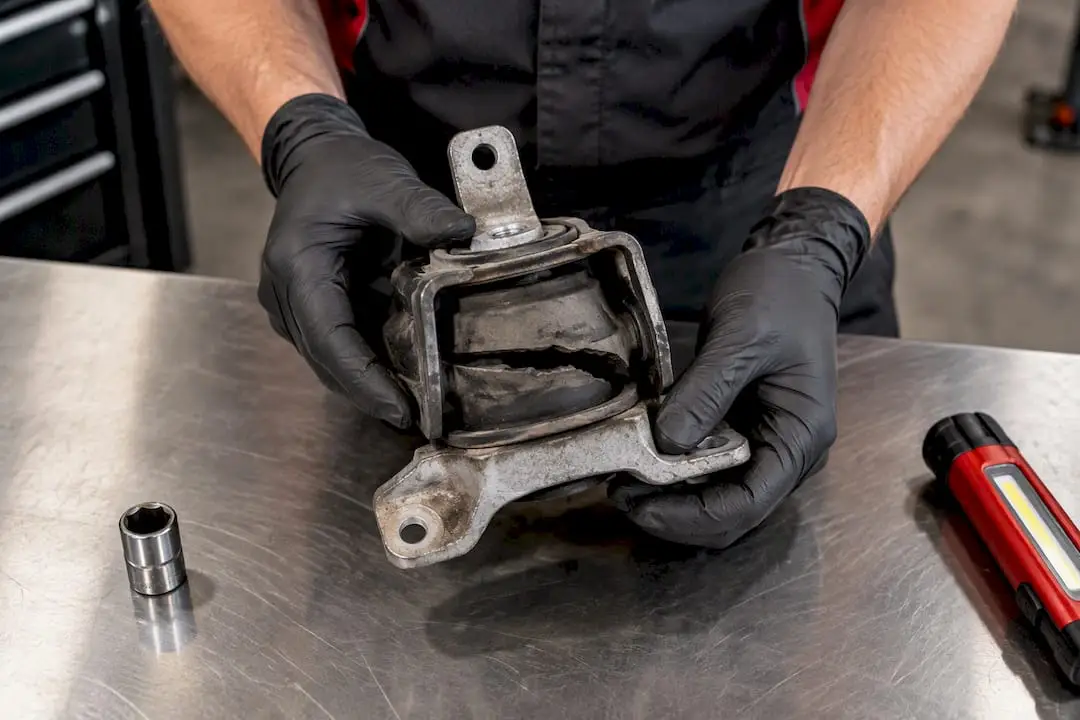
- Visible cracks, tears, or separation in the rubber portion of the mount.
- Engine rocking more than expected when you rev it in park or neutral.
- Fluid leaking from a hydraulic mount, which signals it’s lost its cushioning ability.
To check safely, park on level ground, set the parking brake, and have someone watch the engine bay while you rev the engine gently in park or neutral. Keep hands and clothing clear of belts and fans the entire time. A little shimmy is normal. Excessive rocking, especially side to side, points toward a mount that’s already failing rather than just wearing.
Pro Tip: Compare side to side. If one side of the engine bay looks and sounds noticeably different from the other during your check, that’s usually the mount to focus on.
Urgency and action stages: early, worsening, and critical
Not every symptom means the same thing, and treating a minor vibration like a five-alarm fire wastes your time and money just as much as ignoring a real warning sign does. Think in three stages.
- Early stage: Mild vibration at idle, an occasional light clunk on shifting. Monitor it and schedule an inspection within the next couple of weeks. Short trips are generally fine.
- Getting worse: Vibration you feel through the seat and steering wheel, more frequent clunks, visible cracking when you look under the hood. Schedule service within days and limit driving to what’s necessary.
- Critical: Violent engine movement, loud metallic banging, or a mount that’s visibly separated or hanging loose. Stop driving and arrange a tow rather than risking further damage or a roadside breakdown, a pattern consistent with the severe-symptom guidance from CarParts.com.
Short, cautious drives to a shop are usually acceptable in the early and worsening stages. Once you’re in critical territory, towing is the safer call because a snapped mount can shift the engine enough to damage hoses, wiring, or the exhaust in the time it takes to reach a shop.
Common causes and risk factors that shorten mount life
Engine mounts wear out gradually, but several factors speed up the process.
- Age and mileage: most mounts hold up for roughly 60,000 to 100,000 miles, though that range shifts depending on the vehicle’s design and how the mount is used.
- Fluid contamination: oil or coolant leaks softening the rubber over time. Persistent oil leaks are worth addressing on their own, and routine oil change intervals help catch that kind of leak early.
- Heat and dry climates: both accelerate rubber cracking and hardening.
- Collisions: even a minor fender bender can stress or crack a mount.
- Aggressive driving: hard launches and abrupt gear changes put repeated shock loads on mounts.
Keep in mind that misfires, exhaust components rattling against the body, or transmission issues can mimic mount symptoms, which is exactly why a proper inspection matters before you assume the mount is the culprit.
How technicians diagnose engine mount failure and what evidence matters
A good diagnosis goes beyond driving the car and guessing. Technicians typically look for:
- Visual damage: cracked or separated rubber, fluid leaks on hydraulic mounts, bent or corroded metal brackets, and visible engine misalignment.
- Load and movement testing: applying controlled pressure to the engine while watching how much it shifts, then test-driving the car to reproduce the noise or vibration.
- Nearby components: hoses, wiring harnesses, the exhaust system, and transmission mounts, since a failed engine mount often stresses these parts too.
Because multiple mounts usually work together to hold the engine and transmission in place, a shop may recommend inspecting or replacing more than one, even if only one shows obvious damage, as explained by Flash Pecas Import. Photographic documentation from a digital inspection gives you a clear before-and-after record instead of just taking someone’s word for it.
Pro Tip: Ask to see the actual mount that’s failing. A quick look at a cracked or separated mount makes the recommendation a lot easier to trust than a verbal description.
Consequences of ignoring a failed engine mount
Once a mount fails, the engine has more room to move than it’s designed to, and that extra movement doesn’t stay contained.
- Exhaust damage: a shifting engine can crack manifolds or knock exhaust components loose.
- Hose and wiring stress: excess movement can stretch or snap coolant hoses and electrical connectors.
- Cooling system contact: in severe cases, the engine can shift enough to hit the radiator or cooling fan.
- Drivetrain strain: movement transfers stress to the driveshaft and transmission mounts, which can accelerate wear there too.
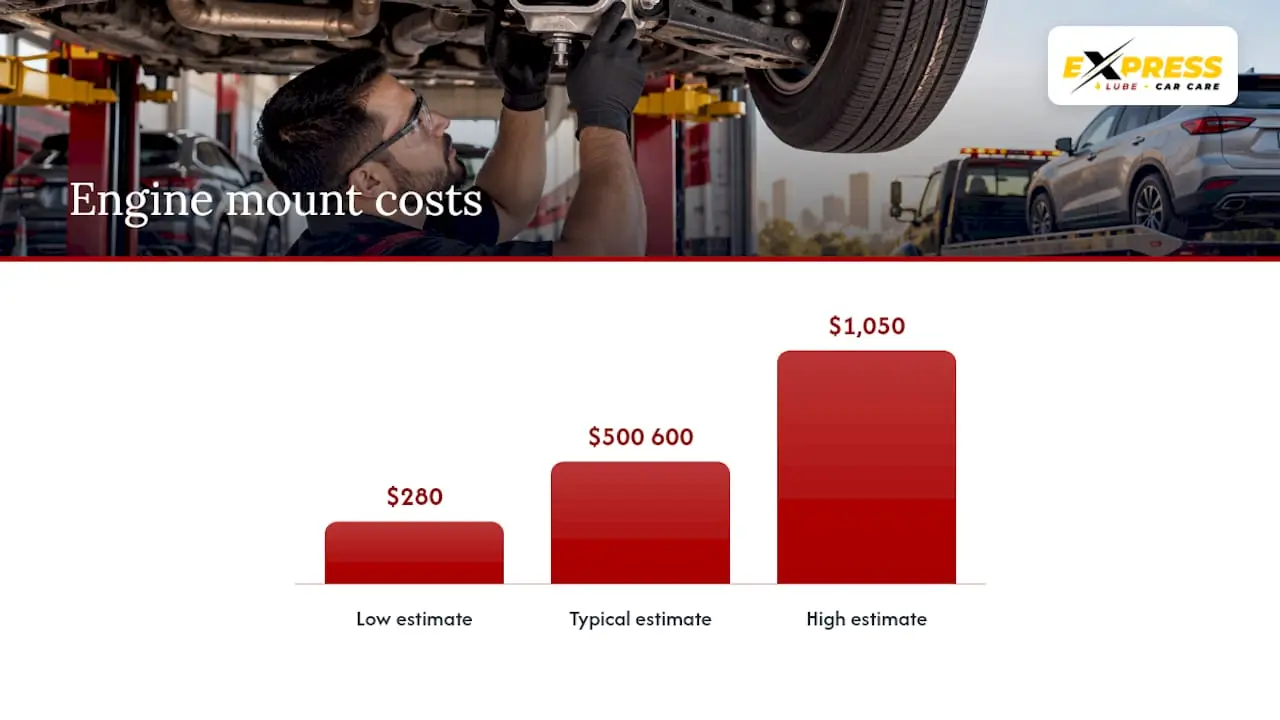
A failed mount typically costs $280 to $1,050 to replace on its own, but letting it damage exhaust, cooling, or drivetrain components on the way to failing turns a single repair into several. In rare, extreme cases, damaged wiring or fuel lines near a shifting engine can create a driveability or fire risk, which is part of why the critical-stage symptoms above call for towing rather than driving.
Repair options and cost expectations
Replacing an engine mount typically runs $280 to $1,050, with most estimates landing closer to the $500 to $600 range. Labor is usually the bigger part of that bill, since reaching some mounts means removing brackets, hoses, or other components first, not because the mount itself is expensive.
A few things shape your final cost:
- Vehicle make and access: some mounts sit in easy reach, others require significant disassembly.
- Single versus multiple mounts: if one mount failed from normal wear, the others may still be fine, but a collision or high mileage often means more than one needs attention.
- OEM versus aftermarket: OEM mounts tend to match the original fit and expected lifespan closely, while aftermarket options vary more in material quality and longevity.
A reputable shop should walk you through a transparent estimate before starting work, not after. That includes digital vehicle inspection photos so you can see what ASE-certified technicians found, plus a 24-month/24,000-mile warranty on qualifying repairs.
Pro Tip: Ask whether the estimate includes inspecting the other mounts, not just the one that’s obviously failed. A quick check now can save you a second labor charge later.
Step-by-step outline of a pre-visit inspection
You don’t need a lift or special tools to get a reasonable read on your mounts before booking an appointment.
- Park on level ground and set the parking brake for safety.
- Pop the hood and visually scan each visible mount for cracked, torn, or separated rubber.
- Check for fluid residue around any hydraulic mounts, which signals a loss of cushioning.
- Have a second person watch the engine while you gently rev it in park or neutral, keeping well clear of the fan and belts.
- Note excessive rocking or side-to-side shifting compared to normal idle movement.
- Listen for clunks while shifting from park to drive or reverse with your foot firmly on the brake.
- Write down when the symptoms happen: at startup, under load, on rough roads, or only at idle.
Bring that list with you. Specific details, like “clunks only when shifting into reverse,” help a technician narrow down the cause faster than a general “it’s making a noise” description. If the vibration seems tied to the steering wheel rather than the engine bay, it’s worth reading about other common causes of steering wheel vibration before assuming it’s a mount issue.
How weather and road conditions wear down mounts
Rubber and hydraulic mounts don’t fail in a vacuum. Extreme heat softens and dries out rubber compounds over repeated summers, making them more prone to cracking. Extreme cold has the opposite effect, stiffening rubber and making it more brittle when the engine shifts under load.
Road salt used for winter de-icing is harder on the metal brackets and housings that hold mounts in place than on the rubber itself. Corrosion on those brackets can loosen the mount’s grip long before the rubber shows obvious wear, which is one reason a purely visual check sometimes misses early damage in vehicles regularly exposed to salted roads.
Stop-and-go driving in extreme heat, combined with a vehicle that already has some age on it, tends to accelerate the process described in the lifespan guidance above. If you’re maintaining an older vehicle through hot summers and cold winters, it’s worth factoring mount condition into the kind of high-mileage maintenance checklist you’d use for other wear items.
Precautions if you can’t get immediate repair
If a repair appointment isn’t possible right away, a few precautions reduce your risk in the meantime. Avoid hard acceleration and abrupt gear changes, since these put the most stress on a compromised mount. Stick to lighter throttle inputs and smoother shifts whenever you can.
Limit your driving to necessary trips rather than routine errands, and avoid highway driving where higher speeds and sustained load put more strain on the mount. If you notice the symptoms worsening, even during this shorter period, treat that as your signal to stop driving and arrange a tow rather than waiting out the original schedule.
None of this is a substitute for the actual repair. A cracked or separated mount only gets worse with continued use, and a temporary driving adjustment simply buys you a little time, not a fix.
Express Lube & Car Care’s approach to mount diagnosis
We don’t guess on mount problems. Technicians combine a hands-on inspection with digital photos of what they find, so you can see the cracked rubber or leaking mount for yourself before approving any work. Same-day and walk-in appointments are commonly available.
Qualifying repairs come with a 24-month/24,000-mile warranty, and you will be walked through pricing before work starts. If you’re hearing clunks or feeling vibration, a proper engine inspection beats guessing at home.
— Express Lube & Car Care
Scheduling an engine mount inspection with us
If your car is showing any of the signs above, the fastest way to get a straight answer is to have it looked at, not to keep guessing from the driver’s seat.
Our engine diagnostics and repair service covers exactly this kind of issue: a hands-on inspection, digital photos of what our technicians find, and a clear estimate before any work begins.
- Bring notes on your symptoms: when the vibration or clunk happens and how it’s changed.
- Mention recent events: a fender bender, a fluid leak, or recent maintenance history helps narrow the diagnosis.
- Expect a walk-through: our ASE-certified technicians will show you what they found before recommending repairs.
Call us at (817) 284-8478 or visit our services page to schedule your inspection today.
Sources
- Signs You Need to Replace Your Motor Mount – AutoZone
- RepairPal estimator — engine mount replacement guidance
- Engine Mount Replacement Cost: $280 – $1,050 (2026) | AutOwner
- How Much Does it Cost to Replace an Engine Mount – Car Talk
FAQ
Can I still drive with bad engine mounts?
Short, cautious trips to a shop are often fine with mild symptoms like light vibration or occasional clunking, according to guidance from CarParts.com. If you hear loud metallic banging or feel the engine lurch violently, stop driving and arrange a tow instead.
How expensive is it to fix an engine mount?
Replacing an engine mount typically costs $280 to $1,050, with many jobs landing closer to $500 to $600. Labor usually makes up most of that cost because reaching the mount often requires removing other parts first.
Is it worth fixing engine mounts?
Yes. A failed mount that’s ignored can let the engine shift enough to damage exhaust components, hoses, wiring, or drivetrain parts, turning one repair into several. Fixing it early is almost always cheaper than repairing the secondary damage later.
How long do engine mounts usually last?
Most engine mounts last roughly 60,000 to 100,000 miles, though that range depends heavily on the vehicle and how it’s driven. Heat, fluid leaks, collisions, and aggressive driving can all shorten that lifespan.