

Yes, BMWs commonly develop oil leaks, and the two most frequent culprits are the valve cover gasket and the oil filter housing gasket. Check your oil level right away, note whether you smell burning oil or see smoke, and avoid extended driving if the level is low or the oil looks milky. The rest of this guide walks through every likely source, how to tell them apart, what a real diagnosis looks like, and what repairs typically involve.
TL;DR:
- The valve cover gasket and oil filter housing gasket account for the majority of BMW oil leaks, especially on higher-mileage engines.
- Oil migration and airflow can disguise the true leak source, making proper diagnosis essential before replacing parts.
- Shop diagnosis typically involves engine degreasing, a controlled drive cycle, and UV dye tracing to accurately locate leaks.
- Driving with a slow leak is often safe if oil levels remain stable and there are no signs of burning oil or smoke; urgent repairs are needed if oil drops rapidly or coolant mixes in oil.
- Combining gasket repairs during the same service minimizes labor costs, especially when multiple gaskets show signs of wear simultaneously.
Table of Contents
- How to Spot a BMW Oil Leak in Your Driveway
- Most Common Sources of BMW Oil Leaks
- How Shops Actually Diagnose a BMW Oil Leak
- Is It Safe to Keep Driving With an Oil Leak?
- What BMW Oil Leak Repairs Actually Involve
- Preventing Future Oil Leaks on Your BMW
- Express Lube & Car Care’s Approach to Diagnosing BMW Oil Leaks
- Does Oil Type or Viscosity Affect Leak Management?
- Should You Diagnose a BMW Oil Leak Yourself or See a Professional?
- The Real Problem With Most BMW Oil Leak Advice
- Schedule a BMW Oil Leak Diagnostic Today
- Sources
- FAQ
How to Spot a BMW Oil Leak in Your Driveway
Not every puddle under your BMW is an oil leak. Before you assume the worst, a few quick checks at home can tell you what you’re actually dealing with.
Start with color and texture. Engine oil runs from amber when fresh to dark brown or black once it’s worked hard, and it has a slick, hard-to-wipe consistency that separates it from thinner fluids like coolant or windshield washer fluid, according to AAA’s guide to identifying vehicle leaks. Coolant tends to be lighter, often greenish or orange, and feels slippery rather than sticky. Transmission fluid is usually redder and thinner. If what’s on your garage floor is dark, slick, and leaves a stain that won’t rub off easily, you’re probably looking at engine oil.
The cardboard trick is the simplest confirmation test. Lay a flat piece of cardboard under the engine overnight, then check it in the morning. The location of the drip tells you a lot: a spot near the front of the engine points toward the valve cover or timing cover area, while a drip closer to the center or rear suggests the oil pan or rear main seal.
A few other signs matter just as much as the puddle itself:
- A burning smell inside or outside the cabin usually means oil is dripping onto a hot exhaust manifold or headers, and it should never be ignored.
- Visible smoke from under the hood while driving or idling is a stronger version of the same problem and warrants an immediate stop.
- A low-oil warning light on the dashboard means the system has already detected a meaningful drop, not just a minor weep.
- Oil film on the serpentine belt or nearby hoses signals the leak has been going on long enough to reach moving parts, which raises the urgency considerably.
Pro Tip: Early leaks rarely look like a puddle. Most start as a glossy shadow or thin oil film on the engine block, often called the “weep” stage. Catching a leak here, before it drips or pools, keeps the repair cheaper because nothing else has been contaminated yet.
Belt contamination is the detail owners underestimate most. Oil-soaked belts degrade faster and can slip or snap, according to AAA’s car care guidance on belts and hoses, which turns what could have been a $400 gasket job into a belt-and-tensioner replacement on top of it. If you see oil residue anywhere near the serpentine belt, that’s your signal to get it looked at soon rather than later.
Most Common Sources of BMW Oil Leaks
BMW engines have a handful of well-known weak points, and most leaks trace back to one of five areas. Knowing the pattern for each helps you form a reasonable guess before a technician even lifts the hood.
1. Valve cover gasket. This is the single most common source of oil leaks on BMW engines. The valve cover itself is often molded from plastic composite rather than metal, and that plastic hardens and shrinks with age and heat cycling. Once the gasket loses its seal, oil weeps down the sides of the engine, often pooling near spark plug wells or dripping onto the exhaust manifold below. Access is usually straightforward on inline engines, which keeps labor time and cost relatively contained. On some V8 and V12 layouts, though, the valve covers sit deep in the engine bay behind intake components, which adds hours to the job.
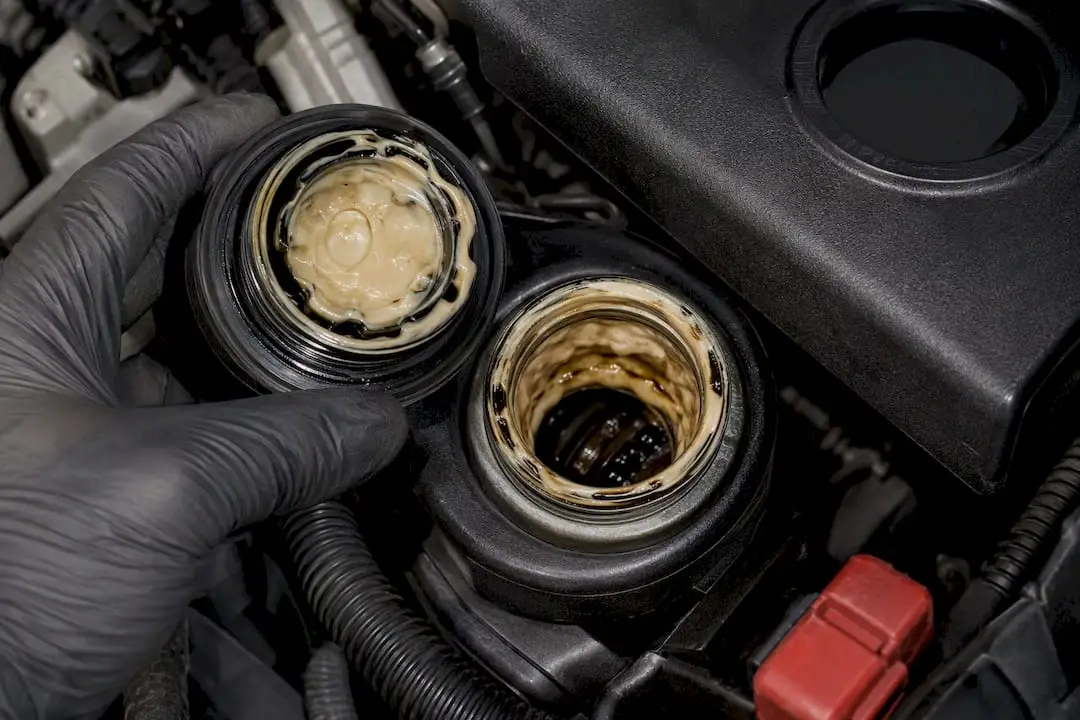
2. Oil filter housing gasket (OFHG). The oil filter housing sits at the front of many BMW engines, right above the timing cover, and its gasket is a frequent failure point. When it goes, oil tends to run down the front of the engine and collect near the timing cover, which owners sometimes mistake for a timing cover leak itself. On certain engines, a failed OFHG can let oil and coolant cross paths internally. If you ever find a creamy, mayonnaise-colored sludge under the oil cap, that’s a sign of oil and coolant mixing, and it means you should stop driving and get the car to a shop immediately, according to technical notes on BMW oil leak diagnosis.
3. Oil pan gasket. Leaks here show up as drips from the lowest, most central point under the engine, which is why the cardboard trick is so useful for narrowing this one down. Oil pan gaskets typically fail from age and heat rather than sudden damage. Depending on the model, the pan may be easy to drop or may require partial subframe or exhaust removal, which changes the labor estimate significantly.
4. Rear main seal. This seal sits between the engine and transmission, sealing the crankshaft where it exits the engine block. A failing rear main seal drips oil onto the transmission bell housing and sometimes onto the ground directly beneath the transmission rather than under the engine itself. It’s one of the more labor-intensive repairs on this list because reaching it usually means separating the transmission from the engine, and in some cases pulling the engine or transmission entirely.
5. Turbo oil lines and VANOS/timing-cover seals. Turbocharged BMW engines route oil supply and return lines to the turbo, and the seals or fittings on those lines can weep over time, especially with heat cycling from hard driving. VANOS seals, part of BMW’s variable valve timing system, live near the front of the engine under the timing cover and can leak into areas that look a lot like a valve cover or OFHG leak from the outside. This is exactly why guessing based on visual location alone gets a lot of owners into trouble.
According to a practical guide to finding and fixing BMW oil leaks, the valve cover gasket and oil filter housing gasket together account for the majority of BMW oil leaks, with oil pan and rear main seal issues becoming more common as mileage climbs.
Here’s the complication that trips up most DIY diagnoses:
- Oil migrates downhill and backward along the engine as the car drives, so a leak from the valve cover can end up looking like it’s coming from the oil pan by the time you spot it on the ground.
- Airflow from the engine fan and forward motion push oil residue toward the firewall or underneath, disguising the true origin point.
- Multiple small leaks often coexist, especially on higher-mileage cars, so what looks like “one leak” from the outside might be two or three gaskets weeping at once.
That migration problem is exactly why a proper trace, not a visual guess, matters so much before anyone starts ordering parts.
How Shops Actually Diagnose a BMW Oil Leak
Guessing at the source and swapping a gasket is the most expensive way to fix an oil leak, because if you guess wrong, you’ve paid for labor twice. Here’s how a methodical diagnosis actually works, from what you can check yourself to what a shop does when the picture isn’t clear.
What you can check at home:
- Note your oil level on the dipstick and log it against your last oil change date and mileage, so you have a real data point instead of a guess.
- Do a cold, flashlight-assisted visual inspection of the engine’s front, sides, and underside before starting the car, since a warm engine can hide fresh drips by burning them off as vapor.
- Run the cardboard trick overnight to pinpoint the drip location relative to the front, center, or rear of the engine.
What a shop does when the source isn’t obvious:
- Degrease the engine to remove old oil residue and grime, creating a clean baseline so any new leak shows up clearly against bare metal.
- Run a measured drive cycle, often including some highway speed and load, to reproduce real-world heat and pressure conditions that cause the leak to reappear.
- Trace the fresh leak, frequently using UV dye added to the oil that fluoresces under a blacklight, which pinpoints the exact seam or gasket that’s weeping rather than just the general area.
- Use a borescope or targeted visual inspection to look behind covers and pulleys without pulling the whole engine apart, and pull OEM diagnostic data through BMW’s ISTA system when an electronic fault or sensor reading is part of the picture.
This degrease, drive, and trace approach is standard practice because it eliminates guesswork, according to technical guidance on tackling BMW oil leaks. A clean engine and a controlled drive cycle turn a vague oil film into a specific, visible source.
Pro Tip: If you’re cleaning the engine bay yourself before a shop visit, use gentle degreasers and avoid high-pressure water near electrical connectors and the intake. A properly cleaned engine, like the safe engine bay cleaning steps outlined by detailing specialists, actually helps a technician find the real leak faster instead of guessing at old residue.
Diagnostic time varies with how obvious the leak is. A leak that’s already been traced with dye from a prior visit might take 15 to 20 minutes to confirm on a lift. A leak with no clear history, multiple potential sources, or one that only shows up under load can take considerably longer, especially if it triggers deeper disassembly to inspect the timing cover or VANOS unit. Shops that find overlapping wear, say a valve cover gasket and an OFHG that are roughly the same age and both showing signs of failure, will often recommend doing both while everything is already apart, since the labor to access one overlaps heavily with the labor to access the other.
Is It Safe to Keep Driving With an Oil Leak?
The honest answer depends on how much oil you’re losing and how fast. A slow weep with the oil level still in range and no smoke or smell is usually fine for a short, careful drive to a shop. A leak that’s dropping the oil level quickly, or showing any of the signs below, is not something to drive through.
Stop and arrange a tow if you notice:
- Oil level dropping noticeably between checks, even over a day or two.
- Milky, creamy sludge under the oil cap or on the dipstick, which points to oil and coolant mixing internally.
- Heavy smoke from under the hood or the tailpipe.
- A strong burning smell, especially one that gets stronger as the engine warms up.
If none of those apply and you’re just topping off a slow drip on your way to a scheduled appointment, avoid high RPMs, keep an eye on the temperature gauge, and check the belts for oil residue before you leave. Ignoring a leak long enough lets it escalate from a manageable gasket repair into something far more serious. Leaking oil that contacts a hot exhaust manifold or electrical wiring creates a real fire risk, according to safety guidance on unaddressed automotive oil leaks, and that risk only grows the longer the leak goes unaddressed.
What BMW Oil Leak Repairs Actually Involve
Repair scope varies a lot depending on which gasket or seal has failed, and that variation is exactly why two shops can quote very different numbers for what sounds like the same job.
A valve cover gasket replacement is typically the least labor-intensive of the group, especially on inline four and six-cylinder engines where the cover is easy to reach. An oil filter housing gasket job usually involves more disassembly since the housing sits behind other components on many engines. Oil pan gaskets can range from moderate to extensive depending on whether the pan can be dropped without disturbing the subframe or exhaust. Rear main seal repairs sit at the top of the labor scale because reaching the seal typically means separating the transmission from the engine.
A few factors consistently drive cost up or down:
- Bundling overlapping repairs saves labor. If a technician finds that your valve cover gasket and OFHG are both aging out around the same time, doing both while the front of the engine is already opened up typically costs less in total than fixing one now and the other in six months, since much of the access labor overlaps.
- Contamination expands scope. An oil-soaked serpentine belt, tensioner, or wiring harness connector often needs replacing alongside the gasket itself, which adds parts and labor beyond the original leak.
- Engine layout matters more than people expect. The same gasket job can take twice as long on a V8 with a tight engine bay compared to an inline six with generous clearance.
Every BMW oil leak inspection includes a digital vehicle inspection with photos, so you can see the actual source of the leak, not just take someone’s word for it. That documentation, paired with a written estimate before any work begins, means you know exactly what you’re paying for and why. Qualifying repairs are backed by a warranty, which matters most on labor-heavy jobs like rear main seals where you want confidence the fix will hold. For a broader sense of what these repairs typically run, our guide on what a typical oil leak repair costs breaks down the variables in more detail.
Preventing Future Oil Leaks on Your BMW
Gaskets and seals age no matter what you do, but a few habits slow the process down and catch problems while they’re still cheap to fix.
Sticking to your recommended oil-change interval matters more than most owners realize. Old, degraded oil breaks down gasket material faster than fresh oil, and using the wrong viscosity for your engine can put extra stress on seals that were never designed for it. Our guide on signs your car needs an oil change covers the warning signs worth watching between services.
A few maintenance habits go a long way:
- Do a visual check every few months. Popping the hood and looking at the front and sides of the engine for fresh oil film takes two minutes and catches weep-stage leaks before they become drips.
- Clean off old grime periodically. A dirty engine hides new leaks, so a clean surface makes the next inspection far more useful.
- Check belts and hoses for oil residue. Catching contamination early avoids the belt-and-tensioner replacement that often follows a neglected leak.
- Have your cooling system checked periodically. This catches early signs of oil and coolant crossover from a failing OFHG before it turns into a stop-driving situation.
Pro Tip: If your valve covers are the plastic composite type common on many BMW engines, expect them to become brittle with age and heat cycling. Replacing an aging plastic cover along with its gasket, rather than just the gasket alone, often prevents a repeat leak within a year or two.
Express Lube & Car Care’s Approach to Diagnosing BMW Oil Leaks
Every BMW oil leak inspection at Express Lube & Car Care starts with a clean baseline and a methodical trace, not a guess. Our ASE-certified technicians document what they find with a digital inspection that includes photos, so you see the exact gasket or seal in question before any repair begins.
That documentation feeds directly into a written estimate that separates parts from labor, which makes it easier to understand why a valve cover job and a rear main seal job cost differently. If two gaskets show similar wear during the trace, we’ll walk you through the option of handling both at once to make better use of the labor already required to access that part of the engine.
Qualifying repairs come with a 24-month/24,000-mile warranty, and walk-ins are welcome alongside scheduled appointments. If you’re a Richland Hills driver who’s noticed a spot under your BMW, same-day diagnostic service is available when scheduling allows.
Does Oil Type or Viscosity Affect Leak Management?
Using the correct oil viscosity for your BMW engine doesn’t stop a failed gasket from leaking, but the wrong oil can accelerate the problem or mask it temporarily. Oil that’s too thin for your engine’s specification flows more readily past a weakened gasket surface, which can make an existing weep look worse than it actually is. Oil that’s too thick can put extra strain on seals during cold starts, when the oil hasn’t warmed enough to flow properly.
Some owners try switching to a slightly thicker oil hoping it will “seal up” a minor leak. It rarely works as a real fix. A thicker oil might slow a very minor weep by a small margin, but it does nothing for a torn gasket or a hardened seal, and running the wrong viscosity outside manufacturer specification can affect oil pressure and lubrication elsewhere in the engine. The better approach is using the oil weight and specification listed in your BMW’s owner’s manual consistently, every time, rather than treating viscosity as a workaround for a mechanical problem that needs an actual gasket or seal replacement. Our guide to proper BMW oil service covers why matching the correct spec protects gasket longevity over the life of the engine.
If you’re also noticing your BMW burning oil rather than just leaking it externally, that’s a different mechanism entirely, often tied to valve seals or piston rings rather than gaskets. Our breakdown on how to address oil consumption issues explains how to tell the two apart.
Should You Diagnose a BMW Oil Leak Yourself or See a Professional?
Basic checks are worth doing yourself: monitoring your oil level, running the cardboard trick, and doing a cold visual inspection with a flashlight cost nothing and give a shop useful information when you do bring the car in. Where DIY diagnosis runs into trouble is anywhere the leak location isn’t obvious, or where the fix requires disassembling components you can’t easily put back together correctly.
Rear main seal work, anything involving the timing cover, or a suspected oil-and-coolant mixing issue all call for professional diagnosis without exception. These jobs require lift access, specialized tools, and in some cases OEM diagnostic software to rule out related faults. Attempting them without the right equipment risks turning a contained repair into a much bigger problem, particularly if a seal is reinstalled incorrectly and fails again within a few thousand miles. If your at-home checks confirm oil is leaking but you can’t pin down exactly where it’s coming from, that’s the point to schedule a diagnostic rather than keep guessing.
The Real Problem With Most BMW Oil Leak Advice
Most of what gets written about BMW oil leaks treats diagnosis as an afterthought, jumping straight from “here’s a list of common gaskets” to “here’s what it costs to replace them.” That skips the part that actually saves owners money: knowing that your valve cover gasket and OFHG are common failure points doesn’t tell you which one is failing on your specific car, and paying to replace the wrong one twice costs more than doing the trace correctly once.
The conventional advice to “just watch for oil spots” also undersells how much oil migrates before it ever reaches the ground. A front-of-engine leak can look like a rear main seal problem by the time you spot it in your driveway, which is exactly why guessing based on puddle location alone leads to unnecessary parts orders.
What we’d prioritize first, before any repair conversation, is a proper degrease-and-trace diagnosis. It costs less than a misdiagnosed gasket swap, and it tells you definitively whether you’re looking at one leak or several overlapping ones, which changes how a shop should scope the whole job.
— Express Lube & Car Care
Schedule a BMW Oil Leak Diagnostic Today
Express Lube & Car Care gives Richland Hills BMW owners something a lot of quick-lube chains simply can’t: a documented, photo-backed diagnosis before any gasket gets replaced. Instead of a verbal guess about where your leak is coming from, our ASE-certified technicians hand you a digital inspection report showing exactly what’s failing, so every dollar on your estimate ties back to something you can actually see.

Walk-ins are always welcome, and same-day service is available when scheduling allows, so you’re not stuck waiting days just to find out what’s dripping under your car. Every qualifying repair carries a 24-month/24,000-mile warranty, which matters most on labor-intensive fixes like rear main seals or oil filter housing gaskets. Browse our full lineup of diagnostic and repair services to see what’s included, or call us at (817) 284-8478 to get your BMW on the schedule. If you’d rather book online, our appointment page takes just a couple of minutes.
Sources
The location of the drip relative to the engine’s front-to-back axis is your best first clue, but it’s not foolproof because oil migrates as it drips and drives. A leak pooling near the front, close to the timing cover, usually points to the oil filter housing gasket or a VANOS seal. A drip from the valve cover area typically shows up along the sides of the engine block, sometimes trailing down toward spark plug wells. Center-low drips under the engine suggest the oil pan, while drips concentrated near the transmission bell housing point toward the rear main seal.
The complicating factor is that gravity and airflow push oil backward and downward as you drive, so a front-of-engine leak can eventually show up as a puddle much further back by the time you notice it in your driveway. This is exactly why the cardboard trick, useful as it is, only gets you a rough starting hypothesis rather than a confirmed answer. A UV dye trace after a proper drive cycle remains the most reliable way to separate a valve cover leak from an OFHG leak from a VANOS seal, since all three can present with visually similar symptoms from the outside.
- AAA — Car care: belts and hoses
- AAA — Identify leaks like a pro
- RepairPal recall/technical safety guidance
FAQ
Is It Common for BMWs to Leak Oil?
Yes, oil leaks are one of the most frequent maintenance issues on BMW engines, primarily from the valve cover gasket and oil filter housing gasket. These plastic and rubber components harden and shrink over time from heat exposure, according to a practical guide to BMW oil leaks, which makes gasket weeping a normal part of higher-mileage ownership rather than a rare defect.
How Much Does It Cost to Fix a BMW Oil Leak?
Cost depends heavily on which gasket or seal has failed and how much labor is needed to access it, with valve cover jobs typically costing less than rear main seal repairs. Express Lube & Car Care provides a written, itemized estimate after a digital inspection, so you know the exact parts and labor involved before agreeing to any work. Our oil leak repair cost guide breaks down what typically drives the price up or down.
Can I Still Drive if I Have an Oil Leak?
A slow weep with the oil level still in the safe range and no smoke or burning smell is usually okay for a short drive to a shop. Stop driving and arrange a tow if the oil level is dropping quickly, you see heavy smoke, or you find a creamy, milky substance under the oil cap, which signals oil and coolant mixing.
What Is the Lawsuit Against BMW Regarding Oil Leaks?
Various legal actions and technical safety notices have addressed oil leak related issues on certain BMW models over the years, including concerns about leaking oil creating fire risk near hot exhaust components, as noted in safety guidance on unaddressed oil leaks. Specific case details and eligibility vary by model year and issue, so affected owners should check manufacturer notices directly rather than relying on general summaries.
Should I Replace Both the Valve Cover and OFHG Gaskets at the Same Time?
If a technician finds both gaskets showing similar wear during inspection, doing both while the engine is already opened up often costs less overall than replacing them separately months apart. This is because much of the labor to access one gasket overlaps with accessing the other, so you avoid paying for that access twice.