

When your car starts making a strange noise, vibrating, leaking fluid, producing an unusual smell, or simply driving differently, the symptoms can provide important clues about what is wrong.
You don’t need to diagnose the exact failed component yourself. The goal is to recognize what changed, determine whether the vehicle is safe to drive, and gather useful information that can help narrow down the problem.
This guide explains how to identify common car problems by their symptoms—including noises, smells, leaks, smoke, vibrations, starting problems, steering and braking changes, overheating, and loss of power.
Start With What You Can See, Hear, Smell and Feel
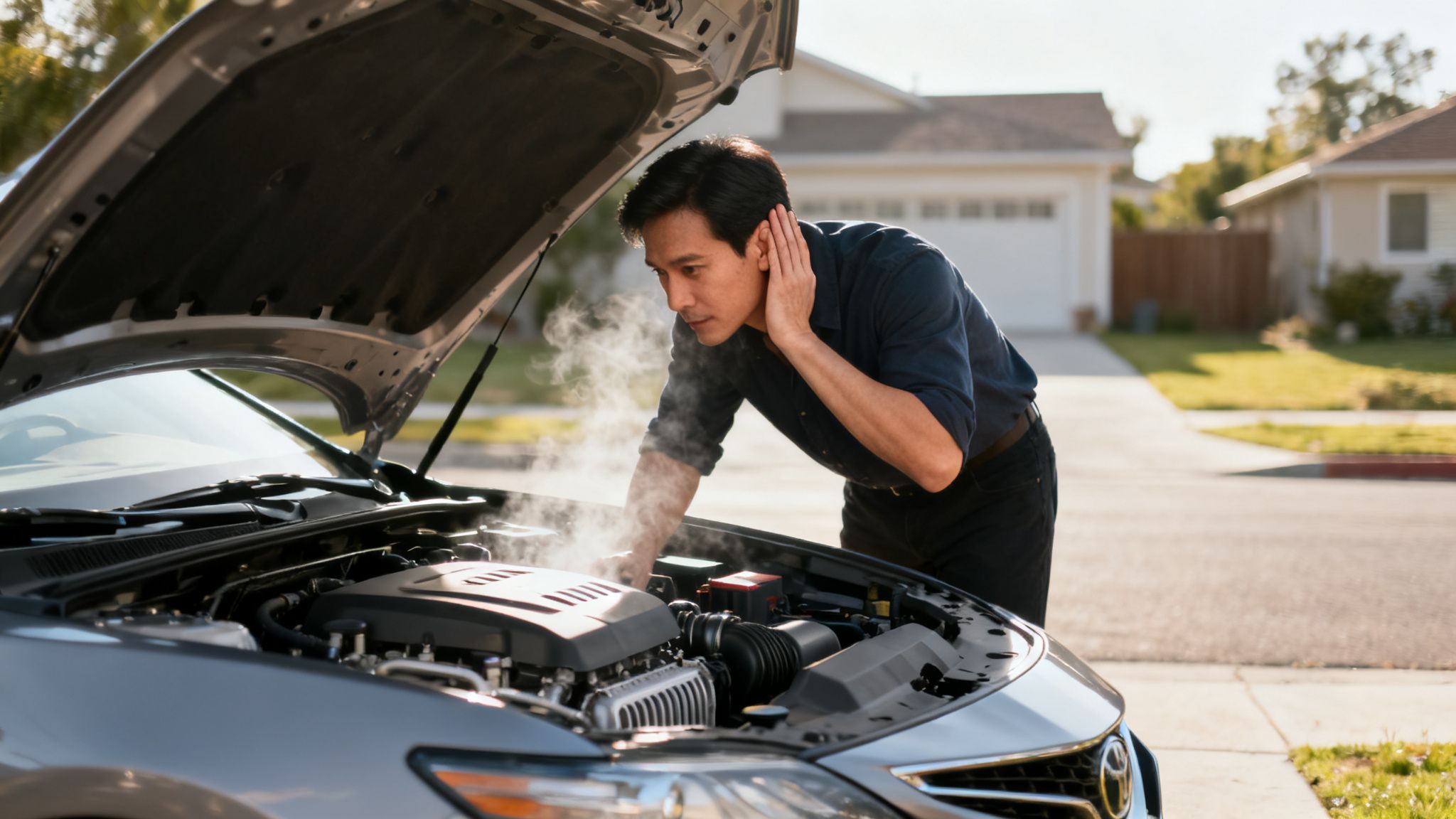
Before reaching for tools, pay attention to exactly what the vehicle is doing.
Instead of describing the problem as “my car is acting funny,” try to identify:
- What are you hearing, seeing, smelling, or feeling?
- Where does it seem to be coming from?
- When does it happen?
- Does it change with speed, braking, steering, acceleration, or engine RPM?
- Is the engine cold or warm when it happens?
- Are any warning lights illuminated?
For example, “there’s a clicking noise from the front of the car when I turn” provides much more diagnostic information than simply saying “the car is making a noise.”
Diagnosing Car Problems by Noise
Unusual noises are among the most useful clues a vehicle can provide. The sound itself, where it comes from, and when it occurs can help narrow down which systems need inspection.
Squealing or Squeaking
A high-pitched squeal can come from several areas depending on when it occurs.
Possible sources include:
- Serpentine belt or tensioner
- Accessory-drive pulley
- Brake components
- Steering-related components
- Suspension components
A squeal that changes with engine RPM should be investigated differently from one that occurs only when braking or turning.
Clicking
A clicking sound can have very different causes depending on the situation.
- Clicking while attempting to start: Battery, starter, electrical connection, or starting-system issue
- Clicking while turning: Drivetrain, axle/CV-joint, steering, or related component
- Engine ticking that changes with RPM: Oil level, valvetrain, injector operation, exhaust leak, or another engine-related condition
Grinding
Grinding should not be ignored. It often indicates that components are making contact in a way they should not.
Possible areas include:
- Brake components
- Wheel bearings
- Transmission or drivetrain components
- Accessory-drive bearings
- Starter or flywheel-related components
If grinding occurs during braking or is accompanied by changes in steering or vehicle control, have the vehicle inspected promptly.
Knocking or Heavy Tapping
A new knocking or heavy tapping sound from the engine can indicate a potentially serious condition.
The cause may involve combustion, lubrication, valvetrain components, internal engine wear, or another mechanical problem. If the sound is loud, persistent, or accompanied by an oil-pressure warning, overheating, or loss of power, avoid continuing to drive until the cause is determined.
Rumbling or Roaring
A rumbling or roaring noise can be associated with:
- Exhaust leaks
- Wheel bearings
- Tires
- Drivetrain components
- Other rotating components
Pay attention to whether the sound changes with engine RPM or vehicle speed. That distinction can help determine whether the source is related to the engine or to something that rotates as the vehicle moves.
Diagnosing Car Problems by Smell
Unusual odors can be important warning signs. Some require immediate attention.
Sweet Smell
A sweet or syrup-like smell can indicate coolant. Look for changes in coolant level or visible evidence of leakage after the vehicle has cooled.
If the vehicle is overheating or losing coolant repeatedly, it should be inspected before continued driving causes additional damage.
Burning Oil Smell
A burning-oil odor can occur when engine oil leaks onto a hot surface such as part of the exhaust system.
Look for visible oil leakage or smoke from the engine compartment. Oil leaks should be identified and repaired rather than simply topping off the oil repeatedly.
Burning Rubber Smell
A burning-rubber odor can be associated with a slipping or damaged belt, a hose contacting a hot component, overheated tires, or another heat-related problem.
If the smell is strong or accompanied by smoke, stop safely and inspect the vehicle before continuing.
Fuel Smell
A strong gasoline or fuel odor requires prompt attention. Fuel vapors can indicate a leak or fuel-system problem and can present a fire hazard.
If you smell raw fuel strongly around the vehicle, avoid driving until the source can be identified.
Rotten-Egg or Sulfur Smell
A sulfur-like odor from the exhaust can be associated with catalytic-converter, fuel-mixture, or emissions-system problems.
The smell by itself does not identify the failed component, so additional diagnosis may be necessary.
Diagnosing Car Problems by Fluid Leaks
A puddle underneath your vehicle can provide valuable information, especially when you note the fluid’s location, color, consistency, and smell.
Possible vehicle fluids include:
- Engine oil
- Coolant
- Transmission fluid
- Brake fluid
- Power-steering fluid on vehicles using hydraulic systems
- Windshield washer fluid
- Water from normal air-conditioning condensation
Do not identify a fluid solely by color because manufacturers use different formulations and fluid colors can change with age or contamination.
When Is a Fluid Leak Urgent?
Seek prompt inspection if:
- The engine oil level is dropping
- The vehicle is losing coolant
- Brake fluid appears low or is leaking
- The transmission is shifting abnormally along with a leak
- The vehicle is overheating
- A large amount of fluid suddenly appears
Simple Under-the-Hood Checks
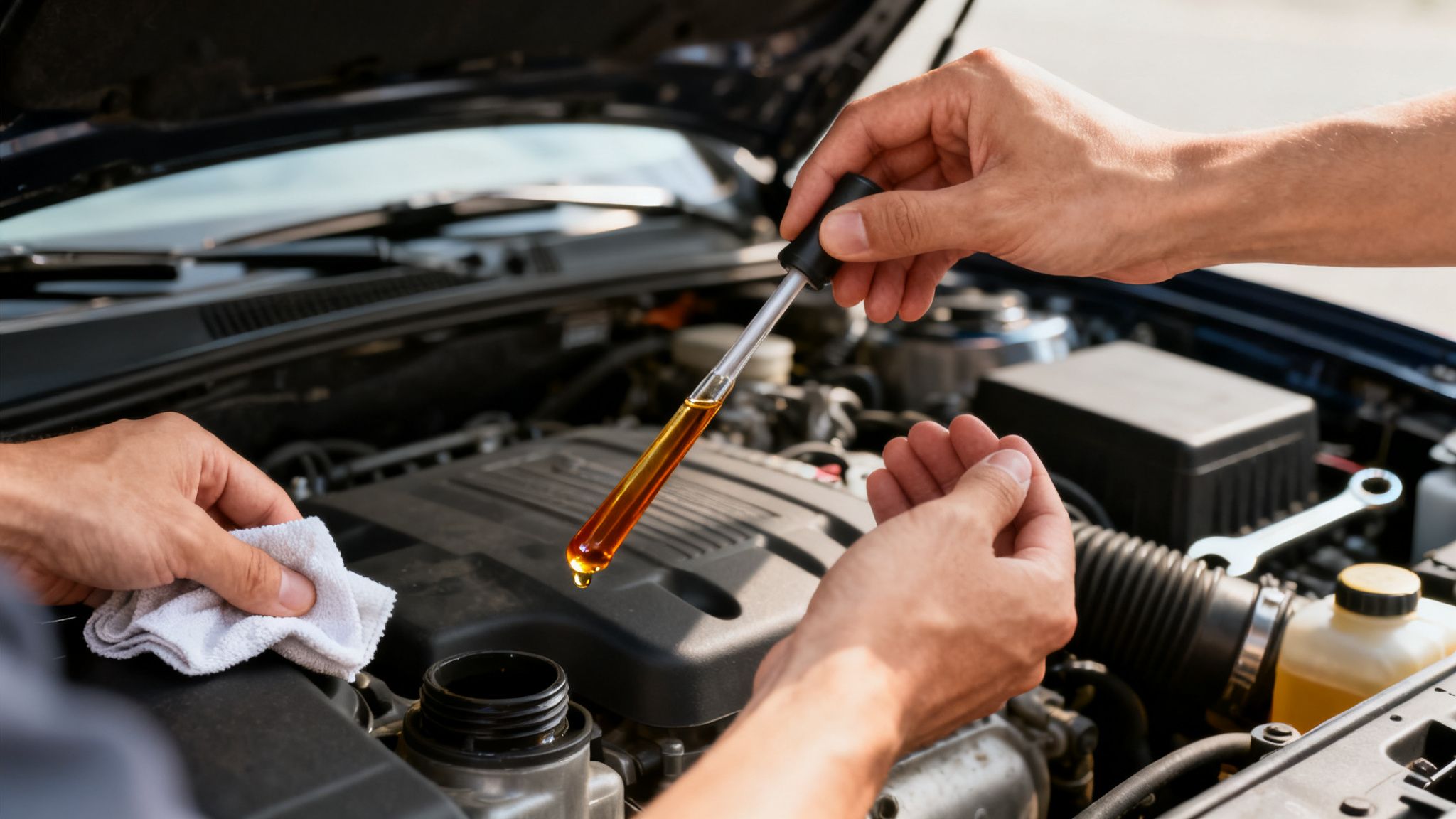
When the engine is off and cool, a basic visual inspection can reveal useful clues.
Check the Engine Oil
Follow the manufacturer’s procedure for checking the oil level. On vehicles equipped with a dipstick, park on an appropriate level surface and check whether the oil falls within the specified range.
Low oil can contribute to lubrication problems and engine damage, so investigate repeated oil loss rather than continually adding oil without determining where it is going.
Check the Coolant
When the engine is completely cool, inspect the coolant reservoir and look for evidence of leakage around hoses, the radiator, reservoir, and other visible cooling-system components.
Safety: Never remove a radiator cap or pressurized cooling-system cap while the engine is hot. Hot coolant can cause severe burns.
Inspect Belts and Hoses
Look for:
- Cracking
- Fraying
- Glazing
- Bulges
- Visible leaks
- Loose or damaged components
A damaged belt or cooling-system hose can lead to a breakdown if it fails completely.
Look at the Battery Connections
Inspect the battery terminals and visible cables for looseness, damage, or corrosion. Poor electrical connections can contribute to starting and electrical problems.
What Different Exhaust Smoke Colors Can Mean
Exhaust smoke can provide useful clues, particularly after the engine reaches operating temperature.
Blue or Blue-Gray Smoke
Blue-colored exhaust smoke generally suggests that engine oil is entering the combustion process. Possible causes can involve piston rings, valve seals, turbocharger-related problems on applicable vehicles, or other sources of oil consumption.
Persistent White Smoke
Some visible vapor during cold weather can be normal condensation. Persistent thick white exhaust after the engine is warm may require investigation for coolant entering the combustion process or another problem.
Black Smoke
Black exhaust smoke can indicate that the engine is operating with an excessively rich air-fuel mixture. Fuel delivery, airflow measurement, sensors, or other engine-management systems may need to be checked.
Diagnosing Car Problems by Vibration
Where and when you feel a vibration can provide important clues.
Vibration While Idling
If the vehicle shakes while stopped and the engine is running, possible areas to investigate include:
- Engine misfire
- Engine or transmission mounts
- Fuel or ignition problems
- Air leaks
- Mechanical engine condition
Vibration at Highway Speed
A vibration that appears primarily at certain road speeds may involve:
- Tire balance or tire condition
- Wheel condition
- Wheel bearings
- Driveline components
- Suspension components
Vibration While Braking
Vibration or pulsation during braking can indicate a brake-system issue that should be inspected, particularly if braking performance has changed.
Vibration During Acceleration
A vibration that occurs primarily under acceleration can involve engine performance, engine or transmission mounts, axles, CV joints, driveshaft components, or other drivetrain problems.
What Steering Symptoms Can Tell You
Changes in steering should be taken seriously because they can affect vehicle control.
Watch for:
- Vehicle pulling to one side
- Loose or wandering steering
- Steering-wheel vibration
- Clunking when turning
- Unusual steering effort
- Uneven tire wear
Possible causes can involve tires, alignment, steering components, suspension components, wheel bearings, brakes, or other systems.
If steering suddenly becomes difficult or vehicle control changes significantly, avoid continued driving until the vehicle can be inspected.
What Brake Symptoms Can Tell You
Brake symptoms deserve prompt attention.
Common warning signs include:
- Squealing or grinding
- Vehicle pulling during braking
- Brake pedal pulsation
- Soft or sinking brake pedal
- Increased stopping distance
- Brake warning light
- Burning smell after braking
If braking ability is reduced, the pedal behaves abnormally, or a serious brake warning appears, stop driving and have the vehicle inspected.
Why Is My Car Losing Power?
Loss of power can originate from several different systems.
Possible areas include:
- Restricted air intake
- Fuel-delivery problems
- Ignition problems
- Engine misfires
- Sensor or engine-management faults
- Exhaust restriction
- Transmission or drivetrain problems
- Internal engine problems
Note whether the power loss occurs constantly or only during acceleration, climbing hills, highway driving, or after the vehicle warms up.
Why Is My Car Hard to Start?
A hard-starting or no-start condition can involve:
- Battery or battery connections
- Starter system
- Fuel delivery
- Ignition system
- Engine sensors
- Electrical circuits
- Mechanical engine condition
Pay attention to what happens when you attempt to start the vehicle.
Does the engine crank normally but fail to start? Does it crank slowly? Do you hear only a click? Does nothing happen at all?
Those are very different symptoms and lead to different diagnostic paths.
Why Is My Car Overheating?
Common areas involved in overheating include:
- Low coolant
- Coolant leaks
- Thermostat problems
- Cooling-fan faults
- Water-pump problems
- Radiator restrictions
- Cooling-system pressure problems
- Internal engine problems
If the temperature gauge reaches the hot zone or an overheating warning appears, find a safe place to stop. Continuing to drive an overheating engine can cause serious damage.
What Warning Lights Should You Take Seriously?
Dashboard warning lights should be interpreted according to the vehicle manufacturer’s information, but several warnings can require immediate attention depending on the situation.
Examples include:
- Oil-pressure warning
- Engine-temperature warning
- Brake-system warning
- Charging-system warning
- Flashing check engine light
If you’re specifically dealing with an illuminated check engine light, see our complete check engine light guide.
For instructions on retrieving and understanding diagnostic trouble codes, see How to Diagnose a Check Engine Light.
When Should You Stop Driving?
Some symptoms require more immediate attention than others.
Consider stopping the vehicle and arranging professional help if you experience:
- Loss of braking ability
- Sudden steering difficulty or loss of control
- Overheating
- Low oil-pressure warning
- Flashing check engine light accompanied by poor engine operation
- Strong fuel smell or visible fuel leak
- Heavy smoke
- Severe engine knocking
- Major fluid loss
- Sudden significant loss of power
When safety is uncertain, avoiding continued driving is preferable to risking additional vehicle damage or loss of control.
When a Symptom Needs Professional Diagnosis

Observing symptoms helps determine where to begin, but many vehicle problems require testing before the cause can be confirmed.
A technician may combine your symptom description with:
- Visual inspection
- Diagnostic trouble codes
- Freeze-frame and live data
- Electrical testing
- Battery and charging-system testing
- Fuel-pressure testing
- Smoke testing
- Cooling-system pressure testing
- Compression or leak-down testing
- Brake, steering, suspension, or drivetrain inspection and testing
- Other vehicle-specific diagnostic procedures
The purpose of professional diagnosis is to connect the symptom you noticed with test results that identify the actual cause.
For a deeper explanation of how technicians work through vehicle problems, see our How Mechanics Find Car Problems guide.
If your symptoms appear to involve the engine itself, our Engine Diagnosis guide explains compression, leak-down, fuel-pressure, ignition, cooling-system, oil-pressure, and other engine tests.
Frequently Asked Questions About Car Problem Symptoms
How can I tell what’s wrong with my car?
Start by identifying exactly what changed. Note unusual noises, smells, vibrations, leaks, warning lights, smoke, starting problems, loss of power, steering changes, or braking changes. Also note when the symptom occurs. These observations help narrow down which systems require inspection and testing.
What car noises should I not ignore?
Grinding during braking, severe engine knocking, sudden loud mechanical noises, or noises accompanied by warning lights, overheating, steering changes, or loss of power should be investigated promptly.
What does a sweet smell from my car mean?
A sweet or syrup-like smell can indicate coolant. Check for changes in coolant level and visible leaks after the engine has completely cooled. Repeated coolant loss or overheating requires further diagnosis.
Why does my car smell like burning oil?
A burning-oil smell can occur when engine oil leaks onto hot engine or exhaust components. Inspecting the vehicle can help determine where the oil is coming from and whether the oil level is dropping.
Why is my car vibrating?
The cause depends on when the vibration occurs. Vibration at idle may involve an engine-performance problem or engine mounts. Highway-speed vibration may involve tires, wheels, bearings, suspension, or drivetrain components. Vibration during braking or acceleration follows different diagnostic paths.
What does blue smoke from the exhaust mean?
Blue or blue-gray exhaust smoke generally indicates that engine oil is entering the combustion process. The underlying cause may involve piston rings, valve seals, turbocharger-related components on applicable vehicles, or another source of oil consumption.
What does white smoke from the exhaust mean?
Some white vapor during cold weather can be normal condensation. Persistent thick white exhaust after the engine reaches operating temperature may require investigation for coolant entering the combustion process or another problem.
What does black exhaust smoke mean?
Black exhaust smoke can indicate an excessively rich air-fuel mixture. Fuel delivery, airflow measurement, sensor information, and other engine-management systems may need to be checked.
Why does my car pull to one side?
A vehicle that pulls to one side may have an issue involving tire pressure or condition, wheel alignment, brakes, steering, suspension, or other components. If the pulling is sudden or affects vehicle control, have the vehicle inspected promptly.
Why does my steering wheel shake?
The cause depends on when the shaking occurs. Highway-speed steering-wheel vibration may involve tires or wheels, while vibration during braking may point toward the braking system. Steering and suspension components can also contribute.
Why is my car losing power when I accelerate?
Power loss under acceleration can involve fuel delivery, airflow, ignition, engine-management systems, exhaust restriction, transmission or drivetrain problems, or internal engine condition. Diagnostic testing is often necessary because several different faults can create similar symptoms.
Why won’t my car start?
A no-start condition can involve the battery, electrical connections, starter, fuel delivery, ignition system, engine sensors, wiring, or mechanical engine condition. Whether the engine cranks normally, cranks slowly, clicks, or does nothing is an important diagnostic clue.
Should I use an OBD-II scanner to diagnose my car?
If the check engine light is illuminated or the vehicle has stored diagnostic information, an OBD-II scanner can provide useful clues. However, a trouble code is not a complete diagnosis. For step-by-step instructions, see our OBD-II check engine light diagnosis guide.
When should I take my car to a mechanic?
Professional diagnosis is appropriate when the symptom affects safety, the vehicle is overheating, warning lights indicate a serious condition, the engine is running poorly, fluid is being lost, the problem keeps returning, or identifying the cause requires specialized testing.
Car Problem Diagnosis in Richland Hills
If your vehicle is making an unusual noise, vibrating, leaking fluid, overheating, losing power, producing smoke, or showing another warning sign, identifying the symptom is the first step. Testing can then determine what is actually causing it.
Express Lube & Car Care in Richland Hills can inspect the vehicle, evaluate the symptoms, perform the appropriate diagnostic testing, and explain the findings before repairs are recommended.
If the problem involves an illuminated check engine light, visit our Check Engine Light & Diagnostics service page.
Not sure what’s wrong with your car? Bring the symptoms you’ve noticed—noises, smells, leaks, vibrations, warning lights, or changes in how the vehicle drives—to Express Lube & Car Care in Richland Hills. Those clues can help our technicians determine what should be inspected and tested next.