

You pull into a lube bay because you need one thing. Get in, get the oil changed correctly, and get back to work, school pickup, or the next stop on your day. If the service is finished quickly, it can look simple from the driver's seat.
Behind the garage door, it isn't simple at all. A fast oil change depends on oil change equipment that's built for repeatable, safe work. The lift has to hold the vehicle securely. The drain system has to capture used oil cleanly. The dispenser has to deliver the right product in the right amount. The hand tools have to prevent stripped threads, damaged filter housings, and leaks that show up later in your driveway.
That's why professional shops invest in tools that most home garages never need. The equipment isn't there to impress anybody. It's there so your vehicle gets serviced with less guesswork, less mess, and fewer avoidable mistakes.
The Technology Behind Your 20-Minute Oil Change
Most drivers judge an oil change by the clock. That's fair. Your time matters. But the reason a professional shop can move quickly isn't because technicians are rushing. It's because the bay is organized around a system.
Industry data show that quick-lube centers perform more than 215 million oil changes each year in the United States, and the average service lasts under 20 minutes because of standardized layouts, automated fluid dispensers, and digital ticketing systems, according to Statista's oil change service market figures.
A good bay works like a checklist in motion. The vehicle enters. The technician confirms the oil type and filter. The car is raised safely. Used oil is captured and routed away without splashing across the floor. Fresh oil is dispensed from calibrated equipment instead of poured from random bottles. The drain plug and filter are tightened with the right tools. The service record is updated before the keys come back to you.
Practical rule: Speed is only a benefit when the process is controlled. In a well-equipped shop, the same tools that save time also reduce errors.
That's also why maintenance discipline matters inside the shop itself. The best bays treat pumps, lifts, dispensers, and inspection steps as a managed system, not a pile of tools. If you want a good plain-English explanation of that mindset, the Products for Automation maintenance strategy guide is a useful read on why consistent equipment upkeep affects reliability.
For customers, the result is simple. You don't have to wonder why one shop finishes efficiently while another looks disorganized. The difference often comes down to equipment layout, tool condition, and repeatable workflow. If you've ever wondered what affects turnaround time in a local bay, this guide on how long oil changes usually take gives a helpful customer-side view.
Vehicle Lifts The Foundation of a Safe Service
The first piece of equipment that matters isn't the oil drain. It's the lifting system. If the vehicle isn't supported correctly, nothing under it should begin.
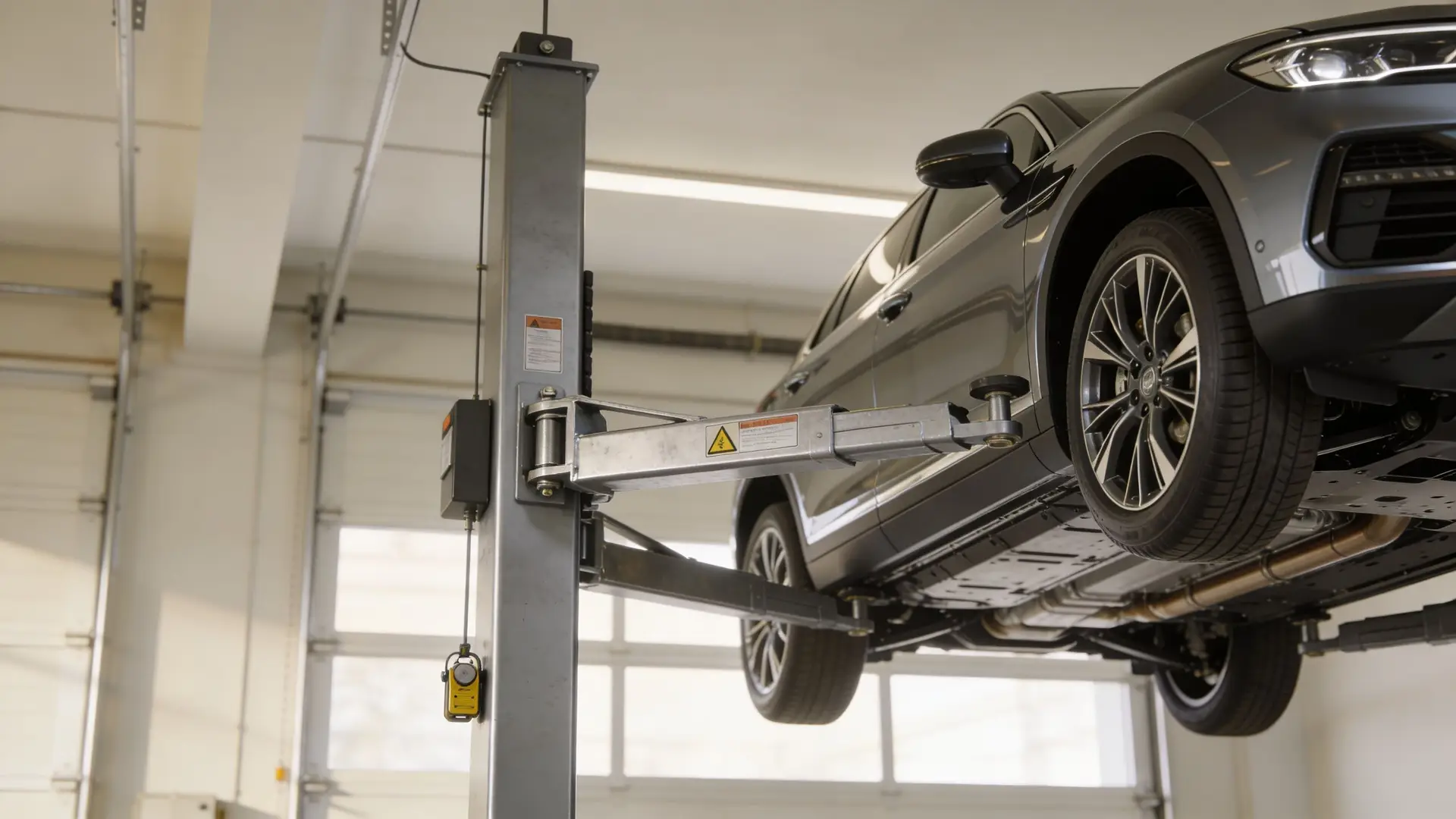
For home oil changes, the common standard is a hydraulic floor jack with at least 1.5-ton capacity paired with jack stands rated for 3 tons or higher, as outlined in JB Tools' guide to oil change tools. That setup can work when used properly. But professional shops rely on permanent lifts because they give technicians stable, repeatable access with built-in safety procedures.
Why permanent lifts beat improvised setups
A shop lift does more than raise the car.
It creates open access to the drain plug, oil filter, splash shields, and surrounding components. That means the technician spends less time repositioning tools and more time inspecting the underside of the vehicle. When access is clean, the work is cleaner too.
It also improves technician posture. Working under a vehicle at the right height is very different from crawling beside it on a garage floor. Better positioning reduces rushed movements and awkward tool angles, which matters when someone is loosening a stubborn filter or reinstalling a drain plug into aluminum threads.
Here's the customer benefit in practical terms:
- Safer support: The vehicle stays on engineered lifting points instead of relying on a temporary setup.
- Better visibility: Technicians can spot seepage, damaged splash shields, or loose hardware while they're already underneath.
- Quicker service: There's less time wasted getting into position or moving catch pans around a cramped floor space.
A stable vehicle is the starting point for every accurate oil change. If the lift setup is poor, the rest of the service usually is too.
Two-post, four-post, and what the customer should care about
Customers don't need to memorize lift styles, but the differences matter.
A two-post lift leaves the wheels hanging and gives broad access to the undercarriage. That's useful for general maintenance and inspection work. A four-post lift supports the vehicle by the tires and can feel especially stable for some service routines. The point isn't which style sounds more advanced. The point is whether the shop uses the right lift for the vehicle and follows proper lift-point procedures.
Watch a lift in action and you can see why professional equipment changes the whole job:
What doesn't work
What fails in real life is usually one of three things. Wrong lift points. Rushed setup. Treating lifting as the easy part because the oil change itself seems routine.
That's backwards. The lift is the foundation. When it's done right, the service is safer for the technician and more thorough for you.
Advanced Fluid Handling for a Clean and Quick Drain
The old picture of an oil change is a basic pan under the engine and a technician trying not to splash used oil while removing the plug. Professional fluid handling has moved well beyond that.
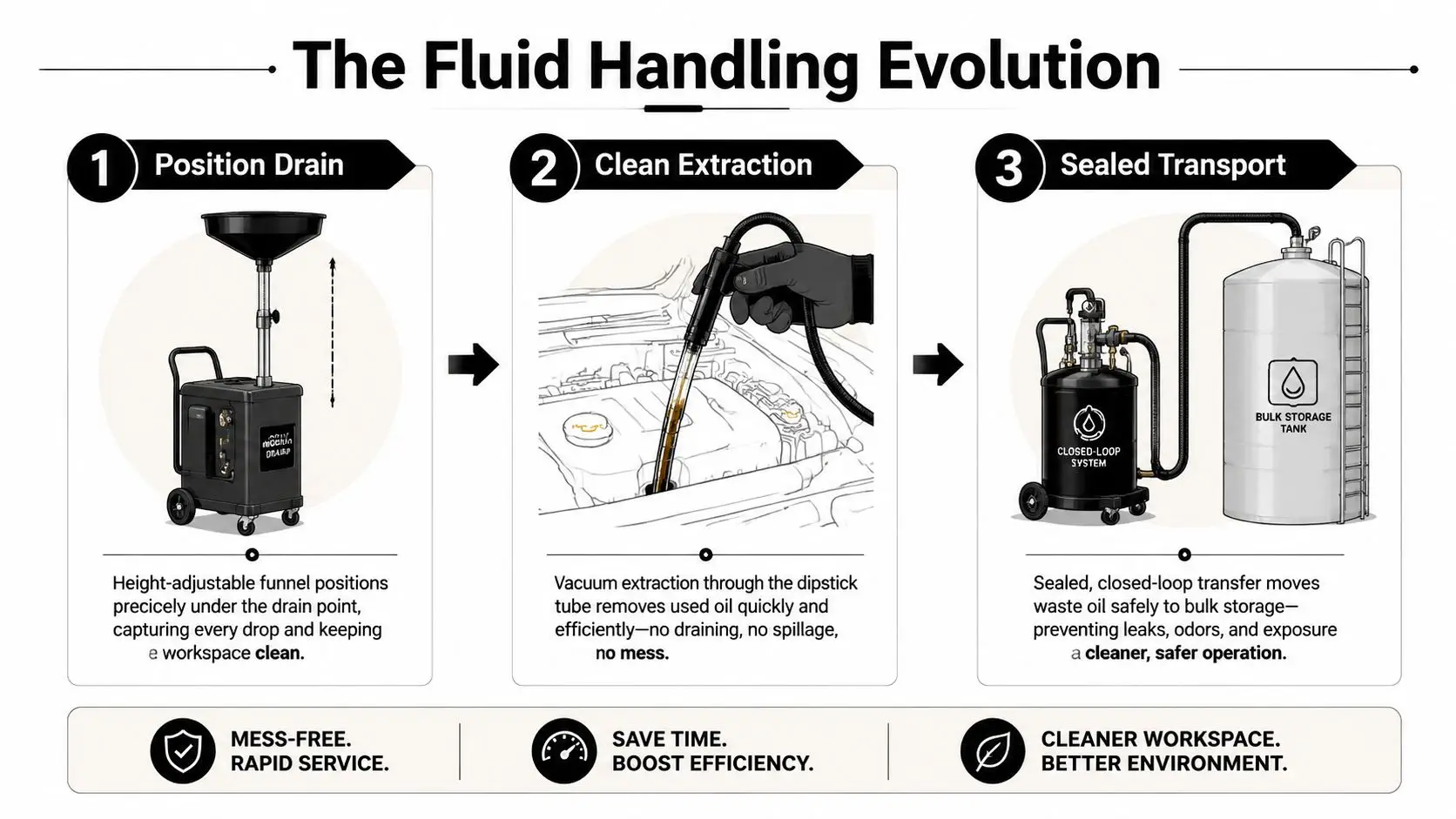
Drain, extract, transfer
Modern bays use a mix of tools depending on the vehicle design.
A rolling oil drain with a height-adjustable funnel sits directly under the drain point and captures the used oil without forcing the technician to balance a shallow pan at the last second. A vacuum extractor can remove oil through the dipstick tube on vehicles designed for that method. After collection, pumps move the waste oil into sealed storage instead of leaving open containers sitting around the bay.
That sounds like a shop convenience, but it directly affects service quality. Less spillage means less cleanup. Less cleanup means less wasted movement. Less wasted movement means the technician can stay focused on the actual job.
Why newer oils require better equipment
Fluid handling matters even more because the oil itself has changed. Synthetic oils now appear in roughly 56% of oil changes, and shops have upgraded pumps and filtration systems calibrated for those fluids, according to Market Growth Reports on oil change shops.
Synthetic and synthetic-blend products aren't something you want handled casually. Shops need equipment that keeps different oil types organized, dispenses them accurately, and avoids cross-contamination. A sloppy setup can turn a routine service into a product mismatch.
That's one reason many shops now rely on metered dispensing guns tied to bulk tanks. Instead of opening quart bottles and estimating, the technician can deliver the specified oil cleanly and consistently. For the customer, that translates to the right fill level and less chance of a messy engine bay.
Clean fluid handling isn't just about appearances. It protects against wrong-oil mistakes, overfills, and avoidable spills.
What customers notice and what they don't
Most drivers notice the speed. They notice the lack of oily footprints and the fact that the service doesn't leave a burnt-oil smell hanging around the cabin or hood area.
What they usually don't see is the closed-loop workflow that makes that possible:
- Controlled capture: Used oil goes straight into a designed receptacle.
- Accurate refill: Bulk systems and dispensers help the technician deliver the correct lubricant.
- Cleaner bay: Less mess on the floor lowers slip risk and keeps tools usable.
If you're comparing routine maintenance services, it helps to understand that oil is only one part of the picture. This overview of fluid change service for your car explains why handling the right fluid the right way matters across the whole vehicle.
Precision Tools That Prevent Costly Mistakes
Some of the most important oil change equipment fits in one hand. These aren't the flashy tools customers remember. They're the ones that keep a routine visit from turning into a repair bill.
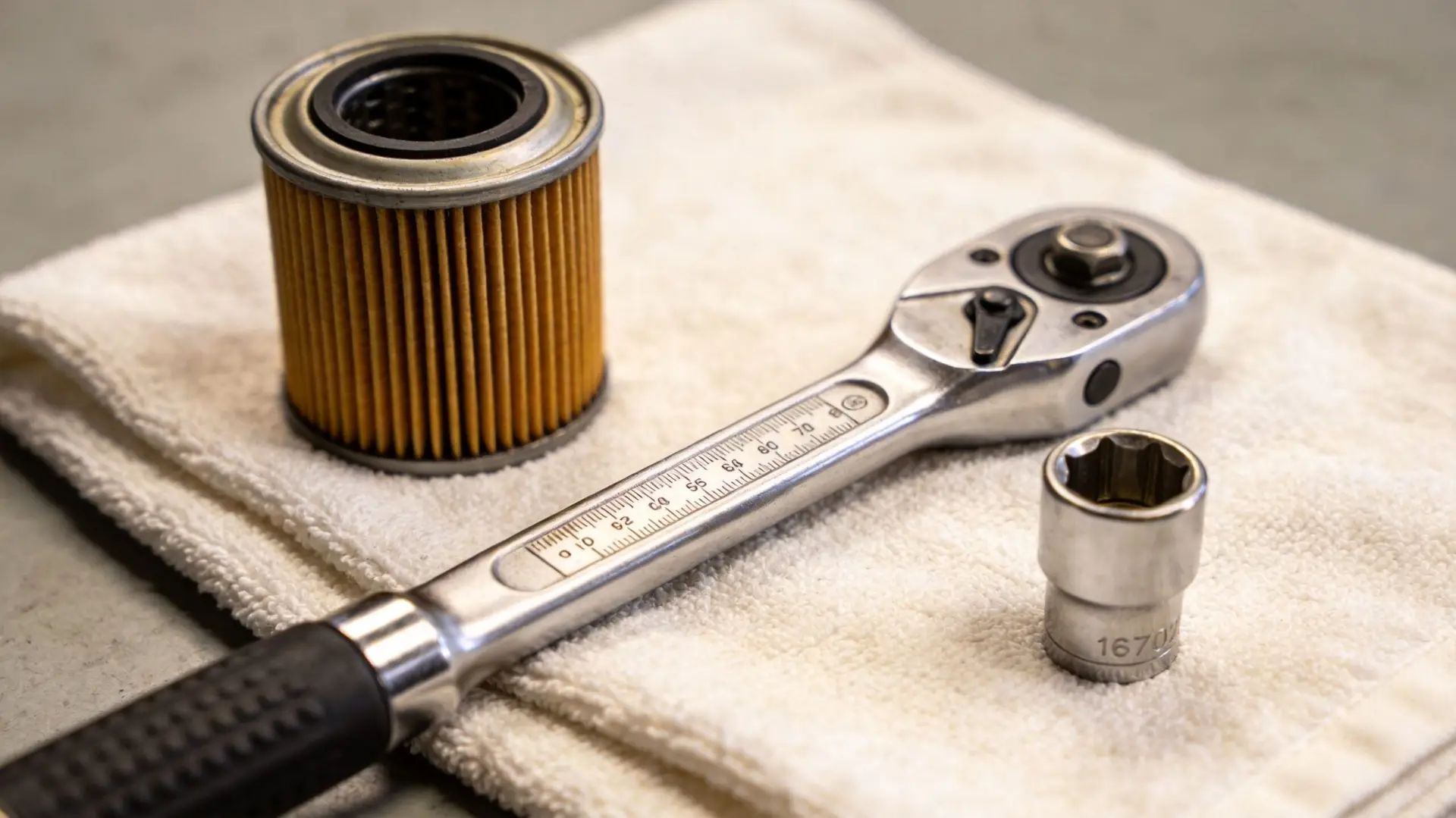
Filter tools need to match the filter
Oil filters aren't all built the same. Some come off easily with a cap wrench sized to the housing. Others need a strap wrench or a claw-style remover because the location is tight or the previous installer overtightened it.
A professional shop keeps several filter tool styles on hand for one reason. The wrong wrench can crush the canister, crack a plastic housing, or force the technician into an awkward angle that damages nearby parts. Customers rarely see that decision, but they benefit from it when the filter comes off cleanly and the new seal seats correctly.
The same logic applies to sockets and fastener access. If you've ever tried to sort out wheel hardware or specialty sockets at home, a practical reference like this guide to find lug nut socket sizes shows how small size differences matter. Drain plugs and underbody fasteners are no different. Fit matters.
The torque wrench is where professionalism shows
The drain plug is simple until it isn't. It threads into the oil pan, often aluminum, and that means there's very little room for “good enough.”
According to Mobil's vehicle maintenance guidance, drain plug torque values typically range from 15 to 30 ft-lbs for passenger cars, and using a calibrated torque wrench for reinstallation can reduce comebacks for oil leaks by approximately 40%.
That single statistic explains a lot about professional practice.
Too loose, and the plug can seep or drip. Too tight, and the threads can strip. Once threads are damaged, the problem doesn't stay inside the oil change lane. Now the customer may need thread repair, an oversized plug solution, or in severe cases a pan replacement.
Shop-floor reality: “Hand tight plus a little more” is not a torque specification.
The small details that protect the engine
A careful technician doesn't just tighten the plug and move on. They also inspect the threads and the sealing surface, and they pay attention to the gasket or washer condition. Reusing worn sealing parts is one of the easiest ways to create a comeback that should never have happened.
Here's what the right precision process looks like:
| Step | What the tool does | Why the customer should care |
|---|---|---|
| Correct socket or driver | Fits the fastener cleanly | Prevents rounded heads and rushed removal |
| Proper filter wrench | Removes the old filter without distortion | Avoids housing damage and sealing issues |
| Calibrated torque wrench | Applies manufacturer-specified tightness | Reduces leak risk and thread damage |
A routine oil change separates into two categories. One is “close enough.” The other is repeatable, documented, and much less likely to create trouble later.
Responsible Waste Oil Management and Disposal
Customers often ask a fair question. What happens to the old oil after it leaves the engine?
In a professional shop, used oil shouldn't sit in open pans, get poured from container to container, or move through the bay in a way that risks spills. Good waste handling depends on purpose-built equipment and a disciplined process.
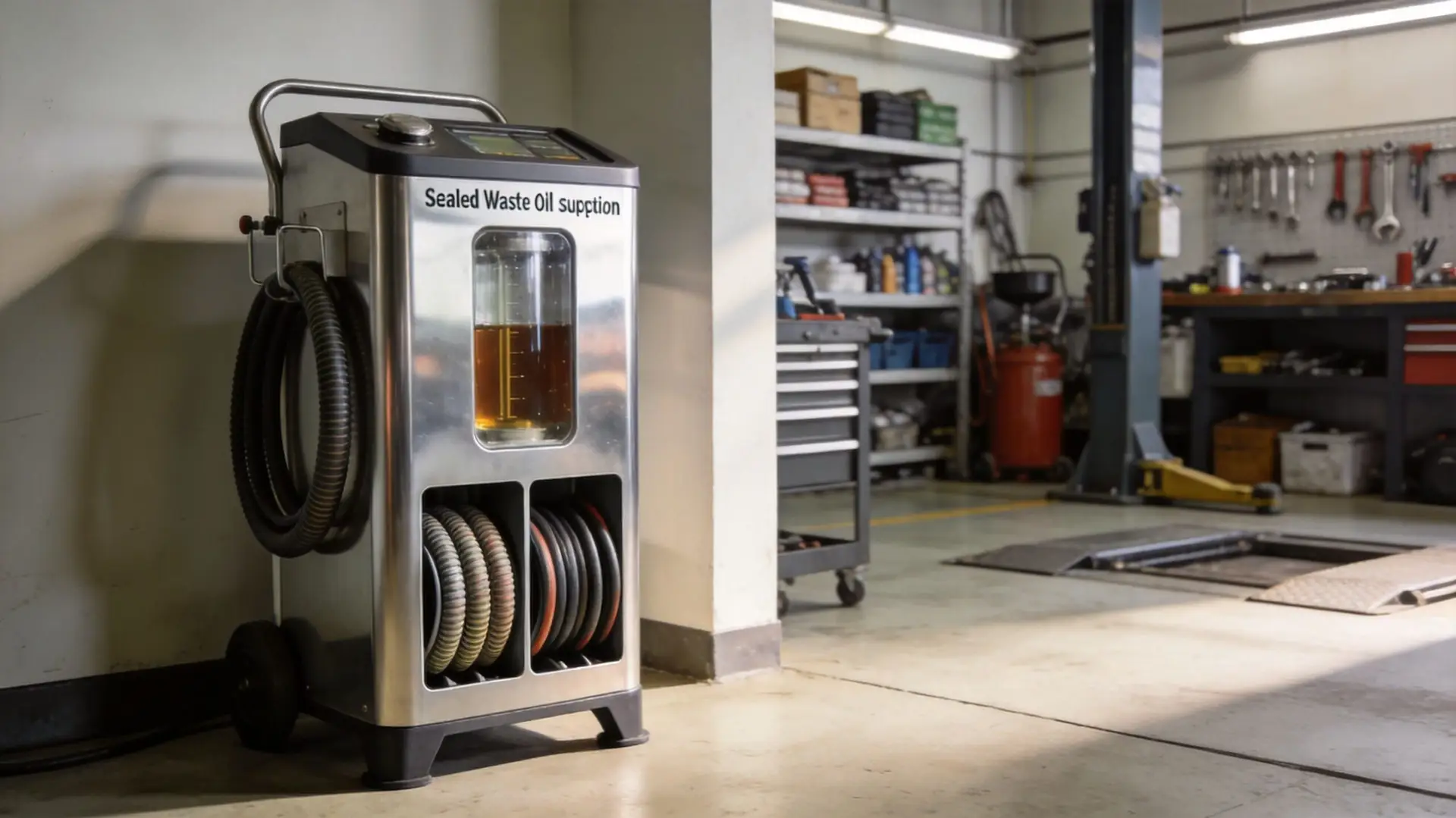
What proper waste handling looks like
Once the oil is drained, the goal is containment. Shops use mobile collection units, transfer pumps, and sealed storage tanks so the waste product stays under control from the moment it leaves the crankcase until it's picked up for recycling or disposal through the proper channel.
That matters for two reasons. First, it protects the workspace. Used oil on the floor creates slip hazards and contaminates tools, mats, and drains. Second, it protects the environment. A sealed system lowers the chance that oil ends up where it doesn't belong.
Why a professional shop is the cleaner option
A lot of DIY waste problems start after the oil change is finished. The drain pan still needs to be carried, poured, stored, and transported. Every one of those steps creates another chance for spills on a driveway, in a trunk, or near a storm drain.
A shop setup reduces those handoffs. The waste oil moves from the vehicle into dedicated equipment, then into bulk containment. The customer doesn't have to guess where to take it, how to store it, or whether it's being handled legally.
Used oil isn't harmless just because it came from routine maintenance. Handling it correctly is part of doing the whole job correctly.
What this says about the shop
Waste oil management tells you a lot about how a facility operates. If the bay is clean, the storage process is organized, and the transfer equipment is in good condition, that usually reflects broader habits. Shops that respect waste handling tend to respect torque specs, fill procedures, and inspection steps too.
That's why responsible oil change equipment isn't only about what goes into your engine. It's also about what leaves it, and how carefully that material is managed after the service is done.
How Express Lube Uses This Equipment for Your Benefit
Good equipment doesn't replace good technicians. It gives good technicians a stable, repeatable way to work.
That's the essential value for customers. A proper lift gives safe access under the car. Clean fluid-handling systems reduce mess and help keep product use accurate. Precision hand tools protect filter housings, drain plug threads, and sealing surfaces. Waste management equipment keeps the bay cleaner and the process more responsible from start to finish.
Better tools make service more consistent
Consistency matters more than speed alone. You want the same careful process whether the bay is quiet or busy.
That's where ergonomic choices matter too. Automotive service workers have high rates of musculoskeletal injuries, and shops that invest in ergonomic equipment reduce technician fatigue and errors, which leads to more consistent service quality for customers. When a technician isn't constantly bending, kneeling awkwardly, or wrestling poorly placed tools, they can pay better attention to the details that protect your engine.
A well-run local shop puts that into practice through bay layout, lift access, drain equipment placement, and tool organization. Those decisions may not be visible from the waiting area, but they show up in the final result.
What that means for your vehicle
For drivers in Richland Hills, the practical benefit is straightforward:
- Fewer avoidable leaks: Precision reassembly lowers the chance of a loose plug or poorly seated filter.
- Cleaner service experience: Modern handling equipment helps keep oil where it belongs.
- More reliable inspections: Proper access under the vehicle makes it easier to spot small issues before they become expensive ones.
If you want a simple overview of what's included in a standard maintenance visit, this page on oil and filter change service is a useful companion read.
Express Lube & Car Care uses quality lubricants, filters, and professional service equipment as part of its oil and filter work. In practice, that means the tools behind the garage door are chosen for one reason. To give customers a service that protects time, safety, and vehicle life at the same time.
If your vehicle is due for service, Express Lube & Car Care offers walk-in maintenance and repair with ASE-certified technicians, clear communication, and the equipment needed to do routine oil service safely and correctly.