

Saturday morning in Richland Hills, the hood is up, a drain pan is on the ground, and you are trying to decide whether this oil change is a smart way to save money or just another chore that eats half the day.
That question deserves a straight answer from a cost standpoint, not just a parts-price comparison.
Changing your own oil can cost less. It can also cost more than expected once you count the tools you may need, the time it takes to buy the right oil and filter, the cleanup, and the chance of a mistake on a newer vehicle. For many drivers, the primary concern is total cost of ownership. That means looking past the sticker price and asking what keeps the vehicle reliable, documented, and affordable over time.
Synthetic oil changed at the right interval is a good example. A professional service may cost more at the counter, but the longer service interval, inspection points, and maintenance record can offset part of that difference for drivers who plan to keep their car.
Here’s a practical side-by-side view.
| Factor | DIY Oil Change | Professional Service (Express Lube) |
|---|---|---|
| Upfront cost | Lower parts cost, but may require buying tools and equipment | Higher service ticket, no tool purchase needed |
| Typical direct pricing | Often cheaper on parts alone, especially if you already own the equipment | Usually costs more upfront, especially with synthetic oil |
| Time | Requires shopping, setup, service, cleanup, and oil disposal | Usually faster and simpler for the driver |
| Skill required | Must choose the correct oil, filter, and procedure | Work handled by trained technicians |
| Mess and disposal | You handle used oil and filters yourself | Shop handles cleanup and disposal |
| Risk | Mistakes can create leaks, warning lights, or engine damage | Lower personal risk and less chance of service errors from inexperience |
| Best fit | Hands-on owners with tools, space, and confidence | Busy drivers, newer cars, and families who want convenience and records |
The True Cost of a DIY Oil Change
Saturday morning starts with good intentions. You grab oil and a filter, figuring the job will cost less than a shop visit. Then the bill starts to show up. Maybe you need a filter wrench. Maybe the drain plug is tighter than expected. Maybe the car needs ramps, a special socket, or a new crush washer you did not know to buy.
That is why the parts receipt only tells part of the story.
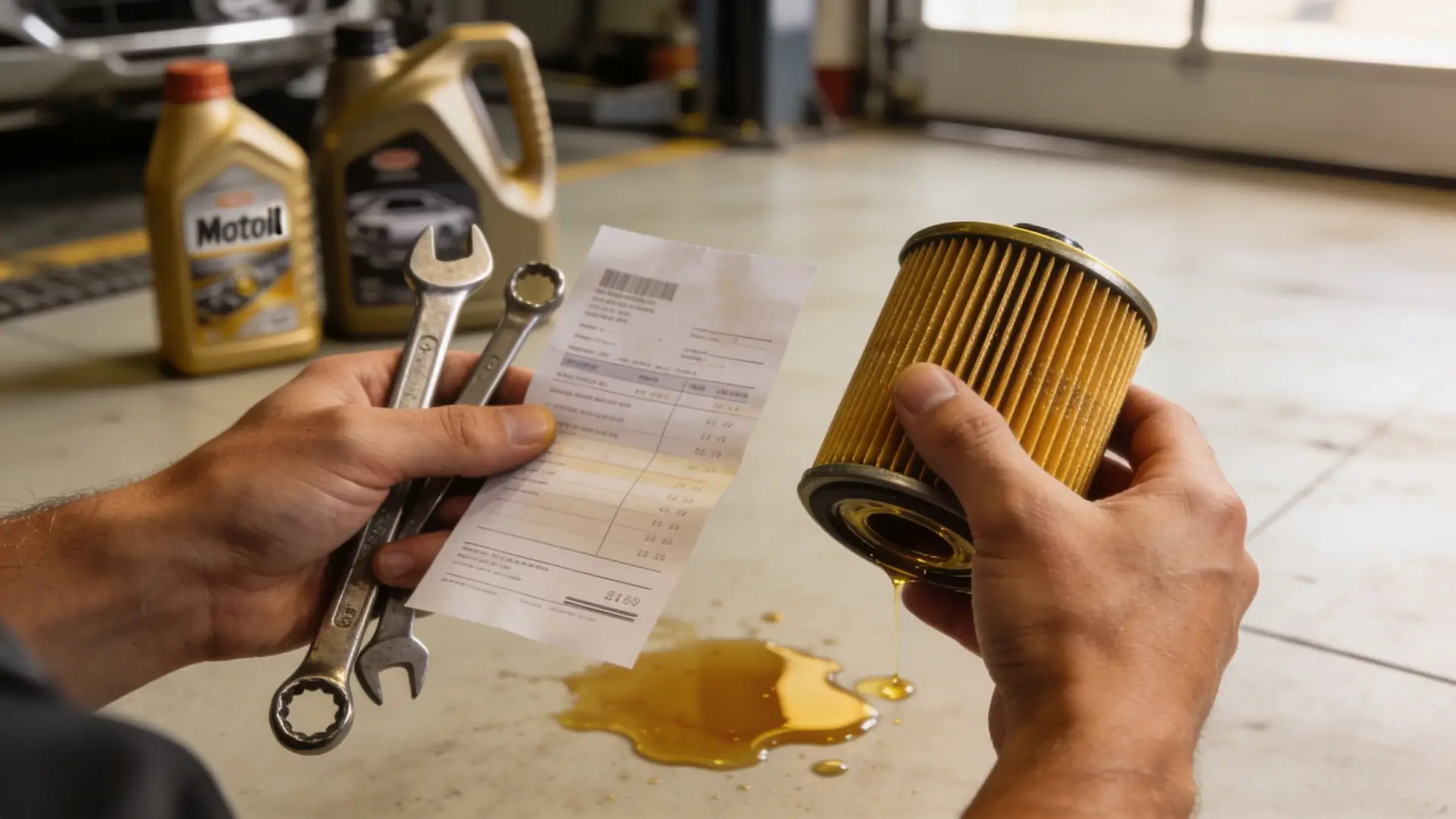
What goes into the DIY cost
A do-it-yourself oil change usually includes more than oil and a filter:
- Motor oil. The weight and specification have to match the manufacturer requirement, especially on newer engines that call for a specific synthetic formula.
- Oil filter. Filter quality matters. Cheap filters can have weaker media, poorer sealing, or lower bypass valve quality.
- Drain plug washer or gasket. Many vehicles need a fresh sealing washer each time to prevent seepage.
- Drain pan. You need a way to catch, store, and pour used oil without making a mess.
- Funnel, gloves, and rags. Small purchases add up fast.
- Socket set or filter wrench. Some cars are simple. Some are not.
- Ramps or jack stands. If the vehicle does not give enough clearance, safe access becomes part of the cost.
For a first-time DIYer, tools often decide whether there are real savings at all. I see this often around Richland Hills. A driver plans to save money, then spends enough on basic equipment to erase the advantage from the first oil change or two.
The cost drivers people miss
Time is one of them.
A DIY oil change means buying parts, getting the car positioned safely, doing the service, checking for leaks, cleaning up, and taking used oil and the old filter to a recycling location. If everything goes smoothly, that may be fine. If the filter is stuck, the splash shield has ten fasteners, or the parts store gave you the wrong filter, the job gets longer in a hurry.
Vehicle design matters too. An older truck with easy access underneath is one thing. A newer SUV with underbody panels, a cartridge filter housing, and tight oil spec requirements is another. The harder the vehicle is to service, the less clear the savings become.
There is also mistake cost.
Overtighten the drain plug and you can damage threads in the oil pan. Leave the old gasket on a spin-on filter and the new filter may leak. Use the wrong oil specification and you can create warranty problems or long-term wear concerns. Those are not common for an experienced DIY owner, but they are real costs when the job goes wrong.
Where DIY can save money, and where it often does not
DIY usually makes better financial sense under a few conditions:
- You already own the tools
- You service multiple vehicles
- You have a safe, flat place to work
- You are comfortable checking specs and doing the job correctly
- Your vehicle is simple to access and out of warranty, or you keep excellent records
DIY often loses ground when these factors show up:
- You are buying equipment for the first time
- You drive a newer vehicle with strict oil requirements
- You value your time on weekends
- You do not have a good place to work
- You are likely to pay someone else if a small mistake turns into a leak or warning light
For many drivers, the break-even point is not one oil change. It is a year or two of ownership. If you do your own maintenance consistently, on more than one vehicle, and avoid mistakes, the math can work in your favor. If you only change oil occasionally, or your car is picky about procedure and parts, the savings can be smaller than expected.
What You Pay For with a Professional Oil Change
Pull into a shop for an oil change, and the invoice is higher than the stack of supplies you would buy at the parts store. That extra cost pays for more than oil and a filter. It pays for a complete service visit, the equipment to do it safely, and a paper trail that can matter later if your engine develops a problem.
For a typical Richland Hills driver, the relevant comparison is not parts cost versus ticket price. It is total ownership cost over time. A professional oil change can make financial sense when it reduces mistakes, saves an hour of weekend time, and keeps maintenance records tied to the correct oil grade and filter.
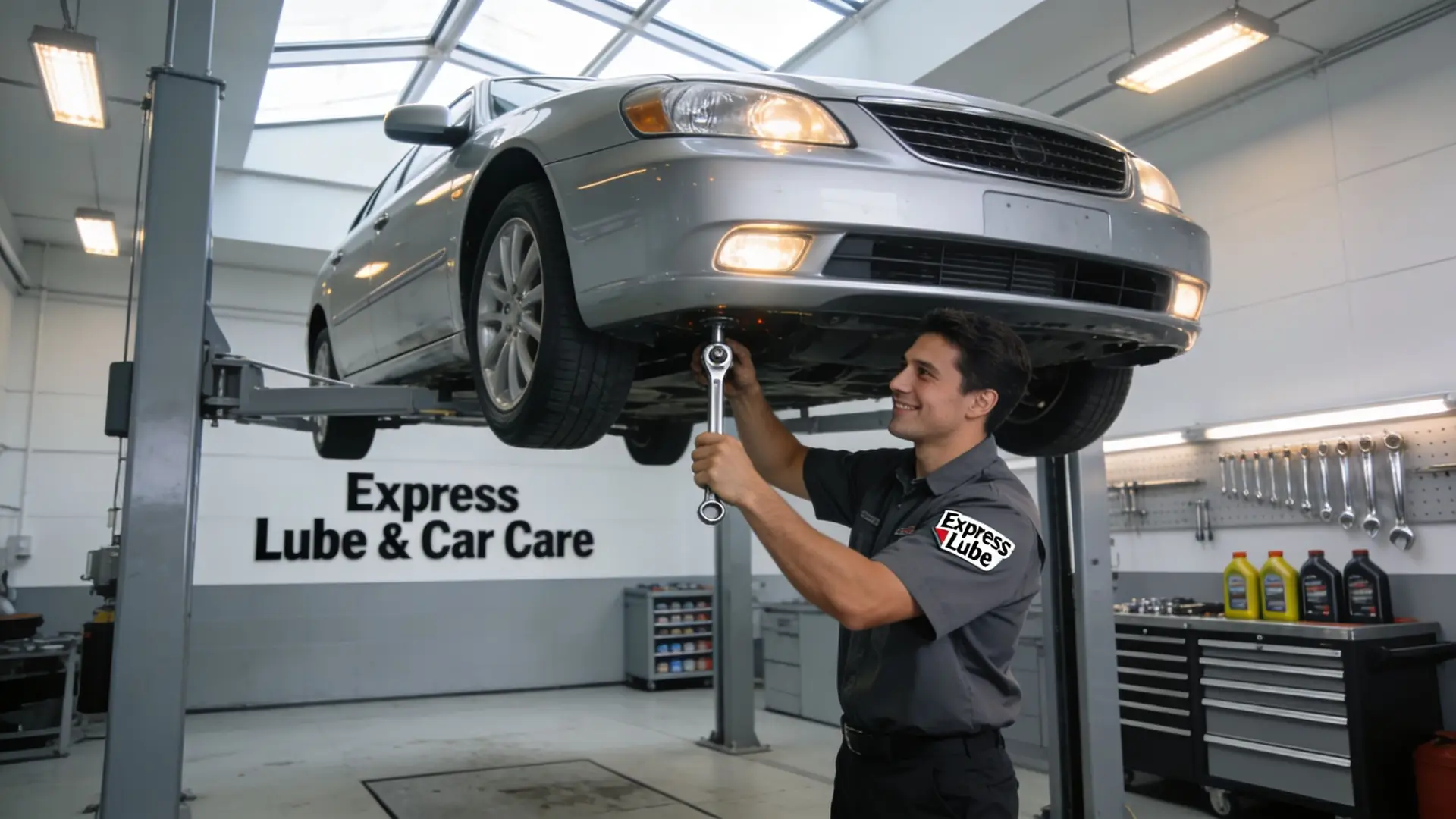
What that price usually includes
A professional oil change usually bundles several things drivers have to handle themselves in a driveway:
- Technician labor. The service is performed by someone who checks the filter fit, drain plug, oil level, and basic service procedure.
- Shop equipment. A lift, drain tanks, filter tools, torque tools, and waste-fluid systems speed up the job and reduce the chance of a mess or injury.
- Used oil disposal. You leave with clean hands and no containers of used oil sitting in the garage.
- A routine inspection. During oil service, a tech may catch seepage, underbody damage, worn wipers, low tire pressure, or uneven tire wear before those turn into bigger bills.
- Service documentation. An invoice showing date, mileage, oil type, and filter can help with warranty questions and resale value.
That inspection piece gets overlooked.
Oil changes are one of the few times a vehicle gets regular eyes underneath. I have seen small valve cover leaks, loose splash shields, missing fasteners, and tire wear issues caught during a simple oil service, long before the owner noticed anything from the driver’s seat.
Why synthetic service changes the math
The sticker price on synthetic oil service can look high if you compare it only to a DIY parts receipt. The better comparison is cost per mile and the time between visits. On many vehicles, the manufacturer calls for synthetic oil because of heat, turbocharger demands, tighter tolerances, or longer service intervals. In those cases, using the right product and documenting it matters more than shaving a few dollars off one visit.
That is also why local pricing matters. If you are comparing options, this breakdown of oil change prices near Richland Hills gives a better local reference point than a broad national estimate.
Professional service makes the most sense in a few common situations
Professional service usually earns its keep when:
- The vehicle is newer or still under warranty
- The engine requires a specific synthetic grade or manufacturer spec
- The oil filter or drain plug access is awkward
- You want maintenance records without having to track every receipt yourself
- Your schedule makes convenience worth paying for
DIY can still be the cheaper route on paper. Professional service often wins on total hassle, documentation, and risk control, especially for drivers who plan to keep the vehicle for years and want fewer maintenance-related surprises.
DIY vs Professional Service A Head-to-Head Comparison
A typical Richland Hills driver usually makes this decision on a Saturday. The supplies still need to be bought, the engine has to cool enough to work on safely, and used oil still has to go somewhere when the job is done. The parts cost is only one piece of the decision.
The better comparison is total ownership cost over time. DIY usually wins on direct out-of-pocket cost if you already own the tools, have a good place to work, and know the procedure for your vehicle. Professional service often wins when time, documentation, disposal, and mistake prevention matter more than saving a small amount on one oil change.
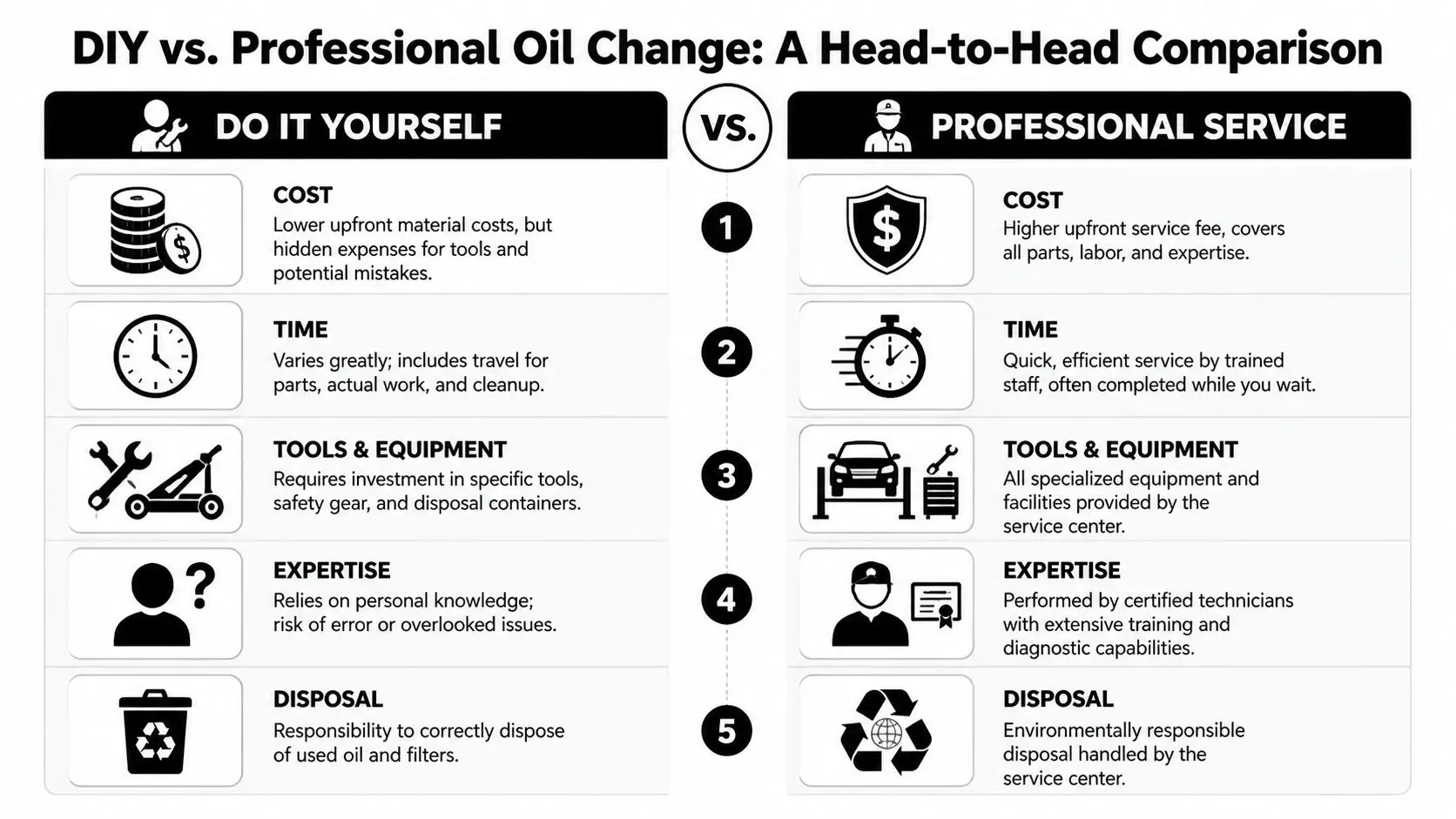
DIY vs. Professional Oil Change. The Full Picture
| Factor | DIY Oil Change | Professional Service (Express Lube) |
|---|---|---|
| Up-front cost | Lower if tools and supplies are already on hand | Higher per visit, but no equipment to buy |
| Real time involved | Parts run, setup, service, cleanup, and used oil drop-off | Usually one stop with less time tied up |
| Safety | Involves lifting or crawling under the vehicle and handling hot oil | Shop handles the lifting, draining, and disposal |
| Vehicle-specific procedure | You need the correct oil spec, filter, torque, and reset process | Technician follows the service requirements |
| Record keeping | You need to save receipts and track mileage yourself | Invoice and mileage records are built in |
| Extra eyes on the vehicle | Limited to what you notice | Technician may catch leaks, tire wear, or other issues early |
Where DIY has the edge
DIY makes sense when the job is straightforward and repeatable. You control the exact oil and filter brand, you can take your time, and you learn how your vehicle is put together. For drivers who maintain several cars, one set of tools can spread that cost over many services, which improves the math.
I also give DIY credit for one thing many shops cannot match. You know how careful you are. If you are methodical, use the correct parts, and keep records, a home oil change can be done right.
Where professional service earns the higher price
Professional service earns its keep by removing friction and reducing avoidable mistakes. You are paying for the oil and filter, but you are also paying for the lift, the disposal process, the service records, and the technician’s habit of spotting small problems before they turn into larger repairs.
That matters more on modern vehicles than many drivers realize. Cartridge filters, splash shields, tight engine bays, turbo engines, and manufacturer-specific oil requirements leave less room for trial and error. One missed O-ring, one overtightened drain plug, or one wrong viscosity can wipe out the savings fast.
If you want a realistic local benchmark, compare current oil change prices near Richland Hills instead of relying on broad national averages.
The practical trade-off
Here is the plain answer. DIY is cheaper on paper for a prepared owner with tools, space, and confidence. Professional service is often cheaper in real life for a busy driver who values time, clean records, and lower risk.
I have seen both sides. A simple home oil change on an older truck can be a smart way to save money. I have also seen a minor DIY mistake turn into an oil leak, a comeback repair, and a much more expensive afternoon.
For the average commuter, the decision usually comes down to one question. Are you only comparing the receipt today, or are you comparing the full cost of keeping the vehicle trouble-free over the next few years?
When a DIY Oil Change Makes Perfect Sense
DIY makes the most sense for a specific kind of driver. Not an average busy commuter. Not someone trying to squeeze a maintenance job between errands. It works best when the setup already fits your life.
The hobbyist with tools and space
If you already have the basics at home and enjoy turning wrenches, DIY is a reasonable path. You’re not buying equipment just for one service, and you’re not annoyed by setup or cleanup because that’s part of the process you like.
This is often the driver who keeps a drain pan on the shelf, has a preferred filter brand, and knows where the oil filter sits before the hood is even open.
The owner of an older, simpler vehicle
Older vehicles that are out of warranty are often better DIY candidates. They tend to be easier to access, less shielded underneath, and less sensitive to special procedures.
That doesn’t mean old cars are foolproof. It means the service is often more straightforward. If that’s your situation and you want a refresher on the process, this step-by-step guide on how to change your oil properly is a practical place to start.
The multi-car household
DIY gets stronger when one tool purchase serves more than one vehicle. A family with several cars can spread the equipment cost over more maintenance events, which improves the economics over time.
The same goes for drivers who keep vehicles for years and stay disciplined about maintenance. They’re more likely to get enough repeat use from their equipment to justify the effort.
A quick self-check
DIY probably fits you if most of these are true:
- You already own the needed tools
- You have a safe, level place to work
- You’re comfortable identifying the correct oil and filter
- Your vehicle is not difficult to service
- You don’t mind handling disposal
- You value the hands-on aspect of maintenance
If only one or two of those apply, DIY may still be possible. It just may not be the bargain it first appears to be.
The Case for Professional Service in Richland Hills
For many drivers around Richland Hills, the smarter financial move isn’t the lowest per-service price. It’s the option that reduces downtime, protects the vehicle, and keeps maintenance simple enough that it gets done on time.
That’s especially true once synthetic oil enters the conversation.
According to 20 Something Finance’s discussion of DIY oil economics, modern synthetic oils enable 7,500 to 10,000 mile service intervals, reducing annual change frequency by up to 50% compared with conventional oil. The same source notes that a professional synthetic service can lower total annual maintenance spending and reduce downtime for high-mileage drivers or fleet owners.
Why the old cheap-per-change mindset falls short
A lot of people still compare oil changes one invoice at a time. That’s too narrow.
If one option needs more frequent service and the other stretches the interval, the only fair comparison is total cost over time. That’s where synthetic often changes the answer. A DIY conventional change may look cheaper in isolation, but fewer professional synthetic services can work out better for many drivers because the car spends less time needing maintenance.
Newer vehicles leave less room for error
Modern cars are tighter, more spec-sensitive, and less forgiving than the simple engines many of us learned on. Correct oil grade matters. Correct filter fit matters. Proper procedure matters.
For drivers trying to protect a newer vehicle, having service records also matters. If you’re comparing what a local shop visit really costs, this breakdown of oil change cost factors in Richland Hills gives useful context on what affects the final price.
Shop-floor reality: The more complicated the vehicle, the less appealing DIY becomes unless you already have the right tools, the right information, and the patience to follow the procedure exactly.
Who benefits most from professional service
Professional service is usually the better fit for:
- Busy commuters who don’t want maintenance eating into weekends
- Families managing multiple schedules and vehicles
- High-mileage drivers who benefit from longer synthetic intervals
- Owners of newer cars who want clean records and fewer service headaches
- Small fleets that need predictable downtime
For those drivers, paying more upfront can still be the lower-friction, lower-risk, and sometimes lower-total-cost choice over the life of the vehicle.
Your Top Oil Change Questions Answered
Should I still follow the old 3,000-mile rule
Not automatically. Many drivers still remember the old interval, but modern vehicles and modern oils often don’t follow that schedule. Your owner’s manual should lead the conversation, not an outdated sticker habit.
Synthetic oil can support much longer service intervals in many vehicles. As noted earlier, modern synthetic oils can allow 7,500 to 10,000 mile intervals in the right applications. That’s one reason the cheapest-looking per-change option doesn’t always win over a full year of driving.
Is it okay to mix oil brands
In a pinch, topping off with the correct oil type and viscosity is generally more important than matching brand labels perfectly. But as a routine habit, sticking with the correct specification and using one consistent product approach is cleaner and easier to track.
The key point is this: don’t guess on viscosity or required specification. Your owner’s manual should always decide that.
What’s the difference between conventional, blend, and full synthetic
Conventional oil is the basic option and is often associated with shorter service intervals. Synthetic blend sits in the middle. Full synthetic usually costs more upfront, but it offers stronger long-interval value for many modern engines.
That’s why the best oil choice is rarely just about shelf price. It’s about what your engine requires and how you use the vehicle.
Can I bring my own oil and filter to a shop
Some shops allow it. Some don’t. Policies vary.
If you want to supply your own parts, call ahead and ask two things. First, whether the shop will install customer-supplied oil and filters. Second, whether there are any limits on warranty coverage or labor guarantees when outside parts are used.
Does changing my own oil void the warranty
Doing your own oil change doesn’t automatically void a warranty, but sloppy records can create problems. If you handle maintenance yourself, keep receipts, dates, mileage, and detailed notes. You need a paper trail that shows the service was done correctly and on time.
For many owners, that recordkeeping burden is one more reason professional service makes life easier.
What’s the biggest DIY mistake people make
Not one dramatic mistake. Usually it’s a small one.
It might be using the wrong oil spec, under-tightening a filter, overfilling the crankcase, forgetting a washer, or rushing through cleanup and inspection. Those details are exactly why oil changes look simple from the outside but still deserve care.
So, is it cheaper to change your own oil
Sometimes. If you already have tools, know what you’re doing, and don’t mind the time and mess, DIY can save money.
If you’re starting from scratch, driving a newer vehicle, or valuing convenience and documentation, the savings may be smaller than expected. In plenty of real-world cases, professional service is the better overall value even when the sticker price is higher.
If you’d rather skip the mess, protect your time, and get reliable service from a local team, Express Lube & Car Care is a solid choice in Richland Hills. Their ASE-certified technicians handle oil changes, maintenance, and repairs with clear communication and transparent pricing, so you can keep your vehicle on schedule without turning a simple service into a weekend project.