

Gas prices have a way of changing your mood before you even finish filling the tank. Around Richland Hills, that hits hard when your week already includes school drop-offs, commuting across Northeast Tarrant County, errands after work, and weekend highway miles. A lot of drivers assume fuel economy is mostly fixed by whatever number the automaker printed on the window sticker.
It isn’t.
If you want to know how to improve car fuel efficiency, the biggest gains usually come from a mix of habits and maintenance, not one magic product. The driver matters. The route matters. The load in the trunk matters. The condition of the tires and alignment matter. North Texas heat and stop-and-go traffic don’t help, but they also don’t remove your control.
I’ve seen the same pattern over and over in the service bay. Drivers often chase complicated answers while missing the simple stuff that changes fuel use every day. Smooth driving, less extra weight, smarter errand planning, and timely maintenance usually beat gimmicks. That’s the practical plan.
Feeling the Pinch at the Pump? You Have More Control Than You Think
Most local drivers don’t waste fuel on purpose. It happens in small, familiar ways. A few hard launches leaving a light. Running errands as separate cold starts all week. Carrying around gear you haven’t needed in months. Letting maintenance slide because the car still seems to run fine.
That combination adds up.
The good news is that fuel efficiency isn’t only a shop issue or only a driving-style issue. It’s both. If you handle what happens from the driver’s seat and what happens in the service bay, you put yourself in a much better position to spend less per mile.
What actually works in real life
The strongest plan usually comes down to four moves:
- Drive with fewer speed swings so the engine isn’t constantly working to recover lost momentum.
- Reduce drag and weight so the vehicle doesn’t have to fight unnecessary load.
- Group trips intelligently so the engine spends less time wasting fuel while cold or idling.
- Stay current on routine maintenance so tires, fluids, filters, and alignment aren’t dragging mileage down.
Practical rule: If a tip sounds complicated, expensive, or hard to repeat every week, most drivers won’t stick with it. The fuel-saving habits that last are the ones you can do on a normal Tuesday.
In North Texas, temperature swings and long stretches of traffic make consistency more important. A vehicle that’s driven smoothly and checked regularly is usually cheaper to run than one that gets random attention only when something feels wrong.
You don’t have to overhaul your life to improve fuel economy. You need a repeatable system.
Smarter Driving Habits for Immediate Fuel Savings
The fastest way to burn more gas is to drive like every gap in traffic is a race. On I-820, Highway 121, or Airport Freeway, aggressive lane changes and sharp acceleration feel productive, but they usually trade fuel for very little time saved.
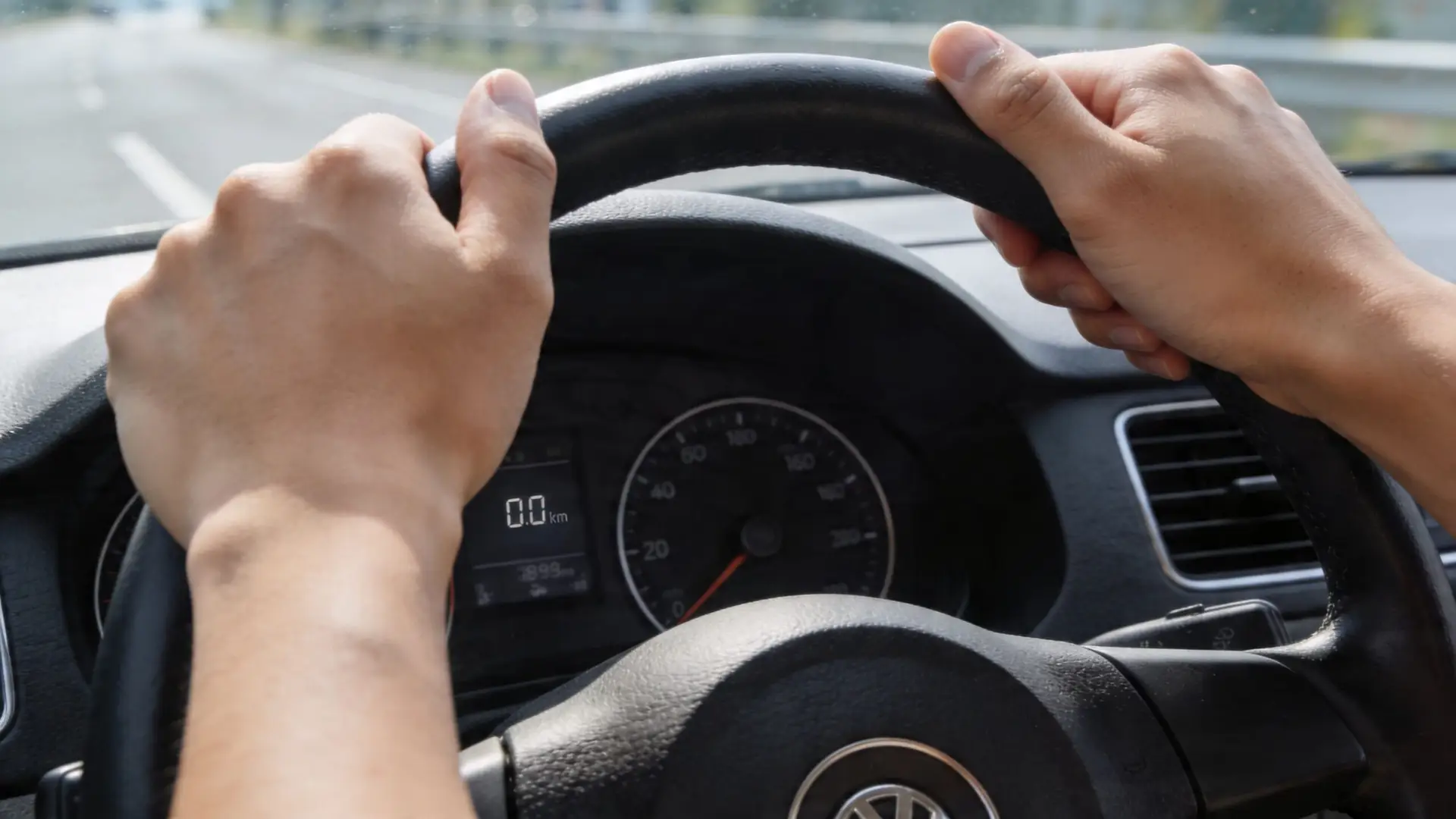
The U.S. Department of Energy reports that aggressive driving can lower gas mileage by up to 33% on highways and 5% in the city, and smoothing out your driving can improve efficiency by up to 10%, as noted by the fuel-saving guidance from the University of Nebraska fleet program.
Smooth beats fast-feeling
Good fuel-efficient driving isn’t slow driving. It’s predictable driving.
If traffic ahead is compressing, get off the gas earlier instead of racing to the next brake tap. If the light has been green for a while, be ready for it to change. If you’re merging, build speed smoothly instead of flooring it at the last second. Every hard acceleration event asks the engine for more fuel than a steady increase in speed.
Three habits make an immediate difference:
Accelerate progressively
Press the pedal like there’s an egg under it, especially from a stop. You don’t need to crawl. You just want to avoid a sudden jump in RPM.Look farther ahead
Most wasted fuel comes from reacting late. When you scan farther down the road, you brake less abruptly and preserve momentum.Leave enough following distance
Tailgating forces constant speed corrections. A little space lets you roll more smoothly through traffic waves.
On crowded North Texas roads, the driver who stays calm usually uses less fuel than the driver who keeps sprinting into the next red light.
Highway speed matters more than most people think
A lot of people lose fuel economy on open highway drives because they assume a little more speed won’t matter much. It does. The same University of Nebraska fuel-saving page notes that cruise control can help maintain a steady speed, and that each 5 mph over 50 mph carries a fuel penalty equivalent to paying more per gallon, which is why moderate, steady highway speeds usually return better mileage than constant surges.
Use cruise control when traffic is light and the road is flowing steadily. Don’t use it when traffic is bunching up or when you need to adjust often around other drivers. In those conditions, your right foot needs to manage speed gently.
Here’s a helpful visual on the same idea:
What doesn’t work
Drivers sometimes try to “win back” fuel economy with one-off tricks while keeping wasteful habits. That usually fails.
- Racing to the next stop doesn’t help.
- Constant lane-hopping usually doesn’t help.
- Late braking definitely doesn’t help.
- Driving much faster than traffic flow adds stress and fuel burn together.
If you want one change you can apply today, start here: drive the car so your passengers barely notice your throttle and brake inputs. That’s usually where the first real savings show up.
Optimize Your Vehicle Setup and Reduce Unnecessary Load
A surprising amount of fuel gets wasted before you even turn the key. It sits in the trunk, hangs off the roof, or rolls down the road on tires that aren’t set up correctly.
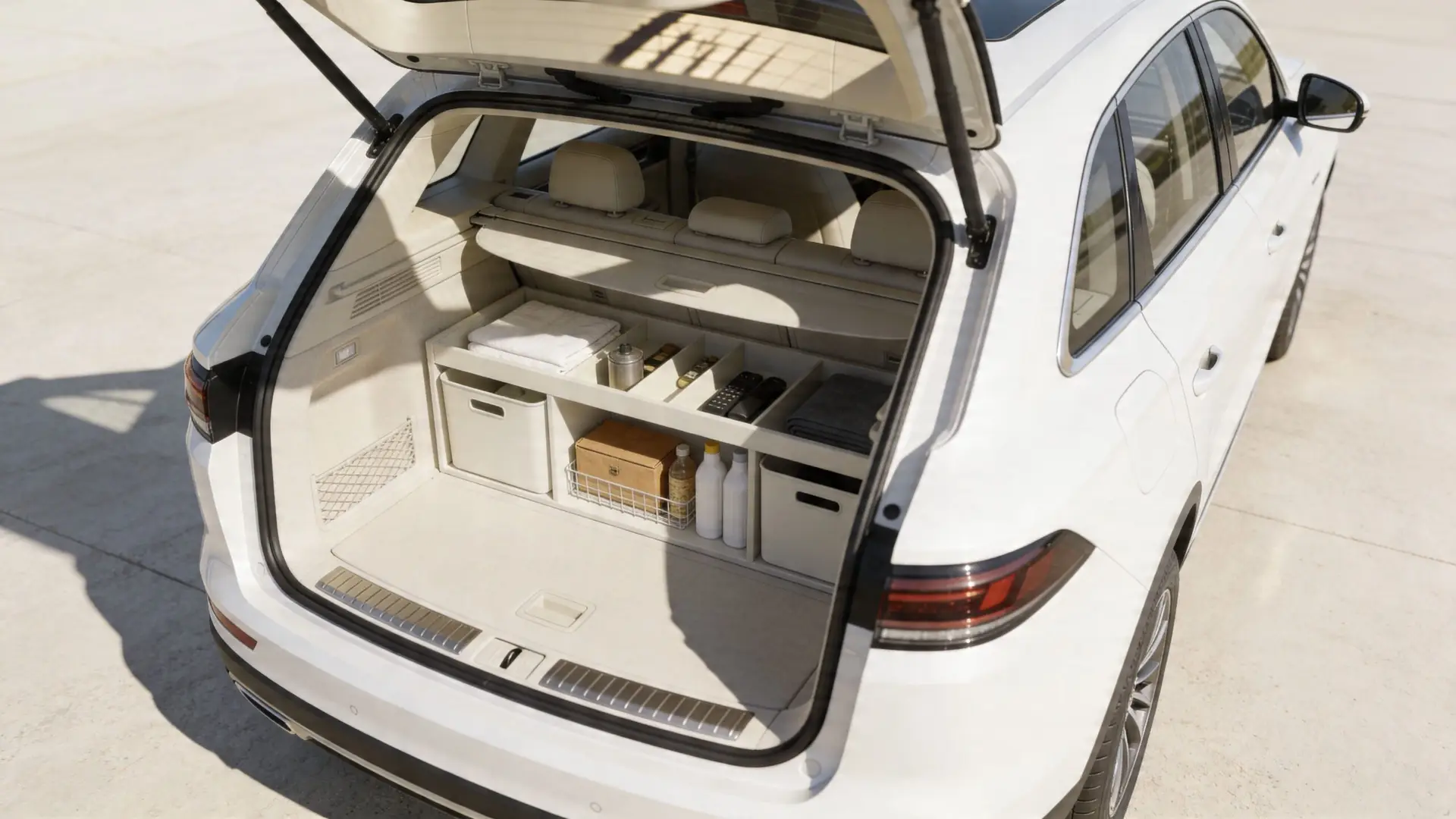
The EPA says every 100 pounds of extra weight in your vehicle can decrease fuel economy by up to 1%, and a rooftop cargo box can decrease fuel economy by 6% to 17% on the highway, according to the EPA’s fuel economy factors page.
Clean out the stuff that became permanent cargo
Many daily drivers in Richland Hills are carrying around the automotive version of a junk drawer. Sports gear, old strollers, bottled water cases, tool bags, bulk shopping leftovers, and emergency items that turned into long-term cargo all add weight.
Do a quick audit of the vehicle you drive every day.
Trunk gear you never use
If it hasn’t been touched in months, it probably doesn’t belong in the car full-time.Duplicate supplies
One emergency kit makes sense. Three half-used tote bags of random supplies don’t.Work items after work
If you commute in a personal vehicle, unload equipment when you can instead of letting it ride all week.
Roof accessories cost more than people expect
Roof boxes, racks, and carriers are especially expensive at highway speed because they add drag where the vehicle is already working hardest against the air. If you only need that cargo box for trips, take it off after the trip. The same goes for bike racks and crossbars that stay mounted year-round out of habit.
This is one of those rare fuel-saving fixes that costs nothing if you already own the hardware. It just takes ten minutes and a wrench.
Don’t ignore rolling resistance
While you’re reducing weight and drag, make tire setup part of the same checklist. If you need a refresher on proper tire pressure, that guide is useful because it focuses on the basics that many drivers skip. If you’re also seeing unusual tread wear, this short explanation of how under-inflated tires wear helps connect fuel economy with tire life and safety.
What works here is plain and unglamorous. Carry less. Remove drag when you don’t need it. Keep the car set up for the trip you’re taking, not the one you might take next month.
Strategic Trip Planning to Minimize Fuel Waste
A vehicle can be driven carefully and still waste fuel if the trip itself is poorly planned, causing many drivers to leave savings on the table. They think about miles, but not about how those miles are arranged.
Several short trips from a cold start can use twice as much fuel as one multipurpose trip covering the same distance with a warm engine, and idling can use a quarter to a half gallon of fuel per hour, according to FuelEconomy.gov’s trip and idling guidance.
Combine errands with intention
If you leave home for coffee, return, head back out for the grocery store, come back, then leave again for prescriptions, the engine spends a lot of time warming up and not enough time operating efficiently. A better approach is to stack stops into one loop.
A practical local example might look like this:
- Start with the farthest stop first while traffic is still manageable.
- Handle short stops next so you’re not crossing the same area repeatedly.
- Finish with the grocery run last if you need to get frozen or refrigerated items home quickly.
This isn’t about making your day rigid. It’s about cutting duplicated miles, reducing cold starts, and avoiding needless backtracking.
A warm engine doing one organized route is usually cheaper to run than the same miles spread across several separate trips.
Idle less in the places people forget about
Most drivers think of idling as waiting in a parking lot. In practice, it also happens in school pickup lines, drive-thru lanes, jobsite staging areas, and long waits for someone who said they’d “be right out.”
If you’re going to be stopped for a while, shutting the engine off can prevent fuel from disappearing while the vehicle goes nowhere. Modern driving routines often include more idling than people realize, especially for parents and service businesses.
Use routing tools for everyday driving
Fleet operators have long treated route planning as a cost issue, and regular drivers can borrow that mindset. Navigation apps don’t just save time. They can also avoid inefficient routes and reduce wasted fuel by helping you cut excess stops, detours, and unnecessary circling.
The key is consistency. The more often you batch errands, avoid repeat cold starts, and trim idle time, the more fuel savings become part of your normal routine instead of a one-time experiment.
Essential Maintenance Checks You Can Perform at Home
The most overlooked DIY fuel-efficiency check is also one of the easiest. Tire pressure.
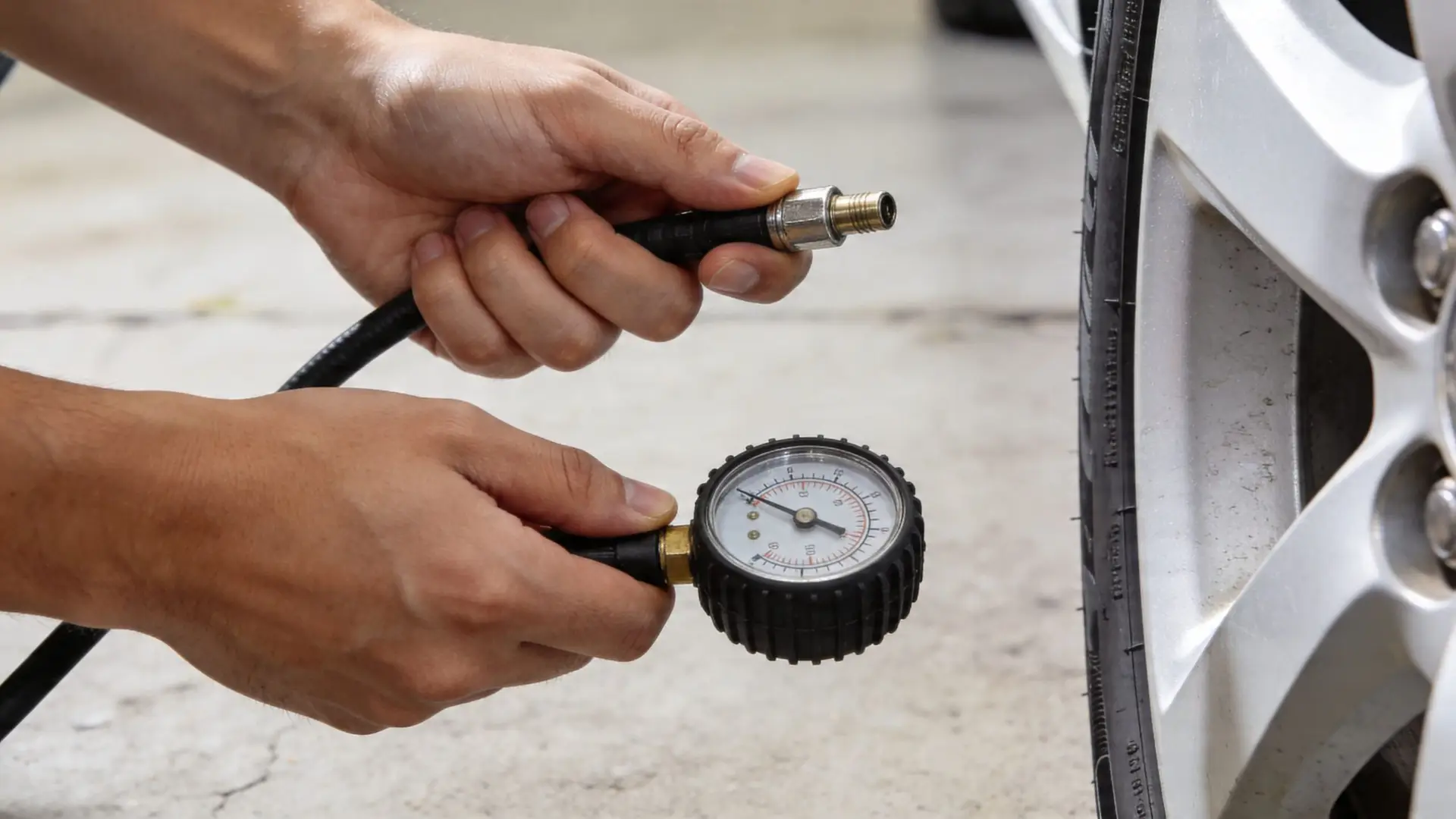
The U.S. Department of Energy states that keeping tires properly inflated can improve gas mileage by up to 3.3%, and under-inflated tires lower efficiency by about 0.3% for every 1 psi drop in pressure, according to the DOE fuel savings publication.
Check tire pressure the right way
A lot of drivers check pressure using the number molded into the tire sidewall. That’s the wrong reference for normal use. Use the vehicle manufacturer’s recommendation on the driver’s door jamb sticker or in the owner’s manual.
In North Texas, this matters even more because temperature changes affect pressure. A tire that looked fine a while back may not be where it should be now. If you only check when the tire looks visibly low, you’ve waited too long.
Use this quick routine:
Check pressure when the tires are cold
Early morning is ideal, before driving very far.Use a gauge you trust
A basic digital or dial gauge is enough if it’s consistent.Compare all four tires
Don’t assume one low tire means the others are fine.Set pressure to the vehicle spec
Use the door sticker, not the sidewall maximum.
Give the air filter a quick look
A restricted air filter can hurt how an engine breathes, especially if you’ve been driving through dusty conditions or heavy road debris. This isn’t difficult to inspect on many vehicles. Open the air box, remove the filter, and look for heavy dirt buildup, debris, or obvious clogging. If you’re unsure what you’re looking at, this guide on how to check your car’s air filter walks through the basic process.
Not every car makes this equally simple, and some housings are easier to damage than people expect. If the cover uses clips or screws that feel brittle, slow down and don’t force anything.
Build a short monthly habit
Fuel-saving maintenance at home doesn’t need an entire Saturday.
Tires
Check pressure once a month and before longer drives.Visual walk-around
Look for a tire that’s wearing differently than the others, which can hint at alignment or inflation issues.Air filter glance
Inspect it periodically, especially if the vehicle has been in dusty conditions.
Shop-floor advice: The cheapest fuel-efficiency fix is often the one you catch before the car feels “off.”
A lot of drivers save themselves money not by becoming amateur mechanics, but by noticing small issues early and staying ahead of the obvious basics.
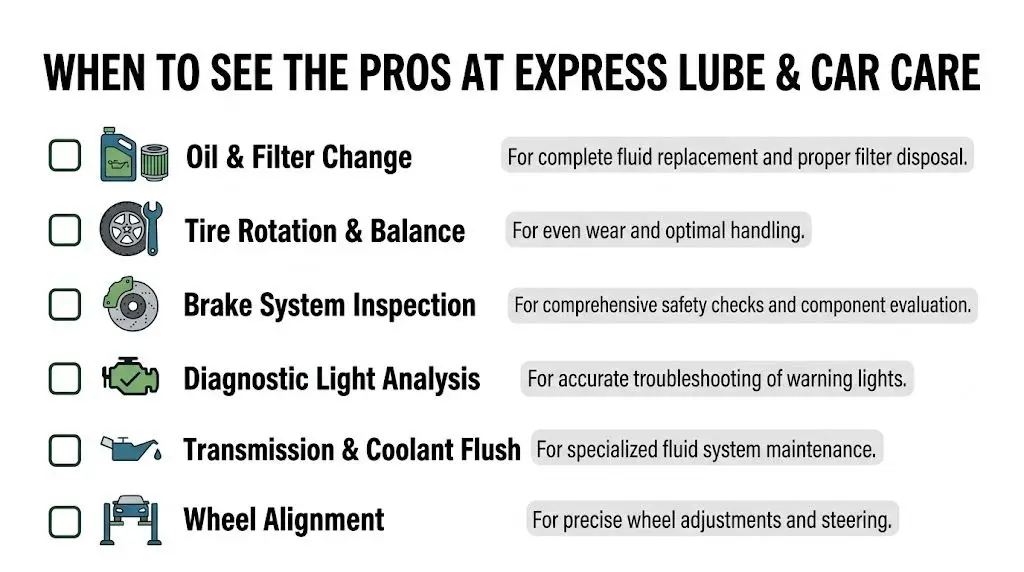
When to See the Pros at Express Lube & Car Care
DIY checks are worthwhile, but they won’t replace scheduled service. Some fuel-efficiency losses come from wear patterns and system conditions you can’t reliably catch in the driveway.
Many drivers aren’t sure how often to service a vehicle for fuel economy. Tires lose about 1 psi a month, and a formal alignment check is recommended at least once a year or every 12,000 to 15,000 miles, according to AAA’s maintenance guidance for gas mileage.
What belongs in the shop
A few examples are straightforward:
Oil and filter service
Correct oil grade matters. Old or incorrect oil can increase resistance and reduce efficiency.Alignment checks
A car can track “almost straight” and still scrub fuel through tire drag.Injector and fuel system concerns
If throttle response feels uneven or the engine isn’t running cleanly, it may be time to look into a professional injector cleaner service.Diagnostics for warning lights or drivability issues
If the engine management system has a problem, guessing is expensive.
Fuel Efficiency Maintenance Schedule
| Service Task | Frequency | DIY or Professional |
|---|---|---|
| Tire pressure check | Monthly | DIY |
| Air filter inspection | Periodically | DIY |
| Wheel alignment check | At least once a year or every 12,000 to 15,000 miles | Professional |
| Oil and filter change | Follow the vehicle manufacturer’s schedule | Professional |
| Fuel system and injector evaluation | When drivability symptoms appear or as advised during service | Professional |
What works better than waiting for symptoms
Many fuel-efficiency problems show up gradually. That's why drivers get used to them. The car doesn't suddenly fail. It just becomes a little less responsive, a little less smooth, and a little more expensive to fill.
In that situation, a professional inspection saves more than random parts replacement. An ASE-certified technician can check for tire wear patterns, fluid condition, obvious drag issues, and the kinds of maintenance gaps that don't announce themselves with one dramatic symptom. For local drivers who don't want to juggle appointments, Express Lube & Car Care handles routine maintenance and diagnostics in a walk-in format, which makes it easier to stay on schedule instead of putting service off.
If fuel economy has slipped and nothing obvious changed in your driving, the vehicle is often telling you it needs attention before it needs a repair.
The trade-off is simple. Waiting feels convenient now, but it usually costs more in fuel, tire wear, and avoidable parts wear later.
Start Saving on Every Mile You Drive
Better fuel economy usually comes from ordinary decisions done consistently. Drive smoothly. Keep unnecessary weight and drag off the vehicle. Group errands so the engine isn't constantly starting cold. Stay ahead of tire pressure and basic checks at home. Get professional maintenance before small efficiency losses turn into bigger repair bills.
That's how to improve car fuel efficiency in everyday driving around Richland Hills. Not with gimmicks. With habits and maintenance that hold up in heat, traffic, and everyday use. Start with one or two changes this week, then build from there. The next tank is where you notice it.
If your car is using more fuel than it should, schedule time with Express Lube & Car Care for a practical maintenance check. A quick review of tires, alignment, fluids, and overall condition can help you catch the small issues that subtly increase fuel costs.