

Auto repair estimates vary because of several specific, measurable factors: labor rates, parts quality, diagnostic depth, and regional pricing conditions. These are not arbitrary differences. Each shop builds its quote from a different combination of those variables, which is why two estimates for the same repair on the same car can look completely different. Understanding what drives those differences puts you in control of the conversation, not the other way around.
Why do auto repair estimates vary so much?
Repair estimates differ because they are built from several moving parts, and each shop makes its own choices about every one of them. Parts quality, labor time, diagnostic fees, and even warranty terms all shift the final number. Two shops can look at the same vehicle and produce quotes that are hundreds of dollars apart without either one being dishonest.
The industry term for this process is a “repair estimate” or “repair appraisal,” and it follows a standard structure: labor hours multiplied by the shop’s hourly rate, plus parts, plus fees. The problem is that each of those inputs varies. Labor rates alone range from $95 to $220 per hour depending on the shop’s location, certifications, and overhead. That spread alone can create a $300 difference on a three-hour job before parts are even factored in.
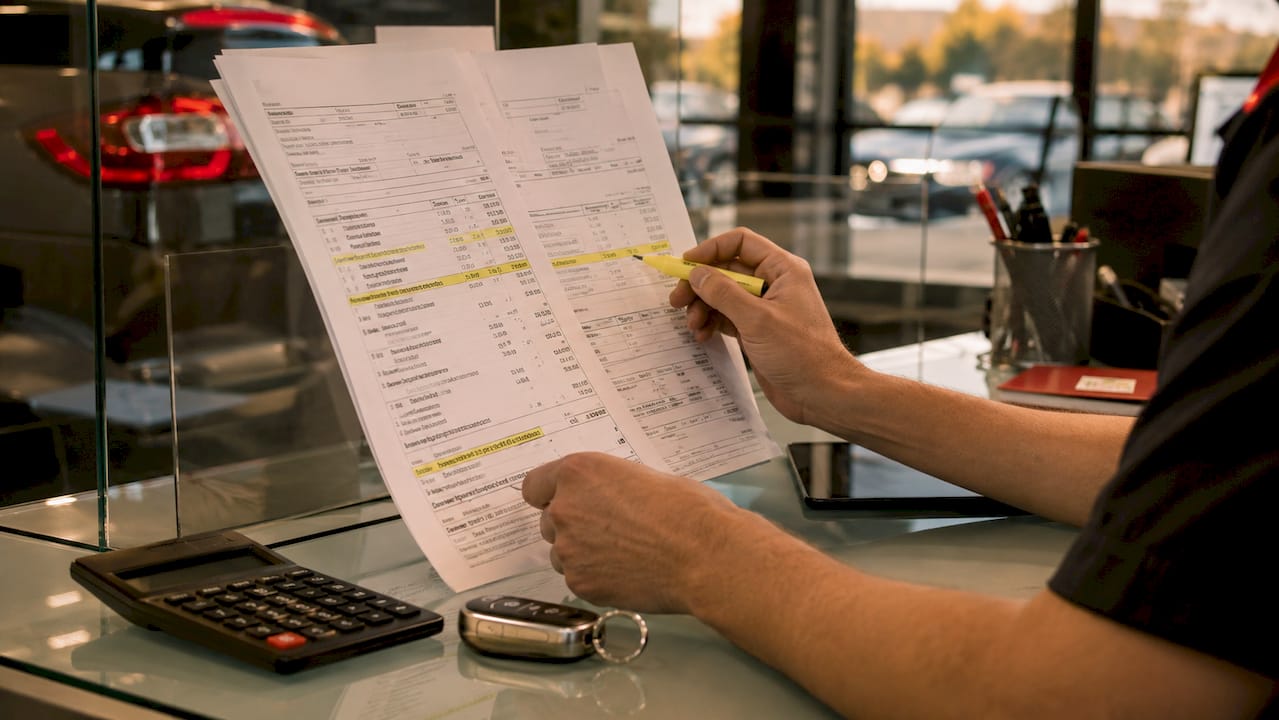
Parts selection adds another layer. Original equipment manufacturer (OEM) parts come directly from the vehicle’s manufacturer and carry a higher price. Aftermarket parts are made by third-party suppliers and typically cost less. Remanufactured parts are rebuilt OEM components, landing somewhere in the middle. Each choice changes the estimate, and not every shop offers all three options.
What makes up a repair estimate, and where do the differences come from?
Every estimate should break down into at least four categories: labor, parts, shop supplies, and fees. When those line items are visible, you can compare quotes accurately. When they are bundled into a single total, you are comparing apples to oranges.
Here is what each component typically includes:
- Labor hours and rate. Shops use flat-rate labor manuals (such as Mitchell or Chilton) to assign standard time values to specific repairs. One shop may apply those hours exactly; another may adjust based on technician experience or job complexity.
- Parts cost and type. OEM, aftermarket, and remanufactured parts carry different price tags. Markups on parts vary 25–60% above wholesale, and dealerships tend to apply the highest markups on OEM components.
- Diagnostic fees. Diagnostic charges range from $80 to $180 and cover scan tool time, road tests, and physical inspection. This is skilled work, and a shop that waives it entirely may be skipping steps.
- Shop supplies and disposal fees. Fluids, rags, and hazardous material disposal add small but real costs. Some shops include these in labor; others list them separately.
- Taxes and warranty terms. Sales tax on parts varies by state. Warranty coverage on labor and parts differs widely and affects the long-term value of the quote.
Pro Tip: Always ask for an itemized estimate. A single total price tells you nothing about whether the labor hours are reasonable, what grade of parts are being used, or whether a warranty is included.
The table below shows how the same brake job can produce very different totals depending on parts choice and labor rate:
| Estimate component | Budget shop (aftermarket parts) | Mid-range shop (OEM parts) |
|---|---|---|
| Labor (2.5 hrs) | $237.50 at $95/hr | $412.50 at $165/hr |
| Parts (front brake pads + rotors) | $120 aftermarket | $280 OEM |
| Diagnostic fee | $0 (waived) | $100 |
| Shop supplies | $15 | $25 |
| Total estimate | $372.50 | $817.50 |
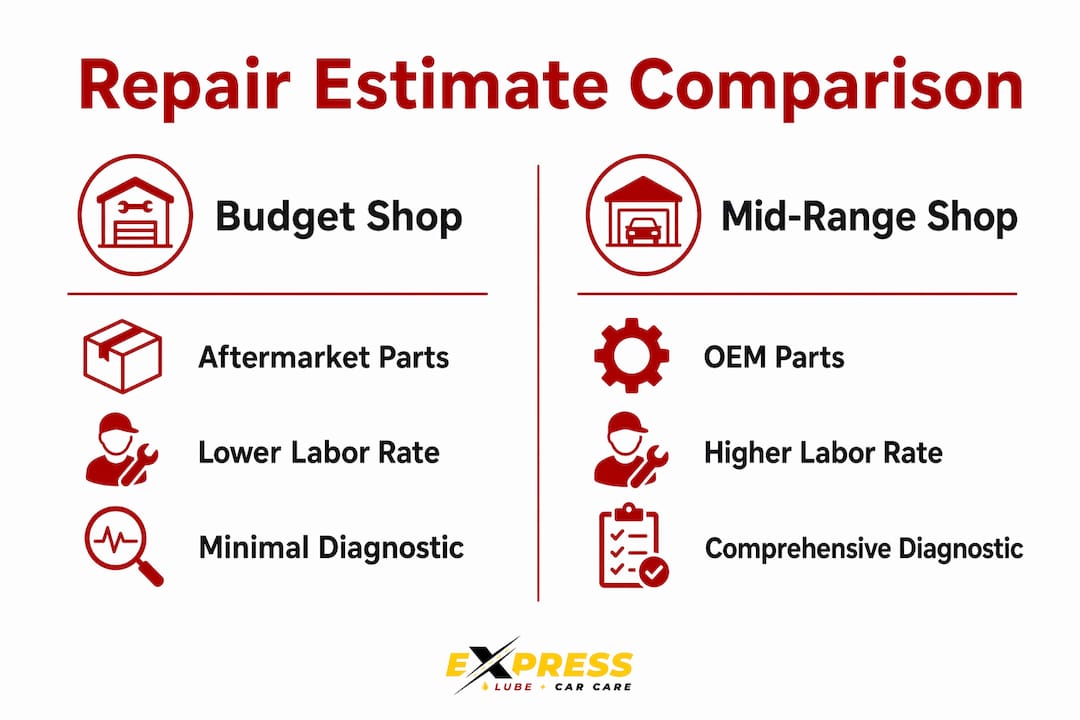
Neither quote is automatically wrong. The difference reflects real choices about parts quality, technician skill, and included services.
How do shop policies and diagnostic thoroughness affect your quote?
Shop practices create some of the most overlooked reasons for auto repair price variations. Two shops may use the same flat-rate labor manual and the same parts supplier, yet still produce different estimates because of what they choose to include or exclude from the initial quote.
Photo-based or remote estimates miss internal and structural damage, which means the final bill often climbs after a physical inspection. This is not a bait-and-switch. It is a limitation of estimating without seeing the full picture. A shop that requires a teardown before quoting is being more thorough, not more expensive.
Hidden damage discovered after work begins produces what the industry calls a “supplement.” Supplements document additional repairs found after the initial estimate and are a normal part of the repair process, especially for collision work. A shop that explains this upfront is being transparent. A shop that never mentions it is leaving you unprepared.
Other policies that vary between shops include:
- Whether ADAS (advanced driver assistance system) calibration is included after alignment or suspension work
- Whether alignment checks are part of the standard post-repair process
- Whether a warranty on parts and labor is offered, and for how long
- Whether disposal fees for fluids and old parts are listed or hidden in the labor rate
Pro Tip: Ask the shop to walk you through their diagnostic findings before approving any work. A good technician can explain what they found, why it needs fixing, and what happens if you delay the repair.
For a deeper look at how diagnostic charges work, the process is more involved than most drivers realize.
How do location and vehicle type change the estimate?
Regional economic factors drive significant auto repair cost variation that has nothing to do with shop quality. A shop in a high-cost metropolitan area pays more for rent, technician wages, and insurance than a shop in a smaller market. Those costs pass directly into the labor rate.
Shops in metropolitan areas charge higher hourly rates, and local conditions like weather also influence what repairs are common and how they are priced. A shop in a rust-belt state may include corrosion treatment as standard; a shop in a dry climate may not offer it at all.
Here is how vehicle-specific factors add to the variation:
- Make and model. European luxury vehicles require specialized parts that cost more and take longer to source. Domestic trucks use widely available parts that keep costs lower.
- Model year. Newer vehicles often require software updates alongside physical repairs. That adds technician time and licensing costs.
- Advanced safety systems. Vehicles with ADAS features require extra calibration steps after many repairs, increasing both labor time and parts cost.
- Repair history. A vehicle with prior repairs may have non-standard components that complicate the job and extend labor hours.
- Parts availability. Rare or discontinued parts take longer to source and sometimes cost significantly more due to limited supply.
Local shops understand regional repair requirements better than a general online quote tool from another region. Getting estimates from shops in your area gives you a more realistic picture of what the repair actually costs where you live.
How do you compare multiple estimates and pick the right one?
Most drivers focus only on the total cost instead of examining labor hours, parts quality, and diagnostic details. That approach leads to choosing the cheapest quote rather than the best value. Here is a better method:
- Compare labor hours, not just labor rates. One shop may charge less per hour but assign more hours to the same job. Check the flat-rate time against what the manuals suggest for that specific repair.
- Identify the parts tier. Ask whether the quote uses OEM, aftermarket, or remanufactured parts. For safety-critical components like brakes or steering, OEM or remanufactured parts are worth the extra cost.
- Check warranty terms. A shop offering a 24-month warranty on parts and labor provides more long-term value than one offering 90 days, even if the initial quote is higher.
- Separate safety-critical from optional repairs. Brakes, tires, and steering components are not negotiable. Cosmetic repairs can often wait. Prioritize accordingly.
- Evaluate shop credentials. ASE-certified technicians have passed standardized competency tests. RepairPal certification indicates fair pricing benchmarks. These credentials reduce the risk of overpaying or getting substandard work.
Understanding labor hours and parts sourcing gives you confidence that goes well beyond picking the cheapest quote. You can also check a local auto repair shop checklist to evaluate shops before you commit.
For a side-by-side look at how these factors play out in real quotes, the auto repair cost comparison breakdown at Express Lube & Car Care walks through common scenarios.
Pro Tip: If a shop pressures you to approve an estimate immediately, that is a signal to slow down. Rushing estimate approvals without explanation can lead to unnecessary repairs. Ask questions first.
Key Takeaways
Auto repair estimates vary because labor rates, parts quality, diagnostic depth, and regional costs all differ between shops, making line-by-line comparison the only reliable way to evaluate quotes.
| Point | Details |
|---|---|
| Labor rate range is wide | Rates run $95–$220 per hour, so the same job can cost hundreds more at a different shop. |
| Parts type changes the total | OEM, aftermarket, and remanufactured parts carry different prices; always ask which is being used. |
| Diagnostic fees are real costs | Charges of $80–$180 cover skilled inspection work and should appear clearly on any honest estimate. |
| Remote estimates miss damage | Photo-based quotes often underestimate costs because hidden damage only appears during teardown. |
| Credentials reduce risk | ASE and RepairPal certifications signal fair pricing and verified technician competency. |
What I’ve learned from watching drivers navigate repair estimates
At Express Lube & Car Care, we see the same pattern repeat: a driver comes in with a quote from another shop, confused about why the numbers look the way they do. Nine times out of ten, the confusion comes from a lump-sum estimate with no line items. You cannot evaluate what you cannot see.
The most common misunderstanding is that a lower total always means a better deal. A shop quoting $400 for a brake job using low-grade aftermarket rotors is not saving you money if those rotors wear out in 18 months. A shop quoting $650 with OEM parts and a 24-month warranty is the better value, even though the number looks bigger upfront.
My honest advice: ask about shop certifications before you hand over your keys. A shop that is ASE-certified and transparent about its parts sourcing has already told you something important about how it operates. One that resists giving you an itemized breakdown has also told you something important.
You own the repair decision. No shop should rush you into approving work you do not understand. Ask for the itemized estimate, ask what grade of parts they are using, and ask what happens if more damage is found during the repair. Those three questions will tell you more about a shop than any online review.
— Express Lube & Car Care
Honest estimates at Express Lube & Car Care in Richland Hills
At Express Lube & Car Care, every estimate is itemized. You see the labor hours, the parts tier, the diagnostic fee, and the warranty terms before you approve anything. Our ASE-certified technicians and RepairPal certification mean our pricing is benchmarked against fair-market rates for the Richland Hills area.
No appointment is needed for most services, including diagnostics and routine maintenance. If you want to start with something straightforward, check our current oil change and service specials for transparent, upfront pricing. For more complex work, our engine repair and diagnostics team is ready to give you a full breakdown before any work begins. Walk in, ask your questions, and leave with a clear picture of what your vehicle needs and what it will cost.
FAQ
Why are two estimates for the same repair so different?
Estimates differ because labor rates, parts quality, diagnostic fees, and included services vary between shops. Two quotes for identical work can differ by hundreds of dollars without either shop being dishonest.
What does an itemized estimate include?
An itemized estimate lists labor hours, the hourly labor rate, parts cost and type, diagnostic fees, shop supplies, and warranty terms. This breakdown lets you compare quotes accurately instead of guessing at a lump total.
Are online or photo-based estimates reliable?
Photo-based estimates are approximations only. Remote quotes miss internal damage that only becomes visible during a physical inspection or teardown, which means the final cost often rises after the shop sees the full picture.
How do I know if a labor rate is fair?
Labor rates range from $95 to $220 per hour across the industry. Rates at the higher end typically reflect ASE certification, specialized equipment, and higher local overhead costs. Compare the hours assigned to the job, not just the rate.
Should I always choose the lowest estimate?
Choosing the lowest estimate without checking parts quality and warranty terms often costs more over time. Focus on the value of the repair, including parts grade, warranty length, and shop credentials, rather than the lowest total price.