

Most car owners assume their vehicle is covered, right up until the moment a repair bill proves otherwise. Understanding how auto repair warranties work can save you hundreds, sometimes thousands, of dollars and a lot of frustration at the shop counter. The term “auto repair warranty” actually covers two very different things: the manufacturer warranty that comes with your new car and the optional extended coverage, formally called a vehicle service contract (VSC), that you purchase separately. Knowing which one applies to you, and how each one actually functions, changes how you shop, how you drive, and how you handle repairs.
Table of Contents
- Key takeaways
- How auto repair warranties work: the two types explained
- Coverage details and the claims process
- Reading your warranty contract and avoiding pitfalls
- Deciding whether an extended warranty is worth it
- My honest take on navigating auto repair warranties
- Warranty repairs done right at Express Lube & Car Care
- FAQ
Key takeaways
| Point | Details |
|---|---|
| Two distinct warranty types | Manufacturer warranties come with new cars; vehicle service contracts are optional add-ons you buy separately. |
| Waiting periods matter | Most VSCs won’t pay claims for the first 30 days and 1,000 miles after purchase. |
| Exclusions drive denials | Reading the exclusions list carefully is more important than reading the covered components list. |
| Pre-authorization is required | Always notify the shop and get warranty approval before repairs begin, or your claim may be denied. |
| Timing your purchase counts | Buying a VSC before your factory warranty expires avoids coverage gaps and waiting period traps. |
How auto repair warranties work: the two types explained
The first thing to straighten out is the terminology. A manufacturer warranty comes bundled with every new vehicle at no extra cost. It covers factory defects in materials and workmanship for a set period, typically 3 years or 36,000 miles for bumper-to-bumper coverage, with a longer powertrain warranty often extending to 5 years or 60,000 miles.
A vehicle service contract, commonly called an extended warranty, is something entirely different. It is an optional contract you buy, either through a dealership, a third-party provider, or sometimes directly from a manufacturer. Extended warranties are treated as service contracts or, in many states, regulated as insurance products. That regulatory difference matters because it affects your cancellation rights and what happens if the provider goes out of business.
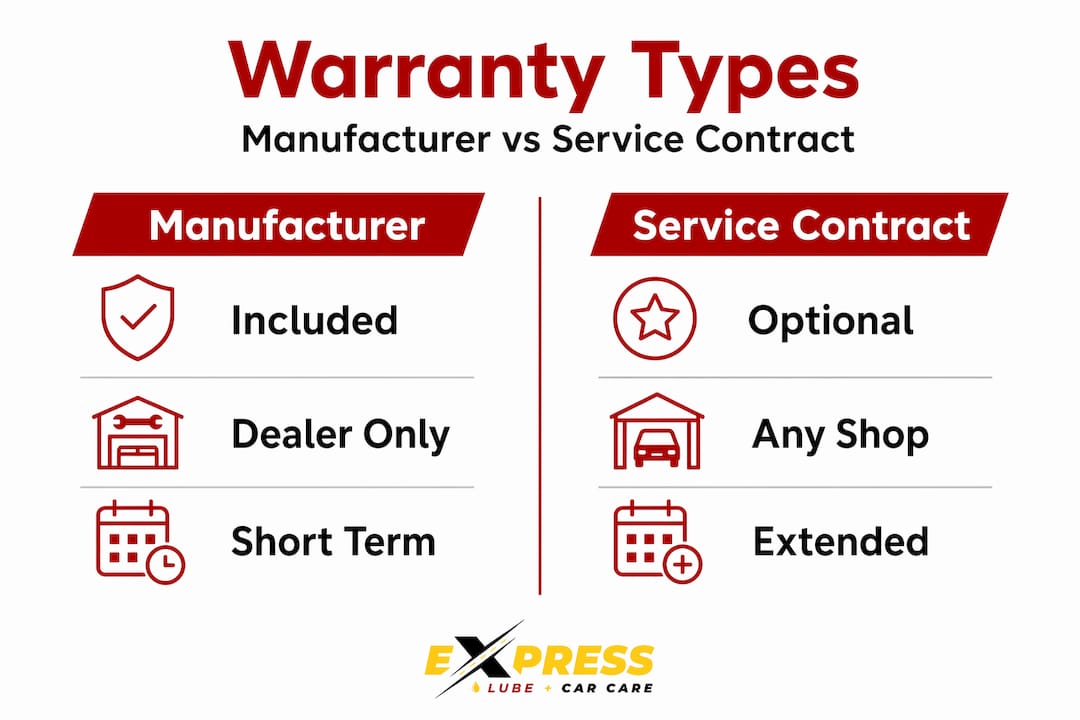
Here is a quick comparison to keep things clear:
| Feature | Manufacturer warranty | Vehicle service contract |
|---|---|---|
| Cost | Included with purchase | $1,300 to $4,000+ depending on coverage |
| Provider | Automaker | Dealer, third-party, or automaker |
| Coverage start | Immediate | After waiting period |
| Repair shop | Usually dealership only | Often any certified shop |
| Regulated as | Warranty | Service contract or insurance |
Both types share a common limitation: they generally do not cover routine maintenance like oil changes, tire rotations, or parts worn down through normal use. Brakes, filters, and wiper blades are almost always excluded. The coverage is for things that break unexpectedly, not things that wear out on schedule.
Pro Tip: If you are buying a used car, ask the seller for documentation of any remaining factory warranty and request a vehicle history report. A transferable manufacturer warranty adds real value and can reduce your need for an extended contract.
Coverage details and the claims process
Here is where a lot of car owners get tripped up. Even when you have coverage, there are specific steps you must follow or the claim gets denied. Think of it less like a guarantee and more like a process you have to manage.
How the waiting period affects you
Most vehicle service contracts include a waiting period of 30 days and 1,000 miles from the contract purchase date before any coverage activates. This exists to prevent fraud. If you bought coverage knowing your transmission was already failing, the provider would otherwise be stuck paying for a pre-existing problem. The consequence for you: any covered part that fails during that window is your cost, period.

The contract effective date and the waiting period start date are sometimes two different things, which creates real confusion. Always confirm in writing exactly when your coverage begins.
The step-by-step claims process
Filing a warranty claim is not difficult, but skipping a step can cost you everything. Here is how the claims process generally works:
- Notify the shop upfront. Tell the service advisor you have warranty coverage before any diagnostic work begins. Failure to do this early can cause delays or outright denial.
- Get a diagnosis. The shop diagnoses the problem and documents it with the specific failed components.
- Request pre-authorization. The shop contacts your warranty provider to get approval for the repair. No authorization, no coverage.
- Pay your deductible. Once approved, you pay the deductible directly to the shop. You should not be charged more than that amount for covered repairs.
- Repair is completed. The warranty administrator pays the shop directly for covered labor and parts.
Pro Tip: Ask your warranty provider upfront whether they pay the repair shop directly or reimburse you after the fact. Direct payment to shops is far more consumer-friendly and avoids putting that financial burden on you while you wait.
Deductible structures: the detail most people overlook
Not all deductibles work the same way. A per-visit deductible means you pay one flat fee regardless of how many things get fixed during that appointment. A per-repair deductible applies to each individual component being fixed. If your alternator and a sensor fail at the same time, you pay two deductibles instead of one. Per-component deductibles can dramatically increase your out-of-pocket cost when multiple failures happen together. Some contracts offer a disappearing deductible if you use a specific network of repair shops, which can be a good deal if one of those shops is convenient for you.
Where you can take your car
Manufacturer-backed warranties typically require you to go to an authorized dealership for repairs. Third-party vehicle service contracts are more flexible and usually allow repairs at any certified shop, which is a meaningful advantage if you have a trusted local mechanic. Understanding this distinction helps you plan before a breakdown happens, not scramble after one.
Reading your warranty contract and avoiding pitfalls
The marketing pitch for any extended warranty sounds great. It is the contract itself that tells the real story. Most claim denials trace back to something written in the exclusions section, not some technicality invented after the fact.
Here are the contract elements you should review before signing anything:
- Exclusions list. The exclusion list determines whether claims get approved more than the covered components list does. Read every exclusion carefully.
- Covered components list. Understand exactly which parts are named. If a part is not listed, it is not covered.
- Maintenance requirements. Most contracts require you to follow the manufacturer’s scheduled maintenance and keep records proving you did. Missing an oil change and then filing a claim for engine damage is a recipe for denial.
- Cancellation rights. Many states give you a “free look” period, typically 10 to 20 days, to cancel for a full refund if no claim has been made. Florida allows up to two months. Know your state’s rules before you buy.
- Transferability. A warranty that transfers to a new owner when you sell the car can increase the vehicle’s resale value. Not all contracts allow this.
- Non-original parts. Some contracts void coverage if non-OEM parts are used during a repair, even a repair unrelated to the current claim. That clause is worth knowing about.
Pro Tip: Before purchasing any vehicle service contract, search the provider’s name alongside “complaints” and check their rating with your state’s insurance commissioner. A low-cost plan from a company that denies claims routinely is worth nothing.
A common red flag worth knowing: some dealers present extended warranties as required for financing when they are actually optional. You always have the right to decline.
Deciding whether an extended warranty is worth it
This is genuinely a personal finance question as much as a car question. Extended warranty costs range from around $1,300 to well over $4,000, depending on the vehicle and coverage level. Whether that math works for you depends on a few key factors:
- Your car’s reliability record. Vehicles with strong reliability ratings, like many Japanese brands historically, may rarely need the coverage you paid for.
- Your financial cushion. If a $2,000 repair bill would genuinely hurt your finances, the peace of mind a VSC provides has real value. If you have an emergency fund that could absorb it, you may come out ahead saving the premium instead.
- Your vehicle’s age and mileage. The older and higher-mileage the car, the more likely something will fail. Coverage aligned with that risk profile makes more sense for a 90,000-mile vehicle than for one with 20,000 miles.
- Overlap with existing coverage. If your factory warranty still has two years left, buying a VSC now means paying for coverage you do not yet need. Time the purchase to start when the factory warranty ends.
The best time to buy is before the factory warranty expires and while the car is running well. Waiting until a symptom appears means that condition will likely be excluded as pre-existing. That is a trap a lot of buyers fall into. Being a good candidate for a local auto repair shop checklist review before making this decision is always a good move.
My honest take on navigating auto repair warranties
In my experience working with car owners every week, the people who get burned by warranties almost never read the contract before signing. They heard “bumper to bumper” and assumed that meant everything. It rarely does.
What I have learned is that the exclusions list is the actual warranty. The covered components list is marketing. If you flip straight to the exclusions page and spend five minutes reading it, you will understand exactly what you are buying far better than any salesperson will explain to you.
I also see a lot of unnecessary claim denials because the customer did not notify us of their warranty coverage before we started work. Once diagnostics and disassembly begin, the pre-authorization window closes. That one step, making a quick call before we touch the car, would have saved those customers their entire deductible.
My honest opinion on whether extended warranties are worth it: they are, for the right car and the right buyer. High-mileage vehicles, cars coming off lease with uncertain histories, and owners without an emergency fund are all good candidates. A three-year-old reliable vehicle with a solid history and an owner who has $3,000 in savings? Probably not the best use of that money.
Read the fine print. Buy early. Keep your maintenance records. Those three habits will serve you better than any warranty sales pitch.
— Express Lube & Car Care
Warranty repairs done right at Express Lube & Car Care
If your vehicle needs warranty-covered repairs or maintenance that keeps your coverage valid, Express Lube & Car Care in Richland Hills is set up to handle both. Our ASE-certified technicians work with multiple third-party vehicle service contracts and can help you navigate the pre-authorization process without the runaround.
Keeping your maintenance records current is one of the simplest ways to protect a warranty claim from being denied. We document every service visit thoroughly, so you always have the paperwork trail your contract requires. Walk in anytime, no appointment needed, and ask about our current service specials on oil changes and routine maintenance. Whether you are maintaining coverage on a newer vehicle or getting a used car back on track, we make it straightforward and honest. Stop by or schedule your visit online.
FAQ
What does a manufacturer warranty cover?
A manufacturer warranty covers defects in materials and workmanship for a set time period and mileage, typically 3 years or 36,000 miles for bumper-to-bumper coverage. It does not cover routine maintenance or normal wear and tear items like brake pads or tires.
Do auto repair warranties cover labor costs?
Yes, most auto repair warranties, both manufacturer warranties and vehicle service contracts, cover labor along with parts for approved repairs. You pay the deductible, and the warranty administrator covers the rest directly with the repair shop.
How do I file a warranty claim at a repair shop?
Notify the shop that you have warranty coverage before any work begins, allow them to diagnose the issue, and wait for pre-authorization from your warranty provider. Once approved, you pay your deductible and the shop handles the rest with the warranty company.
Can I use any repair shop with an extended warranty?
It depends on the type of coverage. Manufacturer-backed warranties generally require dealership repairs, while most third-party vehicle service contracts allow you to use any certified repair facility.
When is the best time to buy an extended warranty?
Buy before your factory warranty expires and while the car is running well. Waiting until a problem appears almost guarantees that condition will be excluded from coverage as a pre-existing issue.