

Preventive vehicle maintenance is defined as a scheduled program of inspections, servicing, and part replacements performed before problems occur, not after. The industry term is “preventive maintenance,” and it is the foundation of every reliable vehicle ownership strategy. Systematic preventive maintenance programs reduce vehicle breakdowns by 70–85% and extend vehicle lifespan by 30–40%. That is not a minor improvement. It is the difference between a car that lasts 200,000 miles and one that strands you on the highway at 90,000. As Consumer Reports expert mechanic John Ibbotson puts it, maintenance is an investment: "It is either pay now or pay more later." Average annual maintenance runs around $900, a figure that looks very reasonable next to a single major repair bill.
What is preventive vehicle maintenance and what tasks does it include?
Preventive car care covers a specific set of tasks performed on a regular schedule. Common preventive maintenance tasks include oil changes, brake inspections, tire rotations, battery tests, fluid checks, and air filter replacements. Each one targets a known wear point before it becomes a failure point.
Here is what every car owner should have on their automotive maintenance checklist:
- Oil and filter changes: Engine oil breaks down over time and loses its ability to lubricate moving parts. Most vehicles need an oil change every 5,000–7,500 miles, though synthetic oil can extend that interval. Regular oil changes improve engine lubrication, reduce internal wear, and directly affect fuel economy.
- Tire rotations: Tires wear unevenly depending on their position. Rotating them every 5,000–7,500 miles extends tread life and keeps handling predictable.
- Brake inspections: Brake pads wear gradually. Catching them early means a simple pad swap. Waiting too long means rotor damage and a much larger bill.
- Battery testing: A battery typically lasts 3–5 years. Testing it before it fails prevents a no-start situation at the worst possible time.
- Fluid checks: Coolant, transmission fluid, brake fluid, and power steering fluid all degrade. Low or dirty fluid accelerates component wear.
- Air filter replacement: A clogged air filter restricts airflow to the engine, reducing power and fuel efficiency.
Some of these tasks are time-based. Others are condition-based, meaning you check the actual state of the component rather than following a fixed calendar. A good vehicle upkeep plan uses both approaches together.
Pro Tip: Use a free app like Carfax Car Care or your vehicle’s built-in maintenance reminder system to log every service. A written record also adds value when you sell the car.
How does preventive maintenance differ from routine and reactive repairs?
The three types of vehicle care serve different purposes, and mixing them up costs money. Understanding the difference helps you build a smarter upkeep plan.
Routine maintenance is calendar or mileage-driven. You change the oil every 5,000 miles regardless of how the oil looks. Preventive maintenance is condition-driven. It monitors actual component wear and adjusts timing based on real usage patterns. The combination of both approaches delivers the best results for long-term vehicle health.
Reactive repair is neither scheduled nor proactive. It happens after something breaks. That is where the real cost lives.
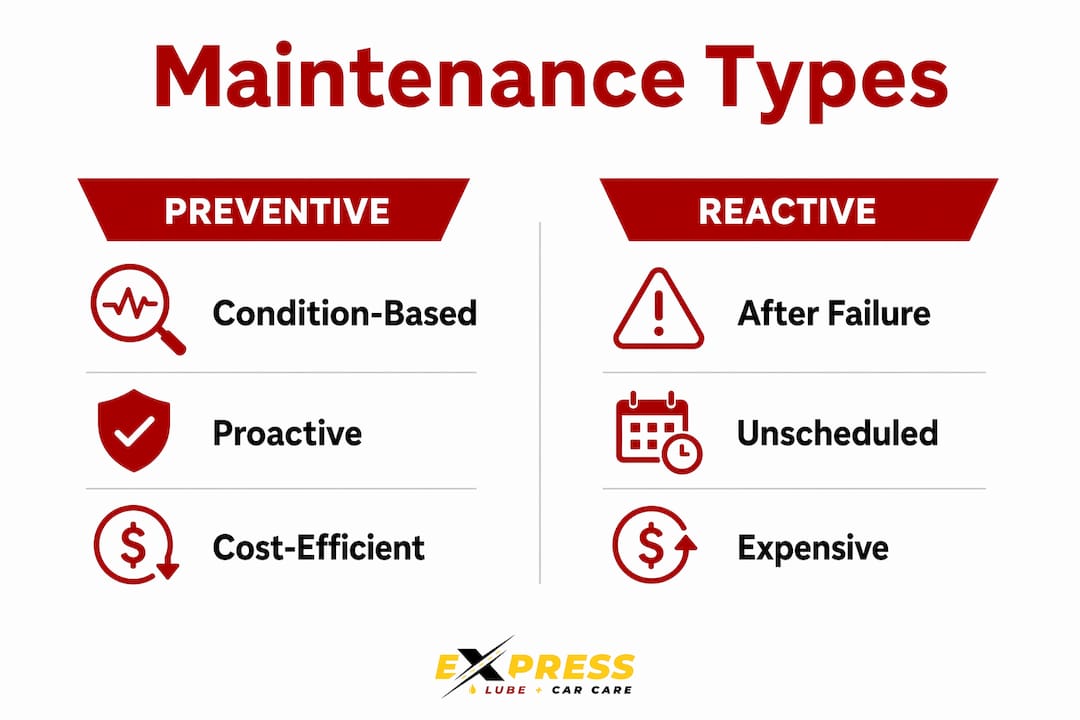
| Attribute | Preventive maintenance | Routine maintenance | Reactive repair |
|---|---|---|---|
| Timing | Condition-based | Calendar or mileage-based | After failure |
| Goal | Prevent failure before it starts | Follow manufacturer intervals | Fix what broke |
| Cost level | Low to moderate | Low to moderate | High to very high |
| Example | Replacing a worn belt before it snaps | Oil change at 5,000 miles | Engine rebuild after belt failure |
| Risk level | Minimal | Minimal | High, often cascading |
The cost gap between proactive and reactive care is stark. Replacing a timing belt proactively costs around $150. Letting it snap and dealing with the engine damage that follows costs $3,000 or more. That single example captures why the proactive mindset matters so much.
Pro Tip: If your car shows new noises, warning lights, or changes in handling between scheduled visits, do not wait for your next appointment. Those are signals for a diagnostic check, not a routine service.
What are the key benefits of preventive vehicle maintenance?
The benefits of vehicle maintenance go well beyond avoiding a tow truck. They touch safety, finances, fuel economy, and the long-term value of your car.
- Fewer breakdowns. Preventive programs reduce breakdowns by 70–85%. That means fewer roadside emergencies, fewer towing fees, and far less disruption to your daily life.
- Longer vehicle lifespan. Regular care extends vehicle life by 30–40%. A car that might otherwise need replacement at 120,000 miles can reliably reach 180,000 miles or more with consistent upkeep.
- Lower repair costs. Spending roughly $900 per year on maintenance is a fraction of what a single major repair costs. Neglecting a cooling system, for example, does not just damage the radiator. Neglecting one vehicle system triggers a domino effect that damages connected components and multiplies the final bill.
- Better fuel economy. Clean oil, properly inflated tires, and a fresh air filter all contribute to efficient combustion. A poorly maintained engine burns more fuel to do the same work.
- Improved safety. Reliable brakes, properly inflated tires, and functioning steering systems are not comfort features. They are safety systems. Maintaining them keeps you and everyone else on the road safer.
- Higher resale value. A documented maintenance history signals to buyers that the car was cared for. That translates directly into a higher sale price.
“It is either pay now or pay more later.” — John Ibbotson, expert mechanic, Consumer Reports
Every preventive maintenance visit is also an opportunity to catch something you would never notice on your own. Professional inspections detect early wear that most drivers miss until it becomes a serious problem.
How can you build and stick to a preventive maintenance plan?
A good plan starts with your owner’s manual. The manufacturer’s maintenance schedule is built around your specific engine, transmission, and drivetrain. It tells you exactly what needs attention and when. Following it is the single most reliable way to maintain a vehicle correctly.
Beyond the manual, here is how to put a practical plan together:
- Schedule by mileage milestones. Set reminders at 5,000, 15,000, 30,000, 60,000, and 90,000 miles. Each milestone typically triggers a different set of services.
- Use a vehicle maintenance schedule as your reference. A written or digital schedule keeps you from guessing what is due.
- Do not skip services because the car feels fine. Most wear happens silently. Waiting for symptoms like squealing brakes or rough idling before acting often means the damage is already done. Worn brake pads that go unaddressed, for example, eventually score the rotors and turn a $150 repair into a $400 one.
- Choose a service center with certified technicians. ASE-certified mechanics follow standardized diagnostic procedures. That matters when you are relying on someone to catch problems you cannot see.
- Keep a service log. Whether it is a notebook in the glove box or an app on your phone, tracking what was done and when removes all the guesswork.
Pro Tip: Plan your biggest maintenance services around mileage milestones and budget for them in advance. A 60,000-mile service might include spark plugs, a transmission fluid flush, and a coolant flush all at once. Knowing it is coming lets you set money aside instead of getting hit by surprise.
If you want a detailed breakdown of what each service interval covers, the car maintenance checklist at Express Lube & Car Care walks through 11 tasks every driver should know.
Key Takeaways
Preventive vehicle maintenance is the most cost-effective way to protect your car’s safety, reliability, and long-term value.
| Point | Details |
|---|---|
| Prevention beats repair | Proactive care reduces breakdowns by 70–85% and costs far less than emergency fixes. |
| Know your maintenance types | Combine condition-based preventive care with calendar-based routine service for best results. |
| Every system is connected | Neglecting one component triggers wear in others, multiplying repair costs quickly. |
| Follow the owner’s manual | Manufacturer schedules are built for your specific vehicle and are the most reliable guide. |
| Track every service | A documented maintenance history protects your investment and increases resale value. |
Why preventive maintenance is about more than saving money
At Express Lube & Car Care, we see the same pattern play out regularly. A driver comes in because something finally broke. After the repair, they ask what they could have done differently. The answer is almost always the same: a simple inspection or fluid change a few months earlier would have caught it.
The “pay now or pay more later” principle is real, and we have watched it play out hundreds of times. But I want to push back on framing maintenance purely as a financial decision. The deeper reason to stay on top of your car’s upkeep is safety. Brakes that fade, tires that are worn thin, and steering components that are loose are not just expensive problems. They are dangerous ones. A car that has been properly maintained behaves predictably. You know how it stops, how it handles in rain, and how it responds in an emergency. That confidence is worth more than the money you save.
We also see how maintenance affects the way drivers feel about their cars. Owners who stay on schedule tend to catch early signs of wear before they become stressful. They are not anxious every time a new noise appears because they know their car was just inspected. That peace of mind is real, and it is one of the underrated benefits of a proactive ownership mindset.
— Express Lube & Car Care
Preventive maintenance services at Express Lube & Car Care
Express Lube & Car Care serves drivers in the Richland Hills area with no-appointment walk-in service and certified ASE technicians who handle everything from oil changes to full vehicle inspections.
If your car is due for an oil change, brake check, or fluid service, the current service specials at Express Lube & Car Care make it easy to get started without breaking your budget. Fast turnaround, honest pricing, and transparent communication are standard at every visit. Staying ahead of wear does not have to be complicated. Come in, and we will take care of the details.
FAQ
What is preventive vehicle maintenance in simple terms?
Preventive vehicle maintenance is scheduled service performed before parts fail, covering tasks like oil changes, tire rotations, brake inspections, and fluid checks. The goal is to catch wear early and avoid costly breakdowns.
How often should preventive maintenance be done?
Most core tasks follow a 5,000–7,500 mile interval, but the best reference is your vehicle’s owner’s manual. Manufacturer schedules are built specifically for your engine and drivetrain.
What is the difference between preventive and routine maintenance?
Routine maintenance is calendar or mileage-based, such as an oil change every 5,000 miles. Preventive maintenance is condition-based, addressing actual component wear rather than a fixed schedule. Combining both approaches delivers the best results.
What happens if you skip preventive maintenance?
Skipping maintenance allows wear to go undetected. A neglected system often damages connected components, turning a minor fix into a major repair. Worn brake pads, for example, eventually score the rotors and double the repair cost.
Is preventive maintenance worth the cost?
Annual preventive maintenance costs around $900 on average. That figure is a fraction of a single major repair, and it reduces the risk of breakdowns by 70–85% while extending vehicle lifespan by 30–40%.